movie: Frequency (2000)

Another firefighter flick. (I can’t remember where I got this list.)

As the movie opens, Dennis Quaid is a hunky firefighter, Frank, in 1960s Queens. He has a good marriage with Julia, and a six-year-old son, John. Flash-forward some 30 years, and John (Jim Caviezel) has grown up to be a cop. He’s close to his mother. They both mourn his long-dead father.

Until the return of the rare (especially in NYC) aurora borealis, which shows up in both 1969 and 1999, coinciding with adult John’s discovery of his father’s old HAM radio. In a sci-fi twist, this allows Frank and adult John to talk to each other across the years. (There is mention of string theory and multiple dimensions to lend this mystery a touch of possibility.) It takes a bit of convincing, especially for Frank, to believe what’s happening, but the play-by-play John is able to give of the 1969 World Series (the Amazing Mets) clinches it. (That World Series will continue to signify throughout the movie.) You can guess what comes next: John is able to warn his father about the warehouse fire in which the latter dies. Now he doesn’t die. Hooray! Except… cue the butterfly effect.

Frank’s survival gives John a whole new set of memories in which his father was there for his adolescence and young adulthood. He’s kept the other memories, too: “I remember both. At the same time. It’s like waking up from a dream and you’re not sure what’s real. I remember you being here, but I also remember when you weren’t.” And now, of course, things start changing in John’s present. His girlfriend doesn’t know him. His mother is not at the phone number he has for her. John the homicide detective gets a new case that matches an old case, and the news just keeps getting worse. He and Frank, across the years and via nightly talks on the HAM radio, undertake to catch a serial killer, but as Frank points out, he’s a firefighter, not a cop. It’s possible that whatever they try will make things worse.

This movie is kind of sappy, but I quite loved it. Seeing the father and the son be open and emotional with each other was darling, actually, even if a bit cheesy. Frequency‘s plot is not unfamiliar (think elements of Back to the Future, Sixth Sense, Ghost, It’s a Wonderful Life), and it uses some fairly transparent tools to manipulate my emotions, but I’m here for it: with a little willing suspension of disbelief, the tension was convincing, and the plot twists intriguing. There’s a bad guy, and there are a couple of clear good guys, and enough disturbance to put them in danger along the way. Most importantly, there are compelling relationships, and maybe that’s key to my enjoyment here. I found a user review on IMDB that says it perfectly: “There have certainly been better action/suspense/serial killer movies (the action scenes weren’t amazing, the story has some holes, and I thought the ending was a little cheesy), but the heart of the film is the relationship between Frank and John. I bought into that relationship fully, and that’s why I liked this film as much as I did.” Well put, UnclePaul.

Solidly worth the time. Also Dennis Quaid is hunky.


Rating: 7 cigarettes.

The Hero by Lee Child (audio)

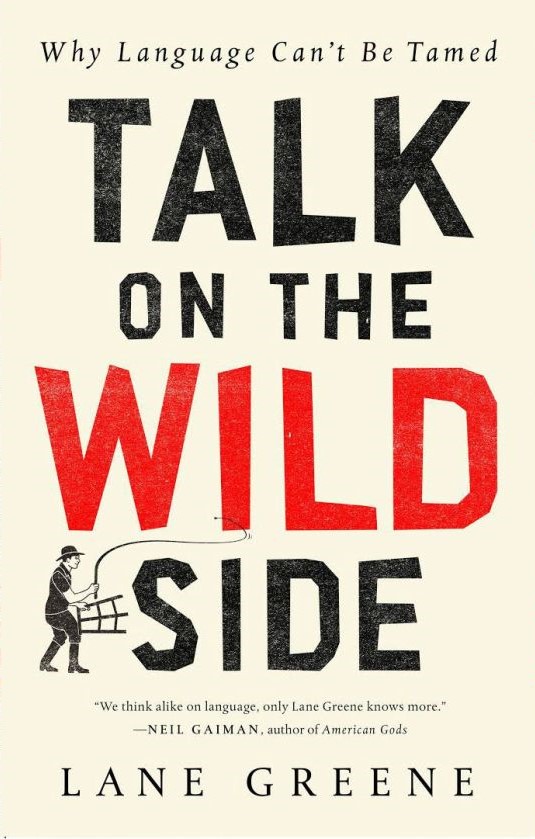
Not a Jack Reacher novella, but an essay. Lee Child (as himself, for the first time in my reading experience) explores the concept of “the hero,” as archetype and as cultural tradition, in this hour-and-change. It opens with the history of opium, or rather of humans’ relationship to opium, in its various forms, as revealed by the archaeological record. This brings us to the book’s subject via that coined name for an opium derivative: heroin, as relates to hero. Etymology as guiding principle! I love it! Some of the reviews on Goodreads are laughably harsh, but that’s an issue of people not appreciating etymology or failing to grasp the concept of “essay” (and to be fair, some of these poor souls thought they were getting a Reacher novella. Which actually I did as well, but I transition between Reacher and the essayistic form more easily than some).

From opium and heroin we move through archaeology and the history and development of human societies (comparison of homo sapiens to homo neanderthalensis), including the move from the hunter-gatherer lifestyle to agriculture, always with a focus on the developing importance of storytelling. Storytelling, Child writes, is a survival mechanism, part of evolution. “Encouraging, empowering, emboldening stories… somehow made it more likely the listener would still be alive in the morning.” Stories are instructive, he explains, and developed from the first use of language which was strictly nonfiction. There was no evolutionary advantage to claiming that there was a predator over the next rise, or prey or berries to be had around the next bend of the river, if it wasn’t true. The move to fiction was a big jump, and had to serve other purposes. Encouraging, empowering, emboldening, and instructing. The girl who met a tiger and ran fast and got away; later, the girl who met a tiger but she carried an axe and successfully fought it off.

Which brings me to a feature of this essay that I appreciate: that it centers women. Child tracks his own link to early homo sapiens and homo sapiens sapiens through the female line. As his own mother had no female child, he considers that line to have died out. Women tend to be the storytellers, and the early protagonists, in the histories he tells. It’s refreshing, when history is so often male-centered.

Another central feature is the importance of language, etymologies, and the joys and rigors of linguistics. (Child’s daughter Ruth is a linguist.) Words matter; and they tell stories. Rivals were originally in competition for rivers or for riverfront real estate. Heroin is named for the concept of the hero.

Reacher’s usual confidence in making logical connections and claiming theories is recognizable here as Child’s own. I’m not an academic in the field of human evolution as told through the archaeological record, nor am I a linguist; I have the sense that he sets forth some theories that are perhaps less than orthodox, but he does so with great assurance. It’s a style of writing that works well for me. This is Reacher as an academic. Jeff Harding’s narration feels spot-on.

A contemplation of language, story, and the archetypal (and ever-evolving) hero in human history: if this stuff sounds like your cuppa, and especially if you like Reacher too, do yourself a favor and check out this novella-length essay. It’s engrossing. (Also, there’s a nice, representative sample available here. Or another here.) Or if you just want a laugh, go check out those Goodreads reviews. Not every book for every reader…


housekeeping: new schedule

Howdy, dear readers. I figured this day was coming! It’s mid-semester time here, and my content output has been slowing as I teach two classes of dear but needy composition students and one literature course which I love but, yes, reading. I’m going to back off the posting schedule here at pagesofjulia to concentrate more on the day-to-day readers and writers in my life. This will be my last Wednesday post for the foreseeable, until something changes again, as things do. Stay tuned for Monday and Friday content to continue; just wanted to give you a head’s up, because I appreciate consistency and clear communication in my life and figure you do, too.

Maybe time for a teaching update one of these days, yes? Hmm…

And perhaps this is a good time to ask for feedback in general. I’m flattered and honored to have many hundreds of followers out there – thank you so much for reading! What do you like best here? What do you wish you got more of? Comment below.

A thousand thanks. Come on back on Friday for more book reviews. Cheers!

Circe by Madeline Miller (audio)

Madeline Miller, winner of the Orange Prize for The Song of Achilles, follows with another retelling from Homer’s great works with Circe. Remember, Circe was the witch-goddess who turned Odysseus’s men to swine on her enchanted island, then slept with him, and successfully tempted him to stay with her there for a year before he was able to tear himself away and continue on his ill-fated journey home (eventually successful in that he gets there, but not in too many other senses). Circe is the daughter of Helios, the sun god, and a nymph named Perse.

I had no idea that Circe had such an extended backstory – I knew her only from the Odyssey. Her story is further enlarged upon in Miller’s lovely telling here: her birth and childhood in the halls of the gods, ignored and unliked by her immortal parents, teased and picked on by the nymphs. Her love of the fisherman Glaucus, and his transformation; his love for the nymph Scylla, and Circe’s spell that transforms her in turn to the monster Scylla we know (again, from the Odyssey and other sources). Her minor role in the punishment of Prometheus, another god with a sympathy for mortals, and her eventual banishment to the island Aeaea (pronounced in this audiobook as ai-aye-uh). Then, her centuries (recall, Circe is immortal) on the island, developing her skills of witchcraft and enjoying a few sexual liaisons: first, with Hermes; later, with Daedalus; and eventually with her most famous guest, Odysseus.

Spoilers follow below (in white text – highlight to read). These are features of Circe’s history that come from myth; but they were stories I’d never encountered before, for all my love of Odysseus’s story, so they may be new for some of you, as well.

We get a lushly detailed version of Circe’s turning men to swine episodes, from her point of view and more justified than in Homeric tellings. We meet Odysseus, well into the length of Circe; and while it’s all been lovely, I have of course been leaning toward this event. Well, Odysseus through Circe’s eyes is rather a different beast (no pun intended), although recognizable. They have a relationship; his men get restless; he prepares to leave, but not before Circe (following a message from Hermes) passes on the prophecy regarding his visit to the underworld. She advises him; he pours the blood and waits for Tiresias, etc. (Pardon my glossing; this is where I know the story well.) And then… After his departure, and without his knowledge, Circe gives birth to Odysseus’s son, Telegonus. His name is a play on that of Telemachus, Odysseus’s older son with Penelope; it also means ‘born afar,’ which for Circe means born far from his father’s land of Ithaca, yes, but also far from her own family – far from the whole world, you might say. Telegonus is a difficult baby but a fine young man.

From his birth, the grey-eyed goddess Athena tries to kill him, but she won’t say why. Because of this threat, Circe worries. She spins massive spells that bear down on her; she works herself weary to protect her child; and she shelters him beyond even the average protective mother. But of course, she can’t keep him away from the world forever. It is Hermes, in fact, who secretly helps him build a boat with which to leave sheltering Aeaea. Telegonus is determined to go find his father. In one of her acts of astonishing strength, Circe wins the poison tail of the older-than-old sea god Trigon, with which she poison-tips a spear for Telegonus – to keep him safe, she thinks. But as is so often the case in Greek myth, this poison spear instead becomes the instrument of fulfilling another prophecy. In an accident, born of the miscommunication of their first meeting, Telegonus’s spear grazes Odysseus, and the yearned-for father dies. I had never known how Odysseus died! Telegonus ends up bringing Penelope and Telemachus back home to Aeaea with him, which Circe does not initially appreciate; but more unforeseen events will arise from here, not all bad. (I have to leave something untold, don’t I.)

Whew.

I was exhilarated by the retelling of Odysseus’s time spent with Circe, and its fallout, following him beyond the end of the Odyssey. All of Circe was compelling and well-told, with style; but I was always waiting for this, the headline act. I was intrigued by a different version of Odysseus than the one I’ve known before. Miller’s is a testier, more temper-prone, less admirable man. And while I don’t like having my heroes messed with, this worked out well for me. Miller’s Odysseus fits within Homer’s; they are not at odds. He was always a little apt to cruelty, and certainly self-serving, the cunning one. And Circe’s perspective necessitated the changes, I think.

A feminist retelling? I suppose, in the spirit of Atwood’s Penelopiad or Barker’s The Silence of the Girls, the women’s version might always read that way. I feel like that’s a simplification, though. It might be better classified as a correction of “history told by victors.” The victors tend to be men, but it’s not just that; it’s their power and ruthlessness and erasure of others. This is at least as much about correcting erasure (generally) as it is about the woman’s POV. Although, those men to swine, man. Well done, Miller.

I do love this Circe, who is (especially when younger) mercurial and passionate, stronger than she realizes (in her witchcraft, yes, but in other ways as well), and eventually a crafty and wise woman. She is loyal and devoted but also clever and practical. She is, in fact, Odysseus’s match. For fans of the mythology, I feel there is much to love here.

And for those less familiar, still: the storytelling is nuanced and full and rich. It might perhaps drag a bit, especially as we wait for Odysseus to appear (or is that just those of us who do know the original stories, and feel he’s the headline?); it’s a longish book. But episodes along the way intrigue and compel, too. I loved the Daedalus/Minotaur subplot.

This audio version, read by Perdita Weeks, is luscious, with a rich accent I’d call vaguely British (I am not good with accents). (Weeks is Welsh.) It feels… sumptuous. This lends a certain effect to the novel that may not suit every reader; it’s a bit grand; but it felt right for the story and for Circe’s larger-than-life (indeed, immortal) story. I’d spend another 12 hours this way, easy. I can’t wait for what’s next from Madeline Miller.

Circe is absolutely recommended for fans of the Greek myths, and for anyone who likes a good, involved, winding yarn about men and women and gods and power struggles and grudges and fantastic magic, and more.


Rating: 8 ground-up leaves.

television: Agatha Christie’s Poirot

I have been thinking, again, about some wonderful memories that have helped to shape me. For starters, please go revisit this post, as I think about what a precious gift my Grammy gave me when she took me to see my first live Shakespeare production at a beautiful theatre in San Diego when I was ten. And just now, I’ve been remembering watching Poirot, perhaps Agatha Christie’s best-known detective, when I was a little girl with my mother. I recall vividly the art-deco entry sequence. I loved this show.

In my memory, this was an old show, but I see now that it began in 1987, when I was five years old. So by the time I was watching it it was not new releases, but still pretty recent. Well, I’ve just rediscovered the series thanks to a few different channels on Amazon Prime. There are now thirteen seasons, and thank goodness, because I can’t get enough.

The early seasons are what I remember from childhood. The tone is fairly lighthearted; the audience is invited to laugh gently at Poirot, who takes himself too seriously, and who is accompanied by the variously comic Miss Lemon (with her ridiculous hairstyle and her lovable passion for filing), Captain Hastings (“I say!”), and Scotland Yard’s over-serious Inspector Japp. This is the cast of characters I loved so much as a child, and I find them as remembered, but with more depth and nuance now that I’m a few years older. (Or maybe my memory just got vague.) It goes without saying that Poirot himself is played by David Suchet, my first Poirot and the only one I recognize; I have since encountered other iterations and they are all offensively wrong for the role in my eyes. What can I say; I’m loyal to my first experience? but I really think he is the portrayer. I am not alone. “Agatha Christie never saw David Suchet in the role but her grandson Mathew has commented: ‘Personally, I regret very much that she never saw David Suchet. I think that visually he is much the most convincing and perhaps he manages to convey to the viewer just enough of the irritation that we always associate with the perfectionist, to be convincing!'” (source)

note the twinkle in the eye and the little smile

I am sorry to say that after season eight, Miss Lemon, Captain Hastings, and Inspector Japp mysteriously disappear on us. Poirot is rather more alone from here, although he does gain (in season ten) a new butler, George, and a new friend, Ariadne Oliver, an irreverent mystery novelist who is always, always eating an apple. While Mrs. Oliver is good for a laugh or two, George does not provide much comic relief; neither of them replaces the original trio. The overall tone of the show has gotten less light, too. It feels a little bit, to me, as if the show has taken a step toward taking Poirot as seriously as he takes himself. I think the loss of tongue-in-cheek humor hurts. I love a good dark, grim, gritty mystery as much as anyone does, but having loved a slightly ridiculous Poirot I am less enamored of the darkly serious one. It is also somewhere in here that his Catholicism begins to play a role. I may misremember, but I feel like he used to be cynical about religion; now he is devout, always whispering over his beads. It’s not bad, but it’s different, and if my love for Poirot is much about nostalgia, I don’t like having my original version messed with.

we are getting more serious now

I’m very glad it keeps going, though. By the time I got to Murder on the Orient Express, near the end of season twelve, I was marveling at what wonderful storytelling Christie’s original was, for one thing, and at how glad I am to have this cinematic telling. The Catholicism is big in this one, and the darkness. Atmosphere, and the snowed-in backdrop, are very effectively done. It’s a grand story that I feel I’ve seen and read and heard in several formats by now, and this version does the whole thing justice. I’m so glad this production exists in the world; I feel lucky.

I am impressed to read that Suchet has played the entire Poirot canon by now! and “only slightly short of the target he had set himself of completing the entire canon before his 65th birthday.” (I’m using Wikipedia as a source; original interview here.) But I have the usual feeling of impending loss, as I finish season twelve and face the approaching end. Thank goodness there are so many stories in the world, yes? I hear Bosch is returning for a sixth season this spring…


Rating: 8 little gray cells, obviously.

I guess I rate television shows now too. What the heck.

Maximum Shelf author interview: Anna Solomon

Following Monday’s review of The Book of V., here’s Anna Solomon: Make an Absence into a Presence.


Anna Solomon is the author of Leaving Lucy Pear and The Little Bride. She is a two-time winner of the Pushcart Prize, and her short fiction and essays have appeared in the New York Times Magazine, One Story, Ploughshares and Slate. She is coeditor, with Eleanor Henderson, of Labor Day: True Birth Stories by Today’s Best Women Writers. Solomon was born and raised in Gloucester, Mass., and lives in Brooklyn with her husband and two children. Her new novel is The Book of V. (Holt, May 5, 2020).

(photo: Willy Somma)

What makes for a compelling protagonist?

A compelling protagonist is someone whose wants and desires and needs are in conflict in some way with the realities of her life. What draws me in as both a reader and as a writer is the tension that exists between the longing and the reality. I also want my protagonists to be inwardly multifarious, ambivalent in what they want. I’m interested in seeing the characters that I read and write struggle not just to get what they want but to figure out what they want.

Was one of these three women the starting point?

When I write a novel, it’s almost impossible for me to remember where I began. But really, Vashti was the beginning. In a lot of ways the three women who hold the book’s core for most of it–Lily, Vee and Esther–were not really where it began. It began with this banished ancient Persian queen, Vashti, who I always wondered about. I wanted to figure out how to make her absence into a presence. So it began with a question about her, but in terms of the characters forming, I’m pretty sure I began with Vivian Barr (also known in the book as Vee), who is my Vashti.

Do you have a favorite character, or one with whom you especially identify?

The answer to each of those questions is different. Certainly, in terms of her relationship to my own life, and the contours of our lives, I identify most obviously with Lily. She is the mother of two in Brooklyn, which is where I live as a mother of two. Our lives are really different from each other: Lily has given up her work, where I have not. But in a lot of ways, writing Lily felt like taking many of my own impulses and questions and exaggerating them to the hilt.

She’s like alternate-reality you.

Kind of, yeah, like what would have happened if I had stopped working? What would that do to me, if I had not held onto the part of me that creates and is out in the world as an adult and a professional and an artist?

As for which I like the most or enjoyed writing the most, the one who was the most fun was Vivian Barr, in part because I got to write her in two very different parts of her life. Writing Vivian both as a young woman and as an older woman, and watching her both evolve and not evolve, was really thrilling for me as a writer. In some ways, I found her development came most easily to me.

How long does it take you to write a novel? You said you don’t always remember the beginning!

That’s also hard to identify by the end! In part because there are so many different stages to writing a novel. And, at least in my experience so far, in the middle of writing a novel I have another one come out in the world. And so I take time away to go introduce that book to the world, and then I come back to it. But I think it’s fair to say that this novel took me three to four years to write and research and edit and rewrite, and all the rest.

I feel as if this book was created perhaps a little more efficiently than my first two, and that’s probably because I did not have a baby while in the middle of writing it. It’s the first book I did not have a baby while in the middle of writing.

That makes a difference, huh?

Yeah! Who knew! (We all knew.)

Your three novels each center on women chafing against limitations of their eras and cultures. How have these projects differed from one another?

When I began dreaming up this book I knew what I wanted to do was much more ambitious structurally than what I had done before. The first book, The Little Bride, featured one protagonist, one clear arc from beginning to end. In Leaving Lucy Pear, I broadened the cast of characters, and there was certainly more complexity in terms of time, but there was still a kind of unified arc to the book. And in this book what I set out to do was thread together three very distinct narratives that were happening in completely different time periods–in fact over the course of 2,500 years. And that was a huge challenge, but I loved the work of orchestrating it. It felt musical, which is why I say orchestration, and it also felt architectural. I really enjoy structure. And I think in a lot of ways this book came to be through its structure as much as through the story. In many ways the structure and the story happened symbiotically. And playing with the structure, kind of seeing how I could move the chapters from one to the next, and the way these women’s stories would overlap and eventually converge in the way that I wanted them to–that was really the great challenge of this book. I really, really enjoyed doing it and I learned a lot about my capabilities as a writer as I did it.

As I wrote it, the big fear was “Can I do this? Will I be able to pull it off?” And of course, there was a lot of work that I did in revision and rewriting to smooth out and fine tune those linkages. But it did feel, once I got going with it, like it came together pretty naturally.

How much research went into this project? Do you enjoy that part?

Yes! I did enjoy it. I do love research. There was a lot of it involved, in terms of understanding the conversations that have come before me around the Book of Esther in particular, and also in terms of getting a hold on the 1970s in Washington, D.C., and in Massachusetts (where I grew up). One of the things that surprised me is how little is actually known, both about how the Book of Esther came to be, but also what it might have been like to live in Persia in 462 B.C.E. I really enjoyed the license that that gave me to really just play. That license is part of what encouraged me to go in certain directions.

One of my favorite parts of research, always, is contacting people. Reaching out beyond the Internet and books and finding people who already know a lot about what I’m writing about, and are almost always eager and generous with their expertise. Everybody from a nonprofit international development expert who can talk about what’s going on in that world today, to my rabbi, and a guy who does shellfish work in Rhode Island and knew all about which shellfish might have been eaten in the 1970s and which wouldn’t. I really enjoy that part of the process.


This interview originally ran on January 29, 2020 as a Shelf Awareness special issue. To subscribe, click here, and you’ll receive two issues per week of book reviews and other bookish fun.

Maximum Shelf: The Book of V. by Anna Solomon

Maximum Shelf is the weekly Shelf Awareness feature focusing on an upcoming title we love and believe will be a great handselling opportunity for booksellers everywhere. The features are written by our editors and reviewers and the publisher has helped support the issue.

This review was published by Shelf Awareness on January 29, 2020.


The Book of V. by Pushcart Prize-winner Anna Solomon (The Little Bride; Leaving Lucy Pear) explores the lives of three women, apparently unconnected yet increasingly intertwined as the pages turn. The braided result is moving, surprising, so touchingly detailed and authentic as to seem more real than life.

In biblical times, a king of Persia takes a second wife. Solomon’s epigraph comes from Elizabeth Cady Stanton’s The Woman’s Bible: “I have always regretted that the historian allowed Vashti to drop out of sight so suddenly.” This first wife simply disappeared: “No one knows. She’s gone.” Solomon takes steps to correct the oversight of Vashti, but she is more concerned with the second wife–Esther, a Jewish orphan girl, chosen by the king as his replacement queen against her wishes.

Esther, meant to be homely and invisible, tried to shrink from the spotlight but somehow charmed the king despite herself. She casts a long shadow here, telling her own story–how she resisted the role of queen, and later used it to save her people–and then influencing several lives that come later.

Lily and her family live in Brooklyn in 2016. Lily gave up her academic career to stay home with her children: two girls who keep asking her to read the Esther book to them, even though she is thoroughly sick of it. Her husband works as deputy director of programs for Rwanda at a major humanitarian aid organization. It’s not that Lily misses academia, but she’s a little dissatisfied with the life she traded it in for. She is also a second wife.

And then there is Vivian, wife of a senator from Rhode Island in the 1970s. Vee is the daughter of a senator’s wife who was the daughter of a governor’s wife. In D.C., she is torn between the women in her consciousness-raising group–“with their circle-talk and their red wine and unmade faces”–and the other senators’ wives: “They are dazzling, these wives of politicians and company presidents, these tigresses who openly dislike and disagree with each other.” Vee is a little of each–and a little contrarian, driven to thwart both.

The title, The Book of V., refers to Vee, to Vashti and surely, to a part of the female anatomy. “This is what the women’s group women insist on calling it. Vagina, [Vee] thinks dutifully, though the word disgusts her.” Solomon shows a careful attention to words. “A blowhard, Esther called him, perhaps not with that word but with another that meant the same in that time and place.” Her writing is lovely, incandescent; paradoxically, it has that ability that fine writing often has to disappear into the background, so that readers seem to hear the characters directly without a writer’s mediation at all.

Readers follow Esther as she is thrown into a pageant (in several senses of the word) against her will, by an uncle who hopes she will solve problems bigger than herself, problems that have been plaguing the Jewish camp outside the city walls. Vee challenges her husband’s authority repeatedly, finally disobeying him in the same way that, legend has it, got Vashti banished or killed. Lily struggles with an attraction to another woman’s husband, just as her mother takes ill.

Chapters alternate among the perspectives of these three women. Individually stunning, their stories also intersect and meet in unforeseen ways. Though each takes center stage in turn, it requires all three to form the complete picture. They illuminate each other. The women’s relationships with men are very much at issue: Esther’s unkind king and his more powerful minister; Lily’s essentially good but somewhat boring husband; and Vee’s rather sadistic senator. They are joined by other male characters, sex symbols and brothers and abusers. But relationships between women are privileged. The Bechdel test–the idea that a book (1) should have at least two women in it, who (2) who talk to each other, about (3) something besides a man–is easily passed. Esther, Lily and Vee are joined by many interesting women: one of the maidens forced alongside Esther to compete for the king’s favor; Lily’s inscrutable mother; an old friend of Vee’s; a fellow Brooklyn mom who makes suspicious attempts to befriend Lily.

Each story is gripping in itself, and to balance them in alternation is a trick; it is to Solomon’s credit that the reader moves so smoothly among them, always sorry to step away but eager to return to the next woman, so that the pages fly by with unusual momentum. For a novel to offer such delightfully realized characters as well as such taut pacing is a fine accomplishment. The interweaving of the women’s lives is cleverly done, hinted at early on (as with references to Vee’s senator as royalty, or Lily’s daughters’ interest in Esther) with a light hand, and then growing as past secrets come to light.

With tense, deft plotting, memorable characters and writing that glows with each sentence, The Book of V. is a striking effort that will leave readers long inhabiting the worlds of Vee, Lily and Esther.


Rating: 8 zipper pulls.

Come back Wednesday for my interview with Anna Solomon.

Tiamat’s Wrath by James S. A. Corey (audio)

Tiamat’s Wrath is a terrific addition to the trilogy of trilogies that comprise The Expanse which, though never less than entertaining, have waxed and waned in their proximity to greatness since the publication of Leviathan’s Wake. (from Tor.com)

I concur: Tiamat’s Wrath is one of the better installments in an uneven but generally scintillating series. (Also, bonus at Tor.com: I learned a new word in the author bio. “Niall Alexander is the manager of an extra-curricular education centre, and also, increasingly occasionally, a reader and a writer. He lives with about a bazillion books, his better half and a certain sleekit wee beastie in the central belt of bonnie Scotland.” I love learning new words.)

Several decades after the end of Persepolis Rising, James Holden remains a prisoner of High Consul Winston Duarte, emperor of all the known worlds. Chrisjen Avasarala has recently died. Naomi lives in isolation in a shipping container, surrounded by tech, where she plays an important advisory role in the Resistance but rarely sees another human. Bobbie captains the captured ship Storm (also Resistance), with Alex as her pilot. Clarissa is no more (see previous book); Amos went on a high-stakes mission years ago, deep in enemy territory, and has never been heard from again. It’s a very somber opening.

Our beloved central characters are getting gray, but those living are still fighting, in their various ways, dispersed across galaxies. Aside from the core, we see Elvi Ocoye return (from Cibola Burn), performing on Duarte’s scientific team but having already, by the time this book begins, figured out she’s on the wrong team. And a new addition to the perspectives that tell this story is Teresa Duarte, the High Consul’s only child, at fourteen his protégé and, well, a teenager pushed to rebel.

A little hint here: it helps to have read The Churn before this book.

The science seems to matter a little more here than usual, or maybe it’s just that it makes more sense? At any rate, I was able (and motivated) to follow it more than I’ve been in a couple of books, and I found that rewarding. One relevant detail is that Duarte has been made immortal by protomolecule technology and with the help of sociopath Dr. Cortázar. But one thing about poorly understood technologies is that you don’t always know what you’ve signed up for.

My engagement with the science part of the science fiction helped me enjoy this book even a bit more than usual. But even more so, I think the plot and the action were at their best. And still more, separating our characters out into their own mini-stories (something that doesn’t always reengage fans, ahem, The Walking Dead) – with only Alex and Bobbie remaining a team – was a great choice here, in my opinion. We got to see each protagonist take on their own challenges, make their own choices, redefine their own values and belief systems. Naomi, in particular, had to expand her self-conception in the best of ways. I love love loved seeing everybody operate on their own, against a bare background if you will.

Our team – the Rocinante‘s crew, even if she’s in long-term storage – experiences surprising losses and surprising gains in this book. We are heading into the final novel of the series from here. I already feel a sense of loss that it will be over (although there are still several novellas and short stories for me to track down). But I also feel like the massive scale, physical, narrative, and moral, that have been undertaken by this series is being honored here in the penultimate installment, and that feels good. Boy, I’m exhausted just thinking about it.

Fan til the end here, me.


Rating: 8 whining dogs.

Maximum Shelf author interview: Jennifer Finney Boylan

Following Monday’s review of Good Boy, here’s Jennifer Boylan: We’re Here to Love Each Other.


Novelist, memoirist and short story writer Jennifer Finney Boylan is also a nationally known advocate for human rights. She is the inaugural Anna Quindlen Writer in Residence at Barnard College of Columbia University, and her column “Men and Women” appears on the op/ed page of the New York Times. Her 2003 memoir, She’s Not There: A Life in Two Genders, was the first bestselling work by a transgender American. From 2011 to 2018 she served on the board of directors of GLAAD and also provided counsel for the TV series Transparent and I Am Cait. She lives in New York City and in Belgrade Lakes, Maine, with her wife, Deedie. They have a son, Sean, and a daughter, Zai. Boylan’s memoir Good Boy: My Life in Seven Dogs, will be published by Celadon Books on April 21, 2020.

photo: Dan Haar

What inspired this book?

I think a lot of people, when they’re a little older, look back at their lives and wonder, how did I get here? It can be a challenge to connect who you’ve become with who you’ve been, for a transgender person like me. And yet it’s not a dilemma that’s unique to transgender people. I think we all seek to connect our pasts and our presents. When I look back, one of the constants in my life would be the dogs that I’ve had. And each of those dogs represents a particular phase of my life. There’s the dog I had in boyhood, there’s the dog I had when I was a nascent hippie, when I was a college boy, and then a young hipster, and a boyfriend and a husband and a father… it occurred to me it would be an interesting way to connect present to past, to talk about the dogs who were a constant over a very complex life.

How was writing Good Boy different from writing She’s Not There, more than 15 years ago?

With She’s Not There, it was all very new to me. Whereas at this point in my life, I’ve lived a third of my life as a woman, almost 20 years. She’s Not There is very much a book about transition. Good Boy in some ways is a book about dogs, but also about masculinity. About boyhood and manhood. It strikes me that a woman in late middle age who had a boyhood has a unique insight on what that experience was like. I have to be careful with this metaphor, because I don’t want to be insensitive, but I sometimes think that being a transgender person has something in common with immigration. I wasn’t born here in the land of women, but I do have my green card. I look back on boyhood and masculinity in the kind of way that my great-grandfather looked back on Ireland: a place remembered well but also a place you’re glad to have escaped from.

I’m able now to celebrate some of the joys of that life. It was a life I was delighted to escape, and I feel so lucky to have landed where I am. She’s Not There was a book of trouble–I was trying to solve a lot of problems over the course of my life with that book. I think I’m able to take a more generous look at masculinity, now that it’s so far in the past.

There is both pain and humor in your story. How do you balance those elements in storytelling?

I’ve always thought those two things come from the same well. Some of my favorite writing is the kind where you’re laughing one minute and in another you’re overwhelmed by a sense of sadness. American humor is funny–we think of humor as the lesser art form compared to tragedy. When was the last time that the winner of the Best Picture Oscar was a comedy? Was it Annie Hall, in ’76, ’77? The humor of fart jokes and frat boys is one thing, but the humor that comes from a life of trouble and absurdity is a much deeper form. I think that kind of writing and the literature of sadness comes from a very similar place.

It seems you and your family have sorted out the rules about sharing personal information. How do you negotiate that?

Well, I don’t know if we have it figured out. There are times when I just feel very sorry for them all, being stuck with me. One of the things that you learn in this book is that my older child came out as transgender a couple years ago, and that completely floored me. That’s not a story in which I come off very well, quite frankly. There are ways in which my own initial response to my child coming out as trans was not as generous as was my Republican evangelical Christian mother’s response to my coming out as trans 20 years before.

In the past I’ve written a lot about my children, and I’m sorry to say I think sometimes I’ve used the stories of their success in the world as kind of a way of proving to people that I am not that bad a person after all. And perhaps, in previous works, I might have waved that flag a little too vigorously. I did have my older child read the book. I had my wife read the book, to make sure everybody was okay with everything. But you still worry. I hope in the end that the people that I love and that love me have some respect for what I’m trying to do as a storyteller, and trust that what I’m doing essentially is done with love. My mother used to say, “It’s just as easy to tell nice stories. Why don’t you tell some nice stories instead?” I think if it were just as easy to tell nice stories I probably would. But the drive wheel of story is conflict. A true story that has conflict in it is going to be about people who at least at times are at loggerheads. You hope in the end that you show how people come to an understanding of themselves and each other, but it’s often a qualified resolution, and not everything being tied up neatly with a bow. There are some things that never get resolved.

Does this book have a moral or a lesson?

I think we all know that if we’re here for any reason at all, it’s to love one another. And yet it turns out that loving each other is not easy, and a lot of the time it’s something that we’re not good at. For men in particular, expressing love can be really difficult. For women, too, but my memory of masculinity is that a lot of serious things, and love not least, had to be expressed ironically or through understatement or through these long pregnant silences. And what dogs do is give us a way to express the love that’s in our hearts in a way that we don’t have to feel ashamed of. You can see the most serious, somber person in the world, and then they get a dog in their arms and suddenly they’re blubbering all over the place and kissing Bingo on the head. If there’s a message, it’s that we all should share the love that’s in our hearts, and if you find that difficult, get a dog.

A lot of times in this book, you’ll see a moment where I’m really messed up. My father is dying upstairs, or I’m out in the woods trying to figure out how am I ever going to get through transition, or I’m wondering how am I going to be a good parent to my daughter. And at those moments, the dogs are there. Lucy and Ranger and Brown. And they put their heads in your lap and you understand that you’re not alone. The message that they have for us is not that complex. Most dogs are not deep thinkers (unlike cats–cats are philosophers). Most dogs kind of know one thing. And that is that we’re here to love each other, and also maybe that it’s always good to have a snack.


This interview originally ran on January 22, 2020 as a Shelf Awareness special issue. To subscribe, click here, and you’ll receive two issues per week of book reviews and other bookish fun.

Maximum Shelf: Good Boy: My Life in Seven Dogs by Jennifer Finney Boylan

Maximum Shelf is the weekly Shelf Awareness feature focusing on an upcoming title we love and believe will be a great handselling opportunity for booksellers everywhere. The features are written by our editors and reviewers and the publisher has helped support the issue.

This review was published by Shelf Awareness on January 22, 2020.


Jennifer Finney Boylan tells her life story with both sweetness and fierceness in Good Boy: My Life in Seven Dogs. A coming-of-age story, a tale of finding and owning of self, and an elegy to a series of delightful and frustrating mutts, this is an occasionally heartbreaking but ultimately feel-good memoir about life and love.

Boylan’s 2003 memoir, She’s Not There, about her trans experience, was the first bestselling book by a transgender American author. Good Boy differs in several particulars: for one, there are dogs. “This is a book about dogs: the love we have for them, and the way that love helps us understand the people we have been.” It follows the path of Boylan’s life, from a confused and troubled boyhood through various teen and young adult phases, to dating and marriage, and finally to the decision to transition and the recent happy years as wife and mother to two young adults. Through these years and epochs, seven dogs in particular helped Boylan mark time and observe change, and learn to love.

First came Playboy, “a resentful hoodlum who loved no one except my father.” He chases and attacks motorcycles and is happy to raise a leg or squat indoors. “My father thought this was kind of funny, but then he was never the person who had to clean it up.” (That person was Boylan’s mother, and she would continue the unenviable task of cleaning up for several dog lifetimes to come.)

Then there was Penny, aka Sausage. What eventually turned out to be a thyroid problem caused this Dalmatian puppy to grow enormously fat, but the young Boylan (at this point known as Jimmy) carries her around “like an unusually heavy rag doll.” Boylan loves her, despite the dog’s indifference. “I figured, if I kept being sweet to Penny all the time, eventually her heart would open, and she would love me as I loved her. No one told me this is never how it works.”

Matt the Mutt humps everything and everyone, human and non, and knocks people down as they enter the house. Despite being neutered, Matt has lots of sex with Sausage, while James–now in college–mostly avoids it, even though he has opportunities with female classmates.

Next comes Brown, whose perfectly plain (if descriptive) name the Boylans hoped would match a personality boringly normal and sane, as none of their dogs had been to date. But all Brown wants to do is eat her own paws, and so she must spend her days in the Cone of Shame, meant to protect her from herself. “Was Brown not so unlike me, driven to the ends of the earth simply because she could not quite do the thing that she was destined to do?”

Alongside the lives of these dogs, young Boylan wrestles with deeply hidden anxieties–about how well he belongs in “his” body, in an all-boys school, in the world he’s been assigned. James’s mother is a martyr to dog poop, and his father battles cancer. On his deathbed, Boylan Sr. tells his son, “Be the man.” That, of course, is the task James most struggles with.

Boylan describes herself as a gender immigrant, as having a life divided into more or less equal thirds: boyhood, manhood, womanhood. (Boylan makes clear that while some trans people would not use such terms, she does see the earlier parts of her life as belonging to a person others perceived as a boy and, later, a man.) Good Boy is in part a contemplation of these themes: What does it mean to be a man? Is it tied to one’s ability to change the oil in the car, build things, woo women?

In adulthood, Boylan meets the woman she will marry, and they receive from their best man and childhood friend a dog that he can no longer care for. Alex is Boylan’s “guardian angel” and a “unique scholar,” apparently the first well-behaved dog to belong to a Boylan, but one who never gets over the loss of his first owner.

Happily married James adopts a “golden retriever” puppy that turns out to be anything but. This vaguely yellow mutt, Lucy, serves as witness to the beginnings of Boylan’s transition, finding herself and becoming Jenny. Initially distressed by the sight of her owner in dress, heels and wig, Lucy eventually counsels Jenny (in imagined dialogue) that, rather than losing everything, “Some things you will keep.”

Finally, Ranger is the dog of Boylan’s happy, settled life, a loyal black lab with a troublesome inability to avoid porcupines. In these later years, the author reflects on how well her conservative mother had handled her coming out, and Boylan herself must consider how to be the best mother she can be when one of her own children has news to share. Happily, well-adjusted Ranger is there to counsel the whole family as Boylan’s children grow up.

The mature woman who has penned Good Boy has much to reflect upon and lessons to share, many of them couched in the lives of good (and troubled) dogs. “There’d been this puppy I’d loved when I was eleven, but in time I’d turned my back on her, thrown my dog out of bed because her gelatinous sadness was a merciless chain tying me to the person I no longer wished to be.” Boylan’s dogs have taught her about love, and how its unconditional nature flows between humans and dogs. Good Boy is a story, first and foremost, about love, its many forms and the many directions in which we point it and receive it, and about how certain details, like gender, really matter very little in the end. If you have a family–and a dog–that love you, that’s the vital thing.


Rating: 6 cello suites.

Come back Wednesday for my interview with Jennifer Boylan.