author interview: Isabel Wilkerson

Following my review of Caste: The Origins of Our Discontents, here’s Isabel Wilkerson: A Portal to Understanding.


Isabel Wilkerson won the Pulitzer Prize for Feature Writing in 1994 for her work as Chicago bureau chief for the New York Times, and was awarded the National Humanities Medal in 2016. Her first book, The Warmth of Other Suns: The Epic Story of America’s Great Migration, won the National Book Critics Circle Award for Nonfiction, among many other awards. She has taught at Princeton, Emory and Boston Universities and has lectured widely. Caste: The Origins of Our Discontents was published by Random House on August 11.

You very naturally and quickly inserted material related to the pandemic in this book. How do you handle that kind of lightness on your toes?

photo: Joe Henson

This book is so far-ranging: three continents, three cultures, the manifestations of the artificial hierarchies that caused so much tragedy in all three. The breadth and the scope of the research was just overwhelming. To build this story meant going into so many different aspects of life, to show how it affects all of us to one degree or another as we find ourselves entrapped in a caste system that we did not ask to be in. I was constantly adding, down to the wire. And then Covid-19 became an ever-present reality in the lives of Americans, and I had to figure out where it could go. It’s been an extraordinary experience, just from a publishing standpoint, to have everyone working on this book spread out all over, trying to put together something this complicated, in addition to all the other projects that anyone who was working on this book was doing. It’s a miracle. That it could come together at all is a testament to what can happen when people are dedicated and committed.

What’s interesting is that it was already in there, because the book opens with a pathogen, and that was just a prescient–almost a premonition. There’s something about how the mind works and intuition acts. A thesis of the book is that caste is so ever-present, an invisible powerful force in society and in all of our lives, that anything that happens somehow has a connection to caste.

This book involves such rich use of metaphor, in a serious piece of heavily researched nonfiction.

I think in metaphor. I’m primarily a narrative writer; narrative nonfiction is where I’m happiest, is the natural expression of my ideas. I find that I’m most at home in telling a story, and a metaphor is a story. It’s making that connection, it’s a way of reaching a reader through the most natural means that I know. I don’t know of any other way.

American caste is both a novel concept and an instantly recognizable one. How does this book tread new ground?

The Warmth of Other Suns is the story of six million African Americans fleeing the Jim Crow South for the north and west over the course of much of the 20th century. Some would describe that as the story of a response to what many people would call racism. However, that word does not appear in Warmth, not in the text. It might be in the title of an article that I refer to–that book has 100 pages of notes–but that’s not a term I use, because I don’t think that it’s sufficient to describe the phenomenon that undergirds interactions and structures of power in the United States. That doesn’t mean racism does not exist, but I did not feel that it was the most applicable or accurate way to describe what people were fleeing, or what they met in the places that they fled to.

This book is a continuation of the perspective I took with Warmth. I think that using the word caste requires us as Americans to think differently. It automatically expands our sense of what we think we know. It’s an uncommon word to apply to ourselves, so it gets you thinking in a way that words we’re accustomed to using can blur. Because it’s not a word that we’re accustomed to using, it’s not judgmental, doesn’t feel as if it’s an accusation, doesn’t automatically incite shame or blame or guilt. Not only is it accurate, but it is a portal to understanding. That’s how I connect with the word as a writer.

Historically speaking, caste has on occasion been applied to the United States. Charles Sumner had used the word; Martin Luther King had used the word. Where people have looked deeply at the structures that we have inherited throughout American history, they have often come back to this word. But there’s been nothing that dives deeply into what that actually means. This was an attempt to do that, and to go to the original caste system that would come to mind most readily, which would be India, and that of the short-lived, terrifying Third Reich, and the interconnectedness of those two and that of our own country.

Then there are the pillars, which I came to as a result of going deeply into the topic: what had been written before; the Laws of Manu, which is the code for the Indian caste system; the Nuremburg Laws; and, of course, the aspect of all this that I knew best, the Jim Crow laws in our own country. I researched them ever more deeply in order to emerge with what I have described as the eight pillars of caste.

I read scores of books from multiple cultures. I collated and pulled together the histories and the ways of enforcing these caste systems into a more easily digestible rendering in one place.

At what point did you see the book take shape?

This has been simmering within me for a long time. Warmth was a precursor. It’s about the Great Migration, but it’s really about freedom and how far people are willing to go to achieve it, and the caste system that they were forced to flee. That’s one reason why Warmth has remained so constant a presence in all the ups and downs we’ve seen since it came out. There’s still been a hunger for it that defies the presumed topics, because the topic is so much bigger than the Migration itself.

I heard a side note on the news about anthrax emerging from the permafrost in Siberia in July of 2016. I didn’t know what I might do, but I knew it was something. That was the beginning of this book. Who knew that by the time I would complete it, we would be in a global pandemic that would shut down humanity in its tracks. I didn’t know at that moment I would write a book about caste, but that was the beginning of an understanding that this was big. The planet was in peril, humanity was in peril, and this was a seemingly small example that didn’t get a lot of attention at the time, but it spoke to me strongly. Every passing month, every passing year after that, it became more urgent. It was a progression toward this book.

First the pandemic, and then the responses to George Floyd’s murder, mark this book’s entry to the world. It feels very timely, but also timeless.

Whenever I write, I seek to be timeless, and focus on the history. We keep seeing the repeat of the history that we’re not paying attention to or don’t know well enough. These events are shocking, but not surprising if you know the country’s history. I go back to one of the many metaphors in the book, the old house: I’m essentially coming in as the inspector of the building and saying, these are the weak points that need attention. If you know your house, then you know what is wrong with it and you will seek to fix those things. If you don’t know, you can’t fix them. If you have no interest in knowing, you absolutely are not going to be able to fix those things.

Without transcending the artificial boundaries between us, without seeing the humanity in one another, we will continue to hurt each other. What we’ve seen recently has been brewing and simmering for 400 years. It rises and it falls, accelerates and slows, but it always comes back, because we’re not dealing with the essential structures that have created the system we live in. Until those systems are addressed, it will continue.


This review originally ran in the August 4, 2020 issue of Shelf Awareness for the Book Trade. To subscribe, click here, and you’ll receive two issues per week of book reviews and other bookish news.

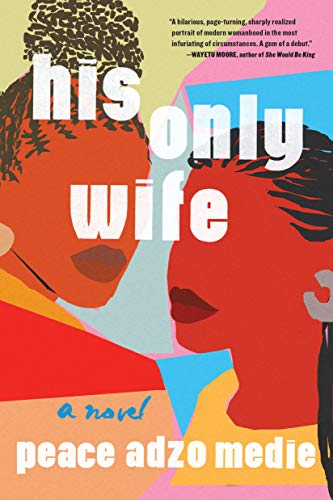
His Only Wife by Peace Adzo Medie

In this winning debut, an arranged marriage exposes a young woman to unimagined riches and a tantalizing taste of freedom, with unexpected consequences.

Afi lives in a humble home in the Ghanaian city of Ho with her mother. Since Afi’s father died, they are beholden to local businesswoman “Aunty” Ganyo for their jobs, their home and basic necessities like flour. So when Afi’s marriage is arranged to Aunty’s son Eli, she knows it is an honor, although she feels some trepidation at marrying a man she does not really know. “Elikem married me in absentia; he did not come to our wedding.” And so her new life begins inauspiciously in Peace Adzo Medie’s arresting first novel, His Only Wife.

Afi’s task, according to the powerful Ganyo family, is to win her new husband away from “the woman” with whom he’s already had a child, who is perceived to have stolen him away from his family. Afi resents being a pawn, but for her own reasons wishes to build a life of true love and commitment with Eli, whom she finds handsome and kind. She is out of her comfort zone, however, when she is installed in a luxury apartment in Accra, surrounded by food, clothing and modern conveniences she’s never known–with Eli still absent.

The young woman’s story unfolds in the first person, as Afi deals with an unfamiliar world and competing bids for her loyalty. Her mother and her new mother-in-law Aunty pressure her to appease and obey Eli. She makes a new friend, mistress to Eli’s brother, who recommends greater independence. While His Only Wife is on its surface the story of Afi and Eli’s marriage, at another level it’s more concerned with Afi’s development as an individual. Over time, in the big city and with more financial freedom, she will grow and learn more not only about her chosen career in fashion but about herself.

Medie gives Afi a voice that winningly combines insecurity, wisdom and dignity. Fashion and food contribute to a cultural backdrop. Accra is a cosmopolitan city, while Afi’s life in Ho was marked by privation and the importance of social and filial hierarchies. The dramas of Afi’s marriage and various family conflicts offer an entertaining plot rich with humor, but it is the story of the strong woman in a challenging and changing world that will capture readers’ hearts. His Only Wife is a memorable novel of personal growth and choosing one’s own destiny.


This review originally ran in the August 6, 2020 issue of Shelf Awareness for the Book Trade. To subscribe, click here.


Rating: 6 bowls of akple.

The Transmigration of Bodies by Yuri Herrera, trans. by Lisa Dillman

Vicky came to give him a kiss and, right as she was about to, turned to one side and sneezed into her elbow.

Maybe one day people wouldn’t even remember when everyone had started doing it like that, instead of covering their noses with their hands. It takes a serious scare for some gestures to take hold but then they end up like scars that seem to have been there all along.

So, the first headline about this book is its eerie relevance to our Covid present (original publication date 2013; in English: 2016).

The Transmigration of Bodies is part of a loose trilogy with Kingdom Cons and Signs Preceding the End of the World. I have read them years apart and a little out of order, so, grain of salt; but it seems their connections are about setting, theme and style, rather than serial characters. Each is absorbing, atmospheric and brief. Someday I’d love to read them again in publication order back-to-back, but that day will not come in the fall of 2020 (so help us all).

In an unnamed Mexican city, a plague has swept through. The streets are mostly empty but for military checkpoints. The mystery illness transmits through respiration; some people wear masks, others take a politicized (or macho) stance by not wearing them. (It was entirely creepy to randomly open this book in August of 2020, let me tell you.) Our protagonist is a man called the Redeemer – the story is told in close third person from his perspective. His job in this rather apocalyptic setting is to handle an exchange of bodies. A young man called Romeo Fonseca has apparently been kidnapped by the Castro family, while the Fonsecas in turn are holding Baby Girl Castro. Both Romeo and Baby Girl have died in the custody of the opposing family, but the Redeemer (with the help of his nurse friend, Vicky) finds that each died of the plague and not by violence. Still, the trading-back of the bodies is a fraught moment, what with the longstanding enmity between the Fonsecas and the Castros, complicated by grief and the general mistrust of the plague-times. (Along the way, the Redeemer will discover the origins of the families’ feud.)

At his home, in between his work for the Fonsecas, the Redeemer is involved in some sexual escapades with a neighbor. I found these interludes a little gratuitous; I’m not sure exactly what they add to the whole, although they’re consistent with the femme fatale of the hard-boiled detective genre.

More sobriquets are used in this story than names: the Redeemer, Dolphin, the Mennonite, Baby Girl, the Unruly, Three Times Blonde. Epithets lend the feeling of mythology, of these people being as much symbol as individual, although they are individuals. The emptied (and militarized) streets of a usually-busy city spook me, the reader, as much as they do the Redeemer. While there are plot twists, this feels like a novel of character studies and atmosphere more than a novel of plot. Backstory and development of individual characters – Vicky, Neeyanderthal, Romeo, the Unruly, and the Redeemer himself – and the Redeemer’s philosophies are the highlights, for me. Yuri Herrera’s writing is a place to get lost in, rather than a story.

I love the sentence-level writing style, for which credit is due both to Herrera and translator Lisa Dillman. She retains the rhythms and patterns, and some usages, of the Spanish language; she coins words and phrases (grimreapery, drunkaneers) which I assume mirror Herrera’s coinages. (I loved hearing him talk about Dillman’s translation work when he visited my MFA program a few years ago. Herrera speaks very serviceable English, but he appreciates Dillman’s different take on his work.)

In the other two books, I noted themes having to do with borders and transition. I found less of that here, although now that I go looking, it’s right there in the title: the transmigration, or crossing over into death. I felt this book was more about trust and distrust, and the transactional nature of trust, as when the two families must rely on their hired fixers to assess a need for revenge. Some similarities have been drawn to Romeo and Juliet. Although there is no romantic connection between the families’ children, they do share a longstanding feud that is perhaps somewhat resolved with shared grief.

Another fascinating novel from Yuri Herrera – who, I’ve just seen, has a new work of nonfiction out; I ordered it immediately. I think these novels are excellent studies in translated literature and in the novella form – worlds to get lost in.


Rating: 7 condoms.

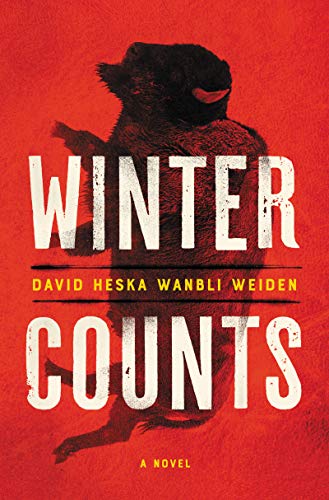
Winter Counts by David Heska Wanbli Weiden

On South Dakota’s Rosebud Indian Reservation, local enforcer Virgil Wounded Horse is faced with a challenging and personal case.


David Heska Wanbli Weiden’s first novel, Winter Counts, is a gripping story of crime investigation set on the Lakota Rosebud Reservation in South Dakota. Virgil Wounded Horse is cynical. He can’t imagine not living on the rez, but he’s more than skeptical of Indian spirituality and ritual, and doesn’t feel very connected to his people; his memories of being bullied in school are too fresh. Now that both his parents and his sister are dead, he doesn’t have much family to feel loyal to–but he is devoted to his orphaned nephew, Nathan, now a teenager who shares his home.

Virgil makes his living as a private enforcer. Tribal police have very limited powers, and the feds don’t bother with much on the reservation short of murder, so the Lakota often resort to hiring someone like Virgil to deliver vigilante justice. Now he gets to beat up his former bullies, and earn a few bucks doing so. It’s not necessarily work to take pride in, though, especially in the eyes of his ex-girlfriend’s politically powerful family. So Virgil is surprised when her father, a tribal council member, asks for his help. And he’s even more surprised when the case brings Marie back into his life.

It seems a local small-time pot dealer might be moving up into dealing heroin on the reservation. And when Nathan accidentally overdoses, it all becomes very real, with high stakes. Virgil will end up traveling all over the rez and down to Denver to try to track this latest crime wave. The scope of the case quickly grows beyond this private enforcer’s comfort zone, and he has a renewed romance to manage, while trying to keep Nathan safe at the same time. Out-of-town gangs, heavy hitters and hard drugs challenge Virgil’s skills. To keep all these threads together, he may need to reconnect with his Native roots, after all.

While Weiden’s prose is serviceable, his sympathetic characters and gripping plot keep readers engaged. Action and suspense are special strengths, and Weiden, himself a member of the Lakota nation, brings valuable perspective to the lives and experiences of his characters. The setting of Winter Counts offers an important and overlooked glimpse at the particular challenges faced by Native Americans, especially concerning crime and justice. But make no mistake: at the heart of this crime novel is a fight for the future of Rosebud Reservation and the lives of Virgil, Nathan, Marie and many more for whom this place is home. Tightly paced, compelling, realistic and deeply felt, Winter Counts offers a fresh take on the crime thriller.


This review originally ran in the July 30, 2020 issue of Shelf Awareness for the Book Trade. To subscribe, click here.


Rating: 6 glasses of Shasta.

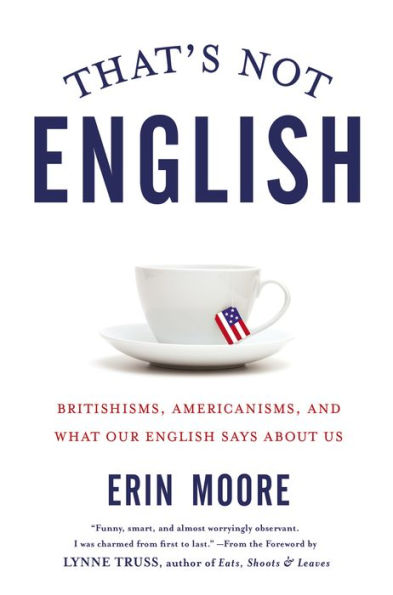
That’s Not English: Britishisms, Americanisms, and What Our English Says About Us by Erin Moore

Disclosure: I read an advanced reader’s copy of this book. (It was published in 2015 but I am just now getting to it. Sorry!)


Well, this was an interesting one. Maybe it’s a good time to post a quick reminder about the reviews that post here at the blog. These days they come in two types: reposts from Shelf Awareness, and blog originals. The former are written (in theory) objectively, with comments on what might be appealing about a given book, perhaps for a given audience or perhaps generally. The latter, the blog originals, are subjective and personal. This is one of the latter.

I struggled with this book from almost the first page. The subject matter is of interest to me; but the narrator’s tone and personality grated. I was motivated to keep reading because I appreciated the content, but I found myself often taking issue or silently arguing or feeling a little wrinkled. How much of this is about me and how much about the book? Generally a little of both. I found Moore’s narrative voice a little cute, trying for a humor that didn’t suit me personally, and sometimes too quick to make a jab that I didn’t feel was warranted. This may play more pleasingly to other ears, so as always, feel free to judge for yourself.

Part of my problem definitely came from the ease with which Moore feels comfortable making broad statements. “Many Americans consider peanut butter a perfectly reasonable breakfast food” – what?? “Surprisingly, the concept of the all-you-can-drink brunch was not invented by the English” – funny, I’m not the least bit surprised. It feels like a very American concept to me. “Americans often speak of exercise in terms that other cultures reserve for their spiritual practices,” including ‘guru’ for personal trainers, being ‘religious’ about exercise, and classes or instructors having ‘cultlike’ followings. I’d say all three of these terms get used for many nonreligious walks of life, including but by no means especially exercise. Americans avoid outdoor exercise because of our “extreme weather”? First of all, this is a HUGE country; generalizing about weather seems a losing battle. Secondly, what is the UK’s (stereotyped) weather famous for? Not pleasant to be outside in, right? So it must be something different – like the English attitude toward weather. (To be fair, Moore gets there. But that statement about “extreme weather” still made me squawk.) “You might struggle to find an American who hasn’t eaten pie for breakfast” surprised me as much as the peanut butter thing. Unless I’m forgetting, you’ve found one. I guess breakfast is a personal issue.

The problem with all of this, of course, is that I am not ‘Americans’ but one American, and you can’t please us all. Moore acknowledges in her introduction that it is difficult to generalize about a place as large and diverse as the United States or the United Kingdom. I might be a reader especially sensitive to this challenge, as I’ve spent so much of my own headspace and writing on just this issue: that a place like Houston or even a little town like Buckhannon, West Virginia is too diverse to sum up in a phrase. It’s sort of a tenet of my personal religion that you can’t generalize place. Again, Moore acknowledges this. But then she goes on to do it anyway – which, to be fair, you’d have to attempt to write a book about “Britishisms, Americanisms, and what English says about us.” I do think it might be more smoothly pulled off with different phrasing (perhaps people from the American South “tend to” assume rather than saying they just do), or with a little more recognition of exceptions. But these strategies would interfere with Moore’s jokey tone.

I am interested to note that this book feels surprisingly dated despite being published in early 2015 (written in 2014 – still refers to some late 2014 events as being in the future). But then, it’s been a momentous few years in the U.S. For one thing, Moore’s jokes about Donald Trump, he of The Apprentice and the Miss USA pageant? Not funny today. Certain remarks about the general financial wellbeing of the average American feel a little off now* (but that’s the trouble with “the average American”!). And Moore’s observation that ‘bespoke’ is not a commercial term on this side of the Atlantic I’m going to say is just no longer true, if indeed it was in 2014. I see advertisements for bespoke everything.

I’m curious as to when Moore – an American now living in England – made her move overseas. I feel like it matters, how long she’s been there. Her confusion about the way ‘partner’ is used over there – for romantic life partners of all genders, not just same-sex ones, and for married and nonmarried couples alike – is familiar to me (as someone who’s only lived in the U.S.), but I figured that one out in… late high school? in Texas, so I wonder if that was an issue of simple timing.

Approaching another personal pet peeve: Moore relies on the (U.S.) red states/blue states binary which I feel is misleading and outdated and unnecessarily divisive, when an urban/nonurban binary would make a little more sense, but in fact (did I mention) every place includes a little bit of everybody. In the 2016 presidential election, Texas’s electoral votes went for Trump. We showed up as a red state. But to throw the entire state under that bus is to disregard the 3,877,868 popular votes that were cast for Clinton in Texas (not to mention the other non-Trump ones – he won 52% of our popular vote). I’m a bit prickly on the red state/blue state myth, myself – it only works in the electoral college.

But here’s my favorite gripe of the whole book. Discussing sweet vs. unsweet tea (another U.S. regionalism),

a Southerner will find, to her horror, that Dixie Crystals do not melt in tea that is already cold, but sink forlornly to the bottom of the glass. For some Southerners, this is the extent of their science education.

As my friend Liz points out, the first statement is actually untrue; a spoon and a little stirring will melt that sugar for you. But that second sentence? Is a cheap shot, and pretty unfair; plays on unflattering stereotypes; shows the narrator to be rather mean-spirited; and serves as a fine example of the kind of humor that hopes to carry this book.

Even with all these critiques, I kept reading, and I appreciated learning a few things (particularly about food, knightings and whatnot, and a few terms – I had never heard ‘Crimbo’). Note that my complaints are about how Americans are portrayed – I don’t think of myself as a prideful nationalist by any stretch, but I bristle at any large group being pigeonholed, and I know Americans much better (being one myself) than I know the Brits or the English. I’m curious to know if a Brit would find themself equally prickled. I’ve sent the book on to a British friend, so here’s hoping he comes through with his own reactions – and we’ll see if I’ve been unreasonable by comparison! (I hope he’s not reading this so he keeps a fresh outlook.)

I wound up feeling like the work of That’s Not English was as much as about making sense of (drawing conclusions about) the differences between American and British cultures as it was about language. Language (and other habits) was used as an entry point (and as chapter headings), but the generalizations made were often much broader than which phrase we all use and what we mean by ‘quite.’ For example, the chapter ‘Fortnight’ recognizes that the Brits use that term and the Americans don’t. That’s the sum of its linguistic observation; the rest is about how differently we vacation. (Danger! Generalizing a nation’s vacation behaviors would seem to lump all socioeconomic classes together…) Perhaps that’s at the heart of my problem with the book. I can’t help but think of the excellent Talk on the Wild Side as a counterexample. That book’s scope was admittedly different, but I felt it was a lot more responsible in the conclusions it drew. I also remember fondly Eats, Shoots & Leaves, whose author wrote a foreword for this book. But I read that one quite a while ago and can’t write intelligently about it now.

There is definitely some good content here, and possibly a different reader (more lighthearted; happier with stereotype as humor) will love it. I seem to be taking things too seriously, although I’m not sure I should apologize for that. I’d be curious to hear an alternate opinion.


Rating: 5 misunderstandings.

*Final note to say that at least in my pre-pub copy, this book contains no footnotes, endnotes, or other record of sources used. There is a Selected Bibliography for further reading, but no citation for where Moore gets this or that fact. As I often questioned hers (and as I am that kind of reader – sorry), I regretted this omission. Maybe there were notes in the final copy, but they’re not mentioned here as TK.

author interview: Natasha Trethewey

Following my review of Memorial Drive: A Daughter’s Memoir, here’s Natasha Trethewey: The Lens of That Burning Question.


Natasha Trethewey is a former two-term United States Poet Laureate and the author of five collections of poetry. She is currently the Board of Trustees Professor of English at Northwestern University. In 2007, she won the Pulitzer Prize in Poetry for her collection Native Guard. Memorial Drive is her second book of creative nonfiction.

Is this the book you thought you were writing when you began the project?

photo: Nancy Crampton

Not at all. When I first said that I needed to do it, it was after I had begun to get a lot of press about me as a writer, after the Pulitzer and after being named U.S. Poet Laureate. Because of that, there were many newspaper stories or profiles in which my mother was mentioned as sort of an afterthought, the backstory. She was basically summed up in a line as this victim to whom this terrible thing had happened, and it really bothered me. I decided that if that tragedy was going to be part of the backstory that was recorded again and again, then I wanted to be the person to write her story, so she would not be simply reduced to a murdered woman. What I wanted to do was to show how important she was, her life, my time with her, her death, and my becoming who I am and becoming a writer. I thought one of the ways to do that was to tell the story of who she was, and I imagined it as more like a sort of biography of her. I would have researched her the way I have researched historical figures I wrote about in poems.

It didn’t work out that way. Instead, I think probably the moment that I looked at Shakespeare’s Sonnet 3, those lines I used–“Thou art thy mother’s glass, and she in thee/ Calls back the lovely April of her prime”–I knew that I was the biography, in many ways. That what she was able to make in me was one of the best records of who she was, and how remarkable and resilient she was.

How did you choose this title? Not person, action, relationship, but place–with obvious allusion to memory/memorializing.

You hit the nail on the head. As a writer I think one of my enduring projects is the drive toward memory and memorialization, and contending with the contentions and overlaps between personal memory and cultural or historical memory, what gets recorded and what gets left out of the record. So I knew that that was my project, because that’s what I was trying to do in Native Guard, that’s what I was trying to do in Domestic Work, is record part of my community, where I grew up in Mississippi, that was disappearing. These old people were dying, and it took me a long time to make that connection, that my mother had literally died on Memorial Drive in the shadow of the largest monument to the Confederacy. And that symbolically had something to do with my drive to memory and memorialization, and insisting that things that often get left out and forgotten are remembered.

It must have been painful in some ways to reenter this trauma. Was it worth it?

Oh, yeah. I mean, it was really difficult, and even now I find that having to talk about her and the book in this way keeps the grief that usually is farther away right up on the surface. So I’m living with it differently now than I usually do. But one of the things that I will never forget is when I first met Dan Halpern, who is my editor, and he had read just a few paragraphs of a scene that I had written when I was proposing the book, and he said to me that he fell in love with her just from that. And I thought, if that’s what can happen then, yeah, it’s worth it. She’ll be remembered. She’ll be known by people. And at least they’ll know what she meant to me. That’s a way of knowing her, too.

When you write a book like this, or in general: Do you write with an audience in mind, or for yourself first?

That’s an interesting question that I hadn’t thought about as related to this book. I think I might answer differently if I were thinking about poetry. Or maybe not. Because I was writing in response to what I told you about at the beginning, the newspaper articles that just recorded her as victim or murdered woman, I really was always having an audience in mind. Someone that I had to say oh, no, no, no–this is who she was, too. But at the same time, I think I must have been writing to myself, because of the things that I learned in the process. I knew many different things by the time I got to the end than when I started. I began to understand more things that I had willfully erased, things that were driving me internally on a subconscious level but that I hadn’t allowed myself to think about consciously. And so in that way, I was revealing myself to myself. Which is of course why for me that other epigraph comes in: “All journeys have secret destinations of which the traveler is unaware.” I didn’t know where I was headed.

And maybe that’s the problem in the question, because how could you ever not be writing for yourself?

Right, but it’s a good question, because it makes you think about the not competing, but the multitude of motivations for writing a book project like this.

How different is the writing of prose versus poetry?

On the most basic level, the silly level, it has always been harder for me to write more. I’ve always been better at writing less. Give me an assignment in a class to write a seven-page paper–somehow I’m not going to be able to get to that. Poems are so much smaller and more compressed; that just seems my natural inclination. But I think that I write prose like that. I imagine there was so much more that could have been in this book and part of this story, but it sort of crystallizes around one or two threads. For me it felt like a very long extended poem that had to do some of the things that I want a poem to do, as it moves, as it turns to certain motifs, certain images, certain words.

Turning to poetry–does a book like Native Guard begin as a project, where there’s a book idea and then it is filled with poems? Or do you write poems and then realize you have a book?

I almost always begin with a problem, some historical question that I want to ask myself, I want to ask the nation. I want to examine and explore from many different angles. When I am focused on something like that, it’s as if I could look at anything and it will somehow be filtered through the lens of that burning question that I’ve been asking myself.

When my students are worried about what they’re going to write about or whether the poems that they’re writing will somehow hold together, I talk to them about their obsessions, the things that we can’t get away from, that have an impact on how we see the world and the things in it. If you trust that, that’s what will come through in your poems, and your poems will hang together more than simply because you’re the person that wrote them. You’re the vision behind them.

What are you working on next?

This book took a lot out of me, and so I’m in a place of trying to fill back up. There are things that I’m interested in, so I’m reading. It has a lot to do with my home state, and cross-mapping memory and memorialization, with Confederate monuments, sites of lynchings, which sort of engrave white supremacy on the landscape. I know that’s what I’m thinking about, so I know that I won’t be able to look at a tree without thinking about it.


This review originally ran in the July 28, 2020 issue of Shelf Awareness for Readers. To subscribe, click here, and you’ll receive two issues per week of book reviews and other bookish news.

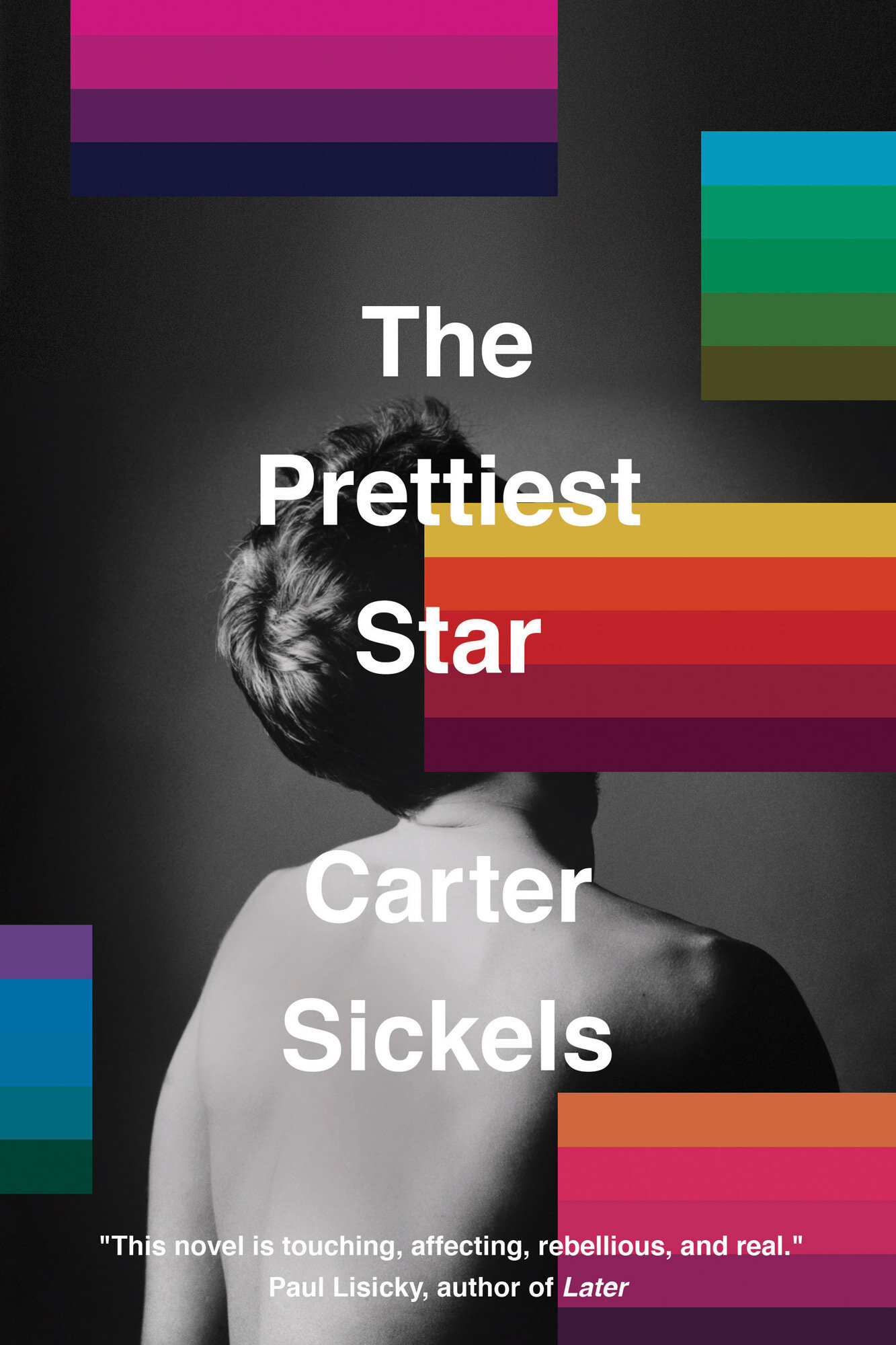
The Prettiest Star by Carter Sickels

Disclosure: Carter Sickels (ed., Untangling the Knot) has taught at my MFA program in the past and we have some mutual friends. He was not there during my studies and we’ve never met.


A gorgeous, transcendent book, this novel just captured and held me. I read it in a single sitting; I couldn’t look away. I was drawn in. It was often painful, but often beautiful, and magnetic throughout. I am so grateful to have read two books in a row that received a rare rating of 10 here at my little blog.

The Prettiest Star is set in 1986. Brian is 24 years old when he decides to leave New York City, where he has lived for six years, and return home to small-town Chester, Ohio, in the Appalachian foothills. He is dying of AIDS; his partner has died, along with so many friends and loved ones, and he can no longer stand the city, filled with its reminders of the past. “Home” in Chester is not exactly a friendly place to return to. His father can scarcely acknowledge him, and will certainly not acknowledge that he is gay, let alone his HIV status. His mother feels only a small measure more tenderness, and responsibility, to her son. His sister Jess, now 14, was just eight when he left. No one has bothered to tell her anything about her brother, who she once worshiped but who is now a stranger. The extended family and the larger community don’t offer any better hope of tolerance, let alone support, with one exception: his paternal grandmother, Lettie.

The story is riveting, the characters beautifully nuanced and believable. I think it’s a victory for a novelist to write a character like Brian’s mother, Sharon: we recoil from her intolerance of her son, but we can also sympathize with her misunderstandings of the world. I don’t mean to be an apologist for bigotry. But Sickels is artist enough to show us that it’s not that black and white. (Also, 1986 was a different world.) I have a harder time feeling compassion for the father, Travis – but take note: Brian, Sharon, and Jess all get alternating chapters giving their points of view. Travis gets only one, at the very end of the book. The author’s choice not to let me into his head absolutely contributes to his being more enigmatic and less sympathetic.

Jess is a perfect teenager, conflicted about her body, boys, other girls, her place in the world; crazy (and very smart) about marine biology; rightfully (I feel) upset that the family doesn’t trust her enough to share certain facts about her brother. Each character felt perfectly wrought. I really responded to Brian’s struggles with memory and memorializing, with his own mortality (unimaginable), with his unasked for role(s) as gay and HIV-positive in a community’s gaze. He’s a regular guy, and an artist, and I enjoyed getting to know him.

Sickels’s choice to alternate chapters from the first-person perspectives of Brian, Sharon and Jess was a good one, I think; it let me triangulate a view of the household and get to know several very well-written characters, and feel empathies in tension with each other, which is life. Another layer to this storytelling method: Brian’s sections are the transcripts of the video he shoots, on cassette tapes, with a camcorder (because 1986). He’s documenting his life (and therefore his death). So where we get Sharon’s and Jess’s POVs in the usual novelistic style, as if we were sort of in their heads, we get Brian’s voice more intentionally: he knows he has an audience, although he’s not quite sure who that audience is. (He occasionally addresses his dear, fierce friend Annie, who comes to Ohio to enter the story at a few points.) He’s consciously recording his life, what he sees and thinks and feels, which makes for a different narrative voice than Sharon’s or Jess’s.

Now here I am. Alive, in Ohio, where we do not speak of the dead. Let us pretend. Where are all my beautiful men?

I love it – it contributes to a tone of elegy, of speaking from a beyond, of looking back in time, all of which feels appropriate to this story because of its subject matter, and because it was published in 2020 about 1986.

Let’s talk about that time for a minute. I saw Sickels read from this book and discuss it at a pandemic-distanced event alongside Paul Lisicky promoting Later. (I had planned to attend this event in person, but here we are.) That event prompted me to preorder the book. Sickels took a question about whether this novel is historical fiction, which I found interesting. I was taught in library school that historical fiction is defined as being set in a time period before the author‘s lifetime – meaning, it’s not about the timing of the reader’s experience of the book, but about whether the author mines a lived timeline or one that is historical to him. Without Googling Sickels’s age, I’d venture that he was alive, but young, in the 80s (like me). We are at an interesting distance from this time period: it was less than 40 years ago, easily in living memory of many of us who are alive now, but it also feels remote in a few ways. For one, technology is almost unrecognizably changed, and was a defining feature of that decade. There are lots of satisfying period details to this novel – clothing, food, music, technology. I think the (clunky, heavy) camcorder that Brian uses to document his life is a neat choice as an eye on this story, because it sets some of the stage props (if you will). Another defining element of the 80s is the AIDS crisis as epidemic and as a failure of social and political systems to support disenfranchised populations, like the gay community. In too many ways, we’re not doing beautifully at the same sorts of issues today, but we’ve come a long way too. To look back at the 80s feels like looking a long way back, although it’s not actually that far away, either. That weird contradiction feels important to me.

Bowie fans will recognize the book’s title, and the titles of chapters. Disclosure: I don’t know Bowie well, so I don’t know how deep the references go. (I have recommended this read to my buddy Dave, #1 fan.) For someone like me, it served as a little background flavor. Possibly the whole thing is filled with references I missed. At any rate, the smell of the 80s is here. The video documentary is an inspired choice, I think, as narrative device as well as for staging. The alternating chapters work beautifully. The characters are expertly done, and the plot moves at an irresistible pace and with such momentum – so feeling, powerful, important to me – that (again) I was never able to stop reading. I think it’s a near-perfect work of fiction.

The subject matter is well handled, I think. It’s important that we keep telling and hearing these stories. I thought Brian’s life was treated sensitively and not as a type, or a cause, or anything like that. Obviously I very highly recommend this book, but I know that some readers will find this material especially painful, even triggering – I guess I haven’t said it outright, but there’s plenty of nasty homophobia in the story. It’s hard stuff; I cried for at least 50 pages. But it’s also really beautiful, and I found it all worthwhile.

I’m so glad I read The Prettiest Star and it’s one of the best of the year for sure.


Rating: 10 photographs.

The City We Became by N.K. Jemisin

What a glorious book. N.K. Jemisin is a wonder.

I loved the fantasy/sci fi version of our world presented in The City We Became. When cities have achieved something like a critical mass of culture or soul, they sort of come to life in the form of a human avatar, a preexisting person who best possesses or encapsulates the qualities of that city. It takes a long time, a lot of history and life, for a city to become. There have only been a few in the Americas to get this far. New Orleans and Port-au-Prince were stillborn. Sao Paolo, as the newest city in the worldwide community, is on hand to help with the next birth to take place: that of New York.

New York is unique in that it has multiple souls, one for each of the boroughs as well as one for the city as a whole. Like London; except that something went wrong in London. So New York’s becoming is unprecedented and fraught. The novel opens with the perspective of the unnamed man who will, hopefully, be New York: “too slim, too young, and entirely too vulnerable,” Black, talented, homeless. His voice blew me away in these first pages, before I had any idea what was going on. (It also reminded me of the voice of a friend of mine, a talented young writer. You’re in good company, B.) Here’s the thing: in the birth moment of every city, the Enemy is near at hand, threatening. This is why some cities don’t come to life at all. It’s why some are killed: Pompeii, Tenochtitlán, Atlantis. Oh, yes: it’s not that Atlantis wasn’t real. It just isn’t real anymore.

Something is different about New York: the city’s main avatar may be precocious, but the Enemy (“squamous eldritch bullshit”) is much stronger here, too. The risk seems greater than ever. Luckily, New York (and his helper, Paolo) has the boroughs to rely on. Or does he? Manhattan has never set foot in the city before. He can’t remember his name–the name from before–or what he did, but he thinks it wasn’t good. Brooklyn grumbles that she is “too goddamn old to fight transdimensional rap battles in the middle of the night,” but she’ll do it anyway. The Bronx is always ready to rumble; her people have been here since before there was a New York. Queens would rather return to her studies (she hates financial engineering, “which of course is why she’s getting a master’s degree in it”). Staten Island is a real mess, downright antagonistic to her fellows. And what is Jersey City doing here?

As you may have realized, the idea of a place being personified in an individual is right up my alley; I bought into this concept immediately and whole-heartedly. I love the challenges it presents the author. To choose an individual means choosing a gender, a race, personality traits. It means committing: Brooklyn to be contained within one woman? If she’s a rapper, or a city councilwoman, that’s a commitment to one way of expressing all of Brooklyn: it sounds like a losing proposition from the start, but Jemisin knows her stuff. Here’s where I say that I know little of New York and the personalities of its boroughs; but I know how tricky it is to try and sum up a place, and I respect the complexities of The City We Became. (Also, I can attest that this story works even for the reader unfamiliar with New York.)

This book introduces a rich panoply of fascinating characters, with backstories, histories, cultural and ethnic heritages, professions, personalities, sexualities and gender expressions, to represent a richly varied New York. It is completely absorbing. The science and fantasy of the world in which cities become struck the right balance, for me, between sufficient explanation and satisfying mystery. (I don’t show up to sci fi for the science.) The whole thing is fully-fleshed, compelling, the kind of story to lose yourself in, both clearly related to the one I live in and weird enough to take me out of this one. Jemisin gives each character their own compelling voice, and plenty of sensory lushness to her settings–which are, pretty literally here, characters unto themselves. They are all, in their own ways, so smart. “There’s a lot to consider: particle-wave theory, meson decay processes, the ethics of quantum colonialism, and more.” Lovecraft is often present, “equal-opportunity hater” though he was. I had a fabulous time. And this is just the first in a trilogy! I’m so excited.

Unqualified recommendation: if you appreciate imagination, or a person’s connection to place, or cities, or cultures, or fine writing, get to know The City We Became.


Rating: 10 brigadeiro.

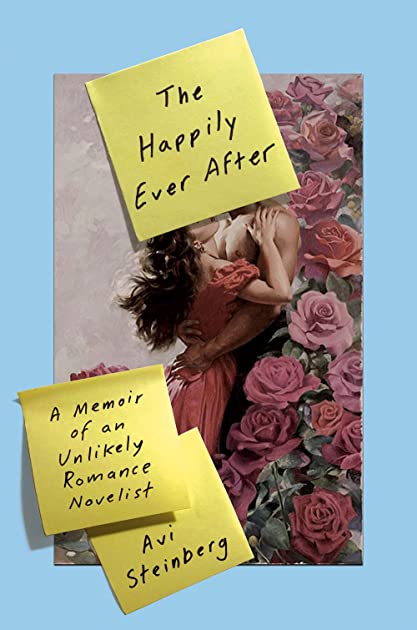
The Happily Ever After: A Memoir of an Unlikely Romance Novelist by Avi Steinberg

A romantically challenged writer treats the romance novel as career aspiration and life coach, with endearing and revealing results.

Following a divorce, Avi Steinberg (Running the Books; The Lost Book of Mormon) enters the realm of the romance novel, hoping to learn how to write a few commercially successful books and, perhaps more importantly, to solve his own real-life romantic challenges. In his quest, Steinberg hangs out with readers, authors, publishers and cover model CJ Hollenbach (so much more than “Ohio’s Response to Fabio”), attends conferences, joins a writing group and eventually lands a multibook contract under the pen name Dana Becker. These adventures he documents in The Happily Ever After: A Memoir of an Unlikely Romance Novelist.

Part personal memoir, part travelogue and part social and literary criticism, The Happily Ever After questions the societal tendency to look down on romance novels (and to apologize for reading them), examines romance’s domination of the commercial book market, reconsiders classics and the author’s own life through a romance lens, and explores the numerous subgenres of this much-loved and much-reviled field. Steinberg makes observations about gender roles and identities not only within romance novels but throughout American society. “The sentimental tropes of romance are so deeply embedded in our culture, we take them for granted,” making his comments relevant for everyone.

Entering as a romance newbie, Steinberg learns (and outlines for readers) the rules of the genre, including the necessity for “an emotionally satisfying and optimistic ending,” or Happily Ever After (HEA, in Romancelandia parlance). He concludes that “romance is America’s national literature: not because it is universally read or admired but because it is universally obsessed over,” and that Scheherazade was a romance author–bound to the whims of her audience, delivering rapidly and on demand.

Appropriately, Steinberg’s memoir has a generally upbeat cast, even during low points and through the narrator’s struggles with sincere emotions (“you go for a laugh when you could say something real,” one of his writing groupmates tells him; he calls himself “a depressed person who is an optimist at heart”). Also appropriately, the book concludes with the author’s own romance and bona fide HEA.

By no means is this memoir just for fans of the romance genre, although those readers will of course be tickled by his appreciative study. Steinberg’s personal story will suit any reader curious about the book industry, or who simply appreciates quirky personalities. Aspiring writers may find tips and tricks of special interest, but this is no how-to; rather, it’s an endearingly candid exploration of books, subculture and love itself.


This review originally ran in the July 24, 2020 issue of Shelf Awareness for the Book Trade. To subscribe, click here.


Rating: 7 aliases.

Black Cherry Blues by James Lee Burke (audio)

Housekeeping note: I expect this will be my last Wednesday post of the season, if not the year. I am heading into a fall semester that I expect will be especially stressful, so I’ll return to a twice-weekly format, posting on Mondays and Fridays. Thanks for reading, friends!


This is just the third in the Dave Robicheaux series, dating back to 1989. I’ve been following Burke’s Robicheaux for decades (perhaps not back to 1989, when I was 7 years old). While this one showed some of the qualities I love about the series, I’m not sure it’s aged well in some ways. Or (as usual) maybe that’s me, the reader, needing something different at this time. It’d be interested to check in with a more recent book in the series – there are now 23 – and see how I react.

Dave Robicheaux runs a bait shop in New Iberia, Louisiana. He’s retired from both the New Orleans Police Department and from New Iberia’s; his wife Molly is recently dead, murdered in their bed; his adopted daughter Alafair (a refugee orphan from El Salvador) is a new member of the household. His old college roommate Dixie Lee turns up, mostly drunk and high and talking about overheard conversations about hiding bodies. Dave is haunted by Molly’s ghost and his father’s, and his own sobriety, held carefully at bay by AA meetings. But he can’t resist looking into Dixie Lee’s accusations, which overlap with Dave’s own past entanglements with a certain oil company. Facing murder charges thanks to a frame, Dave takes Alafair and travels up to Montana to track this mystery, getting involved with both the Mafia and the Blackfeet tribe, and plenty of unsavory characters. (Including Clete Purcell, who I’m always glad to see.)

Among the things I appreciate about the Robicheaux books is Burke’s evocative descriptions of the natural landscapes, showcased by landscapes like New Iberia and Montana (the two classic Burke settings). I’ve always found these books to lie at the literary end of the mystery genre’s spectrum; pacing is often sedate, in favor of evocation and atmosphere, and you might say, at the expense of a snappy plot. Dave’s wrestling with his demons (plenty of them internal, without considering his external enemies) treads a fine line between noir moodiness, and tiresome wallowing. He’s a certain kind of classic detective protagonist, like Connelly’s Harry Bosch: self-destructive, deeply antagonistic toward authority, violent, introspective, iconoclastic. Perhaps I am beginning to turn away from this type, as a reader, especially when they have physically satisfying but emotionally problematic sex with younger women.

The mystery plot of this book took far too long to resolve, for me. It was more enjoyable as lovely writing and studies on character and setting. Possibly the audio format was the wrong choice here, because it tends to take me longer than reading. I’m not sure how much of my trouble with this book was about me the reader, and I’m reluctant to criticize Burke, who I have long appreciated, but all I can report on is my own experience. Again, I wonder if this read better in 1989. I did catch one statement about race that I found problematic (to be fair, expressed by the character Robicheaux rather than the author Burke, but still to be considered). Next time I return to this series, I’ll look for a recent installment for comparison.

This audio performance by Mark Hammer is notable for its variety of accents, a different voice for each character. But I feel it contributed to the stately pace, too.

One thing that has not changed: there is no messing with Burke’s sentence-level writing about place. Here’s one sample from each setting.

The sun was above the oaks on Bayou Teche now, but in the deep, early morning shadows the mist still hung like clouds of smoke among the cattails and damp tree trunks. It was only March, but spring was roaring into southern Louisiana, as it always does after the long gray rains of February. Along East Main in New Iberia the yards were filled with blooming azalea, roses, and yellow and red hibiscus, and the trellises and gazebos were covered with trumpet vine and clumps of purple wisteria.

In the Jocko Valley I watched a rain shower move out from between two tall white peaks in the Mission Mountains, then spread across the sky, darken the sun, and march across the meadows, the clumped herds of Angus, the red barns and log ranch houses and clapboard cottages, the poplar windbreaks, the willow-lined river itself, and finally the smooth green hills that rose into another mountain range on the opposite side of the valley. Splinters of lightning danced on the ridges, and the sky above the timberline roiled with torn black clouds. Then I drove over the tip of the valley and out of the rain and into the sunshine on the Clark Fork as though I had slipped from one piece of geographical climate into another.

As for the rest, your mileage may vary, as always.


Rating: 6 ice cream cones.