A Shape in the Dark: Living and Dying with Brown Bears by Bjorn Dihle

A lifelong Alaskan inspires awe with his beautifully written, expert portrait of the grizzly bear.

Bjorn Dihle was born and raised in the outdoors of Alaska, where he has worked for years as a brown (or grizzly) bear viewing guide. A Shape in the Dark: Living and Dying with Brown Bears is his lovely, thoughtful study on the relationship between humans and this evocative, storied species.

“There have been times I almost hated bears,” he writes. “Like most feelings of hostility, mine were rooted in fear. Yet, there is no place I love more than grizzly country, and no animal has intrigued and challenged me more than the bear.” Moving around in time, Dihle tells his own stories of encounters, from the first brown bear he ever saw–a carcass in a salmon stream when the author was four or five years old–through early trailside meetings and learning how to relate to bears, into his career seeking them out, especially on Alaska’s Admiralty Island. “There’s no way to make bears safe,” Dihle acknowledges, which is surely part of their appeal. But there are measures, such as Larry Aumiller’s “concept of habituation, which he defined as taking away the fight-or-flight response in a bear, that’s key for developing trust between our two species.”

A Shape in the Dark is an appealing, accessible memoir and a history of the interplay of bears and humans in the American West. Dihle intersperses his own and his friends’ bear encounters with those of Grizzly Adams and Teddy Roosevelt, outlining the evolution of attitudes and policy toward grizzlies. In considering the writings of John Muir and Aldo Leopold, he reviews the history of wilderness thinking beyond bears, with a ruminative style and personal perspective. He writes of famous and less famous maulings, the complexities of bear hunting, the role of grizzly bears in native cultures and the impact of climate change on Alaska and its greatest predator.

Dihle’s title hints at something elemental about our fears and the way he handles them: “After a while, much like our ancestors who’d built fires to keep away the monsters, I opened my laptop and stared at the lit-up screen, hoping the words would come.” As his subtitle suggests, Dihle deals with life and death in balanced proportions, portraying the deaths of bears and humans with similar reverence.

Quiet, meditative, wise, well informed, A Shape in the Dark is memoir, history and philosophy in one: “everything leaves a trail, whether it’s imprinted in the land, in the narratives we tell, or even in our blood.” Dihle’s love for his subject is contagious and beautifully conveyed.


This review originally ran in the February 4, 2021 issue of Shelf Awareness for the Book Trade. To subscribe, click here.


Rating: 8 wigeons.

The Cambridge Introduction to Narrative by H. Porter Abbott

In stark contrast to the academic tome I recently undertook, this one was an absolute joy. (It was also much shorter.) I’ve been looking for something to help me understand my enjoyment of certain television shows, and went looking for a guide-to-narrative, which oddly (given my MFA) I seem to have skipped along the way. This book caught my eye as it claimed to take on various fictional formats, not only books but theatre, film, and television (among others). It delivered. I was often thrilled with the examples of the concepts it set up. And I’m now excited by narratology, or narrative theory. There may be more of these in my future.

I like Abbott’s broad approach, how he begins with narrative as it exists, ubiquitous, in our lives (as I tell my students that stories are everywhere, that writing is everywhere). He defines narrative broadly; at every stage he samples the literature and signals where he follows standard understandings or argues for his own. This book really does make an excellent introduction to a field of study; it’s only 213 pages (plus notes and supplementals), so it necessarily serves as a survey, but it felt very complete in that function. Chapters cover narrative frames and paratexts; masterplots and types; closure; narration (so much to explore!); interpretation (problems, styles, main types); adaptations across media (this is an area I’m very interested in); “narrative and truth” and the blurry space between fiction and nonfiction; narrative worlds; and competing narratives (as in political campaigns, legal trials, and more). I was constantly excited to recognize ways I think about stories and storytelling and the ways we experience stories, and to have my beliefs, theories, or experiences spelled out for me in new terms. I would never have thought a work of academic theory like this could be so gripping.

I was pleased to learn of Marie-Laure Ryan’s ‘principle of minimal departure,’ for our tendency to assume that a fictional world will mimic our ‘real’ one, until we learn otherwise. I appreciated a few small, apt examples of narrative differences as examples for my Short Fiction class. I loved all the examples of primary texts (narrative works that exemplify the concepts Abbott was teaching) and secondary sources (other studies of narrative on his various topics). I made note of a few books and movies to put on my lists. Abbott’s examples are disproportionately written by men, but by no means to the radical exclusion of non-men that so irritated me about Gardner’s work.

Call this a tantalizing foray for me into a new way to study and think about stories. This is great fun and I can’t wait to learn more.


Rating: 8 adaptations.

Gay Bar: Why We Went Out by Jeremy Atherton Lin

This superb, multifaceted book takes a close look at gay bars individually and as concept, in history and in the author’s life, tackling big questions with wisdom and grace.

Jeremy Atherton Lin brings a wise, wry voice to his masterful Gay Bar: Why We Went Out. This thoughtful study is part memoir, part research project, part travelogue and a large part classic essay-as-assay, seeking answers on the page. His subtitle indicates a wondering: Why did we go out? The answers are various; they change over time and of course are personal for Lin, but he progresses toward an understanding of what the gay bar really was, is and might be. “The question arises as to what distinguishes an enclave from a quarantine, and whether either is any longer necessary.” If gay no longer needs a bar, is this a victory, or a loss?

“A salon of effete dandies engaged in witty banter, a lair of brutes in black leather, a pathetic spot on the edge of town flying a lackluster rainbow flag for its sole denizen–one lonely hard drinker. Of course, a gay bar can be all these things and more.” Gay Bar is a personal history and a history in the traditional, researched sense: it relates Lin’s coming-of-age as well as a world of gay bars, from the scintillating to the sordid, dating back hundreds of years. Seven sections are devoted to locations–bars or neighborhoods–and represent epochs, both in Lin’s life and in the lifetime of the gay bar. Lin’s specific bars are located in London, Los Angeles and San Francisco, over the course of decades. He ranges through LGBTQ topics including protests, hate crimes, the gay rights movement, relationships with law enforcement, Stonewall and Harvey Milk, and gay-bar topics of sexual consent, music, booze, poppers and pills. Lin considers race, gender and class, and questions exploitation and appropriation. His broader subjects include community and identity, bar and nightlife culture, people’s relationships to place and more–this book has something for every reader.

Lin’s writing is consistently intriguing, descriptive and lovely: “the cranes and glassy high rises hover like chaperones.” As narrator he is by turns pensive, funny, self-deprecating, exasperated and reverent; he can be delightfully suggestive. “A pipe spilled chlorinated water. The brickwork had grown mossy down the length of its trajectory, like a viridescent trail-to-adventure on the building’s belly.” Gay Bar is enriched by the voices of others–thinkers in history, philosophy, literature and queer theory–but Lin never loses his own. This exploration is personal, deeply researched, smart and essential.


This review originally ran in the January 29, 2021 issue of Shelf Awareness for the Book Trade. To subscribe, click here.


Rating: 8 mirrors.

We Run the Tides by Vendela Vida

An uncertain adolescent girl narrates a heart-aching tale of coming of age in a city in transition.

We Run the Tides by Vendela Vida (The Diver’s Clothes Lie Empty) is a dreamy, tricky tale of girlhood, secrets and the shifting sands of truth set in mid-1980s San Francisco. This captivating coming-of-age novel asks readers to consider friendship, cruelty, deception and consequences.

Narrator Eulabee begins her story with the first-person plural point of view. “When I say ‘we,’ I sometimes mean the four of us Sea Cliff girls who are in the eighth grade at the Spragg School for Girls. But when I say ‘we,’ I always mean Maria Fabiola and me.” The foursome is close, but it is beautiful Maria Fabiola who enraptures Eulabee and, apparently, everyone else–children as well as adults–in their rarified world. Theirs is a neighborhood of au pairs, chauffeurs and views of the Golden Gate Bridge. “Sea Cliff is for solitude, for when you want to protect yourself from people.” Bad things still happen here, but the community handles them in whispers, while looking away.

Earnest, awkward, devoted Eulabee is perhaps less polished than her friends, or perhaps it only seems so because readers are privy to her insecurities. The trouble begins when she and Maria Fabiola fail to see a minor event in the same way, literally. Did Eulabee miss a small, important detail? Or did Maria Fabiola make it up? The truth almost doesn’t matter; what matters is that the girls are equally firm in their divergent truths. An insignificant moment snowballs until Eulabee’s world is shattered. Lives may be endangered; the foursome disintegrates; nothing will ever be the same again. “I stand there, on the cusp of the ocean and listen to its loud inhale. And then it recedes and takes everything from my childhood with it–the porcelain dolls, the tap-dancing shoes, the concert ticket stubs, the tiny trophies, and the long, long swing.”

We Run the Tides is an enchanting, literary novel, realistic but a little unreal. Vida gives a tender, incisive portrayal of adolescence. The girls’ cruelties are visceral and impermanent, the stressors of Sea Cliff somehow both superficial and profound. Decades later, the events of 1984-85 remain “part of the lore. The newspapers called what happened the Sea Cliff Seizures,” and in adulthood, Eulabee both has and has not outgrown them. Her friends and classmates have moved on; San Francisco has changed. “Symphonies of tiny violins play themselves to shreds.” And Vida’s readers will be changed, too, by this cleverly woven story about honesty, betrayal, charm and illusion, about what matters in youth and what matters always.


This review originally ran in the January 26, 2021 issue of Shelf Awareness for the Book Trade. To subscribe, click here.


Rating: 8 text messages.

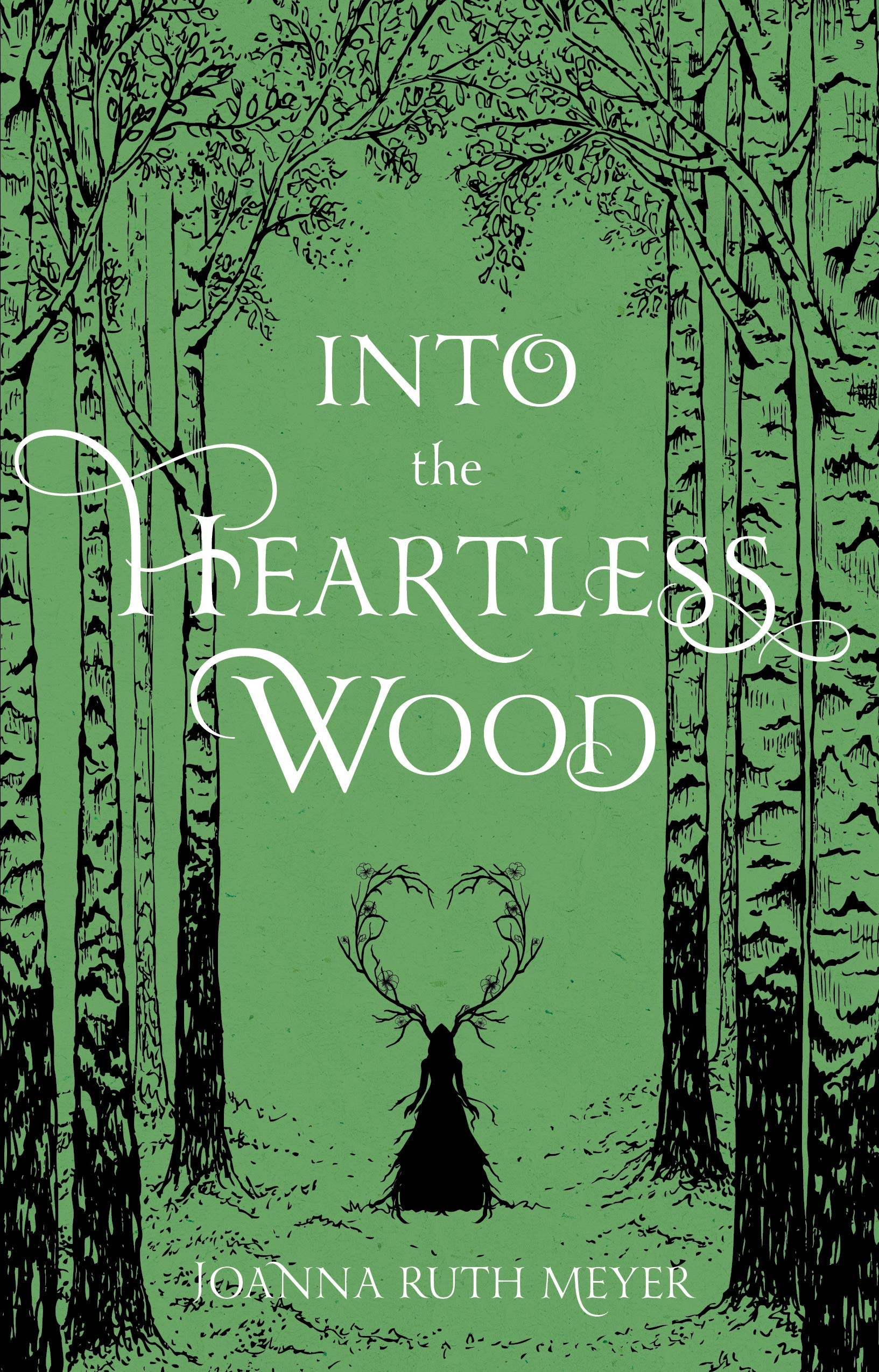
Into the Heartless Wood by Joanna Ruth Meyer

I don’t think Father’s wall can keep the trees out if they really want to come in.”

What a delightful story. Props to my colleague at Shelf Awareness, Lana Barnes, whose review sold me this book. As I’ve done once before (and with another YA novel!), I’m reposting Barnes’s words here for you.

This dark fairy tale weaves together magic, romance and nature with lyrical words and imagery.

Into the Heartless Wood is an intense and haunting fairy tale tinged with horror, romance and magic, and filled with beautiful imagery of nature and love.

The Gwydden’s Wood is ruled by a witch who uses her eight tree-siren daughters as weapons, “commanding them to sing, to lure men and women into the wood and devour them.” Seventeen-year-old Owen and his sister stumble to the precipice of this fate, but are saved by the Gwydden’s youngest daughter, Seren. After his rescue, Owen–intrigued by the “monster” who defies her purpose of being–visits Seren in the forest every night. Their forbidden friendship blossoms into romance, and Seren’s desire to “be more than the monster [her] mother created” grows. When secrets and an ancient curse drive Owen and Seren apart, they find themselves on opposite sides of a centuries-old feud and must find a way to break the curse to free themselves.

This fourth YA novel by Joanna Ruth Meyer (Echo North) is gorgeously written, deeply intense and emotionally fulfilling. Owen’s and Seren’s story is portrayed vividly through a series of moments of euphoria and heartbreak. Whether it’s a scene of them dancing on a hilltop until dawn or a tree-siren-caused train derailment, Meyer uses poetic language and imagery to ratchet up the intensity. Meyer also uses a blend of prose (Owen) and verse (Seren) to parallel Seren’s transformation. As Seren becomes more humanlike, her short lines and simple sentences become more complex. This all creates an atmospheric fairy tale that is bewitching and unforgettable.

Lana Barnes, freelance reviewer and proofreader

I would add that Seren doesn’t have a name – because monsters don’t – until Owen offers her one. He is the son of a musician (his mother) and an astronomer (his father), both loves he has inherited, but it is astronomy that he excels at and dreams of; the name he offers to his new friend means ‘star.’ Seren’s adoption of that name, offered by her first friend, is meaningful, because names have great power; to name something or someone is to exercise power over it, and imagine the power to name yourself when no one ever has.

The setting is Welsh, or at least Welsh-adjacent: it is just a minor frame, but Owen’s cooking is Welsh, and the character’s names often look it as well. I found this charming, and it added a little bit to the otherworldly feeling of the novel.

I loved the dreaminess of this book, especially in Seren’s sections. I loved the difference in writing (speaking?) style between the two protagonists, as Barnes notes, and how that changed the tone I heard the story told in, and characterized each of them. And I love trees – or leaves – and stars as reference points for worldviews, as symbols. The romance in this book is sweet, innocent, muted – definitely YA – but moving. There really is something about young love, or in this case such youth that it doesn’t even recognize that it is love. The classic narrative trick is to put two people (or beings!) in an attraction but then throw something in their way; the conflict here is across worlds, and with the added challenge of a shared history, Owen and Seren on two sides of an old strife. (I shan’t spoil it, but they are not only opposed in the world-scale struggle between powers but also share a personal connection to certain events.) The obstacles they face are great. But out of great conflicts come great stories. This is a great story: emotionally impactful, heart-wrenching, sweet, beautifully told (with extra points for style, in the two very different voices). I’m charmed. Also bonus points for trees.


Rating: 8 slices of bara brith.

The Hare by Melanie Finn

A totally captivating novel to read in as few sittings as possible (beware!), often a bit disturbing or discomfiting, but always engrossing.

We first meet Rosie and Bennett in 1983. They’re on a date, which doesn’t go very smoothly, and highlights their differences. He’s older, far more sophisticated; he comes from money, while she’s a little awkward. (Or maybe just young.) She dutifully takes his cues, but the reader is immediately uncomfortable. Rosie’s perhaps not as uncomfortable as she should be.

We rewind just a bit to gather up her backstory. A childhood of privation in Lowell, Massachusetts; an art scholarship at Parsons School of Design in New York City. She’s a student there when she meets Bennett at MoMA, and is excited and flattered at his attention. And they’re off and running.

Somewhere inside, Rosie had the idea, like a stone buried deep in the Presbyterian loam of her soul, this pregnancy was punishment for being greedy. Her orgasms were rich as chocolate cake or red velvet. Layers of sweetness and dripping icing.

What lovely lines, hm? And a good example of Finn’s expressive writing, and Rosie’s rich interiority. We follow her from here over decades, eventually to rural Vermont; and I don’t think I’ll tell you much of what happens, but she grows and changes and learns so much. She’s a riveting character. While I empathize deeply with Rosie (eventually, Rose) throughout the book, there are times I disagree with or feel disturbed by her perspectives. This perhaps only deepens the connection, though, and my need to see her through.

The Hare is told in close third person, meaning Rosie is ‘she’ rather than ‘I’ but we still see what she sees, which allows for the question of whether she is really a reliable narrator. There are a few types of unreliable ones: there’s the narrator who is being deceitful and lying on purpose, and then there are other kinds, who maybe can’t see their own worlds clearly. Do I see myself the same way that you see me? Can I reliably narrate myself? Tiny spoiler here: Rosie consistently tells us she’s not much of an artist. But some others around her think she might be gifted. Who do you believe?

The visual-arts frame is a neat one – I love this stuff when it’s done right. A certain Van Eyck painting plays a small but pivotal role. And a little more subtly, Rosie’s eye for image, color, line, and perspective have an enormous impact on how we see what she sees. This is a novel with layers to it in a way that I love; I think I’ll be thinking of it for some time.

Gender is central to this book. Rosie’s position in her life, her situation in several senses, and her feelings of powerlessness are attributed to her being a woman. Her gender, and those of other characters, are always and unavoidably related to their roles and relationships. The novel itself is a commentary on gender roles; Rose eventually make explicit commentary, but she was always make implicit observations, too. The back-of-book blurb calls her “an authentic, tarnished feminist heroine,” and I think that’s about right. In some ways this is a coming-of-age story, but lasting far beyond the time in her life that we tend to think of as the coming-of-age time. She’s still growing up, as we all are (I have come to see), and I really appreciated noting that here.

Finn is absolutely expert at mood and atmosphere. We are with Rosie when she feels dread on a Connecticut (I think) back road; luxuriates in a boathouse on a fancy estate on the coast; works in fear, numb and bone-tired, in the snowy Vermont mountains. This is a book to take you out of your own life.

This review has included almost no plot summary. That’s on purpose. I want you to read this work of suspense and be as surprised by events as I was. It’s beautifully thought-provoking, often lovely, and occasionally frustrating (in that Rosie sometimes frustrated me – as I feel sure Finn intends). Haunting. The hare of the title does extraordinarily broad and deep work. I am enchanted.


Rating: 8 duck decoys.

author interview: Katherine Seligman

Following my review of At the Edge of the Haight, here’s Katherine Seligman: Strayed Lives.


Katherine Seligman has been a staff writer at the San Francisco Chronicle Magazine and a reporter for the San Francisco Examiner and USA Today. Her stories have appeared in Redbook, Life, Time, Al Jazeera America and the anthology Fresh Takes. She is a member of the San Francisco Writers’ Grotto and loves working in clay. Her debut novel, At the Edge of the Haight, is the 10th winner of the PEN/Bellwether Prize for Socially Engaged Fiction.

What event or person inspired this story?

photo by Penni Gladstone

One night my husband and I were driving home through Golden Gate Park and this man threw himself in front of our car, saying, “Help, don’t leave me.” We stopped and called the police. He was pointing, and they shone the light over there, and there was a body on the ground. My husband, who’s been an ER doctor, ran over to see if there was anything he could do, and what he saw was this kid gasping for his last breath. They arrested the man who’d stopped us, and nothing ever happened to him. Because there were two witnesses, and one was dead. I tried to find out what had happened, asking questions of people who had been living in the park, and I just wasn’t getting anywhere. One of the cops said to me, “We have no idea what happened, but neither of these guys was up to any good.” And I just started thinking about this kid who died, and what his life had been like. That was what started it off. I had always talked to people on the streets who were traveling through or living here, but I started doing it with a new purpose, and I just started writing.

How are journalism and novel-writing alike and different?

I started out writing fiction in college and a year or two after college, and then went into journalism because I really didn’t have any idea what I wanted to write about. I felt like I was manufacturing things. I continued as a journalist, but never gave up the idea of writing fiction. I wrote two novels before this that are still drafts, and when I got to this one, I felt like I had learned more. It just carried me through the process. I think the natural curiosity and the rhythm of having deadlines and sitting down and knowing that you have to write helped me. I did have a great desire to do it, and some background, but there are some land mines for journalists who write fiction. I can see them in my work, and in other works. You can enter into research rapture, and think everything is so interesting, when it’s not important.

What makes a good protagonist?

Someone who inhabits a world so completely that we believe it. It doesn’t always have to be somebody that you really like or trust, as we know–there are so many books where we completely doubt or dislike the protagonist. But there has to be some element of belief in what this character is doing, and the character has to be revealed in some way. There has to be something that is driving them, often some big discovery, something the reader learns about the protagonist.

What happens inside Maddy is often as important as what happens outside. Why?

I played with writing from a close third person, and from two and then three points of view, but I came around to the first person, inside her head, because I really wanted to show how someone could get into a situation like this. That someone you see on the street often isn’t so different from your own child, or your sister. I know people say that, but I actually believe that that’s true. I really wanted a first-person voice that felt like she was learning while she was going. She didn’t know everything. That’s someone who we could look at and find some level of understanding of what she was going through, because there are a lot of things about herself that she doesn’t know. She’s so hurt. She’s somebody who really wants to hide, which I think is a fairly common human trait. I think there are a lot of people who go through life with so many secrets, trying to hide.

Did you do research specifically for this novel?

I did a number of stories over the years on various homeless issues, and a couple about what was going on in my own neighborhood, raising children, and why we stayed in the Haight.

I went to the hospital and sat and watched people come in. I spent a lot of time in the courts. I went and watched the disposition of cases of homeless people who’d been arrested and listened to how they were treated. The police were very generous, talking to me from their perspective. I did additional research, but in a different way than I did as a journalist, more talking and absorbing. There were a couple of kids who were very generous in spending time with me, answering questions about what it felt like to be awakened at 4 and 5 in the morning when they were sleeping in the park. A lot of the things that happened in the book, not the specific plot but some of the details, are things that actually happened. This neighborhood is so full of color and life. You just never know when you’ll find somebody walking a chicken on a leash down the street. There was actually a young woman many years ago who had a rat that she kept in her sleeve, and she taught it–she’d give it a juice box and it would drink through the straw. She told me what went into training this rat, and it was great.

What message do you hope readers take away from this story?

I hope that people will realize that someone who you walk by has a very full life story, just as you do. I don’t mean it in any finger-shaking kind of way, but I believe that our lives are richer when we open our eyes to what’s around us. It doesn’t matter where you live. And I realize that some people feel threatened, and there are really complicated things going on out there on the street. We have to have basic respect for people who are living on our streets, and they have to have respect for the neighborhood. I hope people will open their eyes and realize there’s a person out there who might have a lot in common with you and your family. Just be open to that. And there are many people with drug and alcohol problems who can be violent, but for the most part they’re people whose lives have strayed from what we consider typical, and who find themselves on the street. In my neighborhood often there are travelers and seekers who are following something that they think is going to be magical.

I didn’t set out to write about homelessness per se; it was just this idea that you walk by people every day and you have no idea who they are, what they’re hiding, what their lives are like. I guess that’s what interests most novelists. I can just look across the street in somebody’s window and think, huh. What’s going on over there? And I think we all have that element of make-believe.


This review originally ran in the January 19, 2021 issue of Shelf Awareness for the Book Trade. To subscribe, click here, and you’ll receive two issues per week of book reviews and other bookish news.

Frames of Mind: The Theory of Multiple Intelligences by Howard E. Gardner

This is a long review of a big, fat, dense book, not particularly a fun read. But I’ve been intrigued and fascinated by the theory of multiple intelligences for years – I think my mother introduced this to me when I was a little kid. I’d read about this theory, but I’d never read Gardner’s own work; I finally decided it was time.

He has written many books, and he’s published books since this one on the MI theory (Multiple Intelligences; Intelligence Reframed), but I chose to go to the original, in its updated form. Frames of Mind was originally published in 1983. My edition has a tenth-anniversary introduction as well as a first-thirty-years introduction; it was published in 2011. (Although published in ’83, Gardner notes he did the writing in ’81, then moved into revisions.) These supplements were helpful to put Gardner’s work in some perspective and keep in my mind the time period he was originally writing in.

I’m going to try to keep it as brief as I can. In a nutshell: I still find Gardner’s theory fascinating and instructive; his thinking about intelligence types informs the way I view people in our world to a large degree. It captures my imagination. Reading this book was definitely stimulating for me. But! it was also pretty frustrating to read, mostly because of his mishandling of gender. Gardner almost entirely excludes women from a discussion of intelligences (except, of course, where we may be of use as mothers to male children). It assumes strict gender roles to an extent that seems almost laughable in 2021. I have some concerns about his treatment of cultural differences, although he’s clearly making some good efforts, but I’m less confident in my criticisms in that area, so I’ll discuss those as concerns I’m not sure about, where the gender business was downright upsetting. As I said about Buried in the Bitter Waters, there is enough good thinking here that it needs and deserves a thorough editing (and in this case, a thorough rethinking), and a rewrite for modern times. In general, a little humility and openness to being wrong is probably healthy for all of us (myself obviously included).

On that note, Gardner is quite good at humility and openness to criticism when it comes to his psychological theory of multiple intelligence, his acknowledgement that the number and identity of intelligence types may need revision, and his easy confession that in some realms he’s not qualified to carry the theory any further. (For example, what this book is not is a prescription for educational theory or practice. This is funny because one criticism of Gardner that I’ve encountered is that his educational recommendations are faulty. Again, he makes none in this book. Although maybe he does so in later works.)

Let me back up and offer you at least a little bit of summary. (This will be minimal, and I’m in a bit over my head with the harder-science side, but there are excellent summaries elsewhere online if you want to go further.) Gardner posits that human beings do not have a single intelligence, in which individuals are more or less gifted, but rather we have a number of different intelligences, or competencies, which are independent of each other; an individual can be gifted in one or more, average in others, and below average in some. In this, his original work on the theory, he introduces and details seven intelligences, defending them in neurobiological terms and with some examples. They are: verbal-linguistic, logical-mathematical, bodily-kinesthetic, musical, interpersonal and intrapersonal (grouped together as the personal intelligences), and spatial. He is careful to separate intelligence from sensory abilities, so verbal-linguistic is not tied to hearing (and hearing-impaired and deaf people can be highly intelligent in this area), and spatial is not tied to vision (same story for blind people). In testing whether an aptitude qualifies as an intelligence under his theory, he requires that it involve a skill set that leads to the ability to resolve “genuine” problems or create useful products; that it also entail the potential to find or create problems; and that it have a biological basis, meaning for example that it be potentially isolated by brain damage. A short list of further criteria: the existence of prodigies; a recognizable developmental history and “end-state performances”; an evolutionary history; support from experimental psychology and psychometry; and “susceptibility to encoding in a symbol system.” Whew. Bookending chapters on each intelligence type are chapters on earlier views of intelligence (background of other theories and schools of thought); biological foundations (hard science, and hard for me); a critique of his theory; comments on the socialization of intelligences through symbolic systems; observations about how we educate to intelligences (observations, not prescription!); and thoughts about “the application of intelligences.”

As you may be concluding, Gardner here writes for an academic audience, in that classic, dry, academic style. Against his advice, I did wade through the “biological foundations” chapter (not that I got much out of it, but I’m a completist). It was a good reminder that psychology is brain science. I would love to see this book rewritten for a more general readership. I think I was hoping for more examples of intelligences in practice – hoping to recognize myself and my friends, family, acquaintances. My interest in this theory is absolutely about armchair-analyzing the world around me, so I was hoping for a slightly different type of book than this, but that’s my mistake; Gardner is clear that this is psych theory, not a which-kind-of-fruit-would-you-be quiz. I would have loved more case studies… and I wonder, is this about my desire for narrative, owing to my individual profile of intelligent types? I especially wanted more from the bodily-kinesthetic chapter, which included only two pages about athletes.

Gardner’s language is often dated. He uses ‘Eskimo,’ ‘victim of autism’ (and clearly sees autism as a tragic disability, when I think we’re pretty far from that mindset now), and ‘idiot savant.’ The use of ‘normal’ for individuals who are neither prodigies nor ‘subnormal’ feels a little wrong to me. And, “for ease of exposition the pronoun ‘he’ will be used in its generic sense throughout this book.” Guess how that struck me. I am aware of the argument that ‘he or she’ is just too much work, and/or too awkward, for regular use, but there are other, more elegant solutions to this problem than just assuming that EVERYBODY IS MALE. You can alternate between ‘he’ and ‘she’ from case to case. You can use ‘he or she’ sparingly (really, I’ve done it, you can). You can also slip into the singular pronoun ‘they,’ which is not a new usage at all, but dates back centuries. To read more than 400 pages of thoughtful and serious social science thinking in which ‘he’ does everything and everything happens to ‘him’ is belittling, offensive, and makes me feel not just left out, but as if I don’t even exist, or these theories don’t apply to me (more on that in a minute). Words matter.

While Gardner is able to cite women as scholars and researchers in his own and related fields (education, psychology, anthropology), he is almost entirely unable to name a woman as an example of one of his proposed intelligences. I noted just four, in these 412 pages plus notes: poet Sue Lenier, ballet choreographer Martha Graham, ballet dancer Suzanne Farrell, and Eleanor Roosevelt (for the personal intelligences, held up alongside Socrates, Jesus Christ, and Mahatma Gandhi). By comparison, his male examples number in the hundreds. His chapter on verbal-linguistic intelligence names 35 men who impress him, and just the one woman: Sue Lenier, who he calls the “possessed poet” for her methods which have been criticized (so that the one woman in that chapter, and one of just four in his whole book, has her intelligence qualified, as if her poems aren’t really her own work after all). Representation matters. I am left with the clear impression that Gardner doesn’t think I could possibly be intelligent in any of seven ways. Yes, it was 1981 when he wrote this book. But some men had already figured out how to see women as people in 1981, so Gardner does not get a pass.

Gardner’s belief in clear gender roles, then, will not surprise you. The development of infants falls squarely on their mothers, and mothers are the only ones capable of playing certain roles in the lives of their infants. (Finally, something women can do.) The chapter on the personal intelligences is far too bound up in a gender binary. I am not extremely well read in gender theory, but I am not sure I buy the strict gendered division of labor and personality going back to prehumans that he sets up. I know that nonbinary gender expressions are not the brand-new item that some would have us believe now, but appear in early and traditional societies as well. I know same-sex couples raising children in exemplary fashion. I think, as a psych theorist, that Gardner is missing some significant pieces of the puzzle here.

When it comes to other cultures, I’m on even shakier ground. And I do want to acknowledge that Gardner’s made an effort to find and examine a variety of cultures, societies, educational systems, and ways of recognizing, valuing, and ‘using’ intelligences in different cultural settings; that is important work and involves his awareness that Western culture is not the only or necessarily the best culture. Sometimes his conclusions feel a little unsure to me, but my expertise on cultures other than my own (let alone in terms of sociology, anthropology, pedagogy, psychology, etc.) isn’t sufficient for me to pick Gardner’s work apart. I did find myself wondering if he wasn’t being a little reductive sometimes, though, as in the stereotypes about Japan and China, for example.

I know I’ve devoted a lot of this review to my criticisms, but these oversights in Gardner’s writing and his perspective on humanity 1) were distracting to me as I tried to take in the theory and 2) make a substantive difference in his theory, because how can one understand human intelligences if one (for example) overlooks half the population??

As a theory, Gardner’s work continues to fascinate me and to inform a lot of my thinking. I am very glad I put in the effort (and it was an effort) to read this book. As a book, it was fairly obnoxious. But as a theory, it is intriguing and evocative. I hope somebody takes on the rewrite someday, and finds some non-men to think about. Who knows–we might learn something.


Rating: 7 puzzles.

Sophomores by Sean Desmond

A boy begins to find himself as his parents face private battles of their own in this poignant and searching novel.

With Sophomores, Sean Desmond (Adam’s Fall) evokes late-1980s Dallas and its suburbs with eerie precision. A nuclear family–father, mother, son–and the worlds they navigate are full of anxieties, choices and possibilities. Spanning just one school year, this is a novel to get lost in.

In the fall of 1987, Dan Malone is a sophomore at the Jesuit College Preparatory School of Dallas. He belongs to a tight foursome of boys who support each other at school and in their forays with the girls of Ursuline Academy. A bit tortured by his shyness in both areas, Dan’s interior workings are self-consciously earnest but endearingly real. “Dan felt a sudden awareness, a shimmering sense of discovery, that his journal, the newspaper, music, writing, reading, it was all connected with some hidden purpose… The hour when he would take part in the life of the world seemed to be drawing closer, and Dan wanted to think and write and listen to his heart and find out what it felt.”

Dan’s father, Pat, is an airline executive facing a serious industry downturn, culturally Irish Catholic and miserably estranged by his displacement (for work) from his native Bronx. He drinks too much and hides it poorly from his family. He struggles with a recent diagnosis of multiple sclerosis.

Mother and wife Anne provides an essential counterpoint to Dan and Pat’s heavily male worlds. As a devout young woman, Anne had been a novice at Sisters of Charity, but she grew into a worldly, quietly feminist woman, inclined to be contrary in her internal monologues. Still a serious Catholic, Anne argues with the pastor both in her head and via anonymous phone calls.

These three perspectives triangulate to offer a rich, subtle story of family grief and love, teenaged seeking and adult angst. Desmond places crises in the classroom, where Dan strives for growth and recognition from a teacher “legendary for rigor and Socratic curveballs,” on equal footing with the murder trial where Anne serves as juror. Flashbacks to Anne’s and Pat’s pasts illuminate their characters and provide nuance and empathy. Events vary from the absurd (an ill-fated swim team trip) to the profane (one particularly colorful episode in Pat’s fall from grace), but throughout this narrative there is a sense that all of this is somehow serious, important, holy.

Sophomores is a sharp, crystalline look at a few months in the lives of a “regular” family. With a keen gaze, it captures a city in transition and a boy just coming of age. Dan and his parents will stay with the reader long after the story is finished.


This review originally ran in the January 8, 2021 issue of Shelf Awareness for the Book Trade. To subscribe, click here.


Rating: 8 sticks.

Copperhead by Alexi Zentner (audio)

I was quite entranced by Touch and so I jumped into Copperhead with nothing but the author to go on. It’s quite a different book, ambitious, and good, but flawed. This novel takes on the timely – not to say trendy – topic of race and racism in contemporary America. I don’t question Zentner’s earnest commitment to the topic, but it’s a tricky thing to execute seriously in fiction without getting a little overwrought.

Our protagonist is 17-year-old Jessup, a high school senior in Cortaca, New York (a thinly disguised Ithaca, with Cortaca University obviously Cornell). He’s a talented football player and excellent student, but still wrong-side-of-the-tracks because of his family’s hand-to-mouth existence, the trailer they live in, and the fact that his brother and step-father are serving prison sentences for the deaths of two Black college students in what was either self defense or a hate crime, depending on who’s telling the story. Jessup’s mother and sister still attend the Blessed Church of the White America. Jessup would tell you he’s not a racist; his girlfriend is Black. He resents that people judge him for his family history and their association with the white supremacist church.

This is all background information; the novel’s action takes place over four days, Friday night’s football game through Monday night’s protests, but it is action-packed. What might be called a series of unfortunate events explodes into increasing posturing, grandstanding, violence. Jessup is pressured to choose sides. Zentner’s greatest accomplishment is the empathy his reader feels for this kid. We don’t like to spend much of our compassion on white supremacists, but this novel ticks boxes for two intellectual puzzles I’ve long been interested in: 1, the concept that bigots are made or taught, not born, and there’s somebody there, at some early-enough point, that I do feel for. And 2, the question of when we begin to hold a person responsible for his own crimes – the abused child we feel for, but when he grows up to be an abuser we don’t; at what age or stage is the cut-off? I feel like Jessup’s character begs both these questions. He is in some ways a good kid. And while he’s far more fair-minded than some of his family and church, he’s also a white supremacist, by default rather than by hate. The puzzle of Jessup himself I think is well-expressed; we stay with his close third-person perspective throughout the novel, and I find it easy to like and sympathize with him, even though he’s problematic too. I find it realistic that (especially) a 17-year-old boy with such a troubled past would have the kinds of blind spots that Jessup has. That doesn’t mean I think it’s all okay, but I think it’s realistic.

The events that kick off (no pun intended) the weekend’s action are a bit contrived, in terms of narrative: a perfect-storm sequence. Sometimes life really does work in such strange ways, but it is also clearly a novelistic device to get the issues moving that Zentner needs to address. That’s more or less okay with me, but the mechanics of plot here are showing a bit more than some might like. Characters other than Jessup are less well developed than he is (also understandable; a lot has been put into this protagonist, and there’s less left over for everybody else). Things get a little ham-fisted with the stepfather, David John, who is just such a great guy aside from the white supremacist business… and this allows Jessup to wonder how it’s possible for a racist to be such a deeply decent dude? (The answer, staggeringly obvious to everyone but Jessup, is that he’s deeply decent to white people. But honestly, I do buy Jessup’s blindness on this account – again, as one of those believable blind spots. Seventeen years old!) Where the novel goes most wrong is in the final events and epilogue: wrapping up this complicated and fraught story is a challenge, and Zentner was maybe a little overcommitted to a redemption narrative. Only in the final pages (minutes, in my audiobook) does the novel, which excels in drawing out my sympathies, descend into morality tale. It gets a little graceless. Again, Zenter’s earnest good intentions are not in question, and it’s a pretty good morality tale, one that will yield good discussions in classrooms and book clubs. But as a novel, the last bit is a bit cringey.

There are some beautiful, moving, thoughtful moments, and absolutely memorable images, and I think Jessup’s character is all win. The complexities of family, legacy, and the taught-and-learned nature of hate are well illustrated. Copperhead took on an ambitious mission, and as a novel, doesn’t quite stand up to that tall order, but it gives us plenty to think about. I think its greatest accomplishment was in how much I empathized with Jessup, and how uncomfortable I felt with my own empathy – not always a pleasurable experience, but an instructive one. I was certainly engaged throughout, and I do recommend this read, with a few caveats. I respect Zentner’s work here, and I’ll look for more from him.


Rating: 7 text messages.