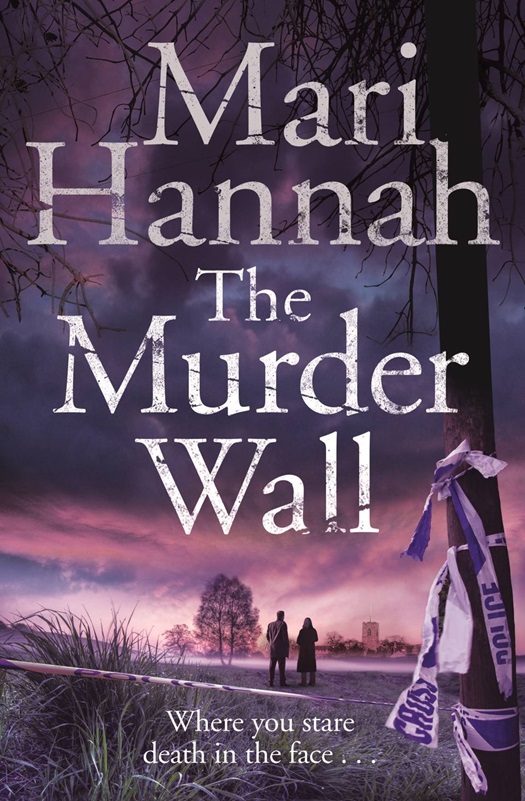
The Murder Wall by Mari Hannah

From Shelf Awareness I got this list of “One Author’s Top 10 Queer Protagonists in Crime Fiction,” which sounded like something I needed. This is the book I chose to buy (and it had to come all the way from the UK).

As a murder mystery, I found this one engaging, not lightning-paced but with enough momentum to pull me right through its 450 pages. In Newcastle Upon Tyne, DCI Kate Daniels is on a career fast track; she’s a favorite of Detective Superintendent Bright, who is also a dear friend. (He and his idealized wife reminded me a bit of Elizabeth George’s Detective Lynley and his Deborah. And Daniels is just a bit of a Havers.) Daniels is not without her secrets, which are uncovered slowly, or her traumas, which we know more or less at the outset: eleven months before this novel’s events begin, she discovered two bodies in a church, whose unsolved murders still haunt her. Now she lands her first case as Senior Investigating Officer, which is a rush–until she sees who the victim is.

Daniels is dogged; she is good; and she has that self-destructive thread that all good fictional detectives, it seems, possess. Her buddy DS Hank Gormley is a treat, too: loyal, smart, funny. All the troops in fact are well written and more or less likeable (there’s always that one guy). This is the start of a series, and the elements I’ll want in a series are all here; I’m ready to follow these characters forward. In the world of murder mysteries, this is a darkish one, focusing on the evil that lurks in some (all?) of us, and the novel does not shy away from sexual assaults (heads up, if you need it). I’m in for more. I will say, though, that the LGBTQ angle isn’t as developed as it might be. If you come to this book chiefly for that element, you might be mildly disappointed. I didn’t necessarily feel shortchanged, because the mystery is strong. Daniels as queer protagonist counts as representation, which is the point of the article that brought me here, and that is significant. Her queerness isn’t central, which cuts both ways: it’s cool that it’s allowed to be no big deal, but it also doesn’t add much as a framing element. Her sometimes-partner is a bit underdeveloped as character, too, but I suspect she’ll come forward as the series does. Daniels is not out at work (this was the breaking point for the erstwhile partner), and her fear of repercussions is a minor plot detail that could also develop nicely; this is the 2000s, but it’s still very true that she’s already at some disadvantage in a men’s world, before inviting homophobia in as well.

I am intrigued and shall continue. I’m also keeping my eye on the possible television series adaptation – that would be fun!


Rating: 7 bags of donated clothing.

Ring Shout by P. Djèlí Clark

Ring Shout is a most interesting, slim, swashbuckling adventure story about hunting and fighting the monsters of the Ku Klux Klan. Here, those monsters are literal: ‘regular’ (human) Klan members are called simply Klans by our narrator Maryse, while those who have ‘turned’ are Ku Kluxes, horrifying beasts who love dog meat and wear human skins but are visible to those – like Maryse and her friends – with ‘the sight.’ What we learn alongside Maryse in the course of this story is that Ku Kluxes are not the only, nor even the worst, monsters in this world.

Ring Shout is set in 1922 and begins on the Fourth of July in Macon, Georgia, where Maryse, Sadie and Chef have set up a trap for the demonstrating Klan: a stinking dog carcass laced with explosives. We begin mid-scene and then slowly get to know our heroines. Sadie is an ace with her Winnie (Winchester 1895), and Chef carries a German trench knife, taken off the enemy when she fought in World War I; but she’s earned her nickname through her expertise with bombs. Maryse Boudreaux is from just outside Memphis, where she experienced a trauma as a young girl that has set her on the path she walks now: she hunts monsters. Maryse, Sadie and Chef are backed up by other talented and badass women at a cabin in the woods outside Macon: Nana Jean is an old Gullah woman with powers of prophecy and root magic; Molly is a Choctaw scientist experimenting on the body parts of Ku Kluxes that the hunters bring her; the German widow Emma Krauss is a folklorist and ardent socialist. It is a motley and formidable crew, backed up by a few male allies who mostly serve as helpers and sexual partners but lack the sight. (This novel attacks racism head-on, while its feminism is inarguable but resides in the background. I love it.)

My editor & buddy Dave didn’t love this book, reporting, “It felt like much more of the action-packed, wise-cracking, zombie-slaying kind of horror story than I’d hoped for. I like my menace to be a bit more subtle.” And I think his description is accurate, but it worked for me. Subtlety is not the language of Maryse or her friends; they are in-your-face angry, foul-mouthed, and unapologetic about their rage, passions, and needs.

Chapters are often preceded by ‘notations’ referring to the Shouts that give the book its title. (“A shout or ring shout is an ecstatic, transcendent religious ritual, first practiced by African slaves in the West Indies and the United States, in which worshipers move in a circle while shuffling and stomping their feet and clapping their hands,” says Wikipedia.) These notations are credited as transliterated by Emma Kraus – differently spelled but the same name as the character in the book. I was fascinated, when I looked up the author P. Djèlí Clark, to find that “Phenderson Djèlí Clark or P. Djèlí Clark is the nom de plume of American science fiction writer and historian Dexter Gabriel; he chose to publish his fiction and his nonfiction under separate names so that readers of one would not be disappointed or confused by the other.” (That’s Wiki again.) This leaves me moderately confident that Kraus and her notations are historical truths, but I can’t confirm that with anything I’ve found between the pages of this book.

Clark’s Acknowledgements paint an intriguing picture of his influences for this story, citing

The 1930s ex-slave narratives of the WPA. Gullah-Geechee culture. Folktales of haints and root magic. A few Beyoncé videos. Some Toni Morrison. Juke (Jook) joints. Childhood memories of reading Madeline L’Engle under the shade of a cypress. Juneteenth picnics. New Orleans Bounce. A little DJ Screw. H-town that raised me…

and more. (Yes, the Screw and H-Town shout-outs please me immensely.) I added one book and one album to my list, and went looking for a book I remember from childhood that plays a role in this story. In other words, Ring Shout ranges widely. It is indeed a rollicking mad adventure story, and in that sense easy to read – under 200 pages and action-packed. Entertaining and horrifying. It is a tale of the memory of slavery and of the Klan and violence. It is quietly feminist. (It is also being made into a television series.) I think I’ll be looking for more by this author.


Rating: 7 juleps.

The Memory Collectors by Kim Neville

A poignant exploration of relationships offers a deep dive into the strong bonds that can form between people and everyday objects.

Kim Neville’s first novel The Memory Collectors is a feat of character and plot, as well as an intriguing consideration of the enormous significance objects and places can hold for different people.

In an opening prologue, the reader meets Evelyn, a child who loves working with her father in his antiques and restorations shop; it is a glimpse of idyllic family life. The novel then flashes forward to its central timeline: Ev is a young adult in Vancouver, socially isolated, making a living by picking through recycle bins and alley discards for items to sell at the Chinatown Night Market. Her relationship with her little sister Noemi is fractured. Their family experienced a tragedy that for much of the book remains unclear.

And then there is Harriet, an older woman with a hoarding problem and a mysterious connection to Ev. They share an ability to read an object’s emotional associations by touch or proximity, but they have very different feelings about this gift, or curse. Ev hides from things she thinks of as “stained,” living in new and undecorated spaces, and moving often as her own feelings settle in. Harriet collects the things she thinks of as “bright,” filling the spaces around her with borrowed emotions until she makes her neighbors ill with “the soft, scrambled buzz of thousands of stains.” Harriet hopes to use her collection to heal, with Ev’s help. But Ev may know better just how dangerous a brooch or a balsawood glider can be.

Ev is a heart-rending protagonist, paralyzed by her oversensitivity to the accrued memories and emotions of others. Because of her ability and her shadowed past, she keeps to herself, but still yearns for connection. Harriet’s isolation is different but parallel, as “the grubby, greedy, Gollum part of her” threatens to take over. A perceptive artist named Owen has something to offer each of them; he doesn’t feel objects as they do, but he might be better with people than either one. Ev’s sister is a troubled and troubling youth with secrets of her own. These characters form the rich heart of this tender, electric novel, which is also expertly plotted, with rising tension and danger, and carefully dispensed details from Ev’s murky family history.

The Memory Collectors is a remarkable piece of magical realism, imaginative and vivid in its specificity. Seemingly trivial items offer enormous symbolic opportunities. Thoughtful and thought-provoking, this story and its vibrant characters will stay with the reader long after the pages have closed.


This review originally ran in an abbreviated form as a *starred review* in the March 19, 2021 issue of Shelf Awareness for Readers. To subscribe, click here, and you’ll receive two issues per week of book reviews and other bookish fun.


Rating: 8 jade elephants.

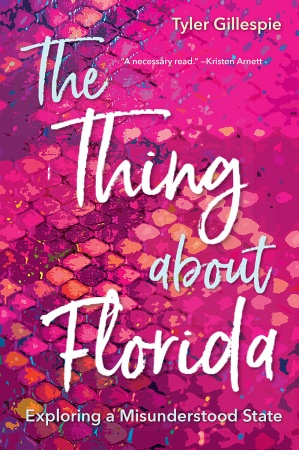
The Thing About Florida: Exploring a Misunderstood State by Tyler Gillespie

Disclosure: I was sent a digital ARC of this book by the author in exchange for my honest review.


Tyler Gillespie’s essay collection The Thing About Florida: Exploring a Misunderstood State has just this week been released, and I’m happy to share it with you here. This book was indeed a good match for my reading tastes! It’s about a misunderstood or maligned place (Texas transplant to West Virginia here: I sympathize), and it’s about place, which I always gravitate towards. It’s a collection of essays that roam widely in theme, and I found Gillespie’s voice very appealing: he can be hilarious and self-deprecating, but also serious and earnest; he considers important questions, as in the painful experiences of the LGBTQ+ queer community in Orlando especially following the mass shooting at the Pulse Club in 2016.

One of the audience members near me asked her friend if the alligators were animatronic. The area’s theme parks seemed to make people question reality. Florida, in general, has a way of doing that.

Essays cover a range of topics: “Because Florida” jokes and “Florida Man”; hurricanes; Civil War reenactors (and the question of how ‘southern’ Florida really is); cattle ranchers; a gay resort/campground, which relates to aging issues for queer folks; alligators! and those who wrangle, wrestle, and love them; snakes, including breeding and smuggling and the escaped ones thriving in Florida; reptile people (that is, those who love them and attend reptile conventions); and the Joy Metropolitan Community Church, where queer Floridians find an open-minded home. “Joy MCC stood less than ten miles away from some of Orlando’s theme parks like The Holy Land Experience. Those attractions gave visitors pyrotechnic performances and larger-than-life experiences. People could escape their daily lives there, while Joy MCC–and places like it–let people come home. They gave Floridians a second chance to be who they already knew they were.”

There is opportunity for humor in some of these topics more than others. I appreciated Gillespie’s stark discomfort with the Civil War reenactors, his (perhaps surprising) affinity for the cattle ranchers (“Marcia’s food almost made me want to sign up to work as a cowboy-for-hire until I remembered the wild hogs and all the broken bones and who I generally am as a person”), and his relationship with his grandmother as it played out in hurricane prepping. He’s most concerned with human culture and history; the scope of this book does not extend very far into the natural world (except in its role as host to those alligators and snakes, etc.). He does evoke some of the landscape, though: “Sawgrass stretched for years, and gnats pestered us like siblings.” I guess I was a little surprised to find Florida characterized as a homophobic place, as my picture of Florida stereotypes involved large numbers of retirees and gay men; but there’s plenty of rural space there as everywhere, and it is the South. (Is it? There are a few perspectives, and again as a Texan, I sympathize – we run from Deep South to TexMex to the southwest. But I certainly thought of Florida as the South, however arguable that idea may be.) Which is to say, totally unsurprisingly, that I learned something from this book.

The best part, though, is definitely Gillespie’s voice. I feel like I made a friend reading this. That’s a way to say: the narrator is personable, intimate, funny, accessible, approachable. It’s pretty rare to feel this way after reading a book, and that’s okay, because not every book sets out to make its reader feel like a friend, but this one certainly accomplishes it. Perhaps the greatest victory Gillespie wins here in arguing for Florida as a real place (not a cartoon landscape) lies in his own relatability. Florida, like every other place you might name, is not any one thing. It contains the city and the country, a wide range of politics and educational and lifestyle backgrounds, and all kinds of different people. Summing up anyplace too easily would be a disservice, and Gillespie does his home state a service here by complicating it. He doesn’t argue that it’s perfect, or the best place, and he readily acknowledges its weirdness, but he makes it variable and diverse and flawed and weird and real. Somebody should commission a series of The Thing About books for the other 49 states, and keep going from there.

Thanks for thinking of me, Tyler.


Rating: 7 burgers.

White Shadow by Roy Jacobsen, trans. by Don Bartlett and Don Shaw

This second in a gripping trilogy of home, place and relationships sees a woman struggle alone, and then less alone, in World War II Norway.

Roy Jacobsen’s White Shadow is the second in his Barrøy trilogy, following The Unseen, which introduced readers to the Barrøy family and the small Norwegian island that shares their name. White Shadow opens: “The fish came first. Man is merely a persistent guest.” It is not a man but a woman, however, who occupies the center of the novel. Now in her mid-30s, Ingrid Barrøy works on the mainland, splitting and salting cod and herring. She “longed to be gone, to be back on Barrøy, but no one can be alone on an island and this autumn neither man nor beast was there, Barrøy lay deserted and abandoned, it hadn’t even been visible since the end of October, but she couldn’t be here on the main island either.”

After paddling back to Barrøy, Ingrid is indeed alone amid the ruins of her family home, until the British bomb a German steamer carrying troops and prisoners of war in nearby waters. In her family’s hayloft she finds a man alive. They do not share a language, but they share much. Hiding her guest from the Nazis and their Norwegian collaborators will send Ingrid away from home again, and it will be another arduous feat to return, but it is always Barrøy for this stalwart protagonist. She stands “suddenly wonderstruck at all the things that had kept her on the island, which in truth were nothing at all.”

Translated from the Norwegian by Don Bartlett and Don Shaw, Jacobsen’s prose is as stark and unadorned as the landscape he portrays. His characters are hardworking, worn and stoic against a ruthless natural world, but there is beauty in their strength, and in the harsh simplicity of island life. “It is as it has always been, Barrøy has everything yet lacks something of real importance.” The central setting is limited in its scope, but in Ingrid’s travels she meets a variety of characters, including profiteers and refugees, eventually repopulating her home and tentatively, perhaps, building something new.

While there is a thread of romance here, White Shadow is more a profile of an individual and a culture (“people who never sat down”). It is also a sensory experience of rough conditions and cold, work ethic and strong ties. Ingrid’s community is hard-won and all the sweeter for it. No familiarity with The Unseen is necessary for this second installment, which stands alone comfortably, although the final lines do gesture at questions about the future of Barrøy.


This review originally ran in the March 18, 2021 issue of Shelf Awareness for the Book Trade. To subscribe, click here.


Rating: 7 herring.

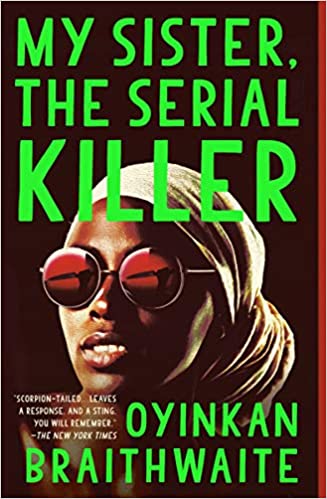
My Sister, the Serial Killer by Oyinkan Braithwaite

Readers of this blog might by now know that I am capable of calling a book about a serial killer light-hearted. Here it is. This is a fun romp about a serial killer.

First-person narrator Korede is a competent nurse at a hospital, where she has a serious crush on a doctor named Tade. He considers her a friend, but nothing more. She is also the responsible sister, and good thing, because her younger sister Ayoola needs one. Their mother is a bit flighty and detached; Korede’s one ally at home is the house girl, otherwise unnamed, another competent but invisible type. Korede and Ayoola’s abusive father, thank goodness, is dead.

Ayoola is a very different sort: stunningly beautiful, she attracts attention everywhere she goes. Men court her and buy her things; women want to be her. She is utterly spoiled, possibly a sociopath, and she has a bad habit of stabbing her boyfriends to death. Thank goodness for Korede’s (perhaps unhealthy) obsession with cleaning products. She knows just how to get the blood out, cover up smells, and where to dispose of the bodies. Her conscience is beginning to nag, however, and so she does what any invisible hospital worker would do: she confides at great length to a kindly-seeming man deep in a coma. You might guess how that winds up.

The delicate arrangement Korede and Ayoola have established to deal with Ayoola’s violent habit is beginning to fray for several reasons, but one event that pushes it to a head is when Tade, Korede’s beloved doctor, asks for Ayoola’s number. The long-overlooked elder sister is forced to decide: is she really willing to protect Ayoola in all scenarios? At all costs?

Chapters are very short, at most a few pages, which is part of what contributes to My Sister, the Serial Killer‘s sense of momentum. I had to force myself to put this one down and get to bed on a school night; it rather demands a single-sitting read. As the present-tense story of Tade’s infatuation with Ayoola unfolds, we also get flashbacks, in chapters titled “Father,” to the story of that patriarch. Braithwaite in no way answers all the reader’s curiosities about this dysfunctional family, but there are surprises along the way, nonetheless.

This novel is set in Lagos, with some Yoruba language sprinkled in, and the family’s foods were often foreign (and interesting) to me. The Lagos police are woefully corrupt and/or incompetent, but other than these details for flavor, if you will, the setting didn’t have an enormous effect on the story.

Despite Ayoola’s murderous tendencies (and generally annoying personality), there is, again, a sense of fun about Korede’s situation: the antics of the women she works with, and Ayoola’s completely ridiculous nonchalance. I felt like the story could keep going, and I would definitely read another installment about Korede’s hapless existence.


Rating: 7 shoes.

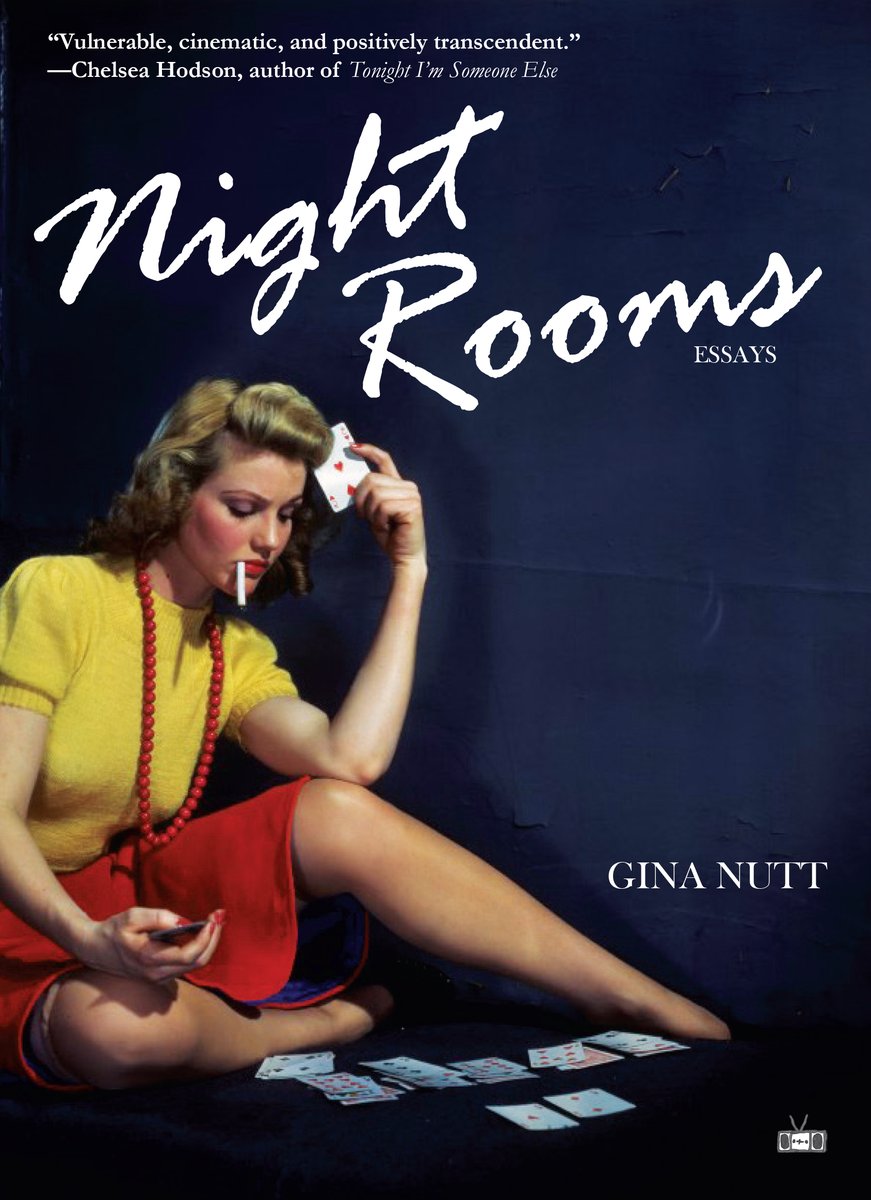
Night Rooms: Essays by Gina Nutt

These 18 essays about gender, horror, grief and much more are thought-provoking, discomfiting and lovely.

Gina Nutt’s Night Rooms is a startling collection of 18 essays ruminating on life experiences, cultural tropes and horror films, examining questions of gender, fear and grief. Fragmented in form, but firmly interconnected, these essays refuse to look away. Nutt’s prose is lyrical, provocative, intimate and intelligent.

“I used to imagine wanting someone alive would revive them, if caught right after dying.” This opening line establishes one of Nutt’s main subjects: the deaths of loved ones and how people do (or don’t) handle them. She wants to find “a balance between mourning and moving on. How does it look to not be so enamored with the image of the final girl–the one who survives–that we forget, or disavow, our dead (selves).” That final girl of horror movies is objectified: a symbol, a survivor, part of a lineage.

Nutt (Wilderness Champion) is also a poet, and has a way with a simple line in brief scenes and observations: in grief or depression, “time pulls thick, opaque as taffy.” “I am making this [darkness] a buoy.” Her voice is vulnerable and frank. Repeatedly she describes a cultural artifact rather than naming it, so it is recognizable to most readers, but made unfamiliar: “the cartoon mouse dressed in a red sorcerer’s cloak and a pointy violet hat with white stars on it.” Quoted sources are named in footnotes, but those only paraphrased are not, so that different readers will find themselves involved to different degrees–as is true with the cultural artifacts themselves.

Haunted houses, horror flicks with sharks in them, ghost stories and slasher films meet beauty pageants, ballet lessons, sexual explorations and home décor to question what it is about the macabre that fascinates. Although subtitled as “essays,” Night Rooms feels more like it contains chapters, which make reference to one another as much as within themselves. The deaths that occupy the narrator in the book’s beginning are relevant again at its close. Indeed, while these essays are fragmented, cinematic in flashes of image, sound and feeling, they are equally fragments of the whole. Together, these pieces form an experience that is sensory, intellectual and emotional, illuminating difficult and even uncomfortable truths.

Part personal reflection and part cultural study, this unusual collection will haunt readers, in the best ways.


This review originally ran in the March 15, 2021 issue of Shelf Awareness for the Book Trade. To subscribe, click here.


Rating: 7 insects framed in flight.

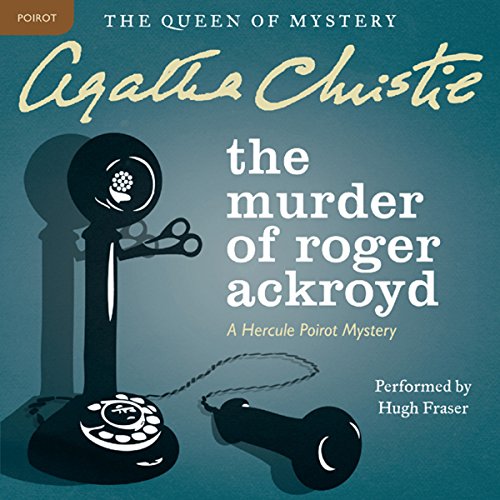
The Murder of Roger Ackroyd by Agatha Christie (audio)

A classic whodunit from Agatha Christie, starring Hercule Poirot, but told through the first-person narration of a character that (as far as I know) appears for the first time in the Poirot-universe. This means we get to see him from afar at first, and recognize him before the narrator understands who we’re dealing with. It’s pure fun. I love the humor and the characters – all of whom, admittedly, are a bit cartoonish, but in entertaining ways. Perhaps the best part of this audio production is the reading by Hugh Fraser, who plays Hasting in the long-running television series I was raised on. The protagonist and first-person narrator of this novel is a Hastings-like character, a stand-in if you will, during the period that Hastings is off living in the Argentine. To have the Hastings actor playing the Hastings-like character, bouncing off Poirot in the loveable way that they do, was just a harmonic moment for me.

Also in classic fashion, the mystery here is clever, ever-twisting and chock-full of red herrings, and the murder takes place in a literal locked room. Everyone is hiding something and harboring overlapping and hidden loyalties. The plot is far from central, however, at least to my enjoyment. (As an aside, I might be a special kind of mystery reader. I can reread the same mystery with no memory of the solution; the plot-level puzzle is rarely my focus; I’m there for characters and relationships. But I might be weird in this regard.) It’s all in the people – here, the caricatures – and the humor. Christie is comfort food, and this is quintessential Christie.


Rating: 7 dropped items.

The Care and Feeding of Ravenously Hungry Girls by Anissa Gray

Once there was a family. The mother died when her children were young; the father, a traveling preacher, remained mostly absent. The eldest sister, Althea, raised her younger siblings. They are Viola, Joe, and the baby, Lillian. A generation later, Althea and her husband Proctor have twin girls, Kim and Baby Viola. Until recently, they also had a successful restaurant in a struggling Michigan town following a devastating flood (locally called the Great Flood). The couple was trusted in town; they ran fundraisers and charity events for those who lost everything. But then it came out that they’d been skimming off the charity donations. Now, Althea and Proctor are facing a trial and possibly serious time for this transgression. The townspeople have turned against them (Althea’s lawyer says, “the community probably wants to see a public hanging”). Lillian has care of the disgruntled teenaged girls; Viola is en route home from Chicago to lend a hand, although she is beset by problems of her own. And Joe turns up, which is not necessarily a good thing.

Althea refuses to let her daughters visit her. Lillian is losing control, particularly of Kim, the difficult child to Baby Vi’s obedient one. Viola is breaking down mid-road-trip. Joe’s past sins remain unresolved. The legacies of their parents do not rest easy. They come together in the family home, which Lillian has renovated to remove some – but not all – its painful stains; she’s also moved in her former-grandmother-in-law, just to enliven this mess of relationships.

The Care and Feeding of Ravenously Hungry Girls is an emphatically character-driven novel, and these characters are wonderfully formed: a mess in all the best ways. Viola is a practicing therapist plagued by her own eating disorder and her failing marriage to a rather saintly, patient woman whom the reader really wants to see her with. Lillian’s childhood trauma has left her obsessive-compulsive and guilt-ridden – it is in part this guilt that causes her to care for the elderly Chinese woman with broken English whose grandson she’s wronged, but the friendship that results is in fact a gift. Althea’s mood is foul enough to keep her somewhat opaque, but she is also the heart of this family; just because she was the responsible eldest does not mean she’s escaped her own wounds. The novel follows the three sisters most closely, with chapters moving among their points of view. The title refers to Viola’s eating disorder, to the various literal and figurative hungers of the sisters, and beyond.

Proctor, whom we see less of – in flashbacks to the time before the arrests; in emails to his wife as they are both incarcerated – is still a lovely character, whose love of music has been a gift to his daughters, and who sends punny musical hints to Althea as a game they used to play. He at one point quotes the lyrics of Jason Isbell (whom he leaves unnamed, but I am the reader for this moment, y’all, so you know that gave me a thrill). There are other still more minor characters who make a real impact on the world Anissa Gray builds here, including Viola’s and Lillian’s respective childhood friends, Kim’s goofy stoner boyfriend, and the women Althea serves times with.

There are a few plot-level details that never especially coalesced for me. The Great Flood this small town has experienced feels like a looming matter of importance that never quite comes to life, although the long-dead mother had some comments to make about women, water, and rivers that should have connected a bit more strongly there. The crimes Althea and Proctor committed – fleecing their neighbors – are sort of neither here nor there; the plot needed them incarcerated, but it never matters much what they did. I spent some time considering this: Gray had to define their crime, of course, couldn’t just leave it unnamed; but this feels like an odd choice. It’s ethically quite off-putting, while in the grand scheme of things (murder, for example) also relatively minor (embezzlement?), and we’re left with a vague sense of the agency with which the crime was committed. It felt a little bit like Chekhov’s gun never went off. These are minor concerns, and it’s not unusual that a novel so gorgeously and richly character-driven might have some plot weaknesses, but I noticed.

The timeline of Care and Feeding is pretty tight, mostly contained within a few weeks as Althea and Proctor’s trial approaches, their sentences are set, and the immediate fallout occurs. There are flashbacks to earlier times (all the way back to the four siblings’ youth), and a final epilogue-style section set after the dust has settled. But chiefly, this novel is concerned with the quasi-locked-room situation when Lillian and Viola come together to sort out family histories and unhealed wounds. It’s about relationships, the pull of the past, the question of cycles broken or continued, and love.

I found it absorbing; I enjoyed sinking in to the lives of these women and girls, getting to know them, accompanying them. I cared, and they felt very real and immediate. If I cocked my head at the odd and somewhat unresolved crimes Althea and Proctor have committed, so be it; life is sometimes confusing in this way. As a story of regular, imperfect, but good people dealing with life’s confusions, The Care and Feeding of Ravenously Hungry Girls was more than satisfying. Gray’s brief “Beyond the Book” essay at the back of my paperback edition tells us that Viola was a fictional character who just wouldn’t go away, who demanded her story be told. And that makes perfect sense to me; I too would follow Viola wherever she wants to take me, narratively speaking. I would read more.


Rating: 7 1/2 Snickers bars.

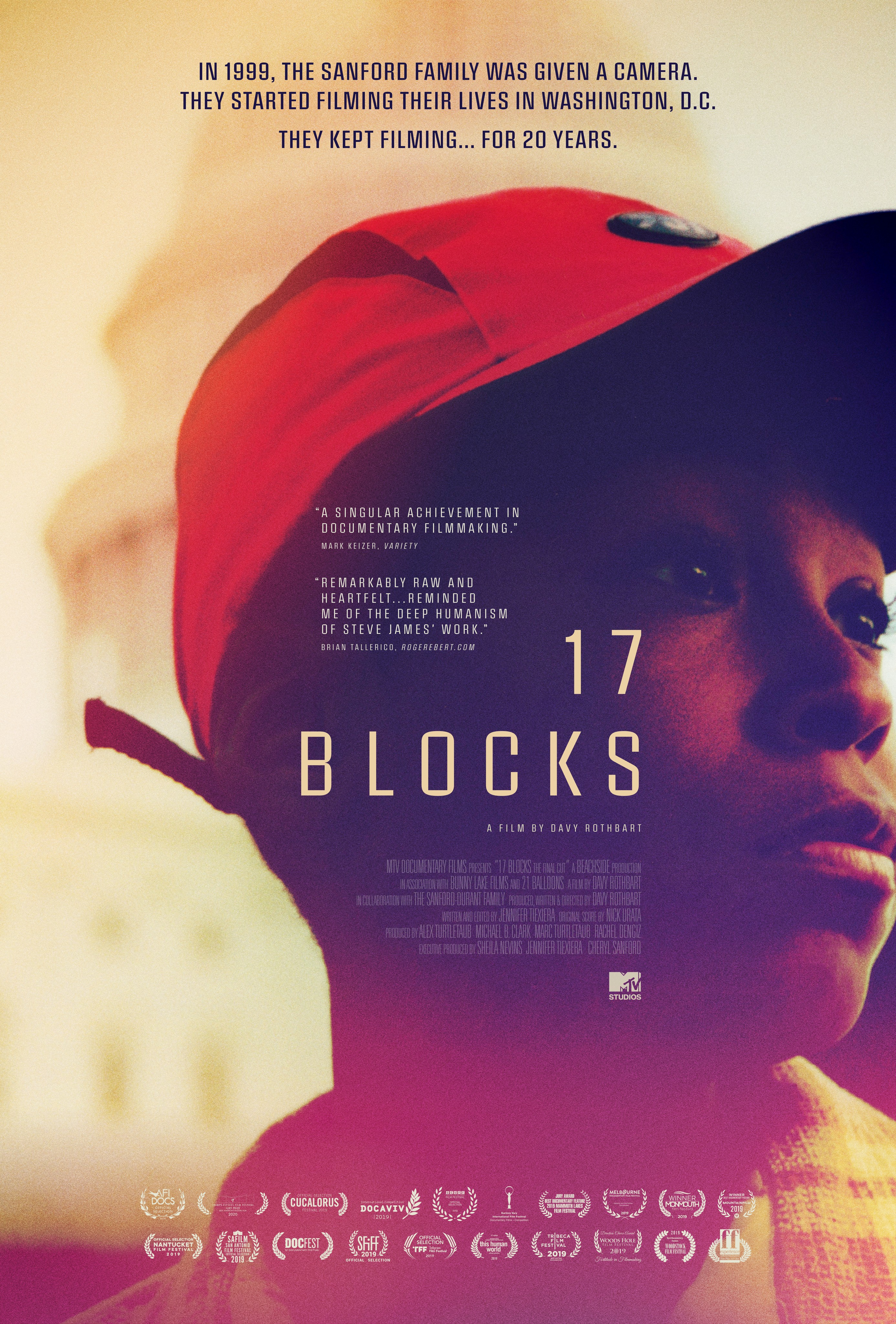
movie: 17 Blocks (2019)

A filmmaker meets two brothers – Emmanuel, 9, and Smurf, 15 – at a pickup basketball game in southeast Washington, D.C. They strike up a friendship. Film footage from the following twenty years, shot by both filmmaker and the family members themselves, eventually yields this documentary: 17 Blocks, in reference to the distance between the Sanford family home (at the film’s opening) and the nation’s capitol building. Count that as a not-completely-subtle cue to consider certain contrasts.

The Sanfords and Durants are poor and Black and plagued by social ills including addiction, gun violence, and incarceration. They live through terrible tragedy. Their lives are presented here seemingly unmediated: they speak directly to the camera; raw footage is edited together. (All narratives are mediated, of course. And it’s worth nodding to the feat of culling 1,000 hours of footage to create such an intelligent narrative in 90-something minutes.) There is plenty of opportunity to think through larger issues, beginning with the commentary implied by the title. What is most horrifying about this movie is the pain in the lives of the Sanfords; what is perhaps even more horrifying is that they are representative of so many lives, that their pain is so common.

There’s a quite good review over at Rogerebert.com (although it gets the Sanford kids’ birth order wrong), to which I’ll refer you for a deeper look; reviewer Matt Zoller Seitz makes some good points that I agree with about why the film is excellent, as well as a few mild criticisms. I appreciate his point that the film “probably doesn’t push hard enough against reactionary, Puritan, possibly racist readings of the Sanford family’s misery as it should have.” He also warns viewers of how hard 17 Blocks is to watch, and he’s right: it’s awful, discomfiting stuff, and the discomfort one feels watching it is only appropriate and reasonable. There’s another layer for me, though, too. The first half or so felt awfully close to ‘poverty porn’ (a term I may have first learned when I first started to get to know Appalachia). The problem is that in order to recognize problems in communities, in systems, we have to look at people’s suffering. But there’s something inherently problematic about the looking at – something voyeuristic – that’s discomfiting in a different way. I haven’t quite sorted my feelings about this. Possibly, if we are to make a movie of the Sanfords’ lives and look at it like this, we have a responsibility to work harder to do the work Seitz mentions, the pushing back, “in order to guard it more righteously against bad faith interpretations.” I’m not sure. This is not properly a criticism I’m offering, but a question. Also, it is very relevant that Sanford matriarch Cheryl was an active part of the production and promotion of the movie; the family is on board and involved, which we should keep in mind in considering the complicated situation with this (white) filmmaker and any potential question of exploitation.

I don’t know. But I do know that the film is artful, wrenching, visually intriguing and deeply affecting, and I’ll be thinking about it for some time. If you check it out, please let me know what you think.


Rating: 7 t-shirts.