The Changeling by Victor LaValle

This is a difficult book to review. I want to use lots of superlatives, and I want to rate it a 10, but with a big asterisk, because I think it should come with a warning label of some kind. I am no longer sure where I got this recommendation from, but I missed a major headline: this is a horror novel, and a truly horrifying one of those, too. I had grasped it as fantasy, which is not wrong but it’s not all. So let me start off here: this is an excellent, mindbending, outstanding novel, but it is likely to upset even hard-to-upset readers (I consider myself one of these). Also, I want you to go in spoiler-free, which makes this review even harder to write.

Shelf Awareness’s review begins:

The Changeling is Victor LaValle’s version of the marshmallow test: forgo the quick thrill of a mass-market mystery/horror and be patient as the author genially paces you through 120 pages of buildup, and you’ll receive the kind of shock that fairy tales are made of.

and I think that part is well done. (I’m not a fan of the rest of it, which gets one important detail wrong and includes a spoiler, and that’s why it’s not linked here. Please avoid spoilers.) Truly, part of why I was so shocked is that those first 100+ pages are so delightful and unhorrifying. LaValle lulled me with the completely realistic, imperfect but sweet story of our protagonist, Apollo, beginning with his parents (white father from Syracuse, Black mother a Ugandan immigrant) and their romance in New York City, Apollo’s birth, and his father’s disappearance when the boy is quite young. Apollo grows up quickly to become a used book dealer (in the best of times, a rare book dealer, but you take what you can get), a kind and driven man. He in turn enjoys his own romance with Emma, a librarian and profoundly independent woman. These are complicated and nuanced people we really like and root for. Their first child, in an unlikely turn, is delivered on a stalled and stranded A train, underground, by Apollo and a few motley fellow passengers; but he is born healthy. Emma appears to suffer from a severe postpartum depression, however. And then things take a strange, strange turn.

I love the characters: Apollo, his mother Lillian, Emma the badass librarian, her sister Kim, her old friend Nichelle. Apollo’s best friend and fellow book dealer, Patrice, is a delightful giant of a man, an Iraqi War veteran with a great sense of humor and a hobbyist’s interest in computers. They’re all fully developed, with small background details that make them real humans rather than types. That these characters are Black is not the point of the book and rarely needs pointing out, except when it very much does (“you and me are two black men sitting in a minivan in the middle of the road in the middle of White Ass, Long Island,” Patrice reminds Apollo. Time to go). That full realization of characters, the round shape of them, applies to the general setting in time and place as well. I can tell that LaValle is an author who knows things about these characters and this world that didn’t make it into the pages; they’re complete like that. It’s a wonderful story to sink into for these reasons. There is commentary on fatherhood: Apollo’s continuing reckoning with his own absent father (and related nightmares), and his role as proud father himself. The passage about New Dads and how they are different from Old Dads is priceless, and self-deprecating: “New Dads do half the housework (really more like 35 percent, but that’s still so much better than zero).”

And then there’s the horror story – which is fantasy and fairy tale too. It’s a delight, actually. I just didn’t have my seatbelt buckled up for it. And if the idea of harm coming to children is a trigger point for you, fair warning here. (Fairy tales can be pretty awful in this regard, to be fair.) When things go south for Apollo, he will have to step out of the modern Queens that he knows and into something more ancient, awful, elemental. “For a moment he pawed through the contents [of his suitcase]: a mattock, some clothes, a children’s book, and a gravestone. This was how you packed for a trip to another world, not another borough.” Just put your seatbelt on.

I am deeply impressed with LaValle’s skills and have just added to my purchase list all of his books: three more novels, a story collection, a novella, and a comic. I’m completely sold. I was horrified! But it was worth every minute for this transporting read.


Rating: 10 moldy hardcovers, but be careful.

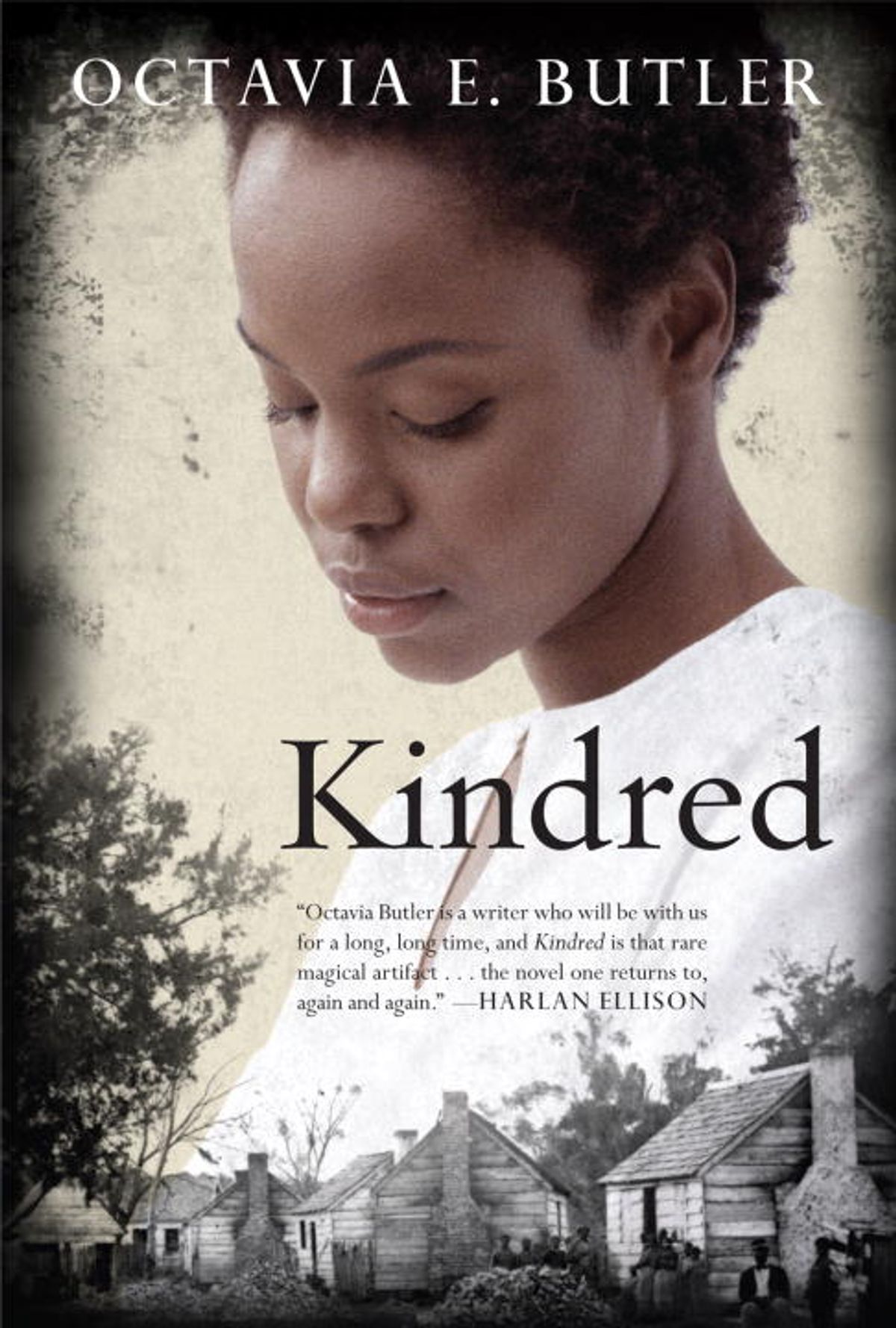
Kindred by Octavia Butler

Kindred is interesting to me in several ways. First, Octavia Butler stands out as a Black woman in a genre – science fiction – that is still awfully short on non-men and non-white writers, and was practically devoid of either when she began publishing scifi in the 1970s. This novel, her bestselling and I think best-known, might be more easily classified as fantasy than scifi, although I’m not going to get caught up in that labels argument. (I’ve tagged it as horror, here, too.) Either way, it is also very much realism and well based in history. Our protagonist, Dana, is a modern 1970s Black woman who suddenly finds herself time-traveled into the 1810s. “Time travel was science fiction in nineteen seventy-six. In eighteen nineteen–Rufus was right–it was sheer insanity.” Rufus is a young red-headed boy who she quickly understands has the (unwitting) ability to “call” her to his time when he is in danger; she seems bound to protect him. Because… it turns out he is her ancestor.

So we have the grandfather paradox, which ironically was just the other day explained to me by the character Natasha in The Sun Is Also a Star. Rufus grows into a deeply problematic white man and slaveowner, but she must preserve his life, even facilitate his relationship with the enslaved woman Alice who will bear his children, to ensure her own birth. Talk about tough subject matter and moral relativism. Back “home” in the 1970s, Dana is married to a white man, one of the good ones, named Kevin. But even the good ones may turn out to be a little troubling, especially when Kevin manages to get transported back in time with his wife. In the 1800s, Kevin can help protect Dana by posing as her master, but that only leads to more lines to be blurred.

This scifi/fantasy plot draws heavily on history. My paperback edition includes a critical essay at the back by Robert Crossley, who points out that Kindred is a sort of fictional memoir, following the traditions of slave narratives, which Butler studied closely. Aside from the time travel element, this story could be considered strict realism. And the time travel could be considered a literalization of a more metaphoric need to enter into another time – one far less distant than we are sometimes tempted to feel – and understand it better, because the forces of racism (and sexism) are alive and well. (While race is the forefront issue here, gender is absolutely at play as well, in the dynamics within slavery as well as the modern marriage of Dana and Kevin, among other places.)

Butler’s skills are on display. Dana’s first-person narrative voice is compelling and immediate; we experience panic, fear, rage, helplessness, and more along with her. Her relationships with Kevin and with Rufus, with Alice and with other enslaved people, are complex; the society of slaves offers a few apparent ‘types’ which Butler then immediately complicates, and Dana’s own biases are exposed in the process.

Topically, this is an important book to read and to think about. ‘Purely’ as a novel, it’s a hell of a ride, fast-paced and high-stakes and absorbing. Dana’s voice is compelling and intimate; she’s flawed and complicated and completely believable. It’s one of those stories it’s hard to look away from. Butler’s reputation is well deserved.


Rating: 8 aspirins.

The Jungle by Upton Sinclair, adapted and illus. by Kristina Gehrmann

A little preface to say that I first read Upton Sinclair’s The Jungle as a young person – before high school, certainly – off my parents’ shelf, and it made a serious impression; I’ve read it several times over the years, and I still marvel at it. I know it has a reputation in some quarters for being dry and polemical, and that perspective is valid, but I find it a gripping and affecting novel. I treasure my parents’ copy (and here as well is the painting I did from it, in case it’s not clear that I’m a fan).

So, you understand that I was excited to see a new graphic adaptation offered and positively reviewed at the Shelf.

I think The Jungle was probably an excellent candidate for this treatment. It is a dense and extremely grim story, well-served by the visual form. Kristina Gehrmann’s illustrations are chiefly done in black and white, with occasional red ink for emphasis: the meat-packing industry offers lots of possibilities for red ink, but it is used sparingly and in perhaps unexpected ways here. The narrative is pared down and reduced mostly to dialog. The most surprising changes for me shouldn’t have been, because my colleague at the Shelf did warn me, but I’d forgotten: the story is somewhat gentled, with (as the reviewer says) a lowered body count, but please note that The Jungle gentled is still a hard, hard ride. More shockingly, the story ends much earlier, at about the novel’s halfway point. This was harder for me to swallow. The novel’s second half gets more didactic, it’s true, but I remain riveted, and I think it’s terribly important stuff. A lowered body count still allows for plenty of horrors in this version, but there are one or two (avoiding spoilers here) whose lack really felt like they changed things for me. It feels like this is not the book I love and admire, but volume one of its adaptation. I am unsettled by this amendment.

That said, I think it is a very fine volume one, and far more approachable than the original. I guess if this is what it takes to enter into this jungle’s horrors, then it’s a service. I just really hope readers continue from here – and I would love to see Gehrmann’s volume two.

When we love a book, its adaptations (usually to film, but the principle applies) will inevitably disappoint us, so I guess I shouldn’t be surprised. And I did appreciate this graphic novel: it is affecting and stark and true to the original in feeling and much of its content. But The Jungle it is not. This just makes me want to reread Sinclair!


Rating: with some effort I award this book 7 boot soles.

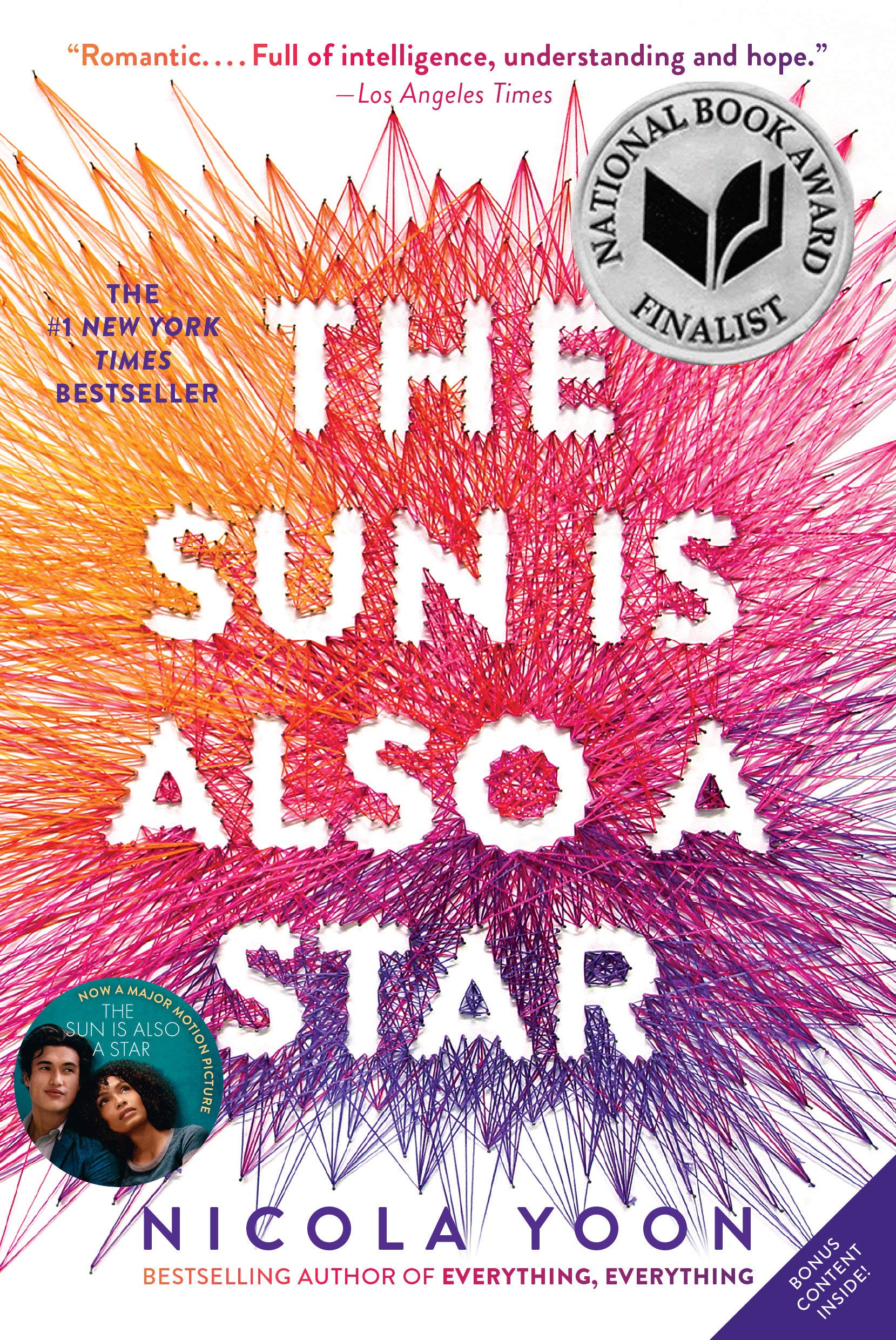
The Sun Is Also a Star by Nicola Yoon

Another great one that threatened to keep me up all night long. Keep ’em coming.

The Sun Is Also a Star is a YA novel of romance, fate, science, race, and more; 98% of it takes place in a single day in New York City. It stars two delightful and very different teenagers. Natasha is a serious science geek and impassioned fan of 90s grunge music, who firmly believes in provable facts and none of that gooey bubblegum stuff about love. She came to the United States when she was eight as an undocumented immigrant, like both her parents; only her little brother was born in the country, and now – thanks to her father’s unbelievable idiocy – the family is just hours away from deportation to Jamaica, a country that definitely does not feel like Natasha’s home.

Daniel is the younger son of Korean immigrants. His high-achieving older brother is their parents’ darling (of course), and a bully, and objectively a serious asshole; he’s just been kicked out of Harvard (Best School), though, so that’s something. Daniel has his Yale interview today (Second Best School), because he’s trying to follow the intended path and become a doctor, but what Daniel really wants to be is a poet. He is all dreams.

You can already see the drama setting up: Natasha and Daniel run into each other on this momentous day, as she attempts a last-minute legal defense against deportation and he approaches the Yale alum he’s meant to impress. They couldn’t be more different, but they’re drawn together nonetheless. Daniel intends that they will fall in love. Natasha, naturally, is having none of it. There are only hours to spare. Chapters shift between the points of view of Natasha and Daniel as well as a handful of others: side characters we’ll see for just glimpses, or a more omniscient view, including ‘future histories’ and etymologies (‘irie’), a ‘history of naming,’ a ‘history of decay.’ The effect is kaleidoscopic, and transcendent. The cumulative tone is frequently hilarious – both teens’ voices are darling, and Daniel especially is a riot; it is poignant in the ways of teenaged love; and, as established by a Carl Sagan-infused prologue, there is an all-encompassing, cosmic-scale sense of gravity and wonder.

This is a pitch-perfect story, lightning-paced as Natasha’s last day in the States and frenzied as young love, but serious as death, too. It’s absorbing, a world to get lost in. On one level it’s very much about race, racism, immigration and culture. Daniel’s father owns a Black beauty shop, like so many Korean-Americans do, and the book pauses to discuss the global forces that have set up this odd truth. Natasha wears her hair natural – which for some is a political statement, but (again the novel pauses to note, in one of those neat asides) it can also be simpler than that. “In the future, she may make it straight again. She does it because she wants to try something new. She does it simply because it looks beautiful.” I love this narrative voice: here is “an African American history” of hair; here is some of the weighty meaning that accrues; and also, here is a young woman who just wears her hair like she likes it. All of these at once.

The romance story that is the heart of this novel is very sweet and engaging. The topical content is well done and not preachy. The conversation between hyperrationality (Natasha) and dreaminess (Daniel) could have been cutesy and pat, but it’s not: it’s thought-provoking, expansive, and smart. I am, again, impressed with what YA can be. And I am therefore now interested in Yoon’s previous novel, Everything, Everything. I really think there’s something in this book for everyone. I am completely charmed. What a beautiful, book-filled world.


Rating: 8 little notebooks.

The Vanishing Half by Brit Bennett

The only difference between lying and acting was whether your audience was in on it, but it was all a performance just the same.

I’m on a roll: here’s yet another book that threatened to keep me up all night. When I finished reading this novel, I went immediately to buy Brit Bennett’s first book, The Mothers. So far there are just the two; I hope she’s writing right this minute.

The Vanishing Half begins in a curious town called Mallard in Louisiana, just two hours west of New Orleans, founded by a man whose father once owned him and whose mother hated his lightness. “He’d married a mulatto even lighter than himself. She was pregnant then [1848, when he thought up the town] with their first child, and he imagined his children’s children’s children, lighter still, like a cup of coffee steadily diluted with cream. A more perfect Negro. Each generation lighter than the once before.” And so Mallard, “a town for men like him, who would never be accepted as white but refused to be treated like Negroes. A third place.”

This colorism suffuses the novel, which is about family and secrets and the identities we inherit and choose for ourselves and those we cannot, and so much more, but always about race and color too. From that founder, generations later, are descended a pair of girl twins who watch their daddy get lynched and then run away from Mallard to New Orleans, where they part ways. One lives her life as a Black woman, and eventually returns to Mallard with a child “blueblack… like she flown direct from Africa.” The other crosses over, and becomes White.

You could drown in two inches of water. Maybe grief was the same.

Usually I get nervous when I read about ‘multigenerational sagas’ that I’m looking at a 500+ page book. This one is just 343 in my hardback edition, but does span generations – chiefly the twins and their daughters – and the country, from Louisiana to Hollywood to New York City, with other brief stopovers. It went by quickly (again, I had to force myself to sleep and finish it on day two). And yet it feels enormous. I’ve traveled so far, I feel like, with these women (centrally) and men. The plot centers on problems of race and of colorism within the Black community, but it also handles gender, sexuality, class, art, personal agency, and especially and in several forms, questions about family and love and hurting those we love, keeping secrets (as a form of love and wounding), and those questions about chosen identities (gender as well as race). I do love these Big Questions. But Bennett is also astonishing at plot, scene, and character – there are so many characters here whose stories, even briefly, captivate. I mourn closing this book (which is why I instantly ordered Bennett’s other one). Don’t even wait: do yourself a favor and get into The Vanishing Half, if you haven’t already. I wish I could read it again for the first time.


Rating: 9 worn calculus textbooks.

The Murder Wall by Mari Hannah

From Shelf Awareness I got this list of “One Author’s Top 10 Queer Protagonists in Crime Fiction,” which sounded like something I needed. This is the book I chose to buy (and it had to come all the way from the UK).

As a murder mystery, I found this one engaging, not lightning-paced but with enough momentum to pull me right through its 450 pages. In Newcastle Upon Tyne, DCI Kate Daniels is on a career fast track; she’s a favorite of Detective Superintendent Bright, who is also a dear friend. (He and his idealized wife reminded me a bit of Elizabeth George’s Detective Lynley and his Deborah. And Daniels is just a bit of a Havers.) Daniels is not without her secrets, which are uncovered slowly, or her traumas, which we know more or less at the outset: eleven months before this novel’s events begin, she discovered two bodies in a church, whose unsolved murders still haunt her. Now she lands her first case as Senior Investigating Officer, which is a rush–until she sees who the victim is.

Daniels is dogged; she is good; and she has that self-destructive thread that all good fictional detectives, it seems, possess. Her buddy DS Hank Gormley is a treat, too: loyal, smart, funny. All the troops in fact are well written and more or less likeable (there’s always that one guy). This is the start of a series, and the elements I’ll want in a series are all here; I’m ready to follow these characters forward. In the world of murder mysteries, this is a darkish one, focusing on the evil that lurks in some (all?) of us, and the novel does not shy away from sexual assaults (heads up, if you need it). I’m in for more. I will say, though, that the LGBTQ angle isn’t as developed as it might be. If you come to this book chiefly for that element, you might be mildly disappointed. I didn’t necessarily feel shortchanged, because the mystery is strong. Daniels as queer protagonist counts as representation, which is the point of the article that brought me here, and that is significant. Her queerness isn’t central, which cuts both ways: it’s cool that it’s allowed to be no big deal, but it also doesn’t add much as a framing element. Her sometimes-partner is a bit underdeveloped as character, too, but I suspect she’ll come forward as the series does. Daniels is not out at work (this was the breaking point for the erstwhile partner), and her fear of repercussions is a minor plot detail that could also develop nicely; this is the 2000s, but it’s still very true that she’s already at some disadvantage in a men’s world, before inviting homophobia in as well.

I am intrigued and shall continue. I’m also keeping my eye on the possible television series adaptation – that would be fun!


Rating: 7 bags of donated clothing.

Ring Shout by P. Djèlí Clark

Ring Shout is a most interesting, slim, swashbuckling adventure story about hunting and fighting the monsters of the Ku Klux Klan. Here, those monsters are literal: ‘regular’ (human) Klan members are called simply Klans by our narrator Maryse, while those who have ‘turned’ are Ku Kluxes, horrifying beasts who love dog meat and wear human skins but are visible to those – like Maryse and her friends – with ‘the sight.’ What we learn alongside Maryse in the course of this story is that Ku Kluxes are not the only, nor even the worst, monsters in this world.

Ring Shout is set in 1922 and begins on the Fourth of July in Macon, Georgia, where Maryse, Sadie and Chef have set up a trap for the demonstrating Klan: a stinking dog carcass laced with explosives. We begin mid-scene and then slowly get to know our heroines. Sadie is an ace with her Winnie (Winchester 1895), and Chef carries a German trench knife, taken off the enemy when she fought in World War I; but she’s earned her nickname through her expertise with bombs. Maryse Boudreaux is from just outside Memphis, where she experienced a trauma as a young girl that has set her on the path she walks now: she hunts monsters. Maryse, Sadie and Chef are backed up by other talented and badass women at a cabin in the woods outside Macon: Nana Jean is an old Gullah woman with powers of prophecy and root magic; Molly is a Choctaw scientist experimenting on the body parts of Ku Kluxes that the hunters bring her; the German widow Emma Krauss is a folklorist and ardent socialist. It is a motley and formidable crew, backed up by a few male allies who mostly serve as helpers and sexual partners but lack the sight. (This novel attacks racism head-on, while its feminism is inarguable but resides in the background. I love it.)

My editor & buddy Dave didn’t love this book, reporting, “It felt like much more of the action-packed, wise-cracking, zombie-slaying kind of horror story than I’d hoped for. I like my menace to be a bit more subtle.” And I think his description is accurate, but it worked for me. Subtlety is not the language of Maryse or her friends; they are in-your-face angry, foul-mouthed, and unapologetic about their rage, passions, and needs.

Chapters are often preceded by ‘notations’ referring to the Shouts that give the book its title. (“A shout or ring shout is an ecstatic, transcendent religious ritual, first practiced by African slaves in the West Indies and the United States, in which worshipers move in a circle while shuffling and stomping their feet and clapping their hands,” says Wikipedia.) These notations are credited as transliterated by Emma Kraus – differently spelled but the same name as the character in the book. I was fascinated, when I looked up the author P. Djèlí Clark, to find that “Phenderson Djèlí Clark or P. Djèlí Clark is the nom de plume of American science fiction writer and historian Dexter Gabriel; he chose to publish his fiction and his nonfiction under separate names so that readers of one would not be disappointed or confused by the other.” (That’s Wiki again.) This leaves me moderately confident that Kraus and her notations are historical truths, but I can’t confirm that with anything I’ve found between the pages of this book.

Clark’s Acknowledgements paint an intriguing picture of his influences for this story, citing

The 1930s ex-slave narratives of the WPA. Gullah-Geechee culture. Folktales of haints and root magic. A few Beyoncé videos. Some Toni Morrison. Juke (Jook) joints. Childhood memories of reading Madeline L’Engle under the shade of a cypress. Juneteenth picnics. New Orleans Bounce. A little DJ Screw. H-town that raised me…

and more. (Yes, the Screw and H-Town shout-outs please me immensely.) I added one book and one album to my list, and went looking for a book I remember from childhood that plays a role in this story. In other words, Ring Shout ranges widely. It is indeed a rollicking mad adventure story, and in that sense easy to read – under 200 pages and action-packed. Entertaining and horrifying. It is a tale of the memory of slavery and of the Klan and violence. It is quietly feminist. (It is also being made into a television series.) I think I’ll be looking for more by this author.


Rating: 7 juleps.

The Memory Collectors by Kim Neville

A poignant exploration of relationships offers a deep dive into the strong bonds that can form between people and everyday objects.

Kim Neville’s first novel The Memory Collectors is a feat of character and plot, as well as an intriguing consideration of the enormous significance objects and places can hold for different people.

In an opening prologue, the reader meets Evelyn, a child who loves working with her father in his antiques and restorations shop; it is a glimpse of idyllic family life. The novel then flashes forward to its central timeline: Ev is a young adult in Vancouver, socially isolated, making a living by picking through recycle bins and alley discards for items to sell at the Chinatown Night Market. Her relationship with her little sister Noemi is fractured. Their family experienced a tragedy that for much of the book remains unclear.

And then there is Harriet, an older woman with a hoarding problem and a mysterious connection to Ev. They share an ability to read an object’s emotional associations by touch or proximity, but they have very different feelings about this gift, or curse. Ev hides from things she thinks of as “stained,” living in new and undecorated spaces, and moving often as her own feelings settle in. Harriet collects the things she thinks of as “bright,” filling the spaces around her with borrowed emotions until she makes her neighbors ill with “the soft, scrambled buzz of thousands of stains.” Harriet hopes to use her collection to heal, with Ev’s help. But Ev may know better just how dangerous a brooch or a balsawood glider can be.

Ev is a heart-rending protagonist, paralyzed by her oversensitivity to the accrued memories and emotions of others. Because of her ability and her shadowed past, she keeps to herself, but still yearns for connection. Harriet’s isolation is different but parallel, as “the grubby, greedy, Gollum part of her” threatens to take over. A perceptive artist named Owen has something to offer each of them; he doesn’t feel objects as they do, but he might be better with people than either one. Ev’s sister is a troubled and troubling youth with secrets of her own. These characters form the rich heart of this tender, electric novel, which is also expertly plotted, with rising tension and danger, and carefully dispensed details from Ev’s murky family history.

The Memory Collectors is a remarkable piece of magical realism, imaginative and vivid in its specificity. Seemingly trivial items offer enormous symbolic opportunities. Thoughtful and thought-provoking, this story and its vibrant characters will stay with the reader long after the pages have closed.


This review originally ran in an abbreviated form as a *starred review* in the March 19, 2021 issue of Shelf Awareness for Readers. To subscribe, click here, and you’ll receive two issues per week of book reviews and other bookish fun.


Rating: 8 jade elephants.

The Thing About Florida: Exploring a Misunderstood State by Tyler Gillespie

Disclosure: I was sent a digital ARC of this book by the author in exchange for my honest review.


Tyler Gillespie’s essay collection The Thing About Florida: Exploring a Misunderstood State has just this week been released, and I’m happy to share it with you here. This book was indeed a good match for my reading tastes! It’s about a misunderstood or maligned place (Texas transplant to West Virginia here: I sympathize), and it’s about place, which I always gravitate towards. It’s a collection of essays that roam widely in theme, and I found Gillespie’s voice very appealing: he can be hilarious and self-deprecating, but also serious and earnest; he considers important questions, as in the painful experiences of the LGBTQ+ queer community in Orlando especially following the mass shooting at the Pulse Club in 2016.

One of the audience members near me asked her friend if the alligators were animatronic. The area’s theme parks seemed to make people question reality. Florida, in general, has a way of doing that.

Essays cover a range of topics: “Because Florida” jokes and “Florida Man”; hurricanes; Civil War reenactors (and the question of how ‘southern’ Florida really is); cattle ranchers; a gay resort/campground, which relates to aging issues for queer folks; alligators! and those who wrangle, wrestle, and love them; snakes, including breeding and smuggling and the escaped ones thriving in Florida; reptile people (that is, those who love them and attend reptile conventions); and the Joy Metropolitan Community Church, where queer Floridians find an open-minded home. “Joy MCC stood less than ten miles away from some of Orlando’s theme parks like The Holy Land Experience. Those attractions gave visitors pyrotechnic performances and larger-than-life experiences. People could escape their daily lives there, while Joy MCC–and places like it–let people come home. They gave Floridians a second chance to be who they already knew they were.”

There is opportunity for humor in some of these topics more than others. I appreciated Gillespie’s stark discomfort with the Civil War reenactors, his (perhaps surprising) affinity for the cattle ranchers (“Marcia’s food almost made me want to sign up to work as a cowboy-for-hire until I remembered the wild hogs and all the broken bones and who I generally am as a person”), and his relationship with his grandmother as it played out in hurricane prepping. He’s most concerned with human culture and history; the scope of this book does not extend very far into the natural world (except in its role as host to those alligators and snakes, etc.). He does evoke some of the landscape, though: “Sawgrass stretched for years, and gnats pestered us like siblings.” I guess I was a little surprised to find Florida characterized as a homophobic place, as my picture of Florida stereotypes involved large numbers of retirees and gay men; but there’s plenty of rural space there as everywhere, and it is the South. (Is it? There are a few perspectives, and again as a Texan, I sympathize – we run from Deep South to TexMex to the southwest. But I certainly thought of Florida as the South, however arguable that idea may be.) Which is to say, totally unsurprisingly, that I learned something from this book.

The best part, though, is definitely Gillespie’s voice. I feel like I made a friend reading this. That’s a way to say: the narrator is personable, intimate, funny, accessible, approachable. It’s pretty rare to feel this way after reading a book, and that’s okay, because not every book sets out to make its reader feel like a friend, but this one certainly accomplishes it. Perhaps the greatest victory Gillespie wins here in arguing for Florida as a real place (not a cartoon landscape) lies in his own relatability. Florida, like every other place you might name, is not any one thing. It contains the city and the country, a wide range of politics and educational and lifestyle backgrounds, and all kinds of different people. Summing up anyplace too easily would be a disservice, and Gillespie does his home state a service here by complicating it. He doesn’t argue that it’s perfect, or the best place, and he readily acknowledges its weirdness, but he makes it variable and diverse and flawed and weird and real. Somebody should commission a series of The Thing About books for the other 49 states, and keep going from there.

Thanks for thinking of me, Tyler.


Rating: 7 burgers.

White Shadow by Roy Jacobsen, trans. by Don Bartlett and Don Shaw

This second in a gripping trilogy of home, place and relationships sees a woman struggle alone, and then less alone, in World War II Norway.

Roy Jacobsen’s White Shadow is the second in his Barrøy trilogy, following The Unseen, which introduced readers to the Barrøy family and the small Norwegian island that shares their name. White Shadow opens: “The fish came first. Man is merely a persistent guest.” It is not a man but a woman, however, who occupies the center of the novel. Now in her mid-30s, Ingrid Barrøy works on the mainland, splitting and salting cod and herring. She “longed to be gone, to be back on Barrøy, but no one can be alone on an island and this autumn neither man nor beast was there, Barrøy lay deserted and abandoned, it hadn’t even been visible since the end of October, but she couldn’t be here on the main island either.”

After paddling back to Barrøy, Ingrid is indeed alone amid the ruins of her family home, until the British bomb a German steamer carrying troops and prisoners of war in nearby waters. In her family’s hayloft she finds a man alive. They do not share a language, but they share much. Hiding her guest from the Nazis and their Norwegian collaborators will send Ingrid away from home again, and it will be another arduous feat to return, but it is always Barrøy for this stalwart protagonist. She stands “suddenly wonderstruck at all the things that had kept her on the island, which in truth were nothing at all.”

Translated from the Norwegian by Don Bartlett and Don Shaw, Jacobsen’s prose is as stark and unadorned as the landscape he portrays. His characters are hardworking, worn and stoic against a ruthless natural world, but there is beauty in their strength, and in the harsh simplicity of island life. “It is as it has always been, Barrøy has everything yet lacks something of real importance.” The central setting is limited in its scope, but in Ingrid’s travels she meets a variety of characters, including profiteers and refugees, eventually repopulating her home and tentatively, perhaps, building something new.

While there is a thread of romance here, White Shadow is more a profile of an individual and a culture (“people who never sat down”). It is also a sensory experience of rough conditions and cold, work ethic and strong ties. Ingrid’s community is hard-won and all the sweeter for it. No familiarity with The Unseen is necessary for this second installment, which stands alone comfortably, although the final lines do gesture at questions about the future of Barrøy.


This review originally ran in the March 18, 2021 issue of Shelf Awareness for the Book Trade. To subscribe, click here.


Rating: 7 herring.