“Hymn to Demeter” from The Homeric Hymns, trans. by Susan C. Shelmerdine

I got to read and review a book recently, and interview its author, for a Maximum Shelf. That column won’t be out til maybe next month, and the book – Fruit of the Dead, by Rachel Lyon – not until March. But it sent me back to search out a book I hadn’t opened in years. Lyon’s is a retelling of the Demeter and Persephone myth, and so here I am with the “Hymn to Demeter” from my high school? or college? studies in Susan Shelmerdine’s Homeric Hymns. The bookmark in it was a flyer for my 20th birthday party, and it’s filled with marginal notes in my handwriting.

I really appreciated having not only the hymn but Shelmerdine’s explanatory notes, in footnotes to the hymn itself but also in an introduction to the poem. Both sets of notes provide context in Greek mythology, and explain any places where the meaning may be unclear, or there may be subtext, or the text itself may be in question. As someone with some background in the myths but who’s rusty, I loved having those reminders.

For those who may also need some reminders, Demeter was the goddess of agriculture, who with Zeus had a beautiful daughter, Persephone. With Zeus’s help, Hades, god of the underworld, abducts Persephone to make her his bride. He takes her to the underworld, where Demeter can’t reach her beloved daughter; Demeter mourns, and the impact this has on agriculture means that humankind is in danger of starving. (The gods also lose, in terms of the sacrifices of grain they are owed by humans.) In response, Zeus and Hades make a deal that Persephone may return to her mother; but Hades is tricky and convinces (or forces?) Persephone (who, let us remember, is also a child – and his own niece – whom he has abducted and raped) to eat a pomegranate seed. (In various versions, this is three, or six, or seven seeds.) Because she has eaten in the underworld, she can only return to the land of gods and mortals for a part of the year, and must return to Hades for the other part. (Again, versions tell this variously as an even split of six months each way or of eight above and four below.) Persephone, goddess of the spring, is therefore closely linked to the harvest.

I think I find the tragedy of this story hits harder now that I’m a little older than when I first encountered it.

It’s story and it’s poetry, both lovely and strange, and I love placing it in the larger field of what I’ve learned about these myths from antiquity. It’s got me excited for Fruit all over again; look out for that review to come.


Rating: 7 seeds.

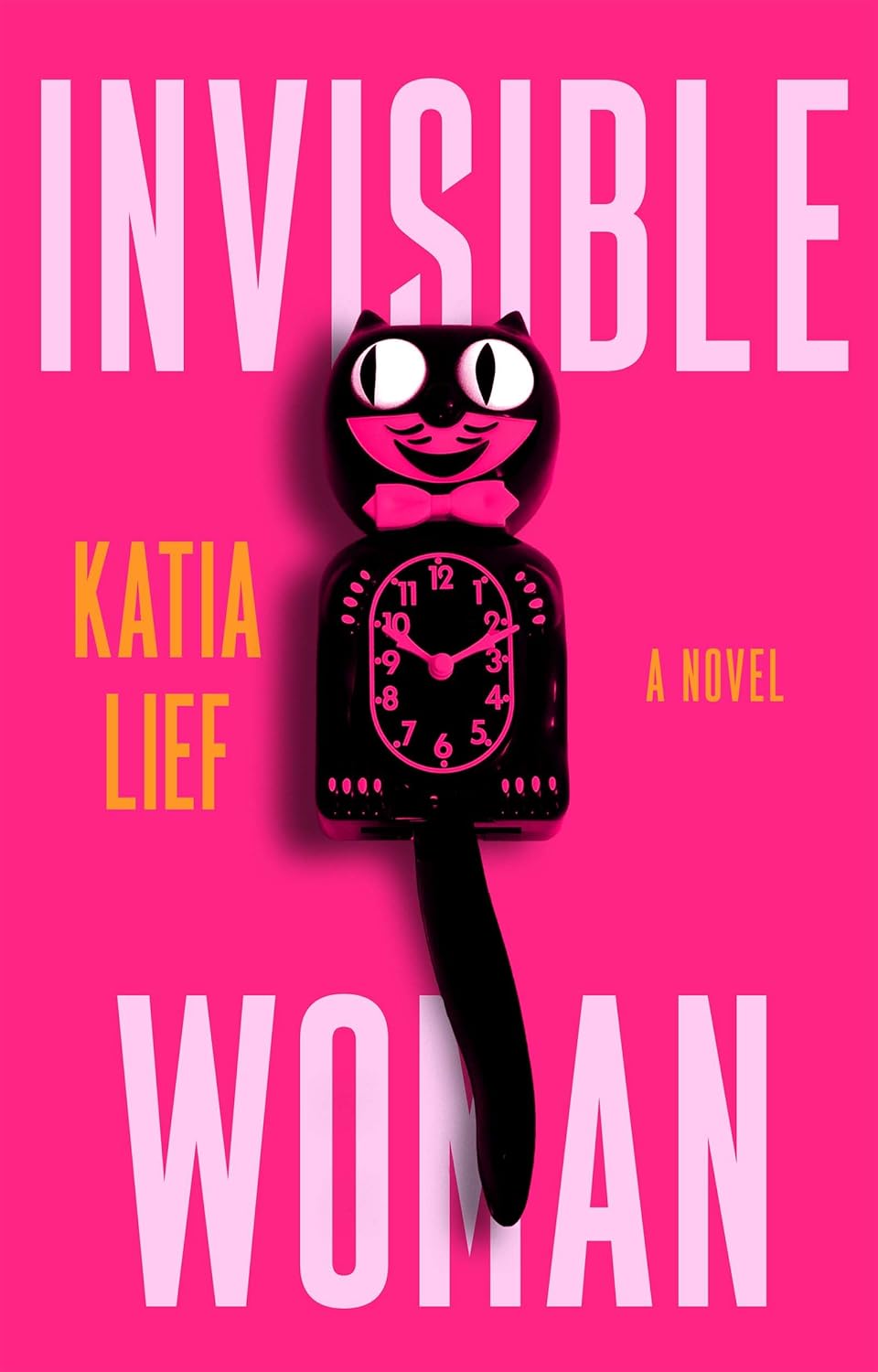
Invisible Woman by Katia Lief

A woman troubled by old crimes and loss reaches out to an old friend, with disastrous consequences in this chilling commentary on gender in society.

With Invisible Woman, Katia Lief (Five Days in Summer; The Money Kill) follows a woman navigating professional life, family, friendship, and societal roles, attempting to reconnect with an old friend whose path diverged from hers decades ago. Their stories are individually compelling, as well as offering questions relevant to the #metoo era.

Joni Ackerman had been a pioneering filmmaker in the 1980s and ’90s, and her best friend and former college roommate, Val, was a promising up-and-coming actor. A secret trauma caused the two young women to grow apart; Joni married, had children, and slowly slid beneath the surface of her husband’s sparkling career in television. The novel opens in 2018, when a fresh film-industry scandal emerges that sends Joni looking for her friend. Joni feels that the time has come to speak out about an old crime, but Val wishes to remain in obscurity, and Joni’s husband, Paul, wants to let sleeping dogs lie. Joni wrestles with her long-lost friendship over a significant divide of time and suffering. Her marriage has been strained for years, and a recent cross-country move has left her isolated. She dives into the novels of Patricia Highsmith, in editions long ago given to her by Val, for comfort and escape, but as real life grows darker and weirder, Highsmith’s gritty psychological thrillers start to feel all too close to reality.

The concerns of Invisible Woman are firmly rooted in #metoo, #timesup, and the historical and continuing challenges of women in the entertainment industry. Joni loves her daughters but grapples with what it’s cost her career to become a mother: early in the novel, she’s invited to appear at a film retrospective in a series called “Lost and Forgotten.” She struggles with personal and family difficulties, and with alcohol. Highsmith was a strong influence on Joni’s highly regarded work in film, but also threatens her tenuous grasp on reality. Readers will root for Lief’s carefully crafted protagonist, even as her decisions become increasingly irrational.

Invisible Woman twists and turns, its escalating dangers alternating with fresh reveals, as momentum builds to a breaking point. Joni is compulsive, troubled, but sympathetic; Val is less central but exerts a force of her own. Characters develop quickly from disagreeable but benign to chilling and dangerous; some readers will find this atmospheric novel engaging and disturbing enough to lose sleep. A literary psychological thriller, cultural study, and heartbreaking story of friendship and loss, Joni’s unforgettable story involves layers of lies and the dangers of self-sublimation. Lief chills, entertains, and challenges.


This review originally ran in the October 27, 2023 issue of Shelf Awareness for the Book Trade. To subscribe, click here.


Rating: 7 years.

The Opposite House by Helen Oyeyemi

I am a glutton for punishment, if that’s what this is (it isn’t). I’m a glutton for keeping myself slightly confused? Considering the challenge I generally feel when I read Oyeyemi, a sense of something unfinished and not entirely understood, it seems a little odd that I keep doing this; but the enjoyment frequently makes the unsettled feeling worthwhile. Sometimes more than others – I think Gingerbread (the first I read) was my favorite, with The Icarus Girl least rewarding. I remember feeling very pleased recently by that story collection, although I see I rated it no higher than Icarus, so what does that mean? At any rate. The challenge and (often) frustration I feel seems to still balance against what I’m getting out of these. I have another waiting on the shelf now.

The Opposite House holds together in that I’m always fairly sure what’s going on: a good start. There are two young women in this plot, whose worlds we alternate between. One is more or less a mortal human in a world I recognize as my own; the other, less so. Yemaya Saramagua lives in the somewherehouse. “A somewherehouse is a brittle tower of worn brick and cedar wood, its roof cradled in a net of brushwood… The basement’s back wall holds two doors. One door takes Yemaya straight out into London and the ragged hum of a city after dark. The other door opens out onto the striped flag and cooking-smell cheer of that tattered jester, Lagos–always, this door leads to a place that is floridly day.” Other people (?) live in the somewherehouse, too, seemingly unrelated and not especially in touch with Yemaya (frequently just Aya).

And then there is Maja, who lives in London with her boyfriend, Aaron. She is newly pregnant with the son she has always known she would someday have. She was born in Cuba to Black Cuban academics; her mother is also a Santería priest (rare for a woman). Maja has a younger brother named Tomás, nicknamed “the London baby” because he was born there. (Maja believes “there’s an age beyond which it is impossible to lift a child from the pervading marinade of an original country, pat them down with a paper napkin and then deep-fry them in another country, another language like hot oil scalding the first language away. I arrived here just before that age.” She was seven.) She has a best friend, Amy Eleni. Together, this crew navigates Maja’s pregnancy (though few know about it within this novel’s timespan) and other challenges.

Meanwhile, Aya struggles to inhabit her identity as spirit / god alongside the people / gods she relates to in various cultures… in this world, the deities of Yoruba and Santería faiths move around, as their congregants do, which is why she is disjointed, and why the confusion of the other residents of the somewherehouse. This part is a bit squishy for me (not least because I’m not particularly familiar with any faith traditions). The Yoruba gods get crossed with Catholic ones, going underground at some points in cultural & regional history for safety’s sake. Are Maja and Aya linked? Are they… the same woman? I don’t think so, but I wouldn’t swear to it.

Maja’s rather more rooted, human life makes more sense to me than Aya’s does, but the uncertainty of the two threads are working for me here, better than they sometimes do.

Lovely; I will certainly keep up with my muddled studies in the Oyeyemi worlds.


Rating: 8 wet flowers.

Here in the Dark by Alexis Soloski

Against the backdrop of New York City’s theater scene, a young woman grapples with the line between life and art in this memorable debut, lush with darkly elegant detail.

Alexis Soloski’s Here in the Dark is a thrillingly dark psychological drama, set in the least visible part of the spectacle of theater. Vivian Parry, 32-year-old theater critic for an important New York City magazine, carefully rations her vodka and sedatives to keep clear of the grasp of the “therapists I’m occasionally required to see.” She holes up in her Manhattan studio apartment, writing and editing in between shows. Readers quickly understand that Vivian is avoiding an unnamed trauma. In the audience–anonymous, with pen and notebook poised–is the only time she is remotely okay: “When I’m in the dark, at that safe remove from daily life, I feel it all–rage, joy, surprise. Until the houselights come on and break it all apart again, I am alive. I know myself again.”

It’s an act: “I am, of necessity, an imitation of myself–a sharp smile, an acid joke, an abyss where a woman should be. For a decade and more I have allowed myself only this lone role, a minor one: Vivian Parry, actor’s scourge and girl-about-town. I don’t play it particularly well.” Seeking a crucial promotion, she reluctantly agrees to an interview with David Adler, an eager graduate student and a man she belatedly suspects may be acting a part, too. “I consider myself a superlative judge of theater and life and the crucial differences between,” she thinks. “But David Adler has shaken that certainty like a cheap souvenir snow globe.” Following their odd and fateful meeting, Vivian finds herself inexorably caught up in intrigues involving a missing person, a dead body discovered in a park, an abandoned fiancé, Russian gangsters, Internet gambling, and more. The line between performance art and “real” life begins to blur still further. Vivian is heavily reliant on drink and pills; it would be easy to mistake her increasing sense of danger for paranoia, but readers can’t deny the threats slipped under her door.

Soloski, in Vivian’s clever, moody, sardonic voice, envelopes readers in details richly laden with subtext. Seasonal decorations include “cardboard Santas leering from store windows, snowflakes hung like suicides from every lamppost.” A large man has “a chest that would intimidate most barrels.” Of Justine, Vivian’s forceful best (and perhaps only) friend: “There are sentimental tragedies shorter than Justine’s texts.” Vivian’s fragile reality fractures in sleek, stylish prose. Here in the Dark is a carefully wrought, slow-burning psychological thriller: as numb as Vivian keeps herself, the terror surges to a crescendo, her wits and understanding of what is real pitched against an unknown foe.

This riveting first novel offers building momentum and looming horror with an entrancing and troubled protagonist and the most sophisticated of settings. Here in the Dark is frightening, delicious, engrossing, and unforgettable.


This review originally ran in the October 16, 2023 issue of Shelf Awareness for the Book Trade. To subscribe, click here.


Rating: 7 thumbnails.

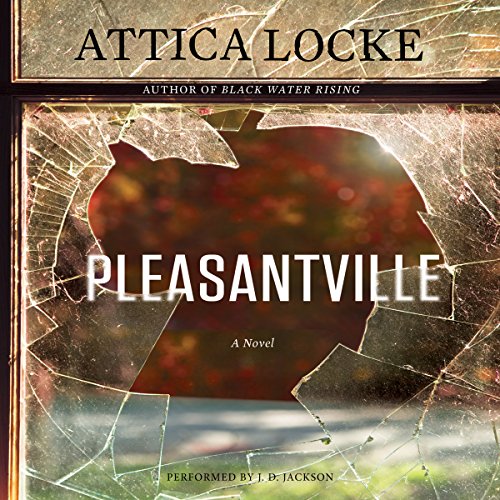
Pleasantville by Attica Locke (audio)

Attica Locke is a very strong mystery writer. I was utterly absorbed by her characters, who felt perfectly real to me, such that I worried about them when I stepped away from the book. It’s a fully-fledged world. I will say that I was a good reader for this one, too, because it’s set in my hometown of Houston, and Locke’s Houston is extremely detailed and true to the original. I loved this aspect of it as much as any other, and that won’t be quite such a nostalgic, moving experience for just any reader; but the strong sense of place and that level of detail will certainly work for anyone who appreciates those strengths.

The plot of Pleasantville is quite complex, again quite detailed, and operates at the intersection of crime, criminal and civil law, and politics, in a particular milieu. This is both a great strength and a potential liability: it asks of the reader a fair degree of attention. If you bring that to this book, you will be amply rewarded. I am still a bit reeling from it, and my admiration of Locke is solidified.

It’s 1996, and a hotly contested mayoral election in Houston is expected to hinge – as they often or always do – on the neighborhood of Pleasantville, an early-established haven for middle-class African Americans 50 years earlier and a continuing close-knit community. Then a teenaged girl disappears off the streets of Pleasantville on election night, and the criminal case clashes strangely with the political drama, and both threaten to swallow whole the man we meet on the first pages: lawyer Jay Porter, whose office has just been burglarized. Porter is still reeling from the loss of his wife to cancer a year earlier. His teenaged daughter and grade-school son are struggling in their own ways. His law practice is on its final legs. He specializes in class-action suits handling issues of environmental racism, like one at work in Pleasantville; he does not want a criminal defense case, but the most powerful players in Pleasantville have other ideas.

There are so many compelling characters in this story that my head almost spins, but it’s all woven together incredibly well, keeping me both engaged and on track (if I put in a bit of effort myself – and I’m happy to). I’m very much still thinking about Jay Porter and hoping his daughter Ellie comes through okay; I can’t wait to get more from Locke. Whew.


Rating: 8 blocks.

The First Fifteen Lives of Harry August by Claire North (audio)

I am doing the unfortunate thing where I’ve waited too long since I listened to this one. In my defense, it was a whirlwind two-week road trip that allowed me to listen to several (!) audiobooks.

Another recommendation by Liz, this one’s pretty mind-bending. Harry August narrates the story of his lives himself, beginning with the first time, when he lived unremarkably. He was born in a train station washroom in 1919, and was then adopted but didn’t know it; his adoptive mother died when he was young, and his adoptive father remained distant; he served in World War II and then returned to the estate where his father had served as a sort of maintenance man, which role Harry takes over until his own death in old age. Ho hum. Then… it all starts over again. In his second life, he does not handle well the knowledge that this has all happened once before. In his third life, he uses what he knows of the war (for example) to his advantage, staying away from high-casualty battles and the like. With each life, he gains a little better understanding of what he’s experiencing. But he struggles to make meaning of it all, even as he meets others like himself: ouroborans, they call themselves, or kalachakras. Until, that is, he meets one man in particular, a fellow ouroboran who will become perhaps his greatest friend and nemesis.

I’ve already said too much, and will let you discover Harry’s many lives and acquaintances for yourself from here.

It’s quite a thought-provoking concept, and a new twist on time travel and the tricky question of the butterfly effect. (Would you kill Hitler? What if he’s only replaced by something worse?) The novel is not plot-driven, precisely, and it’s not character-driven at all. Harry has remarkable drive to learn, understand, and explain; this intrigues me about him, but he’s a bit short on actual personality (and has more of it than anyone else in the book). So, a concept-driven novel, which is a change. I found it perfectly absorbing, one to get lost in, and to occasionally pause and ponder. I will say, there weren’t characters I liked, and that can make it a little tough to hook in. I was very intrigued, but often bemused too.

The audiobook was a strong production on the whole. Peter Kenny does a wide range of voices, which are often pleasing, but I must say his American accents are not convincing.

It will be interested to see how this one sticks with me.


Rating: 7 beakers.

Her Majesty’s Royal Coven by Juno Dawson

This very sweet story of witches, female friendship, intrigue, and coming of age was recommended by Liz. It’s a fun combination of some pedestrian features of regular life – government bureaucracy, for example – with witchcraft and magic. We first meet a group of young girls on the cusp of being inducted into the adult witch’s world of the coven; then we flash forward to find them navigating that adult world in very different ways. Witches can be people of color and queer people, struggling with what that means for any of us in the real, mundane world, as well as the parallel prejudices and oversights of witches (who might be magic but are also just people). Niamh is mourning her late fiancé and just wants to keep her veterinarian practice going smoothly, but she also can’t turn down a young warlock (or witch) in need. Elle has all but renounced her powers, enjoying her cookie-cutter life as wife and mother, until her teenaged daughter shows signs that she’s got powers of her own. Leonie runs an important intersectional coven, with the support of her beloved girlfriend Chinara, but Chinara wants a baby and Leonie’s not sure she’s ready. And Helena… well, her role as High Priestess of Her Majesty’s Royal Coven may be her logical due. Or it may be just a bit much for her. A dire prophecy appears on the horizon, and these four old friends will be hard pressed to handle it each in her own way, to say nothing of how they relate to one another.

It’s really a clever, charming, smart, modern story. These four very different women are just muddling through life as any of us does, magical powers notwithstanding. They parent, find romance, make hard choices, try to do good, and maintain important old friendships – or let them go when they no longer serve. They have to wrestle with bigotry, and they fight for what’s right. They are sweet and strong. And this novel is the first in a trilogy! Thanks for the recommendation, Liz.


Rating: 7 kittens.

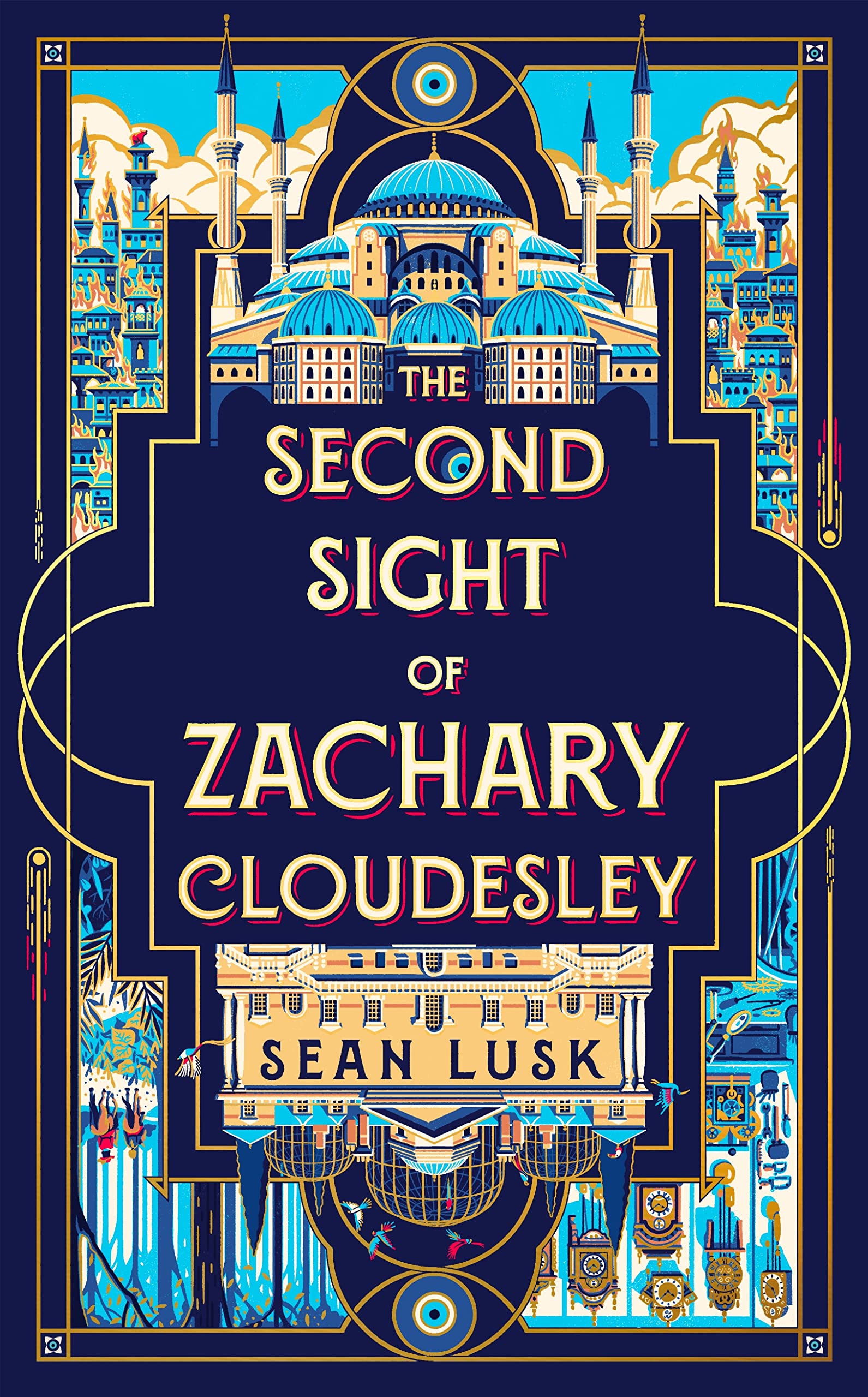
The Second Sight of Zachary Cloudesley by Sean Lusk

An exceptional boy in a loving, if odd, family, surrounded by automatons, must adventure into historical Constantinople to save his father in this debut novel of love and whimsy.

Sean Lusk’s debut novel, The Second Sight of Zachary Cloudesley, is a strange, spellbinding, imaginative work of magical realism set in 1700s London and Constantinople, exploring Pinocchio-esque questions about what is real, and the many forms of love. It contains no shortage of tragedy, but always retains a charming sense of wonder.

In London in 1754, Abel Cloudesley anxiously paces outside the birthing chamber where his beloved wife, Alice, labors. Zachary Cloudesley’s life begins with his mother’s death; Abel will be a loving father, but at first the experience is clouded by grief.

Abel is a clockmaker, but clocks are only the beginning of his artistry: he creates clockwork creatures, automatons that move and communicate like the real-life animals and humans they mimic. In Abel’s workshop, Zachary suffers a life-changing injury, resulting in the treasured son being sent away to be raised in the safety of his eccentric great-aunt Frances’s home in the country. Zachary’s no-nonsense nurse, Mrs. Morley, and the staunchly feminist Frances round out an unusual family for a very unusual boy. Zachary is a genius, precocious in everything, a great reader and nature lover. He also knows things–the past, the future–that he should not be able to know. When Abel is sent away to distant Constantinople on an odd and dangerous mission, seven-year-old Zachary says, “You should not go, Papa. You know that, don’t you?” Abel knows, but sail he does.

Years later, a teenaged Zachary will set out to rescue his father–believed to be long dead–from imprisonment in the Ottoman court. Zachary is still a deeply intelligent young man, but his studies have been conducted from the English countryside, and these travels will be eye-opening. Readers will delight in following the devoted son as he learns about a broader world, encounters romance, and seeks family. Through these pages are woven the clockwork wonders that have gotten Abel into this mess, and may yet get him out.

The Second Sight of Zachary Cloudesley is enchanting. Abel and Zachary are sensitive, compelling characters; Mrs. Morley and Aunt Franny are stalwart and impressive female heroes in two very different styles; Mrs. Morley’s daughter (raised alongside Zachary nearly as a sister) offers her own development and young romance; and Abel’s gifted employee Tom, an indispensable friend to the family, is not quite what he appears.

Lusk’s engrossing novel wraps a coming-of-age narrative in a historical setting, with lovable characters and dreamlike twists. Don’t miss Lusk’s memorable, sweet, original debut.


This review originally ran in the October 12, 2023 issue of Shelf Awareness for the Book Trade. To subscribe, click here.


Rating: 8 peacock feathers.

Maximum Shelf author interview: Douglas Westerbeke

Following Friday’s review of A Short Walk Through a Wide World, here’s Douglas Westerbeke: “It Might as Well Be Infinite.”


Douglas Westerbeke is a librarian in Ohio, at one of the largest libraries in the United States. He began writing with screenplays, and has served for the last decade on the local panel of the International Dublin Literary Award. His first novel, A Short Walk Through a Wide World, coming from Avid Reader Press on April 9, 2024, is the dazzling story of a woman who must keep moving to outrun a mysterious curse, and a library that seems tailored perfectly to her.

Did reading for the Dublin Literary Award help you write this novel?

Douglas Westerbeke (photo: Roan Westerbeke)

I was reading 50 to 100 novels a year, and some I loved and found really inspiring, and some of them were awful. I thought: I can do better than that. The more you read, the more story ideas you keep having; it snowballs, I guess. I used to write short stories when I was a little kid. My mom always told me, you should write a novel. I said no, I can’t be a novelist, those are real writers! I can’t be like them. The Dublin Literary Committee opened my eyes. It’s achievable. You could be like one of these guys–mostly gals, actually. That’s what inspired me. I thought, I’ll give it a try. It’s hard. I’m not used to working on prose that hard, at a sentence level. That’s where all the work really is, for me anyway. And structure. This one is particularly hard for structure.

What impact did your screenwriting background have on the novel?

I lived in Los Angeles for a while, writing screenplays and sending them out. I did pretty well–four of them got optioned, but they never got produced. I gave up. Well, I shouldn’t say that, because I kept writing. In fact, the day I was going to give up, I had another story idea, about a guy who tries to give up his life as a musical composer.

I had kids, and that slowed things down, and I had cancer, and that really slowed things down. And then the Dublin Literary put me on a different path. Forget that, I’ll try this. My odds were better. Back there it was like a million to one, and this is like 100,000 to one. I thought, those are pretty good odds!

Where did the idea of Aubry’s illness come from?

This all began as a short story idea. It was kind of a comedy. It was an old lady in the same time period–if you put it in the modern day, everybody would just be hanging out in airports, right? Older days, you get to ride trains and ships. Old lady goes to her doctor and says, I’m feeling arthritic, something small like that, and the doctor says, maybe try traveling. Go somewhere warm and dry. And all she hears is “travel.” She just takes off, and she’s so scared of her ailment, she ends up in these dangerous situations traveling around the world. She’s this doddering old fearful lady–the joke is, the cure is worse than the ailment. But then I kept thinking, how am I going to end it? She’ll be on a cruise ship, and it’ll break down in the ocean, they have to anchor, and in the middle of the night she passes away. She was so concerned that what the doctor said was true that she just passes away. And then all of a sudden I was like, this isn’t a comedy anymore!

I thought, maybe she should uncover some great mystery of the world before she goes. She ended up being a nine-year-old girl instead, because now I have so many ideas, I’m not going to get it all with just this little old lady. It’s got to be a whole lifetime.

You are a librarian whose novel, naturally, involves a very special library.

It’s the best place ever to work. I love working there. And working there, you’re doing your stuff, you’re processing the new books, you’re answering questions, you’re doing research, and all the while some book will be sitting on the corner of the desk, and you’re just looking at it the whole day, and it looks really interesting, but you have so much work to do. That’s the life. But then maybe at the end of the day you’ll have some time to yourself, and you’ll open it up. It’s like a treasure trove. Random stuff. I’ve studied an analysis of Shakespeare, I’ve learned how to invest in the stock market, I’ve compiled hundreds of recipes to cook, all because random books kept coming across my desk. And then you start to realize, I’m not reading even the tiniest fraction of the books in this collection. I will never live long enough to read them all. It might as well be infinite.

I was always struck by the impossibility of all this knowledge no one person could ever get. And we have these libraries all over. I mean, I’m in a pretty big library, but even in a small branch I wouldn’t be able to read it all. The idea of the infinite library, I guess, comes from that. But I’m not the first guy. Borges does this all the time. It’s also a riff on him, I suppose.

You are yourself well-traveled. What kind of research was necessary?

I’ve traveled a bit, but almost nothing in this book happens in places I’ve been. I’ve been close to Thailand, or Siam–I was in Malaysia. Doesn’t count! And I certainly wasn’t there in 1900. The whole world is different now, so you really have to research it in the library anyway.

I read all up on the gold rush, and how all these women got rich up there, and I read all about North Africa and people’s experiences, Westerners who got shipwrecked and tried to make their way across the Sahara… the best book I got, I found up in the storage in our library. It was all about the Indian royalty during colonial Britain, and it had all these photographs.

You have the story first. The research is really useful–it helps add color, detail. If you’re way off on an aspect of the story you can correct it. But for the most part, the story I had when I started was the story I ended up with. You want to be sure you’re not doing any blatant anachronisms or anything. I love Braveheart but there’s no historical accuracy whatsoever. But this novel takes place in a lot of obscure little corners of the world, a century ago. All these places no longer exist. And it’s a fantastical story as well, which gives you a lot of wiggle room. You don’t necessarily have to be a nitpicker when it comes to the research, but it does help you to not mess something totally up. You can describe the Arab woman with the copper coins.

What’s next?

I’m working on another with similar themes to this. It’s tricky because it’s modern-day and the characters are two little kids, and I’m trying to write it in their voice. I’m reading a lot of Emma Donoghue.


This interview originally ran on October 12, 2023 as a Shelf Awareness special issue. To subscribe, click here, and you’ll receive two issues per week of book reviews and other bookish fun.

Maximum Shelf: A Short Walk Through a Wide World by Douglas Westerbeke

Maximum Shelf is the weekly Shelf Awareness feature focusing on an upcoming title we love and believe will be a great handselling opportunity for booksellers everywhere. The features are written by our editors and reviewers and the publisher has helped support the issue.

This review was published by Shelf Awareness on October 12, 2023.


Douglas Westerbeke’s debut novel, A Short Walk Through a Wide World, is a wild romping adventure, a poignant tale of relationships and interconnectedness, and a compelling journey of self-discovery. The worldwide (and possibly beyond) travels of Aubry Tourvel have something for every reader, with a momentum that’s impossible to turn away from.

“The paper is clean and white–she hasn’t drawn her first line–so when the drop of blood falls and makes its little red mark on the page, she freezes. Her pencil hovers in her hand. Her heart, like it always does, gives her chest an extra kick.” With these opening lines, readers meet Aubry mid-scene, in a marketplace in Siam. Her illness has returned. First the blood, “And then the pain strikes–a terrible, venomous pain–a weeping pain, like a nail through a rotten tooth.” The first pages are adrenaline-fueled, as Aubry runs for her life.

Aubry recounts her past in fragments to people she meets along the way. In early chapters, she narrates the beginning of this singular illness, this mysterious curse that appeared when she was nine years old in 1885, where her family lived in Belle Époque Paris. She ran, and “Every step made her breath flow easier, made the pain slip a little farther away. She knew this would be her strategy from now on. She would outrun it.” Precocious Aubry quickly intuits the inexplicable rules of her condition: she can never revisit the same place twice, can never retrace her steps, can stay in one place only two to three days, four at the most, before she must move on. And so begins a life of constant travel. From a privileged, spoiled childhood, Aubry becomes resourceful, wary, self-sufficient, standoffish, and eventually a kind–but always watchful–wanderer.

Aubry fashions a spear and becomes adept with it. She travels mainly on foot and by boat, doing odd jobs, fishing and hunting. Her relationships, while often meaningful, last only days. One of her most significant love affairs lasts a whole week, aboard a moving train, until the train breaks down and she must leave her lover behind. A few acquaintances try to travel with Aubry, but it becomes increasingly clear that she is special, able to withstand more than the average human. On foot, she crosses the Himalayas, and the Calanshio Sand Sea in the Libyan desert. She finds libraries filled with wordless books containing only pictorial storytelling–to overcome language barriers–and discovers that these libraries, perhaps a little magic, are for her alone.

The workings of Aubry’s unique, global-scale library are never clear, even to her. There, she finds everything she needs: sustenance, warmth, information. “It comforts her that for every path she’s taken during her many revolutions around the world–for every individual footstep, it seems–there’s a story. Something once happened, a past that is not hers.” This is what library-lovers everywhere have long known, but it is also a device that allows for one of the more magical elements of Aubry’s strange travels. “‘It seems,’ said [one brief acquaintance], ‘that the world you travel through is not the same world we travel through.’ My God, thinks Aubry. My God.”

It is a lonely life. People she meets tend to “romanticize her illness. They imagine an eternal holiday, which is ludicrous, of course. Does anyone really want an eternal holiday? A holiday is a temporary break from the routine, a chance to shake off the dust of habit, to experiment with new foods and customs, but then to return, perhaps borrowing from the outside, perhaps rejecting it–but either way, a return.”

Westerbeke’s imagination is prodigious, and the details with which he fleshes out this absorbing tale are equally abundant. A Short Walk Through a Wide World abounds in the tastes, smells, textures, and sensations of a woman who lives almost from moment to moment. Her haphazard travels, rarely planned, are always in response to a sharp pain or a nosebleed, or worse. She stays just a half-step ahead of the illness which she’s come to personify. “It clung to her back, fingers and toes screwed into her bones, gasping and grinning at all the places she went, a happy demon mounted forever on her shoulders.” She speaks to it, and it responds.

Aubry’s travels arrange themselves into a moving story, often sad, but also filled with joy and fun. Aubry has a special weakness for children, and delights in engaging with them wherever she goes, from a ferry in Siam to a tribe in the Congo. This expansive tale offers new ways of looking at the world–wise, questioning, as rich in emotional depth as it is in detail. The characters she meets are numerous and diverse: New Zealanders rescue her in Siam; an Ottoman fisherman encourages her to gain a meaningful skill; an Indian prince befriends her; a Tibetan nomad invites her to hunt a mysterious beast; a Mexican journalist tracks her down in Alaska. A Short Walk Through a Wide World is utterly engrossing, a world–worlds–to get lost in. In these riveting, swashbuckling adventures, tender meditations on relationships, and philosophical musings about travel and home, every reader will find something to love.


Rating: 9 horned cucumbers.

Come back Monday for my interview with Westerbeke.