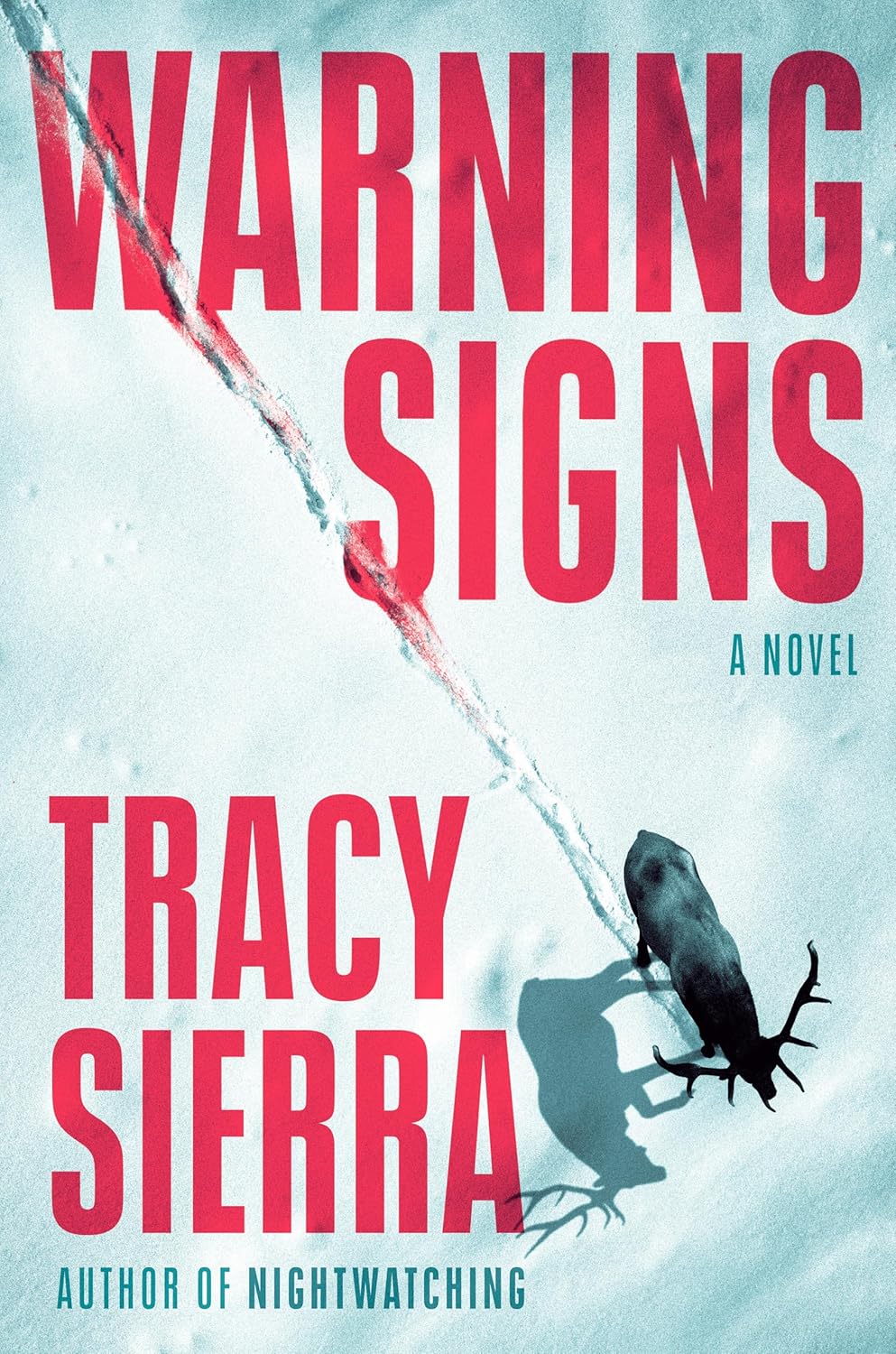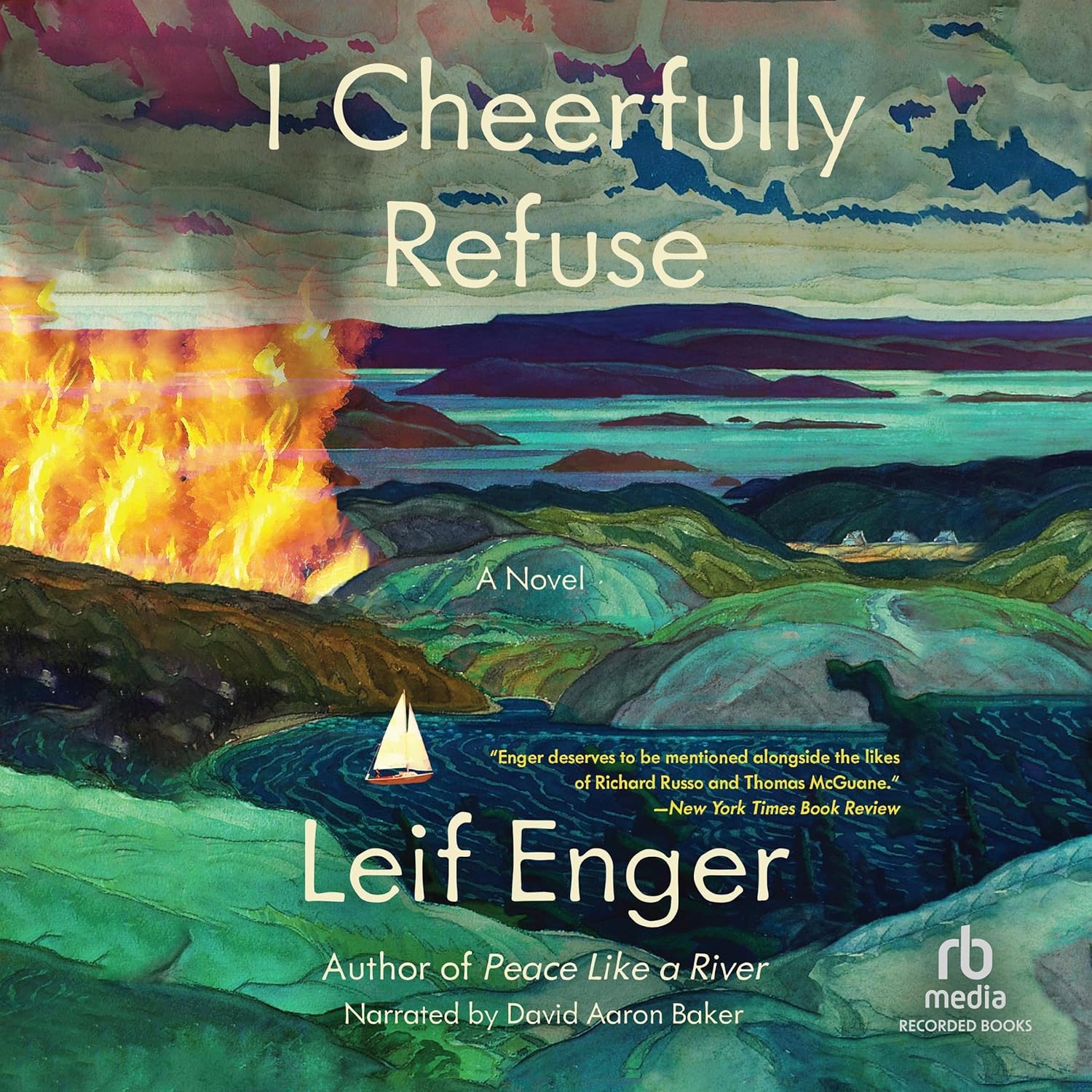
The Language of Ghosts by Heather Fawcett

With this, I have read all of Fawcett’s published books (although I do have Agnes Aubert’s Mystical Cat Shelter on preorder). Sad day.

The Language of Ghosts, offered for middle grade readers, continues to please. In the opening pages, young Noa is sorely grieving the recent death of her mother, queen of Florean. Her brother Julian is newly crowned king although just a teenager. Florean is an archipelago nation, long ruled by the Marchena family of which Julian is now the eldest. The Marchenas are all magicians, and Julian, like his mother, is a dark mage: this means that instead of speaking just one magical language (like most magicians in their realm), they have multiple languages. Julian is completely unique in that he can speak all nine. The Princess Noa, at eleven, is unique among the Marchenas for having no magic at all. In this opening scene, we find her dashing out of the banquet hall in tears at the presentation of their late mother’s favorite dessert (raspberry sundae). Hiding with her emotions in her closet that night, Noa is able to avoid the assassins who come to kill her and her little sister, five-year-old Mite; together the three siblings escape a violent coup in a small fishing boat and set up housekeeping on a new island. Whew.

Fast forward two years. Julian, a powerful magician but with very little think-first instinct, strategy, or perhaps even common sense, is much assisted by his younger sister Noa, who has no magic but lots of strategy, planning, and organizational skill. Cataloging, listing, and mapping are among her passions. Young Mite has two interests: insects and getting dirty. Well, and food. Operating as a king-in-exile with a small but important following, Julian both relies on Noa’s talents and also tends to discount her. Mite follows her around endlessly. The reader might surmise that the smallest Marchena has been through some trauma and finds constant contact with a sibling comforting; Noa is just annoyed.

Julian has enchanted the island of Astrae so that it moves, like a large ship, piloted by his loyal former-pirate captain Kell. They’ve been roaming the seas, taking back Florean one island at a time, but under constant threat by the usurper king, Xavier. Noa, the star of this story, is hard at work on two missions: to get her brother back on the throne where he belongs. And, privately, to prevent the dark magic he wields from turning him to darkness. The Marchenas discover that Xavier is on the hunt for a weapon that could take Julian down: one or more lost magical languages. Our young royal siblings know that they must get there first. Imagine everyone’s surprise when it turns out that, of all people, previously non-magical Noa is the only one who can speak the language of death. She is herself split between puffed-out pride at her new power, and a desperate desire to speak to her mother again. And to save Julian and the Florean kingdom, of course.

The Language of Ghosts showcases Fawcett’s best features. These are three rather ‘normal’ siblings, underneath all the magical and royal trappings: they have three distinct personalities and sets of skills and interests, and are experiencing different phases of childhood. They clash constantly but love each other dearly. Meanwhile, they dwell in a world that emphasizes Fawcett’s imaginative powers, with magical languages, dragons, illusions, sea monsters, betrayals, intrigue, and a wide array of wonderful cakes. Noa is engaged in learning some of the most important lessons of growing up, including the idea that even when we want the best for our loved ones, we can’t control them. I love the nuance Fawcett gives her young characters. Like the others, this is a book that manages to be funny and silly, heartfelt, harrowing, and wholesome. I would follow this author anywhere.


Rating: 8 mouthfuls of octopus pie (throwback to The Islands of Elsewhere).

author interview: Rabih Alameddine

Following my review of The True True Story of Raja the Gullible (and His Mother), here’s Rabih Alameddine: In an Insane World.


Rabih Alameddine is the author of Comforting Myths: Concerning the Political in Art; novels including The Angel of History, The Wrong End of the Telescope, and An Unnecessary Woman; and the story collection The Perv. He divides his time between his bedroom and his living room. His latest novel, The True True Story of Raja the Gullible (and His Mother), considers the life of a high school philosophy teacher in Beirut and his fractious relationship with his overbearing mother.

You are a painter as well as a writer–what is the relationship between the two?

Rabih Alameddine
(image: Oliver Wasow)

I’m not very good at painting, which is fine, because part of the reason I enjoy it is I don’t ask of myself a lot. It’s as if I no longer enjoy writing; I put so much pressure on myself.

I started taking piano lessons at around 58, and I can’t say I am the worst piano player ever, but it’s close. I love that there’s no requirement. Removing the pressure, painting allows me to play.

It takes two to three years for something to grab a hold of me for a writing project. It might be interesting for a month or for an hour, but to sustain interest for the three to four years that it takes to write, is a big thing. Whereas with painting–ooh! That’s a lovely tree! It’s expressing a feeling at that time. It’s not necessarily instantaneous, but it’s not a long-term obsession. Writing is all about obsession, what will not leave my head.

It’s the pressure of making something good that troubles me. I watched a documentary on Meredith Monk the other day, and I was fascinated. She does a lot that is just experimental. It might work, it might not, people might see it, they might not. And I started thinking, when was the last time I did something like that? I don’t know.

Painting and bad piano playing allow me to relax. To allow play back into my work. I make it sound like my work is serious, which it isn’t, but my intention is serious. And I think that’s the problem. One of the worst things an artist can do is take themselves seriously. You have to take it a little seriously, but there has to be some part of me that always goes, ha ha! You think that’s good! Otherwise it becomes too earnest. There has to be a part of me that wants to change the world and a part of me that says, fuck it.

Does your wonderful humor come naturally?

Humor is my defense mechanism. How can one live in this world and be conscious of all the traumas that we cause and still be sane if one didn’t have a sense of humor? How do we deal with the Trump years? One of my ideas was to write this book where this woman gets distracted by two men, one who’s all sex and the other who’s all patriotism. I’m trying to see, would that work as distraction? Would having a lot of sex counter the guilt of being part of a genocide? Or cutting Medicaid on millions of people? How do we deal with these things? What is the distraction? For me, it’s humor. In an insane world, being insane is quite normal.

Raja the Gullible starts and ends in 2023 but jumps timelines in the middle.

I did not want to deal with Gaza, so it had to stop in 2023. There’s no way anybody living in Lebanon or, for me, in the United States, could not deal with it if it goes past 2023. Hakawati ended in 2003, right before the Iraq invasion. You can’t not deal with it, and dealing with it would take over the book.

I wanted this parabolic look at life, and the center of it is the kidnapping, if you want to call it that. I was interested in how we looked at trauma, and how trauma has become identity. We have prescribed ways of dealing with trauma; I sometimes think that it might be better if we go back to not dealing with trauma. We forget that two people might have the same experience and have completely different outlooks. We tend to think this person is this way because such and such happened to them. This is not just wrong, it’s insane! Not even Freud ever suggested that this would explain everything. It has become a cliché: my father did not pay any attention to me and that’s why I fall for men who are such and such. That’s bullshit! I went to see this movie, one of the Marvel superhero movies, and it had a talking racoon. And the movie actually went back to how the raccoon was tortured as a baby raccoon, and I thought, wait, am I supposed to become attached to a raccoon?! This book is sort of the anti-raccoon. Yes, yes, Raja could go back and deal with [his trauma], but dealing with this is not his primary concern. He’s functioning. That’s what I was going for… and then I started writing, and the mother took over.

I did want to write about love. Whether you want to call what was between the two boys Stockholm syndrome–I hate these terms, because it assumes the syndrome is the same for everybody. It isn’t. I wanted to show different kinds of love. It turns out that the weirdest was Raja and his mother. They’re completely devoted to each other, and they want to kill each other. There’s one line: Raja says, “I want to kill my mother. I don’t want to hurt her!” If you live through a civil war and you’re kidnapped, how much would you want the world to be orderly and controlled? He’s a control queen. His mother is, what is the opposite of a control queen? A chaos queen. That was the primary tension.

What do you hope your writing offers to the world?

I am both still shocked that anybody reads me–What?! You don’t have anything better to do with your time?–and shocked that I am not read by absolutely every single person on earth. It is in this tension between ‘you must listen to me’ and ‘why would you listen to me’ that I think art resides. This tension of narcissist megalomania and, I don’t want to call it self-loathing, but feelings of utter incompetence. I hope that tension makes something good.

A book doesn’t exist without a reader, but we’re all different. If you write in every detail, down to the knot in your shoelaces, that leaves little to the reader’s imagination. I tend to write just enough description to be believable, but readers fill in the rest. Because we’re all so different, each reader brings something different. I used to think if we could just empathize–but a book can never do that, in my mind. If this romantic notion were true, that a book can change a life… there are so many amazing books, and we still commit genocide. It is my perspective that what you get out of it is yours–it’s not from the book. Maybe what books do is light a fire under you. What you already had.


This interview originally ran in the September 5, 2025 issue of Shelf Awareness for Readers. To subscribe, click here, and you’ll receive two issues per week of book reviews and other bookish news.

Her One Regret by Donna Freitas

A young mother confesses regret in this satisfying, dynamic mystery that is also a rousing conversation starter about an experience of motherhood still treated as taboo.

Donna Freitas’s Her One Regret explores what one of her characters calls “the last taboo of motherhood.” At once a rocket-paced crime tale of suspense and a thoughtful examination of cultural dictates about motherhood, this novel of women’s lives and relationships excels as both entertainment and a call to difficult but necessary conversations.

In a brief introductory section, readers meet Lucy in the parking lot of a supermarket in Narragansett Beach. On a gorgeous, early fall afternoon, she loads groceries alongside her nine-month-old daughter, Emma. Then begins Part I: “The First 48 Hours.” Lucy has vanished; Emma is found, alone, crying, but perfectly fine, in the parking lot. The small Rhode Island community is horrified, united in a search for the missing mother. But then it is revealed that Lucy had recently confided in her best friend, Michelle, that she regretted having Emma. She had fantasized about staging her own disappearance. The community and the nation erupt in harsh judgment. Is Lucy a kidnapping victim, or on the run? Is she a monster? What do we make of a woman who regrets motherhood?

The rest of Freitas’s narrative jumps between the lives of four local women. Lucy is seen mostly in memory, or as a symbol. Michelle is devastated by her best friend’s disappearance, in love with her own role as mother, but galvanized to defend her friend. Lucy had tried to tell Michelle what she was suffering, but “Michelle did the thing everybody does with mothers: dismiss their feelings as not real. Michelle gaslit Lucy, kept gaslighting her. She hadn’t meant to.” Diana, a retired detective, is drawn to Lucy’s case and its similarities and differences from other vanished women. And then there is Julia, whose baby is the same age as Emma: “Julia keeps waiting for the moment she’ll feel bonded to her son, that miracle other women talk about when connection and unbelievable love will flood her person and overcome the dread, the sadness, the resistance. But it never happens.” Julia, an artist who can no longer bring herself to create, sees herself in Lucy, shares the fantasy of escape, and now watches as the world on social media condemns her parallel self. Her desperation feels like an emergency no one around her will acknowledge.

Freitas (Consent; The Nine Lives of Rose Napolitano) relates these lives and quiet–or in Lucy’s case, suddenly very public–struggles with nuance and compassion. Her One Regret is purposefully thought-provoking and a riveting mystery–a masterpiece of duality, not soon forgotten.


This review originally ran in the September 5, 2025 issue of Shelf Awareness for the Book Trade. To subscribe, click here.


Rating: 8 sketches.

The Mystery at Dunvegan Castle by T.L. Huchu

Book three of Edinburgh Nights (The Library of the Dead; Our Lady of Mysterious Ailments) might be the best yet. Ropa is still pushing on in her unpaid internship for the Society of Sceptical Enquirers (or rather, its secretary, her patron, Sir Ian Callander), and at this book’s start, she finds herself at Dunvegan Castle on the Scottish Isle of Skye, assisting with the biennual conference. This should be low-level drudgery, but Callander is good about keeping Ropa handy; and anyway, events quickly take a turn for the unusual, necessitating Ropa’s special skills in solving mysteries. A prestigious Ethiopian magician comes to visit, a priceless ancient scroll (valued both as an antiquity and for the secrets it contains) is stolen, and a librarian – Ropa’s favorite, in fact – is murdered. And our young hero is on deck to save the day. But where she has some experience solving crimes and battling magicians, here at Dunvegan she might just be outclassed. Everybody on site except Ropa, it seems, is a professionally trained magician. Academia and the Society have turned out much less virtuous than she’d imagined. With the written advice of Niccolò Machiavelli running through her mind, Ropa decides she can trust no one. Even her heroes are suspects.

This might be the saddest in the series, as Ropa becomes disillusioned with the society and the Society she had been so keen to join. We continue to admire her for her own strong morals, even if standing on principle sometimes gets her in arguably unnecessary trouble. But her ideals are shaken as she finds out that the people she’d looked up to are fallible.

That said, it’s a great story, expertly paced and compelling, with characters we care about. And I was thinking this was a trilogy, but this book ends on a hell of a cliffhanger, and I’m glad to see there are four published books in the series with a fifth due in December! So I’m pleased to be hooked by Huchu’s singular and unforgettable young ghostalker-turned-investigator. Get on board.


Rating: 8 servings of cranachan.

Witchcraft by Sole Otero, trans. by Andrea Rosenberg

This graphic novel follows an unusual household over several centuries in Buenos Aires, Argentina, through various characters whose lives are impacted, if not ruined, by three enigmatic sisters.

Argentinean comics artist Sole Otero (Mothballs) offers a tale that meanders through historical and speculative fiction with Witchcraft, a graphic novel that spans centuries in Buenos Aires. In Otero’s evolving but recognizable visual style, the opening scene emerges spookily from the fog, as a ship arrives in Nuestra Señora del Buen Ayre in 1768. (One of a series of footnotes explains that this was the original name of Buenos Aires, given by the conqueror Pedro de Mendoza.) Readers see three women disembark with their goat, taking with them the three-year-old son of another passenger, to the latter’s wails of despair. From these early, atmospheric pages, a sense of unease is established and maintained.

The following sections of the narrative undertake large jumps in time. In more or less present-day Buenos Aires, a man tells his friend a scarcely credible story of nude women dancing around entranced nude men, with a goat and a chalk circle and “this super creepy music.” In an earlier, historical setting, a Mapuche woman goes to work at a grand estate for three sisters who are both feared and respected in their local village, to a horrifying end. In modern times, a reclusive woman exchanges e-mails with a similarly lonely man, the veterinarian who came on a house call to look at her sick cat; he tells strange, disturbing tales about his family and the elderly goat they want him to save. A nunnery sends an allegedly evil orphan girl to live with three sisters who normally adopt only boys. From these and other narrative threads, populated by spirits, witch hunts, pleas and losses, readers begin to piece together the fractured story of the María sisters and their unusual, perhaps supernatural, habits.

Otero’s style of illustration varies somewhat between sections, but is often distorted or off-kilter, and highly detailed; in full color, her characters’ facial expressions and contortions advance the unnerving atmosphere of the larger story. Page spreads may include carefully spaced panels or no panels at all; text style likewise shifts, with infrequent footnotes to help readers along. This results in a sinister, mysterious, and deeply compelling reading experience. Translated by Andrea Rosenberg (who also translated Otero’s Mothballs), Witchcraft blends horror, dark magic and dark humor, rage and righteousness. This disjointed, sometimes discomfiting, entertaining story addresses colonial power and indigenous resistance alongside ritual, sex, and sacrifice in an eerie, phantasmagoric package not soon forgotten.


This review originally ran in the August 18, 2025 issue of Shelf Awareness for the Book Trade. To subscribe, click here.


Rating: 6 trees climbed.

Verity Vox and the Curse of Foxfire by Don Martin

This lovely book came to me from a Shelf Awareness review. I was hopeful that it will be right for one of my young friends next, especially with the Appalachian connection. And I think I was right!

The town of Foxfire, deep in the dark woods in a holler, is cursed. Following the withdrawal of the coal companies, struggling, the townspeople had made some deals with a traveling peddler who calls himself Earl. It started out innocently enough, but Earl’s prices were untraditional: one’s ability to see the color blue for fair weather. The hearing in one’s left ear for his horse to be healthy. A man’s jaw for some good canned vegetables. When the town pushes back against their tormentor, he takes his revenge. The bridge that connects the town to the rest of the world is destroyed, and attempts to rebuild it always fail. Animals sicken, food rots, the earth will no longer yield produce. The people seem doomed to despair and slow deaths, able neither to provide for themselves nor to leave.

Someone in Foxfire sends out a message.

And then the reader meets Verity Vox, a young witch in training, awaiting her next assignment. Her familiar, Jack-Be-Nimble (generally known as Jack), who normally appears as a black cat (sometimes a kitten) and sometimes as a black bull, a jaguar, a black rat, a crow (etc.), finds the message: “We’re cursed. Send help!” And Verity Vox goes to Foxfire.

Verity is young and still learning. Part of any witch’s training involves moving around: she can only stay in a place for one year, and then she must follow the signs to the next place she can help. Her powers and talents have come naturally to her; she is accustomed to easy success, and to being welcomed wherever she goes. People are glad to have her assistance. In Foxfire, however, things are different. The town got burned hard by the last magical being from whom they accepted ostensible help. And these hills can be a little insular. For the first time, her advances are unwelcome. Verity is perplexed; but she only wants to help, she keeps repeating. Her first reluctant customer (so to speak) keeps asking what she owes Verity, and Verity is baffled. Mistrust, it seems, is an unfamiliar concept.

So, Verity and the town have much to learn about each other. And then there is the pressing mystery of Earl – who he is, from where he draws his power, what it would take to rid Foxfire of his malice once and for all. Magic can do a lot, but there are still rules. For example, “tea… eluded even the most powerful of witches. It simply could not be rushed and every attempt to do so resulted in a brew that was bitter, bland, or box turtles.” Verity is very powerful. But there is much she doesn’t know yet about the world, and Earl is an unprecedented challenge, and the more she gets to know the people of Foxfire, the more she wants to improve their lot. There is a point where she thinks she will be able to offer them an escape, a literal exit from the place, and is surprised to learn that they don’t want to leave their home. More lessons to learn for our young witch protagonist, but she remains determined. “What was magic after all but having the gall to believe you could tell the world around you how it ought to be and then watching as it did as it was told?”

This is a beautiful story about learning and growing up, facing challenges, relationships formed with people and with place. The connection to Appalachia feels very special to me, and I have been telling everyone I know about it. The book is recommended for grade levels 10-12, although I see no reason not to give it to kids a little younger than that, and obviously it has enormous appeal for some of us adults, as well. Will be on the lookout for more from this author!


Rating: 8 candles.

Sister Creatures by Laura Venita Green

From rural Louisiana to locations around the globe, the same problems and secrets follow a quartet of girls-become-women in this arresting, unnerving, and wise debut novel.

With Sister Creatures, Laura Venita Green invites her reader to navigate a shape-shifting world, beginning in rural Louisiana and ranging overseas and into starscapes and imagination. Rotating among a small group of girls and women, this imaginative narrative muddies the line between the novel’s real world and a fictional one within it. The result is dreamy, often disturbing, and hauntingly unforgettable.

In the opening scene, Tess uses her isolated job as a live-in nanny to hide away from the life she feels has already cratered, at age 20, with her heavy drinking. A neighboring teenager, Gail, makes a disquieting appearance: she is clearly not well, perhaps in danger, but rejects Tess’s half-hearted offer to help. The older girl “hat[es] how relieved she felt not to have to deal with anything.” Gail’s plight becomes a legend to the other characters until she makes a reappearance as an adult at the novel’s end. Meanwhile, Tess grows up and has a daughter of her own, lives around the world as part of a military family, but struggles to escape the problems she hid from in Pinecreek, La. Her former best friend, Lainey, leaves Louisiana as well, resulting in permanent banishment at the hands of a troubled younger sister. Another young woman, Olivia, wrestles with the local options, characterized as “Jesus and booze,” and with a sexuality not likely to be tolerated there. And then there is a recurring character whose entire reality seems in question. While they all choose to leave Pinecreek, the struggles that originate in their shared hometown follow these characters to Munich, Baltimore, New York City, and beyond.

In their parallel comings-of-age, and across generations, Green’s characters thread their paths between love and spite, affection and abuse. Their loose connections and jumps in chronology reward close attention, contributing to a slightly off-balance reader experience that is very much a part of the novel’s atmosphere. Sister Creatures blurs the concepts of reality and of right and wrong. Are the woods–of Louisiana, Maryland, or Bavaria–sanctuary or threat? Who is real and who is made up? Green’s narrative offers a strong literary bent, as characters interact with “The Yellow Wallpaper,” old fairy tales, misogyny, motherhood, and their own creative pursuits. They hurt each other, but they help each other, too; this is a novel ruled by nuance and surreality as well as the all-too-real.

Sister Creatures is often unsettling, but pairs moments of great sweetness alongside discomfiting ones. This novel remains thought-provoking long after its final pages.


This review originally ran in the August 12, 2025 issue of Shelf Awareness for the Book Trade. To subscribe, click here.


Rating: 7 cut-out musical notes.

Our Lady of Mysterious Ailments by T.L. Huchu

At the start of book 2 of the Edinburgh Nights series, young Ropa Moyo thinks she’s got a big break with an apprenticeship at the Society of Sceptical Enquirers, working directly with Sir Callander, Scotland’s top magician. But in the opening scene, her apprenticeship is downgraded to an unpaid internship. The big shots who work highly regarded “scientific magic” in this culture see this as a role with honor and opportunity–Callander has not taken an intern in many years–but Ropa is not exactly a member of that rank of society. She and her Gran and little sister Izwi live in a slum, in poverty, and Ropa is their sole wage earner. She cannot afford “unpaid.” (Race is not a very ‘forward’ issue in these books, but Ropa’s family is originally from Zimbabwe, and those roots influence the style of magic she’s learned from her Gran and which puts her a bit at odds with the establishment.)

Luckily, her buddy Priya has the lead on a side job: figuring out the nature of illness for a young patient at Our Lady of Mysterious Ailments. And, because Ropa is resourceful and always hustling, another mystery presents itself as well, one that might actually come with a serious paycheck. (Our protagonist is always worried about medications and medical care for Gran, and schooling for the precocious Izwi.) Chasing one puzzle and another, trying to impress the society and keep her family afloat, hard-working Ropa alternates between hopefulness and despair. Interestingly – and in a departure, as far as my memory serves, from The Library of the Dead – the case(s) here are tangled up with Scottish history and old wrongs.

Ropa’s unmistakable, unforgettable narrative voice is a big part of the charm to these novels. She offers a mix of a sort of classic, hard-boiled detective’s cynicism with a teenaged variety of same, and a youthful (not quite naïve) optimism, with both sardonic wit and earnest love for her family and friends. There is significant slang to season that combination to boot. I’d recognize Ropa anywhere, and although I have to look up the odd word, I’m always stimulated, intrigued, and entertained.

I hope it goes without saying that I’m all in for book 3 of this trilogy.


Rating: 7 movie posters.

The Islands of Elsewhere by Heather Fawcett

Another sweet, feel-good, funny, wholesome, middle-grade book by Heather Fawcett. I believe I have just one left in this age range, after which (if she’s not published more!) I’ll have to return to the Emily Wilde series to get my fill, and refresh my memory on how Fawcett matures her characters (and subject matters) for adult readers. I’m really enjoying just swimming in her imagination.

The Islands of Elsewhere stars the three Snolly sisters, but especially the middle sister, Bee. Eldest Hattie likes math, money, and being bossy; youngest Plum never stops moving, likes all sports, and generally teams up with Hattie, especially in their shared love of witches, fairies, and all things magic. Plum prefers to wear a costume, always: some of them store-bought Halloween costumes, many handmade by their loving Mom, who works for and performs in the theatre. And then there’s Bee, who appreciates science, especially botany, and is ever annoyed by her sisters’ belief in dreamy magical nonsense. Their toddler brother Dore rounds out the small family. Dad is mostly off-screen, but he and his girlfriend get along great with Mom, and he’ll be picking up the sisters for a camping trip in a few weeks’ time.

But first, Mom and the four kids are off to stay with Granddaddy at his home on the beach. They haven’t been there in a long time – Bee was too young to remember the last time. The sisters are delighted to arrive and discover that he lives right on the ocean! And his property includes an island – no, three islands! Fairy Island, Little Fairy, and Ghost come with some fascinating, even sinister stories in the little community of Misty Cove. The girls will have plenty to keep them busy: Hattie is practicing for a sandcastle contest that she intends to win (with a grand prize of one hundred and seventy five dollars!), Bee’s collecting new specimens of leaves and flowers, and Plum finds costume inspiration in the new setting: she wants to be a seal next, among other things. But there’s also a sadder reason for their visit. Beloved Granddaddy, an accomplished surfer and prolific and inventive baker of chocolate chip cookies, is having trouble with his memory. Mom is afraid he may not be able to live on his own for much longer.

The girls hatch a plan. If they can find the hidden treasure rumored to have been hidden away by their great-great-grandmother – an actual pirate – maybe they can afford to all live with Granddaddy from now on. The Snolly sisters must band together to search the fabled islands, and deal with octopuses, surly islanders, and the possible ghost of a witch along the way.

I loved the family dynamics here, which are nontraditional in some ways but always loving and positive. I loved the sibling relationships, and the earnest attempt to save the day. I loved Granddaddy’s quest for the perfect chocolate chip cookie, which includes everything from gum drops to Halloween candy to pumpkin pie, and maybe even octopus? It’s just all good clean fun, but not so clean as to be stuffy. In between heavier reads, I will take Fawcett’s younger-reader offerings any day. I hope she’s still hard at work. Hugs to Bee and the rest.


Rating: 7 unexpected ingredients.

author interview: Jessica Gross

Following my review of Open Wide, here’s Jessica Gross: Playing with Reality.


Shelf Awareness called Jessica Gross’s first novel, Hysteria, “coolly sexy and razor-smart”; it has been optioned for TV development. Her nonfiction has appeared in the New York Times Magazine, Lilith, and the Los Angeles Review of Books, among other publications. She has taught writing at the New School and Texas Tech University, and lives in West Texas with her husband and her dog–she notes that “we all have the same hair.” Her second novel, Open Wide (Abrams Press), is thought-provoking, darkly funny, and a little terrifying, and has been optioned for film development.

Do you start with the imagery of splitting open, or a concept that you then look for a metaphor to fit?

Jessica Gross
(photo: Macy Tapp)

More the latter. This book has taken me through a personal evolution. At the time I started working on it, I was a single woman living in New York in 2019. Then I met my now-husband and entered a serious relationship for the first time in a long time. I was grappling with the question of what it means to be with someone and maintain your separate personhood, and my own boundary issues and confusions. So it started with mining that difficult psychological terrain personally, and thinking, what can I do with this in a fictional world? And concretize it. So it started with the psychic part, and became the surreal body horror iteration.

Is that a matter of literalizing a universal impulse?

I’ve been very inspired by the writer Marie-Helene Bertino, who I’ve been privileged to know personally. Her work often does this kind of magical realist thing, and she’s talked about it in ways that have influenced my own writing. Why not literally make the world magical, instead of it just feeling magical? That’s been something I’ve had a lot of fun playing with in my own work. It’s just taking a concept to its most extreme version. Often, when I’m revising, it helps me to print out the work. Then I can see it from a distance and in a new way, and cut it up and play around with it, literally, on the paper. It feels like a version of that. I’m going to play with this concept, but from a different angle, and see what happens. And it’s often nothing good for the characters! It’s easier to see their psychological ailments when you make them really concrete.

Why do you suppose it’s fun for us to write, and read, those uncomfortable extremes?

When I taught at the New School, we were reading a story where the characters were completely going at it, and one of my more brilliant students said “Oh! In fiction the characters can do and say things that we’re too scared to do and say in real life.” And that was a great description of one thing that fiction can offer. This catharsis, being able to live through characters what we don’t necessarily have the guts or ability to live through in our real life, is something that plays and novels have offered us since their inception. It’s fun in the same way that reading a book set on the French Riveria while you’re living in Lubbock is fun. You get to be transported to another world, another person, another psyche, and you get to play something out without any repercussions in your actual life or relationships. And maybe there’s a bit of schadenfreude too, that this character is doing something damaging and, oh, what a relief. It’s like waking up from a dream. Whew. None of that was real.

This is a very physical, embodied story. Is it fun to write that stuff, the guts? Is that a consistent interest or feature in your writing?

Yes. I like to root things in the body. I feel like it’s a very effective way to involve the reader in the story, simulate for the reader what’s happening in the story. In my first book, there was a lot of sexual body stuff–which there is some of in this book. But the body horror elements–it’s funny, because I don’t like reading or watching horror. It’s not a genre I’m interested in as much. But doing it myself is obviously very different, because I have total control over the gruesomeness. So it was extremely pleasurable! On the couple of occasions when I forced myself to watch videos of doctors performing surgeries, I was really disgusted. I was then having to search “doctor explaining surgery on human model,” because I just couldn’t handle the actual gore. But it was extremely fun and pleasurable to be able to write about the body in such a visceral way. In this novel, also, I tried something new to me, which was making it very focused on sound. And that’s tough–trying to get anything sensory on the page is a fun challenge, and a way for the story to subsume the reader from different angles that aren’t just intellectual.

What relationship does Open Wide have with Hysteria? Are they in conversation?

They definitely are. One is not an extension of the other–it’s not a sequel–but the narrators of both happen to be a little off their rockers, have psychological struggles that they’re working through. They’re both deep first person. The first one even more–it takes place over about 48 hours, so it’s very much about living the narrator’s life, and incredibly embedded in her psyche. With this one, I wanted a tiny bit more distance, and it takes place over a longer period of time, so it’s not quite as immersive. But they have that stylistic thing in common, and the surrealism. The first one was also surreal; in both of them I’m playing with reality. What’s really happening? And as you noticed, concretizing something that could have just been a metaphor. They have a lot in common, but with different characters and different challenges I set myself from a craft perspective.

What makes Olive so compelling as a protagonist?

Well, it is not a foregone conclusion that someone else would find her compelling! To me, she’s strange in a way that I really enjoy. I feel like she’s very observant, and she’s funny, and just bizarre and messed up in a way that I like. I’m not drawn as much to characters that have everything figured out. I’d rather they be working through something kind of messy, and a little bit spilling all over the place. I’m drawn to people who are working through it, working on their psyches, and willing to let you in. I tend to start with something I’m grappling with my own life and then turn up the volume by 400%. For fun. For exploration.


This interview originally ran in the August 8, 2025 issue of Shelf Awareness for Readers. To subscribe, click here, and you’ll receive two issues per week of book reviews and other bookish news.