admiring Sharon Kay Penman; and, a discussion of historical accuracy

As I near the end of this masterpiece, I’m marveling at author Penman’s ability to keep everything straight. The number of people, castles, battles, the family relationships, the sequence of events, the shifting loyalties – I’m doing okay as the reader at staying clear, but only because I allow myself to drift and be re-seated by my gracious guide every so often; and of course because she’s created strong enough characters that it’s easy to follow each personality. (No one would ever get Henry and Eustace confused.) I wonder just how close to true history she stays? Clearly there’s an unbelievable amount of research involved; but I wonder how truly accurate this novel is. Of course, the devil’s advocate might wonder how truly accurate our “history” books are on this time, too, considering how long ago (the 1100’s) and that history is written by the victor, and all. At any rate, this book has encouraged me to do some research of my own: into Penman herself.

First I went looking for the author’s website; these are often my favorite resources in answering questions about a series, like series order and years of publication, as well as what’s coming out. (I figure generally an author has an interest in promoting upcoming work and in keeping them straight.) Penman lists her books both alphabetically and chronologically, isn’t that helpful of her. And wouldn’t you know, she has a blog! What fun.

The first thing I learned on her website is that I lied when I said I’d only read one book of hers before this one. I read The Queen’s Man several years ago and forgot who the author was. Now that it’s been pointed out to me I do recall that book as being in her style, but call me suggestible. I’m such a haphazard reader: I read the third in one Penman trilogy and am now reading the first in another… no respect for series order. You know, I kind of think it’s the mark of a good book that it stands alone even if it is part of a series. I’m generally not bothered by spoilers or out-of-order reading. Maybe I’m just fortunate to have a short memory; I have certainly reread books (like mysteries) that benefit from surprise plot twists, and been surprised all over again! (I consider this a gift, allowing for repeated enjoyment of the same revelation.) I love Penman and would love to read more; but I’ll most likely just fall upon whatever crosses my path next, without regard for order. With so many wonderful books in the world, I rarely find myself seeking out particular ones; it’s so easy to just read the wonderful book that lands on my desk next.

But my purpose in seeking Penman out was to look into her research methods. The first thing I came upon was her research recommendations, sort of an annotated list with discussion of resources. But I had a lot more fun reading her medieval mishaps, where she confesses to mistakes in historical accuracy, including a number of anachronisms that I, for one, would never in a million years have spotted. Remember, I read historical fiction in part because it teaches me history! …which I love, but I also want to remain aware of the inherent risk of learning something incorrectly as fact. So again, how closely researched? If Penman is concerned about whether or not Stephen’s hunting hawks wore hoods, or the expected life span of an Irish wolfhound in the 1400’s, I can’t believe she’d get the sequence (or victors!) of major battles wrong. But let’s not make assumptions.

According to her blog, Penman’s normal contract for a novel is three years, during which she does research that she repeatedly calls obsessive-compulsive. This is promising. But I’m not sure that reading her own characterization of her research is a fair way to judge; surely any author of historical fiction would claim exhaustiveness? This leads me to look for similar information about Philippa Gregory, another author of historical fiction I’ve enjoyed. A few minutes of internet research makes it easy to see that the internet, at least, gives Penman much more credit for accuracy than Gregory. This doesn’t surprise me too much, as Penman’s books read a bit more “seriously” than Gregory: P spends more time on historical details while G is a bit fluffier, a bit more romance-novel.

I fear that the final conclusion I’m coming to, is that one would have to do considerable research, nearly become an expert oneself, to best judge how accurate Penman’s (or Gregory’s) fiction really is. I’m not interested in that much research just now! Short of such an investment myself, I can only look at the statements made my other readers, who are themselves experts to greater or lesser extents, unknown to me. I found an interesting discussion here from librarything that sort of illustrates my point: it’s open to interpretation, depending on your level of expertise. I guess what I’d most like to read is an article of literary criticism written by an academic scholar of the era of history under discussion; but I don’t think those sorts of scholars tend to spend their time critiquing Sharon Kay Penman.* sigh.

Does it matter how historically accurate a work of fiction is? Yes and no. Historical accuracy does not effect my enjoyment of this book, because I don’t know any better. (If I know better, we’re in a whole new topic; see below.) As a work of fiction, it can be very very strong, both as literary achievement and as entertainment, without being very accurate at all. At some point, of course, it might be best to let it stand as “fiction” rather than claiming to be “historical”; but you get my point. However, there is a real danger in educating ourselves through fiction. Using fiction to learn history requires vigilant attention be paid to historical accuracy. So, it depends on what your purpose is in reading. But awareness is always important in life and in reading: awareness of our purposes in reading; awareness of historical accuracy; awareness of what our reading is convincing us of, regardless of our original purpose.

I especially appreciated a comment on that same librarything discussion, made by margad in message 28: “sometimes small inaccuracies can completely spoil one’s trust in an author.” This is a real concern. I deeply disliked a book called Sophie’s World, by Jostein Gaarder, for a number of reasons, but immediately off the bat I disliked it for a reference to what Homer “wrote.” Homer was prehistory; there was no writing; this is incredibly important in appreciating what he achieved, grumble grumble. Get a fact that I know wrong in the early pages, and you will lose me, immediately and probably irreconcilably.

Have I gotten far enough off topic? My original purpose in writing today was to say wow, Ms. Penman, hats off to you for writing such a lengthy and detailed novel that keeps everything so straight – whether it’s perfectly accurate or not, that’s an achievement, and I’ve enjoyed it mightily, and have no idea how true to fact it is. 🙂


*I did find a little smidge of such criticism, of all things, about Gregory here:

Internationally renowned novel critic Dr. James Higgins (who has a PhD in Historic Literature from the University of Australia) said of Gregory when he reviewed The Other Boleyn Girl: “Philippa Gregory has created a mesmerising work of fiction, seamlessly intertwined with historical fact. While her list of sources may give some reason to believe her novel contains more fact than fiction, it is quite clear to me that Gregory has gained a knowledge of the basic storyline, as well the culture and customs of the Tudor Court, and embellished and dramatised it even more (if that is possible).”

Conclusion? She writes historical fiction. Thank you Mr. Higgins. At least I know such a scholar exists!

mostly through When Christ and His Saints Slept

I’m continuing to enjoy Penman; what a luxury this weekend of laziness is.

What a feat: to tell the story of several decades of civil war in such agonizing detail, complete with all the characters and personalities and constantly shifting loyalties and betrayals. The sheer number of battles and quantity of blood is shocking and sobering (thus the title), but after hundreds of pages of it, I’m still engaged. I guess I do become a little bit numb but we still care about the people and we still want to see what happens to them. Maude and Stephen grow from youth into age, and their children take up the fight, still chasing the crown. The war is shocking. We know war is bad, yes, but the civilian massacres just go on… it makes me consider political issues that are far from settled today. It’s sad (but very human) how both sides bemoan the civilian suffering but continue to fight; each says golly I wish all this suffering could end, but I still need my crown (for my son) and it’s really the other side’s fault it’s still going on, if only *they* would give up… Epic is absolutely the word for this novel. But I’m still deeply engaged and invested in these people. I’m not very strong on English monarchic history, but reading fiction is helping me! (I know, it’s fiction, don’t worry, I’m not taking it as gospel. But at least I’m getting some of the major characters set in time, even if they never delivered these lines.)

As I wrote in an earlier post, I do appreciate how Penman visits with characters from various strata of society. I miss that we haven’t revisited Berold or Barbe and Marthe since the first 30 pages of the book; I thought for sure we’d see them again (and maybe we still will, I’m only on page 575, lol). But perhaps we met them only so they could introduce other people and scenes. I like the colorful, three-dimensional feel these characters add to the story.

Penman takes me into another world, and keeps me there for 750 pages. I’m swept into another dimension, with conflicting loyalties and no easy answers, and human characters, and love and romance and tragedy and death. It’s an amazing tale. And I do think historical fiction can be educational. Still recommending.

reading weekend.

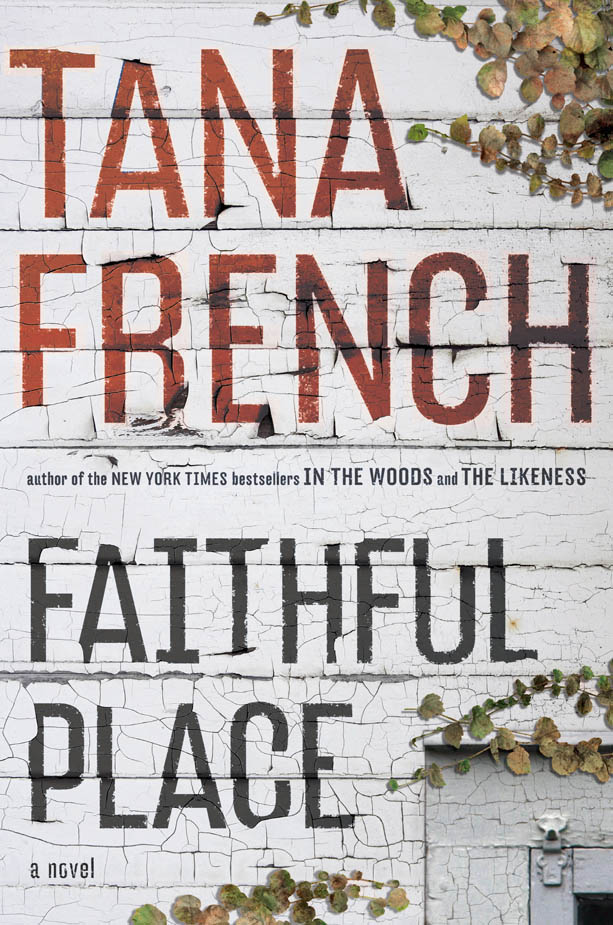
Without getting too personal, I’ll say that I’ve got a situation here that has derailed my weekend intentions and instead landed me a whole lotta reading time, which is the silver lining. I started Faithful Place last night, with enthusiasm but also with regret that it required putting down When Christ and His Saints Slept; I was really enjoying it. I’m also feeling the pull of Room and several others… but to get back on topic:

I’m now feeling the need to pause (come up for air) on page 262 at the start of chapter 17, realizing that my friends and fellow readers (Karma) probably have not been quite as full-time as have I in the last 24 hours. So.

I’m really enjoying this book! I was drawn very quickly into the romantic story of Frank and his childhood love with Rosie, who no-showed their elopement date and left him thinking she’d, well, left him. There’s an air of mystery about it from the first (let’s be fair, all the blurbs and the inside of the dust jacket agree that it wasn’t that simple, so no spoilers there) and I care about them right from the first, too. Frank is familiar to me. Am I projecting, are all detectives starting to look like Harry Bosch, or is Frank another loner-type, hard on the edges, who cares deeply about his job (see my last post: job is one of the things he’s die for), but has the very soft spot of a young daughter, complete with estranged baby-mama? I think he is. This is my type of detective. But he’s in the relatively new-to-me setting of modern Dublin, and I’m eating up all the local culture and dialog. (I ❤ Guinness.) There's an interesting interplay of class and culture between his family home and neighborhood, which he hasn't visited in 22 years, and his ex-wife's world of privilege. But I think the best part is the characters and the complications of their relationships. If Frank and his four siblings are types, it doesn't make me love them any less, or make them any less real.

It’s hard for me to go much further than this without revealing plot spoilers, which I’m determined not to do, because I want Karma and Valerie and the rest of you to be able to discuss with me in this blog even if you’re not keeping up with my pace in the book. (I think I’m going to switch back to Christ and His Saints now so as to allow some catch-up time.) So what I’m saying here is that the plot has some interesting twists and turns and surprises me, which of course I love. The revelation on page 205 kind of floored me, in fact. When you get there, let me know what you think.

Now, more than half way through the book, I’m starting to get a fatalistic feeling that perhaps I can see the end and the whodunit, and it’s awfully sad. Poor Frank… the guilt and distant love in this family… but you know, author French has me going, and I won’t be surprised if she has a few more surprises to throw at me in the next 140-odd pages.

For now, as a side story, let’s talk about the character Stephen. I like him! It would be very unlike the “type” that is Frank to make a new friend (and he is resisting it) but I’m pleased to meet this likeable guy. How do you feel about him?

I’m off to take a break now and give my other books some love, and hope that you’ll catch up with me a bit. We’ll get back to Frank & Rosie in a day or three. Thanks for joining me here and I hope your weekend allows for all the action and/or restful reading that you like.

book beginnings on Friday: Faithful Place

This meme is hosted by Katy at A Few More Pages.


I’m giving in to the temptation here, to give you two book beginnings to the same book: one from the prologue and one from the proper start of the book. I’m also sticking with my preferred quotation parameter of two sentences.

So, from the prologue of Faithful Place, by Tana French:

“In all your life, only a few moments matter. Mostly you never get a good look at them except in hindsight, long after they’ve zipped past you: the moment when you decided to talk to that girl, slow down on that blind bend, stop and find that condom.”

I find this outstanding. It makes me stop and think about which moments have mattered in my life, and have I recognized them in hindsight? I can think of a few. But these first two sentences of prologue really make me want to stop and meditate. I call that a strong beginning.

From chapter one:

“My father once told me that the most important thing every man should know is what he would die for. If you don’t know that, he said, what are you worth?

I’m still interested. I’ve heard good things about this book from several sources, and I have a readalong buddy for this one too, so I’m excited. Stay tuned.

several pots on the fire

So last night I found myself with some unexpected free time at home, and because it was *unexpected*, I had unfortunately left my current book, When Christ and His Saints Slept, at the library at work. Bummer. I’m already going to have several going at once when I start Faithful Place as planned tomorrow. So I picked up one of the many (many, many) lying around TBR, and started…

The Things They Carried, by Tim O’Brien. This is not a new book; it was originally published in 1990, and I became aware of it this year with the 20th anniversary republication and various discussions. It’s a collection of related short stories (or a novel, depending on who you ask) set in the Vietnam War, and based on O’Brien’s experiences there. I read only one story/chapter last night before bed; but I can see why this book has been so talked about. This story/chapter that I read is “The Things They Carried,” and I love how he uses those things to tell so much of a story. It’s sort of sparsely written, and using “things” rather than emotions, which to me makes for less telling and more showing. It’s beautiful and sad and evocative. I look forward to more.

I was a little sorry to start another book while reading one and ready to start another tomorrow. But then I realized that I have several going at any one time, as it is… there’s Dust by Martha Grimes on the bedside table, and Frederica by Georgette Heyer in the bathroom, and This Book is Overdue! by Marilyn Johnson on the coffee table. What fun, when a person gets to live like this. Do you read several books at a time?

The “BBC” 100 list

Thanks to Nadia at A Bookish Way of Life for reminding me of this idea.

The story is that the BBC has published a list of 100 books, predicting that most of us will have only read 6 of them. What’s funny is that I can’t find the BBC’s association with this list anywhere through the BBC, although quite a few blogs and librarything, etc., credit it thusly. So the truth is that I don’t know where this concept got started, or whose list it is originally, but I like the game and am going to play along.

Below is a list of 100 books that we should all probably try to read at some point; they’re classics by most people’s definition. I have marked them:

Bold = I’ve read it
Italicized = I’ve started the book, but never finished
neither = I haven’t picked it up.

1 Pride and Prejudice – Jane Austen
2 The Lord of the Rings – JRR Tolkien
3 Jane Eyre – Charlotte Bronte
4 Harry Potter series – JK Rowling
5 To Kill a Mockingbird – Harper Lee
6 The Bible
7 Wuthering Heights – Emily Bronte
8 Nineteen Eighty Four – George Orwell
9 His Dark Materials – Philip Pullman
10 Great Expectations – Charles Dickens
11 Little Women – Louisa M Alcott
12 Tess of the D’Urbervilles – Thomas Hardy
13 Catch 22 – Joseph Heller
14 Complete Works of Shakespeare
15 Rebecca – Daphne Du Maurier
16 The Hobbit – JRR Tolkien
17 Birdsong – Sebastian Faulk
18 Catcher in the Rye – JD Salinger
19 The Time Traveller’s Wife – Audrey Niffenegger
20 Middlemarch – George Eliot
21 Gone With The Wind – Margaret Mitchell
22 The Great Gatsby – F Scott Fitzgerald
23 Bleak House – Charles Dickens
24 War and Peace – Leo Tolstoy
25 The Hitch Hiker’s Guide to the Galaxy – Douglas Adams
26 Brideshead Revisited – Evelyn Waugh
27 Crime and Punishment – Fyodor Dostoyevsky
28 Grapes of Wrath – John Steinbeck
29 Alice in Wonderland – Lewis Carroll
30 The Wind in the Willows – Kenneth Grahame
31 Anna Karenina – Leo Tolstoy
32 David Copperfield – Charles Dickens
33 Chronicles of Narnia – CS Lewis
34 Emma – Jane Austen
35 Persuasion – Jane Austen
36 The Lion, The Witch and The Wardrobe, CS Lewis
37 The Kite Runner – Khaled Hosseini
38 Captain Corelli’s Mandolin – Louis De Bernieres
39 Memoirs of a Geisha – Arthur Golden
40 Winnie the Pooh – AA Milne
41 Animal Farm – George Orwell
42 The Da Vinci Code – Dan Brown
43 One Hundred Years of Solitude – Gabriel Garcia Marquez
44 A Prayer for Owen Meaney – John Irving
45 The Woman in White – Wilkie Collins
46 Anne of Green Gables – LM Montgomery
47 Far From The Madding Crowd – Thomas Hardy.
48 The Handmaid’s Tale – Margaret Atwood
49 Lord of the Flies – William Golding
50 Atonement – Ian McEwan
51 Life of Pi – Yann Martel
52 Dune – Frank Herbert
53 Cold Comfort Farm – Stella Gibbons
54 Sense and Sensibility – Jane Austen
55 A Suitable Boy – Vikram Seth.
56 The Shadow of the Wind – Carlos Ruiz Zafon
57 A Tale Of Two Cities – Charles Dickens
58 Brave New World – Aldous Huxley
59 The Curious Incident of the Dog in the Night-time – Mark Haddon
60 Love In The Time Of Cholera – Gabriel Garcia Marquez
61 Of Mice and Men – John Steinbeck
62 Lolita – Vladimir Nabokov
63 The Secret History – Donna Tartt
64 The Lovely Bones – Alice Sebold
65 Count of Monte Cristo – Alexandre Dumas
66 On The Road – Jack Kerouac
67 Jude the Obscure – Thomas Hardy
68 Bridget Jones’s Diary – Helen Fielding
69 Midnight’s Children – Salman Rushdie
70 Moby Dick – Herman Melville
71 Oliver Twist – Charles Dickens
72 Dracula – Bram Stoker
73 The Secret Garden – Frances Hodgson Burnett
74 Notes From A Small Island – Bill Bryson
75 Ulysses – James Joyce
76 The Bell Jar – Sylvia Plath
77 Swallows and Amazons – Arthur Ransome
78 Germinal – Emile Zola
79 Vanity Fair – William Makepeace Thackeray
80 Possession – AS Byatt.
81 A Christmas Carol – Charles Dickens
82 Cloud Atlas – David Mitchell
83 The Color Purple – Alice Walker
84 The Remains of the Day – Kazuo Ishiguro
85 Madame Bovary – Gustave Flaubert
86 A Fine Balance – Rohinton Mistry
87 Charlotte’s Web – EB White
88 The Five People You Meet In Heaven – Mitch Albom
89 Adventures of Sherlock Holmes – Sir Arthur Conan Doyle
90 The Faraway Tree Collection – Enid Blyton
91 Heart of Darkness – Joseph Conrad
92 The Little Prince – Antoine De Saint-Exupery
93 The Wasp Factory – Iain Banks
94 Watership Down – Richard Adams
95 A Confederacy of Dunces – John Kennedy Toole
96 A Town Like Alice – Nevil Shute
97 The Three Musketeers – Alexandre Dumas
98 Hamlet – William Shakespeare
99 Charlie and the Chocolate Factory – Roald Dahl
100 Les Miserables – Victor Hugo

I came out with 47 books read, which I’m comfortable with. I should be able to make 50 pretty easily from there. 🙂 The funnier thing is that I have started and failed to finish only one! And that, not a book but a series (Harry Potter), of which I read one book in its completion and never started another. Does this make me a great finisher of books? (I have only recently really become comfortable with the concept, as my library volunteer Anne puts it, that I’m an adult now and don’t HAVE to finish a book if I don’t want to!) Or does it mean that most of these books are easily finishable because they’re so good? I remember A Tale of Two Cities from high school as being difficult to finish, but I did because I had to. At any rate, I appreciate this list even if it didn’t come from the BBC; somebody had a fine idea and I’d play along again with a different list anyone cares to compose for me! Maybe I should compose a list of my all-time 100 for you to play along with. Hmm…


Here is my list of 100!


Life According to Literature

I couldn’t resist this super-fun game I found at Stuck in a Book! The idea is to answer each question using the title of a book you read in 2010. I found it hard – I wasn’t reading books with this concept in mind, unfortunately, and have some good answers using book titles that I didn’t read this year, more’s the pity. But I had a good time. Give it a try yourself and let me know how it turns out!

Describe yourself: Running the Books (Avi Steinberg)

How do you feel: Pride and Prejudice (Jane Austen)

Describe where you currently live: Echo Burning (Lee Child)

If you could go anywhere, where would you go: Trail Solutions (International Mountain Bicycling Association)

Your favorite form of transportation: Mastering Mountain Bike Skills (Brian Lopes)

Your best friend is: Careless in Red (Elizabeth George)

You and your friends are: The Old Wine Shades (Martha Grimes)

What’s the weather like: The Tin Roof Blowdown (James Lee Burke)

You fear: The Long Goodbye (Raymond Chandler)

What is the best advice you have to give: We Need to Talk About Kevin (Lionel Shriver)

Thought for the day: Minutes of the Lead Pencil Club: Second Thoughts on the Electronic Revolution

How I would like to die: One Shot (Lee Child)

My soul’s present condition: Stretching (Bob Anderson)

When Christ and His Saints Slept

What an enjoyable book. This is only my second Sharon Kay Penman experience, which I need to work on; I got stuck on The Reckoning and read it over and over when I should be reading more of her work! I got through the first 100 pages of this 750-page book this weekend, and I’m engrossed. It is an awfully long book at 750, but I’m not intimidated; she’s so easy to read. It’s a real saga of historical fiction, dealing with the fight for the English crown after the death of King Henry I in 1135, between his daughter Maude and nephew Stephen.

I think a large part of what makes Penman’s work special is the characters. She writes a multitude of more (or less) sympathetic characters; we grow to like them (or not), and we get to know them fairly quickly. While there are many characters, I for one don’t have trouble keeping track of them because they emerge quickly as having recognizable personalities. (I’m always glad when they have different names, too; too often in historical fiction about English royalty we’re bombarded with Elizabeths, Marys, Georges, Henrys and Richards until it’s all a blur, but so far in this story everyone holds distinct names, thank goodness.) The characters provide multiple perspectives on a complex story, which helps illustrate the ambiguities – is Stephen right in seizing the crown? etc. It also calls into question the reliability of these perspectives; think of reliable or unreliable narrators. The third person perspective stays constant, but seems to interpret through different characters, so we get different perspectives. When we’re with Stephen, we see him as being sympathetic to Maude; when we visit Maude, we see Stephen as being more grasping and ruthless, so the perspectives change. Through Geoffrey’s eyes, Maude is an evil ice queen; through Maude’s, Geoffrey is violent and disrespectful.

The other thing I notice about Penman’s characters (in contrast, for example, to what I recall of Phillippa Gregory’s dealing with similar stories) is that we visit with decidedly lower-class, minor historical figures. To me, this makes the world much more real. The characters tend to have some nuance and complexity, making them more human, too. Varied perspective and multiple complex characters from diverse walks of life make for a fascinating story. Expect me to take a little while to finish this lengthy novel. But unlike some books of this size, I expect to enjoy every minute of it.


readalong: FYI, with a little lead time: My buddy Karma and I are going to be reading this book together, starting this Friday the 17th. Please join us for discussions here!

book beginnings on Friday

This meme is hosted by Katy at A Few More Pages.

From When Christ and His Saints Slept, by Sharon Kay Penman:

“Stephen was never to forget his fifth birthday, for that was the day he lost his father. In actual fact, that wasn’t precisely so.”

Hm. I call this a good, grabby opener: “this is so. actually it isn’t.” That makes me say, what? Tell me more. Plus, I recall Penman’s The Reckoning (the only other of hers I’ve read) as one of those books I can enjoy over and over again, and every time be sad when it ends. I’ll let you know how it goes.

in praise of librarians

I almost forgot (shame!) to share this snippet with you, from James Lee Burke’s The Tin Roof Blowdown (are you sick of hearing about this book yet?):

“Then I used the most valuable and unlauded investigative resource in the United States, the lowly reference librarian. Their salaries are wretched and they receive credit for nothing. Their desks are usually tucked away in the stacks or in a remote corner where they have to shush noisy high school students or put up with street people blowing wine in their faces or snoring in the stuffed chairs. But their ability to find obscure information is remarkable and they persevere like Spartans.”

…and then the librarian cracks the case wide open! Robicheaux eventually got a call back from the FBI providing some of the same information but the library beat them to it. Good for you Mr. Burke. 😉