Brokeback Mountain

Just read all 55 pages of Brokeback Mountain by Annie Proulx real quick. It’s been years since I saw the movie but from my memory, it stayed remarkably close to what I just read. Of course, it should be easy for a two-hour movie to include everything in a 55-page short story, but it’s Hollywood; you have to keep your eyes on them. At any rate, I hope I wasn’t too colored by having seen the movie first; I thought it was a remarkably evocative little book. In few words, Proulx gives us emotions without calling them that; she shows, doesn’t tell. It reminded me of Hemingway’s short stories that I love so much, like Up In Michigan in particular: coarsely sexual, quietly tragic, no-frills. I’m impressed.

edits on an education from James Lee Burke

I need to edit my claim that mysteries don’t make me do research.

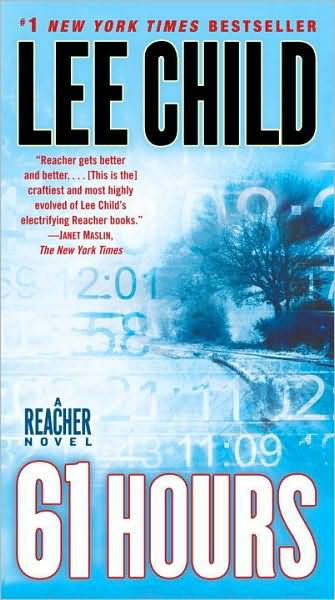
First I realized that I’ve needed a reference source a few times while reading Lee Child, on all the guns he writes about and their functions and ability to, for example, withstand torrential rain. However, the Husband has filled this role sufficiently to date, so far, so I haven’t actually *looked up* anything.

I also did some research on the painter Hieronymous Bosch, while getting into Michael Connelly’s series starring a detective protagonist by the same name. This became particularly important when I read A Darkness More Than Night, which deals with painter-Bosch’s work fairly extensively. So here I am coming up with examples that refute my earlier statement; ah well, that’s life.

finished The Tin Roof Blowdown

Burke sure does know how to be poetic. Check the final paragraph of the epilogue, which I have decided to include here in its entirety (not really so much of a spoiler at all because it is Robicheaux’s *fantasy* ending):

“In my fantasy, I see Bertrand far out on the water, pulling on the oars, his arms pumped with his task, the ruined city of New Orleans becoming smaller and smaller in the distance, a great darkness spreading across the sky just after sunset. The blisters on his hands turn into wounds that stain the wood of the oars with his blood. As the wind rises and the water becomes even blacker, he sees hundreds if not thousands of lights swimming below the surface. Then he realizes the light are not lights at all. They have the shape of broken Communion wafers and the luminosity that radiates from them lies in the very fact they have been rejected and broken. But in a way he cannot understand, Bertrand knows that somehow all of them are safe now, including himself, inside a pewter vessel that is as big as the hand of God.”

I call that rhythmic, lyrical and hopeful, and even I, with my failure to grasp biblical allusions, can see the significance of blood staining the wooden oars.

I find it notable that Robicheaux deals somewhat sympathetically with a character who is a rapist. Some might be offended, I suppose (especially if you take my statement straightforwardly, which would be a mistake), but it’s not simple at all. Robicheaux is disgusted with this individual and the pain he’s caused. But in a very realistically, human, ambivalent way, he recognizes that we are all at least a little bit a product of our environments, and that perhaps everything is at least a little bit relative. The character in question makes some form of amends, at least within the structure of his own understanding. It’s complicated. I’m not particularly sympathetic with rapists myself (!!) but I appreciate that Burke portrays everything to do with human nature and sin and redemption as being complex and not black-and-white (no pun intended, in a book definitely charged with racial tension as all Burke’s books are – probably unavoidable considering the setting).

I confess that Cadillac Jukebox let me down just a bit, but The Tin Roof Blowdown has been so outstanding that I think I’m ready to make a James Lee Burke crusade like I did on Michael Connelly a few months back – and try and read everything he’s written.

But then again, there are so many good books in the world…

2011 Where Are You Reading? Challenge

I’m getting ambitious and trying to *really* join the reading blog community by entering a challenge hosted (appropriately) at One Person’s Journey Through a World of Books. The idea is to read a book set in each of the 50 states, over the course of all of 2011, with bonus points for additional locations. I don’t think the challenge itself will be too hard; I do a lot of reading. Of course I might have to do some purposeful seeking out of my missing locations towards the end of the year; but that’s part of what’s curious about this challenge. I’m interested to see how randomly scattered the books I read are before making any special effort.

My efforts will be kept track of (and herein lies the challenging part, I suspect) at this map:


So you can keep track of me here. The challenge doesn’t start til Jan. 1, so don’t be anxious that the map is empty so far, k? 🙂 And feel free to join us. I think it’ll be fun!

book beginnings on Friday on Tuesday

I’m behind the times and/or I’m a rebel – I just found this blog today and so I’m starting today and will hopefully keep up on *Fridays* from now on!

The idea is to share the first line or two of a book and my thoughts on it. Just my kind of thing.

From James Lee Burke’s The Tin Roof Blowdown:


“My worst dreams have always contained images of brown water and fields of elephant grass and the downdraft of helicopter blades. The dreams are in color but they contain no sound, not of drowned voices in the river or the explosions under the hooches in the village we burned or the thropping of the Jolly Green and the gunships coming low and flat across the canopy, like insects pasted against a molten sun.”

Maybe including two sentences was cheating this time, since they compose the whole first paragraph, but boy does Burke know how to set a scene, hm? I feel it’s fairly obvious that he’s talking about Vietnam, even if you were not familiar with protagonist Dave Robicheaux already, in which case you know he’s a vet. These first lines are atmospheric and set a tone. They make me feel at home with Burke who I love, and I’m ready to settle in for a new adventure with Robicheaux.

an education from James Lee Burke

While I am neither the most or the least well- and widely-read person in the world, I do have a graduate degree and do a fair amount of reading; I have a fairly strong vocabulary. I can generally hold my own amongst educated folks. I’m pretty weak on religion, though, which is where most of my questions have come up in The Tin Roof Blowdown. Credit to Burke for making me look up a number of references – something I’m not afraid to do and occasionally relish doing; but it doesn’t happen every day, and very rarely when reading genre fiction!

Today I looked up the Garden of Gethsemane, for example. From page 3, in the intro to the novel and the horrors it offers: “But as I watched Jude grow into manhood, I had to relearn the old lesson that often the best people in our midst are perhaps destined to become sojourners in the Garden of Gethsemane. Ordinary men and women keep track of time in sequential fashion, by use of clocks and calendars. The residents of Gethsemane do not.” What is this garden? Apparently it’s the place where Jesus prayed to his father the night before his arrest and crucifixion. When delving into the symbolism and significance of locating certain characters in Gethsemane I’m a little stumped; it’s like the class on biblical references starts at a higher level than I’m prepared for; I didn’t take the prerequisite. It is suggested that Gethsemane is a symbol for Christ’s controlled and willing submission to his father’s will. It’s also compared and contrasted to that other biblical garden that even I have heard of, Eden. But I find that my internet research (from Wikipedia to the Encyclopedia Britannica and quite a few religious sites) doesn’t yield me a satisfactory understanding of Burke’s mention above.

I also had to look up the Great Whore of Babylon, which Burke writes is the city of New Orleans. This is another enigma to me and I didn’t do much better. Apparently the bible states that the whore offers us false gods and other alternatives to Jesus and what he represents; it’s a Christian allegory for evil and decadence and pleasurable sin. Yep, that sounds like New Orleans, which could be an alternative object of worship, too. But again I think I’m missing some nuances that would require much deeper bible study than I’m interested in right now. I don’t remember this much biblical allusion in Burke.

The next one was secular: John Ehrlichman, used as an example of why military honors do not an honorable man make. Ehrlichman is an easy icon to dissect: he was a Nixon aid and was involved in Watergate. These are symbols I’m familiar with.

Any bible scholars out there who care to explain the first two references to me, please do…

I always find it a refreshing challenge when a book makes me take notes and look things up later. Of course there’s a comfortable limit; running to an encyclopedia or dictionary for every page of text disrupts the flow. But in general I appreciate learning new things when they’re presented to me. It’s not a common experience in mystery novels though! Well played, Mr. Burke.

What have you had to look up lately in conjunction with your reading? Don’t be shy. None of us knows everything.


finished Running the Books and more Burke

Well it turns out that Running the Books gets a resounding endorsement. Author Avi Steinberg started a touch slow, but he grabbed me hard in the end. As our protagonist, Steinberg develops as a character and as a human being as the book unfolds, making some real personal discoveries. It’s a very human story, poignant and forgiving and realistically ambivalent in its eventual conclusions (or lack thereof) about the nature of prisons and criminals. I really enjoyed it.

(If you can’t tell in the image at left, his face is made up of lots of date stamps. Like due date stamps. It’s rather an interesting and clever piece of librarian-art if you care.)

I’m now well into another James Lee Burke, The Tin Roof Blowdown, that my mother gave me quite a while ago. That’s the Dave Robicheaux novel set in New Orleans and New Iberia in the aftermath of Hurricane Katrina, and boy, you want to talk about something stark and visceral… putting aside for a moment the beauty that is a Dave Robicheaux novel, the realistic descriptions of Katrina’s destruction are gut-wrenching. The death and suffering, the necessary decisions about who lives, who dies, who a person chooses to save, the morals and ethics involved, the widespread racism, the political neglect, and the gritty reality of the blood and guts and sewage… it’s very real, and those moral dilemmas are evoked expertly. (I expect nothing less of Burke.) This one is grabbing me a lot harder than Cadillac Jukebox did recently. I really like the character of Alafair, Dave’s adopted daughter, too. (Burke has an adopted daughter named Alafair, who like her fictional namesake is also a writer; one wonders where fact meets fiction.) The chasing of the bad guys by Dave and and perennially self-destructive Clete Purcel is as finely wrought as ever, but for me, what’s special about this book is the rawness and realism of Katrina’s destruction. Whew.

I am, as usual, swamped in fine reading material, and don’t think Burke will take me too long, so stay tuned for one of the three books I recently named as coming next! 😉

who are you?

Hey loyal blog reader, who are you?

identifying with the prison librarian

Well, you tell me, does this make me a little nuts, or just mean that Steinberg is a skilled author? It’s occurring to me that our situations are parallel: we both work in “special libraries” (that’s a real term), meaning we’re not in schools, universities, or public libraries. Prisons and hospitals are fairly unique environments. I’m not sure my employer would appreciate the comparison, but both are large institutions, and I have heard my patrons say they feel a little bit like they’re being processed in a machine. I’ve been thanked for using their names instead of 8-digit numerical identifiers. That’s kind of sad. I just had this strange feeling as I walked back from lunch, having reluctantly closed Running the Books, that perhaps it’s weird that I’ve become accustomed to seeing signs on escalators that say “If You Are Feeling Dizzy or Unstable, Please Use the Elevator” and in bathroom stalls that say “If you have had an accident or soiled your clothing and need help, please call XXX.XXX.XXXX.” People here are not necessarily happy to be here. Also, I share with Avi the prison librarian the embargo against connecting with our patrons. There are different reasons – his are a serious security risk, are considered to have lost the privilege of making friends, threaten his job. Mine have a federally protected right to privacy and are going through utterly life-changing events. But they’re all people and we all too easily see ourselves and our loved ones in these strangers. Of course, Avi sees the same people for long periods of time (very much the norm in prison I think) and my people come and go unpredictably (and when they go, I never know why). But I’m getting into this book and identifying with Avi’s workplace conundrums.

a few mysteries and more prison libraries

Well vacation was outstanding and too short as usual. Hope everyone enjoyed. With a total of 22 or so hours on planes and 8 or so hours on trains… I did some reading!

I started with Unhinged, by Sarah Graves, which is “A Home Repair is Homicide Mystery” – one of those specialist mysteries like the quilting or recipe-filled ones, or one of the book-related ones I binged on recently. Pretty interesting as such, but my fear with books of this sort is always that they’ll be sort of simplistic, or rely on their novelty status. This one didn’t do half bad; I was amused and interested and the characters were cute. It wasn’t terribly serious or literary and was definitely a cozy. I might pick up another with the same casual interest for an airplane ride, but it was unremarkable. I’m no home-repair buff, but the related details were light and unobtrusive. Of course if you were a home-repair buff, I’m not sure you’d be satisfied with those aspects.

Next came another Lee Child, One Shot. I am decidedly a fan. I love the Jack Reacher character; those who told me he’d be a good character for me based on my love for Connelly’s Bosch were so right! The fast pace and strong sense of place are great; I stayed up late into the night to finish this one, and have recommended it to the Husband, who likes Connelly, couldn’t get into the more thoughtful pace of Raymond Chandler, and reads just a few pages at a time with long gaps in between, so fast pace is pretty important to him. He likes it so far. One Shot is set in small-town Indiana, which is not an environment I’m familiar with, but Child makes it seem plenty real. I just love the suspense and the loner aspects of Reacher; he has the Bosch characteristics of seeming intolerant of people trying to form relationships, while really being something of a softie inside, though he has trouble giving in to this impulse. Reacher is a little bit of a caricature Rambo-type, but I’m so into it that I don’t mind. I’ll definitely be pursuing this series – and good thing, since I’m all out of Connelly for now.

Finally I picked up the James Lee Burke I found to bring along, Cadillac Jukebox. Classic Burke with Robicheaux going it alone (despite being a member of law enforcement) in renegade cowboy fashion against massive injustice, including the racial and sexual kinds. Clete Purcel makes a few minor appearances, and New Iberia, New Orleans, and the surrounding environs are strongly evoked. Burke writes beautiful, poetic, prose with an appreciation for nature. These are great books. But, I’m noticing that the more time I spend with Connelly and Child, the slower Burke feels to me. His books aren’t slowly paced by any means, but they’re decidedly more leisurely than the other two. Robicheaux is also a bad-boy loner, also with soft spots (the wife in this book is Bootsie and daughter Alafair is present as well), but his self-destructive tendencies almost feel more pronounced to me. Where Reacher is fairly well outside society, completely outside law enforcement, has no ties, and is completely unstoppable in physical combat, Burke is more human and seems to have more to lose. Where Bosch has loyal compatriots in the force and a teflon-like mastery of department politics, Burke feels isolated and more vulnerable. Here in Cadillac Jukebox he gets wrongly accused of sexual assault and is threatened with the loss of his health insurance, both of which somehow feel unlikely with Bosch, who (in the course of the series) leaves and returns to the LAPD without significantly changing his relationship with crime investigation. At any rate, full marks for Burke as usual, but I’m starting to notice that he’s not the perfect counterpart to Connelly I once thought he was – that might be Child – while on the other hand, I just had a patron request Connelly and Burke in the same sentence, so clearly I’m not alone in my tastes!

I was without reading material for the flight home 😦 but I made it anyway, and am now back to Avi Steinberg’s Running the Books and ready to render a verdict on the questions I asked earlier. Not tiresome, but fascinating and engaging! It took long enough, but by halfway through, I’m hooked and anxious to get back into it. The separate story lines have converged, if minimally, but more so, they’re no longer anecdotes but continuing tales involving characters that I really care about. These are real people (literally, but they also feel real) and I mourn them when they die. (This is about prison; not everyone gets a happy ending; just past halfway, I’ve yet to find one happy ending, in fact.) Avi, the narrator, is emerging as a real person with some soulful stuff on the line, too; he gets involved with his inmate patrons and some of the larger issues as well. I enjoyed the tour he takes of past prison and jail buildings and his historical/social/philosophical/literary discussion of them (look for Sylvia Plath). What I called a clever and potentially pretentious writing style I have come to find engaging, contemplative, self-reflective, maybe even slightly poetic. I enjoy the part I’m reading now, about the difference between archivists and librarians, and which of them Avi will turn out to be – bearing in mind he didn’t have a library degree or any background when he took the job, so he’s learning as he goes. I’m giving this book an endorsement, in case you can’t tell.

Stay tuned… next I’m trying to decide between Still Missing by Chevy Stevens, finally starting Larsson’s series with The Girl With the Dragon Tattoo, or getting into the fat Sharon Kay Penman I’ve got looking at me on my desk, When Christs and His Saints Slept. What are YOU reading?