The Paris Wife by Paula McLain

Ahhh. This was really a joy and a pleasure to consume. I’m just sorry it’s over.

(Let me apologize in advance for a lengthy post today, but I have a lot to say about this book.)

Ernest Hemingway is my greatest literary obsession; I’ve certainly loved, and returned to, and reread, and studied other authors, but Hemingway has been the love of my reading life. Certainly, that was a large part of the appeal of this book: to come home to familiar and much-loved territory. We all know that feeling, I think: visiting an old neighborhood, hearing a song from one’s happy youth, telling old friends the same old stories of shared memories.

So, as I’ve said, part of the luxuriant pleasure of this book was all the intertwining threads of familiarity. I have recently been reading By-Line: Ernest Hemingway, a collection of his newspaper and magazines stories and dispatches, many from the Hadley era of his life. I’ve read 3 or 4 biographies, and piles of his novels and short stories, and nonfiction/memoirs like Death in the Afternoon (about the bullfights he saw) and A Moveable Feast (about his life in Paris with Hadley). And I just yesterday purchased The Garden of Eden, a novel published posthumously (and controversially edited by his surviving family), about a couple who becomes a triangle on the beaches of France and in Spain. I read it years ago but wanted to own my own copy. I remember really loving this book, although it’s surrounded by critical ambivalence and debate; this is where Hemingway most directly ventures into gender-changing, gender ambiguity, cross-dressing, bisexuality, threesomes… and all sorts of interesting and disturbing subjects linked by some biographers to Hemingway’s mother’s tendency to dress him up as a little girl when he was young. I find it all fascinating.

my Hemingway library at present


Hadley Richardson was Hemingway’s first wife; they married when he was just 22, and she was 29, and surprised at herself for landing such a vibrant, popular, ambitious young man. They took off for Paris quickly, and shared the early years of Hemingway’s career, including the publication of Three Stories and Ten Poems, In Our Time, and The Sun Also Rises, his first novel and the one that really launched his career. They also shared poverty and insecurity, a number of hardships, an unstable but scintillating circle of famous friends, and an unplanned pregnancy. Their story ends (I’m not giving anything away here, it’s history) when Hemingway begins an affair with Pauline Pfeiffer, who will be his second wife (who will be thrown over for the third, who will be thrown over for the fourth, who will hear the gunshot when he commits suicide just before his 62nd birthday).

So, as I’ve said, a large part of the joy of this book for me was sharing so intimately in the life of someone I feel I know well, and whose work I love. But there was a real danger there; for if it had been done badly or in poor taste (overly sentimental or maudlin, or vindictive towards Hem the womanizer) or inaccurately, imagine my upset! With this subject being so near to my heart, the standards were very high.

Paula McLain has my gratitude and admiration, because she’s done beautifully! This is a gorgeous novel. Her writing style (in Hadley’s voice, in first person) is a bit like Hemingway’s, although not quite so sparse. She paints pictures with short brush strokes. Hadley’s character is an interesting blend of strength and weakness (which is an observation she makes about Hem, too); she repeatedly bemoans her un-modern tendency to obey and bow to her difficult husband, compared with the women around her and their new-age relationship rules. She “lets him go” to Pauline without a fight, from the perspective of several mutual friends. But I think she maintains a certain dignity, and not just in her defeat at the deceitful Pauline’s hands. And at any rate, her voice is clear and authentic and emotionally revealing without being sappy. She seems to be honest with herself, and with the reader. In many ways this is a novel about a woman struggling to find and maintain her own identity in the unique setting of 1920’s expatriate Paris, and while being a loving wife and mother. In this sense it wouldn’t need to be about Hemingway; it’s a woman’s story, and it’s important without the celebrity. It reminded me a little of Kate Chopin’s The Awakening, or The Painted Veil by W. Somerset Maugham.

I loved how McLain (or Hadley) used some of Hemingway’s own rhetoric about truth and turned it back around on him. For example, on page 230, Hadley is dealing with her feelings about being completely left out of the book, The Sun Also Rises, when all the others present made it in as characters (none flattering):

I was incredibly proud of him and also felt hurt and shut out by the book. These feelings existed in a difficult tangle, but neither was truer than the other.

Hadley was a complex and mostly sympathetic character; I got frustrated with her here and there for not standing up for herself a bit more, but she was so authentic and real and human, I mostly was able to take her as she was. Hemingway was not so sympathetic, which is also very authentic and real. He was a cad towards the men and women in his life, pretty consistently. He was also very lovable, which is why so many men and women came back to him over and over for more fun and abuse. He was, as Hadley says on page 311,

such an enigma, really – fine and strong and weak and cruel. An incomparable friend and a son of a bitch. In the end, there wasn’t one thing about him that was truer than the rest. It was all true.

Again with the truth of the thing, which Hem himself loved to cite.

What a work of art this book was, and how evocative of emotions. It was exhausting and cathartic. Is my reaction colored by my love of all things Hemingway? Yes. But my standards were also raised almost impossibly high, so please take me seriously when I give McLain an A+, and thank you, ma’am.

Britannica bookshelves, improved

Much nicer all full-up, aren’t they? This is my TBR bookshelf now. 🙂 (notice how I left room for joiners!)

medicinal use

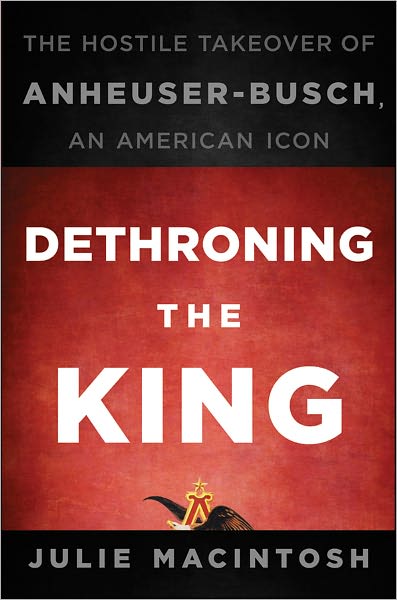
I left work today just before lunchtime because I’m sick (poor me, ok moving on) and expect to be home at least tomorrow, hopefully no longer. I left Dethroning the King at work but brought home The Paris Wife because I have been SO excited about it.

But then, even sick, I couldn’t help stopping by the half price bookstore on the way home. I’ve been trying to get over there for days and even though I felt awful and needed to crawl in bed, I couldn’t help myself. I had a gift card to spend!!

Of course I wanted just one or two things 😛 and so hadn’t picked up a hand cart, but you know I had to go back and get one…

A large part of what inspired this trip was actually a need for some Anita Brookner, so I can play along with Thomas over at My Porch as he presents International Anita Brookner Day! I was not really familiar with her til he proposed this mini-challenge/celebration of Brookner’s birthday, but the terms were just far too easy to pass up: read at least one of her many books by her birthday this July? Sounds like a breeze! Why pass up a friendly encouragement to try a new author? (On this note, I want Thomas over at Stuck in a Book to know that his Barbara Comyns recommendation, Who Was Changed and Who Was Dead, is not two feet from this laptop as I type and I have ever intention of trying her soon, too. Perhaps I need a deadline a few months out like Thomas assigned! :))

But I didn’t stop there. I got all sorts of goodies:

That is:

the store’s entire stock of Sharon Kay Penman (Devil’s Brood, Here Be Dragons, and The Sunne in Splendour) – I love her so much and want to read everything she’s written!

True at First Light, The Garden of Eden, and The Torrents of Spring by Hemingway – I’ve read the first two of the three but want to own them; the third I know to be mid-early and critically understood to be “meh” but, you know, I want to be fully expert in ALL things Hemingway

Lady Chatterley’s Lover by D.H. Lawrence, because I’ve never read it and I need to get cracking on the Classics Challenge 🙂 and Moll Flanders by Defoe for the same reasons – I believe I saw some sort of television miniseries made from it many years ago, and enjoyed it, but haven’t read the book, which I have no doubt will be massively superior.

Hotel du Lac by Brookner, for the event mentioned above

Replay by Ken Grimwood was recommended just days ago by my librarian and sci-fi enthusiast friend Amy, so I picked that up when I saw it…

and finally, a book of Frida Kahlo postcards, because I owe some Postcrossings.

(yes, if you were wondering, I exceeded the amount I had on my gift card.)

All this, on top of my visit to the (bigger, public) library yesterday yielding the next two books in the Maisie Dobbs series for the read-along I’m participating in…

…I might make it through my sick day(s). 🙂

How To Blog (I’m still learning, myself)

Today I was fascinated by a post I found on Eva’s blog, A Striped Armchair. (By the way, welcome back Eva! Missed you!) A commenter asked her about how she composes posts – mostly, how quickly, and with how much editing. This question caught my attention because I was asked the same thing recently (out loud, in the real world, but still). My answer is similar to Eva’s: I mostly write off the cuff, and almost always publish in the same session as I compose. But that’s in the nature of my blog; I intended it to be about my personal responses to the world, mostly books, but occasionally other stuff, too. I (try to) always check first for typos and broken links, but generally I then click “publish” and move on. This is not my full-time job.

Interrelated to this question, for Eva, is the question of whether she “reviews” or “recommends” books. This question spoke to me as well. I conceived of a reading blog initially while taking a class in Readers Advisory services – meaning, the service librarians provide in helping readers find books they might enjoy. This art-science involves listening to what readers have enjoyed in the past, and seeking books that share similar qualities. It definitively excludes making a personal judgment or statement about these books. I enjoyed my Readers Advisory class (the second I’ve taken in fact) and love the idea of the service; but as it turns out, my blog never really went that way. Because this is my personal space, I like to keep my voice, and it just feels natural to tell you how I feel about the books I read.

I follow about 40 blogs, ideally checking in every day. These are mostly reading blogs (a few writing blogs, and one or two miscellaneous/funny ones I just can’t resist). And the ones I enjoy most are the ones in which I can hear a (preferably hilarious and/or thoughtful and reflective) personal voice describing that reader’s reaction to a book or a life event. I find real people and personal reactions far more interesting than clinical book reviews. Perhaps that’s part of why I’m comfortable letting my personal perspective live in my blog.

Eva directs her readers to another post here, in which The Boston Bibliophile debates the appropriateness of a personal voice in a bibliophile’s blog. I don’t disagree one bit with her conclusion to keep her personal life out of her blog. I mean, golly, in a world of blogs, personal websites (I have one of those, too), facebook, twitter, and the rest, I fully support someone seeking a little privacy. And maybe The Boston Bibliophile has other reasons for keeping that blog a bit anonymous; she does mention that she has another, private, more personal blog for friends & family. All of that makes sense to me, for her.

But for me, it makes sense to do it this way. For example, to respond to one of The BB’s questions, yes, I think one’s religious sensibilities does color our reading of at least those books that overtly involve religion. Every book I read is filtered through my own set of experiences, beliefs, and understandings of the world; how could it possibly be otherwise? Since I’m not speaking for a corporation or anything, I feel most comfortable recognizing my own perspective when I write about books. I find other bloggers’ “reviews” (or recommendations) most interesting when they involve the personal. But, I’d never seen The BB’s blog before today. Maybe I’ll find it fascinating; I’m not judging, but merely responding to the two above posts.

Thank you to Eva and The Boston Bibliophile for giving me the chance to consider my style here at pagesofjulia. These are my pages, and I’m comfortable with the influence of julia on them, but it’s always a good idea to think one’s position through!

Teaser Tuesdays: Dethroning the King


Teaser Tuesdays is a weekly bookish meme, hosted by MizB of Should Be Reading. Anyone can play along! Just do the following:

* Grab your current read
* Open to a random page
* Share two (2) “teaser” sentences from somewhere on that page
* BE CAREFUL NOT TO INCLUDE SPOILERS! (make sure that what you share doesn’t give too much away! You don’t want to ruin the book for others!)
* Share the title & author, too, so that other TT participants can add the book to their TBR Lists if they like your teasers!

You got the book beginning(s) on Friday; today you get a teaser from the middle. I did a fair amount of reading this weekend and am halfway through. I promise this one won’t take me weeks like Mr. Playboy did! I hope to be done by the weekend, because The Paris Wife is here teasing me, along with so many other good ones stacked all around…

“Randomly” selected from page 191, where I am reading today:

When she inherited her father’s Modelo ownership, Maria had been unemployed and raising two children, and had almost no business experience. She decided to throw herself into the family business rather than letting others control her fate, and from an office the size of a broom closet, she made two of Modelo’s bankrupt yeast companies profitable within a year of taking them over.

I liked this quotation because it highlights two things: one, author Macintosh’s attractive ability to treat the players in this nonfiction tale as interesting, engaging characters, painting them as complete people who we learn to care about (one way or the other); and two, the rare female character in this extraordinarily (but not surprisingly) male-dominated story.

I raved about this book last Friday upon beginning it, and I’m no less enthusiastic today. This is a story that fascinates me, both personally because of my relationship with beer and the beer industry, and as an important story in our national history. Macintosh writes in an accessible, narrative style that draws me in and just sneaks all the learning about economics, business, and politics right past without me noticing. I can’t over-recommend this book, really.

An Incomplete Revenge, by Jacqueline Winspear. and, tattoos

Another very enjoyable Maisie Dobbs book! I am definitely hooked on the series at this point. Immediately after finishing An Incomplete Revenge, I started reading Pardonable Lies – that is, the third book in the series that I skipped over. Good stuff.

In this episode, Maisie ends up following Billy Beale and his family on their “working vacation” out to Kent, to pick hops and enjoy the air away from “the Smoke” (which apparently is London – I’m learning some Britishisms from these books, for sure). James Compton, the son of her original patroness and supporter, has come looking for her help in his business dealings in the small town of Heronsdene. His concern is with the strange events there, including petty crime and a fairly regular occurrence of arson. Since the Beales were already to be in the area, Maisie can use her assistant as usual.

I really liked the way this book opened with another woman’s perspective on Maisie – the weaving instructor, Marta, observes her and makes some guesses about her life. I appreciated an outsider’s view of her, since I think we often get Maisie’s point of view, even in third person.

We quickly learn some new and, I think, important details about Maisie’s personal history and past that I found valuable in understanding her, as well as entertaining in their own right. I’m glad Winspear gave her this new dimension. As I’ve said throughout the series, if Maisie lacks anything, it’s dimensions; perhaps Winspear is wise to mete them out sparingly like this, though, since I’m so interested and on the edge of my seat. Give me more! MORE!

The story itself (avoiding spoilers here) I found heartwrenching. I was surprised at the degree of forgiveness shown in the end – although the offended party does not call it forgiveness (he says, “that is not for me to do”), he does forbear to take (ahem) Complete Revenge. It was a satisfyingly complex and twisting story, with Winspear’s characteristic overarching, large-scale, human-condition themes, and I found the exotic addition of the gypsies to be a point of interest, too.

A few things caught my eye in this book. I really enjoyed the beautiful, sensual description on pages 219-220 of the War Office Repository. The polished dark wood floors, hushed tones, and onionskin papers, along with the emotions of the people doing their research (as imagined by Maisie), and the helpful clerk, “reminded [Maisie] of a library.” (They did me, too.) I’m a librarian, and am always excited to get a mention. 🙂

Another connection in this book that I REALLY enjoyed was the hop-picking! I’m a big fan of beer – I used to sell it for a living, and I’ve made pretty significant plans over it (like flying overseas), and it’s pretty important in my family – both my parents, and the Husband, and I are all beer people. And the HOPS are my favorite part. I’ve never picked any, but I have munched on fresh-dried ones, and, yum. I even have a tattoo: …because our littlest dog is named Hops, so now I have a tattoo for each dog. Here is Ritchey:

…and the two real-life models.

At any rate. Thanks for bearing with me through the tattoo gallery 🙂 (there’s more where that came from, but I shall spare you). I’ll be commenting, as well, over at Book Club Girl‘s discussion post. Come on over! I’m so glad I’m participating in this read-along; it’s been great fun and I’ve discovered a new series I really enjoy.

book beginnings on Friday: Dethroning the King

Thanks to Katy at A Few More Pages for hosting this meme. To participate: Share the first line (or two) of the book you are currently reading on your blog or in the comments. Include the title and the author so we know what you’re reading. Then, if you feel so moved, let us know what your first impressions were based on that first line, and let us know if you liked or did not like the sentence. (You might also consider visiting the original post where you can link to your own book beginning.)

I am so very excited about the book I’ve just started! Dethroning the King is my favorite kind of nonfiction: narrative nonfiction, written by an author (in this case, a journalist) who gets personally involved in her story and becomes a real voice in it. I’m only 30-ish pages in, but I’m really enjoying the style in which Macintosh tells the story, as well as the story itself.

You get three beginnings today, oh joy! First, from the Author’s Note:

The summer of 2008 is one many people wish they could forget. In the immediate aftermath of the collapse of Bear Stearns in March, the global financial markets briefly looked as though they might stabilize.

And from the Prologue:

Some men golf when they’re looking to unwind. Others take their sports cars out for a drive or toss a few steaks on the grill. August A. Busch III liked to shoot things – ducks in the fall and quail in the winter.

And from Chapter 1:

Wednesday, June 11, 2008, was forecast to be hot and sticky in St. Louis, with afternoon temperatures rising well above 80 degrees. None of the Anheuser-Busch executives who pulled into the parking lot of the soccer park in Fenton that morning expected to see much sunlight for the next 48 hours, however.

Now, if you think three book beginnings is overkill, please bear with me. I think all three beginnings illustrate my point: that Macintosh writes in an accessible, narrative style. Don’t all three sort of grab you and make you wonder what comes next? As opposed to a nonfiction book that starts off, “X was born on Monday, November 3, 1942. His parents were X and X.”

I’m very excited about reading this book because I am especially interested in the beer industry, used to work in it, and have a friend who worked for A-B for years and has (at least a little bit) an insider’s view. I think this story is fascinating. While I don’t actually like the product A-B makes, I have respect for the business and, more so, find the lifespan of it relevant and interesting. Macintosh makes a fair case that the fate of A-B is a metaphor for our country’s economic and political well-being in a changing world, and that both entities fell victim to hubris in a class Greek tragic sense.

What are you reading today? I have my eye on Heather Gudenkauf’s These Things Hidden next, but I also have to admit that the moment Paula McLain’s The Paris Wife shows up, I’m all over it! Happy Friday!

Pardonable Lies by Jacqueline Winspear

Book 3 of the Maisie Dobbs mystery series by Jacqueline Winspear is called Pardonable Lies. From the author’s website (because I’m lazy, and because this is a fine one) I give you a synopsis:

In the third novel of this unique and masterly crime series, a deathbed plea from his wife leads Sir Cecil Lawton, KC, to seek the aid of Maisie Dobbs, psychologist and investigator. As Maisie soon learns, Agnes Lawton never accepted that her aviator son was killed in the Great War, a torment that led her not only to the edge of madness but also to the doors of those who practice the dark arts and commune with the spirit world. Determined to prove Ralph Lawton either dead or alive, Maisie is plunged into a case that tests her spiritual strength, as well as her regard for her mentor, Maurice Blanche. The mission will bring her to France and reunite her with her old friend Priscilla Evernden, who lost three brothers in the war, one of whom has an intriguing connection to the case.

Set against a finely drawn portrait of life between the World Wars, Pardonable Lies is “a thrilling mystery that will enthrall fans of Jacqueline Winspear’s heroine and likely win her new ones” (Detroit Free Press).

This episode involves the rift between Maisie and her mentor, Maurice. I’m not terribly impressed with Maisie’s decision-making in this book. I think it’s a time of growth and learning for her, though. Out of her rift with Maurice comes a greater independence in her own work (which is rather patronizingly and, I thought, unnecessarily explained to us by Winspear), which she did need. But she also showed a stubbornness in this book that endangers her own health and therefore those things she cares so much about: her business, her cases, Billy’s employment. She needs to confess that she’s human, and be willing to accept help when it’s both offered and needed. I was also frustrated with her treatment of Dr. Dene. I know she has precious little experience “walking out with” a man, and her one love affair ended tragically and she’s hurt. Still, I felt that she treated Dene rather cruelly. Surely someone as intuitive as Maisie could come up with more humane behavior towards a man who rather loves her, who she cares for (if less) in return. But I guess that’s the great irony: psychologists with screwy relationships, mechanics whose cars don’t run. Right?

But, I had a good time with Maisie, again; enjoyed the several cases she solved and the puzzles she unriddled. I thought the case of Avril was interesting, but I especially enjoyed the cases of the two missing soldiers. I think Winspear’s best subject matter may be the war and it’s painful aftermath; perhaps that’s why these were such powerful, moving stories. That, and I love Priscilla and enjoy getting to know her family.

Although I am very, very late, I am heading over to Book Club Girl‘s website to join the discussion about this book, so come on over there with me if you like. On Monday, March 14, I’ll be posting, and we’ll be discussing, An Incomplete Revenge. Next up (in order, and on time!) I’ll be reading-along book 6 of the Maisie series, Among the Mad. Stay tuned!

further response on Marginalia

Well! Wouldn’t you know. Coincidentally… do you believe in coincidence? Maurice Blanche, mentor to Maisie Dobbs, says that coincidence is the messenger of truth… but coincidentally, my Shelf Awareness email of the day opens with the following quotation from NPR’s Andrei Codrescu:

I’m reading a new book I downloaded on my Kindle and I noticed an underlined passage. It is surely a mistake, I think. This is a new book. I don’t know about you, but I always hated underlined passages in used books…. And then I discovered that the horror doesn’t stop with the unwelcomed presence of another reader who’s defaced my new book. But it deepens with something called view popular highlights, which will tell you how many morons have underlined before so that not only you do not own the new book you paid for, the entire experience of reading is shattered by the presence of a mob that agitates inside your text like strangers in a train station.

“So now you can add to the ease of downloading an e-book the end of the illusion that it is your book. The end of the privileged relation between yourself and your book. And a certainty that you’ve been had. Not only is the e-book not yours to be with alone, it is shared at Amazon which shares with you what it knows about you reading and the readings of others. And lets you know that you are what you underline, which is only a number in a mass of popular views…. Conformism does come of age in the most private of peaceful activities–reading a book, one of the last solitary pleasures in a world full of prompts to behave. My Kindle, sugar-coated cyanide.

–Andrei Codrescu on NPR’s All Things Considered

How’s about that, hm? Rather a different take on Sam Anderson’s concept that I discussed in yesterday’s post. Just thought you might be interested. I fully sympathize with Codrescu’s feelings about having other readers’ impressions imbedded in what I’m reading: it clouds my experience. Even if I do care what another reader thinks, I want to hear about it after I’ve read the work myself, unsullied, the first time. What do YOU think about writing in books? Sometimes, never, always? Of course only in books that belong to you. Right?!

Broadway presents Billy Elliot

Sorry, friends, I have just realized that I failed to write up my experience last Friday night seeing the Broadway show, Billy Elliot. Here we are now.

I went into this one without a clue of what the story was about. Sometimes I like to do that. But, I think it is almost always better to have an idea of what it’s about. Maybe I just got lazy.

what DO you call it?

My synopsis: Billy Elliot is the young son of a north English miner. The backdrop for Billy’s story is the miners’ strike of the 1840’s, and this sets the emotional scene for Billy’s struggle. He lives in a working-class world of economic hardship and strife, and his home life is male-dominated; his mother is dead and his grandmother is a bit batty, but his brother and father provide macho male energy to go around. In this environment, Billy is taking boxing lessons, but at heart he is a dancer. He stumbles into a ballet class full of little girls (in his boxing helmet or what do you call it? and all) and takes off.

Predictably, his love for the ballet, when discovered, does not make his family proud. But, as the story goes, the town’s miners are crushed and learn to put their pride in this gifted son of the community, and Billy ends up with his father’s support.

It was a touching story, and quite humorous at times, and a touch political – I liked the Margaret Thatcher gags, although I confess I’m not up to speed on the contemporary politics. There’s something absolutely irresistible about a little boy singing and dancing his heart out; and the young actor did some extraordinary dancing. I loved it.


But, I have to say, this play had weaknesses. Unlike RENT, and West Side Story, this was less than perfect. There were definitely moments, for me, when the action lagged; I got impatient on several occasions for them to go ahead and get on with it. I get it, Billy’s brother is mad. He’s going to run offstage and do something. Do it already. The story was good, the music was good (ahem, by Elton John), and the dancing and emotion was great. But the pace could stand an adjustment, in my opinion.

Oh and also – I enjoyed the relationship between Billy and his friend, was it Mark? This little boy likes to dress up in his mother’s dresses, and while doing so, is the one to suggest ironically that Billy might be a little “poof” for enjoying the ballet. Mark (or whatever his name is) turns out to be the “poofy” one, in fact, but they have a touching friendship and when they dance around in little-kid-drag, there are some fun comedic moments.

All in all, I had a fabulous time, as usual, and feel so lucky to get to see shows like this one. Next up, Urinetown! followed by Cats!