The Giant Golden Book of Biology: An Introduction to the Science of Life by Gerald Ames and Rose Wyler, illus. by Charles Harper

My mother got me this lovely book for the illustrations of Charley Harper, who it turns out was a native of the place I now call home, Upshur County, West Virginia. She tells me he was also a chief illustrator for Ranger Rick magazine. I remember the magazine well, but I’m not sure Harper’s illustrations ring a bell there. They are certainly lovely.

This is an entry-level science book for kids. The foreword, by Harvard biology professor George Wald, claims it isn’t ‘just’ a child’s book, which is true in that I also enjoyed it; but the text has a clear audience in mind. Concepts are plainly presented, although the authors (a married couple) don’t shy away from rather complex ones, such as the work of various scientists to classify living things or run experiments to figure out the principles of dominant versus recessive genes. Content ranges throughout the science of life: small and large living things; microscopes; air, food, fluids, building blocks of cells and protoplasm; growth, sex, and mating; genes; the theory of evolution, the origins of life and development from sea to land and from single-celled to more complex beings; the possibility of life on other planets. It takes us all the way to “the problem of how the earth began”!

I was supposed to be here for the illustrations! but found the text distracting because it was interesting and (I think) surprisingly well-written. Also, despite publication in the 1960s, it didn’t feel terribly dated to me. It does persist in referring to ‘man’ or ‘mankind’ and the ‘he’ pronoun; that’s an out-of-date set of usages. It also leaves us with this very hopeful idea… “Before explorers set off for other worlds, biologists must solve these problems of life in space. And they will be solved, thanks to growing knowledge about life on one remarkable planet, the earth.” Strikes me as awfully optimistic.

I noticed a few spellings that are out of favor now, or Britishisms: ameba for amoeba and oesophagus for esophagus. Also, admittedly, I am not at the cutting edge of science and may have missed something, but I have the general (layperson’s) perspective that not much has changed in our understanding of science at this elementary level. I’m impressed on the whole.

But what we’re really here for: those pictures. I really did appreciate Charley Harper’s illustrations, and from this relaxed-pace read* and the other Harper work I’ve looked at with Mom recently, I’ve definitely come to recognize his distinctive, often geometric style. I’ve pulled out a few of my favorite images here for your enjoyment. (Click to enlarge.)

I am amused at this creeper version of Darwin

*I took my time with this one, not least because it is an older book, rather precious, I think expensive? and visually lovely. I didn’t take it with me on any of my recent travels and was careful around food. Especially since I’ve been traveling a fair amount lately, it took me a long while to get through this book, but that felt good.

Final verdict? Definitely recommend for the visual art; still passable for the science. Thanks, Mom.


Rating: 8 cowbird eggs.

The Last Language by Jennifer duBois

A Harvard-trained linguist enters into an intimate relationship with a nonverbal man in this riveting riddle of a novel.

The Last Language by Jennifer duBois (A Partial History of Lost Causes; Cartwheel; The Spectators) is an utterly compelling puzzle of linguistics, perspective, and some version of love. Angela is 27 years old when her husband dies suddenly; she is four months pregnant (a pregnancy she will lose, “because of the stress, possibly”) and has a four-year-old daughter. Just months later, she is kicked out of her Ph.D. program in linguistics at Harvard, following a nasty exchange with her “intellectual rival and personal archnemesis.” With her daughter, Angela moves in with her mother and takes a low-paying job running an experimental therapy for “facilitated communication” to help nonspeaking patients with motor impairments. This questionable opportunity will have profound consequences. Readers gradually become aware that Angela is writing her first-person narrative while incarcerated. She tells of her love affair with a young man who can communicate only through Angela herself. Or, if readers do not believe her account, she has taken egregious advantage of a seriously disabled man.

Angela’s background in linguistics gives her a complex, many-layered perspective on Sam O’Keefe’s ability to communicate and even to think: “if thinking was language, the linguistic determinist would argue, then there was nothing to discover within people who didn’t have it already.” Despite early reservations, she is quickly taken with Sam’s sardonic humor, the life behind his startling eyes, his wit and intelligence–at least according to her account. Angela is very smart and has a thoroughly expert grasp of languages and linguistic theory; she knows what this looks like, but she knows her love for Sam, and his for her, is real. Readers must decide for themselves. This question is at the deeply intriguing heart of The Last Language. Is Angela a deluded predator or among the most misunderstood lovers of all time? DuBois’s choice to give readers only her perspective on this story is critical to the contortions of this gripping psychological drama.

Angela is ardent. She makes poor decisions, but her love is pure. She sprinkles her narrative with linguistic trivia and philosophic musings: she anticipates the arguments of the prosecution in her case and those of the linguistic scholars who would say “a person cannot conceive of what he cannot name.” She writes to Sam, who will never read her account: “In a very real sense, there was no you.” Together, she and Sam read Nabokov: Pale Fire rather than Lolita, but the parallels present themselves. Backed by Angela’s academic scholarship and the philosophy of what constitutes humanity, The Last Language is a smart intellectual riddle and a mystery with the highest of stakes. Readers will find it unforgettable.


This review originally ran in the August 14, 2023 issue of Shelf Awareness for the Book Trade. To subscribe, click here.


Rating: 8 angles.

In the Lives of Puppets by TJ Klune

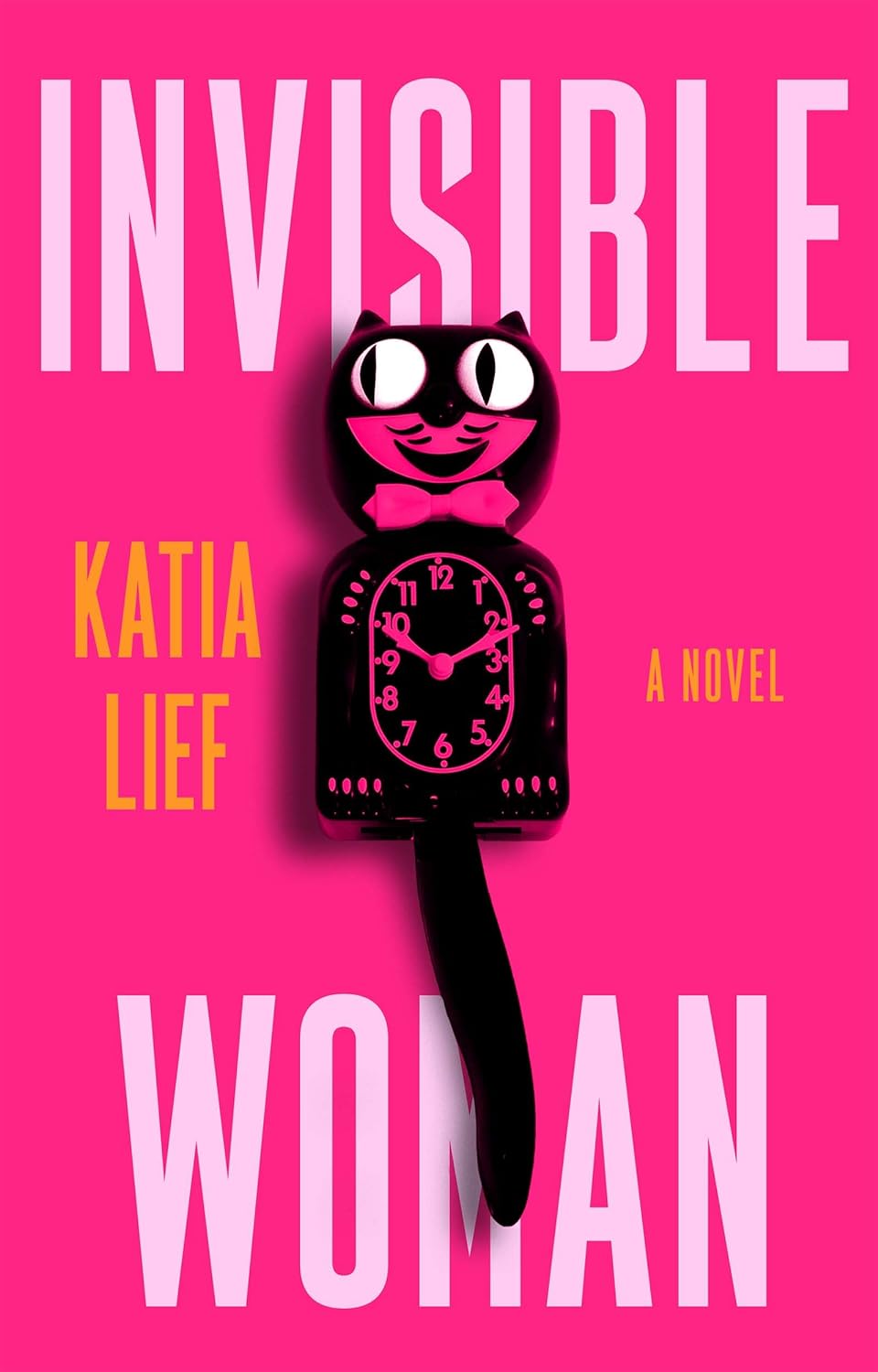
In the Lives of Puppets is TJ Klune’s third adult standalone novel, in a similar vein to The House in the Cerulean Sea and Under the Whispering Door. These are the only three of his I’ve read, although there are more, and I may still get to those.

I said about Whispering Door that Klune excels at “the juncture of sweetness, fantasy, profundity, inclusivity, wisdom and pure silliness.” Puppets continues in that style. Rather than magical orphans or a magical afterlife, here we have a decidedly sadder challenge. The story begins with a lovely forest. A man (“who wasn’t actually a man at all”) approaches an old, falling-down house in the forest. He builds a life there, a crazy network of add-on treehouses and laboratories a la Swiss Family Robinson. He has a son, Victor. Flash-forward: we meet adult Victor with his two companions, a nurse-robot named Nurse Ratchet (that’s an acronym for Nurse Registered Automaton To Care, Heal, Educate, and Drill, and yes, think One Flew Over the Cuckoo’s Nest) and a vacuum-robot named Rambo. Victor’s father Giovanni is still around, and much-beloved; they have a happy family, although Victor is the only human member of it. Like Giovanni, he is an inventor, builder, creator. He spends many of his days combing through the Scrap Yards, where the Old Ones deposit their detritus, some of which turns out to be useful to Victor’s little forest-dwelling family. It’s where he found Nurse Ratchet and Rambo, both of whom he’s patched up to become the wacky friends they are today. (Nurse Ratchet is forever hoping to murder someone or something, slowly, and document their agony. Rambo is crippled by anxiety, restlessness, and his ceaseless need to clean. He loves the old movie Top Hat.) One day, at the Scrap Yards, Victor finds a new potential friend, one who will change everything.

This book assailed me with literary allusions, some of them less obvious than the two I’ve named already. Epigraphs refer to Pinocchio; Victor’s first name and some other plot elements remind of me Frankenstein; the goofy-sidekick robots make me think of R2D2 and C3PO from Star Wars as well as The Wizard of Oz. Which is to say, Klune is not working with brand-new material here (nor does he think he is). The world of robots gets a decided Klune twist, though: sweet, silly, romantic, hopeful. There are a few big reveals I won’t name here. As I already mentioned, this world feels a bit less hopeful to me than the worlds of Whispering Door and Cerulean Sea. The romance felt a full step less believable to me, somehow, although I can’t quite say why – it’s not like the pairings-off in those first two novels made perfect sense in any real world, but this is fantasy. Something about this one just didn’t go off the same, for reasons I can’t articulate. Possibly (is this too obvious?) it is that difficult to write robots (or androids) as relatable humanish characters. Maybe it’s as simple as where we were left with this love affair.

I really enjoyed this read: I was absorbed, engaged, tickled, and concerned for the characters I’d come to love. It is a good book. I just think it’s less awesomely good than the two previous ones by this author that I’ve read. I will certainly buy the next standalone novel he publishes in this same vein.


Rating: 7 butterflies.

A Fine Line: Searching for Balance Among Mountains by Graham Zimmerman

Alpine climber Graham Zimmerman’s memoir, dense with lessons learned and offered, recounts how he sought balance between his sport and the other elements of life.

Graham Zimmerman felt strongly about climbing from his earliest experiences growing up in the Pacific Northwest, and by age 25 was an avid and accomplished international alpinist with his dreams focused on nothing else. But injury, loss, climate change, and a yearning for connection have forced him to consider how to combine his love for alpine ascents with social and environmental pursuits. A Fine Line: Searching for Balance Among Mountains is his thoughtful story of climbing communities in broader context, and his philosophies for a life well lived.

Not yet 40 at its writing, Zimmerman acknowledges “this is not a complete work,” calling his book “a signpost along the way.” It is still dense with lessons learned and offered, however. At just over 200 pages, A Fine Line reads quickly, many of its action sequences adrenaline-filled as Zimmerman recounts climbs with varying levels of success. It is also a neatly organized memoir, with the tensions between climbing and everything else appearing early. Following a major award, he experiences a significant fall, injury, and lengthy recovery, emphasizing the dangerous nature of his passion and his financial insecurity. The women he attempts to date react poorly to months-long absences on risky expeditions. Frequently climbing at high altitudes amid shrinking glaciers also alerts Zimmerman (trained in geology and glaciology) to the impacts of human-caused climate change. And the young alpinist wrestles with loss, as numerous fellow climbers–his friends–die in the mountains. A mentor cites what he calls the “100-year plan”: to make decisions that will set one up to live to be 100. “I was 26 and only occasionally thought about turning 30, let alone ticking over into triple digits,” Zimmerman reflects. “Do I have a death wish…? No, just a case of severe myopia.” This plan, and meeting the fellow athlete whom he would marry, reset the narrator’s views on risk. Over time he comes to focus on being not just a better climber, but a smarter, safer one: “It hadn’t been more time in the mountains that had set me up for success; rather, it was a stable relationship and being surrounded by positive influences.”

As its subtitle forecasts, A Fine Line is about finding balance between an extreme sport in remote natural settings and “actual life in the lower regions.” As a crafted work of memoir, the book mirrors that achievement with its own balance between gorgeously written adrenaline rushes and philosophic reflections about intentional living, healthy relationships, athletic ambition, and service to human communities and the natural world. Obviously for fans of extreme outdoor sports, Zimmerman’s debut is also recommended for readers seeking wisdom and balance in any pursuit.


This review originally ran in the August 4, 2023 issue of Shelf Awareness for the Book Trade. To subscribe, click here.


Rating: 7 pitches.

Ellie’s Story by W. Bruce Cameron

Another one from my young friend. I knew this was a risky book for me, because dogs are my kryptonite, or my Achilles’ heel, if you will. My young friend does not know this. I read the book anyway, but I knew it would hurt me, and it did.

It’s a good book, and I enjoyed it in some ways, but an important part of this review is to say that it hurt me.

Librarians I have known have a shorthand code for a way to talk about whether books will hurt us. We say, does the dog die? This is generally metaphoric – there may not even be a dog – but you get the idea; if ‘the dog dies,’ the story takes a tragic turn that might make readers cry. In this book, the dog does not literally die, but I did still cry. (Note that I am an especially messy reader on the topic of dogs. Your mileage as always may vary. But if you have a soft spot like I do, beware.)

The title dog Ellie narrates her story from birth. Cameron does a good job with this voice: not only a voice of innocence but a canine one, Ellie tells what she sees and hears around her, her comprehension gradually growing, but the reader mostly understands more than she does. (She is, in a strange turn, able to relate human dialog, which we understand but she does not.) A German shepherd puppy, she’s chosen by a police officer out of her litter, and trained to be a search-and-rescue dog. She bonds with this owner/handler, Jakob, but he is injured in a shooting and she’s reassigned to a new handler, Maya. Ellie is an especially talented search-and-rescue dog, and continues to do excellent work with Maya. Ellie’s Story entails several great, heroic events, culminating in one I’m going to call pretty unlikely; but it’s a very impactful tale, emotional and moving (obviously), and with some fun educational info about search-and-rescue dogs built sneakily in. I also like that this edition includes discussion questions and activities both for the family at home (warning: this book has your family signed up for some significant work!) and for the classroom. Solid.

A good book, but risky for some of us. I’ll steer clear of more like it, myself.


Rating: 7 socks.

The Last Colony: A Tale of Exile, Justice, and Courage by Philippe Sands

The 2018 freeing of an Indian Ocean archipelago from British colonial rule is both a complex case of international law and a stirring tale of injustice and homecoming.

In The Last Colony: A Tale of Exile, Justice, and Courage, Philippe Sands combines a moving story of human tragedy and injustice with the complexities of international law to great effect.

The Chagos Archipelago is a little-known collection of islands in the Indian Ocean near Mauritius, colonized over centuries by the Portuguese, Dutch, and French before becoming a British colony as part of Mauritius. In 1973, the British forcibly removed its longtime residents, ostensibly to make way for a United States military base on a single island. Residents for generations, in many cases descended from enslaved coconut oil workers, were deported en masse with no notice, forced to leave behind their homes, memories, pets, and any possessions that didn’t fit in a single small trunk. Among them was Liseby Elysé, recently married, 20 years old, and four months pregnant. Decades later, in 2018, Madame Elysé would be present for the decision of the International Court of Justice in The Hague that would allow her to return to her home island, for which she’d yearned all those years. Her testimony would be an important part of that case.

Sands (East West Street; The Ratline) was part of the legal team representing Mauritius in its bid to free the Chagos from British control. With decades of international law experience and an intimate knowledge of many of the judges and lawyers involved, Sands brings authoritative expertise to this subject matter; as an actor in the case at hand, he acknowledges his personal perspective, including an admiration of Madame Elysé and other Chagossian activists. Madame Elysé cannot read or write, but in Sands’s recounting she is a natural storyteller, has an excellent memory, and speaks eloquently and unwaveringly of her strong feelings for her home. This sense of place and feeling of loss for her homeland, even nearly 50 years after leaving, strikes a common chord of human connection to the place from whence one came.

With a lawyer’s careful research and methodical laying out of the facts, Sands rewinds to 1945 and Ralph Bunche’s work on decolonization at the founding of the United Nations; briefly reviews Chagossian history over centuries; and then zooms into the finer points of international law on separation of colonies after World War II. The Last Colony is both a neat work of detailed legal points and history, and a deeply felt narrative about the injustice of deportation and the dwindling number of Chagossians with strong ties to their homeland. Madame Elysé is an impressive, courageous figure and emblem, putting a human face on colonialism’s continuing wrongs, both for the International Court and this book. There is much to appreciate about this little-known story in Sands’s sensitive telling.


This review originally ran in the August 1, 2023 issue of Shelf Awareness for the Book Trade. To subscribe, click here.


Rating: 7 dogs.

People Collide by Isle McElroy

In this smart, absorbing, thought-provoking novel, a husband and wife mysteriously swap bodies and experience widely varying impressions and reactions.

Isle McElroy (The Atmospherians) takes readers on a mind-bending journey of gender exploration and body politics with People Collide. Much of the novel is told from the perspective of Eli Harding, an American man living in Bulgaria with his wife, Elizabeth, a highly accomplished writer with a prestigious teaching fellowship. Eli is also a writer, but less successful–at everything–than his impressive spouse. In the novel’s opening pages, he discovers that he has woken up in Elizabeth’s body. Elizabeth herself has disappeared.

Eli first hides away in the couple’s apartment, waiting for Elizabeth–whom he assumes now occupies his body–to return, or for this mysterious “Incident” (as he thinks of it) to right itself. When he ventures out, he dresses Elizabeth’s body, applies makeup, and decides that she was right: a male friend was condescending to her all this time. Then both Eli’s mother and Elizabeth’s parents push for action: he is sent to Paris by his own mother (who believes he is Elizabeth) to search for her vanished son. He finds his wife–indeed, in his own body–and the surreality intensifies.

People Collide comments on gender and the roles that the larger world expects from people who present as men and as women. Elizabeth is an ambitious, dominant, talented, driven, no-nonsense individual; Eli is a hardworking writer but has mostly made his living as a restaurant server. He’s followed her to Bulgaria for her more prestigious work. They do not disagree that she is his superior: “‘I’m smarter than you, I’m kinder than you, I’m more talented and better looking. And you benefit from all of that. It’s exhausting. And I want to benefit. Things should be easy for me.’ It didn’t hurt to hear her say those things. I felt the same way.” Eli’s well-muscled body is six inches taller than Elizabeth’s, and she carries it “with a graceful confidence that I had never shown in my life.” He used to walk too quickly for her, which she found “frustrating and selfish.” In her body, he notes: “I never slowed down for her. Not until now, when I had no other choice.”

Beyond the gender binary and the public’s assumptions based upon appearances, McElroy’s insightful novel also examines class, privilege, the art world, and family relationships. Elizabeth’s parents are smugly satisfied with their money, connections, and community in a small, liberal, artsy town in Michigan; they look down upon Eli’s thrice-divorced mother. Everyone judges Eli harshly for abandoning his wife–an irony, because it was, in fact, Elizabeth who did the abandoning, in his body.

People Collide is sly, clever, funny, provocative, and compelling. It offers a world and a story to get lost in.


This review originally ran in the July 28, 2023 issue of Shelf Awareness for the Book Trade. To subscribe, click here.


Rating: 7 steps.

Maximum Shelf author interview: Tim O’Brien

Following Friday’s review of America Fantastica, here’s Tim O’Brien: Route 66 Meets MAGA America.


Tim O’Brien is the author of the novels Going After Cacciato; The Things They Carried; In the Lake of the Woods; and others, as well as memoirs including If I Die in a Combat Zone, Box Me Up and Ship Me Home. He has won the National Book Award for Fiction, the James Fenimore Cooper Prize, and the Katherine Anne Porter Award, and was a finalist for the Pulitzer Prize and the National Book Critics Circle Award. O’Brien has been elected to the American Academy of Arts and Letters and the American Academy of Arts and Sciences. His eighth novel, America Fantastica, a wild ride through a paranoid nation, will be published by Mariner Books on October 24, 2023.

What brought you back to writing a novel after more than 20 years?

Tim O’Brien
(photo: Tad O’Brien)

The character of Angie Bing. She came into my head, I don’t know, 20 years ago, as did the antihero, Boyd. I tried to push them away for a long time. They just kept yapping at me. Put me in a book! Especially Angie. It was that voice inside my head for all those years that convinced me to at least try. And it was fun. I enjoyed her.

I was pretty determined not to ever write another novel. It’s hard work and often frustrating, all the things that go with a 400-something page book. Five years of my life. I was a little reluctant to do it, but once I started, I got a kind of perverse pleasure out of it.

America Fantastica contains so many characters, events, places. How do you stay organized?

The organizational tool is my head. It’s nothing much beyond that. Occasionally I would lose chronology, but then I simply go back and reread and rediscover.

The novel switches voices among many of those characters. How fun or difficult is that?

It was a great pleasure, going from voice to voice. There are some pretty nasty people in the book–most of them, in fact–and it was fun being nasty. I see it around me so much. It was a sort of Jonathan Swift/Mark Twain fun, curmudgeonly. You call a bank or an airline and they’ll have that message on: “Our phone lines are unusually busy; please hold.” They’re not unusually busy. They’re usually busy. In fact, they’re always busy. Things like that were fun to strike back at.

Do you have a favorite character?

No. Characters, probably for all writers, are like your own children. You don’t pick them. They’re very different. I don’t approve of most of the characters in this book, but I don’t approve of most of the people I see on CNN and Fox, either.

This work of fiction is centered on the lying or fictionalizing of its characters.

It’s been a theme that’s gone through my entire work and probably my entire life, going way back even to my childhood. I grew up in a small town and spent a lot of my time in my own head, imagining I was not in this godawful place. That followed me to Vietnam and has followed me through adulthood. It’s astonishing the things that we witness that seem almost impossible, incredible, especially during the Trump years. How can this be happening in a country I really had loved as a kid? It seemed as if I were living in a fairy tale that couldn’t be true, and yet seemed true. And so all of my work has to do with this blend of our imaginations and the realities we see around us. This book probably is the most blunt about it. Boyd seemed to represent for me what I’m witnessing socially, culturally, and politically in this country, a kind of shameless lying or deceit. I wanted to have as a foil someone who was pretty certain about the world–Angie has a kind of religious certainty about the world. The tug of war between them was fascinating.

Angie came first?

They came together. I imagined her originally as a bank teller, and then almost instantly I imagined Boyd as a small-town entrepreneur (later a JCPenney manager), and within 20 minutes or so I had him robbing that bank as the novel begins. Robbing it essentially for entertainment, as a way of making himself move out of his lethargy and do something in the world. When he invited her along, or made her come along, a kind of Route 66 theme dominated, and it stayed throughout the entire book. It’s sort of a Route 66 meets MAGA America kind of book.

I knew it would be set during those years. They were the years that I was living through, with my mouth agape as I watched the television set. It seemed appropriate to have a character who was a shameless liar and had been his entire life, and to find out why. Why do people do this sort of thing? There’s a quote at the beginning of the book by Yeats: “We had fed the heart on fantasies, / The heart’s grown brutal from the fare.” That’s what I saw happening around me, that sort of fantasy: of a lost election being a winning election, for example. I wanted a hero who was part of the conspiracy world, coming up with these bizarre fantasies about the world and apparently believing in them, repeating them enough to believe in them.

By having such a human being as one of the two main characters in the book I felt I was trying to get into what made people do these sorts of things. For my hero, Boyd, it goes back to his childhood, as we learn late in the book. He began, even as a kid, living in a fantasy world as a way of escaping the world he was in. It can have terrible consequences, and did for him: a broken marriage, a lost career. But on the other hand, fantasy keeps us going. The fantasy that tomorrow will be better than today. Maybe fantasy isn’t the word, but the hope or the dream that things will improve for all of us. I’ll win the lottery, I’ll have a great time in Yellowstone, I’ll meet the girl of my dreams or the boy of my dreams. I think we need fantasy. So there’s that tug of war, when what we need can have terrible consequences. That will always fascinate me, and has since I was a kid.

What are you working on next?

I’m working on my golf game.

Nothing. I’d been working on this book all the way through page proofs and so on; it still feels like in my head I’m working on it.

Are you one of those writers who’s never done, even when it’s printed and published?

I am. I’ve made changes in The Things They Carried; In the Lake of the Woods; [Going After] Cacciato. I slip them in when they print a paperback edition. Most of them minor and none of them noticed, except by scholars. I did have a letter from a high school English teacher once who disputed my changes.


This interview originally ran on July 27, 2023 as a Shelf Awareness special issue. To subscribe, click here, and you’ll receive two issues per week of book reviews and other bookish fun.

Maximum Shelf: America Fantastica by Tim O’Brien

Maximum Shelf is the weekly Shelf Awareness feature focusing on an upcoming title we love and believe will be a great handselling opportunity for booksellers everywhere. The features are written by our editors and reviewers and the publisher has helped support the issue.

This review was published by Shelf Awareness on July 27, 2023.


Set against the backdrop of an unnamed but recognizable American presidency, Tim O’Brien’s black comedy, America Fantastica, takes both the dark and the comic to epic proportions with simultaneous absurdism and poignancy. O’Brien (The Things They Carried; If I Die in a Combat Zone, Box Me Up and Ship Me Home) here offers his first novel in more than 20 years–a sprawling, madcap tale of road trips, crimes large and small, love, loss, and, most of all, lying. Like The Things They Carried, America Fantastica revels in detail and highly specific lists, so that the world it portrays feels robust and brimming.

Its opening lines set the tone, far-reaching and grandiose: “The contagion was as old as Africa, older than Babylon, wafting from century to century upon sunlight and moonbeams and the vibrations of wagging tongues. During the second decade of the twenty-first century, the contagion alighted in Fulda, California, riding aboard the bytes of a MacBook Air…. Reinvigorated by repeated utterance, fertilized by outrage, mythomania claimed its earliest victims among chat room patrons–the disappointed, the defeated, the disrespected, and the genetically suspicious…. The disease spread northward into Oregon, eastward into Idaho, arriving on Pennsylvania Avenue in January of 2017.”

Readers first meet O’Brien’s antihero in action. “On an afternoon in late August of the year 2019, after locking up the JCPenney store on South Spruce Street, Boyd Halverson strode out to his car, started the engine, sat without moving for several minutes, then blinked and wiped his eyes and resolved to make changes in his life. He had grown sick and tired of synthetics, rayon in particular.” He departs his Kiwanis brunch early to head to the bank, where he presents a gun and leaves with just under $81,000 and the teller, “a diminutive redhead named Angie Bing.” She is technically kidnapped, but Boyd will repeatedly try and fail to ditch her over the coming months. His name is not really Boyd Halverson and his entire résumé is a fiction. He had in fact been married, had a child, had an impressive career as a foreign correspondent and nearly won a Pulitzer Prize. But that life was built on lies, culminating when “at last he collided with the sudden, brutal, and well-earned catastrophe he’d been patiently anticipating for decades.”

Boyd and Angie hit the road, seeking first Boyd’s ex-wife, Evelyn, and then her father, Dooney, against whom Boyd holds a significant grudge. Their travels prompt movements by an increasingly colorful cast of bizarre characters. Dooney and his partner Calvin flee the possibly murderous Boyd from Port Aransas, Tex., to Bemidji, Minn., and onward. Randy, Angie’s boyfriend, an almost-laughably amoral electrician/rodeo cowboy/burglar, tracks Angie from Santa Rosalía, Mexico, to Santa Monica, Calif., and beyond. Along the way, he meets two ex-cons at a diner in Los Angeles who latch onto his interest in an unreported bank robbery. These characters set the tone of a novel dealing equally in ludicrous comedy, political commentary, and pathos. They will be joined in O’Brien’s imaginative, wide-ranging tale by a violent, egomaniacal CFO; a bank president and his wife, both with a gift and passion for fraud; a racist cop; an Amazonian CrossFit gym owner and amateur detective; a small-town sex worker with either an excellent act or multiple personalities. Events range from disturbing to ridiculous, often simultaneously, as when Boyd gets his toes broken with a monkey wrench by an unlikely pair of sidekicks. These characters and events, in a series of deftly drawn American locales, form a fantasmagoria, a version of reality that both bizarrely exaggerates and digs directly into the emotional truth of the real world.

O’Brien opens with a Yeats epigraph: “We had fed the heart on fantasies,/ The heart’s grown brutal from the fare.” His novel speaks of a nation that craves delusion and deception; O’Brien’s profile of the 2019 United States is savage, blending satire and realism. “Off with their heads! Climatologists? Chemists? Off with their tongues! Who needs reality when you have Venom? Who needs history when you can manufacture your own?” Is it plausible that Boyd, an esteemed investigative journalist, exposed as a liar, might in turn expose larger wrongs than his own?

America Fantastica showcases a broad emotional range, as Boyd Halverson (aka Otis Birdsong, aka Junior, et al.) turns out to harbor some very real trauma amid a fabricated personal history, and at least one complex personal relationship. It is a story chock-full of lies or fictions, a theme O’Brien has explored in earlier works as well. “[Boyd] had fervently believed every word, every unearned moment of an unlived life. Yes, he was a Princeton graduate. Yes, he had distinguished himself in the Hindu Kush, scaled Mount McKinley, survived brain cancer, scored near-perfect on his SATs. But so what? Why risk failure when a fib was always conveniently at hand?” By the novel’s end, readers will have learned–more or less, as far as we can tell–the “real” truth. This feels in some respects like a hopeful conclusion. But the truth itself is more grim than hopeful, which is perhaps the most realistic–truthful–possibility.

As in the earlier works for which he has long been recognized, O’Brien here demonstrates an electric combination of deadpan humor, vicious wit, and a masterful eye for detail in capturing a peculiarly American form of torment.


Rating: 7 wiggles.

Come back Monday for my interview with O’Brien.

Black Sheep by Rachel Harrison

In this darkly comedic yet philosophical horror novel, an unhappy 20-something returns home to the insular community and church she’d left behind only to find frights worse than she’d remembered.

Black Sheep by Rachel Harrison (Such Sharp Teeth; Cackle; The Return) moves inexorably from the darkly absurd into terrifying horror. Readers follow apathetic, antisocial Vesper Wright as she returns home to her estranged family and learns that what she knew of her unorthodox upbringing was just the beginning.

Vesper is 23 years old, working as a server at a chain restaurant “in an unglamorous part of Westchester County, sporting a polo and serving plates of baby back ribs I was fairly certain were generated in a lab.” She’s unhappy but relieved to be free from the family, community, and church in which she was raised–until she receives an invitation to attend the wedding of her former best friend and her first boyfriend. Magnetically drawn to the place she misses, dreads, and still thinks of as home, Vesper reencounters not only the unusual church but her powerful mother, a horror movie megastar who never proved very maternal: “I’d only ever seen her emote on screen, her vulnerability behind glass. She was more human to me when she was pretending to be someone other than herself.” What she finds at home will blow Vesper’s world, and perhaps literally the entire world, wide open. She reconsiders her memories and “that our past is not the truth. It’s warped by time and emotion, inevitably muddied by love and resentment, joy and shame, hope and regret.” Eventually Vesper will have to rethink everything she thought she understood about her family, her church, and her past–and reexamine her loss of faith.

Early on, Black Sheep exhibits black humor and an accessible 20-something nihilistic angst. Details of Vesper’s former church are darkly comic. As the stakes rise, however, Harrison’s imaginative plot turns gruesomely to true horror. Fans of the genre will find pleasure in both the playful and the ghastly aspects. Aside from the terror, Vesper’s story ruminates on themes that include nature vs. nurture, the legacy of family trauma, and the repercussions of organized religion in its various forms. “Nothing terrified me more than this. The notion that without a choice we inherit parts of us that we cannot change. Cannot cut out.” This subject matter elevates a horror novel to a study in philosophy, even as the bloodletting ramps up.

Black Sheep is can’t-look-away riveting in its best and most disturbing moments, gripping readers on both conceptual and visceral levels. Vesper’s discontent and wrestling with her own worst self, her former family’s creepy cultlike demeanor, and the final crescendo of action add up to an unforgettable adventure.


This review originally ran in the July 14, 2023 issue of Shelf Awareness for the Book Trade. To subscribe, click here.


Rating: 6 glasses of wine.