two-wheeled thoughts: Jean-Paul Sartre

two-wheeled thoughts

Handing over a bank note is enough to make a bicycle belong to me, but my entire life is needed to realize this possession.
–Jean-Paul Sartre

Thanks Pops for today’s submission! Realizing my bicycles is indeed a lifelong journey, and I’m feeling it these days, working hard in physical therapy to try to get back to where I was… and onwards from there. I want to win a trophy to present to my PT.

did not finish: Upgunned by David J. Schow and Cosmopolis by Don Delillo (audio)

Just very briefly here, because I didn’t get very far into either…

David J. Schow was the screenwriter of The Crow and Texas Chainsaw Massacre: The Beginning. These credentials are not terribly meaningful to me, not being a fan of horror movies, but they did give me some hope. Upgunned begins with the perspective of a semi-celebrity photographer of the scuzzy, scummy upper crust – drug-addled anorexics and the like. He is kidnapped and forced at gunpoint to take blackmail photos of a local politician. And then the perspective shifts to the man behind the gun.

The plot premise was mildly interesting to me – I can get into a good thriller regardless of framing elements if it’s done right – but the writing and characters didn’t hold up. I found both early characters a little bit cartoonish and overdone, the society in question was just a little too sickening for my taste, and the writing did nothing to redeem it. Nancy Pearl would be disappointed as I quit just 48 pages in, but I couldn’t motivate any further than that.

This DNF review is based on a galley sent to me by the publisher. Many thanks!

I have fond memories of Don Delillo from his amazing White Noise (and also my buddy Jerko is a big fan and I value his opinions). But Cosmopolis didn’t hold up. (And to be fair, Jerko specifically did not recommend it.) I made it maybe an hour in, which I think should count as 50 pages, if only just. 🙂 The story of Eric Packer’s billionaire troubles while wending his way through the city in his limousine (as pictured on the cover) failed to make me feel anything deep. Delillo’s trademark tone of detached despair is there, but the writing feels a little stilted, a little overdeveloped. Mostly though, I just couldn’t get interested in Packer’s fate.

Am I a little disenchanted and difficult-to-please these days? Hey, it’s possible. We all go through those phases. I will point out, though, that I attempted these two DNFs within a week of reading my two most recent additions to the Best of 2011 list: 11/22/63 and The Home-Maker. So maybe everything else pales in comparison. 🙂 At any rate, I’m sure there’s more outstanding reading right around the corner, and I hope the same for you as well!

Teaser Tuesdays: Left Neglected by Lisa Genova

Teaser Tuesdays is a weekly bookish meme, hosted by MizB of Should Be Reading. Anyone can play along! Just open your current read to a random page and share a few sentences. Be careful not to include spoilers!

This is a smashing audiobook so far. The narrator is doing a terrific job with a terrific story; I’m riveted. Stay tuned for my review to come; I think I will be recommending Left Neglected. Here’s your teaser for the day:

Bob and I are in our master bedroom. I’m leaning against the sink, getting ready for bed. Bob is standing behind me, getting ready to drive back to Welmont. He’s also watching over my brushing, just like he did a few minutes ago with Charlie and Lucy.

Stick around, folks, I’ll be ready to review this one in just a few days. And what are you reading this week?

Suite Française by Irène Némirovsky (audio), trans. by Sandra Smith

Pagesofjulia earlier published a guest review of this audiobook by my father. He did an excellent job of telling the backstory, so I’m just going to quote him here.

Much of the impact derives from knowing the author’s own story and how the book came to life. Born 1903, she was a Russian Jewish immigrant to France (1918), converted to the Catholic Church (1939), published numerous works of renown before the war (including one brought to film), was denied French citizenship in 1938 due to Jewish heritage, and has since been criticized for being a self-hating Jew. She was in the course of writing this work as events unfolded, expecting to create a novel in 5 parts. She finished two parts, was denounced by French collaborators and deported to Auschwitz where she died within a month. Many more of her writings were published since the war. But her daughters retained this notebook manuscript, keeping it unread until 1990 due to anxiety over the expected pain of reading her wartime “journal” – only then, before donating the pages to an archive, did they realize what powerful words those pages held. Written 1940-42, it was published in 2004, acclaimed, translated and read internationally.

(I don’t know where he gets his info from, but his write-up appears to agree with what the rest of the interwebs tells me.)

The backstory does indeed increase the impact of this story for me. For one thing, knowing that she wrote without knowledge of how the story ended makes some of her predictions and judgments especially poignant.

I think the most remarkable aspects of this book for me were the beautiful writing, and the tone of dry humor. See my Teaser Tuesday and Book Beginnings posts featuring this book for a few snippets I appreciated. The poetry flowed so naturally and yet painted such lovely pictures, without ever feeling forced. And as for the tone – Némirovsky does not spare the French, particularly the upper classes. While they are “victims” of the Nazis, they don’t read as sympathetic characters most of the time; see again that teaser post above for some of her cutting satire (and it goes on from there). The Germans sometimes come across more sympathetically, which I found interesting and not entirely expected. It’s easy to denigrate the Nazis, right? But Némirovsky gives us a truth: these were all just people, elementally.

Perhaps the point that drove Némirovsky’s story home for me the most – that is, both Suite Française and her own real-life story – was the ending of the book. Némirovsky’s daughter chose to publish as one book the first two in an intended series of five novels (so says Wikipedia). She also left behind the outlines of the third part. But in effect, this book ends very abruptly to me, leaving many threads unresolved. The abruptness of the ending was of course made more stark for me in audio format – I’m walking along, listening to the book on my earbuds, and then, nothing. What? Is that the END? I had gotten so engrossed in the story – worried about Bruno, wondering what Lucile would do next – that I’d forgotten the similar plight of the author herself (in that her future was being torn apart and eventually her life ended by the same forces at work in the book). So the cutting off of her work in progress ended up telling the same story for me that her book tells within its pages. I found that very powerful.

Suite Française has an interesting story to tell, both between its covers and without. It is beautifully written, humbling, stark and poignant. The same Wikipedia page (above) calls it “possibly the earliest work of literary fiction about World War II.” It’s really something, and you should check it out. But beware unintended cliffhangers.

take the day off, kids.

I’m giving you the day off here (which has nothing to do with me taking the day off ;)). I’ll be spending my day with family and relaxing. We’ll return tomorrow to our regularly scheduled programming. Happy Holidays, friends.

Here Be Dragons by Sharon Kay Penman

I continue to be enthralled by Sharon Kay Penman’s works of historical fiction. Here Be Dragons is the first in the Welsh trilogy, and is concerned with 13th century Wales, the rule of Llewelyn Fawr (Llewelyn the Great) and his wife Joanna, bastard daughter of England’s King John. The book opens with Llewelyn at age 10, unhappy in his new status as stepson to an Englishman; his Welsh culture was drastically different from that of the nearby neighbor, and he found it difficult to assimilate. It only took a few years for him to go home to Wales and undertake to regain the crown that was rightfully his. One of the unique and questionable points of Welsh culture was that sons were expected to share their father’s property, rather than it all (unfairly) falling to the eldest son as in England. This most often resulted in fratricide, and family violence had previously cheated Llewelyn of his birthright to rule. Llewelyn went to war at 15, and won himself many decades of power in Wales, but almost constant conflict and challenges to his power, too. Alongside the story of young Llewelyn, we meet Joana, on her 5th birthday, living with her ostracized mother; her mother’s death just a few days later takes her to the court of her father, John, who eventually became king of England.

The book follows Joana and Llewelyn, their split loyalties, their many friends, relatives, and associates… and as always in Penman’s epic novels of British royal history, we’re treated to the tangled webs of intrigue, betrayal, and power struggles. One of the most powerful threads in this novel – arguably the dominant one – is the romance of Llewelyn and Joana’s marriage. I find myself most charmed by the threads of romance that Penman reliably delivers. I love the court dramas and the intrigue, but I love the romances, too. I’m not a reader of romance novels, and that’s not what this is; it’s so much more. The drama, the tragedy, the heartbreaking complications of family dynamics, the strained loyalties… this is truly a sweeping epic deserving of every minute of concentration it demands. I read these 700 pages in just over 2 days – while on break from work, yes, but given the time to devote to it, it was easy to do.

I find myself learning history from Penman somewhat. This is a slippery slope, to learn history from fiction, as I’ve discussed before. But if it’s ever permissible, Penman might be your author; she is very faithful to her extensive research, and her Author’s Notes at the back of each book offer good outlines of where fact meets fiction.

My first Penman read was The Reckoning, which happens to be the third in this Welsh trilogy. (Once I get through Falls the Shadow I’ll have to decide if I want to go back and reread The Reckoning yet again!) That’s where my fascination with Welsh culture, customs and language began. I am interested in traveling to Wales to explore what I’ve learned, but I’m also sorry to know that Llewelyn, alas, is long gone from our world! If you haven’t picked up Penman yet, I must say – do it now! And I’m off to pass this book on to Pops for his enjoyment.

book beginnings on Friday: Available Dark by Elizabeth Hand

Thanks to Katy at A Few More Pages for hosting this meme. To participate, share the first line or two of the book you are currently reading and, if you feel so moved, let us know what your first impressions were based on that first line.

I’ve been sent a copy of Available Dark for review, and have only the back-of-the-book blurb to go on here. It reads, “Photographer Cass Neary is already wanted by the police for questioning when she receives a suspicious job offer that sends her from Helsinki to Iceland… with murder following her every step.” There, now you know as much as I do! We begin:

There had been more trouble, as usual. In November I’d headed north to an island off the coast of Maine, hoping to score an interview that might jump-start the cold wreckage of my career as a photographer, dead for more than thirty years.

Now I’m confused by the Maine setting, as the above blurb led me to think this was another Scandinavian-set thriller (quite the rage, is that setting right now, no?). Maybe Maine is but a brief stop. I’ll let you know eventually!

What are you reading this week?

This quotation comes from an uncorrected advance proof and is subject to change.

The Home-Maker by Dorothy Canfield

homemakerOh my. This has got to be one of my top *five* books of the year. What a delight! I’m reeling! First I would like to thank Thomas at My Porch, again, for sending me this book along with the also-lovely Some Tame Gazelle. (This was because I have cute dogs. Lucky me!) Thank you, Thomas! You did so splendidly selecting books for me.

I have a lot to say about this book and will try not to be too long-winded.

The Home-Maker is the story of the Knapp family. The mother, Evangeline, is the home-maker – of course, because how else could it possibly be done? (This book was published in the 1920’s and seems to be set about then, too.) She is efficient and hardworking, and miserable; and her three children are miserable as well, and two of them physically ill. Her husband, Lester, is a lackluster breadwinner, also miserable. In an accident (or was it? read the book), Lester is paralyzed, and their world turns on its ear. Eva ends up going to work, and Lester staying at home to play Mr. Mom. And presto change-o, everyone blossoms! It’s lovely. Eva is fulfilled, challenged, in her element; she earns raises and promotions and everyone’s respect and appreciation. Lester gets to know his children, marvels at their youthful struggles, their individuality, their talents. He learns to cook, bake, and darn socks. And the children become healthy, rosy-cheeked, encouraged – and the troublemaker amongst them gazes adoringly up at his father. It’s remarkable, and heartwarming, and, gosh.

As a story of a family, it is engaging, droll, actually laugh-out-loud funny at times. As an instructive tale – which it obviously is – it is straightforward and sensible. Who could not agree that we should all do what we’re best at and enjoy, if we’re so lucky as to have those two things coincide with one another, and to have a family comprised of all the roles necessary for universal happiness? It’s almost so obvious as to be dull; but the sad trick is that even in 2011, when we congratulate ourselves for being enlightened on such topics as gender roles, we still need this book. I can only imagine that this book’s contemporaries felt their feathers ruffled; but surprisingly, the introduction of my Cassandra Edition claims, “very little of the criticism was harsh or outraged.” This edition also includes an article Canfield wrote for the Los Angeles Examiner on marital relations; it’s well worth reading, too, and succinctly echoes the novel’s point: do what you do best, and be happy. That’s a big duh, right? But again, I’m afraid we still don’t have it right!

For example, one point that SCREAMED off the page at me was the same set of ideas applied to the currently uproarious debate about gay marriage. Canfield actually does refer to “a man and a woman” several times, but I’m going to give her credit and believe that if she were writing today, she’d apply the same logic she did to hetero-marriage. Two people who love each other and want to make a family should do it in the way that takes the best advantage of everyone’s skills and passions and makes everyone happiest! To me, this is abundantly easy to understand, but alas, still, we have debate. Sigh. I’m not trying to have that debate here (rather because I don’t think it merits much discussion) but it was an obvious corollary of Canfield’s position here so I wanted to mention it.

For those who fear a heavy-handed instructive tone weighing down a lovely story, don’t. I’m sensitive to that fault, myself (okay, it was nonfiction, but I loved County while lamenting its overly-obvious point). But it’s not an issue here. Canfield is matter-of-fact in her portrayals; I think the strength of the “issues” at play here are that they’re too clear-cut to BE issues. Does that make sense? And the story itself is delightful. “Cosmic Stephen in his pink gingham rompers!”

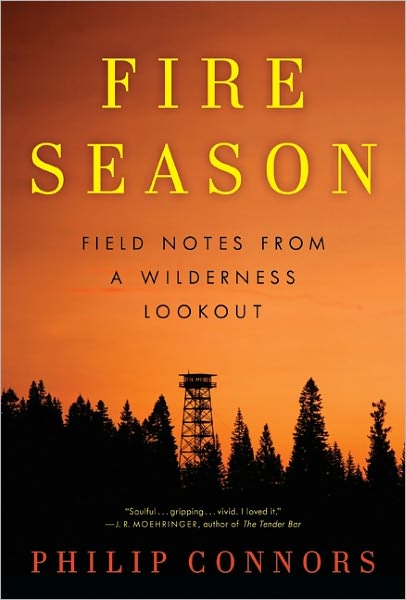
I really enjoyed this as much as just about anything else I read this whole year. It’s the first to compete with Fire Season by Philip Connors, which I’ve been calling my #1 best of 2011. (Rather different books they are, too.) Thomas, you’ve done me a great service, and here, I’ll try to pass it on: the rest of you, go find The Home-Maker today.


BUT.


Here’s my one caution for seekers of the book. I appreciated that my Cassandra Edition included the newspaper article that I mentioned above, and it’s a nice edition all-around, but for a single glaring flaw: page 134 is followed by page 119, which then runs back up to 134 and then skips to 151. So while reading this book and really enjoying it, I was suddenly thwarted! The publisher (after some discussion of what might be a reasonable way to deal with this issue) promised to put another copy in the mail to me. So it’s a nice edition, but find yourself a different one! Perhaps I’ll be able to make a recommendation when my new copy arrives.

11/22/63 by Stephen King

Wow. What can I say? This book was a thrill, a wild joyride, emotional and tender, thoughtful, had me on the edge of my seat. I guess I’ve not bothered to seek out Stephen King (aside from one book I read for the horror section of my genre fiction class in grad school, From a Buick 8, and a short audiobook for a car trip, Stationary Bike) because I don’t have much use for horror; but of course he does more than horror, doesn’t he. There are reasons why he’s a mega-bestseller, and this book illustrates several of those reasons very well.

I’ll back up a bit and give you the premise. Jake Epping is an English teacher in small-town Maine in 2011. His alcoholic wife has just divorced him in favor of a man she met at AA meetings when Al, of the local Al’s Diner, calls him up. Al has aged 10 years overnight and is clearly dying, like right now, but how can this be when Jake just saw him yesterday looking healthy if chubby? We’re thrown into the weirdness immediately as Al sends Jake through his diner’s pantry, and through the rabbit hole, into 1958. This strange loophole through time always takes a visitor back to the same moment in 1958, and no matter how long one stays, he’s always gone just 2 minutes in 2011. Al has returned from 1962 with terminal cancer. He tried to make it to 1963 to stop the Kennedy assassination, thinking to prevent as well the assassinations of Bobby Kennedy and Martin Luther King, the tragedy of the Vietnam War, and – why not? – all the bad since then, too. But now Al is out of the game, and with very little instruction, Jake is in it.

I’ll go ahead and tell you that Jake takes on the challenge, because I don’t feel it’s much of a spoiler. (This book runs over 800 pages; something had to happen.) But I won’t tell you much more. This is a suspenseful ride through time and history with the most serious of potential consequences. It’s awesome. Jake is an awfully likeable character, very human, fairly well developed, with good intentions but human weaknesses as well. There is definitely some humor in his preordained knowledge of the past; and before you go thinking he can see everything’s future as he travels through 1958, and onward, across the United States, remember (as Jake will remind us) that he’s an English teacher, not a history teacher. In particular, the regular people he meets are beyond his future-sight, as he didn’t study up on them beforehand. And it’s the little people, the regular folks he comes to know in the Land of Ago, that will turn out to be important to Jake. How could it not be so? He’s just a regular folk himself.

As my mother (who read this book first and prompted me to do so; thanks Mom) pointed out, King is not terribly poetic or lyrical in his writing style. (For the exception that proves the rule, see my recent Teaser Tuesday.) But not all books have to be poetic, and this one loses nothing for it’s more straightforward style. What King does right is build characters, make us care, paint the world of the late 50’s and early 60’s so completely that we taste and smell it. The storyline is fabulous, and this book is a page-turner; if only I had started it sooner during my week off work I might have tried to do it in one or two sittings!! As it was I stayed up past my bedtime on a work night to finish it.

The history and culture of the past is great fun; the characters are engaging; the action is suspenseful. This book is fun and exhilarating and I highly recommend it! Go ahead and add it to my Best of 2011 list. (See, I knew I was jumping the gun…)

Teaser Tuesdays: The Home-Maker by Dorothy Canfield

Teaser Tuesdays is a weekly bookish meme, hosted by MizB of Should Be Reading. Anyone can play along! Just open your current read to a random page and share a few sentences. Be careful not to include spoilers!

Dorothy Canfield’s The Home-Maker was a gift from Thomas of My Porch some months ago, and I have just now gotten around to it – but it’s WONDERFUL! I shouldn’t have waited so long! You get just a snippet today – the review is to come – but let me tell you now, you want to run out and find a copy immediately. Here’s your teaser:

How he loathed his life-long slavery to the clock, that pervasive intimate negative opposed to every spontaneous impulse. “It’s the clock that is the nay-sayer to life,” he thought, as he climbed the cellar stairs.

I love that turn of phrase. He (Lester) fancies himself a poet, you know. If this teaser is a bit depressing, stay with me; this book turns rather hopeful (at least so far, I’m not finished yet, it could still end in tragedy I suppose) and oh so droll.