I am leaving you. Just temporarily, though.

Just a note to say I’ll be gone for a bit! Husband and I leave tonight for Ireland! How exciting is that? Neither of us has ever been before; I’ve seen a little bit of England. We’ll be meeting one of my best friends, Barrett, in Dublin, and he’s done this several times, so hopefully we’re in good hands. Our plan is to head west from Dublin across the country to the west coast and then north, to see Belfast (for the 100th anniversary of the Titanic leaving from there! there is a festival). Top aspirations include finding great pubs & great beer; seeing some history (old pubs, old buildings, Newgrange); beautiful natural scenery; and soaking up some culture (traditional live music, please). Really I don’t know what all we’re doing; Barrett has done pretty much all the planning that’s been done and we’ll be doing a fair amount of playing it by ear (Husband’s preferred style). I’m ready for adventure!

So what am I reading? I have had a certain amount of angst about this. At this point I’m pretty sure I’ll be taking Doug Peacock’s Walk It Off, a memoir of his relationship with Edward Abbey, and Doug Magee’s Darkness All Around, a thriller kindly sent me by the author. Will definitely take Abbey’s The Monkey Wrench Gang, which (gasp) I have not read yet. And naturally those Ireland travel guides that I haven’t cracked yet :-/ but will at least skim if not study on the plane. That would be 50 Best Pubs Crawls in England, Scotland, Wales & Ireland, lent by my parents, and Lonely Planet’s Ireland 2012, lent by my library. I’m not sure if that’s going to do it, though, and I don’t want to take Houston Public Library’s copy of Aldo Leopold’s Sand Country Almanac because I don’t want anything to happen to it, plus it’s coffee-table size, awkward for travel. Hrm. I may have to grab things off my plentiful TBR shelves on the way out the door. The iPod can come with its audiobooks too of course. But I’d prefer to keep my ears open on this trip with friends. Oh, and Husband is bringing Fire Season.

And what does this mean for the world of pagesofjulia? Never fear: I have posts scheduled to come up almost daily, like normal, while I’m gone. (I’m taking the two Sundays off to get through the break.) But just be aware that I won’t be responding to your comments for a bit; I will be catching up April 9 and 10 when I’m home. Please come visit me here and comment! But be patient with me in getting back to you. I’ll be offline.

Finally, burglars, beware! We do have a housesitter. 🙂

Have a great week-plus and now we return to our regularly scheduled programming.

Claire DeWitt and the City of the Dead by Sara Gran (audio)

The “City of the Dead” is New Orleans during & after Hurricane Katrina, and that’s what drew me to this mystery. That’s the whole sum total of my knowledge of Sara Gran’s book when I began it, and that was enough. I love New Orleans and I think my favorite mysteries are those with a strong sense of place, a well-developed sense of location as a pivotal part of the story – stories that couldn’t happen anywhere but where they do. (I’m thinking of Harry Bosch’s Los Angeles, Tana French’s Ireland, Lisa Gardner’s Boston, James Lee Burke’s New Iberia.) And even as far away as Houston – not so far, especially considering all the Katrina-displaced New Orleanians who now live here – the idea of Katrina is evocative and powerful. So the idea of a mystery set in Katrina’s New Orleans was enough to sell me. Of course, that wouldn’t necessarily make the book good… I’ll give Sara Gran herself credit for doing that.

This was a great, and entertaining read (listen). It’s part mystery and part study of New Orleans, and large part mystical magical musings – but perhaps that last is necessary of a study of New Orleans, with myth, legend, Mardi Gras Indians intruding upon the mystery. Our private investigator, Claire DeWitt, bends the classic hard-drinking, silent-loner-type PI to fit into New Orleans’s unique culture: she uses hard drugs and channels her detective hero, Jacques Silette (author of Détection, her bible of detective skills) as well as her mentor, the late Constance, former apprentice to Silette himself. Claire is sort of secondarily hunting her childhood friend and former fellow junior detective, Tracy, who disappeared so many years ago.

So what is the mystery? Claire comes down to NO from California when she’s hired by Leon, who wants to know what happened to his uncle, Vic Willing. Vic disappeared during Katrina, never to be seen again. I’m not sure we ever really settled why this indicates foul play, as lots of people got “lost” in Katrina, but it’s accepted throughout the story that something sinister must have befallen him, and I’m okay with getting on that train. Vic was a successful local DA, and fed birds from his apartment. And there the clues seem to end. Claire quickly gets herself entangled with some local delinquent youngsters, and has various adventures involving gunplay and drugs. Despite her hard exterior, she’s a bit of a softie towards these young men who’ve been dealt “a bad hand,” but she doesn’t let it show much. The mystery of Vic’s disappearance is not the star of this book. Its eventual wrap-up is a bit simplistic; as a strict, standalone mystery it might not impress. But that’s not what this book is about. Rather, several other threads steal the spotlight: Claire’s relationship with Andray and Terell; her relationship with her late mentor Constance; and the mystery (unresolved – maybe that’s another book?) of Tracy’s childhood disappearance, not to mention the interest (the framing element, if you will) of Claire’s nontraditional methods of detection, including throwing the I Ching and analyzing dreams and drug-induced hallucinations. Claire’s approach to mysteries in general is mystical.

There are also some decidedly funny moments; I giggled out loud several times (which will always make people look at me funny). Claire’s voice is wry and cynical, and she speaks in metaphors and self-deprecates. She’s prickly but altogether someone I’d like to know. In conclusion, while Claire has certain qualities in common with your traditional loner-drunken-detective archetype (which, by the way, is not a criticism!), she has plenty of unique quirks that make her very interesting to know. The mystery here is only a backdrop for the drama of New Orleans to play against. Claire DeWitt and the City of the Dead includes a number of characters I’d like to know better, and while it has a satisfactory and complete ending, it does leave the door open for a sequel. Sara Gran! I want it! Recommended.


Rating: 7 grumpy detectives.

Teaser Tuesdays: A Queer and Pleasant Danger by Kate Bornstein

Teaser Tuesdays is a weekly bookish meme, hosted by MizB of Should Be Reading. Anyone can play along! Just open your current read to a random page and share a few sentences. Be careful not to include spoilers!

A Queer and Pleasant Danger: the true story of a nice Jewish boy who joins the Church of Scientology and leaves twelve years later to become the lovely lady she is today. And that lengthy title-and-subtitle is the tamest part of the whole book.

Today’s teaser:

“Paul, Mildred, I have news for you. Albert is an artist.”

My mother gasped. My father muttered, “Oh, crap.”

I was thrilled with the diagnosis.

That, of course, was just the beginning for Albert and his parents Paul and Mildred. This is a wild, outrageous book, and I highly recommend it, but it may not be for the faint of heart.

This quotation comes from an uncorrected advance proof and is subject to change.

Edward Abbey: A Life by James M. Cahalan

I appreciated Calahan’s biography of Ed Abbey. I found it the perfect next step in my increasing fascination of the man’s work, which (for me at least) is also necessarily a fascination with the man. As I’ve mused before, there is too much of the man in the work for one to possibly extricate them. And this book was just the thing for me. I learned a lot about Abbey, some of which you can find in that earlier post. Calahan’s angle on Abbey, if you will, seems to be the contradictions of the man – an angle I’m always ready to appreciate. In this case, he (Calahan) speaks often to the public figure Abbey created for himself and the often distinct private, “real” Abbey. And then there are those controversial aspects…

Abbey’s stance on immigration, for example. The public maligned him for being a racist after he spoke (and wrote) against allowing immigrants in from Mexico, which was perhaps an understandable response, but an overly simplistic one. In a nutshell, Abbey conceived his anti-immigration stance as an issue of economics, not of race; he stressed that he was against immigration of any kind of people from anywhere, including the internal migrations within the United States (easterners moving into his beloved west), which he conceded he could do nothing about. He had lots of Hispanic, Mexican, and Native American friends, and liked to visit Mexico. He also, though, wrote and spoke of the unpleasantness of Mexico and Latin America and stated that he didn’t want to live there (and neither, he pointed out, did most Latin Americans – meaning those immigrated to the US). I understand this stance perfectly and see how it could be a position without consideration of race: more people are bad for these precious and shrinking wild open spaces, regardless of their race. But it’s easy to see where he got beat up for this position, too, especially considering his reluctance to back down from controversy, to apologize or restate his position. Rather, he was inclined to bait his critics by making farcically backwards remarks.

Similarly, Abbey’s relationship with women was a complicated one. He repeatedly stated that they were the “better” sex, that he respected women and certainly that he loved them (as evidenced, in some sense, by his five wives and many extramarital relationships!). But there was that ludicrous letter he wrote to “Mizz” magazine, and all the cheating he did on his wives. He was supportive and helpful in the professional writing careers of a number of serious women (Terry Tempest Williams comes to mind, as I recently read her most recent work – the review should be out any time now). But even in his fifth and by far most successful marriage, he was firm in his wish for his wife to be a full-time mother to their children. Misogynist? Ah, I don’t quite think so; but his relationship with women was complicated.

And another example: Abbey repeatedly denied that he was a naturalist. I’ll let Cahalan himself speak here.

It is true that Abbey was not a naturalist in the scientific way that Rachel Carson or even Annie Dillard was qualified to be; he got mediocre grades in subjects such as zoology. Wendell Berry was right (and Nancy Abbey agreed) that Abbey’s real subject was himself – that as an author he was primarily an “autobiographer” more than an “environmentalist.” Yet Desert Solitaire and The Monkey Wrench Gang activated more than a generation’s worth of activists toward a radical new brand of direct action in defense of wilderness. While telling the story of himself and his friends, Abbey managed to change the world.

I share these observations on Abbey just to share some of what I’m learning about him. But back to the book review:

I like that Cahalan has a coherent approach to Abbey’s life here: the contradictory man, the public vs. private figure, the questions his life raises. Cahalan muses on these questions without authoritatively answering them, which is appropriate. These are questions without definitive answers. It is a sensitive biography, appears well-researched, and gave me just what I was looking for. I leave it thoughtful and curious about still more Abbey, but thoroughly satisfied (for now) in terms of biography. I recommend this work, and I still recommend all the Abbey you can find!


Rating: 7 women younger than the last.

final review: The Likeness by Tana French (audio)


Well, I don’t suppose I have much more to say about this one than I already did in my early review, other than to assure you that the positive feelings persisted! Tana French kept me guessing til the end, and she had me deeply invested in her characters. The final denouement was satisfying. Cassie felt real to me; all the characters felt real to me. I was sorry it was over, and especially sorry that I’ve now read all three of French’s novels. This is in my opinion her best. I hope there are more to come – and I hope Heather O’Neill narrates them.

I ended up feeling that The Likeness is really very reminiscent of Rebecca in some aspects: the house as a character, as a force, with a personality and motivations all its own, with a history that intrudes upon the lives of the present residents even when they’re unaware of that history… and more (avoiding spoilers). Further, the mood and tone of this book share a slightly spooky atmosphere, a sense of foreboding, a feeling of something unknown looking over one’s shoulder, with Rebecca. But it’s not derivative. No, The Likeness is a fresh, new piece of work, with accomplishments all its own. I would love to hear Tana French’s explanation of the role she feels Rebecca plays in this novel, though.

I’ve been asked if I think it’s necessary to read In the Woods first. That’s French’s first novel, and introduces some of the characters we meet here. I don’t think it’s all at necessary. (Full disclosure: I’m a fan of reading series out of order.) I read In the Woods about 2 years ago, and don’t really remember it at all. Those characters that transfer over into this book are in very different circumstances now, and their histories are explained enough that I felt comfortable. That said, there is much reference to “that big thing that happened that changed everything,” and “that thing” is not explicated at all. I wasn’t bothered by it; some readers may feel motivated to go read the first book to answer their questions. I didn’t find it necessary. If that’s the kind of thing that bothers you, by all means go read In the Woods first. I found The Likeness far superior, but to each her own; maybe you’ll feel the opposite. I guess my main point here is that while these two books share characters, they are not serial in the sense that the action of the first book is built upon in the second. They can confidently stand alone.

This book is amazing and I found it unique. (Simon has drawn a comparison to Tess Gerritsen’s Body Double. I may have to go find that one.) Beyond that, I refer you back to my earlier post (link at top of this one) in which I rave. The ravings stand.


Rating: 9 questions of identity.

Edward Abbey on privacy

In the early 1970’s… the stone house was isolated enough that Abbey could stand outside and urinate in peace – as his friend Dick Felger once observed him doing from the roof of the house, after Abbey called out to him when he was driving by. This was Abbey’s privacy test; when outdoors urination was no longer feasible, it was time to move on. He told Sandy Newmark that “if you can’t pee in your own front yard, you live too close to the city.” –from James M. Cahalan’s Edward Abbey: A Life

I have to say I could appreciate this notion of privacy. I may have to come up with an Abbey quotations meme around here, to go along with hemingWay of the Day and two-wheeled thoughts.

book beginnings on Friday: To the Last Breath by Francis Slakey


Thanks to Rose City Reader for hosting this meme. To participate, share the first line or two of the book you are currently reading and, if you feel so moved, let us know what your first impressions were based on that first line.


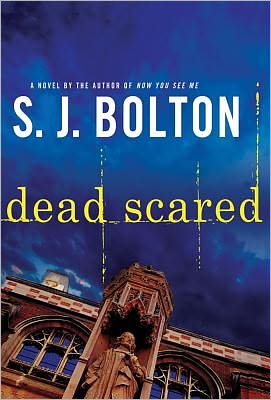
My cover (which is an advanced reader’s edition; this book will be published May 1) has a first-person quotation rather than the one on the image at right (click to enlarge). It reads,

In 1997, I decided to scale the highest peak on every continent and surf every ocean. Over the next twelve years, I survived a storm atop Everest, an ambush by guerrillas, and a head-on collision in the high desert. But every escape from death brought me closer to life.

That is, of course, not your book beginning! The book starts:

I am out of balance. I hang dangerously off center but I’m oblivious, until some dim awareness of the world shakes me awake.

It begins full-on, with an adrenaline-charged event. I’m enjoying it so far. What are you reading this weekend?

This quotation comes from an uncorrected advance proof and is subject to change.

musing on Edward Abbey

I’ve been thinking a lot about Edward Abbey recently, as you know. I’m currently reading his Down the River, a collection of essays, as well as Cahalan’s biography, Edward Abbey: A Life, so I’m a little immersed. My fascination with him is recent, and I have a long way to go in studying him, but that’s the exciting thing about discovering an author you love, especially when that author was prolific enough to keep you busy for a while, which Abbey was. (I guess it would be even better if he were alive and still writing.) I’ve read only four (Down the River makes five) of his 25 books (I’m using this bibliography), and I’m already holding a second book about him, his friend Peacock’s memoir Walking It Off. It’s exciting to know there’s that much more to read by and about him. Heck, I haven’t read everything I want to read by and about Hemingway yet, and I’ve spent years studying him.

I’m contemplating why I’m so interested in him. I love his writing, of course. But there are other authors whose writing I admire whom I fail to get interested in as individuals. Authors of fiction often are able to stay separated from their work, of course, unless their fiction becomes very autobiographical – which was true of both Abbey and Hemingway. The fact that he writes nonfiction, and autobiographical fiction, makes Abbey the man play a significant role in my reading of him, obviously. And Abbey is fascinating because he’s sympathetic, yes – meaning I agree with many of his politics and values and emotional reactions to the world – but he’s also fascinating because he’s nuanced, complex, contradictory, and not 100% sympathetic. The most fascinating figures, to me, are those that we cannot wholeheartedly and completely endorse. Hemingway, Hefner, Harry Hughes (I haven’t read it yet, but one of my favorite library patrons has been raving about the apparently fascinating and weird biography of Hughes we have here), Lillian Hellman whose new biography by Alice Kessler-Harris I found so wonderful, and my oldest, best friend, are all complex personalities, very different from one another, but somehow similar in their contradictions.

Of course, the more I read about Abbey, the more I see how similar he is to my longtime favorite, Ernest Hemingway. They were married four and fives times, respectively. Hemingway left each of his first three wives for the next; the fourth he left in death. Abbey left wives 1, 2 and 4 for 2, 3 and 5; his third wife died, and he left the fifth in death. Both were serially unfaithful. Both authors were aware that they had a gift, struggled with their writing which they took very seriously, rewriting repeatedly, working very hard on their craft; and both struggled with some form of depression and angst in the process. As perhaps is evidenced by their plentiful relations with the opposite sex, both were very charismatic men. Their writing styles bear a resemblance, as do their outward projections of themselves as masculine, hearty, strong, skilled with their hands. The biggest difference, the one that glares off the page at me as I read Abbey’s biography (which I’m not finished with yet, so take me with salt!) is the circumstances of their deaths. According to Wikipedia – since I’m not jumping ahead in my book – Abbey died from “complications from surgery; he suffered four days of esophageal hemorrhaging, due to esophageal varices, a recurrent problem with one group of veins.” This is a far cry from Hemingway’s demise, from a self-inflicted double-barreled shotgun blast to the forehead. I can’t tell you how relieved I am to be focused on a literary hero whose life, for all its tragedies, excludes the unique tragedy of suicide.

I’m very much enjoying getting immersed in the life of this prickly, unique, humorous and passionate man whose work I very much admire. And I’m struck by the fact that all those adjectives could apply to my first literary obsession, Papa. Who have you been stuck on lately, and why?

Tutankhamen: The Search for an Egyptian King by Joyce Tyldesley

A new biography of a very old figure still shrouded in mystery.


Joyce Tyldesley (Cleopatra: Last Queen of Egypt) takes on the life of King Tutankhamen, examining the many questions still surrounding his life and the archeology of his tomb, whose discovery in 1922 caused a wave of what Tyldesley calls “Tut-mania” across the Western world. As a king, Tutankhamen came to rule very young, yet managed to effect great change during his short reign–but was then removed from written records by his successors, an act with great consequence in ancient Egyptian theology. His tomb is unusual: relatively undisturbed, and as Tyldesley retraces, surrounded by mystery and myth.

The first, larger part of Tutankhamen is devoted to the archeological record and what it tells us about Tutankhamen and some of his relatives. Tyldesley discusses and critiques various theories (for example, regarding his biological parents) and acknowledges that little is known for certain. Next, she examines Tutankhamen’s legacy in our world–most notably, the rampant myths and legends about the curse on his tomb, which spread as quickly as the news of its discovery. Finally, for those interested in a clear storyline, she outlines her best approximation of Tutankhamen’s life story (while noting that it is only a well-educated theory).

Tutankhamen succeeds in making this ancient monarch accessible to the average reader. Beware of developing an appetite for Egyptology upon reading!


This review originally ran in the March 13, 2012 issue of Shelf Awareness for Readers. To subscribe, click here, and you’ll receive two issues per week of book reviews and other bookish fun!


Rating: 5 mummies.

Teaser Tuesdays: Claire DeWitt and the City of the Dead by Sara Gran

Teaser Tuesdays is a weekly bookish meme, hosted by MizB of Should Be Reading. Anyone can play along! Just open your current read to a random page and share a few sentences. Be careful not to include spoilers!

I’ve only just started this one, but this line struck me immediately.

New Orleans was a little like England. People were comfortable with class distinctions.

These two sentences are very expressive. I’m not your #1 expert on New Orleans or anything, but I live just 5-6 hours away and have been a number of times; I love the city and Katrina has certainly affected me and all Houstonians. With my moderate level of New Orleans knowledge, I see what she’s driving at here. I like this book so far.

What are you reading?