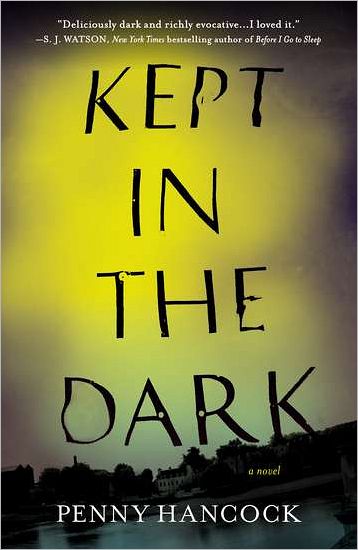
Kept in the Dark by Penny Hancock

An enchantingly disturbing tale about an older woman and a younger man, with shades of Lolita.

Sonia is slowly withdrawing from the world, from her marriage to an older man who travels a great deal, from her relationship with a daughter who has left home, and into the River House, her family estate on the Thames. When 15-year-old Jez knocks on her door, she is charmed by his youth, which reminds her of another time in her own life and another young boy. The pull of the river and her memories prove too strong for her, and Sonia decides to keep Jez in the River House, where she feels he belongs. As the outside world mounts a search for the missing boy, Sonia becomes convinced of the rightness of what she is doing, and her fractured grasp on reality slides further downhill.

In Kept in the Dark, Penny Hancock’s twist on the timeworn male kidnapper and young female victim, Sonia and her delusions are deliciously, convincingly creepy. The fantasy of her relationship with Jez, who is increasingly frightened and ill, gradually reshapes the rest of the world into the enemy of Sonia’s happiness, until her connection with her own past overrules the present. The reader’s willpower is tested as the stakes grow higher, along with the temptation to flip to the final page of the book. Will Sonia let Jez go as promised? Or will the force of the river, the River House and the power of obsession keep him captive? Jez’s fate and the dark secret of Sonia’s childhood are left hovering, teasing, until the closing moments of this delightful debut novel.


This review originally ran in the August 31, 2012 issue of Shelf Awareness for Readers. To subscribe, click here, and you’ll receive two issues per week of book reviews and other bookish fun!


Rating: 7 goosebumps.

Teaser Tuesdays: Broken Harbor by Tana French

Teaser Tuesdays is a weekly bookish meme, hosted by MizB of Should Be Reading. Anyone can play along! Just open your current read to a random page and share a few sentences. Be careful not to include spoilers!

My excitement about Tana French has only grown as I’ve read her books, culminating with the first she wrote but the last I read, The Likeness. So I was very anxious to get my hands on her new book, Broken Harbor. My review is coming in a day or so, but for now I will tell you that she does not disappoint! Here’s an example of why:

It was October, a thick, cold, gray Tuesday morning, sulky and tantrumy as March.

The plot and the characters are wonderful, too. But I love the evocative tone of that one sentence. Doesn’t it help you picture Dublin (and surrounding areas), and feel the cold? The strong sense of place is one of my favorite elements of French’s mysteries. I’ll go ahead and give her points for “tantrumy,” too, although I’m sure some purists will be offended. πŸ™‚

How’s your Tuesday, and what are you reading?

The Warmth of Other Suns: The Epic Story of America’s Great Migration by Isabel Wilkerson (audio)

I didn’t really know what this book was about when I picked it up – only that it was well-regarded. I’m so glad it found its way into my hands. Isabel Wilkerson has taken on a large-scale, ambitious subject here, and rendered it beautifully. And the audio reading by Robin Miles is lovely to boot.

The “great migration” in the subtitle refers to the movement of black Americans out of the South and into the northern and western United States in 1915-1975. Wilkerson starts from the very beginning, looking at the experiences of former slaves just after Emancipation in an impoverished region struggling to rebuild with a new order of things. The creation and expansion of Jim Crow laws designed to hold blacks down took time after the end of the Civil War to take effect. In the new caste system, former slaves and their descendents were unable to move up in the world and were in constant fear for their lives if they were to misstep around Southern whites. By 1915, they had begun to move out of the South, in what became a mass migration along lines so distinct that enclaves of blacks from specific towns and states were recreated in new locations.

Wilkerson shifts between two ways of studying the Great Migration. Sometimes she takes a broad view of history, in which she cites her own interviews (she states that she did over 1,200) with migrants and their descendents as well as a number of historical sources, to render the story of the Migration generally. And sometimes she follows the specific personal stories of three individuals who she interviewed at great length over a long period of time, traveling the country with them and becoming part of their lives. (In this respect, the journalist/author becoming part of the family of her subject, I was reminded of Rebecca Skloot’s amazing The Immortal Life of Henrietta Lacks.) George Swanson Starling moved from Eustis, Florida to New York City, later sending for his wife Inez to join him there. He had to leave Florida suddenly because a friend tipped him off that a lynch mob was coming for him; he had been involved in organizing his fellow citrus pickers to demand higher wages. Ida Mae Brandon Gladney moved with her husband George and their two children, with a third on the way, from Mississippi where they had been sharecroppers. They would eventually end up in Chicago, by way of Milwaukee. And Robert Joseph Pershing Foster was an ambitious surgeon and veteran from Monroe, Louisiana, with his heart set on Los Angeles. Known as Pershing in Monroe, he would resettle as Robert (or Bob, or Doc) in LA and send for his wife and daughters to join him there, where he built a new life in high society with the big house and booming practice he’d always wanted.

I found this shifting back and forth between the broad view and three personal histories extremely effective. Anecdotes from the lives of Southern blacks drove well home the misery of their bottom-rung status there; some of these stories are horrific, but important to show the desperation some migrants felt when they left their homes in the South. National trends played a role – for example, during WWII demand for Florida’s citrus was high while the supply of labor to pick the fruit was low, with everyone off at war, and this imbalance led to George Starling’s ability to demand higher wages. And the history of Chicago’s race relations and residential segregation puts Ida Mae Gladney’s home ownership into the proper perspective. You get the point. The history is well-documented and, I’m convinced, well-researched; and the personal stories make it all, well, personal. I was deeply involved with our three representative individuals by the end of the book and, yes, I cried.

I love that Wilkerson brought such a large-scale, important trend, that has had such huge effects on American history, to life the way she did. I also like that she examined the broad effects of the Great Migration, in terms of the cultures of both white and black residents of the North and the South, and took the time to show that black migrants were really far more like immigrant groups in history than like migrants within their own country. I recommend this book as part of a study of American history – but one need not be an academic to appreciate it. The story of the Great Migration is made accessible here, and I’m glad I know more about it now. This 19-disc audiobook (over 600 pages in print) went by easily. This is how I like to take my history lessons. Check it out.


Rating: 8 train rides north.

The Reluctant Communist by Charles Robert Jenkins with Jim Frederick

I came to this book from my reading (listening) of Escape From Camp 14, which I… ‘enjoyed’ is not the word, but I was very impressed by it. That was the story of Shin Dong-hyuk, who was born in a North Korean political prisoner labor camp and lived there until he escaped in his early 20’s. It was shocking and informative. I believe it was in the closing of that book that the author mentioned Charles Robert Jenkins and his unique life story, which he tells in The Reluctant Communist. And thanks to my local public library, here we are.

Jenkins was a sergeant in the US Army stationed in South Korea in 1965, and he was miserable. Clouded by exhaustion and alcohol, he concocted a scheme: he would desert and earn himself a short jail stay, and end up home in North Carolina. He crossed the demilitarized zone into North Korea, turned in his rifle, and waited to be offered up to the Russian consulate, then to be shipped out. But things didn’t work out that way for him. His greatest mistake was his ignorance of North Korea. He would later come to describe it as “a country that is little more than a giant prison.”

Jenkins was kept in North Korea for 40 years. “As a POW?” asks Husband. No, just as North Korean citizens are kept, more or less – better off than most, in fact. The country’s own citizens are captives; leaving is not an option. Rather, propaganda and starvation are the norm in this militarized, destitute country. Jenkins was settled with three other US deserters in a little community so that the “Organization” (the government and the party, as a collective force) could guard and guide them. They receive educations in propaganda just like any good North Korean; they are given some work, here and there, and a tiny living. In fact, the treatment of the four Americans is well above average in this poor country, but would be considered inhumane by Western standards. Eventually they are given “cooks” – women who cook for them and provide sexual services – and later, wives. These wives are abducted foreigners. Jenkins is presented with a Japanese abductee and told fairly straightforwardly that he should rape her, but instead he takes his time getting to know Hitomi, teaching her English, and finally convincing her to marry him of her own free will. This is a remarkable story, under the circumstances, and perhaps the most surprising part of the book.

Hitomi and Jenkins have two daughters together, who are something like 18 and 20 years old by the time their situation begins to change. In a strange turn of diplomatic events, North Korea’s leader Kim Jong-il admits to Japan that his country had indeed abducted a number of Japanese citizens, as suspected, and named Hitomi as one of them. This eventually leads to Hitomi’s being sent home to Japan, and twenty-one months later, Jenkins finally leaves North Korea and with their two daughters, joins his wife in Japan, where they live at the time of this book’s publication and (as far as I can tell) today. The family also got to make a trip to North Carolina to reunite with Jenkins’s living relatives: his mother (suffering from Alzheimer’s and only mostly aware of his return) and several siblings. Along the way, he turns himself in to the United States Army, faces trial for desertion, and serves his sentence: one month in jail. Jenkins is very contrite and emphasizes the wrongness of leaving his troop of men without a leader and deserting his post. He addresses the idea that a one-month sentence was rather short, but points out that he was offered clemency for a few good reasons: he feels remorse; he never intended to join or aid the enemy; and he had already suffered 40 years of imprisonment.

This is a hell of a story. After a Foreword told in journalist/coauthor Jim Frederick’s voice about the role he plays in its construction, the book is told from Jenkins’s first-person perspective. As Frederick states is his intention, this voice is simple and straightforward. There are mannerisms that indicate Jenkins’s lack of formal education, but if anything, this unpolished style makes the story he has to tell all the more powerful. (In fact, I was reminded a little bit of Jaycee Dugard’s A Stolen Life.) I can’t overemphasize how moving his tale is. Go read the book. It’s extraordinary to think about the privations and hopelessness, the extent to which Jenkins is cut off from the world. And then, to imagine something like a modest love story developing under those circumstances… Hitomi abducted from her hometown, thrown to a man who doesn’t speak her language, convinced to be his wife as a means of self-preservation… the whole thing is disturbing. We only have Jenkins’s own perspective on their relationship, of course, but it sounds like they developed a loving relationship in an awful environment. It’s charming to read about their quiet life at liberty in Japan today.

Charles Robert Jenkins has a very unique and odd life story, and I found it both moving and educational to read about. If I had the chance to speak to him, I’d thank him for sharing it with us.


Rating: 6 pieces of sushi.

Before the Rain by Luisita Lopez Torregrosa

An impassioned memoir of love between two journalists, set amid travel and revolution.


Luisita LΓ³pez Torregrosa (The Noise of Infinite Longing) is a New York newspaper editor when Elizabeth comes aboard as a new reporter in the 1980s. Her quiet, self-contained, slightly mysterious air draws Luisita’s attention. When Elizabeth lands a sought-after position as foreign correspondent, she builds a home for herself in Manila. Luisita joins her there, and the two women throw themselves hesitatingly and then wholeheartedly into a passionate affair against the backdrop of the fall of Ferdinand Marcos.

As a love story, Before the Rain is spellbinding and heartwrenching, but Torregrosa’s highest feat is perhaps one of poetry. Her tone is haunting, lyrical and sensuous. Readers will feel the equatorial heat of the Philippines and the beat of the Manila Blues, smell the mangoes and squatters’ camps, taste the margaritas and then feel the biting cold of New York winters as the story returns to the United States.

Before the Rain is a memoir of revolution as well as love: the beauty, upheaval and political turmoil of the Philippines are handled sensitively and lovingly. Besides Manila, Luisita and Elizabeth live and travel in New York, Tokyo, Los Angeles, Miami, Rio and Washington, D.C.– and each of these places leaves its mark. But their relationship is always the book’s main focus. The two women travel, move, work various jobs (some rewarding, some soul-draining); and throughout, their ardor has a momentum all its own. Even in its painful finale, that love is this book’s most lovely evocation.


This review originally ran in the August 10, 2012 issue of Shelf Awareness for Readers. To subscribe, click here, and you’ll receive two issues per week of book reviews and other bookish fun!


Rating: 8 sheets of newsprint.

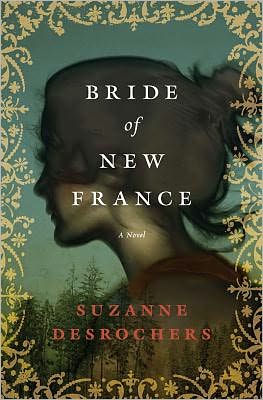
Bride of New France by Suzanne Desrochers

A heartfelt novel about a 17th-century young woman’s journey from Paris to the Canadian wilds.


As a young girl, Laure is torn from her parents’ arms on the streets of 17th-century Paris–destined for the SalpΓͺtriΓ¨re, a notorious institution housing destitute, insane and criminal women. She grows up with minuscule rations, sickness and tragedy, dreaming of becoming a seamstress and marrying to improve her station. Instead, she finds herself on a ship bound for the colonies of New France in Canada, as a fille du roi (“daughter of the King”)–not an opportunity but the worst of punishments.

Laure’s new life is in some ways worse than she’d imagined. She is to serve as wife to a fur trapper or soldier, doing her part to increase the population of New France, but learning how to make fine lace has left her unprepared to chop wood or defend herself in an uncivilized world of deadly cold winters, wild animals and savages. Her ill-suited husband immediately leaves her alone in a rough-hewn cabin to fend for herself, and she must turn to one of the feared Iroquois for her survival.

Suzanne Desrochers’s well-researched debut novel captures Laure’s challenges and complexities admirably, with a candid account of an era that is often glorified. The settings of squalid Paris and feral New France are well evoked, and Laure’s emotions and frustrations are easily understood. Though flawed, she is a fully human character; the future that she and her counterparts face is bleak, but hopeful as well.


This review originally ran in the August 7, 2012 issue of Shelf Awareness for Readers. To subscribe, click here, and you’ll receive two issues per week of book reviews and other bookish fun!


Rating: 5 furs.

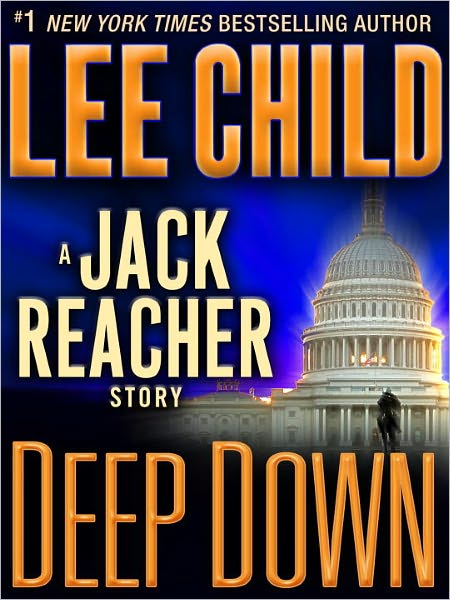
Deep Down by Lee Child

Jack Reacher is back. In this e-book-only short story, he’s back in the army, in his 20’s, making it chronologically one of the very early Reacher tales. He’s been called in from Frankfurt to Washington, D.C., where he’s put undercover as a sniper sitting in on a pre-committee… I know, bear with me… of politicos discussing a possible requisition for sniper rifles. Apparently the prior two meetings of these subcommittee politicos with military representatives have resulted in sensitive weapons information being leaked overseas, and Reacher is to find the leak. His handler in this operation is sure the leak is one of four women, and encourages Reacher to use his woman-wrangling skills as he sees fit. As we watch Reacher getting briefed and prepped in a slightly-too-small suit, we simultaneously see one of the women jogging into work. And the action begins. I’ll leave it at that in case you want to read it yourself.

Reacher fans will be able to predict how things play out. There are a few obligatory features: Reacher seems to read minds; he makes observations the average bear would not, and draws correct conclusions. There is flirtation. There is violence. He gets things right in the end. In these ways, it fits within the other Reacher stories we know and love.

What’s different here, though, is the format – and I don’t mean the e-book part, although I’m still not excited about that aspect either. No, I think I’m coming to the conclusion that short stories do not best showcase Reacher’s abilities. This is the second I’ve read, and The Second Son was interesting for the light it shed on Reacher’s past, brother Joe’s personality, and their relationship. I felt that Deep Down had some shortcomings. A lot of what I love in a full-length Reacher novel is development, the careful playing out of string, the stinginess with which we learn details, the way we get to know our characters better, often the development of a steamy relationship to boot: all things we need a full-length novel to do. While this story had all the elements Reacher needs (as observed), it didn’t give them the space they needed to grow. It didn’t do it for me. Instead, Deep Down read to me like what I fear it is: a hastily-produced holdover for Lee Child’s fans to satisfy themselves with while we await his new novel (A Wanted Man comes out in September). It was fun, and Reacher did kick butt, and it only took me 30 minutes to read – but that’s part of the problem. Only so much plot can come to fruition in a 30-minute read.

That last statement makes me wonder – is this really a problem inherent to the short story? And I don’t think it is. I’ve certainly read some very impressive, moving short stories by my favorite master of that genre, Hemingway. But you know, I don’t read a lot of short stories; I do find it a difficult genre, and I think I’m dissatisfied more often with short stories than I am with novels. New question, then: am I a poor reader of short stories, difficult to please? Or is this a difficult genre to do well in? I suspect the latter (although I’ll allow the former): with less space in which to develop characters and plot, an author has to be very precise and economical. This would help explain why Hemingway was so good at them, precision and economy being his hallmarks. And that author may need to take on less, plot-wise, so that he has time to flesh it out.

I have managed to make a rambling mess of this review. Perhaps I am not so strong on precision and economy, myself? At any rate, I found this a fine but decidedly below-average Reacher story; I am anxious for the next full-length book. Many thanks again to my mother for her loan of the e-reader so I could knock this one out on a lunch break!


Rating: 4 tough guys.

Moll Flanders by Daniel Defoe

Moll Flanders is our first-person narrator, presented in the Author’s Preface by Defoe as a real person whose story he has ostensibly edited; but don’t be fooled. It is a novel.

Moll begins with her birth and infancy as she understands it: she was born to a convicted thief in Newgate Prison, who “bled her belly” and was allowed to live until her baby (our titular character) was born. This is the story of Moll’s life, from gypsy infant to favorite child of a widow running a school for small girls, to the charity case in a rich family’s house where she is the elder brother’s mistress and then the younger brother’s wife. This first husband dies young and she leaves the family, starting afresh with a new husband who flees bankruptcy and debtor’s prison, telling her to make her own way and feel free to remarry. This leads her to a third husband, and now it begins to get really juicy: after traveling to Virginia together to farm a plantation, Moll gets to know her mother-in-law and discovers in horror that she is… her own mother. Moll has married her brother, and born him three children. At this point (after some drama) she returns alone to England.

Moll is befriended at Bath by a man who becomes her lover, and she his kept woman, until his near death causes him to repent his adultery and leaves her again shifting for herself. She is courted by an eligible banker – well, he will be eligible as soon as his divorce comes through… but in the meantime, marries a handsome man named Jemmy for his fortune as well as for the affection she feels for him. But she’s not yet to be happy: theirs is a union of double trickery, in which everyone loses, for he has married her for her (nonexistent) fortune as well, and gone into debt courting her, to boot. They part, and Jemmy, like husband number two, releases her to remarry if she finds a good option; but they share some loving moments, and he says he hopes to find her again one day when he’s made a (real) fortune.

At this point Moll intends to return to her banker, now divorced, but finds she is pregnant with Jemmy’s baby, so she takes a quick respite at the house of a woman she calls Mother Midnight. This woman is competent and caring, but criminal in her business of birthing unwanted and illegitimate babies and then disposing of them. After Moll has seen her child into adoption, she does marry the banker, and gets five years or so out of him before he dies. At this point I count five husbands, three of whom are still living, and my entirely casual count gives her something like 10 or 12 children, none of whom she has maintained a relationship with (the latest, the banker’s, she has Mother Midnight pass on). She is, again, destitute, and turns to petty theft and finally back to her friend Mother Midnight for help. This matron takes pleasure in training Moll in the fine arts of pickpocketing and conning, and the two become fast friends and make a fine living together; for the longest period yet, Moll is without male companionship and seems perfectly satisfied, indicating that her liaisons were more for the sake of financial security than anything else, although she has certainly enjoyed herself sexually as well. (There is a brief interlude of prostitution, in the most respectable manner, with a solitary high-class client.)

Moll’s criminal career goes smoothly; she is very good and very lucky. But her name (that is, her alias, “Moll Flanders” – we never know her real name) becomes well-known, and Newgate Prison, place of her birth, looms. Eventually, of course, she is captured, tried, and given a life sentence. During her time in Newgate, which she describes as the hellish place I have no doubt it was, she repents her life of sin (“a horrid complication of wickedness, whoredom, adultery, incest, lying, theft; and, in a word, everything but murder and treason”) and finds God. Eventually, with the ongoing friendship of Mother Midnight on the outside, Moll’s sentence is commuted to transportation, meaning she will be sent overseas into the New World, as was her mother. As a final coincidence, she is reunited with Jemmy, husband number four and rather a true love, who is imprisoned and also facing death for highway robbery. Things are worked out so that they travel together into the New World, where they start fresh with Moll’s still-considerable criminal savings. She meets the son of her incestuous brother-marriage, inherits a plantation from her mother, and continues to repent her days of wickedness. She and Jemmy, at the time of her supposed writing of these memoirs, have resettled in England with great fortune and happiness in their old age.

Whew.

It is a heck of a narrative: entertaining, spicy, lusty, juicy, well-told. There are interjected moral moments: I am amused to note that I’m that audience member Moll worries about, more tickled by her transgressions than moved by her repentance. As a story of her life, I find it diverting, and an interesting look into 17th century England, particularly the difficulties of being a woman without substantial fortune and male relatives to look after her – which good luck would have come with its own tribulations. As my edition’s notes repeatedly explained, Defoe himself spent a few years in Newgate Prison, and could write both passionately and accurately about the horrors of that place.

I read a “Barnes and Noble Classics” paperback, and found it, if anything, over-notated. Some of the helpful hints seemed aimed at a reader who had never ventured out of 20th and 21st century literature before; it was elementary for me, but no harm done. If you’re comfortable reading 18th century writings, I see no need for this edition, but it has something to offer if you’re less comfortable with some of the usages of that time. The introduction makes a case for Defoe writing possibly the first English novel – that was definitely a point of interest.

I enjoyed this book, and think it has an important place in classic lit: it both moralizes and sensationalizes, and entertains to boot. Moll is a rather outrageous character and I like her very much. Her spunk and determination to take care of herself presage Scarlett O’Hara, and her freedom with her own sexuality recalls Madame Bovary and Lady Chatterley somewhat. Yet another banned book, of course, if you’re looking for a read for upcoming Banned Books Week! (That’s Sept. 30 – Oct. 6.)


Rating: 7 illicit relations.

movie: We Need to Talk About Kevin (2011)

I just happened across this movie the other day. I really enjoyed the book by Lionel Shriver – pre-blog, sorry, but I’ll recap here very briefly. The book is an epistolary novel, meaning it comes to us in the form of a series of letters from Eva to her husband Franklin. Their family has clearly suffered a tragedy of sorts, which goes unnamed until the very end, and the source of that tragedy, equally clearly, is their son Kevin. Eva is trying to process her difficulty with Kevin, and to figure out where the blame for what’s wrong with him lies. Was it in him from the start? Or was she a bad mother, and turned him bad? She felt the evil in him while he was still in the womb – or maybe she was just a non-nurturing mother. To me, that was the overarching question of the book: where did the badness come from? And it’s an interesting question. At the risk of sounding creepy, I guess I also found it kind of refreshing to see a presentation of motherhood that wasn’t all roses, sunshine, and easy bonding. Not all readers, or bloggers, enjoyed the book (by a long shot!), but I did. And I found its big reveal surprising. Important tip: if you want to enjoy the book, don’t let anybody spoil it for you! (No spoilers here.)

So, the movie. I was interested in two things: how well would the movie communicate the profound creepiness of Kevin the little boy? And how would the epistolary format difficulty be overcome? As in the case of book-to-movie The Lovely Bones, which in book form is narrated from heaven, the voice of Eva in her letters is difficult to translate into movie form unless you’re going to have Eva’s character voiceover the whole thing, which doesn’t sound appealing. (Qualifier: I only read and never watched The Lovely Bones. Apparently the film met with mixed reviews.)

As to the first question, they made Kevin creepy as hell, which was perfect. His manipulation of one parent while showing his dark side to the other reminded me of that terrifying woman-child in Orphan (shudder). I thought the toddler Kevin was great; before he started speaking, he would glower at his mother until I thought surely he was going to blurt obscenities. But this is just a little boy!

Eva with little Kevin


And as to the second question, how to translate the epistolary format, the film took an arty, quiet, disjointed approach. There may be a technical term for this style – I am so very far from being a film buff. It reminded me of Punch Drunk Love, that outlier of Adam Sandler’s ouvre, which is far less tragic than this one, but what can I say, I don’t see a lot of movies. The chronology jumped around. And this raised a whole new question for me, one I can’t answer. Is the final big reveal as surprising in the movie as it is in the book? Since I knew it going in, I can’t say.

Throughout, the movie relies heavily on the repetition of one highly (screamingly) symbolic color, red, and is extremely quiet. Dialogue is very sparse. It drags along a little, but that might be part of the arty nature of it. (Short attention spans, beware.) It expresses terror in a whisper – an awfully effective technique. It communicated the same discomfort, questions, and alarm that the book did, and like the book, it’s not for everyone. But I think this film does what it set out to do.

Death of a Valentine by M.C. Beaton (audio)

This is my first experience with M.C. Beaton, who I know is popular for both her Agatha Raisin series and her Hamish Macbeth series, of which this is one. You know me, I’m unafraid to jump in mid-series; and when it comes to audiobooks, I’ll take what I can get, which is how I ended up listening to Death of a Valentine.

I’ll start on a positive note. I liked the Scottish Highlands setting, with those local-flavor items like food & culture, and particularly in audio form when I was able to get the accent as well. Hamish Macbeth is an unoriginal but likeable bachelor policeman, unhappy with his recent promotion to Sergeant, which has landed him with an assistant. And here is my first negative: the assistant, Constable Jodie McSween, is intolerable. She became a policewoman more or less by accident, and has always capitalized on her good looks and general affability to get by. She has no interest in or aptitude for police work. And her raison d’Γͺtre in Macbeth’s precinct of Lochdubh is… to land him as her husband. Never mind that all those good-looking, intelligent, proficient policewomen (and other professional women) out there just took a blow from this miserable character. She didn’t do this book any good, either.

The mystery story is unremarkable but mildly enjoyable. The local beauty queen in the next town over has been blown to bits by a letter bomb on Valentine’s Day, and as soon as the coppers start looking into things, her reputation falls apart. It becomes increasingly clear that instead of a dear, sweet, innocent, Godly little beauty, she was a manipulative jerk bent on stealing other girls’ boyfriends, and worse. And then lovestruck boys start dropping like flies. Hamish is on the case, and he’s pretty competent. There’s a rather fun interlude involving an elderly escaped lion that Hamish befriends; and he has a dog and a cat who accompany him around the countryside a good bit, and that’s nice and cute at all, although they’re not very well-developed characters. Hamish also has a small collection of female friends that he discusses his case details with (not advisable, I wouldn’t think, but this is a fairly fantastical story) and that drive Josie mad with jealousy.

But the sideplot of Josie’s love for Hamish is altogether nauseating and truly offensive. I’m pretty tolerant of the mistreatment of women in the fiction I read, when it’s in pursuit of a good story, but this is just rubbish. She’s worthless, unlikeable, mooning, needy, and dumb as dirt. Am I supposed to care about what happens to this woman? No, I join Hamish in being perplexed and annoyed by her strange behaviors. She tries to drug and date-rape him, in consummately inept fashion. I mean, really.

I finished this book. I wanted to see (hear) what would happen. I generally interpret this desire to finish a book as a redeeming quality. I don’t know, there were some cute moments, but there were also some distasteful moments. I can’t quite decide, for example, if all the moaning about marriage as a miserable end of all the fun (“those who were not married found the whole idea of a wedding romantic, and those who were had a feeling of schadenfreude that some other poor soul was about to be chained in holy matrimony”) is funny or just plain offensive. In the end, while I found some moments in Death of a Valentine cute, my overall impression leans towards a) being offended by the insufferable Josie and the depiction of women in general, and b) rolling my eyes at a ridiculous plot and underdeveloped characters. No more M.C. Beaton for me, thanks.


Note: good marks to narrator Graeme Malcolm, who was funny and heck, I don’t know Scottish accents very well but I found his amusing and convincing. I don’t hold this book against him.


Rating: 3 puppy dogs.