The Black Box by Michael Connelly

Harry Bosch’s investigation into a 20-year-old murder linked to the Rodney King riots and the first Gulf War is set to a moody jazz soundtrack.

The Black Box, Michael Connelly’s 25th novel, comes 20 years after his first, The Black Echo, which introduced readers to Los Angeles detective Hieronymus (Harry) Bosch. These days, Bosch is working with the LAPD’s Open/Unsolved Unit, and he decides to pursue a 20-year-old case that was originally his: the murder of Danish photojournalist Anneke Jespersen during the 1992 riots. Bosch never got a chance to investigate thoroughly–but, as regular readers know, Bosch never gives up. As he pursues the reason Jespersen came to Los Angeles in the first place, he finds himself investigating war crimes dating back to Desert Storm. Searching for the “black box” that will reveal the recorded secrets of Jespersen’s murder, Bosch also lands (not unusually) on the wrong side of the police department’s leadership.

All the strengths that Connelly’s readers have come to expect are on display. He employs an expert sense of place in evoking a gritty, stark Los Angeles, and the mood of the novel is dark and brooding. The pacing is taut, the characters well developed. Bosch’s side interests in jazz artists like Art Pepper and baseball greats like Casey Stengel provide depth and layers to his personality. Series readers will enjoy the updates on ongoing story lines, as Bosch’s daughter, Madeline, continues to mature and his relationship with girlfriend Hannah struggles along. But like all Connelly’s atmospheric, fully realized novels, The Black Box can also be read as an entirely satisfying stand-alone mystery.


This review originally ran in the December 14, 2012 issue of Shelf Awareness for Readers. To subscribe, click here, and you’ll receive two issues per week of book reviews and other bookish fun!


Rating: 6 furrowed brows.

two-wheeled thoughts: Wolfgang Sachs

two-wheeled thoughts

Those who wish to control their own lives and move beyond existence as mere clients and consumers – those people ride a bike.

–Wolfgang Sachs, of the Wuppertal Institute for Climate, Environment and Energy and the former Chairman of Greenpeace, Germany.

I have long found it strange that we talk about “driving” cars and “riding” bicycles, when it fact it seems to me the opposite: when we operate cars, we take a more passive role, sitting (or slouching) and working the controls; whereas on a bicycle, the operator sits, stands, works every second, pedaling, and making micro-adjustments to balance and handling and interacting with the outside world directly. No glass, plastic or metal separates the cyclist from her surroundings, and every shred of power and maneuvering is her own. Therefore I think of us more as driving a bicycle while we ride in cars. And that is part of what Sachs’s statement, above, means to me.

Second of two days off.

Tomorrow, we’ll be back to our regularly scheduled programming.

Happy holidays!

First of two days off.

Friends, I’m taking two days off for the winter holiday. Wish you all the joy, love, family & friends, book reading and bike riding that I am planning on enjoying myself!

Encounters from a Kayak: Native People, Sacred Places, and Hungry Polar Bears by Nigel Foster

One man’s reminiscences of flora, fauna and miscellanea encountered while paddling the globe.

For decades, Nigel Foster has been kayaking the world’s oceans, lakes and canals–as well as teaching the skill, designing the equipment and writing about his experiences. Encounters from a Kayak collects more than three dozen of his articles in a single volume, many of them never previously published. Each examines a moment in time in which Foster–sometimes alone, sometimes with fellow enthusiasts–interacts with the natural world and its inhabitants from his small craft. It is one of the strengths of the collection that not even the oldest pieces (extending as far back as the early 1980s) feel dated.

The stories are organized thematically around creatures, people, places, and flotsam and jetsam; the diversity and scope of Foster’s contacts in all these categories are impressive. In his encounters with historic artifacts in Scotland, local police in Shanghai and monkeys in the Florida Keys, Foster brings a sense of humble wonder to his environment. Naturally, he considers issues of ecology and conservation in his travels, but he never lectures. Rather, in unadorned prose, he delivers the experiences themselves: the glow of bioluminescence, the ordeal of a Dutchman’s flight from Nazi occupation by kayak, the history of a sleepy Minnesota town and the real-life Scylla and Charybdis of Scarba and Corryvreckan, just off the Scottish coast. Foster’s unassuming consideration of his surroundings is charming, simple and occasionally poetic. Natural history, human history, birds, jellyfish, thunderstorms and more come together to entertain and educate in Encounters from a Kayak.


This review originally ran as a *starred review* in the December 14, 2012 issue of Shelf Awareness for Readers. To subscribe, click here, and you’ll receive two issues per week of book reviews and other bookish fun!


Rating: 5 campfires.

Strangers on a Train by Patricia Highsmith

strangersStrangers on a Train was Patricia Highsmith’s first novel, and deservedly received a good deal of attention (although never as much as one might expect in her native United States) and is admired as one of her finest. It’s a quietly frightening story about two men, strangers, who meet on a train, and find that each has a person in his life who he would rather were not. Guy Haines wishes he were rid of his adulterous and manipulative (and estranged) wife Miriam, so that he might marry the lovely and wealthy Anne. Charles Bruno hates his father, who limits Bruno’s access to his own money. It is Bruno’s idea that they could trade murders: each could have an alibi for his own acquaintance, and would never be suspected in the murder of the other’s, because there would be no detectable motive. Guy is disgusted by Bruno and his concept, and leaves the train without saying goodbye.


SPOILERS FOLLOW.

Bruno proceeds to murder Miriam without his consent. Guy suspects it may have been Bruno but can hardly believe in such a strange action on the part of a stranger. And then he begins to hear from Bruno. Guy’s relationship with Anne, and his work as an increasingly acclaimed architect, both suffer as he feels guilt for his involvement in Miriam’s death; and Bruno’s harassment increases, as he now feels Guy owes him the returned favor of killing Bruno’s father. Put very simply, Bruno succeeds in driving Guy a little crazy, until he carries out the murder; but they don’t get away with the second as easily as they do the first, essentially because Bruno (clearly a psychopath, and a raging drunk to boot) can’t leave Guy alone. He’s obsessed. I will interject here that I think the “perfect crime” conceived by Bruno would have worked if he could have remained a stranger to Guy; but he can’t. I will lay off the spoilers here, mostly, and tell you that they both meet unpleasant ends, in rather different manners.

The structure of the book is worth noting. The early tension of the two strangers’ meeting, and Bruno’s excited murder of Miriam, go by rather quickly. And the final action that resolves the fates of Guy and Bruno also happens in a rush. The middle section of the book is all interior: we see some of Bruno’s thought processes and degeneration, but him being the psychopath makes him rather less interesting than Guy, who was an essentially good and “normal” person when we met him on page 1. Most of the psychological drama takes place inside Guy’s head, where much more change takes place, and he goes slowly… crazy? Or, to look at it another way, slowly gives in to some nasty impulses. I’m rather in the first camp, but I think there’s room for debate.

Highsmith has done a fine job here of what I believe she set out to do: she creates a creepy-crawly atmosphere of fear that the worst lies within each of us, that we don’t really know our friends or family like we think we do, that the worst is only an obnoxious phone call or two away. The inside of Bruno’s head is a nasty place to be, but it’s Guy’s inner workings that are truly frightening. It is a very effectively executed novel.

That said, it won’t be for everyone. Even as I found myself admiring Highsmith’s craft, and riveted to the page, I was not always entirely enthused. For one thing, the extended psych-drama of the lengthy middle section of the book was a little slow-paced for me. And while she does an excellent job of putting me inside that scary brain of Guy’s, I’m not so sure that I wanted to be there. Thus, call this a well-executed novel that I did not really want. And part of that is Highsmith’s victory and (perhaps) her intention: to make her reader uncomfortable. But I think part of that, too, is just that psych thrillers are not my favorite things.

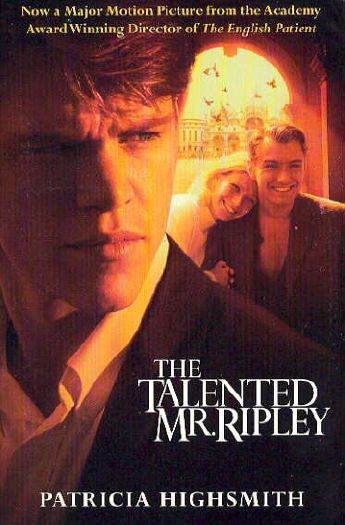
Exquisitely done, but not my cup of tea. Still interested in The Talented Mr. Ripley; and the Hitchcock movie version of this one.


Rating: 7 imagined stranglings.

two-wheeled thoughts: Frances Willard (part 2)

two-wheeled thoughts

Tens of thousands who could never afford to own, feed and stable a horse, had by this bright invention enjoyed the swiftness of motion which is perhaps the most fascinating feature of material life.

–Frances Willard, suffragette and author of How I Learned to Ride the Bicycle.

Frances Willard lived before automobiles were common and well before our roadways were designed with cars in mind, but her concept here can easily be translated to the modern world.

[See an earlier Willard two-wheeled thought here.]

Teaser Tuesdays: The Eyre Affair by Jasper Fforde

Teaser Tuesdays is a weekly bookish meme, hosted by MizB of Should Be Reading. Anyone can play along! Just open your current read to a random page and share a few sentences. Be careful not to include spoilers!

For those unfamiliar with Jasper Fforde, he writes unique fantasy or alternate-reality mystery novels that take place in a world of books. I read his The Big Over Easy years ago, about the eyreaffairpushing of Humpty Dumpty over the wall; this is my first (and the first) of his Thursday Next series, in which a character by that name (yes, Thursday) works as a Literary Detective. Here’s a tease from the early pages:

…no one was taking any chances since a deranged individual had broken into Chawton, threatening to destroy all Jane Austen’s letters unless his frankly dull and uneven Austen biography was published.

What I think is charming about this story is the world in which books, and art, matter as much as anything does. It’s great fun for those of us who love books, to imagine a world that shares our value system. Also, because cloning and genetic engineering has come so far in Thursday’s alternate world, she has a pet dodo bird named Pickwick, and that’s pretty cute, too.

Rain Gods by James Lee Burke (audio)

raingodsJames Lee Burke is best known for his series of mysteries starring Detective Dave Robicheaux, who makes his home in New Iberia, Louisiana and whose adventures mostly take place there (or in New Orleans, or – in one case that I know of – in Montana). But he does write other books: I read a western a while back. Rain Gods is the first Burke I’ve read that stars Hackberry Holland, sheriff of a small Texas border town that I am pretty sure remains unnamed.

As the book opens, Hack has just discovered a shallow grave filled with illegal immigrants behind a church, and a young man named Pete Flores, a veteran of the war in Iraq, flees town with his girlfriend Vikki. They fear the team of professional criminals that were involved with the shooting, but the threads of the case are quickly so thoroughly intertwined that Pete himself doesn’t know who they’re running from. Between a New Orleans crime boss, a bumbling Texas strip club owner, a psychopathic hit man who thinks he’s the left hand of God, and a couple of young lackeys whose loyalties are yet to be tried, Hack and his deputy Pam Tibbs have their hands full in trying to solve the murder and protect Pete and Vikki. And they may still be working out the relationship they share, to boot.

As in any good mystery story, some subplots come out sooner than others. The man they call “Preacher,” who somehow thinks God is supportive of the mayhem he creates, is an enigma of pure evil; but he’s not the only one whose motives are unclear (or irrational). The romance that Pete and Vikki share is a welcome sweet note; and Hackberry’s storied past and accumulated guilt are a familiar but still satisfying facet. The fact that both Pete and Hack are still processing their experiences in war (Iraq and Korea, respectively) is a sobering note of reality that draws the two generations together effectively.

I don’t feel that Rain Gods is Burke’s finest work; I found it a little bit slow-paced. But it had all the hallmarks that I come to Burke for. Our hero is damaged and has committed great wrongs, but is essentially good. The setting is strongly evoked – and I liked it particularly, as the plot mostly takes place in West Texas borderlands, a location I’m fond of and fairly familiar with. And Preacher’s character is quite frightening – as he was intended to be.

The audio narration by Tom Stechschulte is excellent. I love the different voices he does – especially because there’s such a collection of characters featured here, with different accents and tones of voice that express emotions and pain and insanity. This audio format deserved a fine portrayal, and it got one.

I will be reading more James Lee Burke. But I may prioritize the Robicheaux novels.


Rating: 6 delusions.

book beginnings on Friday: The Lady and Her Monsters by Roseanne Montillo

Thanks to Rose City Reader for hosting this meme. To participate, share the first line or two of the book you are currently reading and, if you feel so moved, let us know what your first impressions were based on that first line.

monsters

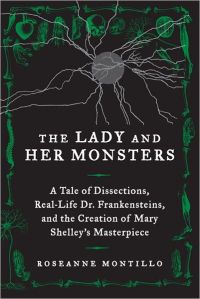
The Lady and Her Monsters: A Tale of Dissections, Real-Life Dr. Frankensteins, and the Creation of Mary Shelley’s Masterpiece is a fascinating title, isn’t it? I was attracted immediately. It begins:

Camillo’s footsteps echoed loudly as he crossed the empty cobblestone streets of Bologna toward his uncle’s house. The afternoon was hot, and the scorching heat, coupled with that lazy midafternoon spell between noon and evening, allowed him to go by virtually unnoticed.

Although this is a work of nonfiction, I think these atmospheric opening lines are appropriate, since its subject is something of a gothic ghost story.

Happy reading to you this weekend!

This quotation comes from an uncorrected advance proof and is subject to change.