Yellowstone, Land of Wonders: Promenade in North America’s National Park by Jules Leclercq

An unprecedented English translation of a travel narrative from the early years of Yellowstone National Park.

yellowstone
In 1883, a well-traveled French lawyer, writer and judge named Jules Leclercq explored the newly designated Yellowstone National Park on horseback. Three years later, he published a book praising the area’s strange and wondrous marvels–but the book is not simply a lovely appreciation of natural scenery. Leclercq also researched the history of the region and its people in order to write a scholarly study, a snapshot of a place in time. And yet there has never been a complete English-language translation of his original text until Janet Chapple and Suzanne Cane’s Yellowstone, Land of Wonders.

Leclercq is most fascinated by Yellowstone’s geysers: “The mind is so occupied with the extraordinary geological phenomena bursting upon one at every step,” he writes, “that one views the scenery only abstractedly.” He does, however, turn his pen to Yellowstone Lake and Falls; he considers the latter far superior to Niagara. He also includes a chapter on the park’s wildlife, and warns that whole species will be exterminated if hunting continues unchecked.

Leclercq’s narrative is imperfect. He sometimes quotes without attribution from contemporary sources and gets geological details wrong. But Chapple and Cane meticulously keep readers informed on such points. Their translation and editing–with copious notes–is thorough in confirming and expanding Leclercq’s points, offering commentary not just on Yellowstone but on the author and his era. The result has more than just historical value; as Leclercq concludes (and as is still true today), “All this grandeur inspires grave and religious thoughts.”


This review originally ran in the May 10, 2013 issue of Shelf Awareness for Readers. To subscribe, click here, and you’ll receive two issues per week of book reviews and other bookish fun!


Rating: 6 geysers.

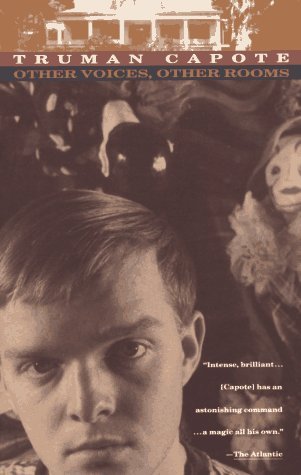
Other Voices, Other Rooms by Truman Capote

othervoicesOther Voices, Other Rooms was Truman Capote’s first novel, and I have picked it up because it was referenced in The Used World. Such is the power of Haven Kimmel.

This is a strange, spooky, sad tale, beginning with an unwanted child: we meet 13-year-old Joel as he’s hitching a ride en route from New Orleans to a crumbling estate in Mississippi. He had been living with his aunt following his mother’s death; now he has been summoned to his father, who he’s never met. Upon arriving at Skully’s Landing, he finds no father, but an odd stepmother and her even odder cousin, Randolph. Approximating friends are a neighbor tomboy named Idabel and a black servant named Zoo. Eventually Joel’s father is revealed, mute, bedridden, and as horrifying as everything and everyone else at the Landing. Among these horrors are a ghostly woman in a window where no woman belongs; a cottonmouth “thick as his leg, long as a whip”; and a mule who hangs himself.

Randolph is clearly gay, and a model for the effeminate Joel to consider, for better or for worse – sexuality aside, Randolph has a dubious moral code. He relates (among other things) the story of how he met Joel’s father, in an episode that rather reminded me of The Sun Also Rises, in which a motley mismatch of characters in a debauched setting (here, New Orleans) are remarkably frank about who wants who sexually. Later, when Joel attends a country fair with Idabel, things turn more towards Alice in Wonderland, in its sinister moments. But Capote is in his own class here, regardless of my literary comparisons. He evokes a startling, ghostly, creepy, sleepy yet stark atmosphere, and for me, that atmosphere was the great accomplishment of this novel.

Plot-wise, Joel’s story is one where not a great deal happens but a major life change takes place, anyway. This is a coming-of-age story, in which Joel starts off decidedly a child but finishes – just a few months later – a young man with a somewhat clearer picture of himself. (But, I think, no happier.) Part of that coming-of-age regards his sexuality, but only in an unstated, amorphous way, which is a fair description of the whole book, really. In fact, I have to admit to some trouble following things, as so much is unstated and wavering and strangely expressed from varying and unreliable viewpoints. That this novel is at least vaguely autobiographical I guessed; that there were themes of understanding one’s sexuality and coming-of-age was clear to me. But the rest was less clear. In fact I was reminded somewhat (to drop another literary name) of Faulkner, a la The Sound and the Fury. I won’t bother regurgitating it for you here – they are not my own interpretations – but even Wikipedia (for example) gets way more out of this story than I got. Go figure.

I think Other Voices, Other Rooms is likely to be another great candidate for a “close reading” with a knowledgeable guide – I picture my high school English teacher, Mrs. Smith – to direct related readings and fill me in on the background. Without such assistance, I still enjoyed a creepy, weird tale of cobwebbed, forgotten Southern grandeur and depravity. Take it as you will. If nothing else, Capote’s talent shines through and foreshadows his future success – but I still prefer In Cold Blood.


Rating: 6 bluejay feathers.

In the City of Bikes by Pete Jordan

A history of Amsterdam’s love affair with the bicycle contained within an American cyclist’s memoir.

cityofbikes
After the close of his first memoir, Dishwasher, Pete Jordan moved to Amsterdam for a semester to study urban planning, with a focus on his passion: bicycles. He never left.

Jordan’s decision to move was rather capricious–he knew almost nothing about Amsterdam–but he found a city packed with bicycles and rich with cycling history. In the City of Bikes is the story of his journey from itinerant dishwasher to settled family man, as well as a thoroughly researched history of the bicycle in Amsterdam. Beginning with the early bikes of the 1800s and cycling’s golden age in the 1890s, when the safety bicycle hit the streets, Jordan moves on to the tire shortages and (in this case, bicycle-related) atrocities of the city’s Nazi occupation before concluding with his own place in modern cycle-crazy Amsterdam.

Joining Jordan are his new wife, Amy Joy, and their son, Ferris, a passenger and later pilot of Amsterdam bicycles since his conception. When Amy Joy becomes proprietor of a local bike shop, the Jordans have truly found their home in the Dutch capital. Considering his reason for going in the first place, Jordan is especially well suited and qualified to tell this story, and he lives up to expectations with a meticulous detailing of Amsterdam’s bikes. Full of personal anecdote, self-deprecating humor, local lore and a history of cycling that positively bursts with enthusiasm, In the City of Bikes is both a memoir and an ode to bicycles.


This review originally ran in the May 3, 2013 issue of Shelf Awareness for Readers. To subscribe, click here, and you’ll receive two issues per week of book reviews and other bookish fun!


Rating: 7 tire-powered light generators.

526395_4403542975615_1825014471_n

Bonus photo I couldn’t resist, of me in the early 2000’s, cycling in Bruges – but it may as well be Amsterdam, and I did ride there too – on a Dutch-style bike. (Hoping this gives me extra reviewer-cred!)

book beginnings on Friday: The Fame Thief by Timothy Hallinan

Thanks to Rose City Reader for hosting this meme. To participate, share the first line or two of the book you are currently reading and, if you feel so moved, let us know what your first impressions were based on that first line.

famethief

Ah, it’s Friday again, kids! I have a new thriller to begin with you this week. A front-cover quotation from the Los Angeles Daily News calls Timothy Hallinan “a modern successor to Raymond Chandler,” which are strong words; we shall see. This book begins:

Irwin Dressler crossed one eye-agonizing plaid leg over the other, leaned back on a white leather couch half the width of the Queen Mary, and said, “Junior, I’m disappointed in you.”

If Dressler had said that to me the first time I’d been hauled up to his Bel Air estate for a command appearance, I’d have dropped to my knees and begged for a painless death.

Some clever over-the-top character sketching there, I’d say. All right, I’ll keep reading.

How are you starting off your reading weekend?

This quotation comes from an uncorrected advance proof and is subject to change.

long weekend

To celebrate our five-year wedding anniversary, both our birthdays, and Cinco de Mayo, Husband and I spent a 4-day weekend in and around Fruita, Colorado, doing stuff like this, this and this:
943306_10201062229306789_1774384214_n
944566_10201051113628904_538245173_n
934628_10201070277387986_1341583516_n
And in between, we did this:
197821_10201070257347485_641106476_n
Ahhh. Lovely. 🙂

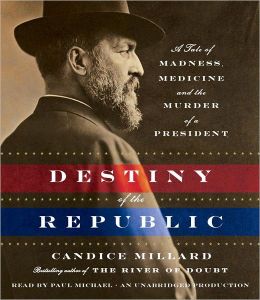
Destiny of the Republic: A Tale of Madness, Medicine and the Murder of a President by Candice Millard (audio)

destinyJames A. Garfield was the 20th president of the United States, and served one of our shortest terms: after being shot by assassin Charles J. Guiteau, he lived over two months before dying in September of 1881. Destiny of the Republic is the story of Garfield’s short presidency. As expressed in the subtitle, it is also the story of Guiteau’s madness and the medical era in which Garfield was unsuccessfully treated. What is left out of the title is the story of Alexander Graham Bell, who worked on a metal detector that was related to his recent invention, the telephone, with the intention of locating the bullet lodged in Garfield’s torso. So, to recap: this is the story of Garfield the President, Giteau the assassin, Bell the inventor, and a Dr. Bliss, who headed up the President’s medical team.

I knew next to nothing about Garfield, although I had a vague sense of his dying journey to the sea, passing by train through crowds of Americans gathered to honor him. I assume I’m not alone in my ignorance; he’s a long-dead president who (necessarily, by virtue of his short service) made no historical contributions sufficient to bring him to a modern layperson’s consciousness. So, I’ll fill in a little more. Garfield is painted in the opening chapters as a very sympathetic man: he did not aspire to the White House, but rather was nominated against his will by a post-Civil-War Republic Party that could not agree on any of the more favored candidates for nomination (Ulysses S. Grant, James G. Blaine and John Sherman). He was humble. In this book, he is a likeable character (more on that to follow).

Interspersed with descriptions of Garfield, his very humble past as a poverty-stricken and fatherless child, and his marriage to Lucretia (“Crete” ), are descriptions of Guiteau. Guiteau is, briefly, delusional. I don’t know what his diagnosis would be in today’s mental health establishment, but he would be diagnosed. He believes he deserves great things and the world owes him; he is a chronic petty criminal, and because he once wrote a speech (never delivered) stumping for Garfield, he believes upon Garfield’s election that he deserves a lucrative posting, preferably to Paris. (One of the hot political issues of this age was the spoils system.) In his diseased mind, Garfield’s failure to honor him becomes a crime punishable by death; and/or it’s God’s will that Garfield be killed; and/or Vice President Chester Arthur needs to be President for the sake of the country, etc. Thus the assassination.

Also interspersed are some of the thinkers of the era. Alexander Graham Bell has just invented the telephone, which although not ubiquitous, is beginning to change communications for some of the population, and will have great future impact; in the meantime Bell works feverishly on that and other inventions. Also contemporary is the British Joseph Lister, pioneer of the concept of antisepsis, or sterilization of medical (especially surgical) equipment. Medical minds of the day did not generally believe in germs, because they could not see them, and practiced surgery on the second patient with the blood of the first still wet on their hands (not to mention pus and general dirt). Lister tried to convince American doctors of the lifesaving power of sterilization, but in the case of Garfield’s Dr. Bliss, failed.

So the action of the story follows Garfield’s nomination, election, and early days in office; Guiteau’s descent into madness, and his shooting of the President; Bell’s laboratory work, including work on a machine to locate the bullet lost inside the President; and the medical community’s thoughts on antisepsis. Dr. Bliss is an unsympathetic character. He successfully bluffs a small crowd of other doctors, several better qualified, and at least one more open to the idea of sterile surgery, out of the White House, taking over Garfield’s care himself. He is imperious, intolerant, and unpleasant; it also turns out that he had the wrong medical ideas, with the knowledge we have now. Garfield suffers in the White House for some two months after being shot, with a bullet lodged near his liver. During this time he is endlessly poked and prodded with filthy fingers and probing implements, deep into his wound. We know now – indeed, they mostly understood upon his autopsy – that it was not the gunshot that killed him, but the massive infection caused by unsterilized instruments. And then, we hear of the First Lady’s mourning, and the trial and hanging of Guiteau. In the epilogue, we also follow Bell, Bliss and Lister through to their eventual ends.

I found this story fascinating, as perhaps is clear from my lengthy synopsis. I liked that Millard sketched the political background of the United States in the decades after the Civil War, the lingering divisiveness of North vs. South, the corruption of the spoils system and the conflict between VP Arthur and Garfield’s presidency. I found the characters interesting, compelling, and real. This history is told relatively briefly and at a quick pace: I think reluctant readers of nonfiction will be pleased, and yet I don’t have reason to think it was dumbed down or oversimplified. Destiny of the Republic is good, readable history for the mainstream reader, and I recommend it.

I do have one concern. Garfield is portrayed in a wholly sympathetic light. I don’t know enough to criticize him; but I’m always suspicious of such a glowing picture of a historical figure. Surely he wasn’t all good? I worry about so much praise, as I said in my review of Team of Rivals.

I really enjoyed getting a glimpse of the medical thinking of this era, which I thought was well handled, although in brief. The conceptual leap to believing in invisible germs and the risk of infection has to be one of the more important in the history of medicine, and I can understand how people like Bliss who thought they knew what they were doing would be skeptical, although it’s hard to sympathize with him in this story of the huge consequences of his skepticism (coupled with his egotism and nasty personality, of course). There was another angle I wish had been explored as well, regarding Bliss’s very imposing nature, the bossiness with which he took over Garfield’s care, and his unwillingness to let either the President or the First Lady choose a doctor or make medical decisions. This is another area of medical practice in which change has occurred much more recently: the authority of doctor versus patient. We’re still working this one out, but today, no doctor would be so likely to barge in and tell the wife of an unconscious man which doctor would be treating him; and if she called in the doctors of her choosing and fired the first, her decision would stand. Now, Mrs. Garfield never tried to “fire” Bliss – it wasn’t done. But that’s my point: the concept of who holds the power in that relationship, doctor vs. patient (& family/caregiver) has changed drastically. As someone who works in a hospital setting with patients and family members, not to mention some of the decisions I’ve seen made in my own family, my mind jumped at this part of Garfield’s story. He had no advocate to protect him against the failures of the medical establishment; no second opinions were allowed; the patient and his family were allowed no part in the decision-making process. Not only would antisepsis have made the difference to Garfield, but, I submit, patient advocacy and empowerment would likely have made a major change as well: if he had still died, at least he might have been much more comfortable, and I think quality of life even at the end of life should not be discounted. If I had written this story (with my perspective as a medical librarian), I would have added this facet to Garfield’s story as well.

Minor quibbles aside, I really enjoyed Destiny of the Republic and found it an easy, engaging, quick read that I would recommend to anyone. The audio production, read by Paul Micheal, was entertaining and gave the varying voices to the story that I think it needed. Well done.


Rating: 8 propaganda-ridden medical bulletins.

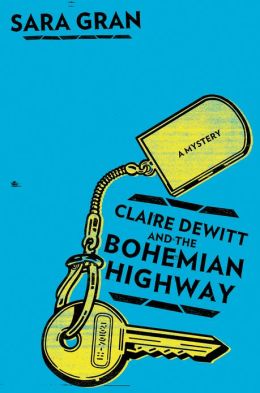
Teaser Tuesdays: Claire DeWitt and the Bohemian Highway by Sara Gran

Teaser Tuesdays is a weekly bookish meme, hosted by MizB of Should Be Reading. The idea is to open your current read to a random page and share a few sentences. And try not to include spoilers!

gran

I am enjoying the second in a mystery series starring Claire DeWitt, a dark and disturbed private investigator in the tradition of classic PI’s, but female and drug-addled. She’s a funky riff on an archetype: I dig her.

The cops can only do so much. Even if they mean well, even if they’re geniuses, they have fifty or so cases and limited overtime and wives and husbands and children and mortgages. That’s why you hire a private eye. Because if she’s smart, the private eye has none of those things.

I like to imagine her saying these lines in a gruff, hoarse voice. I think she’d make good film.

This quotation comes from an uncorrected advance proof and is subject to change.

hypothetical travels: Fruita, Colorado

Over the weekend, and today, Husband and I may be riding some of the trails mentioned in this magazine article… maybe in a place that looks something like this…


As we depart Houston, the weather’s looking pretty grand!
943453_10201031339254557_187866890_n

book beginnings on Friday: You Are One of Them by Elliot Holt

Thanks to Rose City Reader for hosting this meme. To participate, share the first line or two of the book you are currently reading and, if you feel so moved, let us know what your first impressions were based on that first line.

oneofthem

I’m quite excited about this book as I begin it. I haven’t read much of anything involving Russia, but so far I love this author’s tone and the story fascinates me. Plus, look at this beautiful cover, to which connections are made in just the opening pages. I’m psyched. And I’m going to cheat (slightly) and give you a double-beginning. First, the prologue:

In Moscow I was always cold. I suppose that’s what Russia is known for. Winter.

And then, Chapter 1.

The first defector was my sister.

I don’t remember her, but I have watched the surviving Super 8 footage so many times that the scenes have seared themselves on my brain like memories.

If those aren’t some teasers for you… I just don’t know.

Happy weekend, friends!

This quotation comes from an uncorrected advance proof and is subject to change.

a less bookish post

Just a little newsy post for you today, friends, so you’d know what’s going on behind the scenes at pagesofjulia…


The last few weeks have been eventful, with birthdays (my grandfather celebrated his 92nd; also my father and my best friend), anniversaries (3 years at my current job; 5 years married to my handsome Husband!), travel (Husband for work, me to visit my grandparents), and the end of a life:

550316_10200967878788085_1161368923_n
Rexford Pryor Kastner, “Pop,” April 13, 1921 – April 20, 2013. He was a World War II vet, husband, father of 4, and grandfather of 7. I feel very lucky that I got to spend time with him in his final days.

While it is sad to lose someone we all love, and we’ll miss him, it was about as peaceful an end as a person could hope for; and it helped my personal experience more than I can say, that I got to see him and say goodbye. He was fairly lucid, in good spirits, and made sure to impart some final words.

Another big event is my parents’ permanent departure from Houston: they are now installed (though still settling in) in their new hometown of Bellingham, Washington, near the Canadian border and thus nearly as far as one could get, domestically, from here. This is great for them, and I can’t wait to visit, but of course it’s a loss, locally and in the short term. We’ll be going up there as soon as possible.

And now for more travel and birthdays: Husband and I are off to western Colorado for a long weekend of mountain biking, to celebrate both our birthdays (May 7 and 8). I may put together some vacation-placeholder posts for my absence, as I’ve done before.


And there are books, too!

destinyI am just coming to the end of Destiny of the Republic by Candice Millard, on audio. So far I can recommend it: not a dense or challenging work of nonfiction, but fascinating, and the audio production is fine.

endgame

I am about 120 pages into the 450-page Endgame, Volume 1: The Problem of Civilization by Derrick Jensen. This is a large book in more ways than the one, and I will need some time not only to read it, but to process it and figure out how to present it to you. It is not only a book but a worldview.

gran

For Shelf Awareness, I have just finished Sara Gran’s Claire DeWitt and the famethiefBohemian Highway, sequel to Claire DeWitt and the City of the Dead which you will recall I loved – and this latest is quite good too. And I’ve just started The Fame Thief by Timothy Hallinan, who is being compared to Raymond Chandler. Those are about as big as shoes get in the murder mystery game, but it’s also quite good so far.

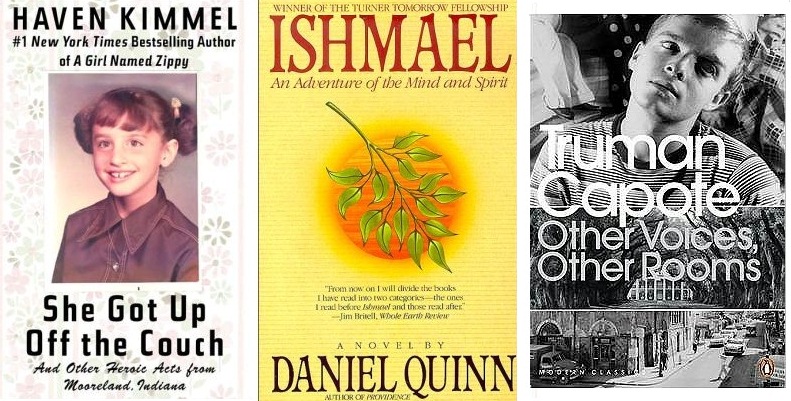
I have 3 books checked out from my local library right now, which is rather many, so I need to get to work! They are Haven Kimmel’s She Got Up Off the Couch; Daniel Quinn’s Ishmael; and Truman Capote’s Other Voices, Other Rooms. And I do not know what is coming to Colorado with me, sigh.

ishmael


So, good reading, and a generally eventful life. And now I’m off to play in the dirt and rocks – enjoy your weekend, kids, and I’ll be back in a while!