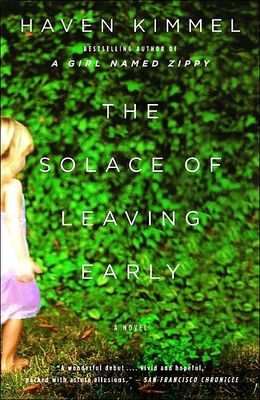
The Solace of Leaving Early by Haven Kimmel

solaceofleavingLangston Braverman has recently returned to her hometown of Haddington, Indiana. Very close to receiving her PhD she walked out of her oral exams. She is a strange, exceptionally erudite but socially fragile and problematic young woman. She has a dog named Germane: “named not after Germaine Greer, but as in: Germane to this conversation.” (I love that.)

Amos Townsend is Haddington’s pastor, of only a year or two now. He is tormented by the death of a local named Alice; he feels that he should have been able to stop her death, and he is struggling with his faith, which is actually nothing new.

Alice’s two children are left in limbo; their crazy aunt Gail has turned out to be unfit, and their grandmother Beulah is clearly too near death herself to wrangle with two traumatized little girls. Upon Alice’s death, they dispose of their original names, Madeline and Eloise, and state that they are now called Immaculata and Epiphany. They wear costumes from a Renaissance drama from school, that their mother made, all the time. Complete with hats: the tall cone-shaped kind with ribbons streaming off the tops.

Langston’s mother AnnaLee picks up some of the slack, and then insists that Langston step up: she is not in school, not working, and these children need her. Of course, Amos plays a role as well, so that this village will truly raise a child.

Langston and Amos are the stars of this story (along with the striking Immaculata and Epiphany, of course). When they meet, they repel one another like magnets. Despite sharing tastes and interests in reading, philosophy, theology, and (I can’t stress this enough) their particular brands of weird, they repel. And, as is clearly a theme in Kimmel’s work, the cerebral content, the philosophies and theologies that shape this part of the story are complex and thoroughly explored. I think I said this in my last Kimmel review, but: her many references partly pique me to go off and study, and partly exhaust me, making me so glad I don’t have to read Whitehead and Tillich and Frithjof Schuon. It makes me sit back and …wonder… that all these strange, complex, learned thoughts that Langston has are thoughts that Kimmel had to have first, had to conceive to put them in her heroine’s mouth; think of that.

Immaculata and Epiphany see Mary (the Mother of God) in the dogwood tree in their grandmother Beulah’s backyard. Naturally, because that is the kind of world this is. It is very strange and is a kind of beautiful, and again I observe that Kimmel’s gift is to create a midwestern small-town world that is both hopelessly humdrum and depressing and everyday, and also strange and exalted and worthy of examination.

What happens to our exquisitely odd cast of characters should definitely remain a surprise to you, reader. It’s pretty great, though.

I love this author SO MUCH that I am struggling to write reviews; but I will keep reading her. Next up is The Used World, and I am, of course, working to get my hands on her best-known bestselling memoir, A Girl Named Zippy.

I’ll close, as I tend to with Kimmel, with a few lines from the book that particularly caught my eye. Where these have, in the past, been lovely examples of her use of language, these are more concepts that I really liked. There is a book theme here. And the language is great – observe the curry comb, is that an image or what – but it’s the concepts that I like most here:

Amos knew as well as anyone what went into writing a book, having written a master’s thesis, and he considered the process to be akin to having one’s nerves stripped with a curry comb.

Maybe he knows what goes into writing a book as well as anyone… who hasn’t written a book?

The most intractable aspect of his bachelorhood was that Amos was uncomfortable eating without reading; he felt as if he were wasting both time and food.

Me too, Amos. I’m right there with you.

Amos tapped his fingers on his bony knees. “Why do you have a book and I don’t?”

“Because I’m a woman, Amos.”

“Yes, but why do you have a book and I never do in a situation like this?”

AnnaLee put the book down. “I carry a bag. I also have safety pins and emergency money, and a package of those little wet towelettes. We live in Indiana. I could get stopped by a train, I could get bored. I always carry a book.” She went back to reading.

How perfect is that. “We live in Indiana, Amos!” Perhaps it goes without saying that I, too, try to keep a book with me at all times? I fail on safety pins and wet towelettes, though.

I’m sure I’ve failed to do this book justice. But it’s divine.


Rating: 9 ribbons on a hat.

book beginnings on Friday: The Solace of Leaving Early by Haven Kimmel

Thanks to Rose City Reader for hosting this meme. To participate, share the first line or two of the book you are currently reading and, if you feel so moved, let us know what your first impressions were based on that first line.

solaceofleaving

I am still super excited about Haven Kimmel! The other day I picked up The Used World and read the first few pages, compulsively, and only later noticed that it is (apparently) the third in a “loose” trilogy that began with The Solace of Leaving Early. So I put down the latter (effortfully), and picked up this one. (The book in the middle is Something Rising (Light and Swift), which I loved.) It begins:

It wasn’t given to Langston Braverman to know the moment she became a different person; she only knew later, looking back on the afternoon a simple storm arrived and stayed for days, the afternoon she first saw the children. The woman Langston had been was immune to visions and visitations; she was a head-dweller, an Attic Girl who could quote theologians on the abandonment of reason, but who, nonetheless, trusted reason the way one trusts one’s own skin.

I can already recognize the thinking characters that Kimmel favors. I’m ready.

A White Heron by Sarah Orne Jewett

I found this story online, for free, here. Thanks to the Open Library project.


thanks to the Boston Public Library for sharing

thanks to the Boston Public Library for sharing

I finally got around to this one, and I’m so glad I did. I’ve seen it referenced before, but it was in Iodine that I saw the allusion that finally got me. And it was pretty easy to find online in full-text form, so no excuses.

It is a simple story. A girl named Sylvia (Sylvy) lives with her grandmother in the woods; she is fortunate to have been the one of a “houseful of children” to be chosen for this life, because she was very unhappy with people and in the city, and now she blossoms. The birds and trees are her friends. She meets a hunter, a pleasant enough young man, who initially scares Sylvy (because he is people) but who she comes to like and esteem. He is seeking a rare bird, a white heron, who does not usually roost in these parts but who Sylvy has seen and knows. In her admiration for the hunter, Sylvy climbs a very tall tree before dawn – a feat of great proportions – to locate the heron’s nest. Perhaps you can see where the central conflict comes from.

This is a very fine example of the art of the short story. It is a brief tale, and simple, but layered and allegorical and very moving. There are only three human characters, of whom the hunter remains unnamed and the grandmother is usually referred to simply as “the grandmother”; only Sylvy consistently gets a name. This adds to the simplistic, and the symbolic, effect. On the other hand, the natural world is well characterized. I love the cow:

…though she wore a loud bell she had made the discovery that if one stood perfectly still it would not ring.

Or the tree Sylvy climbs:

…it must truly have been amazed that morning through all its ponderous frame as it felt this determined spark of human spirit wending its way from higher branch to branch… The old pine must have loved his new dependent.

We can see here the important role that nature plays. Indeed, Sylvy herself is part bird:

…her bare feet and fingers… pinched and held like bird’s claws to the monstrous ladder [of the tree] reaching up, up, almost to the sky itself.

Her tree-climbing adventure seems to me to clearly be an epic journey of a rather religious nature; but I am inexpert in religious texts & symbolism, so I’m not sure I can articulate that for you.

Part of what I love about this story is the deceptive ease with which we sympathize with the bird over the hunter. I read this story in the car, and Husband expressed an interest, so I summarized it for him (which was a pleasure in itself), and he took it for granted that we want the bird, as it were, to win. Well, that’s an easy conclusion to come to; we’re animal lovers, he rescues baby birds that fall out of nests (I call him St. Francis), we like the woods. And this hunter, after all, is a sporting sort, interested in bagging a rare species, rather than feeding his family. But I don’t think the same sympathies would have occurred, let alone been obvious, to Jewett’s original audience (in 1886); they certainly aren’t obvious to the hunter and the grandmother in the story. In other words, Husband and I had very clear-cut sympathies, but I think we read this story differently than it would have read in 1886. The fact that it is moving to us today as it presumably was then, but in a different way, is remarkable to me, and thought-provoking.

This is a lovely little short story in the style of realism, in praise of nature over human industry, allegorical and sweet and very powerful. I have left quite a bit unsaid – like, the ending – because I want you to read it. The link’s at the top of this post, and it won’t take long. Go.


Rating: 9 breaths of fresh air.

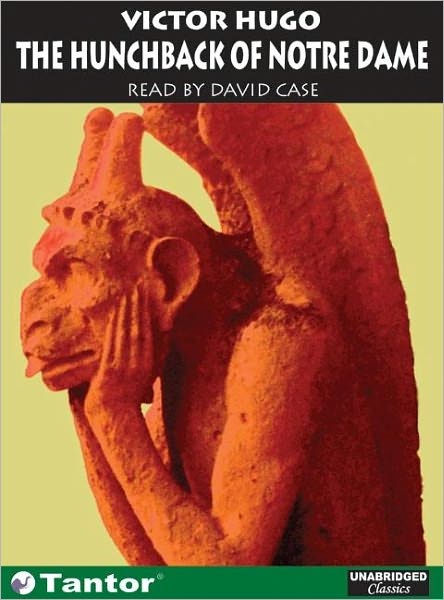
The Hunchback of Notre Dame by Victor Hugo (audio): second half

hunchbackIn brief: better than the first half.

In the first half of this classic novel, I felt there was a bit much explication of aspects less interesting to me personally: most to the point, the architecture of Paris and the history of that architecture. This turns out to be a historical facet that does not fascinate me. If you feel otherwise, enjoy. I said then that Hugo’s strengths lay in the narrative of his story, especially in dialogue; and it seemed to me that this second half had more of that. I am still refraining from plot summary, since that question is well answered by the internet at large. So, briefly, in this second half our characters meet their fates. La Esmeralda, Quasimodo, Claude Frollo, Phoebus, Gringoire and Sister Gudule are for me the central characters, and each comes to a resolution by the end; Hugo wraps up very neatly in that regard.

I found the story interesting – not riveting, but engaging in that I cared about the fates of these characters. It moved a little too slowly to be called riveting, but I did remain mostly attentive. (The description of Parisian building styles through the centuries was not entirely absent in this latter half of the book, so I did still zone out some.) Gringoire’s comic soliloquies are among the best moments; and the Archdeacon’s depravity was shocking and certainly absorbing. I think he easily equals the sociopaths featured on Criminal Minds. One of my observations on finishing this book is that 15th-century French society unfortunately allowed for such crazed and dangerous behaviors if one only held a high position in the church.

This is mild praise, you realize. The Hunchback of Notre Dame struck me as a fine story, but unremarkable. And yet Victor Hugo is a big name, and this one of his best-known works (I am not excited about Les Miserables!), so what have I missed? Well, for one thing, there is this assertion that I got from Wikipedia:

Hugo introduced with this work the concept of the novel as Epic Theatre. A giant epic about the history of a whole people, incarnated in the figure of the great cathedral as witness and silent protagonist of that history. The whole idea of time and life as an ongoing, organic panorama centered on dozens of characters caught in the middle of that history. It is the first novel to have beggars as protagonists.

Notre Dame de Paris was the first work of fiction to encompass the whole of life, from the King of France to Paris sewer rats, in a manner later co-opted by Honoré de Balzac, Gustave Flaubert and many others, including Charles Dickens.

And when put in this perspective, I see its value a little more clearly. Upon its publication in 1831 there were no novels like this; okay. On the other hand this is Wikipedia (and there is a sentence fragment in the above quotation, oh the horror), so, grain of salt. Certainly I can see how this is a great, sweeping view of 15th century France, as stated involving both the King and the beggars, and I am happy to nod to the precedent set even if this is not my favorite example of the genre.

The narrator, David Case, turned out to be perfectly fine and appropriate. I liked the different voices he plays for the very different characters of Gringoire (comic, self-important, whinging), the Archdeacon (dark, conflicted), Esmeralda (sort of a wilting lily), and Quasimodo (deaf). He gave the piece flavor.

In the end, though, I shrug at this lengthy audiobook and move on without looking back.


Rating: 5 gargoyles.

Teaser Tuesdays: Crossing the Borders of Time by Leslie Maitland

Teaser Tuesdays is a weekly bookish meme, hosted by MizB of Should Be Reading. The idea is to open your current read to a random page and share a few sentences. And try not to include spoilers!

crossing

I am pleased with the early chapters of this memoir, in which the author travels back to Europe to hunt down her mother’s long-lost love, from whom she was separated during World War II. Today’s teaser concerns the mother’s family, Jews who lived on the border between France and Germany in a region that changed hands between those two countries frequently, confusing their sense of heritage.

…for Sigmar, returning to French-controlled Mulhouse after [World War I] – a German war veteran with a new German bride – proved difficult too, with anti-German sentiment in France running so high. Feeling even less welcome as Germans in France than as Jews in Germany, Sigmar and Alice crossed the Rhine once again to settle and start a family in Freiburg.

This is a nuance I had not considered before, and drives home the displacement of Jews in this era.

What are you reading this week?

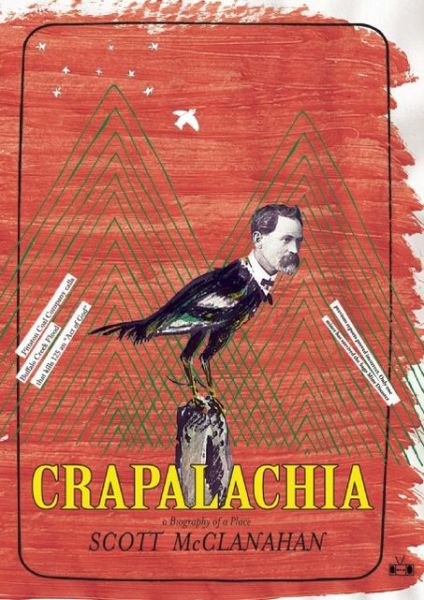
Crapalachia: A Biography of a Place by Scott McClanahan

The author of Stories and its followups, Stories II and Stories V!, shares a memoir of Appalachian boyhood filled with the requisite hardships but ultimately redemptive.

crapalachia

Scott McClanahan centers Crapalachia on two characters of his West Virginia youth who rule over much of the narrative–his Grandma Ruby, an ornery, fantastical mother of 13 (or so) children who also photographed dead people, and his uncle Nathan, who had cerebral palsy and enjoyed listening to the radio preacher and having six-packs of beer poured down his feeding tube. We also meet his schoolboy friends, like Little Bill, an eventual roommate with obsessive-compulsive disorder and a destructive crush on a girl down the street.

Crapalachia is an unusual story told in an unusual fashion, peppered with second-person references, advice to the reader on how to live, how to remember and forget. The attentive reader will also appreciate McClanahan’s “Appendix and Notes” for its revelation of where he’s twisted the truth (as he remembers it) to suit the story he wanted to tell. Like many memoirists, McClanahan is concerned with the nature of memory, its credibility and value. He sometimes gets mired in the unpleasant, cringeworthy details of life, then pans out for grand, loving, hopeful statements. This is a gritty look at life–in Appalachia, yes, but also in a universal sense. Historical detail turns what looked to be a memoir of childhood into the subtitle’s promised “biography of a place.” In the end, despite various tragedies, this poetic, rambling series of remembrances is surprisingly optimistic.


This review originally ran in the March 26, 2013 issue of Shelf Awareness for Readers. To subscribe, click here, and you’ll receive two issues per week of book reviews and other bookish fun!


Rating: 6 gallstones.

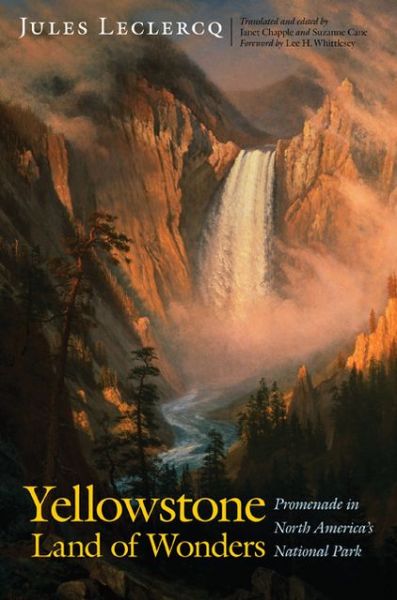
book beginnings on Friday: Yellowstone, Land of Wonders by Jules Leclercq; with notes

Thanks to Rose City Reader for hosting this meme. To participate, share the first line or two of the book you are currently reading and, if you feel so moved, let us know what your first impressions were based on that first line.

yellowstone

I am having a difficult time deciding where to “begin” this book, because it opens with not just a foreword or introduction, but:

  • Foreword
  • Acknowledgements
  • Translators’ Introduction
  • Translation and Editorial Method
  • A Note on the Illustrators
  • Preface (by the original author), and…
  • Chapter 1.

All of which is not a problem for me; I read each of these sections happily (most were 2-3 pages); but how to design today’s book beginning? Let’s start with chapter 1:

In 1871 the American geologist Hayden revealed the existence of one of the most phenomenal regions on earth. It was named the “Land of Wonders.”

This quotation comes from an uncorrected advance proof and is subject to change.

As I learned in the copious introductory remarks, this is the first-ever English translation in full of an 1886 publication in French, La Terre des Merveilles, by a renaissance man who spent 10 days in Yellowstone in 1883. It is billed as being remarkable and unique in many ways, and I am looking forward to it.

In the first few pages alone I learned several interesting pieces of trivia, including that Yellowstone is roughly one third the size of Belgium (at least as they both looked in 1886!); that geyser is an Icelandic word; and the definition of the word ‘diadem’ (I was thinking something like jewelry or a tiara, and I was right). And speaking of notes – as I’ve written before, I keep notes while I read: passages I want to quote, words or concepts I want to look up, thoughts I want to include in a review. I have also written before about footnotes; and on this subject I have some observations to make here. For one thing, the endnotes are copious. By the time chapter 2 ended on page 21, I had been cued to reference 47 endnotes. That’s two-and-a-quarter per page! And they are endnotes, meaning they occur at the end of the book rather than throughout; and while some direct the reader to a source for the information given, some make substantive contributions to the text, so that I can’t know to always refer to them or always ignore them; and this makes for a great deal of flipping around. Also, while we’re keeping track, I’ve made only 4 notes myself in those 21 pages (plus 6 pages of notes!), so there you are. This is looking like… are you ready for it?… a noteworthy read.

And what are you reading this weekend?

Iodine by Haven Kimmel

iodineThis is my new favorite author. I can’t even tell you… I want to read this book aloud to strangers and shout and cry. I adore her. What a powerful book, and story, and what wordsmithing.

I will tell you very little about the plot of Iodine. Its protagonist is a young woman named Trace, who also goes by Ianthe. The perspective shifts between a third person view of Ianthe and a third person view of Trace and a first person voice, in which the woman who is both women narrates; and she is the quintessential unreliable narrator. She relates memories and then states that they never happened. Her story is revealed slowly and disjointedly, in such stingy scraps that I had to go back and reread, trying to wring out the detail; but the effect is more tantalizing than awkward or confusing the way mixed-up timelines can be.

It is a disturbing story. Trace, along with the other characters we slowly come to know, has a history that upsets us. There is a strong thread of incestuous and otherwise inappropriate sexual longings running through this book (as we saw in those opening lines). Be prepared to be a little uncomfortable at times; but oh, the payoff. And again I give you the beautiful language:

Her red hair was curled and teased and sprayed into an elaborate dome; there were waves and… like the outline of paisleys, it was busy, stiff, bright hair. Not the red she was born with – this was the color of a ripe cantaloupe mixed with blood.

Kimmel has many strengths. Her prose is also poetry. She can characterize a minor player in just a few lines so crisply that I recognize a thoroughly unique and yet familiar man or woman.

Scherring was less a man than a character in a short story, and it was a story Trace rather liked; she liked how the years had disappointed him, and ruined that perfect family, and revealed gin to be poison to the liver.

Her characters are very real, straight from a mundane and yet terrifying Americana, and their lives are both disturbing and everyday.

Iodine is far more a psychological thriller than was Something Rising. There is more Patricia Highsmith here and less Tennessee Williams. There is also definitely something of Bonnie Jo Campbell’s Once Upon a River, although the protagonists of the two books are different in many ways.

One aspect of Iodine that was also present in Something Rising is a study of literature, in this case of Greek myths, of archetypes, of Freud and Jung: several characters are deeply mired in academia, speaking in a language of myth & archetype, which makes for a beautiful and strange little subculture that they live in. Trace/Ianthe is both very much a part of this world, and also outside of it. I found this erudite framing element to the story very charming and also a little ridiculous, which I think is how Kimmel intended to portray it. It certainly made me interested in reading some of what Trace reads; but not all of it! (I will be looking up Sarah Orne Jewett’s A White Heron, finally, after seeing it referred to in various places before this book.)

I think I’ve made a hash of this review. I don’t want to say much about the plot, and I can’t do Kimmel’s extraordinary talent justice. She has a lovely way with words; I would read her stories about absolutely anything, but find this damaged, disturbed microcosm of the American Midwest especially enthralling. I was riveted throughout, and upon finishing, had to just sit and absorb the effect of this story. My fascination with Kimmel continues and she remains highly recommended.


Rating: 9 black dogs.

books from Fil

I thought it was time for a feature post on my most frequent book gifter. He does an excellent job of selecting reading material for me; I’m sure you will recognize the themes from the list below. Nothing he’s given me (that I’ve read) has been less than great, yet. But I still have many of them to read.

I first met Fil at the bike shop where he works, and where I would later work alongside him. That would have been, oh, almost ten years ago. The first book gifts he got me were back when we were coworkers, for my birthday, I’m fairly sure; and those were bike themed. Since then, we have also shared interests in Mexico and in travel in general. I’ve made this list in vague alphabetical order, from memory, and I’m not completely sure that it’s exhaustive, but it’s a great start:

six days

Six Days of Madness by Ted Harper: a 1993 book about six-day racing in the United States in the “Golden Age” of cycling, the 1890’s. I read it, pre-blog, and LOVED it: track racing is obscure enough, but six-day racing is an extra-special, rare reading subject.

bicycle racing

Bicycle Racing in the Modern Era: a VeloNews production covering 25 years of pro cycling in multiple disciplines (road, track, mountain, cyclocross, BMX), and the beauty of it is that the 25 years covered are 1975-2000 – meaning that Lance Armstrong has only a bit part. In a totally Lance-saturated world, this was inexpressibly refreshing; and I learned a lot. I read it pre-blog.

londonderry

Around the World on Two Wheels: Annie Londonderry’s Extraordinary Ride by Peter Zheutlin: the story of Annie Londonderry’s bike ride (ostensibly) around the world incorporates adventure, women’s issues, world travel & cultures, as well as the Golden Age of cycling. There is even a thread running through it regarding women’s clothing and clothing reform – interesting stuff.

spokesongs

Spokesongs: Bicycle Adventures on Three Continents by Willie Weir: a series of anecdotes by a man who cycle-tours several continents. A focus on the developing world makes for some interesting cultural tidbits.

geese

I’ll Gather My Geese by Hallie Crawford Stillwell: the memoir of a woman who headed off into the unknown of far southwest Texas in the 1910’s to work as a schoolteacher and live on a ranch. Sounds good! I just haven’t gotten to it yet.

fromalaska

From Alaska to Tierra del Fuego: Across the Americas in Two Years by Michael Boyny: just looking at that gorgeous cover (click to enlarge) makes me anxious to get to this one, a coffee-table book, which I think was technically given to Husband but Husband does not read… It’s the story of a couple that traveled the length of the Americas in an old pick-up truck, and promises “superb pictures.”

mangostreet

The House on Mango Street by Sandra Cisneros: an exceptionally beautiful and powerful collection of short stories that might be poems. Not one to miss! And Fil had never read it; so I was able to recommend it back to him. Note that this edition is extra-special because of the lovely introduction (by Cisneros) that is included.

volume1volume2

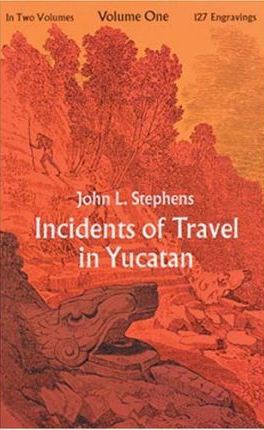
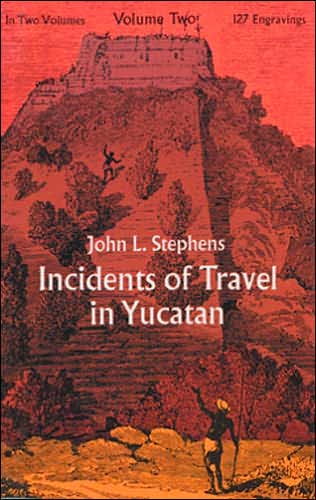
Incidents of Travel in Yucatan by John Lloyd Stephens, Volumes I & II: Barnes & Noble claims that “Edgar Allan Poe called it ‘perhaps the most interesting travel book ever published.'” That might do it for me, right there! Husband and I have a special fondness for Mexico’s Yucatan Peninsula, and an 1800’s-era travelogue with that kind of blurb definitely belongs on my book shelf.

cruisers

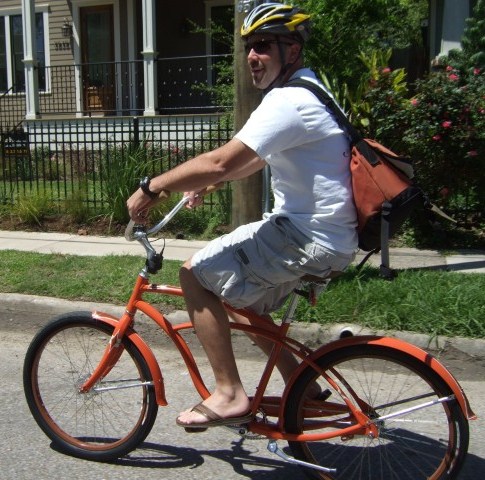
Cruisers by Jonny Fuego and Michael Ames: another given to Husband, and more of a coffee table book than a cover-to-cover, although I confess I haven’t looked at it much yet. Pictures of beautiful bicycles, of course, do belong on our coffee table. For a little context, here’s Husband on our wedding day on the bike I got him for a wedding present:
weddingbike
I brought Ritchey to the wedding on my cruiser:
tattoopic
Sorry, I got distracted.

solace

The Solace of Open Spaces by Gretel Ehrlich: reputed to be a fine, lyrical observation of the American West of the 1970’s. Hopefully – and I think this is Fil’s intention – it will fall in line with the tradition of Edward Abbey and Phil Connors; and more recently, Isabella Bird (see below). Bonus: just the other day, A.Word.A.Day featured Ehrlich for their “thought for the day”:

Walking is also an ambulation of mind.

Which is a lovely one.

noblest

The Noblest Invention from Bicycling Magazine: another coffee-table bike book, this one on the history of the bicycle, presumably a celebration of our relationship with two wheels and with lots of good pictures, as well as a well-advertised foreword by Lance Armstrong, who has been inescapable in cycling publications for years – maybe that will change now with his newfound ignominy?

wellville

The Road to Wellville by T.C. Boyle: I know nothing about this one, and I believe the same goes for Fil; I think it was purchased on the strength of Boyle’s reputation, which I know although I have read none of his yet. So, fair enough, Fil. A reading assignment. Okay.

justride

Just Ride: A Radically Practical Guide to Riding Your Bike by Grant Petersen: “radically practical” sounds like a quite fine way to describe Petersen himself, a personality I’m familiar with through the Rivendell Reader (an occasional serial publication from Rivendell Bicycle Works, Petersen’s company – you can see a few issues here). He is the definitive retro-grouch when it comes to bicycles, and my reaction to his philosophies is mixed: much of what he says makes sense (and I have a little retro-grouch, even a little Luddite, running through me), but some of it seems to be clearly grouchiness for its own sake. Fil had already become ambivalent about this book by the time he gifted it to me! And I haven’t looked at it yet; but I will. I have David Byrne’s Bicycle Diaries on my shelf, too (also a gift, from another friend), despite BikeSnob‘s relentless fun-making of him, and I may as well get all sides of this story! I suspect I will fall in line with the majority of Petersen’s directives, at least.

711

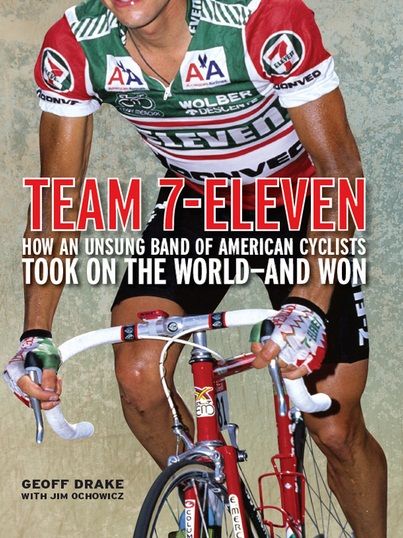
Team 7-Eleven: How an Unsung Band of American Cyclists Took on the World – and Won by Geoff Drake: the story of professional road racing in the pre-Lance era, back when all their gear was recognizable and Americans were new on the scene. I can read that.

adventures

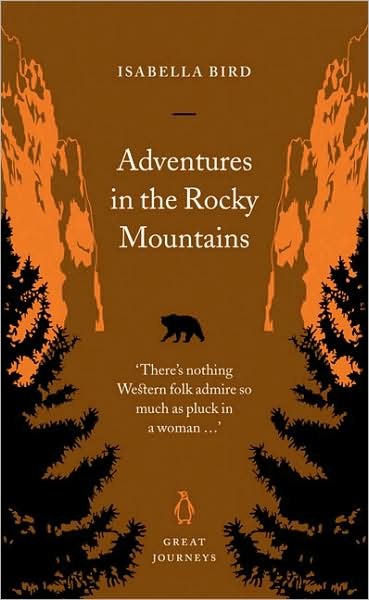
Adventures in the Rocky Mountains by Isabella Bird: just recently read, of course. I have an idea that this might make a fine comparison read next to The Solace of Open Spaces, above, which is similar in being a woman’s perspective on the natural beauty and benefits of the American West, but from precisely 100 years later. Perhaps that’s the next Fil-gifted read I shall look forward to. Hm. I am also most attracted (in making this list) by I’ll Gather My Geese, From Alaska to Tierra del Fuego, and Incidents of Travel in Yucatan (who can resist the Poe endorsement!). In other words, Fil is still doing well around here! Oh, and I feel I should get to the David Byrne book, too, and compare it to Bike Snob and Just Ride.

Which books on this list appeal to you especially? Do you have friends who consistently give you books, or consistently give really good gifts, or (lucky you!) both?

Teaser Tuesdays: The Hunchback of Notre Dame by Victor Hugo, again

Teaser Tuesdays is a weekly bookish meme, hosted by MizB of Should Be Reading. The idea is to open your current read to a random page and share a few sentences. And try not to include spoilers!

hunchback

Yes, I just did this one last week. The good news is that there continues to be text worth quoting! I liked these lines of dialogue:

“The gallows lead to hell.”

“That is a rousing fire.”

“Jehan, Jehan! The end will be bad!”

“The beginning at least will have been good.”

There is something Shakespearean, I think, in this repartee. As I said in my mid-way-through review, Hugo is at his best in narrative (or dialogue!), when he is pithy and entertaining. Still enjoying this one, on the whole.