book beginnings on Friday: Light in August by William Faulkner

Thanks to Rose City Reader for hosting this meme. To participate, share the first line or two of the book you are currently reading and, if you feel so moved, let us know what your first impressions were based on that first line.

august

Friends, I have a confession: I fear Faulkner. I tried to read The Sound and the Fury once, and I was left feeling certain that either I’m an imbecile, or he is. The jury is still out. But I found this collection of audio lectures on iTunes University, from Yale, on Hemingway, Fitzgerald and Faulkner; and I already love two of those authors, and the three are often considered together; and I want to listen to these lectures and be able to follow along; so here I am again, attempting Faulkner. I’m told Light in August is a little easier than The Sound and the Fury. Wish me luck. It begins lucidly enough:

Sitting beside the road, watching the wagon mount the hill toward her, Lena thinks, ‘I have come from Alabama: a fur piece. All the way from Alabama a-walking. A fur piece.’ Thinking although I have not been quite a month on the road I am already in Mississippi, further from home than I have ever been before. I am now further from Doane’s Mill than I have been since I was twelve years old

[Regarding punctuation: I checked two print editions and both left off that final period, so I guess that was Faulkner’s work. I actually value punctuation, myself; trying not to let this make me nervous.]

Any Faulkner fans out there who can reassure me? I want to like this book!

The Silver Swan by Benjamin Black (audio)

swanThis is book 2 in a series, because I couldn’t find book 1; so be it. You know I don’t bother too much with these things, anyway.

Set in Dublin, and thus very enjoyable as an audiobook with those Irish accents – various Irish accents based on region, of course. I’m no connoisseur of dialect but I can hear the different effect coming through and I appreciate it. Having visited there now, too, I think I might call an Irish accent the most musical and pleasant to listen to that I know.

Our protagonist (I started to call him a hero; but I think the jury is out) is named Quirke, and he’s a pathologist, meaning he performs autopsies. The scene is set when an old friend – hardly more than an acquaintance – from school calls up to request that Quirke forgo cutting open his recently dead wife, Deidre Hunt, professionally known as Laura Swan. (No, not what you’re thinking. She’s a beautician.) Deirdre is an apparent suicide. Quirke goes poking around where he doesn’t belong. He behaves awfully like a detective, but of course he isn’t; although it is hinted at that in the first tale of his adventures, Christine Falls, which I missed, Quirke likewise tried to do the cops’ job for them, and it didn’t turn out well for him. Ah well, these hard-boiled types never learn, and Quirke goes looking into Deirdre’s life and habits. He discovers a former lover with an angry wife, and some financial troubles, but none of that is as interesting as Quirke’s own family drama. Apparently he had a daughter who was passed off as his niece until just a few years ago; so he has a “new”, adult child; and she becomes embroiled herself with Deirdre Hunt’s life and menfolk. Oh, and Quirke has the classic characteristic of being a reformed or reforming alcoholic; there are scenes where he hangs out in bars (to talk to his informant) and yearns for a drink. No real new ground there.

As a mystery, there were a few odd elements here. Quirke behaves very much like a detective, which is tolerated surprisingly well by everyone, including the detectives; yes, there’s a little complaining, but no efforts to limit his actions. On top of that, I thought the husband was a fine suspect from the very start – that is, once we’ve established that Deirdre was murdered, which is a conclusion danced around for much of the book. The husband then requests that no autopsy be performed; and yet Quirke never really does get around to suspecting him. I was left feeling that I had missed something; and maybe I did, but I think in that case at least some of the blame falls on the story.

I enjoyed this read somewhat, but frankly, I think most of my enjoyment lay in the lovely Irish voices telling the story. Other than that, it was just fine.


Rating: 5 very neutral shrugs of my shoulders for this one.

Junius and Albert’s Adventures in the Confederacy by Peter Carlson

Adventure, suspense, and a dash of romance make for a highly readable–and absolutely true–Civil War story.

junius
Peter Carlson’s Junius and Albert’s Adventures in the Confederacy opens with the capture of its titular subjects near Vicksburg in 1863, then rewinds to show how they landed in such a predicament. Albert Richardson, an enterprising journalist for the New York Tribune, had decided to travel south as an undercover correspondent, and naturally chose his best friend and fellow newspaperman Junius Browne to accompany him. The stakes were high if they were discovered–the Tribune was reviled as a liberal abolitionist paper–but the two young men were game for adventure. After their capture, they spent nearly two years in a series of Confederate prisons before escaping, half-starved and freezing, to trek overland toward Union lines in December 1864.

Despite the serious and frequently tragic nature of Albert and Junius’s story, the book’s title signals the often playful tone that Carlson (K Blows Top) employs. The descriptions of Confederate prisons like Libby, Castle Thunder and Salisbury are horrific, but there is also the occasional scene of mirth–as when prisoners put on a variety show to celebrate the 4th of July. Besides Junius and Albert, the other colorful personalities in Carlson’s history include a larger-than-life “Union pilot” skilled at guiding refugees over the mountains to freedom, and a beautiful young Southern horsewoman who rescues them during a perilous moment. With eccentric and likeable characters like these, Carlson’s history successfully masquerades as an entertaining adventure story.


This review originally ran as a *starred review* in the June 4, 2013 issue of Shelf Awareness for Readers. To subscribe, click here, and you’ll receive two issues per week of book reviews and other bookish fun!


Rating: 7 weary months.

Teaser Tuesdays: She Got Up Off the Couch by Haven Kimmel

Teaser Tuesdays is a weekly bookish meme, hosted by MizB of Should Be Reading. The idea is to open your current read to a random page and share a few sentences. And try not to include spoilers!

couch
Haven Kimmel is absolutely and totally my literary obsession these days. She is hilarious, and wise. I think I might be most mesmerized by her novels; but her memoirs are so funny and strange I can’t put them down. (Thanks, Krinkle, for keeping me up way too late on work nights.) And she has a way with words. Take today’s teaser:

In truth, if there could be said to be one truth about my brother, it is that he carried both a tombstone and scraps of coal in a little red wagon, and what that did to him and what it meant to him is written in a closed book in a library guarded by dragons.

He literally had a tombstone and scraps of coal in his little red wagon. You’ll have to read this book to find out more.

[I wanted to reprint the entire two-page dedication and the preface for you here, but I fear copyright violations. Go read it!!]

more on Maclean from Liz

Nature, unfortunately for the organization of academia, is vexingly interdisciplinary.

Why are the activities aboard the Titanic so fascinating to us that we give no heed to the waters through which we pass, or to that iceberg on the horizon?


Last week I posted a review of Norman Maclean’s A River Runs Through It, and other stories. My coworker Liz, who more than once has directed us to some great reads, immediately found and forwarded a 1989 Past President’s Address to the Western Literature Association by a Glen A. Love. Her comment was: “After reading your review I went looking for Maclean biography and found this, I know you dislike the form but I was compelled to send it along anyway.” She’s referring to my dislike of essay collections – I know, it’s terrible, right? but I can’t get excited about collections of essays. A single essay, however, for no good reason, I am game for.

This one turned out to be very interesting. (Liz wins again.) It begins:

Describing the early rejection of the manuscript for his widely admired book A River Runs Through It, Norman Maclean recalls in his acknowledgments the cool dismissal from one New York publisher: “These stories have trees in them.”

And then it largely abandons Maclean; but never fear. It’s a great argument for the failure of Literature to address ecology; it’s a polemic, and sadly no less relevant and (to my inexpert eye) no less correct in its criticisms today, despite being 24 years old. I thrilled to read about great nature writers whom I’ve loved, and also those I haven’t yet discovered (and note the reference to Gretel Ehrlich, of whom I’d never heard until recently). She is mentioned as one of those writers who “seem to slough off their New York or L.A. skins when they confront western landscapes.” If that doesn’t remind you of Phil Connors, you haven’t been paying attention. Maclean inhabits this article mostly in that phrase, quoting a rejecting publisher: “These stories have trees in them.” Love argues that this is one of the tragedies of Maclean’s kind, and a chief failure of the literary establishment: that to write about trees will get you derisively branded with “the contemptuous epithet nature-lover.”

I muse, as I read this article, about some books I’ve read that were partly nature writings, but only as a framework through which to dissect the human condition: Mountains of Light was lovely, and awed by Yosemite, but the author was really there to exorcise the particular demon of his wife’s death; and Almost Somewhere was even more overtly a drama of young women coming of age, and the unfortunate cattiness that often accompanies them, set against the John Muir Trail. This is one of Love’s points, too: that we (as a society, not only as writers & critics) continue to fail to consider nature, or the earth, in its own right, and instead keep considering its role in human experience.

I think Phil Connors and especially Derrick Jensen would agree with Love’s assessments. So, I’m feeling more of that synchronicity that I’ve written of before: I’ve found another kindred spirit, as Anne of Green Gables might say.

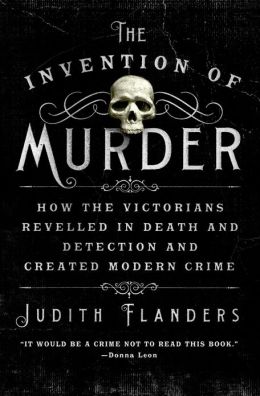
book beginnings on Friday: The Invention of Murder by Judith Flanders

Thanks to Rose City Reader for hosting this meme. To participate, share the first line or two of the book you are currently reading and, if you feel so moved, let us know what your first impressions were based on that first line.

murder

I am pleased to be reading this hefty work of history regarding the Victorians’ fascination with murder – a relative rarity in that era – and the birth of the murder mystery genre in literature (as you know, that’s my favorite genre in fiction). And I’m pleased to share with you a great, and representative, book beginning:

“Pleasant it is, no doubt, to drink tea with your sweetheart, but most disagreeable to find her bubbling in the tea-urn.” So wrote Thomas de Quincey in 1826, and indeed, it is hard to argue with him. But even more pleasant, he thought, was to read about someone else’s sweetheart bubbling in the tea urn, and that, too, is hard to argue with, for crime, especially murder, is very pleasant to think about in the abstract: it is like hearing blustery rain on the windowpane when sitting indoors.

This statement is a little disturbing, but I think inarguable, and maps out where the book is heading.

This quotation comes from an uncorrected advance proof and is subject to change.

A River Runs Through It, and other stories by Norman Maclean

riverNorman Maclean is a poet and a genius. Annie Proulx’s foreword, and Macleans’ own acknowledgements, had me spellbound from the first moments; even before I began the first of three stories, I had to put the book down and meditate on what I’d read. Consider the final lines of the acknowledgements:

This, then, in summary, is a collection of Western stories with trees in them for children, experts, scholars, wives of scholars, and scholars who are poets. I hope there are others also who don’t mind trees.

This is Maclean’s first book, published when he was already an old man. It includes three pieces I have a little trouble categorizing. Short stories? Well, they’re not particularly short, not consistently: the first one is over 100 pages and therefore more properly a novella; the second is 20 pages; the third, 90. They are also nonfiction, which makes calling them short stories or novellas also problematic. Take that as you will. They are very fine, whatever they are.

I am going to write this review much like I did yesterday’s, heavy on the quotations because this writer is such a Writer.

“A River Runs Through It,” the title story and the one best critically received, begins:

In our family, there was no clear line between religion and fly fishing. We lived at the junction of great trout rivers in western Montana, and our father was a Presbyterian minister and a fly fisherman who tied his own flies and taught others. He told us about Christ’s disciples being fishermen, and we were left to assume, as my brother and I did, that all first-class fishermen on the Sea of Galilee were fly fishermen and that John, the favorite, was a dry-fly fisherman.

We meet a young Norman and his brother Paul, briefly as boys to establish their personalities and their relationship with fishing (every bit as reverent as those opening lines suggest), and then we delve into their lives in their early thirties. They fish together. Paul is a gifted fly fisherman. They have a noncommunicative (stereotypically male) relationship, but they worship together at the river, hone their craft, share special moments; their world is intruded upon by the unpleasantness of Norman’s brother-in-law, who is (gasp) a bait fisherman. Paul also likes to fight, and he comes to a young and violent end. All these years later, the Maclean who writes this story might be seen as exorcising a youthful trauma; lucky for us it is as thoughtful, wise, delicate, and beautiful as it is.

…I could never be talked into believing that all a fish knows is hunger and fear. I have tried to feel nothing but hunger and fear and don’t see how a fish could ever grow to six inches if that were all he ever felt. In fact, I go so far sometimes as to imagine that a fish thinks pretty thoughts.

Again I see Derrick Jensen here: fish are people, too.

What a beautiful world it was once. At least a river of it was. And it was almost mine and my family’s, and just a few others’ who wouldn’t steal beer. You could leave beer to cool in the river, and it would be so cold when you got back it wouldn’t foam much. It would be a beer made in the next town if the town were ten thousand or over. So it was either Kessler Beer made in Helena or Highlander Beer made in Missoula that was left to cool in the Blackfoot River. What a wonderful world it was once when all the beer was not made in Milwaukee, Minneapolis, or St. Louis.

If you don’t see Hemingway’s legacy there, I don’t know what I can say to help you. Maclean was born just three years after Papa, but Hemingway had been dead over a decade when this, Maclean’s first book, was published, so at least in literary terms they are a generation apart. No one can write prayerfully about fishing and the beauty of a trout stream without channeling that man.

I sat there and forgot and forgot, until what remained was the river that went by and I who watched. On the river the heat mirages danced with each other and then they danced through each other and then they joined hands and danced around each other. Eventually the watcher joined the river, and there was only one of us. I believe it was the river.

Again, talk about prayerful – a word he uses several times, actually, and appropriately. I won’t quote the famous final line of this story for you. Go find it out for yourself. I cannot argue with the accepted notion that “A River Runs Through It” is Maclean’s masterpiece.

Next is “Logging and Pimping and ‘Your Pal, Jim'”, a story of Maclean’s work as a young man on a logging camp, during the summers while he’s not in school becoming an academic. The man who signs his letters as in the story’s title is a mystery, and the fact that Maclean leaves him unexplained felt a little strange but, of course, very real. It’s an entertaining and rather disturbing little tale, worth the time, but nothing compared to River.

And then there is “USFS 1919: The Ranger, the Cook, and a Hole in the Sky,” almost as long as the first story and less well received critically, but in my opinion very striking. It focuses on just a few weeks during the time Maclean spent working for the Forest Service, yes, in 1919, when the world was a little different place:

We were fairly representative of early Forest Service crews as I came to know them – maybe not even that good, because the war had ended less than a year before and many of the best men had not yet returned to the woods, and the earth was still pretty much in the care of the old with corrugated skin and tiny steps and young punks looking for a fight and gassed Canadians and anonymous lookouts who had to be there but can’t be remembered. Not one had ever seen the inside or the outside of a school of forestry. But, as Bill said, we were a pretty good crew and we did what we had to do and loved the woods without thinking we owned them, and each of us liked to do at least one thing especially well – liked to swing a jackhammer and feel the earth overpowered by dynamite, liked to fight, liked to heal the injuries of horses, liked to handle groceries and tools and tie knots. And nearly all of us liked to work. When you think about it, that’s a lot to say about a bunch of men.

The first line introduces our narrator:

I was young and I thought I was tough and I knew it was beautiful and I was a little bit crazy but hadn’t noticed it yet.

And there is wisdom about nature:

…the mountains of Idaho, poems of geology stretching beyond any boundaries and seemingly even beyond the world.

And work:

The unpacking was just as beautiful – one wet satin back after another without saddle or saddle sore, and not a spot of white wet flesh where hair and hide had rubbed off. Perhaps one has to know something about keeping packs balanced on the backs of animals to think this beautiful, or to notice it at all, but to all those who work come moments of beauty unseen by the rest of the world.

And as a historical moment in time, I found it only a hair’s breadth less impressive than River. I like to read about the Forest Service, and I can’t wait to get into Maclean’s Young Men and Fire, about the Mann Gulch forest fire of 1949, in Montana, where a bunch of young smokejumpers were killed. (My fascination with forest, and fire, holds over from Fire Season, obviously.)

I am reeling from this book. Especially having read A River Runs Through It back-to-back with The Solace of Open Spaces, and with the two set side-by-side (or, top to bottom) in Wyoming and Montana, I feel swept away. Sometimes our reading happens this way, that a set of books come together to effect more than the sum of the parts. So, like Ehrlich’s lesser-known work, I will say that Maclean’s is… wise, compassionate, lyrical, and so important and beautiful in its honoring of a dying version of our world. Highly recommended.


Rating: 9 beads of sweat.

The Solace of Open Spaces by Gretel Ehrlich

Edit: see Pops’s review here.


solaceThe observation that sticks with me most from this slim, beautiful book is: it’s interesting how poetic nature writing never grows old for me, even though in some ways Ehrlich’s work here is not particularly new. She is unique, like every one of us snowflakes – I don’t mean to call her derivative; read on – but she definitely follows in a tradition; and what I’m trying to say is, I am always ready for another literary descendant of Thoreau, Leopold and Abbey. Especially when she’s a woman and offers a little different take in that respect.

Gretel Ehrlich is decidedly special, for all that I’ve compared her to the greats that she has followed. For one thing, her writing is exquisite, like perfect drops of water with points of light shining on them. Her story is her own, too. She was a filmmaker in New York City who traveled to Wyoming in 1976 to shoot a film, and also to escape the way in which her life was falling apart: the man she loves, her business partner, had just been given only a few months to live. She hangs around sheep ranches until she becomes one of them, a sheepherder, a ranch hand, a rancher. She visits with the dying man, keeps in touch, in pain, and then he dies far away while she’s preparing to fly home to see him. So her time in Wyoming, in the wild, on the frontier, with animals and laconic men, is a time of mourning and healing, as in Mountains of Light, or somewhat as in Fire Season.

Ehrlich’s wild is not Ed Abbey’s, or Phil Connors’, or Derrick Jensen’s, or Aldo Leopold’s wild; hers is populated by humans, nonnative stock animals and plant species, and irrigation. But it is far wilder than New York City, and far wilder than most of our country then and certainly most if not all of it now. It retained a wildness, including a human wildness. I love her descriptions of the human and animal personalities she comes to know. I also love her discussion of what it is to be a cowboy (or cowgirl, of which there are also several stunning examples).

But the best part has got to be her writing. And as I’m inclined to do in such cases, I’m trying to write less myself and share more of her lovely thoughts and phrases.

Disfigurement is synonymous with the whole idea of a frontier. As soon as we lay our hands on it, the freedom we thought it represented is quickly gone.

The old conundrum. We love it; we want to save and preserve and conserve it so we can enjoy it; but every act of enjoying is a failure of preservation. If we all lived in the wild it would be gone. (Which we’re headed towards, anyway.)

True solace is finding none, which is to say, it is everywhere.

As the title indicates, Erhlich is seeking solace – in the mourning of her lost partner, but also in the need for change more generally, I think.

Because she is the granddaughter of Ralph Waldo Emerson, I imagined she possessed unusual reserves of hardiness. But she protested. “I don’t do a very good job of it,” she said modestly. “I get in these hoarding moods and get mad at myself for all the stupid things I do. Then I pick up this old kaleidoscope and give it a whirl. See, it’s impossible to keep just one thing in view. It gives way to other things and they’re all beautiful.”

Isn’t that lovely? It’s always changing, and always beautiful. (Can’t say I’m not partial to an Emerson allusion, either.)

Winter scarified me. Under each cheekbone I thought I could feel claw marks and scar tissue.

Great imagery here, about the harshness of the world out there, in a Wyoming winter.

The seasons are a Jacob’s ladder climbed by migrating elk and deer. Our ranch is one of their resting places. If I was leery about being an owner, a possessor of land, now I have to understand the ways in which the place possesses me. Mowing hayfields feels like mowing myself. I wake up mornings expecting to find my hair shorn. The pastures bend into me; the water I ushered over hard ground becomes one drink of grass. Later in the year, feeding the bales of hay we’ve put up is a regurgitative act: thrown down from a high stack on chill days they break open in front of the horses like loaves of hot bread.

Derrick Jensen would like that. Ever since I read him (and before; but especially since), I’ve been thinking about the concept of land ownership, so this struck a chord.

And finally –

Leaves are verbs that conjugate the seasons.

Could a person ask for more than this? Leaves as verbs. Gretel Ehrlich, you have won me over.


Rating: 9 cowboys.

Teaser Tuesdays: A River Runs Through It, and other stories by Norman Maclean

Teaser Tuesdays is a weekly bookish meme, hosted by MizB of Should Be Reading. The idea is to open your current read to a random page and share a few sentences. And try not to include spoilers!

river

It has taken me too long to find Norman Maclean. Those who recommended him were, of course, oh so right; and now I can’t wait to get a hold of Young Men and Fire.

My 25th anniversary edition of A River Runs Through It includes three stories, but the titular one is the bulk of the book. It is from that story that I’ve taken this lovely teaser for you today.

It was so hot that the mirages on the river melted into each other. It was hard to know whether the utterances I had heard were delphic.

Of course I’m a sucker for the classical reference in the use of the word ‘delphic’. And now I will try to bite my tongue and save it for my review; but let me say, this is a beautiful book.

Krinkle

Last night, just goofing around, I asked Husband to name three authors I love. [If you’re not a regular reader, I will tell you that Husband is a NONreader. I am such a reader that you’d think he’d pick up a little; you be the judge.] I thought this would be a funny exercise. He piped up immediately with “Papa!” which was the easy one; we have a Hemingway shrine in the living room, and we’ve traveled together to Key West and visited couchthe Hemingway House there. He stumbled on the second one. I’ve been reading a lot of Haven Kimmel lately, but he’s had trouble learning her name; I had shown him the cover of my latest read, Kimmel’s She Got Up Off the Couch, not 20 minutes earlier. So, for a second author I love, he guesses “Krinkle.” Really? That’s your new nickname, Haven Kimmel. He slays me, really.

For the third one he cried for mercy, which is really pathetic, gonefriends. But I told him to think of books that HE has read – and these are very few – and he came up with both Lee Child and James Lee Burke, so I’ll give credit for those. He missed Michael Connelly – who he has also read – as well as the obvious choice, Edward Abbey. Maybe I’ll try again in three months and see if he’s paying attention. And while we’re on the subject, congratulations, Husband, for finishing a book! He’s been flying a lot lately and recently finished Child’s Gone Tomorrow, which makes for about 4 books now completed in our 5 years of marriage. I’m so proud. [If you’re keeping track, they are The Old Man and the Sea by Hemingway, Void Moon by Connelly, and I think now two Childs. Guess who influences his reading.]

Now back to my Krinkle book.


EDIT: Husband wants to be clear that he is thinking of Henry Krinkle, apparently the alias of the main character in the movie Taxi Driver, which, no, I haven’t seen. So we can call Kimmel, more properly, Henrietta Krinkle. I wonder if she has had a stranger nickname. She’s a good candidate, of course.