

We’re taking the day off. Enjoy.

(shamelessly stolen from a friend of mine at a nearby library. great job again, Kate.)
Filed under: miscellaneous | Leave a comment »





We’re taking the day off. Enjoy.
Filed under: miscellaneous | Leave a comment »
The Lincoln Lawyer returns to the courtroom to solve a friend’s murder from years past.
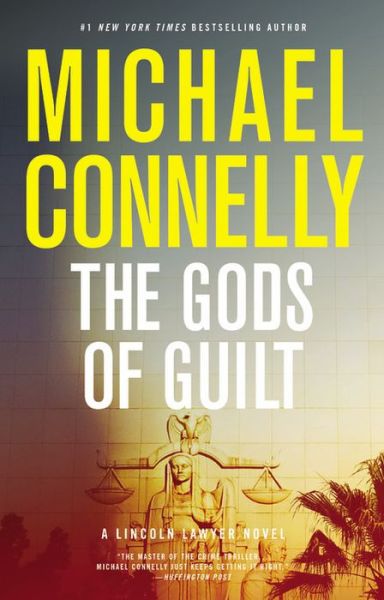
Mickey Haller is back at work in The Gods of Guilt, the fifth Lincoln Lawyer novel from Michael Connelly (also author of the Harry Bosch series). When Andre La Cosse requests Haller’s representation on murder charges, Haller approaches it with weary cynicism about his client’s probable guilt. But then he learns who referred La Cosse to him: the victim, a prostitute Haller represented for years, and whom he thought had left the game. It quickly becomes clear this case is bigger than it looks, involving the DEA and organized crime and stretching back nearly a decade, and that La Cosse may be that rare thing: innocent.
At stake for the Lincoln Lawyer: not only his client’s freedom, but also his relationship with his daughter, who has stopped speaking to him because of the results of an earlier case. The murdered prostitute, an old friend, plays an important role as well; Haller thought he’d saved her, only to find that he may have contributed to her death.
The Gods of Guilt is a gripping courtroom drama with strengths that Connelly’s fans will recognize: fully-wrought, likable characters, absorbing action, sympathetic relationships and the exploration of right and wrong and the gray areas in between. The title refers to Haller’s understanding of jury members: that they are gods sitting in judgment of guilt and innocence. These gods of guilt also sit in judgment of Haller’s own choices, and The Gods of Guilt reflects Connelly’s sensitive handling of morality and consequences.
This review originally ran in the December 17, 2013 issue of Shelf Awareness for Readers. To subscribe, click here, and you’ll receive two issues per week of book reviews and other bookish fun!
Filed under: book reviews | Tagged: mystery, sense of place, Shelf Awareness | Leave a comment »
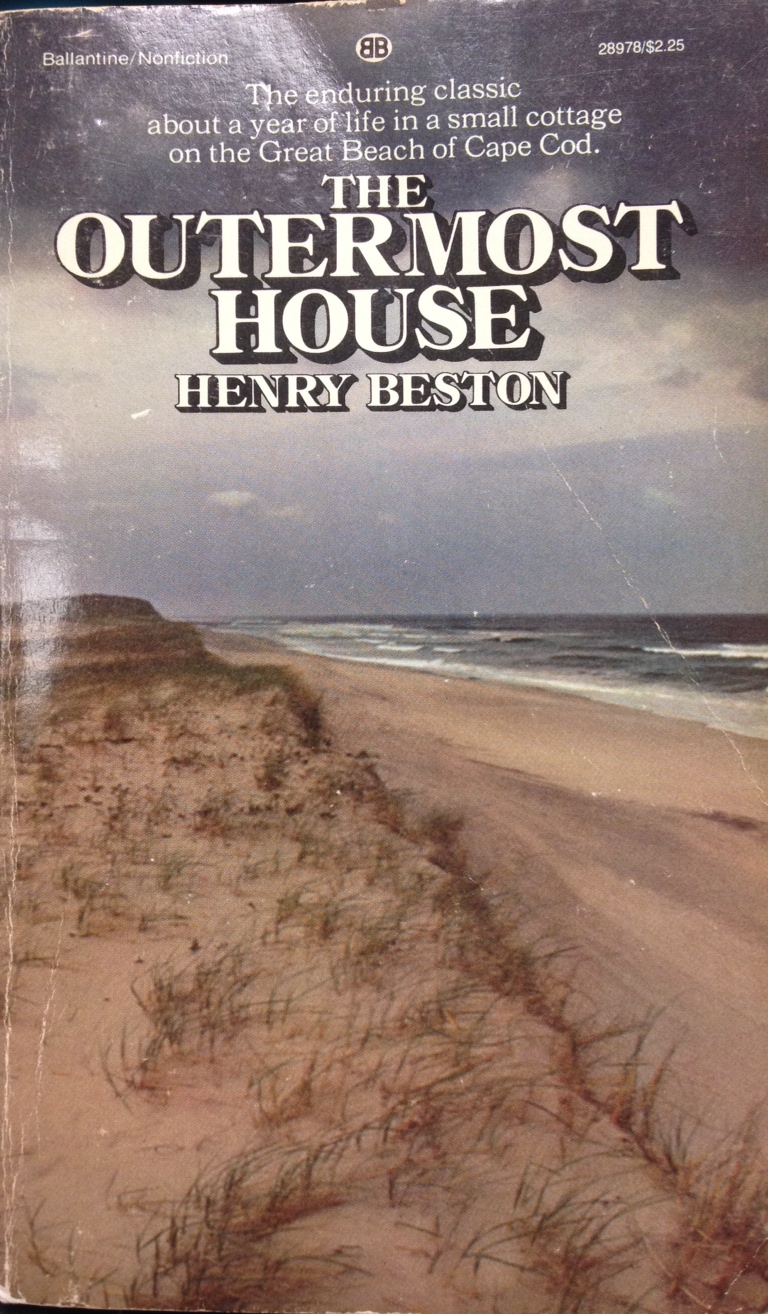 This book came to me recommended by Rachel Carson. I’m relatively sure that I came up with this title in my reading of On a Farther Shore, a recent biography of the author of Silent Spring. And by that convoluted path, here we are.
The first thing that struck me about The Outermost House, and certainly the most striking overall, is its similarity to Thoreau’s Walden. I have been describing it as “Walden Pond on Cape Cod.” Henry Beston wrote this book in 1928 about a year he spent, rather by accident, on the island; he had a small, humble cabin constructed on a remote dune for the purpose of visiting more often, and moved in in the fall, thinking he’d be there only a matter of weeks but staying a full year. (My edition also contains a new foreword from 1949.) That Thoreau would be well-known to Beston, his literary descendant of just a few decades in the same region, is clear, even if he weren’t mentioned by name around page 100. The similarities are many (more below), but I don’t mean that to take away from Beston’s work. I think Walden bears some imitation, and Cape Cod is different enough from the Concord locale to justify its own study.
The next thing that struck me is Beston’s comfortable observation that, although “man” has altered & damaged the world mightily, “Nature” is overall impervious, and Cape Cod in specific remains untouched. I congratulate Beston that in 1928 (and ’49) he was able to feel such confidence. Today, sadly, he would not.
Like Thoreau, Beston describes his home in some detail, for its details are hugely relevant to his year on the outer beach. Like Thoreau, he sees his fire as a friend and companion, a major force in withstanding solitude. And like Thoreau, he overstates that solitude, first writing of how very, very alone he was – how very rare was a human face in his year out there in the wild – and in the next breath, shamelessly, noting that he saw his Coast Guard buddies from up the beach almost daily, and walked into town for groceries once or twice a week. Having come to terms with this dissonance in Walden, I just smiled at it. Solitude is clearly relative, and he’s enjoyed far more than I have experimented with.
The Outermost House is perhaps most lyrical and pensive in its contemplation of bird life and waves, and equally thoughtful in its treatment of the Cape Cod locals and the solidarity they feel with wrecked vessels on its shore. He seems to refer to a “god,” although not by name; he is very concerned with “man”‘s relationship to Nature (always the capital N), and how sick we get when we disconnect. These themes are timeless and not dated at all.
For those who enjoyed Walden, this will undoubtedly be a great pleasure. If anything, Beston is less pretentious and self-congratulatory than Thoreau was. His descriptions of the migratory birds of Cape Cod’s seasons are lovely and, I imagine, useful for scientists & natural historians. It’s well-written, short (under 200 pages), and solid.
I will let Beston himself close, with a few of my favorite lines.
Glorious white birds in the blue October heights over the solemn unrest of ocean – their passing was more than music, and from their wings descended the old loveliness of earth which both affirms and heals.
…today’s civilization is full of people who have not the slightest notion of the character or the poetry of night, who have never even seen night. Yet to live thus, to know only artificial night, is as absurd and evil as to know only artificial day.
Filed under: book reviews | Tagged: creative nonfiction, memoir, nature, nonfiction, sense of place | 4 Comments »

Thanks to Rose City Reader for hosting this meme. To participate, share the first line or two of the book you are currently reading and, if you feel so moved, let us know what your first impressions were based on that first line.
Wake defines itself quickly (on the back cover as well as preceding the title page):
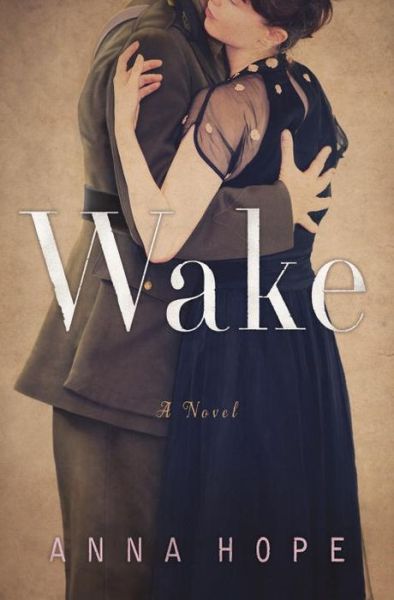
Wake: 1) Emerge or cause to emerge from sleep. 2) Ritual for the dead. 3) Consequence or aftermath.
And I think that dictionary reference is a very fine, succinct explanation of this title for a novel about three English women struggling to deal with the repercussions of World War I, as they prepare to “celebrate” (or not) the two-year anniversary of Armistice Day. All three definitions will come into play.
Don’t worry, I still have the opening lines here for you:
Three soldiers emerge from their barracks in Arras, northern France: a colonel, a sergeant, and a private. It is somewhere close to the middle of the night and bitterly cold.
As I said of last week’s book beginning: lots of atmosphere.
This quotation comes from an uncorrected advance proof and is subject to change.
Filed under: book beginnings | Tagged: historical fiction | Leave a comment »
Sean Strub’s earnest, evocative memoir of political activism, coming out and the AIDS epidemic will appeal to diverse readers.
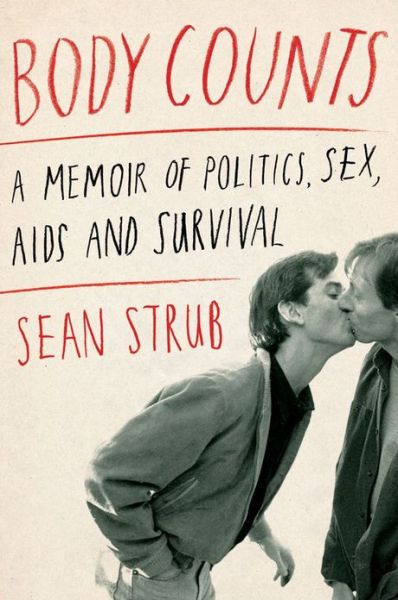
Seventeen-year-old Sean Strub left Iowa City in 1976 to attend Georgetown University and–more importantly for his future–to become an elevator operator at the Capitol Building. He worked to meet as many powerful figures as possible, with his own political career in mind, yet he was haunted by a secret he feared would make him unelectable: he was attracted to men.
Three years later, the colorful, growing gay community of New York City encouraged the aspiring politico to begin to explore his own sexuality and acknowledge it as a permanent feature in his life. As an increasingly “out” gay man, he shifted his focus away from the idea of running for office and became a committed activist in the pursuit of gay rights. Strub’s second passion and skill was for entrepreneurship, and he eventually started up an impressive number of companies, including direct-mail ventures and publications that supported his causes.
In the early 1980s, “gay cancer,” eventually known as AIDS, was suddenly everywhere. Strub couldn’t attend every funeral and memorial service, he writes, but he always made sickbed visits; sometimes he walked the halls of a hospital without a specific friend in mind, reading names on rooms, sure he’d find people who needed him.
Strub had known he was HIV-positive since 1985, when he was given a prognosis of “maybe” two years, but his partner Michael died with no warning, not even getting sick first. The need for AIDS activism to push for quicker access to new drugs and fight discrimination naturally dominated Strub’s attention in the years following his diagnosis and Michael’s death.
In Body Counts, Strub relates the joys and struggles of learning self-love, political aspirations and disillusions, activism and relationships with countless men and women he loves, with cameo appearances by Tennessee Williams, Bobby Kennedy, Gore Vidal and Bill Clinton (among others). Body Counts is a powerfully moving personal memoir with the added value of a fine and feeling primer on the history of gay culture and AIDS in the United States. Strub’s subject matter could have been morbidly tragic, but he retains a sense of humor and celebration, honoring the dead with love and hope. Now an AIDS survivor for nearly 30 years, Strub notes that he is on his way to matching, in same-sex weddings, the number of funerals he attended in the 1980s and ’90s.
This review originally ran in the December 13, 2013 issue of Shelf Awareness for the Book Trade. To subscribe, click here.
Filed under: book reviews | Tagged: creative nonfiction, history, LGBTQ, memoir, nonfiction, Shelf Awareness | Leave a comment »
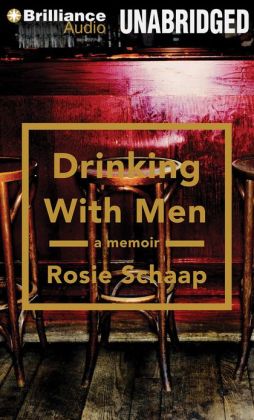 I picked up this memoir for what I’m sure are obvious reasons. The title alone appeals to me: I am, ahem, a drinker, and a tomboy who’s been most commonly and comfortably in the company of men. Read a blurb, and find out further that Rosie Schaap is a fan of hanging out in bars, which puts her generally in male society; I’m right there with her.
And I was immediately charmed at this audiobook, read by the author in her somewhat gravelly (drinker’s, smoker’s) voice. She opens the introduction by calling herself a serial monogamist when it comes to bars: she becomes a regular at one for a year or years, then moves to another to which she will also be faithful for the medium-long-term. This memoir is organized by bars where she achieved “regularhood” (a status that she points out is even more overwhelmingly male-dominated than bar-drinker-hood generally), and covers the rest of her life – relationships, school, careers, living arrangements – as it relates to the bar, mostly. Her brother, parents, and husband get sketched rather more lightly than do her drinking buddies, for example. Her bars are located in New York City, small-town Vermont, Dublin and Montreal – but mostly New York City, her hometown and persistent home.
As expected, and as her first few lines indicated, I felt a real connection with Rosie. (I consider us to be on a first-name basis, as we would be on our barstools.) Her inexplicable (to some) comfort going to bars alone as a woman struck a note with me: I share that comfort (at the right bar, of course), and confirm her observation that this is rare behavior. I certainly agree that the definition of the best sort of bar is where one can go alone while female – and even read a book, or carry a conversation without shouting. (See here.) I also agree that these bars can come in different shapes and sizes (well, small is the ideal size), and that they overlap, but not entirely coincide, with dive bars. I often felt as if she were speaking right to me – like this is a long-lost sister I’m listening to. How lovely. We should get a drink sometime.
She did lose me for a little while mid-way, when she got enthused about religion and becoming a minister. I couldn’t follow her there; we got separated; and I worried that we had taken permanently distinct roads. But she sort of let that part of her story lapse; I don’t know if that part of her life lapsed, too, but I was certainly okay with the book taking that turn. Personal preference, there.
Rosie’s life has taken a few turns that I think will be familiar to many of us: youthful rebellion, difficulty determining What She Would Do With Her Life, and a troubled marriage. She experience 9/11 as a New Yorker, and lost her father the same season. She moved away a few times, and returned. And she has had some very cool relationships with some very cool bars. I felt very close to her as I experienced what she had written, and as she read it aloud for me. I think that has to be one of the aims of memoir.
As an aside, I had a fun “aha!” moment: as Rosie talked to me, I had a niggling feeling of deja vu. I recalled a story I’d read somewhere, about a young woman in a bar wearing an ugly hat, who was approached by an intimidating biker who wanted to buy her hat for his friend. It was a good story, and I was reminded of it. Sure enough, just as I was wondering, she told it. I figured out that I’d read it in the New York Times Magazine, courtesy of my mother. (You can read it here.)
Schaap’s writing style sort of disappeared for me, which I mean in a good way: that is, that there was no discernible style. It just felt like she was telling her story. I would have enjoyed ten times this length of the same – although on the other hand, she seems to have shared exactly the right amount.
If you’re at all interested in bar culture or women in a men’s world – I recommend Rosie’s story told in her own voice.
Filed under: book reviews | Tagged: audio, booze, creative nonfiction, gender, memoir, nonfiction | Leave a comment »
Thanks to Rose City Reader for hosting this meme. To participate, share the first line or two of the book you are currently reading and, if you feel so moved, let us know what your first impressions were based on that first line.
Oh my. You guys, I just started the most amazing book. For instance – check out these very first lines.

This book was born of a murder, a murder I committed. It was not my first, but I have some hope it will be my last. Since I never set out to kill – quite the contrary – I suppose I am guilty only of negligent homicide, or possibly mere criminal negligence. Still, I feel deeply culpable. All I can do is plead ignorance, and say that this particular death was a life-changing event for me (as well, of course, for my victim). Possibly, since you have this book in your hands, the tragedy will save a few lives I will never know.
The deceased in this case was a twelve-year-old guest, a permanent resident, really, of my household. She was a lovely, graceful creature about five feet tall, and a particular favorite of my family. Kam Kwat she would have been called in Cantonese, had she lived in her native land. As it was, since we live just outside Washington, D.C., we knew her as a kumquat tree.
I have quoted at greater-than-usual length because I wanted you to be able to appreciate Kassinger’s clever ruse here. Wait, don’t go! Yes, it’s a book about plants – the science behind plants, even – but it is the least dry thing you can imagine; I think the conversational tone is well displayed here, and it only gets better. I am entranced. Stay tuned!
This quotation comes from an uncorrected advance proof and is subject to change.
Filed under: book beginnings | Tagged: botany, nonfiction, science | Leave a comment »
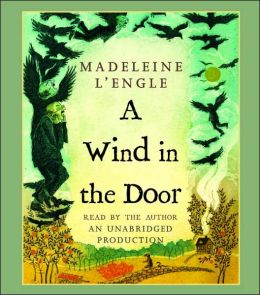 The second book in L’Engle’s Time Quintet series stars the same quirky, likeable Murry family members: chiefly Meg, along with her brother Charles Wallace; and to a lesser extent, their mother and twin brothers. (Their father is again away in this story. I wonder if he’ll come to play a stronger role in later books.) Calvin, friend of the family and Meg’s tentative romantic interest, plays a lead role alongside Meg. Where their task in A Wrinkle in Time was to save the Murry father, this time it’s Charles Wallace himself who’s in danger: there’s something wrong with his mitochondria, and the farandolae who dwell therein.
As A Wrinkle in Time used outside supernatural influences – Mrs. Whatsit, Mrs. Who, and Mrs. Which – to direct Meg and Charles’s actions, A Wind in the Door features a Teacher named Blajeny and a cherubim named Proginoskes (Progo for short). Yes, cherubim is generally considered to be plural, but Proginoskes is “practically plural” – he is at first mistaken for a drive of dragons by Charles Wallace.
To save Charles Wallace from the rebellion of his farandolae (and you can look it up: while farandolae are fictional, mitochondria are as real as the tesseract that starred in A Wrinkle in Time), Meg and Calvin, along with Blajeny and Progo, must become very very very small and get to know one of Charles Wallace’s farandolae intimately, going inside Charles Wallace to fix him up.
I enjoy the characters that L’Engle creates. I will say that her young people don’t always sound like young people – which is explained in Charles Wallace’s case because he is nothing like a normal young person (this book opens with him being constantly beat up at school for talking about mitochondria and the like); but I think Meg is supposed to represent a more approachable, normal-ish girl, and along with Calvin, Sandy and Dennis, she can be a little odd. But somehow, even as I note this, it doesn’t bother me. Realism is not a central dogma of this series; it is fantasy after all.
I love the science (even though it’s science fiction, and I suppose might confuse the young readers – and the not-so-young – as to what’s real; that’s a concern), and I love that L’Engle makes science interesting and relevant in a series starring a girl. That’s no small thing even today, but these books were published in the 1960’s, 70’s, and 80’s, and I think this deserves note and applause. That said, Meg is on the one hand a mathematical genius, and on the other a little whiny and reliant upon big strong Calvin. Perhaps that’s where the realism comes in.
With a few quibbles, I definitely did, again, enjoy this listen. It’s read by the author in a somewhat gravelly voice, and she does voices for her characters. I recommend the books, for readers of all ages (I am not much of a YA [young adult] reader, myself), and I recommend the audio. I’ll be continuing with the series: next up is Many Waters.
Filed under: book reviews | Tagged: audio, children's/YA, fantasy, sci fi | 4 Comments »


