Following Wednesday’s review of I Am Pilgrim, here’s Terry Hayes: On Breadth of Scope.
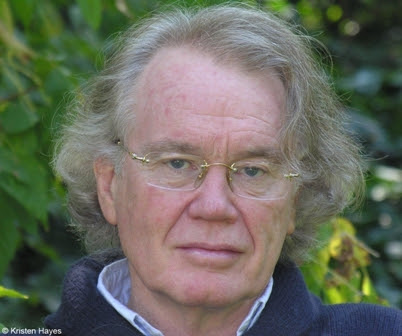
Terry Hayes was born in Brighton, England, migrated to Australia as a child, was based in New York as foreign correspondent at 21, and produced a current affairs radio program before moving to Los Angeles to work as a screenwriter. He has written numerous screenplays and mini-series, and has received two international Emmy nominations. His credits have included Payback with Mel Gibson, From Hell with Johnny Depp and Vertical Limit with Chris O’Donnell. I Am Pilgrim is his first novel. He lives in Switzerland with his wife, Kristen, and their four children.
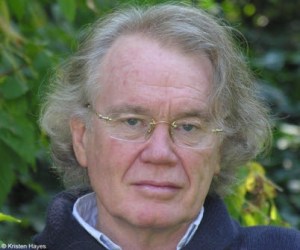
photo: Kristen Hayes
I Am Pilgrim travels through many complex spheres in numerous countries. How much research was required for this book? How did you go about it, and did you enjoy that part of the creative process?
The short answer is: an enormous amount of research. When I started I had no idea just how challenging it would be–which was probably just as well, otherwise I might not have even started. I did have a couple of advantages. With the exception of Afghanistan and Saudi Arabia, I had either lived in, or visited for extended periods, all of the countries where the plot takes place. The race against time criss-crosses continents, and ranges from the Lower East Side of Manhattan to Damascus in Syria, from Santorini in the Greek islands to a Bulgarian border post. My own wanderings lessened the research load and, I hope, allowed me to bring the novelist’s eye for detail to those locales. The second advantage I had was that I had once been a journalist and foreign correspondent, so I am accustomed to efficient and focused research and interviews. I approached the material as if I was a journalist on assignment–I admitted to myself I had a lot to learn. The one thing that I found the most difficult was the science. The plot involves a lot of biological detail, and I wanted that to be as accurate as possible. When I was at high school, several of my science teachers told me that I was very lucky I was good at English and history! Still, I have an enormous curiosity and am happy to read and interview widely, so I eventually managed to wrestle that part of the subject to the ground.
In a practical sense, it would not have been possible without the Internet. Such a vast array of information, so readily accessible, I believe is changing the nature of writing, especially of something like an international spy thriller. You can find out exactly how public beheadings are conducted in Saudi Arabia, how much a gene sequencing machine costs on eBay, or many of the latest tradecraft habits of covert intelligence agents operating in hostile territory. It gives an enormous grounding to the rest of the research. I did enjoy it, most of the time. I am lucky to have an overwhelming curiosity and a pretty good memory, so the research, whether it was about the Islamic faith or the design of a Roman coliseum called the “Theatre of Death,” was really a great experience. Of course, I worried that I had made a mistake–which I am sure I probably have–but I reminded myself that the book was not a documentary. It was, beyond everything else, a work of fiction.
You have created an extraordinarily intricate plot, with lots of characters and lots of detail. Can you tell us a little about the note-taking, outlining or whatever method you used to keep everything straight?
This is the type of book I have always loved–big, epic stories that you can really lose yourself in. The ones that affect you in a very emotional way and also, hopefully, teach you something on the journey. That was the sort of novel I tried to write. Part of that ambition was to interweave a major plot with a number of subplots and somehow try to make it all “of one piece.” Basically, how I did it was to keep telling myself the story. Or, better still, telling it to my wife on long car rides! I think, by the end, she was glad to hear the last of Pilgrim. Of course, you have to have some major stepping stones, or turning points, along the way. The biggest of these was the ending. Whether it is a screenplay, a piece of journalism, or the novel–I have always had to know how it was going to finish. So, once I had an idea of the character and an ending, I could start to embellish it. “Okay,” I would ask myself. “Where do we meet him?” “Why is he there?” “What does he want, what is his objective?” On and on and on. Slowly, the blanks would start to get filled in, and in order to do that, you have to have Pilgrim–or whatever his real name is–interact with other people. It’s funny, but you don’t forget a good run of events in the story, or ideas of how to do it. Bad ideas don’t last a single sleep. Time after time, I would start at the beginning again and tell myself (or my long-suffering wife) the story. When the detail became too much, I started to make notes and, naturally, I had to do that while I was researching the more difficult sections of the story–the things like the biology of viruses or the exact methods used in waterboarding. As the story grew, I started to use what people in movies call “beat-sheets”–one-line notes detailing each “beat” of the story, each significant development of the plot or important moment for a character. Toward the end, the problem became finding the exact research note I knew I had made months earlier. “I know I wrote that down somewhere….”
In the past, you have written in a number of formats, including screenplays, television and journalism. How was writing this novel familiar, and in what ways was it new and challenging?
Well, it is all story-telling. Whether it is a feature article for a newspaper or a screenplay for an action movie, you are always trying to take the reader–or viewer–through a sequence of steps, or events, which are believable and arresting. There is always that struggle to find the right word, the memorable phrase, the clearest way of expressing something. So those things were extremely familiar. The major difference is that in writing movies or long-form TV, the script is part of a manufacturing process–it is a step along the way to creating the finished episode or movie. In a novel, it is the finished article. So the pressure on crafting the words and paragraphs is that much greater. Sometimes a little paralysing! The other major difference is that in movies or TV you can’t tell the audience what a character is thinking–you have to rely on the actor to try and convey that. Of course, in a novel those internal thought processes are easily conveyed, so it is much easier to explain why a character follows a certain course of action. After years of writing for the screen, I found that completely liberating. I loved having the ability to say in the novel “He thought such and such… so he did this and this.” Because you can’t do those internal thoughts in a screenplay, I always think writing a movie is like fighting with one hand tied behind your back: it’s a real skill, but it sure makes things hard.
Pilgrim, like many of fiction’s most compelling heroes, struggles with his own past and demons. If anything he becomes more human, and less perfect, as the novel develops. Did he develop this way for you, too?
Yes, he sure did. I think it’s a little like life itself–the more you get to know somebody, the more you learn about their flaws and the wounds they carry. It doesn’t mean you like them any less; to the contrary, you often end up admiring them even more. So it was with Pilgrim. Most of us, I think, are damaged in some way, but Pilgrim–as you point out, like so many heroes in fiction–is more damaged than most. On one level, the novel is about him confronting and dealing with those issues and demons from his past–a different sort of pilgrimage, I guess. Despite his failings, despite his flaws, he never gives in. He knows that he has to endure an enormous amount of anguish and pain, but he finds the courage and resolve to see his mission through to the end. The fact that he is prepared, if necessary, to sacrifice himself in the pursuit of something far more important than himself makes him a true hero, in my mind. There seems to be a prevalent view, especially in movies, that heroes should have some sort of super-powers. I don’t agree. I think it is the very human things, faults and failings included, that make a true hero. Especially if he or she can overcome them and show us what great courage and commitment really mean.
And then there’s your antihero, the Saracen, who is Pilgrim’s genius-counterpart but approaching total evil. Do you think of them as two sides of the same coin?
They have so many things in common–especially an anguished childhood–that I certainly see them like that. If this were Star Wars, I would say one turned to the dark side, the other to the light. Although born on completely opposite sides of the earth, they both experienced the death of a parent in horrific circumstances, they are both extremely intelligent, have undertaken medical degrees, and are loners, complete outsiders in the world. They both go on a great journey, a pilgrimage, where the fate of people and nations hangs in the balance. At one stage Pilgrim describes his adversary as a “ghost”–spectral, hidden and barely glimpsed–but Pilgrim could just as easily be describing himself. These two men, who have spent all their lives living in the shadows–one hell-bent on cataclysmic revenge, the other a covert intelligence agent–move ever closer to each other. When they finally step out of the shadows and meet in a place called the Theatre of Death, their battle relies more on intelligence than it does on weapons. It is an epic struggle between two men trying to outsmart each other. In order to do that, they have to know an enormous amount about each other. I have always thought that, because of his own background and experiences, Pilgrim understands his adversary better than any man on earth.
What do you have in mind next? Avoiding spoilers, of course: is there room for a sequel here?
Well, in my fevered mind, Pilgrim was always the first part of a trilogy. On the last page of the last novel we discover what his real name is, and I don’t think it is giving away too much to say that he walks up the front steps of a house and we know that he has found safe harbor at last. As you can probably tell, I have the next two books outlined–which I had to do in order to set up a lot of things in the first novel that I would pay off in the later volumes. However, as I was not certain if I Am Pilgrim would meet with any success, I did not want to launch into writing the second volume if nobody had read the first! Therefore I am in the midst of writing a book tentatively called The Year of the Locust, which is another thriller, partly set in the intelligence world. It also involves “just over the horizon” science and pits a man and his wife against seemingly impossible odds. I like the story very much and, as much as is possible while wrestling with words every day, I am really enjoying it. I hope, when it is finished, other people will feel the same!
This interview originally ran on May 27, 2014 as a Shelf Awareness special issue. To subscribe, click here, and you’ll receive two issues per week of book reviews and other bookish fun!
Filed under: interviews | Tagged: authors, Maximum Shelf, Shelf Awareness | Leave a comment »







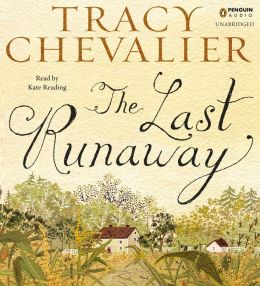 From the author of Girl with a Pearl Earring (which I read pre-blog, and loved), another historical novel of women’s lives. I recently tried reading Chevalier’s The Lady and the Unicorn, but I found I couldn’t appreciate it. No such problem with The Last Runaway.