movie: The Secret to a Happy Ending (2009)

From the band’s website:

This is a film about the redemptive power of rock and roll; it’s about the American South, where rock was born; it’s about a band straddling the borders of rock, punk and country; it’s about making art, making love and making a living; it’s about the Drive-By Truckers. This film documents the band and their fans as they explore tales of human weakness and redemption. With unparalleled access, this documentary encompasses three critical years of touring and recording as the band struggles to overcome trauma and survives a near breakup, in a persistent search for a happy ending.

secret to a happy endingThe Drive-by Truckers are one of my favorite bands and one that has had an impact on my life and how I look at my world. It is a love I share with the Husband. We saw this movie in a theatre when it came out to town, back in Houston. We bought a copy of it on DVD, too, and now I am in this writing class and working on a long essay about the Truckers and what they mean to me; so as research, we watched the movie again at home.

Obviously and basically, I love the movie because it is a distillation of the band. The filmmaker was lucky to have the Truckers’ cooperation, and followed them to several shows, recording live footage; and interviewed all the band members repeatedly, as well as some of their families. Cultural authorities like a university professor (and obvious DBT fan) and music writer get screen time as well. This is a fan’s documentary, and I think fans can’t help but be pleased by it. Non-fans are liable to become fans… but then, I’m biased.

I like that the movie captures a moment in the life span of this long-lived band, reviewing the early years (including the band Adam’s House Cat, where the two lead men, Patterson Hood and Mike Cooley, originally played together) and then getting into a few difficult years, when bassist Shonna Tucker and guitarist/singer/songwriter Jason Isbell divorced, and Isbell left the band. (He’s had an impressive solo career since. Look him up.) One of the things I’ve come to love about DBT is how many layers there are to love, investigate, and appreciate – like the people involved. The story of Shonna and Isbell breaking up is maybe none of my business; but you can bet all the band’s fans followed it and had feelings about it, nonetheless. For the record, I blame no one and wish them both the best.

It’s a hell of a good movie, and even if you’re not a Truckers fan, I think it’s a fine documentary about rock-and-roll (and other things too). It pulls my heartstrings.


Rating: 9 songs.

I hope this is not too off topic, but I want to share a short piece that didn’t make it into my longer essay about the Truckers and their impact on me.

I have a large tattoo covering my right arm and shoulder: a tree and its surroundings and inhabitants: fallen logs, grasses and flowers and mushrooms, a bunny rabbit, a snake, a squirrel, a turtle, a weasel, a fat yellow songbird. On the front of my shoulder, the tree’s branches part around a Cooley bird. Around the back of my shoulder, wrapping onto my back, a black owl with red eyes flies away, departing. It’s the same owl that my husband Chris has tattooed on his left bicep, flying above a leafless tree on a burnt yellow desert and under a spooky moon that looks down with knowing eyes and a slight smirk.

These tattoos borrow images from Wes Freed, a Virginia-based artist who has drawn all the art for all the Drive-by Truckers’ albums, posters, website art, promotional material, backdrops, and etc. since time immemorial (or at least the Southern Rock Opera album of 2004). He is the band’s brand. In a documentary about the Truckers called The Secret to a Happy Ending (whose cover art he also created), he says: “It’s always about the music. The music is the most important thing. But there’s so much going on with the records. It’s cool to be able to have the opportunity to illustrate the songs. That’s cool.” Wes Freed. I love that his named is a sentence: Wes Freed; or else a description: Wes, Freed. And the songs are themselves filled with dark and toothsome images. I did my own (very poor) copy of Freed’s illustration of “The Wig He Made Her Wear,” a song based on true current events in which a Tennessee preacher’s wife kills her husband: in court, her lawyers then displayed “them high-heeled shoes and that wig he made her wear,” as evidence of how abused she had been before she just snapped. Freed portrays a woman in a see-through negligee and high-heeled pumps, blue hair piled and stacked high, holding a shotgun whose smoke swirls around to caress her against an enormous yellow moon. A monkey in a fez cavorts behind her. I’ve looked and looked for Freed’s illustration of this song on the internet, but it seems to have disappeared; all I have is my poor imitation.

Thanks for reading.

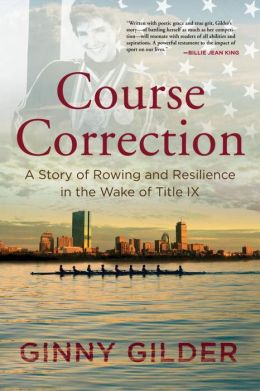
book beginnings on Friday: Course Correction: A Story of Rowing and Resilience in the Wake of Title IX by Ginny Gilder

Thanks to Rose City Reader for hosting this meme. To participate, share the first line or two of the book you are currently reading and, if you feel so moved, let us know what your first impressions were based on that first line.

course

I’ve only just begun this one, but it’s good from the get-go. How about this opening paragraph:

A well-rowed shell is art in motion. It moves smoothly. Stroke after stroke, oars drop in the water and come out together. The rowers’ bodies swing back and forth in sync, performing the same motion of legs, backs, arms at the same instant; no extraneous shrug of shoulders, flick of the wrist, turn of the head, shift of the seat. The result – perfectly spaced swirls of water trailing the shell’s wake – offers the only visual cue of the speed these on-water dancers live to create.

I’m a sucker for poetic praise of athleticism, and it looks like this story has a few other points in its favor, too. Stay tuned.

This quotation comes from an uncorrected advance proof and is subject to change.

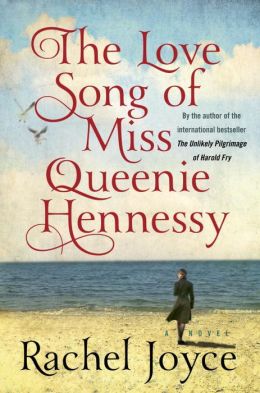
The Love Song of Miss Queenie Hennessy by Rachel Joyce

A companion to The Unlikely Pilgrimage of Harold Fry, and every bit as affecting, sweet and sad.

love song

Rachel Joyce’s The Unlikely Pilgrimage of Harold Fry won many fans with its bumbling but likable protagonist and his improbable journey across England and through his own troubled life. Harold appears off-screen in The Love Song of Miss Queenie Hennessey, in which Queenie replies to the postcards he sent her in Pilgrimage. Readers will be delighted to rediscover the action of the first book, from a very different perspective and with considerable added detail on Queenie’s side. Those considering Pilgrimage should definitely start there, as Love Song comprises one big spoiler. However, it’s not necessary to have read the first to enjoy this second novel.

Love Song begins when Queenie receives Harold’s first postcard. She has written to him from hospice care, sharing the news of her impending death. Harold sets out to visit, asking her to await his arrival. Queenie is startled and alarmed. She has kept an old secret from Harold that she had intended to take with her; she now decides she needs to come clean.

Joyce alternates among three timelines: in real time, as Queenie waits for Harold while composing a long letter of explanation; their separation 20 years ago, when she fled life’s complications; and their original meeting and developing friendship. While the present-day setting is inarguably dour, the action in all three stories is fresh, compelling and deeply emotional, and Queenie’s fellow residents create a charming little world of their own. Just as in Pilgrimage, a major revelation at the end amplifies the impact of an already powerful book.


This review originally ran in the March 10, 2015 issue of Shelf Awareness for Readers. To subscribe, click here, and you’ll receive two issues per week of book reviews and other bookish fun!


Rating: 8 painted nails.

Tug-of-War by Judith Somborac

This touching story plainly told provides a captivating view of wartime Serbia, its tensions, and its effects on ordinary working people.

tug

Judith Somborac’s Tug-of-War follows the fictional experience of one young woman’s coming-of-age in World War II Serbia. Teenage Miriana sees upheavals to the size and shape of her household, grasps for fortitude, and glimpses hints of love. Her war years are stressful but formative, and the resulting tale is compelling and heartfelt.

…Click here to read the full review.


This review was published on March 3, 2015 by ForeWord Reviews.

growing


My rating: 6 Christmases.

Maximum Shelf author interview: Kate Bolick

Following yesterday’s review of Spinster, here’s Kate Bolick: The Single Woman as a Cultural Archetype.


Kate Bolick is a contributing editor to the Atlantic, and a freelance writer for Elle, the New York Times and the Wall Street Journal, among other publications. She’s also host of “Touchstones at The Mount,” an annual literary interview series at Edith Wharton’s country estate in Lenox, Mass. Previously, she was executive editor of Domino, and a columnist for the Boston Globe Ideas section. She lives in Brooklyn, N.Y. Her memoir is Spinster: Making a Life of One’s Own.

photo credit: Willy Somma

photo credit: Willy Somma

Clearly this book was a lifetime in the making. But how long did you purposefully work on it? Did the idea of it change during that time?

Spinster began as a bolt of excitement in 2000, when I first came across 19th-century journalist and novelist Neith Boyce’s 1898 Vogue column, “The Bachelor Girl,” about her decision to never marry. Until then, I was completely unaware that the public conversation around singledom had such a long history, and after that I couldn’t stop thinking about the single woman as a cultural archetype, and collecting examples.

After a few years, I sat down and tried to write a book about how Neith and two of her more-or-less contemporaries had influenced my thinking about marriage vs. not-marriage. It was a total and complete failure. I had no idea how to turn my fascination with their unconventional lives into a compelling narrative, and I was too young to have any insight into or personal perspective on the topic, or even know how to ask the right questions. I put the project aside, but never stopped thinking about it.

Then, in 2011, the Atlantic asked me to write a cover story about the changing face of contemporary marriage, and as I did my reporting and research I could almost physically feel the ghosts of those women from the past perched on my shoulder, taking in everything I learned. After the article came out, I thought maybe I was old enough now to give that failed book another go. In early 2012 I signed a deal with Crown.

From the start, I knew that I’d use my own coming-of-age as an adult as the narrative arc, and feature the lives of my “awakeners” as “love stories”–women I’d found, fallen for, then moved on from. In this way I’d be able to lead the reader through a series of historical and intellectual ideas that might feel dry on their own. Actually plotting that out, though, was maddeningly difficult, and more than a few times I thought I had to abandon that approach and try another.

What started as a fascination with certain lives deepened with research into a more comprehensive understanding of the single woman’s place in the social order, and how it’s changed across time. The specific economic, political and cultural conditions of each era determine who the single woman can be, and how she’ll be perceived.

How was this writing process different from the different kinds of writing you’d done before?

The process of writing this book was so different from anything I’ve ever done that for months and months I was near-paralyzed with doubt about whether I could do it. Length alone was a challenge–I had to unlearn journalistic tics like concision and speed, and give myself over to the space a book calls for and demands. The primary challenge was learning how to create a narrative; what compels a reader to keep wanting to turn the page? Weaving my own story in with the lives of others in a way that didn’t feel thunderingly obvious and clunky was likewise vexing. I also struggled with tone. I’ve written plenty of literary criticism, personal essays, interviews and biographical articles–how could I find a voice that would be capacious enough to let all these disparate forms coexist under the same roof?

What do you most want people to know about you that’s not in Spinster?

The book is officially a memoir, but I had to leave out acres of thoughts and experiences in order to keep the emphasis on what matters: the lives of the women I write about; the history of single women in general. Which is to say, the book is only one slice of me. Dear reader, I contain multitudes!

Could there be a sixth awakener for you, who you just haven’t found yet?

Absolutely. In fact, by the time I started writing the book I’d accumulated quite a few awakeners, which I decided to cut down to a more manageable six–the ones who’d influenced me most directly. After I finished the first draft, I realized six was one too many, and cut another. I expect that for the rest of my life I’ll keep finding new awakeners. At least, I hope I do.

Are you prepared to be an awakener yourself?

Hah! Well, given that finding an awakener is such a private, intimate process, and one that the awakener her/himself has no idea is taking place, I suppose I could handle it. In this way, I’m much better suited to being an awakener than to being a heroine, who needs to be dashing and daring. I’m not very dashing or daring.

What are you working on next?

Wait, you mean there’s life beyond Spinster?! Heh. I love the material too much to even want to think about anything else just yet. After two years holed away writing, I’m excited to finally be back in the world, talking about what I learned.


This interview originally ran on March 4, 2015 as a Shelf Awareness special issue. To subscribe, click here, and you’ll receive two issues per week of book reviews and other bookish fun!

Maximum Shelf: Spinster: Making a Life of One’s Own by Kate Bolick

Maximum Shelf is the weekly Shelf Awareness feature focusing on an upcoming title we love and believe will be a great handselling opportunity for booksellers everywhere. The features are written by our editors and reviewers and the publisher has helped support the issue.

This review was published by Shelf Awareness on March 4, 2015.


spinster

“Whom to marry, and when will it happen–these two questions define every woman’s existence, regardless of where she was raised or what religion she does or doesn’t practice… even if the answers are nobody and never.” Kate Bolick explores her own answer to the classic questions, arduously and over the years of her own life; she examines their place in society, and the way other women she admires have answered them, mining the lives of female writers who have affected her. The resulting book, Spinster: Making a Life of One’s Own, is less a polemic than one might expect, and more a thoughtful, generous consideration of our world, and a woman’s best options to honor herself.

Bolick begins with her family background, her loving parents and brother, and her home in Newburyport, Mass. In a personal and family tradition of talking, reading, discussing and writing, Bolick naturally gravitates toward literary models for the life she hopes to build. After her mother’s death, she seeks to re-create the conversations they used to share, “not with other, real, live women… but real, dead women, whom I could sidle up to shyly and get to know slowly, through the works they left behind and those written about them.” In the opening pages, she introduces her five “awakeners,” women of the written word who have offered her lessons about how to live as a woman, married or not. These awakeners are an essayist, a columnist, a poet, a novelist and a social visionary (although each, of course, crosses over and between those categories).

Maeve Brennan (1917-1993), essayist at the New Yorker, offers a loving picture of single city life and an admirable sense of style. She will also come to provide a frightening negative version of the stereotypical single woman’s final days. Neith Boyce (1872-1951), columnist at Vogue and representative of the Bachelor Girl, supplies a glimpse into the life of working women, a novel possibility in her time; although as Bolick points out, the chance of sex or sexiness in the workplace presents a “negotiation [that] continues today.” Edna St. Vincent Millay (1892-1950), poet and legendary lover, brings revelations. “Her legacy wasn’t recklessness, but a fierce individualism that even now evades our grasp.”

Edith Wharton (1862-1937), novelist and grand dame (“society’s favorite version of the single woman”), built herself a house, the Mount, with two rooms of her own, a public “boudoir” for entertaining and a spare bedroom in which to do her writing. She represents a model for the prioritization of one’s work, and also for the work Bolick reluctantly takes on in editing a luxury decorating magazine: rather than mere frivolity, this focus offers another opportunity to get to know herself. Charlotte Perkins Gilman (1860-1935), social visionary and prolific writer (of The Yellow Wallpaper, for example), inspires self-improvement and a different way to go about making a home.

Bolick tells her own story chronologically. As she discovers each of her five awakeners (a term borrowed from Wharton) and the lessons she finds with them, she changes jobs, moves from Newburyport to Boston to New York City, and dates and cohabitates with different men (referred to only by the first letter of their first names). She started using the word “spinster” in her journals in her early 20s, and always considered it a positive appellation, one posing possibility. Her evolving interest in spinsterhood is tracked by all of these layered journeys, the lives and writings of the awakeners interspersed with her own. Along the way, she also makes brief calls on Virginia Woolf, Mary McCarthy, Anne Sexton, Annie Dillard and others. Bolick acknowledges that the subjects of her investigations are all like her: straight white women of New England; diversity is not her focus.

Spinster‘s tone is charming, by turns confessional, collegial and academic. Bolick’s erudition is leavened by a playful, casual tone, even as she references Shakespeare and the Lernaean hydra in a single page. Not only a memoir, Spinster employs research into the lives of the five profiled writers, as well as into history and sexual politics. As the narrator of this voyage, Bolick is amiable, credible and fun to know.

Interestingly, all five of the awakeners eventually married, in some cases more than once. While it thoughtfully contemplates the possibilities for and arguments in favor of women remaining unmarried, Spinster is not a mandate. Bolick does not insist upon spinsterhood for her readers. Rather, she offers assistance in “holding on to that in you which is independent and self-sufficient,” whether single, happily or unhappily coupled. The word “spinster,” and all it entails–and Bolick makes great strides toward the proud and pleased application of this embattled historical term–is thus a tool for our individual contentedness.

Entertaining, wise and compassionate, Spinster is the result of Bolick’s lifetime of meditations, ruminations, angst and joy; of research, reading and appreciation of five intriguing lives; of dating, moving in with someone and time spent alone. While allowing that the coupled lifestyle is fine for some, Bolick’s message for readers is a celebration of the delights, challenges, and opportunities of remaining single.


Rating: 8 women.

Come back tomorrow for my interview with Bolick.

Untangling the Knot: Queer Voices on Marriage, Relationships & Identity, edited by Carter Sickels

An incisive and enlightening examination of same-sex marriage within the wider context of LGBTQ needs.

untangling

Untangling the Knot: Queer Voices on Marriage, Relationships and Identity assembles pieces from diverse contributors, college professors and blue-collar workers, some established writers and some never before published. Edited by Carter Sickels (The Evening Hour), these extremely sharp essays offer a startling array of perspectives on the fight for same-sex marriage in the United States, rendering a deceptively simple concept–that the needs of the LGBTQ community range far beyond marriage–fully and feelingly. Published as the Supreme Court agrees to hear arguments about same-sex marriage on a nationwide level, Untangling the Knot is profoundly eye opening, even for readers well informed on the subject.

Essays cover the reasons why marriage is important to some members of LGBTQ communities, addressing questions of medical decision-making, finances and insurance, child rearing, equality. Others protest what Ben Anderson-Nathe calls a “rhetoric of sameness”: the argument for marriage rights based on the idea that queer families are just like straight ones. Jeanne Cordova illustrates why choosing a single issue is damning for a movement. Joseph Nicholas DeFilippis writes that the continuing assumption that marriage is the highest form of family does a disservice bigger than the queer community, affecting straight people as well. Several contributors argue against legal rights, benefits and protections being tied to marriage at all. Some suggest better uses for organizational resources: homelessness, health care, anti-discrimination, and aid to trans people, the poor and queer people of color.

With Sickels’s synthesizing introduction, these sympathetic, well-informed essays show that the fight for same-sex marriage is deeply complex and only one issue in the fight for inclusiveness and equality.


This review originally ran in the March 3, 2015 issue of Shelf Awareness for Readers. To subscribe, click here, and you’ll receive two issues per week of book reviews and other bookish fun!


Rating: 8 nontraditional arrangements.

National Theatre Live presents Treasure Island (2015)

The Pickford Film Center regularly offers this format: live-taped broadcasts from the National Theatre in London, of plays performed on the stage there. I was originally skeptical about the concept; would it translate? The answer is yes, and I will be seeking out more.

treasureI was interested because I have fairly recently read (listened to) Robert Louis Stevenson’s Treasure Island. This adaptation for the stage by Bryony Lavery was astoundingly good – on which more to come; this is mostly a rave review – but I don’t know why I’m always so surprised at how much they change from the original. (This is why they call it an ‘adaptation.’ I know the compression/acceleration is necessary, but I’m always taken aback and disappointed. When will I learn?) In this case, most notably from the start: Jim is parented not by his mother but by a grandmother, both of his parents being dead; and Jim starts out as a gender-bending youth, and then becomes clearly a girl. The former, the grandmother for the mother, remains inexplicable to me. She provided some comic relief; maybe the mother from the original, rather a serious, even dour character, was deemed too sober. But I didn’t find the grandmother so much better as to justify making the change.

Jim as a girl, though, was totally amusing and fun, and provided another element. She’s every bit as boyish as the Jim we know and love; it is mainly just a poke at the original, and an inclusion. I dug it. And the gender-bending confusion here and there is good fun. Maybe it’s strange, that the apparently huge change of the protagonist’s sex bothers me less than the substitution of one female relative for another, but there it is.

This format, of stage-on-film? Completely outstanding. I loved that it captured the best of both worlds: the theatricality of the stage with the informality, convenience, and affordability of the big screen. The music & sound effects were great. And the set! My word, this is the finest set I’ve ever seen onstage: the stage itself was round, and the set lifted up from a flat to a multi-story, and also rotated on demand, so that there was no need for darkened figures hurrying to replace scenery while the audience was distracted: they simply turned the stage around, the actors meanwhile performing in our view, and changed what was behind (or took it underground to change it there). Transitions were perfectly seamless, adding to the drama rather than taking away from the momentum of the play, because there was such a sense of movement, of action. I am blown away.

Jim herself, portrayed by Patsy Ferran, was possibly even more astounding than the astounding set. She was delightfully expressive and sort of puckish, and pulled off that gender confusion early on. Lavery’s adaptation keeps Jim as the narrator of the story, so she speaks directly to the audience lots throughout. I loved the emotion and delivery: action, drama, adventure, humor.

As for some complaint about the “feminist twist”: I have to disagree with the Spectator blog. I don’t feel that the play was feminized aside from the change of Jim’s gender; she goes on no feminist tirades; she’s not a particularly feminine girl by any means. It was more of a nod than anything else, and takes nothing away from Stevenson’s original. The tone of that original is unchanged, except in that this version is a little funnier – which has nothing to do with Jim’s nominal gender. If we’re going to take issue with the fact that the play is not precisely the original novel, I think we have bigger beefs than Jim’s gender, frankly: the ending is changed, for example.

This play was even better than the original book, to which it is not completely faithful – for the best.


Rating: 8 apples.

A Greater Ireland: The Land League and Transatlantic Nationalism in Gilded Age America by Ely M. Janis

Scholarly examinations of a political movement delve into the nature of the Irish American identity.

greater ireland

A Greater Ireland: The Land League and Transatlantic Nationalism in Gilded Age America, by Ely M. Janis, is a concise, meticulously researched examination of one specific thread in a shared Irish and Irish American history: the Irish National Land League of the 1880s. This organization spanned the globe, uniting citizens of both Ireland and the United States in pursuing Irish land reform and self-rule, and had lasting repercussions for Irish American identity and political involvement.

…Click here to read the full review.


This review was published on February 27, 2015 by ForeWord Reviews.

IMG_4538


My rating: 3 speaking appearances, for tedious readability.

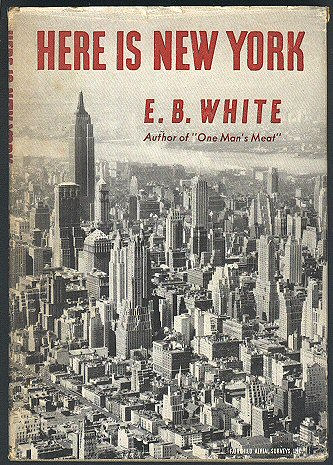
Teaser Tuesdays: “Here is New York” by E.B. White

Teaser Tuesdays is a weekly bookish meme, hosted by MizB of Should Be Reading.

here is new york

I’ve heard about this essay over the years, and have finally gotten around to reading it for a class I’m taking. I think it’s quite lovely and expressive, and I suspect it still rings true in the New York of 2015, though E.B. White wrote it in 1949. I especially loved this line:

And the fan takes over again, and the heat and the relaxed air and the memory of so many good little dinners in so many good little illegal places, with the theme of love, the sound of ventilation, the brief medicinal illusion of gin.

I think it is the illusion of gin that did it for me.

You can read the full essay here.