museums: MFAH and the Holocaust Museum

Over the winter break I traveled home to Texas, and had a wonderful time with all the friends, restaurants, events… and a couple of great museum visits. Just some quick notes here.

Museum of Fine Arts Houston (photo credit)

With an old friend, I visited the Museum of Fine Arts Houston to see the new Norman Rockwell exhibit there. I learned a lot about him. We all know Rockwell in some way – his better-known images are in the fiber of American culture. But (of course) there’s more story there than I knew. For instance, I hadn’t realized that after forty-some years, he left the Saturday Evening Post at least in part for moral reasons: they forbid portrayals of Black Americans outside of service roles. It was the 1960s, and he needed to depict what was happening in the real world, including the Civil Rights Movement. Look published his work in that later era, including “The Problem We All Live With” (you know this one, if not by name: it features Ruby Bridges walking to school in New Orleans, flanked by U.S. Marshals and backgrounded by ugly graffiti and a thrown tomato). I saw some striking paintings from that later career, including one of Lincoln, and several portrayals of multiculturalism and interracial camaraderie.

In the earlier Post era, especially, Rockwell is accused of being overly optimistic, of depicting an America that is homey and happy and quaint. (He’s even inspired an eponym.) I don’t think that’s entirely fair. Optimistic? Yes. But I think he was always portraying real life, even if his images had a hopeful slant to them. There is the element of the everyday, of skinned knees and half-peeled potatoes, that feels more authentic than sentimental, not that there’s an absence of the latter. Also, he likes strong girls and women, which I appreciate (think “Outside the Principal’s Office,” which I’m very sorry was not a part of this exhibit). The attention to detail and to the everyday and the modest is what seems to me to have carried him into the civil rights subjects of his later work.

In telling my father about the Willie Gillis series, he shared that my great-uncle (my father’s namesake), who died in WWII, had sent home a series of his own cartoons of military life. I was thrilled to get to see some of these that he scanned over for me, and he gave permission for me to share one here. Not every soldier was a Norman Rockwell, but many of them recorded their lives in the same way, including one of my own family that I never got to meet.

my great-uncle’s wartime art

Rockwell’s four paintings portraying the Four Freedoms were present in several iterations, and I got to read about how they each came to be; they even have the jacket that was used for the “Freedom of Speech” painting (worn by his model). At the end of the exhibit, a small room was filled with photographs taken as part of a recent project, “For Freedoms.” These images reimagine Rockwell’s originals – the same scenes, same poses – but populate them with more diverse faces and bodies. Click the link and spend a few minutes. With all that I found powerful about this exhibit, this final small room was the part that moved me most, and made me feel really good.

In short, I found the Rockwell exhibit intriguing and moving, and was glad to learn more about the man.
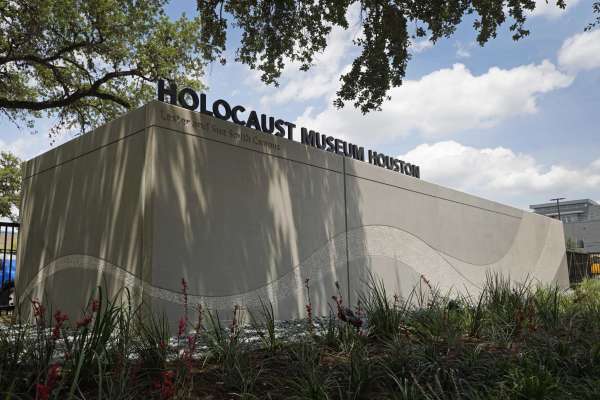

Holocaust Museum Houston (photo credit)

The next day, I took myself to Houston’s Holocaust Museum, which I think I last visited some 30 years ago. What to say about the Holocaust Museum? I think they’ve done a pretty good job with an unspeakable task, to communicate a history of massive scale and unthinkable cruelty and ugliness and hate… I also did some thinking about how the Holocaust is something we sort of just all know about, to some extent – except that I now know that not everyone does know, which is a piece of profound news I’m still processing, actually. I have some memory of discovering this topic for the first time, when I was a kid, in elementary school. In my memory, much of the horror was communicated in images, photographs that showed graphically what it looked like to starve to death. This museum did not rely on such graphic, upsetting images. Most of the photographs were of healthy families and children from before the war, with a note that this child was killed at age seven, etc. I think graphic images are powerful, on the one hand, because they viscerally communicate how bad things were. On the other hand, they run the risk of sensational “torture porn,” of the image itself and its shock value taking away from the message we most need to hear. I appreciate the Holocaust Museum’s approach here. Also, one notable exception: there was a video showing on a monitor, near the floor, pointed straight up at the ceiling, and in a tube, so you had to stand directly over it and look straight down – in a rather uncomfortable position. I couldn’t figure out why they’d use such a weird design, until I saw the content of the video. It was about the post-liberation coverage of the concentration camps, how Eisenhower had the media come in to record and show exactly what was there. It was that footage, of the bodies recovered near death. It was quite graphic, and very affecting, and upsetting; at that point, the physical discomfort of the position required to watch the video made sense. It felt like part of the effect. My theory is that this design is to keep small children from watching.

I also visited the Holocaust Museum’s exhibit of the Civil Rights photography of Danny Lyon, an exhibit on Dolores Huerta, and the art of Holocaust survivor Samuel Bak. It was a lot to take in, but it was all good. I was especially taken with Lyon’s photography of SNCC, the Freedom Riders, lunch counter sit-ins, MLK and Stokely Carmichael, among other landmarks. There was one, captioned something like “police officers pose at such-and-such place,” where six white cops stood around and sneered; one raised his middle finger, while another offered a crotch grab and full-body fuck-you posture. Speaking of graphic; the hate was visible. I kept thinking, I wonder where this man is now, who his children are, if they’re proud of their father.

The Holocaust Museum is no joy, even if the stories of resistance and rescue are moving. But it’s at least as important a history for us to see now as it has ever been, and I’m grateful this museum exists. I have been thinking about the balance, between graphic ugliness and truth about the horrors, and upliftingness of stories of resistance. I don’t know where the right balance lies, but I think they’re doing a pretty good job. I recommend this visit to everyone.


I find even the best museums exhausting, but I do love a good museum, and I’m glad to have had the chance to take in some such experiences while I was in Houston. Among other things, I saw some old friends, attended a great yoga class, ate at a whole pile of excellent restaurants… it’s perhaps more bittersweet every time I go back to my hometown, but I do love every visit, too.

comparative literature and lives, from Pops

The Living Mountain
Nan Shepherd (1945 / 1977)

Under the Sea Wind: A Naturalist’s Picture of Ocean Life
Rachel Carson (1941 / 1952)


I want to celebrate early – and timeless – work from two remarkable women naturalists of the 20th century. This is not really book reviewing; it is tribute to these two writers’ noteworthy similarities and differences, and appreciation of their early, largely disregarded success. The books came to me unintentionally, separately, and coincidentally; that’s always a fun thing.

As shown in these books, both authors were naturalists in the purist sense: keen observers of the more-than-human milieu around them, with a literary voice enabling them to describe what they saw, which appeared so differently to them than most people. Humans rarely feature; they appear only occasionally as natural background to the author’s higher interest in place, or other inhabitants.

While both show an informed ecological understanding of what they observe, such insight is rarely explicit; they ‘teach’ by example. Both prefer to rely on literal and figurative senses as a narrative lens, and the result on these pages, while different in style, is surprisingly similar in tone, feeling and impact. There is a sophistication to their form that impresses, especially for its time. Carson embraced the term ‘poetic prose’, which certainly applies to both.

They lived during the same era, against a backdrop of both constraint and change for women. They wrote the two works cited here within the same decade (1935-45); publication of each book was at least partially affected by the war. There is no suggestion they knew of each other.

While both traveled internationally, they lived on different continents. The focus of their attention in the natural world rarely overlapped, even while the results of their inspiration bore similar fruit on the page. Carson was a committed author and trained biologist; Shepherd, always ‘only’ a writer, and more introspective. Early writing success met Carson, followed later by greater success and international impact; Shepherd’s writing was only fully appreciated late in life, and even then mostly limited to her region.


Nan Shepherd was born (1893) and lived always within walking distance of the Cairngorm massif in Scotland’s central highlands – and walk she did, across every ridge and through every valley of her cherished place. Always a poet, sometimes an essayist, she had a brief burst of minor publication before she finished writing The Living Mountain in 1945 at age 52.

For various reasons – post-war disruption, intervention by a mentor, some factors perhaps inexplicable – the book was not published. Only in 1977 was the original manuscript revived by the author and publisher (4 years before her death); it immediately gained attention regionally. Largely due to ‘discovery’ and ardent promotion by Robert Macfarlane, it has belatedly become a classic. The Scottish five-pound note now displays her image, with a quotation.

Shepherd’s subject here is explicitly The Living Mountain, which she embraced passionately her entire life. Her brief Foreword in 1977 testifies to her continued attention to that place. While the narrative draws from her experience over decades, it is organized into 12 chapter categories of her choosing, from Water, to Plants, to Being.

Her focus never strays beyond its boundary of geography, shaped by water. But her meaning for ‘the living mountain’ encompasses everything about it: rocks and water; clouds and winds; plants and insects; large and small; above ground and below; its impact on the psyche. Implicitly, this is an ecological view. Her language is intimate, lyrical and dense – all, matching her perception of the subject. Yet her voice is calming & humble, conveying her affinity for Buddhism. There is likely nothing else in print resembling her work here.

Macfarlane’s introduction in the 2011 edition runs to 28 pages including three pages of footnotes. This is a superlative essay in itself (of course, one might say), partially because Macfarlane himself roamed these hills as a youth, and even today. But mostly this is his own tribute to Shepherd, as we hear her on these pages. As he says, this is “a formidably difficult book to describe.” I would agree, and say that about both books.


Rachel Carson was born more than a decade after Shepherd, in rural Pennsylvania. Even though she grew up land-locked her reading inspired an interest in the ocean. So it is unsurprising that the sea informed both her early interest in writing, and eventual degree in aquatic biology. Significantly, her early work in articles led to mentoring by a Dutch children’s author, who encouraged her simple, direct, descriptive writing style, which is so effective later.

Under the Sea Wind was her first book, published in 1941 at age 34. (Two subsequent books now comprise her ‘Sea Trilogy’: The Sea Around Us, and The Edge of the Sea.) While initial publication met with critical success, sales and popularity were dampened by the war. When The Sea Around Us became a bestseller in 1951, the earlier book was rediscovered and the next year also became a bestseller.

Under the Sea Wind is organized into 15 chapters, divided 5-7-3 into three sections, or ‘Books.’ Each Book is a theme that ties together its chapters in loose narrative; yet all three also naturally connect in a general sense, and comprise a generic year’s cycle.

Carson’s sightline in this book covers the broad western hemisphere, especially the western Atlantic, encompassing ocean and sea; shoreline and river; marine and freshwater; birds and fish; whales and sand fleas. Yet, on a given page, her attention is particular species, and even individuals of a species, which she sometimes assigns a proper noun. One can imagine children of a certain maturity devouring some passages; and adults of a certain proclivity cherishing its entirety.

The magic of her ecological view is how her ‘narrative’ seamlessly and endlessly follows one organism to the next, taking as a thread a trophic food chain, or an expansive migration path, or intricate inter-species symbiosis. But she rarely resorts to such jargon, any global perspective, or stated scientific facts. She simply knits together, piece by piece, story by story, an appreciation of this connected web of life.


The relaxed pace; the embracing language; the sense of peacefulness amidst natural turbulence; the reassurance in understanding how things work – both books display these things, and commend themselves to sympathetic readers.

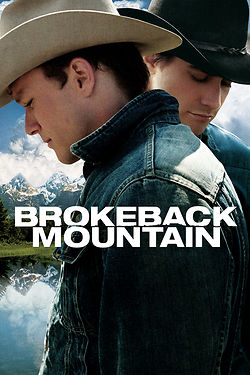
movie: Brokeback Mountain (2005)

I just recently rewatched this movie, which I saw when it first came out, and appreciated. I’m quite blown away. This is masterful understatement. Emotions run fast and deep; Jack Twist and Ennis Del Mar are men’s men in a classic sense, macho, physical, and (in Ennis’s case) of few words; they are also lovers. There is a rough physicality to their affection, as in the scene when Jack shows up at Ennis’s apartment after four years apart. It’s a deeply sexy, sensual movie, perhaps more movingly so because of how different this love and sex is from what we’re accustomed to seeing in romance movies.

And it’s a very romantic movie, in several senses. For one thing, there is the romantic relationship at its center; but there’s also the romanticism of ranching and rodeoing and the gorgeous scenery and harsh weather of the Montana mountains. (Heath Ledger and Jake Gyllenhaal are gorgeous, too.) I think the power of the film is in part in the overturning of expectations about romance (in both those meanings) and about who we expect Jack and Ennis to be. To put a point on it, we don’t expect cowboys to be gay, and we don’t expect gay men to be rough-and-tumble, macho-masculine cowboys. Those are stereotypes, and Brokeback Mountain is here to dispel them. But that makes it sound didactic when in fact it’s anything but that: it’s deeply beautiful, starkly painful, and at every point feels true.

I have dim memories of enjoying the Annie Proulx story this movie is based on, but perhaps because I saw the movie first, my standard remains this cinematic, visceral, visual version.

I could watch this movie over and over again.


Rating: 10 hats.

movie: We Have Always Lived in the Castle (2019)

There’s a movie version out of We Have Always Lived in the Castle! Boy, rereading that review was interesting. This blog was still pretty young back in 2011. I cringe a bit at the thought that I didn’t know the book yet, and didn’t make the Shirley Jackson connection; but that’s what life is, is a learning process. Everything you ever know, you at one time didn’t know yet! (Don’t make fun of beginners!) Also, it’s interesting to note that now the big Shirley Jackson reference is not “The Lottery” but The Haunting of Hill House, since it’s recently been made into a successful TV series. My students this coming semester will be reading “The Lottery,” of course.

First note: the movie is scarier than the book was. I recall (and it seems from my review) that the book was more spooky or creepy than outright frightening. Well, the movie is not straight horror, in the sense that there are no jump scares; but I was more upset by the things that lurk in the night. For one thing (spoiler follows here in white text, highlight to read): Cousin Charles reads as physically threatening, as in he assaults each sister in turn in what might be a sexual fashion, which I don’t recall happening in the book.

Reviews are mixed. Some reviewers found the tone of the movie off; others felt there wasn’t enough substance, or something like that. I found it to be quite a successful adaptation, and wonder if some of the criticisms aren’t missing the point, or if things I’m calling positive were what most bothered those reviewers. For example, it’s true that the aesthetic of the movie is bright and colorful – not at all matching its content. Constance is forcefully cheerful, with a bright Stepford smile; she almost seems drugged (and her pupils are dilated – how’d they do that? give her eye drops?). This contributes to a weirdly upbeat vibe, even though it’s patently faked, and often in extreme contrast to the conflicts taking places around Constance. It’s odd, but not I think by accident. Each character – weirdo Merrikat; forced-chipper, porcelain-beautiful Constance; increasingly angry Charles; and poor unbalanced Uncle Julian – delivers their own lines in varying forms of deadpan; each believes their own reality. It’s most disturbing, and that is absolutely the point.

There is a trailer here, which on the one hand gives a good impression of visuals and atmosphere, but on the other hand maybe you should go in without having seen so much of it? Maybe the latter; I’m glad I went in more or less blind.

It has been eight years since I read the book, which undoubtedly helps, but I’m inclined to say that as far as book-to-movie adaptations go, this one was quite good and less likely to frustrate the book’s fans than most. Full credit for capturing the feel of the original; great visuals and a hair-raising effect, even without your traditional horror movie’s jump scares. I’m looking forward to reading “The Lottery” with my undergrads now.


Rating: 7 pies.

movie: Hellfighters (1968)

Well this was a fairly silly but also awesome film. Extra points for vintage Houston footage, and a most interesting look at how they (used to) put out oil well fires. A little family drama and a bunch of feel-good, handshakin’ male friendship make for an all around warm-and-fuzzy (although seriously dated) John Wayne movie about firefighting and love.

IMDB calls this “disaster/action/adventure,” but it’s at least as much soap opera as it is any of that. Chance Buckman (John Wayne) is the best in the world at what he does: puts out oil well fires, “around the clock, around the world,” as says the slogan of The Buckman Company. He split with his ex-wife Madelyn because she can’t take the stress of his highly dangerous work, but they still love each other. When Chance is badly injured on the job, his assistant Greg fetches his daughter Tish to visit him in the hospital (against Chance’s wishes). Lickety-split, Greg and Tish are married, and the new generation gets their own chance (no pun intended) to navigate matrimony against a fiery backdrop. The final action takes place at a five-well fire in Venezuela, choppers chopping and bullets whining overhead, as both Tish and Madelyn show up to spectate.

I’d like to give some credit for these women being treated less as delicate flowers in need of protecting than I’d expected from 1968. It’s not modern, but it’s better than I’d have thought. Also, these people have phones in their cars and on airplanes! I understand 1968 less well than I thought I did, all-around.

It’s silly – I wonder how seriously the filmmakers took themselves – but pretty fun, too. The brawl between the Americans and some Australian firefighters in a gambling parlor in Malaya was fine slapstick. It’s got a 14% rating on Rotten Tomatoes, and I fell asleep once. But I had good fun with it, in the end. Keep your expectations low and have a good time.


Rating: 7 delays with the nitro.

Short Fiction

I thought it would be fun to share with you some of the reading I’ll be doing this semester, for an other-than-usual reason: I am teaching the undergraduate lit course Short Fiction (ENGL 165) to a mix of freshmen, sophomores, juniors, and seniors, and I’m very excited about it. My students will read something like 50 stories this semester, and we’ll discuss elements of fiction (like plot, setting, character, point of view, style, and theme) in context of those stories. I cannot imagine that I’ll be writing about each one for you all here! (Although I suppose it’s possible that I’ll be moved to write about a few standouts. And some are already covered, of course.) But I thought at least you might appreciate a list of what stories I have in mind.

I’m using an anthology as a textbook: The Story and Its Writer, which also includes pretty good text on those elements of fiction, and supplementary materials such as analyses and author commentaries. I’ll also use Jon Corcoran’s The Rope Swing – we’ll discuss how it functions as a whole as well as in each individual story. And there will be a few “extra” stories that I’ll scan for my students. So, the list – in no particular order for now.

  • “I Stand Here Ironing,” Tillie Olsen
  • “Crazy They Call Me,” Zadie Smith
  • “A White Heron,” Sarah Orne Jewett
  • “Sonny’s Blues,” James Baldwin
  • “Interpreter of Maladies,” Jhumpa Lahiri
  • “Desiree’s Baby,” Kate Chopin
  • “Samuel,” Grace Paley
  • “The House on Mango Street,” Sandra Cisneros
  • “The Blood Bay,” Annie Proulx
  • “The Yellow Wallpaper,” Charlotte Perkins Gilman
  • “Everyday Use,” Alice Walker
  • “The Man Who Was Almost a Man,” Richard Wright
  • “Yellow Woman,” Leslie Marmon Silko
  • “Girl,” Jamaica Kincaid
  • “The Ones Who Walk Away from Omelas,” Ursula K. Le Guin
  • “A Brief Encounter with the Enemy,” Saïd Sayrafiezadeh
  • “Harrison Bergeron,” Kurt Vonnegut
  • “The Grasshopper and the Bell Cricket,” Yasunari Kawabata
  • “Journey to the Seed,” Alejo Carpentier
  • “Prisoner on the Hell Planet: A Case History,” Art Spiegelman
  • “The Shawl,” Cynthia Ozick
  • “A Continuity of Parks,” Julio Cortázar
  • “Looking for a Rain-God,” Bessie Head
  • “Cathedral,” Raymond Carver
  • excerpt from Persepolis: “The Veil,” Marjane Satrapi
  • “The Moths,” Helena María Viramontes
  • “Dimensions,” Alice Munro
  • “Brownies,” ZZ Packer
  • excerpt from Palestine: “Refugeeland,” Joe Sacco
  • “Vision Out of the Corner of One Eye,” Luisa Valenzuela
  • “The Colonel,” Carolyn Forché
  • “The Fellowship,” Alison Bechdel
  • “The Swimmer,” John Cheever
  • “Barbie-Q,” Sandra Cisneros
  • excerpt from Barefoot Gen, Keiji Nakazawa
  • “The Things They Carried,” Tim O’Brien
  • “Appalachian Swan Song,” Jonathan Corcoran, from The Rope Swing (RS)
  • “The Rope Swing” (RS)
  • “Pauly’s Girl” (RS)
  • “Through the Still Hours” (RS)
  • “Felicitations” (RS)
  • “Corporeal” (RS)
  • “Hank the King” (RS)
  • “Excavation” (RS)
  • “Brooklyn, 4 a.m.” (RS)
  • “A Touch” (RS)
  • “Pea Madness,” Amy Leach, from Things That Are
  • “Four Boston Basketball Stories,” Brian Doyle, from The Mighty Currawongs
  • “The Pull,” Lidia Yuknavitch, from Verge
  • Any Other,” Jac Jemc
  • The Little Mermaid,” (Daniel) Mallory Ortberg
  • Who Will Greet You At Home,” Lesley Nneka Arimah

This list includes writers of various ethnicities and national backgrounds, gay and trans writers, Westerners and non-Westerners, graphic stories, recent and historic ones. It is probably a few stories too long – definitely subject to some change, but not much. I meet my students in just a few days, and I want us to more or less have a plan.

What do you think? A class you’d be interested in??

2019: A Year in Review

Happy New Year, friends! The other day you saw my best of the year post, and here we are today with another traditional annual post. (You can see my past years in review here: 2018; 2017; 2016; 2015; 2014; 2013; 2012; 2011.) I’m always glad to put these numbers together and see what’s changed, and in writing this post, I knew the numbers would be very different. I finished 2018 by finishing an MFA program; I spent the bulk of 2019 living in a van, with no day job except the book reviews.

In 2019, I read 88 books, compared to 66 in 2018. While not up to my good-old-days numbers nearing 150 books per year, this increase definitely reflects some change. A season for all things…

Of the books I read this year:

  • 55% were nonfiction (last year I read 70% nonfiction).
  • 41% were written by female authors (53% last year); 59% were by men (41% last year), with the remainder being collections by multiple authors, or variously unidentifiable, or “other” – this was a negligible category this year, although it made a larger proportion in 2018.
  • Of the fiction I read, 25% were contemporary (a growing number), 22% historical, 18% mysteries, and a whopping 23% were sci fi (that would all be The Expanse). Last year I mostly read fiction I was categorizing as “misc,” which seems to indicate I need better categories, although I didn’t so much change my classification scheme as read more in the categories I’d already established (like sci fi!).
  • In perhaps the most notable (and most predictable) change this year, nearly 20% of what I “read” I listened to as audiobooks. This is all about the van travel, of course. In 2018 I listened to just one audiobook, although in previous years I’ve been as high as 25%, back when I was a commuter.
  • Another big and predictable change: reading for school. Combined reading as student and as teacher this year amounted to just 6% of the books I read; while I was an MFA student my years were 49-70% schoolwork. Happily, 36% of my reading was purely for pleasure, plus a handful marked with the reason “travel” (which can be counted as pleasure: researching places I was headed). 51% were read for reviews. I think I need to make it a life goal to get out from under that majority, much as I love my work.
  • I was sent 54% of my reading by authors and organizations seeking reviews (which means I marked several as read for pleasure; sorry if that’s confusing). Another 24% I purchased (down from 64% last year!), and the remaining 22% were gifts, loans, or library books – sources not much in evidence these last few years.
  • I found time to reread three books this year. I thought it was more than that! With just one in 2018, this remains a negligible category, but I’m glad for each and every one (hello, Brian Doyle).

Some of these numbers changed less than I thought they would – total books read, and rereads, for example. Overall, I’m pleased to see the increased variety in what I read. I’m very grateful to the Shelf for being so flexible with me while I’m on the road, and for being my only employer for most of the year; but I confess I wish I were choosing a few more books for myself and purely for pleasure. (It’s true that the Shelf sent me almost every favorite book of the year. But you know, there’s so much more out there, too…) And now heading into 2020, I can just imagine that we’ll have another drastically different year, with teaching a literature course – surely this will suck up much of my reading time? – and the at-present-total-unknown second half of that year… All I can say is stick around and we’ll all find out together what the heck I’m doing. Thanks for bearing with me through all the surprises!!

How did 2019 treat you as readers? What do you hope the new year – and decade – holds?

best of 2019: year’s end

My year-in-review post will be up Wednesday, as per usual. But first, also as usual, I want to share the list of my favorite things I read this year. (You can see past years’ best-of lists at this tag.)

The short best-of-the-best list:

Honorable mentions:

Note that these are overwhelmingly new releases, which bodes well for the publishing industry in general (and probably reflects my reading habits) (and credit to my lovely editor Dave who sends me such great books to review).

Bonus: Shelf Awareness’s Best Books of the Year is available at that link. It includes none of my choices but that’s okay – more to choose from! Bonus-bonus: their Best Children’s and Teen Books.

Hooray for good books always! What are some of the best things you read this year?

Come back Wednesday to see a further breakdown of my reading habits in 2019.

Tara Westover at West Virginia University

Last month, I traveled with a small group of English faculty, English majors, and Honors College students from the little town where I live and teach, up to Morgantown and West Virginia University. My department chair organized several activities around the memoir Educated, by Tara Westover. She got us books at a discount; we set a couple of book club meetings; and she got us tickets to see Westover speak at WVU.

It was a perfectly pleasant evening, driving up at dusk and gathering for dinner (at a most strange pseudo-Mexican joint), and then over to the university, which was an experience for those of us from a college of about 1500 students: the ballroom seats several hundred, and was located in a building that reminded me more of the big universities I come from. After a notably awkward introduction, Tara Westover came on.

At this point I had read about half her book, as directed for the book club meeting later that week. So I was familiar with part of her story (and I knew how it finished, at least in broadest terms). Westover was raised in Idaho by fundamentalist Mormons. She did not go to school or see a doctor. At seventeen, she followed in the footsteps of an older brother and self-studied for the ACT, then went off to Brigham Young University in Utah – her first time in a classroom. It was here that she was exposed for the first time to many concepts we take for granted, including (in a memorable example) the Holocaust.

I thought we were attending a reading, but instead Westover spoke about her thoughts on education. She was quite informal and off-the-cuff, although as the talk proceeded I decided it was more practiced than I’d originally thought. (Which is fine.) She retold her story, as in the book, for the benefit of those who hadn’t read it (and in slightly different terms). She spoke of education as having value in broadening our perspectives, and helping us see multiple points of view. This feels like an obvious and simple observation, on some level; but it was a revelation, to think of someone having to learn this in early adulthood from such a limited perspective as she had growing up. I also found very useful one thing she said, about how young people – like my freshman students – can tend to overemphasize the events of their lives (or so it appears to us, a few years older), because their perspectives are so different: if you’re 18, a year is an awfully long time, as a percentage of your lived experience. Whereas it’s a bit easier, if you’re 40, to see how little that test failed or boyfriend lost really matters in the long run. We can tend to say patronizingly that kids that age don’t know what love is (or whatever), but it’s just that their perspective is quite different. We could reframe things. In the same way, she talked about the shape of the narrative arc, and how you can’t see your own arc if you’re still on top of the damned thing; you can’t see where the narrative arc peaks, where the climax is, until it closes. I’m going to try to use these ideas when talking to my freshmen students next semester – about narratives, no less!

Westover’s experiences make her a compelling figure for the college student to consider, especially the first-generation student, as many of mine are. Her talk was often interesting (her story is quite sensational, for one thing), and inspirational. I’m glad we made the trip.

My review of Educated will be up on Monday.

movie: The Pieces I Am (2019)

Transcendent, not that I’m surprised.

This documentary of the life of Toni Morrison was released shortly before her death, which has helped it make an even bigger splash, although it was doing fine anyway. My dear friend Liz told me I needed to see it, which pushed me further (I was already interested). I was so glad to get a chance to see it locally at a micro-theatre here in Buckhannon, West Virginia.

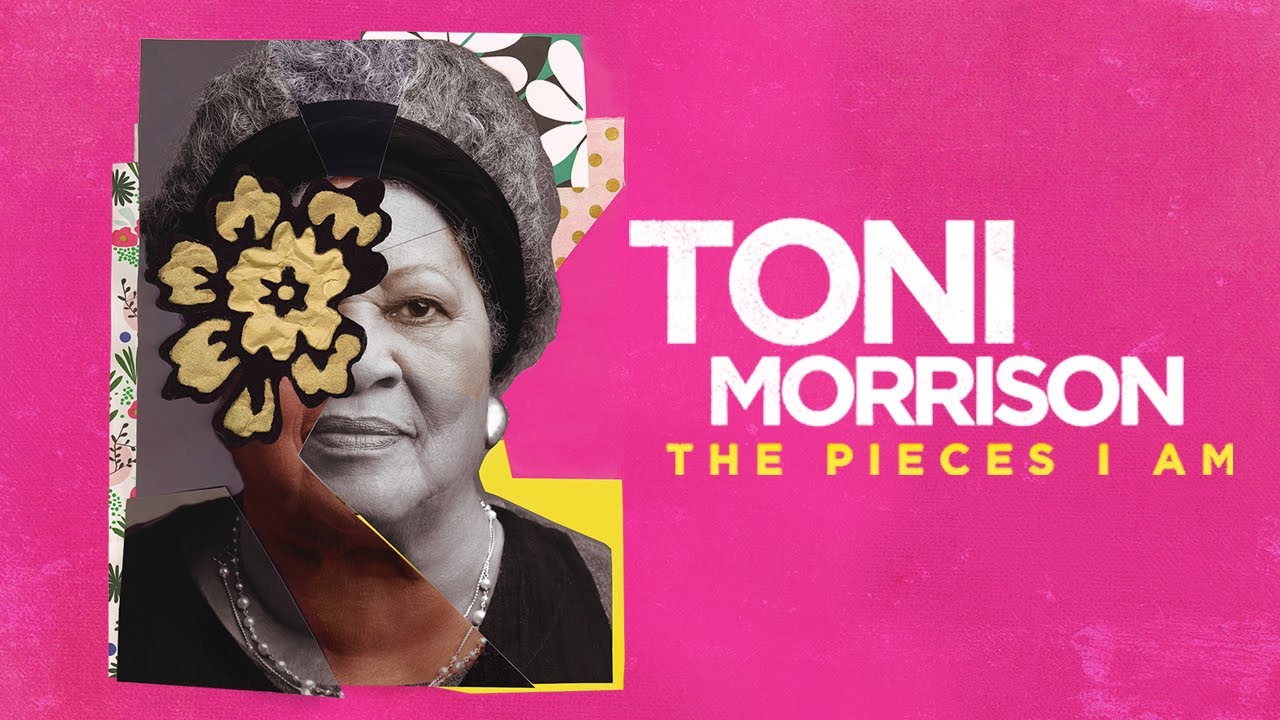
For starters, check out that image above. The collage of Toni’s face is built up in an opening sequence that shows many faces of Toni Morrison as she ages, and as a portrayal of the creative process I found it moving and thought-provoking. The rest of the movie followed suit. I loved that they mostly let Toni speak for herself. A “present” Toni sits against a blank backdrop and speaks directly into the camera throughout the film. She is dressed in black, white, and gray, highlighting her beautiful gray hair. She speaks with humor and wisdom, and as she talks, we see images and film clips from her life. Friends and contemporaries including celebrities (Angela Davis, Oprah Winfrey), other artists (Sonia Sanchez, Walter Mosley), and college professors (Farah Griffin, David Carrasco) also speak to the camera; a voiceover reads from a few articles, like nasty racist criticisms of Morrison’s early work. But mostly it is Toni’s own voice that tells of her life, from the melting-pot steel town on Lake Erie where she was raised (Lorain, Ohio) to Howard University to Cornell, to teaching, marriage and divorce, raising two boys, and her influential career as an editor at Random House… and of course writing 11 world-changing novels in 45 years, along with children’s books, short fiction, drama, nonfiction, and an introduction to The Oxford Mark Twain‘s edition of The Adventures of Huckleberry Finn that I’d love to see.

The impression of Toni Morrison that I take away from this film is an entirely take-no-shit, strong woman who we might describe as brave, but I think her own view would be that she was not so much a brave woman as just doing what needed to be done, and what was right, without thinking twice about it. Of course that is brave, but it seems to have just come so naturally to her.

It was nice to see her celebrated not only as an earth-shatteringly talented, singular artist, but also as an incisive, gifted editor, who dragged Angela Davis’s memoir out of her and put Muhammad Ali in his place during the editing of his. I enjoyed the story of her Nobel Prize and the delightful party she so enjoyed in Sweden. In short, I found a rich and rounder portrait here than I think I’d seen of Toni before now.

Although I knew it before, I feel again what a loss we suffered this year when she died, and I feel how lucky we are to have her work in the world. I’m so glad I saw this movie. Don’t miss it. There are lots of ways to watch at home, so you’ve no excuse.


Rating: 9 dolls.