guest post: “A Letter to Snow” by Victoria Weeks

I really did have a book review for you, promise (ha!), but The Case of the Missing Maid (which was excellent!) will have to wait for Monday. I wanted you to see this post from a friend of mine that went live yesterday. We are seeing all the possible shades of winter here in central West Virginia, and Vicky (who lives a little over an hour away, in the highlands of the Canaan Valley) and I are headed into a weekend of fatbike racing. After a good variety of snow and snow-adjacent conditions at the last three events, this weekend’s race in Garrett County, Maryland is looking like a real crapshoot, with rain, snow, and ice promised over the next few days. So this lovely brief bit of writing feels entirely apt. Please enjoy.

Thanks, Vicky.

“How Long ’til Black Future Month?” (essay) by N.K. Jemisin

After reviewing the story collection on Friday, I felt the need to go find the essay which gave the collection its name. I’ve decided to just repost it here for your pleasure rather than muddying it with my own words. I think it’s important. Please take the time to visit Jemisin’s site for…


movie mini-reviews: Clash of the Titans (1981) and Wonder Woman (2017)

Thanks to Natalie Haynes’s brilliant Pandora’s Jar (review forthcoming), I watched two movies over winter break that make reference to the Greek myths that I love so much.

Unsurprisingly, this one from 1981 that relies heavily on special effects plays more comically than originally intended; those special effects are almost unbelievably bad now… but the themes of the movie hold up well, and the hubris that forms such an essential turning point in the story still rings true, and fits with the Greek myths it arises from (where hubris was such a frequent theme). Clash of the Titans mashes up its myths: Medusa’s head will be weaponized against the Kraken, so Scandinavian meets Greek, but who cares: it’s actually quite fun, and the female love interest is less useless than she might have been, for her time. (Natalie Haynes writes, “It is hard to escape the conclusion that the Clash of the Titans kraken is so named purely for the delight of audiences in hearing Laurence Olivier – who plays Zeus – say, ‘Release the kraken.’ For the record, I consider this a perfectly legitimate reason to ignore any amount of mythological chronology and geography.”)

Fairly wacky, and hasn’t aged extraordinarily well (special effects!!), but still diverting, and I’m pleased to know where Haynes got her start into the myths. She’s doing them better justice herself, though.

Wonder Woman of 2017, on the other hand, was a fine romp, and I had a much easier time getting into the groove. (One wonders what this will look like in another 36 years.) There is a large dose of romance at its heart, even as the movie dances around that concept, and the astonishing good looks of leads Gal Gadot and Chris Pine make a difference. But the girl-power Amazonian island is both an appealing concept and nicely portrayed visually here, too. From their man-free paradise, Gadot’s Diana thrusts herself into the “real world” of World War I, which offers only horrors by contrast. The movie does a decent job of portraying both the light and the dark, and combines humor (Diana being “not from around here”) with pathos (war) engagingly. There’s no question this one relies on visual appeal, but that can be lovely when done well. And if it’s a bit of a simplification (of both myth and complicated gender dynamics), it’s still an empowering adventure tale. I do recommend.

HeartWood Lit Mag: Meet the Editors

Just a little piece of news I’m not sure I’ve shared here, friends. I’ve been in this role a little over a year now. Check us out:

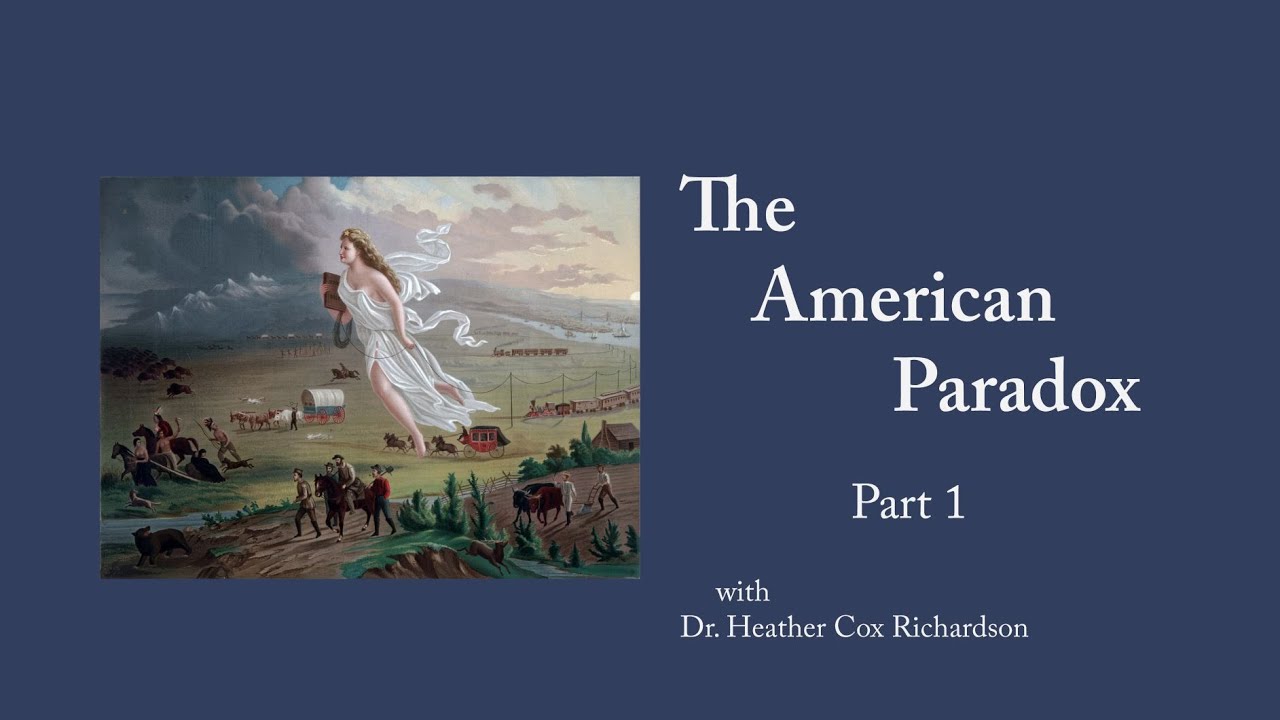
“The American Paradox,” lectures by Heather Cox Richardson

If you haven’t been receiving Heather Cox Richardson’s daily email “Letters from an American,” you’ve been missing out. She’s also been producing (prodigiously) several series of lectures on YouTube, including “American Paradox,” which we’re told follows the main themes and points of her recent book, How the South Won the Civil War. The paradox Richardson refers to is baked thoroughly into this country: that “all men are created equal” but that “all” doesn’t mean “all”; non-white men, and non-men, as well as certain classes of men, have been excluded from the beginning, and quite purposefully so. As we’ve moved as a country toward the idea that more people should receive equal chances in life, there has been a traditional pushback that is still alive and well, based in the fear that more equality for some people somehow means less equality for the original “all men,” meaning white men with a certain amount of money and power. Richardson portrays these points through storytelling, beginning well before the founding of the U.S., and catching up with Trump’s presidency. This lecture series has nine installments of about an hour apiece.

I listened to Richardson speak while working around the house, which means she didn’t always have my total attention, but I still got a lot out of the experience. I love her infectious enthusiasm for her subject – I feel there’s nothing so inspirational as an expert really excited about their field, and she definitely qualifies. As she occasionally reminds us, she delivers these lectures without notes. It’s astonishing the depth of her knowledge, and I am very comfortable with the trade-off that she is sometimes unsure of a precise date. I also really love the connections Richardson makes across disciplines (something I’ve been working to show my students this past semester), like noting the trajectory of Shakespeare’s playwriting career against world history and technologies, as in: The Tempest‘s setting in the Bahamas places that late-career play in time, as England colonizes that part of the world, a project made possible by new designs in sails and therefore in the shapes of boats. Literature, world history, and shipbuilding technologies are all a part of the same story! This exhilarates me. She also includes references to popular books, movies and television at different points in history, noting their subtle political or ideological contributions to culture, which is a method I recognize from Stamped, where I also appreciated it.

The central paradox in our country-as-concept didn’t feel like a new idea to me, but I think she presents it so logically that this series could serve as an introduction. (Who doesn’t hear the irony in “all men are created equal,” I don’t know, but I guess they’re out there.) For me the most exciting aspects of these talks were Richardson’s mastery of her material, how neatly she integrates interdisciplinary material into a single thread, her avid storytelling, and the big-picture perspectives she brings (which is what I love most about her email Letters). She is definitely, as my father says, a “history wonk,” a geek (I say in the most loving spirit) who excels at and loves storytelling. As my father again notes, this can “result in some enthusiastic ‘really cool!’ diversions into personalities and anecdotes that risk diluting her narrative,” and she sometimes has to pause to clarify that a story might be ‘really cool’ in terms of research and meaning-making, while being abhorrent in terms of what actually happened. This can be a bit jarring, but I think if we accept Richardson’s history-geekness, we can appreciate what she has to offer, which is an extraordinary body of knowledge and ability to draw connections and see patterns, and a boundless, contagious love for her work. I’d take a history class with her any day.

If you’re still learning our history (and who isn’t?) and if you feel that it sheds light on our present and future (which I think it certainly does), I highly recommend Richardson’s expert teachings, free and online for the taking.


Rating: 9 mules downstream.

personal news: cross-post from Foxy

Just a little bit about what’s going on in my life these days; back to book reviews tomorrow. Moving In and Moving On.

bonus post: Shelf Awareness Turns 15!

Please pardon the extra post on a Tuesday, for this pleasing big news. I loved yesterday’s email, and hope you will too. Shelf Awareness Turns 15.

housekeeping: new schedule

Howdy, dear readers. I figured this day was coming! It’s mid-semester time here, and my content output has been slowing as I teach two classes of dear but needy composition students and one literature course which I love but, yes, reading. I’m going to back off the posting schedule here at pagesofjulia to concentrate more on the day-to-day readers and writers in my life. This will be my last Wednesday post for the foreseeable, until something changes again, as things do. Stay tuned for Monday and Friday content to continue; just wanted to give you a head’s up, because I appreciate consistency and clear communication in my life and figure you do, too.

Maybe time for a teaching update one of these days, yes? Hmm…

And perhaps this is a good time to ask for feedback in general. I’m flattered and honored to have many hundreds of followers out there – thank you so much for reading! What do you like best here? What do you wish you got more of? Comment below.

A thousand thanks. Come on back on Friday for more book reviews. Cheers!

another new beginning: pagesofjulia in the classroom

I am honored to announce that I’ve received one of two Irene McKinney Fellowships from my MFA alma mater, West Virginia Wesleyan College. This is a nine-month teaching appointment there on campus in Buckhannon, WV; I’ll have three sections of writing composition in the fall and three sections in the spring, one of the latter possibly being a literature course. So, I’ll be pausing my van travels there this summer, with the option to restart them the following May.

I am excited and intimidated; I think it will be great.

Again (are you accustomed to the fluctuations yet?) my work for Shelf Awareness will decrease to give me more time for my day job. I don’t yet know what this will mean for the blog, but we always work something out, don’t we? Stay tuned… it’s still some months away, but I wanted to share my news. On to the next big thing.

Writing the Personal Essay

Hey folks, another quick digression here (and bonus Saturday post!). I didn’t want anyone to miss a great opportunity. Creative Nonfiction‘s online classes are about to get a great boost, when Matt Randal O’Wain teaches an upcoming section of “Writing the Personal Essay.” Matt is a visiting faculty member with my MFA program this semester, which means I got to study with him at this recent residency, and I was really pleased to get to know him. He’s a great guy, personable and thoughtful and considerate and we share some interests; more importantly for these purposes, he’s also a well-read, thoughtful, insightful teacher. Register here! This Monday is your last day to get discounted registration for this course, and I have a coupon code to share with you to get an additional $50 off! I’m not sure I should post that here, but drop me a line at julia@pagesofjulia.com and I will get you the code asap.

If you have any questions about CNF’s courses, or about Matt, also drop me a line or comment here and I’d be glad to share what I can.

Thanks for reading. Back to your weekend.