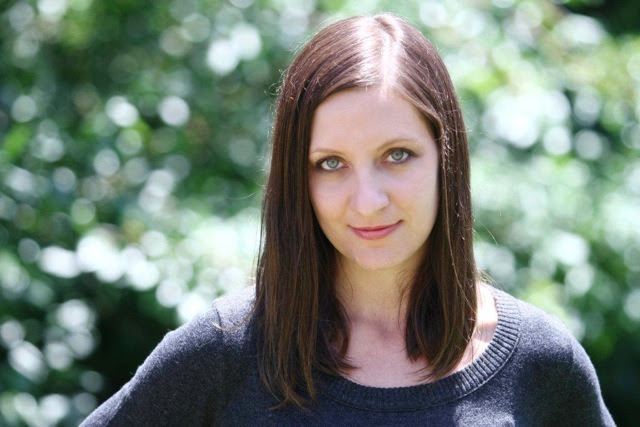
Maximum Shelf author interview: John Vaillant

Following yesterday’s review of The Jaguar’s Children, here’s John Viallant: Looking at the World Differently.


John Vaillant’s work has appeared in the New Yorker, the Atlantic, National Geographic and Outside, among other magazines. His two previous nonfiction books, The Tiger and The Golden Spruce, were award-winners and international bestsellers. Vaillant was born in Massachusetts and lives in Vancouver, B.C. The Jaguar’s Children is his first novel.

vaillantIs Hector’s story based on a specific true account? Where did you get the idea?

The idea came from a conglomeration of different border-crossing incidents. There was one particularly awful case in which a boxcar load of immigrants attached to a train was taken across the border and never opened. It wasn’t found for weeks, until it got to Iowa. Just a hideous, nightmarish situation. I started wondering, what happens in there? What would you go through? And then my family and I lived in Oaxaca for a year, 2009-2010. In Oaxaca, water trucks are a common sight. On one side, they read, “Agua por Uso Humano,” “water for human use,” and I kept thinking about that, and I kept thinking about thirst, and the anagram of agua and jaguar. It just fell into place. All these disconnected observations and ideas gradually coalesced. There was a moment when this fellow, the narrator, just announced himself to me, in January 2010.

This is your first published fiction. What led you here from your past work in nonfiction?

Trying to find a container that was suitable for the story I wanted to tell. Needless to say, Oaxaca is a really interesting place–Mexico is full of stories. There was a nonfiction story that was jaguar-related, that I was pursuing and actively researching down there, and for a couple of reasons it didn’t fully coalesce. A lot of what I was experiencing were more like travel anecdotes, but I didn’t want to write a travel book. It felt too trivial. So then I asked, how do I take all of these things I’m seeing and hearing and feeling, and put them all together in a place where they will make sense and hang together, and create a synergetic narrative and a picture of what is going on down there right now? And the novel was the right form.

This is also somewhat a departure from writing you’ve done about the relationship between people and the natural environment.

I’m really interested in hearing voices that I, or we, don’t usually get to hear, so that’s in a sense what the books are about: creating a platform for these people or beings who are generally invisible, to get some air time. You know, it’s not a selfless, altruistic mission on my part–I’m really curious and I want to see what that world is like, I want to understand it better and re-create it in a way that feels authentic. Ideally people who live that life, whether they’re tigers or conservationists, or biologists or foresters or Mexicans in Oaxaca, will feel that their realities were accurately reflected. So the whole natural world connection is almost incidental, honestly. For me, those margins where human beings and the natural world collide, that’s where the most dynamic tension is. It’s a kind of a front line, and also a fault line. Whether it’s human beings and corn, or human beings and thirst, or human beings and tigers, or the forest, there is a common thread. But it’s certainly not intentional; it’s just where my natural interest seems to go.

Did you go to Oaxaca with any work in mind, a book or a story?

I was deep in The Tiger then. I was in the middle of edits and to be perfectly honest, all I wanted to do was finish that book, lie in a hammock and read books that didn’t have tigers in them. Or any other big cats. That really was the plan.

And here we are.

Here we are. That’s the beauty of the muse, really. All the books I’ve done have really come unannounced. It wasn’t a premeditated objective to write any of those stories, they’ve all come to me and I see them as gifts of sorts. Really time-consuming ones. This again came right when I was just about wrapping up The Tiger and ready to read Under the Volcano or some other books about Mexico. And instead, Hector showed up.

Hector’s perspective is of a Mexican indio from Oaxaca, and his voice is convincing.

I do have a strange, kind of inside track to Mexico. For three generations my father’s family lived there, and I grew up steeped in Mexican lore as it was refracted through their experience. My grandfather was a well-known archaeologist who wrote the first comprehensive history of the Aztec nation, a book called Aztecs of Mexico. My grandmother told us many stories about him. Her house, all her kids’ houses, including my father’s, were filled with things from Mexico, some of them very very old, none of them more modern than 1930 because that’s when they came back. So Mexican art and artifacts were featured in my upbringing, as were stories of my grandfather.

In what ways was your year in Oaxaca helpful?

My wife is a potter and an anthropologist, and she wanted to spend time with traditional Mexican potters. I would follow her around in her trips to these villages, quite remote and very very traditional, so we’d meet people who didn’t speak any Spanish at all. People who have never really succumbed to the dominant culture. They were nominally Christian, but observing and worshiping traditional deities and certainly pursuing traditional practices, whether it was ceramics or agriculture. So it was really like going into another world. I had a notebook and a camera and my innate curiosity. The fact that I had a deep Mexican connection in the family gave me more of a motive to try to understand it. What was it that kept three generations of my family down there when they were all Americans? And perfectly well-connected Americans; they could have had fine lives up here, but for some reason Mexico was the place that offered them something different, something more.

But ultimately this is a story about a Zapotec guy from southern Mexico. Think about the U.S./Mexican border: it’s the most active border on the planet, the site of the largest human migration on earth, and Oaxaqueños play a huge role in that. One in three people from that state go to the States at some point to work, most of them illegally. And all kinds of things happen to them. As I came to understand that, it just started to feel more and more important.

And there was another inspiration. Just as I vowed not to read any more books about tigers, my father-in-law gave me The White Tiger by Aravind Adiga, which won the Booker Prize in 2008. It’s a wonderful novel about a low-caste, indigenous guy from northern India, who notices that there’s something big going on in Bangalore and Delhi. Big money is being made. He’s very smart, but he just doesn’t understand the system well enough to know even how the money’s being made. And that’s how a lot of indigenous Oaxaqueños approach the U.S.–they may have family up there, they may not, but they do not understand the culture terribly well–or often the hazards of the journey, which are many, and can be absolutely lethal. So you have these people who are capable in their sphere but naïve about the wider world, making the journey north, and a lot of them come to grief on the border.

Was this book as difficult or traumatic to write as it may be to read?

I wondered a lot about why I would want to return to this place over and over again, and go back into that truck. It’s a hideous, deadly place. But I thought, nobody else is probably going to do this. And this is something that happens to people, that shouldn’t be happening. And Hector was a very compelling person. But as far as difficulty goes–it was extremely difficult. The novel is a different animal, so to speak, than nonfiction, and certain narrative tools do translate, but being in that voice and pacing it and dealing with the other voices… really was new to me. You’re not really the same after doing something like that. I look at the world differently and feel it differently as a result of spending so much time there.

So the challenge of immersing yourself in the painful subject matter was ultimately rewarding, which I think is the case for readers as well. This is about more than just a nightmarish border-crossing incident.

So much of the book isn’t about that. It’s really about being a young person in a very troubled–some could argue broken–society and first trying to find his place in it, and then ultimately having circumstances align in such a way that he has to leave. The time you spend in the truck is desperate and terrible, but also you get to see how strong Hector is, and what he’s made of. He’s extraordinary in some ways, but he’s not superhuman. It’s amazing what people survive. It’s amazing the kind of clarity and wisdom those kinds of stressors can evoke and inspire. I think it’s a crucible for him, and for his character. I think all of us undergo tests, some of them truly terrible–it’s part of the human experience. Hector is a guy trying to figure it out. Trying to survive at the immediate level, but also at the cultural and occupational levels. The world is changing really fast around us. There are pressures being brought to bear that I have no control over, so what do I have control over? How should I respond to the people around me, to those who are trying to help me and those who are trying to impede me or hurt me? In that sense it feels like a kind of fundamental story.


This interview originally ran on November 5, 2014 as a Shelf Awareness special issue. To subscribe, click here, and you’ll receive two issues per week of book reviews and other bookish fun!

Maximum Shelf author interview: Yannick Grannec

Following yesterday’s review of The Goddess of Small Victories, here’s Yannick Grannec: On Mathematics and Metaphor.


Yannick Grannec is a graphic designer, freelance art director, professor of fine arts and enthusiast of mathematics. The Goddess of Small Victories is her first novel. She lives in Saint-Paul de Vence, in France.

(Interview translation courtesy of Other Press.).

yannickWhy Kurt Gödel? Why did you feel the need to tell his story, or more accurately, Adele’s?

When I was 18, I read Gödel, Escher, Bach and became fascinated by the work of Kurt Gödel. Twenty years later, I read, by chance, an essay about the friendship between Gödel and Einstein and, as the subject interested me, read other essays. In one of them, I came across a few lines about Adele that struck me as condescending. This question was implied: How could such a genius marry such a common woman?

Knowing Gödel’s life–the man was paranoid, anorexic, depressed–I wondered: How could a woman love such a difficult man for 50 years? There was nothing scientific about it, but that seemed to me to be the real mystery.

I had the intuition of a human story that needed telling, one that came with an opportunity to share what has always fascinated me, the history of science, as part of the fabric. To tell it in the voice of Adele seemed to me completely natural: she was the Candide, which allowed me to transmit complicated ideas with simple words. I felt an immediate empathy for her, as though I’d always known her: she spoke to me of all these destinies of women, of these lives sacrificed for love or out of social obligation. She spoke to me of my mother, my grandmothers, and all those other women howling through my DNA.

What kind of research did you do to prepare for this writing?

Even before beginning to write, I read a great number of documents over the course of at least a year. Of course, I had begun with everything that was within my intellectual reach that had to do with Kurt Gödel, then Einstein, then the biographies of those scientists who shared their destiny. But as soon as I pulled on one thread, an infinite tapestry appeared: I had to stick my nose into epistemology, into history in general, into philosophy, etc. I admit to having had a few periods of discouragement. In particular about Husserl, on whose subject, clearly, I stumbled. Like Adele, I didn’t have the keys. I assembled a wide-ranging collection of photographs to nurture my imagination (the people, the period clothing, the places, etc.) and then I went on reconnaissance to Vienna and to Princeton, to soak up those places. In certain neighborhoods, those two cities seem to be stopped in time. It is very easy to imagine the era before the war in Vienna and the 1950s in Princeton. I had come up with a route, from house to café, from university to sanatorium, to follow in Gödel’s footsteps. I understood why, for example, they lived in the suburb of Grinzing: the 38 tram was direct from the mathematics university. Kurt didn’t like complications in his daily life. Each new discovery stirred up big emotions: seeking Kurt and Adele on the street where they lived, I found an old photography studio at the address that had belonged to Adele’s father. I’ve returned there since, only to discover it has been replaced by a snack bar. Destiny, in this case, gave me this gift. Three years later, I would have missed it. At Princeton, I timed the route Gödel walked with Einstein, to determine the length of their conversations. At the Gödels’ tomb, in Princeton, I cried. I’ve lived with them; they’re my family.

As for having the nerve to make Einstein, Gödel or Oppenheimer speak, I owe it to a kind of wild foolishness, the one that urges you to jump from a diving board into cold water. In retrospect, I shiver at the thought.

How did you come to the decision to switch back and forth between the latter-day view of Anna’s life, and Adele’s life history as it happened?

Anna was born in hindsight. I needed a character who would listen to Adele. And I felt a need to interrogate the Gödels about their lack of reaction to the rise of the Nazis. I needed to explore this gray area. I’m going to say something very pretentious, but the novel’s construction is meant to be a metaphor for the incompleteness theorem. The system observed here is not a mathematical system, but that of Adele and Kurt’s relationship. Extrapolating from the incompleteness theorem–Gödel forgive me!–we can say: one has to be outside of the system to understand the system. So I opted for a double construction: a subjective perspective, from the inside of the system where Adele recounts her story and her feelings in the first person, and a more objective perspective, in the third person, where the narrator observes Adele and the way she tells her story, completed by the letters of the Gödels’ nurse, Elizabeth Glinka.

Anna was therefore supposed to be an objective observer, but the more I wrote, the more her character developed. The relationship with the old woman became a creative re-creation, allowing me to work without documentation, following my intuition. Her destiny became a mirror of Adele’s with, obviously, different paradigms of social origins and historical circumstances. In the end, Anna is, for me, a very positive character: she gives Adele her affection and the possibility to pass on the vital force that defines her. So the novel doesn’t conclude with a disappearance, but with all the possibilities of a life being constructed.

Toward the end of the book, it felt like we got a more intimate look inside Adele’s head. Was this intentional?

The first part of the book takes place during the time of the events that tormented her: life in Vienna during the heady days, the rise of Nazism, the flight across the Pacific, the move to the United States, McCarthyism. At the end of the novel, we accompany the couple through their aging, in a life that’s more and more reclusive. We must understand Adele’s solitude, her boredom. I felt strangely compelled to make the reader feel Mrs. Gödel’s inner battles: her anger, her discouragement followed by a sort of abandon, the acceptance of her own weakness and inevitable decline.

Did you have any role in the translation of this novel by Willard Wood into English? What does the process look like?

My English is really not good enough to judge the translation. I have complete confidence in Judith Gurewich, my American publisher, and Stephen Carrière, my French publisher, both of whom are completely bilingual. I know it’s a very good translation. I loved working with the translator, Willard Wood: we exchanged numerous e-mails. Willard has a sensitivity, an attention to detail that moved me, and a deadpan sense of humor that I greatly appreciated. For other translations, I had to sometimes explain, literally, the idiom or the double senses, which can be very exhausting. That wasn’t the case with Willard, who has a perfect mastery of the second degree in both languages. It was very important to me to keep the humor of the original French, if I can allow myself to describe it that way!

How important is historical accuracy in fiction, and how faithfully does this novel stick to the historical record?

To slip into Gödel’s life demanded a great deal of exactitude. When you use someone’s life, respect is an imperative at every moment. For Kurt, it wasn’t difficult; his life had already been explored and dissected by different biographers, like the “bible” by John Dawson, Logical Dilemmas. For Adele, I had so little information. I had to make myself empathetic, attempt to guess her feelings, her emotions, through the few anecdotes I was able to gather: the aggression of the Nazis on the steps of the university, the naturalization scene in Oskar Morgenstern’s memoirs, Dorothy Morgenstern’s saying that she was very intelligent and funny. I constructed three chronologies: an historic and scientific frieze; a timeline of Kurt Gödel’s life (his trips, moves, work, depressions and health problems); and underlining it, one of Adele’s life as well. She was the unknown in the equation determined by history and the history of her husband. I tried to guess at and date her moods, her joys and, at times, her despair.

The main difficulty lay less in historical exactitude than in approaching scientific exactitude. First of all, it was necessary to attempt to understand. I could talk about this famous incompleteness theorem in a general way, but not in any detail; I’m not a mathematician, and I’m not at all conversant in the language of logic in which it’s expressed. Then, I had to betray. Because the language of mathematics is, by its very definition, objective–but to integrate it into fiction, and to share it, I could only use written language, a subjective tool. To go from sign to metaphor is a betrayal. So I needed to accept, and have others accept, an inevitable inexactitude.

For the part on the continuum hypothesis, I took a course taught by a mathematician friend. This part is more developed, because I thought I understood it better, and my intention was to use only what I thought I understood, because it was important to me to be intellectually honest. Of course, often, we think we understand, but it’s only the surface of things.


This interview originally ran on August 6, 2014 as a Shelf Awareness special issue. To subscribe, click here, and you’ll receive two issues per week of book reviews and other bookish fun!

Maximum Shelf author interview: Michael Pitre

Following yesterday’s review of Fives and Twenty-Fives, here’s Michael Pitre: At Our Most Human.

pitreMichael Pitre is a graduate of Louisiana State University, where he was a double major in history and creative writing. In 2002, he joined the U.S. Marine Corps. He deployed twice to Iraq and attained the rank of captain before leaving the service in 2010 to get his M.B.A. at Loyola University. Pitre lives in New Orleans with his wife. Fives and Twenty-Fives is his first novel.

This novel handles a great deal of trauma, and one assumes you experienced similar trauma during your military service. Was your writing process cathartic, or painful?

My experiences in Iraq were pedestrian compared to those endured by the characters in this story. It’s a book about people I knew and, in some cases, friends for whom I could have done more. That’s the hidden pain of veterans, I think. We always remember the moments when we weren’t brave, occasions when we didn’t measure up, and days when we didn’t give our best.

Catharsis came from a desire to do right by my friends. There were times when I knew exactly what would happen at the end of a paragraph, and I didn’t want to finish it. Yes, it was painful. Had this book been easy to write, it would not have told a true story.

You point out that this is not a memoir, but you have a great deal in common with Lieutenant Donovan. Were the boundaries between fact and fiction always clear to you as you wrote this book? Did those boundaries turn out as you’d intended?

Early on, I was hyper-focused on maintaining a bright line between fact and fiction. Again, I set out to write a story that would honor the people I knew, and I’d hoped to avoid autobiographical details entirely. Of course, writing is a process. What crept into Donovan’s character from my own experiences were mostly his feelings of inadequacy as an officer, and the awkwardness of being a young veteran in graduate school where classmates ask you to tell stories they aren’t prepared to hear.

Are there any misconceptions about the war in Iraq that you felt you had to guard against?

I was eager to shun misconceptions about war in general, particularly when it came to glamour and gallantry. War is work. For the average U.S. service member in Iraq, it was filthy and exhausting, absurd and terrifying, repetitive and boring. That’s why I chose road repair as the principal mission of Donovan and his Marines. It wasn’t a sexy gig, but I don’t know of another task in Iraq that was more dangerous or more necessary.

On the home front, I was wary of the giving the impression that Iraq War veterans are damaged goods. The young men and women who fill the ranks of the U.S. military are devoted professionals.

Though the characters in this story are struggling to reintegrate to civilian life, they aren’t giving up, they aren’t blaming anyone, and they aren’t victims. They’re working through their problems, and in the end, they’re doing it together.

Who is the hero of this story? Or, your hero?

All three narrators are young men placed in impossible circumstances, and none of them come away clean. Even Donovan, who’s all but bestowed with the formal title of hero, knows the truth about himself. The title becomes his burden.

The closest thing this story has to a hero is Sergeant Gomez. I’ve known a few Marines like her. I’d say they’re my heroes.

I’m so glad you said that. She is so much more than the “token female” that she might have been in lesser hands. Her presence as the only woman in the platoon felt very natural. Does your experience bear out her ease in this story?

The short answer is yes, it’s perfectly normal for a female sergeant like Gomez to run a road repair crew. Most Marines wouldn’t give it a second thought. Female service members have been fully integrated into occupational specialties such as military police, combat engineers and logistics for well over two decades, and these groups have spent as much time on the roads of Iraq and Afghanistan as anyone.

In fact, as the American experience in Iraq wore on, female service members became highly valued for cultural reasons. To avoid inflaming the population, male Marines were forbidden to search Iraqi women at security checkpoints. So, a task force of female Marines was assembled, trained in search techniques and deployed to check points throughout western Iraq. This ad hoc solution was eventually formalized into a program called “Lioness,” in which every battalion in theater had to answer its “Lioness tax” by surrendering a number of female Marines for the duration of a deployment.

Lioness was so successful that the program was copied and expanded into Afghanistan. Infantry patrols were reinforced with Female Engagement Teams composed of six to 10 female Marines. While the grunts dealt with the Afghan men outside, the female Marines would take off their helmets, go into the houses and develop relationships with the Afghan wives, mothers and daughters.

I served in Iraq alongside a female sergeant named Sally Saalman, who was perhaps the most feared and respected Marine in our battalion. She’d served on a forerunner of Lioness in 2005, and had been badly wounded in a suicide attack that killed six service members, three male and three female. (Read more about that event here.)

That was her first deployment. We met on her third. When Saalman raised her voice, everyone around would shut the f*** up and listen.

When and why did you decide to switch voices between your three main characters?

From the beginning, I knew the story would require three different perspectives and that one had to be Iraqi. It’s a long-ignored truth of war that warriors often suffer least. This is especially true in counter-insurgency, where the civilian population is the battlefield. The Iraqi people were the mission. I felt that not representing their experience with its own, distinct voice would’ve been narcissistic.

As for Donovan and Pleasant, I thought it important to show how some veterans have opportunities opened for them by their service, while others are left all but ruined by it.

Did you set out to write a book with a message or moral, or is this simply the story that you held inside yourself as a novelist?

I didn’t set out to write a book with a message or a moral. This really was just a story I had to tell. But along the way, as the character of Dodge became very real to me, I stumbled across the idea of people finding each other in their shared frailty. We’re at our most human when we can recognize our dread, and our weakness, in others.

For those who presume they have nothing in common with a kid from Baghdad, I’d hope that they finish this book having discovered that they have everything in common with him.


This interview originally ran on July 23, 2014 as a Shelf Awareness special issue. To subscribe, click here, and you’ll receive two issues per week of book reviews and other bookish fun!

Maximum Shelf author interview: Marja Mills

Following yesterday’s review of The Mockingbird Next Door, here’s Marja Mills: Making Acquaintances.


Marja Mills is a former reporter and feature writer for the Chicago Tribune, where she was part of the staff that won a Pulitzer Prize for a 2001 series about O’Hare airport entitled “Gateway to Gridlock.” The Mockingbird Next Door is her first book.

Mills was born and raised in Madison, Wis. She is a 1985 graduate of Georgetown University’s School of Foreign Service; a lifelong interest in other cultures led to studies in Paraguay, Spain and Sweden. Mills lives in downtown Chicago and often spends time in Madison and her father’s hometown of Black River Falls, Wis. (pop. 3,500).

marja

Did you have preconceived notions of what Nelle Harper Lee would be like? In what ways did she surprise you?

I didn’t know what to expect. I thought she might be quiet and reserved. Not so. She was gregarious much of the time, and witty. She loved to laugh. When she was telling a story that especially amused her, she’d take her glasses off, tip her head back and just laugh until she could finish what she was saying.

Nelle and her sister Alice–an attorney she calls “Atticus in a Skirt”–loved to get in Nelle’s Buick and explore the back roads. I’d read that the home she shared with Alice when Nelle wasn’t in New York was more modest than one might expect for an attorney and an author of her remarkable and enduring popularity. That was true. They lived simply, didn’t care about material things and had an eclectic group of good friends, from a Methodist minister and a librarian to a hairdresser and a bank president and his wife. Most were retired but still very active.

What about the Southern culture you encountered, in general? Any surprises there?

Being from the Midwest, I was surprised how many words in common usage in Alabama were new to me. Things such as mashing buttons instead of pushing them. Or using a buggy at the Winn Dixie instead of a grocery cart. That was a source of entertainment for the Lees and their friends: watching me learn local expressions. My favorite is an old-fashioned one that Nelle taught me: “journey proud.” It’s the excitement and apprehension before a trip that makes it hard to sleep.

How would you describe Harper Lee as you later came to know her?

My first day living next door in Monroeville, she left a note inviting me to dinner. That touched me. Soon she was calling to have afternoon coffee together, often at McDonald’s.

And of course you can’t know Nelle without knowing her sister Alice. Their lives were entwined and yet quite different, as were their personalities. Miss Alice, as she is known, is 15 years older than Nelle and there was another sister and a brother between them. As I wrote in the book, “even at their ages, it was clear Alice was the steady, responsible older sister, and Nelle Harper the spirited, spontaneous younger one.”

Both gave generously to the Methodist church and various charities. Nelle had been donating large sums, quietly and behind the scenes, for many years. As their Methodist minister friend, Tom Butts, said, she educated many people who had no idea she was their benefactor.

In what ways, if any, do you identify with Harper and Alice Lee?

They got lost in books as children, pulled into another world where you’re not just reading words on the page but living in the story, walking around in it. I was that way, too. Nelle’s eyes would dance, 70 years later, when she talked about being absorbed in the adventures of the Rover Boys.

Aside from many hours spent talking with Nelle and Alice, what research was involved for this book?

Some of the most valuable and enjoyable research I did was around kitchen tables and on porches, interviewing Lee friends and family. There were people I needed to talk to “while they still had their marbles,” as Alice put it. Or “while they’re still above ground,” as Nelle said. These were leisurely interviews but overall there was a sense of urgency, too, that if their stories about the town and the Lees weren’t preserved they would go with them to the grave.

Books were part of the research, too, naturally. I have rows and rows of them at home. Many of the titles were recommended by the Lees, with Alabama history and Southern fiction being two major categories. I enjoyed memoirs by Horton Foote, the playwright who adapted To Kill a Mockingbird for the film, and Wayne Flynt, the Alabama historian.

What was different about the writing process for this book, compared to your past experience as a journalist?

I had the opportunity to really get to know the people and the place I was writing about, to let them reveal themselves over time. That’s a luxury most journalists don’t have. Nelle and Alice did things on their own terms and on their own time. The way this experience unfolded gradually was more compatible with that that. “You let the river run,” was the way Rev. Butts put it.

You allude to the Lees’ approving what went in the book and what didn’t. How much were you asked to hold back?

Not as much as I expected. Much of what they said that was off the record was to spare the feelings of a friend or relative. When I lived next door, we talked about some of the things they especially wanted in the book. They resented Truman Capote’s characterization of their mother, for example. Both sisters described her as a gentle soul. I went over with them stories I wanted to share as well. I was ready to do much more of that but their approach was “use your own judgment.”

Has Nelle or Alice read this book? Any comment from them?

Because of their age and health–neither is able to live at home anymore–I don’t know that they’ll be able to read it but I think they’d enjoy reliving some of the adventures we had together. Age and diminished vision do take their toll. I’ve wondered sometimes how many books each has read in her lifetime. A staggering number; both were avid readers since childhood. Even in her 90s, Alice often had four books going at once. She told me about the time she and Nelle decided they would donate some of their books to the Methodist church.

Nelle set her jaw and tried to keep up her determination to part with some of the books. But then she would have second thoughts and retrieve them from the boxes they were trying to fill. Alice was no better. For all their generosity over the decades, books were hard to give away, even for their church. The evidence of that was the rising tide of books in their house. They had all shapes and sizes of bookcases, crammed where they could find space, and it still wasn’t enough.

In your book you make it clear that the Lees supported this project, but there was some press in 2011 regarding a statement from them indicating the opposite. Can you help us understand these conflicting reports?

I asked Alice Lee about it. Nelle was not living at home; she had a serious stroke in 2007. Alice issued a statement. She said that the first statement had gone out without her knowledge and did not represent her feelings or those of her sister. As far as I know, that put the matter to rest.


This interview originally ran on June 25, 2014 as a Shelf Awareness special issue. To subscribe, click here, and you’ll receive two issues per week of book reviews and other bookish fun!

Maximum Shelf author interview: Terry Hayes

Following Wednesday’s review of I Am Pilgrim, here’s Terry Hayes: On Breadth of Scope.


Terry Hayes was born in Brighton, England, migrated to Australia as a child, was based in New York as foreign correspondent at 21, and produced a current affairs radio program before moving to Los Angeles to work as a screenwriter. He has written numerous screenplays and mini-series, and has received two international Emmy nominations. His credits have included Payback with Mel Gibson, From Hell with Johnny Depp and Vertical Limit with Chris O’Donnell. I Am Pilgrim is his first novel. He lives in Switzerland with his wife, Kristen, and their four children.

photo: Kristen Hayes

photo: Kristen Hayes

I Am Pilgrim travels through many complex spheres in numerous countries. How much research was required for this book? How did you go about it, and did you enjoy that part of the creative process?

The short answer is: an enormous amount of research. When I started I had no idea just how challenging it would be–which was probably just as well, otherwise I might not have even started. I did have a couple of advantages. With the exception of Afghanistan and Saudi Arabia, I had either lived in, or visited for extended periods, all of the countries where the plot takes place. The race against time criss-crosses continents, and ranges from the Lower East Side of Manhattan to Damascus in Syria, from Santorini in the Greek islands to a Bulgarian border post. My own wanderings lessened the research load and, I hope, allowed me to bring the novelist’s eye for detail to those locales. The second advantage I had was that I had once been a journalist and foreign correspondent, so I am accustomed to efficient and focused research and interviews. I approached the material as if I was a journalist on assignment–I admitted to myself I had a lot to learn. The one thing that I found the most difficult was the science. The plot involves a lot of biological detail, and I wanted that to be as accurate as possible. When I was at high school, several of my science teachers told me that I was very lucky I was good at English and history! Still, I have an enormous curiosity and am happy to read and interview widely, so I eventually managed to wrestle that part of the subject to the ground.

In a practical sense, it would not have been possible without the Internet. Such a vast array of information, so readily accessible, I believe is changing the nature of writing, especially of something like an international spy thriller. You can find out exactly how public beheadings are conducted in Saudi Arabia, how much a gene sequencing machine costs on eBay, or many of the latest tradecraft habits of covert intelligence agents operating in hostile territory. It gives an enormous grounding to the rest of the research. I did enjoy it, most of the time. I am lucky to have an overwhelming curiosity and a pretty good memory, so the research, whether it was about the Islamic faith or the design of a Roman coliseum called the “Theatre of Death,” was really a great experience. Of course, I worried that I had made a mistake–which I am sure I probably have–but I reminded myself that the book was not a documentary. It was, beyond everything else, a work of fiction.

You have created an extraordinarily intricate plot, with lots of characters and lots of detail. Can you tell us a little about the note-taking, outlining or whatever method you used to keep everything straight?

This is the type of book I have always loved–big, epic stories that you can really lose yourself in. The ones that affect you in a very emotional way and also, hopefully, teach you something on the journey. That was the sort of novel I tried to write. Part of that ambition was to interweave a major plot with a number of subplots and somehow try to make it all “of one piece.” Basically, how I did it was to keep telling myself the story. Or, better still, telling it to my wife on long car rides! I think, by the end, she was glad to hear the last of Pilgrim. Of course, you have to have some major stepping stones, or turning points, along the way. The biggest of these was the ending. Whether it is a screenplay, a piece of journalism, or the novel–I have always had to know how it was going to finish. So, once I had an idea of the character and an ending, I could start to embellish it. “Okay,” I would ask myself. “Where do we meet him?” “Why is he there?” “What does he want, what is his objective?” On and on and on. Slowly, the blanks would start to get filled in, and in order to do that, you have to have Pilgrim–or whatever his real name is–interact with other people. It’s funny, but you don’t forget a good run of events in the story, or ideas of how to do it. Bad ideas don’t last a single sleep. Time after time, I would start at the beginning again and tell myself (or my long-suffering wife) the story. When the detail became too much, I started to make notes and, naturally, I had to do that while I was researching the more difficult sections of the story–the things like the biology of viruses or the exact methods used in waterboarding. As the story grew, I started to use what people in movies call “beat-sheets”–one-line notes detailing each “beat” of the story, each significant development of the plot or important moment for a character. Toward the end, the problem became finding the exact research note I knew I had made months earlier. “I know I wrote that down somewhere….”

In the past, you have written in a number of formats, including screenplays, television and journalism. How was writing this novel familiar, and in what ways was it new and challenging?

Well, it is all story-telling. Whether it is a feature article for a newspaper or a screenplay for an action movie, you are always trying to take the reader–or viewer–through a sequence of steps, or events, which are believable and arresting. There is always that struggle to find the right word, the memorable phrase, the clearest way of expressing something. So those things were extremely familiar. The major difference is that in writing movies or long-form TV, the script is part of a manufacturing process–it is a step along the way to creating the finished episode or movie. In a novel, it is the finished article. So the pressure on crafting the words and paragraphs is that much greater. Sometimes a little paralysing! The other major difference is that in movies or TV you can’t tell the audience what a character is thinking–you have to rely on the actor to try and convey that. Of course, in a novel those internal thought processes are easily conveyed, so it is much easier to explain why a character follows a certain course of action. After years of writing for the screen, I found that completely liberating. I loved having the ability to say in the novel “He thought such and such… so he did this and this.” Because you can’t do those internal thoughts in a screenplay, I always think writing a movie is like fighting with one hand tied behind your back: it’s a real skill, but it sure makes things hard.

Pilgrim, like many of fiction’s most compelling heroes, struggles with his own past and demons. If anything he becomes more human, and less perfect, as the novel develops. Did he develop this way for you, too?

Yes, he sure did. I think it’s a little like life itself–the more you get to know somebody, the more you learn about their flaws and the wounds they carry. It doesn’t mean you like them any less; to the contrary, you often end up admiring them even more. So it was with Pilgrim. Most of us, I think, are damaged in some way, but Pilgrim–as you point out, like so many heroes in fiction–is more damaged than most. On one level, the novel is about him confronting and dealing with those issues and demons from his past–a different sort of pilgrimage, I guess. Despite his failings, despite his flaws, he never gives in. He knows that he has to endure an enormous amount of anguish and pain, but he finds the courage and resolve to see his mission through to the end. The fact that he is prepared, if necessary, to sacrifice himself in the pursuit of something far more important than himself makes him a true hero, in my mind. There seems to be a prevalent view, especially in movies, that heroes should have some sort of super-powers. I don’t agree. I think it is the very human things, faults and failings included, that make a true hero. Especially if he or she can overcome them and show us what great courage and commitment really mean.

And then there’s your antihero, the Saracen, who is Pilgrim’s genius-counterpart but approaching total evil. Do you think of them as two sides of the same coin?

They have so many things in common–especially an anguished childhood–that I certainly see them like that. If this were Star Wars, I would say one turned to the dark side, the other to the light. Although born on completely opposite sides of the earth, they both experienced the death of a parent in horrific circumstances, they are both extremely intelligent, have undertaken medical degrees, and are loners, complete outsiders in the world. They both go on a great journey, a pilgrimage, where the fate of people and nations hangs in the balance. At one stage Pilgrim describes his adversary as a “ghost”–spectral, hidden and barely glimpsed–but Pilgrim could just as easily be describing himself. These two men, who have spent all their lives living in the shadows–one hell-bent on cataclysmic revenge, the other a covert intelligence agent–move ever closer to each other. When they finally step out of the shadows and meet in a place called the Theatre of Death, their battle relies more on intelligence than it does on weapons. It is an epic struggle between two men trying to outsmart each other. In order to do that, they have to know an enormous amount about each other. I have always thought that, because of his own background and experiences, Pilgrim understands his adversary better than any man on earth.

What do you have in mind next? Avoiding spoilers, of course: is there room for a sequel here?

Well, in my fevered mind, Pilgrim was always the first part of a trilogy. On the last page of the last novel we discover what his real name is, and I don’t think it is giving away too much to say that he walks up the front steps of a house and we know that he has found safe harbor at last. As you can probably tell, I have the next two books outlined–which I had to do in order to set up a lot of things in the first novel that I would pay off in the later volumes. However, as I was not certain if I Am Pilgrim would meet with any success, I did not want to launch into writing the second volume if nobody had read the first! Therefore I am in the midst of writing a book tentatively called The Year of the Locust, which is another thriller, partly set in the intelligence world. It also involves “just over the horizon” science and pits a man and his wife against seemingly impossible odds. I like the story very much and, as much as is possible while wrestling with words every day, I am really enjoying it. I hope, when it is finished, other people will feel the same!


This interview originally ran on May 27, 2014 as a Shelf Awareness special issue. To subscribe, click here, and you’ll receive two issues per week of book reviews and other bookish fun!

Maximum Shelf author interview: Chevy Stevens

Following yesterday’s review of That Night, here’s Chevy Stevens: Listening to Her Own Voice.


Chevy Stevens grew up on a ranch on Canada’s Vancouver Island and still lives on the island with her husband and daughter. When she’s not working on her next book, she’s camping and canoeing with her family in the local mountains. Her debut, Still Missing, won the International Thriller Writers Award for Best First Novel. That Night is her fourth novel.

unnamedThis is your fourth novel. Is it getting easier, or harder?

I really enjoyed writing That Night, and even though it still had some challenges–as each book does–it was the fastest I’ve ever written a novel. It was a different experience for me in many ways, however, because I was pregnant when I started writing the book. I had a wonderful amount of energy and focus (love those pregnancy hormones!), and also the burning desire to get as much completed as possible before the baby arrived. I was a few days short of finishing my first draft when she decided to make her appearance. The rest was finished after she was born.

I think with each book you learn more and you grow as a writer so you learn to recognize weaknesses early, and to question things sooner. I’ve also learned how to listen to my inner voice more when I have doubts about a plotline or a character. I think with each book I’m beginning to understand my own style more, what works for me, where my voice resonates the most, and what my fans also enjoy the best about my writing. Hopefully I can keep giving them that.

You got the idea for your debut, Still Missing, in which a realtor is abducted from an open house, while working as a real estate agent yourself. Where do your subsequent creepy-terrifying plot concepts come from? Do you scare yourself with these stories?

Never Knowing was the result of a conversation I had with my editor, a “what if” premise, which grew into a story. In Always Watching, I wanted to write about Nadine, the therapist in my first two novels, and I was intrigued by the debate about repressed memories and also the subject of cults. The cult in that book is inspired by a hippie commune that lived in Shawnigan Lake in the ’70s.

That Night grew from an idea I had while watching a true story on television about a man who served years for his girlfriend’s sister’s murder. I also “saw” Toni in my mind and wanted to write about her.

Sometimes certain scenes in the books do scare me quite a bit. Essentially, I am telling myself the story first, so if I don’t feel anything, then it’s not strong enough. There are some moments in the current book I’m working on that are truly terrifying and made my own heart pound when I wrote them.

Did you have to research the prison system?

I did quite a bit of research for That Night. There seemed to be more information available about the American prison system than the Canadian, so I had to work hard to uncover some sources willing to talk to me. Because of the sensitive nature of the information they shared, they asked to remain private. I read everything I could find–online articles, books, memoirs, and watched both documentaries and numerous episodes of Lockup.

Shauna and her gang are so mean, it’s just boggling. Do they come from life–yours or anyone’s–or are they a grotesque fantasy?

I think we all remember “mean girls” in high school, but they are also a product of what I learned during my research. I read books on teen bullies and how girls can be especially vicious, often cutting another girl out of their circle, or simply deciding they don’t like someone and then making their life hell. There have been many documented real-life cases where bullying has gotten completely out of hand, with deadly consequences. Sadly, a few young girls have even taken their own lives because they can’t cope with the constant harassment. The worst part to me is that parents are often unaware of what’s happening to their children at school.

Toni’s voice is convincingly teenaged in the passages set in her early life, and more grown-up in the post-prison passages. Did you make a conscious effort to vary her voice? Was it difficult to switch gears?

I don’t think it was conscious. Writing is a bit like acting sometimes, you go into the character. So when I was writing Toni’s teenage years, I felt like a teenager, with a teenager’s concerns and thoughts and hopes and dreams. Then, when Toni was older and released from prison, I wrote from a different mindset, imagining how it would feel to be in that situation, how it would shape you, harden you, how angry you would be at the system for failing you.

Are you already at work on your next book, and can you share anything about it with us? All your books so far are stand-alones; any interest in the idea of a sequel?

Yes, I am close to finishing my fifth novel. I’m not ready to share the title just yet. It’s a superstition of mine that the book has to be finished first. But I will share that it’s another standalone about three sisters who escape a terrible situation and go on the run, only to get caught in an even worse nightmare.

I haven’t wanted to write a sequel to any of my books at this point because I’ve usually put the characters through quite a bit, and it doesn’t feel fair to keep ruining their lives.


This interview originally ran on April 30, 2014 as a Shelf Awareness special issue. To subscribe, click here, and you’ll receive two issues per week of book reviews and other bookish fun!

Maximum Shelf author interview: Lily King

Following yesterday’s review of Euphoria, here’s Lily King.

Lily King grew up in Manchester, Mass. She received her B.A. in English Literature from the University of North Carolina at Chapel Hill, and her M.A. in Creative Writing from Syracuse University. She has taught English and creative writing at several universities and high schools in the U.S. and abroad. Her three previous novels are The Pleasing Hour, The English Teacher and Father of The Rain. Her short fiction has appeared in literary magazines including Ploughshares and Glimmer Train, as well as in several anthologies. King is the recipient of a MacDowell Fellowship and the Whiting and PEN/Hemingway Awards, among others. She lives with her husband and children in Maine.

photo credit: Laura Lewis

photo credit: Laura Lewis


Presumably even this “loosely based” work required research into the field of anthropology and Mead’s life. Did you have any background to begin with? Did you enjoy this research?

It required a ton of research and no, I had zero background in anthropology or ethnology, not even one anthropology course in college! Like many writers, though, I have always felt like an extremely amateur and untrained anthropologist in the world, observing the huge, crazy mysteries of human behavior and writing it all down in novels.

On the one hand, you enjoy the research because it’s not writing, which is much harder, but on the other hand you miss writing miserably and feel like a part of you is dead. I had so much to learn before I could start, but because I always knew the book would be fiction, I didn’t want to get too attached to any one detail or fact. I read a lot of books at a squint, taking notes but always letting my imagination in on it, writing more notes on what could happen than what did happen, but at the same time trying to absorb all the information in some visceral way so that it felt like personal experience I could draw from when I started writing. And it was hard to know when to start writing. There was always, always more to read, more to learn. When I finally decided it was time, the research loomed over me. But once I wrote the first scene, I felt it become my story, and all that information became useful, not threatening.

What makes Margaret Mead such a good subject for this work? And when did you know you wanted to write about her?

I stumbled into the novel by reading a biography of Margaret Mead nine years ago and coming across this one short chapter about when she was way up this river in Papua New Guinea with her second husband and she met her third. She fell in love hard and fast in this completely isolated environment. She believed in an open marriage, what she called “polygamy,” and her husband did not, but she was very honest about her feelings and the whole thing, combined with the heat and mosquitoes and malarial fevers, was just a wild mess. So of course I thought, what a fantastic novel that would make. For a long time I didn’t believe that I would actually write it. But I kept going out and getting books about them and by them and taking notes and getting ideas while at the same time thinking: I cannot write this novel. I cannot write a novel about a love triangle between anthropologists in Papua New Guinea in 1933. It was preposterous. But I couldn’t seem to stop myself, either.

How did the writing of Euphoria differ from your three previous novels?

With the first three, I was able to just start writing. Each of them required a little detour to the library for something, but usually not until I was deep in, after the first draft had been written. But for this one I didn’t even write a sentence for a year after I got the idea. I was working on my novel Father of the Rain while reading everything I could get my hands on about Margaret Mead and Gregory Bateson and Reo Fortune. And when I got that first sentence–four sentences, actually–in a coffee shop, I didn’t write anything else for several more years. That little cluster of sentences, though, helped me feel I could write the rest someday. They are the words that open the book still and are not much changed from when I scribbled them down at the back of a notebook in that coffee shop. That was very different. With the other books, once I got the first sentences I kept going for fear the initial vision would cloud over and vanish.

Euphoria is told in first person by Bankson, who is the outsider in his own tale. This gives the reader a somewhat restrained perspective. How did you decide to tell it this way? Did you toy with giving Nell her own voice?

That’s an excellent question. The plan all along was for it to be told from Nell’s point of view. It was supposed to be her story entirely. And it did start that way. But after I wrote the first chapter, I realized I needed the reader to feel what was going on with Bankson, the man she is about to meet and fall in love with, so I wrote that next chapter from his perspective. It surprised me how much closer I was able to get to him, and so quickly, how I was able to get inside him in a way that I was not inside her. This is something that all the planning and plotting of a book can’t anticipate. I knew I was a bit in love with him even before I started writing, so I thought it would be so easy to write from Nell’s perspective about falling for him. I just never expected to identify with him so closely, sort of fuse with him. But once I did, I realized it was his story. I denied this for a while, actually, and tried to write the book from all three points of view, but apart from Nell’s journal entries, Bankson claimed the whole thing in the end.

How important is historical accuracy in fiction? How faithfully does your novel follow the historical record?

Fiction is called fiction for a reason. While I used what I read about a particular moment in the life of Margaret Mead as a springboard, I felt absolutely no allegiance to historical accuracy when it didn’t work within the story I was trying to tell. Some of Euphoria is historically accurate, but not because I forced it to be, just because those elements were useful to me. They inspired me. I love history and I love reading about history and I treasure what little I know about our past on this earth, but a novel is not where I go for facts. A novel is where I want to feel the truth. Sometimes you need facts to get at the truth; more often you need your own voice and vision.


This interview originally ran on April 23, 2014 as a Shelf Awareness special issue. To subscribe, click here, and you’ll receive two issues per week of book reviews and other bookish fun!

on author access

I have done some author interviews, as you may have noticed. I did a handful for a podcast, which was an interesting opportunity that I enjoyed but which came to be a little more work, and stress, than I was looking for in an unpaid gig – although many thanks again to Chris at Critical Wit for the chance, which was great while it lasted! And I do the occasional interview for the Maximum Shelf special editions of Shelf Awareness. For the former, I got to choose my own subjects; for the latter, they are assigned to me. When I go to choose interview subjects, I am looking firstly for authors whose books appeal to me (obviously), and nextly for authors that look like they would talk to me – that look like I could get access to them. Reasonably enough, debut authors who aren’t getting ALL the attention in the world are more likely to take the time to talk to little old me than are the Micheal Connellys of the business. (Not to pick on Connelly and for the record, I never asked him for an interview.) A good measure of this is, when I look at their website, does the “contact me” link take me to the author’s email address? or does it say something like “for speaking opportunities, contact the publicist at xxx and for interview requests, contact the whomever at xxx”? The first instance makes for a far better chance of somebody small-time, like myself, getting access.

But when I’m assigned an author interview at Shelf Awareness, I’m guaranteed access, even to the big authors, because the author (or his/her team) has agreed to the special issue in advance. It does promote the upcoming book, you know. So I get the assignment and I get connected with the author or some representative of the author – a publicist, an agent, or somebody with the publishing company. And when we’re both ready, I get set up with the author him/herself. This is easier for me because I don’t have to go seeking access; and it’s presumably easier for the author, for whom usually an appointment is set up and he/she just has to be available by phone or email at the agreed upon time.

So it was surprising when I had a different experience, some time ago. (I am posting this experience well removed, timing-wise, from the incident in question, to preserve this author’s anonymity. And I am calling this author Jane, and making her a woman because I’ve interviewed more women than men and that seems to help preserve anonymity, as well.) I got the book; I read the book; I wrote my review and my interview questions; and I was in touch with Jane’s representative (listed as a “cataloging coordinator” at the publishing company), who asked for an estimated time frame for when I’d be ready for the interview. I gave this estimate, and right about on time, emailed the representative again that I was ready to set up an appointment. As always, I offered the option to do the interview by phone (to be recorded and then transcribed), or by email (no transcription necessary, and more convenient for all parties, but less likely to get off-the-cuff, conversational answers). And that’s when things went south. This author’s representative said, ok, great! so this is what we’ll do: I’ll send you a list of questions you can ask Jane, and you can pick from that list. Um, no. That’s actually not an interview at all; that’s a press release. It’s not like I was going to ask hard or antagonistic questions – c’mon. I passed this issue along to my “boss” for this project, who agreed with my rejection of this option, and followed up with the publisher herself.

This begun a process. My boss and myself eventually communicated with no fewer than 4 people at the publisher: a Cataloging Coordinator, a Director of Advertising and Promotion, an Associate Director of Publicity, and a Publicity Assistant. The cataloging coordinator also referenced the opinions of an editor and a marketing director who apparently weighed in as well. There was a great deal of concern that author Jane (a fairly well established one, with several bestsellers to her name) just couldn’t possibly talk with me, or couldn’t possibly be asked questions that did not come from an approved list. (They did ask for my questions in advance, and I willingly provided them.)

After dealing with these 4-6 folks over a period of weeks, we did finally end up scheduling an interview with the hallowed Jane – a full 7 weeks after my original interview request, which had been preceded by a 2-week notice of my upcoming need for the interview, which was preceded by the original agreement between publisher and my boss. By this time, boss and myself were thoroughly aggravated with the process and all the players involved, including poor Jane, who we realized may very well have no knowledge of any of these goings-on. In fact, as it turns out in the end, she is very active and friendly via social media, and was so friendly and easy-going in the eventual interview that I’m 100% certain that she was innocent in these proceedings.

I had read nearly a dozen books since I’d read Jane’s, which was less than ideal for the interview, with my memory fading somewhat. And I worried that I would have trouble being friendly with her after all the trouble her people had given me – although that turned out to be easier than expected, because she was a peach. Things came out okay in the end; but just barely, and at a certain cost in terms of hairs pulled out by my boss and myself in the two months (plus) that the entire process took. And poor Jane to this day doesn’t know this story, I feel sure; if she reads this blog post (unlikely) I don’t know that she’ll recognize herself.

Should I have told her? I certainly feel that she’s being poorly served by a team that blackened her name with such unprofessional communications with an organization in her industry who was essentially on her side – trying to help her sell her book. I’m assuming they have some sort of mandate to not harass this well-established author – to not give out her home number to anybody who wants it, for example (obviously). But they handled my boss and myself badly.

I didn’t tell Jane this story, because she was just trying to get through this interview and get back to whatever she had going on on the afternoon in question. No hard feelings towards her in the end. But I wanted to share with you the interesting range of experiences I’ve had in interviewing authors… I’ve never encountered one who was less than friendly, professional, and gracious. But this publicity team seemed determined to shoot itself in the foot. How outrageous do you find these events? And for other book bloggers out there – what are your experiences trying to get access to authors? When I was pursuing my own interviews (cold calling), I never even bothered with anyone who looked unattainable. Maybe I’m a coward, but I didn’t want to have to beg, or bother anyone who didn’t want to deal with me. If it’s this hard when agreed to in advance…

Maximum Shelf author interview: Laura McHugh

Following yesterday’s review of The Weight of Blood, here’s Laura McHugh.


Laura McHugh: On Dark and Light.

Laura McHugh grew up in small towns in Iowa and the Ozark mountains of southern Missouri. She now lives in Columbia, Missouri, with her husband, two young daughters and one enormous dog. Her background includes computer science, software development and library science; The Weight of Blood is her first novel.

mchugh

Lucy’s voice is convincingly young adult. Did you find it difficult to write in her voice? What kind of preparation did you do?

That made me laugh, because I sometimes forget how far removed I am from being a young person. Lucy is the youngest of the narrators, but her voice came to me first. I didn’t do any formal preparation, though I think a few things in my everyday life gave me a foundation to work from. I kept a journal throughout my teens, and I still remember how I felt and acted at that age. I tried to channel my 17-year-old self to an extent, though only a few bits and pieces of me ended up in Lucy’s character. Some of my favorite books are adult novels with young adult narrators, and I kept those in mind as I was writing Lucy’s sections. And I’m not sure whether this really helped or not, but as the youngest of eight kids, I spent years observing (spying on) my teenage brothers and sisters.

Did the evil side of this novel get to you at all while you were writing? Give you nightmares?

I didn’t have nightmares, but I did spend an unhealthy amount of time worrying about the dangers that await my daughters out in the world. My oldest is in elementary school, and I won’t let her walk home from the bus stop by herself, because I keep a mental list of children who were kidnapped on the way to or from school. I always imagine the darkest possibilities in any situation, which isn’t good for my anxiety level, but serves me well as a writer.

Is this dark story based on truth?

Part of it, yes. I started the novel knowing that Lucy’s friend Cheri was dead, but I wasn’t sure what had happened to her. Then I came across a news article about a shocking crime involving a young woman in Lebanon, Missouri–the small town where I’d attended high school–and I knew that Cheri would suffer a similar experience.

Living in rural communities, it often seems like everyone knows everyone else’s business, and that it would be impossible to keep secrets, but then you see a horrific case like this one–multiple people involved, over several years, and no one said a word. I don’t want to give too much away, though I can tell you that the real-life victim survived her ordeal, unlike Cheri.

What about the Ozarks drew you to place your characters there?

The forbidding landscape and the remoteness of the Ozarks create a sense of foreboding that helps set the tone of the novel. And I’ve always been fascinated by the culture, which is steeped in folk wisdom, home remedies, and superstition. We were outsiders in our tiny town, yet at the same time, it became my home. Years after moving away, I was still haunted by the place, and the novel allowed me to explore the darker side of those tight-knit rural communities where outsiders aren’t welcome.

How did you decide to use a split narrative?

Lucy doesn’t know what happened to her mother, Lila, but I wanted the reader to know. And I didn’t want Lila’s story to be backstory, I wanted it to be as real and present as Lucy’s. The split narrative allowed me to do that, though I often cursed myself for that decision during revisions–I kept thinking how much easier it would have been to write a novel with one timeline and one narrator! In the end, weaving the two narratives together was the most satisfying part of the writing process.

And the secondary characters get perspectives as well, although not in first person. How did that strategy come to you? Was it especially challenging?

I hadn’t initially planned for more than two narrators, but as I worked on the first draft, the other characters kept telling their own versions of events. Each secondary character has secrets–pieces of the puzzle that are hidden from everyone else–and their perspectives were necessary to make the story whole. I wrote the secondary characters’ sections as they came to me, some in first person and some in third, and eventually changed them all to third for consistency. I wanted Lucy and Lila to stand out as the main characters, so I kept them in first person.

The hardest part was integrating the different perspectives and timelines. I clipped an index card to each chapter, with notes on the narrator, timeline, and key events. Then I spread them all out on the floor and moved them around, trying to get the order right and identify any gaps in the story. I was very methodical and possibly a bit crazed. The process took days, during which I fed my children a lot of chicken nuggets and let them watch too much TV. Everyone, including the dog, was relieved when I finished that part and let them back in the living room.

What do you have in mind next? Is there room for a sequel here?

Spiegel & Grau has purchased my second novel, Arrowood, which I’m working on now. A young woman returns to her childhood home in a decaying Iowa river town, where she witnessed the kidnapping of her sisters years ago. A terrible discovery forces her to question everything about her past, including her own memory.

I would love to write more books set in the Ozarks, though I’m not sure if Lucy will make an appearance. I was pretty hard on her in The Weight of Blood, and I think she deserves to rest for a while.


This interview originally ran on January 15, 2014 as a Shelf Awareness special issue. To subscribe, click here, and you’ll receive two issues per week of book reviews and other bookish fun!

Maximum Shelf author interview: Sue Monk Kidd

Following yesterday’s review of The Invention of Wings, then, here’s the gracious Sue Monk Kidd!


Sue Monk Kidd: Inhabiting the Past

Sue Monk Kidd was born and raised in Georgia and now lives in Southwest Florida with her husband, Sandy, and their black lab, Lily. Since her first publication in 1988, she has written fiction, nonfiction and memoir; The Invention of Wings is her first work of historical fiction. Kidd’s bestselling books include The Secret Life of Bees, The Mermaid Chair and, as co-author with her daughter Ann Kidd Taylor, Traveling with Pomegranates. Kidd is very active on Twitter.

photo: Roland Scarpa

photo: Roland Scarpa


How much research did you do on the real Grimké sisters?

Well, I began reading about the Grimké sisters and I could hardly stop. I was inspired to write the novel because I discovered them at Judy Chicago’s Dinner Party exhibit in New York, and I came home very excited and began to read about their lives. And that went on for months. I suppose I did full-time research for about six months before I began writing, and then I wrote for three and a half years, during which I was still doing a lot of research. I would sit in front of the computer, inventing and writing, and suddenly I would have to get up and figure out what kind of mourning dress widows wore in 1819. Or what were the emancipation laws in South Carolina at that time. It was constant, ongoing research. And it wasn’t just reading books; I made trips to the Library of Congress, the Smithsonian, the New York Historical Society–and of course a lot of places in Charleston. That was a primary site for me, and a lot of organizations were helpful.

Did you enjoy that research?

I loved it so much that I had to make myself stop and start writing. I think a writer can get lost in her research if she’s not careful! There’s a point where you just have to put it aside and begin writing. I was very concerned that I get that era right. I wanted it to be as authentic as I could make it, rich with details, and I wanted the reader to be plunged into a real world. So I needed to gather a lot of information, and I really had fun doing it.

How important is historical accuracy in fiction, and how faithfully does this novel stick to the historical record?

That is such a large question for any author of historical fiction. In this case, I was not only writing about a time and place that existed, but I decided to populate the book with real historical figures. As this was my first book of historical fiction, it was a learning curve for me. I started off so enamored with Sarah Grimké’s history, just in reverence for her life and her history and that of her sister, too, that it was very hard to deviate from that historical script. It took me a long time to come to a place where I understood that there was Sarah Grimké, the historical figure, and then there was Sarah Grimké, my character. And I’m not a biographer, and I’m not a historian; I’m a novelist. I had to come home to that again, because I was so caught by her history. I would say that I wrote the truth of Sarah’s life as much as I possibly could, and I think that anyone who reads the novel will find her life rendered there pretty closely. But my goal, I realized, was to serve the story itself, and that meant that I had to deviate some. It meant that I had to invent; it meant that I had to find Sarah in my own imagination as well as in history, and that was really crucial. The moment that I was able to let go and do that, she became alive for me in this book.

How did you make the decision to write this story in two voices?

When I began I was inspired to write the story of Sarah Grimké, and that was as far as I got. I knew I wanted to write her story in first person, because I love the intimacy of that first-person voice. I feel like I can inhabit her and her mind and her heart, and I love seeing the world through her eyes. I love the closeness of that and what it allows me to do, to get into her inner life. But as I began reading about the history, it became very quickly apparent to me that I could not just tell her story without telling the story of an enslaved character. It seemed that in order for this whole time and place to be fully fleshed out, I needed to enter the lives of two characters. So as I was reading about Sarah’s childhood I discovered she had been given what she called a waiting maid, when she was somewhere around 11 years old. This waiting maid was named Hetty, and Sarah taught Hetty to read, and then Hetty died soon after that, as a young person. That’s everything I knew about her life. But the moment I read about her I knew that this was the character, and that I could have this close relationship between them that’s also a complicated, difficult relationship, and I could talk about both worlds. Now, it was daunting to me to do this, to be honest, because writing first person from the standpoint of an enslaved female character is pretty far flung for me. So that was sort of my literary sky dive, I guess! But it was apparent to me that that’s what I needed to do, to tell both stories.

Sarah left plenty of detail to history, including many writings in her own voice, while Hetty barely existed at all on the record. Was it freeing to write Hetty, in comparison?

It was absolutely freeing. Maybe the biggest surprise in writing this novel for me was that Hetty’s voice was more accessible, that it came to me more easily. This I did not expect. I thought it might be the opposite, actually. I think it was because Sarah came with this big historical script, and we knew basically nothing about Hetty. So I had this broad imaginary canvas to fill in. It freed me, I think, just to be able to explore and to just let her talk–and she would talk! I mean she would just talk, talk, talk to me.

Hetty’s mother, Charlotte, is a rich personality who keeps her secrets. Does she have a historical counterpart? Where did you find her?

There was a little seed of something that kind of helped me to create her character. When I was reading the slave narratives I came upon one sort of secondhand story: one woman was speaking about her time in slavery, and referred to someone named Sukie, who was apparently a very defiant, unusual woman. She told a story about how Sukie resisted her master’s advances and pushed him into–I think it was a hot pot of lye soap or something like that–and he was burned, and for that she was sold. And she remained very defiant to the very end. Something about that ignited this idea in me, and I wanted to be sure that Charlotte was someone who could protest and resist and who was concerned about her own self-possession, who had this spirit of insurrection and even subversion. I think it’s important to offer images of enslaved women who are not just victims. We’ve had far too much of that, I think. I wanted to show women who were not just victims, certainly not in their minds. They were in a struggle to be human, self-possessed, to fight back and to show this kind of defiance and resistance. In that regard, the slave narratives were evocative for me of the kind of character that I tried to bring to Charlotte.

Do you have a favorite character? Or one with whom you especially identify?

Oh, it’s always hard for an author to say which character is her favorite! It’s like picking between your children! As a writer, I feel like you have to love all your characters, even the so-called misbehaving ones. But having said that, it’s true, your heart gravitates to your characters in special ways. I remember reading something Alice Walker said that I referenced recently. She spoke about writing about her mother in literature, and she said, my mother was all over my heart, so why shouldn’t she be in literature? And I just loved that line! I thought, that’s how I feel about Handful. She’s just all over my heart. And every day that I wrote, I had this very special feeling about her. I love Handful’s great hope, and the way she used irony and wit to deal with things.

Sarah’s big struggle, at least in my novel, was to find her voice. I literally gave her a speech impediment, which the historical records say she did not have, but I have this idea that writing a novel is really about taking a bad situation and making it worse! Sarah had difficulty speaking in public, but she didn’t have an impediment, so I sort of enhanced it and made it a little worse. That’s one example of how I deviated from the record to serve the story. Her journey was to find her inner voice and to be able to articulate her truth in the world, and I identify with that–I think many people identify with that.

What have you read and loved lately?

Well, I just made this long transatlantic flight, and I hauled books on board instead of my iPad! I don’t know what that says about me. I read three Edith Wharton novels that I had not read before, and I hate to admit that I hadn’t read these; but I guess we all have classics that we’ve not read and we’re ashamed to admit we’ve not read until we finally do! Those were The House of Mirth, The Custom of the Country and The Age of Innocence, and I thought–what took me so long? And then I read Delia Ephron’s Sister Mother Husband Dog: Etc., which I just loved. The other book I read recently was Dear Life by Alice Munro. All wonderful books. There are so many and so little time! That’s what’s so great about a nine-hour flight, you know.


This interview originally ran on December 18, 2013 as a Shelf Awareness special issue. To subscribe, click here, and you’ll receive two issues per week of book reviews and other bookish fun!