Maximum Shelf author interview: Dan Marshall

Following yesterday’s review of Home is Burning, here’s Dan Marshall: Self-Deprecation and Happiness.


Dan Marshall grew up in a nice home with nice parents in Salt Lake City, Utah, before attending UC Berkeley. After college, Marshall went to work at a strategic communications public relations firm in Los Angeles. At 25, he left work and returned to Salt Lake City to take care of his sick parents. While caring for them, he started writing detailed accounts about many of their weird, sad, funny adventures. Home is Burning is his first book. He is currently working on adapting it into a screenplay.

Your Facebook notes and blog posts fed into what became the book. What does the writing process look like when you have all that material to start with?

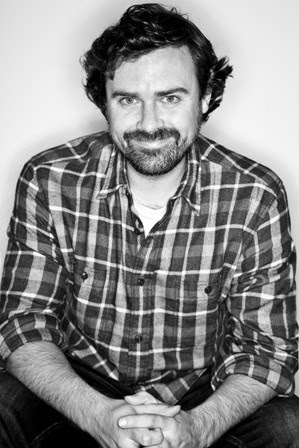
photo: Sharon Suh

photo: Sharon Suh

It was a fairly unique process. The blog was mainly shorter posts: funny conversations, short stories and a lot of lists. When I decided to write the book, I aggregated all the blog posts, and then read through them. The blog was a lot cruder than the book (if you can believe it), and was focused more on trying to make people laugh than on the sentimental moments from the story. So a lot had to change.

The blog also didn’t really have a theme other than, “S**t is bad.” So in reviewing all the material (about 900 pages worth), I had to figure out first what I was trying to say with all this writing–what theme or message I was trying to get across. I started to realize that it’s really a story about a selfish, spoiled kid finally facing something real, and thus being forced to sort of grow up. Once I realized that, it was a little easier to know what should stay from the blog and what should go. So I started trimming it down, cutting parts that didn’t push the story forward or relate to the theme, and adding a few parts that helped to fill in some of the gaps that I didn’t cover in the blog.

Overall, it was a tedious process.

Was writing this book terribly painful, or cathartic?

Certain things–like when my dad announced his desire to die, the Abby break-up, my dad’s eventual death–are always painful to relive and write about. I usually had to take a lot of walks while working on those sections to calm myself down.

Also, the voice I write in is rather dark and sad. So, getting into that morbid headspace is always painful. Whenever I was jumping into a rewrite or going through the book again, I would tell myself, “Okay, you’re going to be sad and feel like shit for a couple of months,” then start writing.

However, writing the book was also really cathartic, especially when I discovered the themes of the book. It was like, “Wow, that was horrible, but I learned a lot.” You learn more from pain than pleasure, so I think writing the book made me wiser. I’m a lot smarter than my friends with living parents.

This is going to sound sappy, but the book was also an opportunity to hang out with my dad again. I could bring him back to life and relive some happy memories. So, that aspect of it brought me a lot of joy. Then, each time I’d finish writing, I’d miss my dad even more. So, I’d fall into a bit of a depression for a few weeks. Nothing that a few burritos can’t cure, though.

Are you this amazingly self-deprecating in real life?

I start everyday by looking in the mirror and booing. Just kidding. I don’t do that.

But I do have a genuine hatred for myself that runs deep. I feel like a little self-hatred is healthy, but I probably overdo it. I’m pretty hard on myself, which is funny on the page, but sort of a drag to live with. I feel really worn down by myself all the time. Sometimes I want to yell, “Leave me alone!” at myself.

I think self-deprecating humor is a defense mechanism because I figure if I think the worst about myself, then I can’t be shocked by anything bad anyone says about me. I do need to work on being nicer to myself. Whenever I’m going on a self-deprecating tangent, my mom always says, “Stop saying so many mean and hurtful things about someone I love.” I should follow her advice.

You share an awful lot of painful personal detail here, both your own and others’. How do you decide where to draw the line? Do you draw a line? Was your family involved in those decisions?

In writing this, I made a commitment to revealing everything and being as open and honest about the experience and my life as possible. I don’t think it’d be that entertaining to read if I were holding back.

Also, I wanted people to know what it was actually like to care for a person with Lou Gehrig’s disease. It’s such a horrible disease, and I think if people were aware of what actually goes into caring for someone with the illness, then more people would donate money toward trying to solve the ALS puzzle. You wouldn’t think it, but like 60% of the care you do for someone who is bedridden is bathroom stuff. So I figured I needed to address all that to give readers the full experience.

When it comes to stuff about me, nothing is off-limits. When it comes to stuff about others, I try to be a little more selective. It’s so hard to have some a**hole write about you, so if someone asks me to take something out of the book, I usually do. But I do try to push it. I often ask, “How much can I reveal about this person and still have them love me?” It varies from person to person. My brother Greg is a writer, so he’s basically okay with anything about him.

My sisters and mom, however, were a little taken aback when they first read the book. My mom’s initial reaction was, “F**k you Danny and f**k your book.” She’s since forgiven me and has been incredibly supportive of the book.

Generally, though, my family has been really good sports about this. They realize that this is a story about our dad more than anything. And they realize that I’m as hard on myself as I am them.

You relate some shocked reactions to your off-color and morbid sense of humor generally. What reactions do you anticipate to the book?

I think the book will get a mixed reaction. Some people will probably really enjoy it. And some people will absolutely hate it. I find that people over 80 tend to not get my sense of humor, so I doubt I’ll be asked to do readings at retirement communities or in Florida.

I’m prepared for all of my Mormon friends to hate me when the book comes out. In fact, I probably won’t be allowed in the state of Utah anymore. I always get a little nervous when a Mormon friend tells me they’ve pre-ordered the book. I try to be especially nice to them so we can hopefully remain friends. I actually really love Mormons now. I didn’t for a long time, but I realized through this that they’re also just trying to get through life.

But I hope people see what I was going for. I know it’s crass, and crude, and contains South Park humor, but I hope they see past all the language and realize that at the core of it, this is a story about a guy learning to love his family and learning how to grow up.

As a screenwriter, can you tell us what rating this book will receive onscreen?

It will receive an R-rating for sure.

What’s next?

I try to keep busy because I’m not good at having hobbies so I get really anxious and bored when I’m not working. I’m working on the Home Is Burning adaptation for New Line Cinema now. Miles Teller is attached to play me and Jonathan Levine is directing.

I have a few other film projects I’m working on. One is a script called F**k Me, I’m Paralyzed (inspired by a true story) about a friend helping his paralyzed friend try to get laid for the first time since his accident. We’re hoping to film in early 2016.

I’m also planning on writing another book that focuses on what life has been like after my dad passed, sort of an exploration about how to deal with moving on from loss and rebuilding yourself–trying to find happiness without the people who made you happy.


This interview originally ran on September 2, 2015 as a Shelf Awareness special issue. To subscribe, click here, and you’ll receive two issues per week of book reviews and other bookish fun!

two readers, two books: Tassava on Philip Connors

I recently posted my friend Tassava’s review of Philip Connors’s second book, All the Wrong Places. We have now both read & reviewed both of Connors’s books.

(Julia reviews Fire Season; Julia reviews All the Wrong Places. Tassava reviews Fire Season; Tassava reviews All the Wrong Places.)

Of course, the most interesting part of sharing our responses turns out to be our differences. I was so blown over by Fire Season that Places was probably doomed to never live up. The latter was deeply impressive, but not the perfect gem that was the former, for me. Tassava felt the other way around: was very impressed by the first book, but found that Connors had perfected his style with the second.

So I went back, to try and tease out our different reactions.

Is your ranking of All the Wrong Places over Fire Season based on the writing style that you praise? Solely?

Not solely, no.

Long stretches of Fire Season had glowing, wonderful prose. Sections on the wilderness, for instance, stood out. But the more personal writing in Places resonated with me even more. It’s hard (as I’ve learned in my own work) to write well about one’s interior life. To write convincingly and beautifully about it is impressive.

True story. And that leads into my next question. Did the personal nature of All the Wrong Places ever make you uncomfortable? It did me. There was so much pain that I wanted to look away.

Interesting! Some of it was uncomfortable to read (for embarrassment, the sex stuff; for pain, his wondering if his call to Dan could’ve prevented the suicide), but it was so well done that I had to keep reading. And I read it at a time when I really needed to sort of bathe in someone else’s pain.

Ah. Would love to hear more, if you’re willing…

I have a personal situation that I am trying to work out right now, with the question of how much of it is my own fault and how much is outside my control. So his worry or terror at having “caused” or at least not prevented Dan’s suicide resonated with me.

And is, I’m sure, typical of suicide survivors.

Also his efforts to understand it (talking with his parents and others, like Dan’s girlfriend) and to forget it by drinking and fucking and moving around (from job to job and place to place).

Or escape it, rather than forget it.

Oh, sure. I think that has to be a fairly common response – as you said in your review.

Must be.

I hadn’t thought of this as a “self-murder mystery” (love that phrase!), perhaps because an earlier essay I read may have acted as a spoiler for me. Was that suspense and reveal part of your captivation?

Definitely! I hoped that there was a mystery at the core of the story, but assumed that it would be something… different… (edited for spoilers) I wanted to keep reading to find out what that “cause” was, or if it was actually there. I would’ve been satisfied with a story that didn’t end with anything more conclusive than Dan simply being depressed and armed. Oldest story, right?

Right.

It sounds like the personal divulging of Places worked for you and the place that you were personally in when you received it. Whereas my personal reaction as reader was to shy away. But we’re in sync on the stylistic mastery of both books?

Yes, we definitely agree that Connors is a superb stylist, a writer who can sketch the primeval wilderness of New Mexico as beautifully as he can describe the primeval compulsions of a grieving brother.

Last question. Are you going to send my book back to me now?

Yes!

Thanks, buddy. It’s been a pleasure, sharing these two excellent books.

author interview: Julia Keller

Julia Keller was born and raised in Huntington, W.Va, the daughter of a college mathematics professor and a high school English teacher. As a journalist, she won the Pulitzer Prize in 2005 for a three-part narrative series on a deadly tornado that struck a small town in Illinois; she has also taught writing at several universities. She currently divides her time between Chicago and a small town in Ohio.

Keller’s detective series starring prosecutor Bell Elkins is set in the fictional town of Acker’s Gap, W.Va. The fourth novel in the series, Last Ragged Breath (Minotaur Books, August 25, 2015), refers to a real event, the 1972 Buffalo Creek Flood. Years after this tragedy, a fresh murder challenges Bell to consider the waning coal industry and burgeoning tourism investments. It’s a complex case concerning the nature of memory and revenge.

I reviewed Last Ragged Breath here.

photo: Mike Zajakowski

photo: Mike Zajakowski


You have established a successful series with a well-developed character. Your readers presumably have certain expectations from new installments. Does this make the writing process easier or harder?

Harder–but it ought to be harder, right? I mean, based on the response I get from readers, they know these characters well and they have certain expectations for them, much as our friends have expectations for us and tend to call us out when we veer away from our essential natures. People know Bell Elkins and Nick Fogelsong, and they have an idea about how they’d behave in particular situations. If Bell suddenly became meek and timid, I think I’d hear a lot of outrage from readers because that’s not who she is. Her mistakes are always going to be mistakes of commission, not omission.

Your question reminds me of an aphorism about life choices that I’ve always liked: “Be careful when you choose your rut–because you’re going to be in it for a long time!” It’s the same with creating a series: Be careful when you dream up your characters and their peccadilloes, because you’ll be living with them for a long time–if you are fortunate, that is, and if your series strikes the fancy of enough readers.

In Last Ragged Breath, Acker’s Gap is described as a “beautiful, beleaguered patch of West Virginia.” Could these novels have been set anywhere else?

Absolutely not! I’ve always said that my home state of West Virginia is the most singular state in the country, because it combines stunning natural beauty with so many intractable social problems. Many states are beautiful, and many states have social and economic woes–but only West Virginia combines beauty and sorrow in just this particular and poignant way.

I sometimes gnash my teeth when people mistake West Virginia for “western Virginia” (believe it or not, this is a common error) or lump together all novels set anywhere outside New York or Chicago or Los Angeles. Every place has a specific character and texture–just as every person does. There may be superficial similarities, but the deep essence of a region–its history, the stamp it leaves on those who live there–is unique. One of my favorite lines in Last Ragged Breath comes when Nick Fogelsong contemplates his life in Acker’s Gap: “To walk each day on ground that had given rise to you” is, he decides, pretty darn cool. And so it is.

Did researching the Buffalo Creek Flood take you back to your career in journalism? Was that a comfort or a chore?

You know, journalism used to be the automatic career choice for aspiring writers–everyone from Ernest Hemingway and Katharine Anne Porter to Thornton Wilder and Willa Cather. It enables you to have experiences that you’d otherwise never have. It certainly did for me. I got to go to murder scenes, fly a plane, tour a coal mine–and so much more. That’s not as true today as it used to be–a lot of fledgling novelists end up in creative writing programs in grad schools instead of newsrooms–but for me, journalism was a great education, and I constantly use what I learned there in my fiction.

Many of the cases in the Bell Elkins series have roots in stories I covered. The death of a young boy in A Killing in the Hills is based on a crime story I wrote about. The opening scene in Bitter River–a car being pulled out of a river, with a body inside–is based on a similar moment I had as a reporter at a riverbank. And the retired coal miner in Summer of the Dead whose daughter rigs up a coal mine in the basement so that he’ll feel at home is also based on a real-life situation I came across as a journalist. The coal mine scene in Last Ragged Breath is informed by my own very harrowing journey down into a working coal mine, while researching a story on coal production.

The series for which I won the Pulitzer Prize is set in a small town about the size of Acker’s Gap. Hanging out in that town was a great way to sort of road-test my ideas about small towns in which, as the song says, “everybody knows your name.” That can be wonderful–or it can be stifling.

I like the way you phrased the question–“comfort or chore”–because it’s really a bit of both. I have the comfort of knowing that I’m writing about something I’ve seen and felt, but it’s a chore in the sense that, as a reporter, you are often coming into people’s lives in the wake of tragedy. I grew up hearing stories about the Buffalo Creek tragedy–every West Virginian does–and to return to a time of such heartbreak and loss is difficult, even if necessary.

At the center of the story in Last Ragged Breath is a child survivor of the flood, now a grown man accused of murder. Does Royce Dillard have a historical counterpart, or is he entirely your creation?

Royce Dillard is entirely fictional, but there were certainly flesh-and-blood children who survived the Buffalo Creek flood. Some lost one or both parents. As far as I know, none of these children has ever faced a murder charge as an adult–thank goodness!–but the psychological scars left by the flood are well-documented. Royce’s emotional issues are very loosely based on published accounts of the travails of real-life survivors. So he is fictional, yes–but he represents many people who suffered then, and who suffer still.

You told NPR’s Crime in the City series that you read most literary fiction as crime fiction. You cited Hamlet, To Kill a Mockingbird and the Oedipus stories. Is there a distinction between “genre” crime fiction and these classics? Where do your books fall?

I try to write books that will be accessible and entertaining, yes, but that also give readers something extra–perhaps a way to reflect upon life’s deepest questions, and a way to think about the catastrophes that can befall those who have done nothing to deserve them. To me, any novel–whether it’s categorized as “crime fiction” or “literary fiction” or whatever–is a window into how another human being works out her or his destiny.

I fight against the idea of genre because it’s so limiting. It’s an artificial distinction. It puts novels into boxes and closes the lid–and novels need to breathe! Dorothy Parker once divided her bookcases into two categories: Good and Crap. That’s the only division that really matters.

Will my books turn out to be classics–that is, novels that are read by multiple generations? I’d certainly like to think so.

Last Ragged Breath pulls together strings from past Bell Elkins novels. It appears that the series will continue. What’s next? Do you already have the next book underway?

Oh, yes, indeed. I’m well embarked upon the fifth book in the series. It’s set in an Alzheimer’s care facility near Acker’s Gap. I am intrigued by questions about memory, and by an awareness of how central our memories are to our very essence. When memory begins to fail, what happens to that core self? The basic plot in The Disremembering–that’s the tentative title–is about a series of mysterious deaths at the facility, but the deeper theme is this issue of memory. As more and more people live longer and longer, our culture will be struggling with the problems of Alzheimer’s and its long reach. It is a great springboard for a novel–and a touchstone for contemplation about how the past constantly interacts with the present, in ways both good and bad.


This review originally ran in the September 1, 2015 issue of Shelf Awareness for Readers. To subscribe, click here, and you’ll receive two issues per week of book reviews and other bookish news.

Maximum Shelf author interview: Bill Clegg

Following yesterday’s review of Did You Ever Have a Family, here’s Bill Clegg: Characters with Secrets.


Bill Clegg is a literary agent in New York, and the author of the bestselling memoirs Portrait of an Addict as a Young Man and Ninety Days. He has written for the New York Times, Lapham’s Quarterly, New York magazine, the Guardian and Harper’s Bazaar. Did You Ever Have a Family (Scout Press) is his first novel.

CleggWhat motivated your transition from memoir into fiction, and how did it go?

I became interested in stories where people with good intentions inadvertently make the wrong choice and instigate calamitous consequences.

On top of that: How do the people in their lives forgive them, how do they forgive themselves? Also the possibility of years of struggle that arrive at peace, finally, but not for long. For instance, stories of people who find love after years of its absence, only to face its sudden loss. I found that fiction was the place to begin to find answers to those questions, and soon the world of the novel came into being.

Did your insight as a literary agent make writing and selling a novel easier or harder?

Probably both. I advise my writers to write for themselves first and try and satisfy the terms of the work as they’ve laid it out, and then open their ears to their fellow writers and me, and then editors. Hold on to it as long possible, take it as far as you can before sharing. If publishers don’t want it right away, it is likely not the end of the story, it’s just that it’s not always easy. So knowing that there are no sure outcomes when you submit fiction to publishers was useful because I could, over the years that I worked on the novel, just try and answer the questions I was asking and also stumble onto new ones. For a long time, whether it would be published or not was, happily, not involved in its making. So that part was helpful. Of course, when my agent Jennifer Rudolph Walsh sold it, there was a lot that didn’t need to be translated for me as we progressed toward closing a deal.

I love that so many different characters get a voice in this book. Did you have a favorite to write?

At various times I was drawn to some more than others. Cissy, who works at the seaside motel, held my attention for a long time. She still does.

Cissy is indeed a great enigma. Does this mean that you’ll be writing more about her? Is there room for a sequel here, or will you be able to let her go?

I don’t think Cissy would figure into any next book I might write, but you never know. And I don’t see a sequel in the cards. Anything else that might happen to the characters in Did You Ever Have A Family I leave to the imagination of readers. I have, though, been writing in and around a group of characters in Wells, the town in the novel. It is a place I expect I’ll return to at least one more time.

What makes for a compelling protagonist?

Oh, gosh–many things and likely different for every reader. I tend to be drawn to characters who have something to learn through the course of the story being told. Also people with secrets. I had a lot for a long time and it’s a lonely existence that I am sympathetic to.

This novel starts out as the story of one family’s tragedy, but it expands into something larger. Is this the book you set out to write, or did it grow as you worked?

It opened up in the writing. And far beyond what ended up in the book. I had to write beyond and outside the thing to figure out some of the characters and ideas and voices. Issues of class and people’s relationship to the places they come from became more important and more interesting to me as I wrote.

How tantalizing! What happens with that material? Has it run its useful course?

Not as tantalizing as you might think! All that material is for the forensic computer experts to someday find in my computer but it will never see the light of day.

Do you feel that there is a moral to this novel, a message you needed to share?

When it feels like the end it often is not. And also: despite everything we think we know–about class, about human nature, about psychology–we really know nothing of anyone else’s life, cannot ever presume to understand another’s particular existence. Judgement is often no more than a confession of ignorance.


This interview originally ran on June 10, 2015 as a Shelf Awareness special issue. To subscribe, click here, and you’ll receive two issues per week of book reviews and other bookish fun!

Maximum Shelf author interview: Erika Swyler

Following Monday’s review of The Book of Speculation, here’s Erika Swyler: Writing, Binding and the Bath.


Erika Swyler is a graduate of New York University. Her short fiction has appeared in WomenArts Quarterly Journal, Litro, Anderbo.com and elsewhere. Her writing is featured in the anthology Colonial Comics, and her work as a playwright has received note from the Jane Chambers Award. Born and raised on Long Island’s North Shore, Swyler learned to swim before she could walk, and happily spent all her money at traveling carnivals. She blogs and has a baking Tumblr, ieatbutter, with a following of 60,000. Swyler recently moved from Brooklyn back to her hometown, which inspired the setting of The Book of Speculation, her debut novel.
swylerYou presented your manuscript in a highly unusual way. How did that work, and what possessed you?

The plot hinges on the idea that a particular old book is such a fascinating object that it could consume someone’s life. It felt very important to create that experience for a person reading my manuscript. It was a simple thought: if they connected with the manuscript as an object, it would pave the way for connecting with the story. I had next to zero experience in bookmaking when I decided to bind and age the manuscripts. I might have balked if I’d known from the start how much of my life the project would devour.

Possessed is the right word. While revising, I spent months experimenting, testing stains and hunting down the right material for the cover. I tried other binding methods, but they were either too time intensive, or spectacular failures. Japanese stab stitching was fast, and a great way to make a binding stand out. Production took about a month and a half, with binding being the fastest part. Aging books takes time–drying time. It took two days for a book to cure after being rasped and stained, and another day for gilding. For the better part of a summer my dining room was a mess of drying paper, dust from abused tarot cards, rasps and gold ink. My friends thought I’d lost my mind. I probably had, to a degree, but I’d already sunk a good part of my life into writing the book and I felt it deserved every possible advantage I could give it. If nothing else came of it, I’d at least have an art object. I made 16 manuscripts in all. I held on to two copies.

What were the most and least fun parts of writing this book, or bookmaking?

The worst bookmaking moment was when my favorite drill bit snapped and took a piece of my thumb with it. That was an angry day in the dining room bookbindery. The most fun part? I got to make books! Waxing linen thread is really satisfying. It smells delicious and there’s a meditative quality to it. I also got to learn a new skill. I’m happiest when I’m learning.

Trying to evenly balance a dual narrative was the hardest part of writing. The easiest thing a reader can say about a dual narrative is that they prefer one part over the other. It was my mission to make sure that both narratives were treated equally. The whole story had to have a chance. I’d read the narratives together, then separately, then together, and then pull them apart once more. For every one read of a draft a writer might typically do, I’d read anywhere from two to four. The most fun part of writing it? Any scene involving terrible weather. There’s some truly awful weather in this book and it was always a joy to write. Bad weather allows you room for scenery chewing.

How much of this story is rooted in history?

I did a good amount of research, particularly for the 1790s portion. I really wanted to know how circus came to America, and what it looked like before P.T. Barnum cast his shadow. I found this little window of time shortly after the Revolutionary War where circus was just beginning to pop up. It was the perfect space to let Peabody and his menagerie breathe. I also think when you’re playing with the fantastic, it’s helpful to have grounding elements. The Wallendas, Philip Astley, the Joneses, John Bill Ricketts and Mr. Spinacuta are actual figures in circus history. That said, Peabody and his menagerie are entirely imaginary.

Librarians are awesome, aren’t they?

Yes! Librarians are flat-out wonderful. Nothing’s better than a person who doesn’t bat an eye when peppered with questions about curse tablets, circus accidents, tide tables, and if there’s any way around a paywall on an article. I may have done that to several librarians. Yes, I know, search engines. Search engines are like opening a fire hydrant. Librarians are far better at helping you find what you’re after, even when you don’t quite know what that is.

You’re from Long Island. What of your childhood is in Simon’s?

Napawset is a shameless amalgam of small towns where grew up. It’s an interesting place that makes you desperate to leave it, while simultaneously wondering why anyone would ever want to go. As for Simon’s childhood, I spent a good deal of mine on the beach with my sister. Thankfully, our relationship is better than Simon and Enola’s. We played on the rocks, cooked out on the beach and made ourselves nuisances to the adults around us–like kids. Also, when you grow up on a shore, there’s always this odd need to check on the water, to see what it’s up to. I think my gift to Simon was that the water was always up to something.

Where does an idea like this come from? Was it born to you whole, or were you working to flesh it out all the way through?

The idea is rooted in that moment we’ve all had when we stare at our families and think, “Where did you people come from?” That’s Simon’s narrative, this very practical question. His story also came from wondering about the houses that actually are sliding into the Long Island Sound, who lives in them, and how they got to that point. It was something I had to work out because it began with questions more than characters. The 1790s portion came to me almost fully formed, in about thirty seconds, while taking a bath. I saw Peabody, Amos, Evangeline, the entire menagerie, and how it connected to Simon all at once. It was a seriously great bath.


This interview originally ran on April 15, 2015 as a Shelf Awareness special issue. To subscribe, click here, and you’ll receive two issues per week of book reviews and other bookish fun!

Maximum Shelf author interview: Leslie Parry

Following Monday’s review of Church of Marvels, here’s Leslie Parry: Trusting the Characters.


Leslie Parry is a graduate of the Iowa Writers’ Workshop. Her stories have appeared in the Virginia Quarterly Review, Missouri Review, Cincinnati Review, and the PEN/O. Henry Prize Stories, among other publications. She was recently a resident at Yaddo and the Kerouac House. Her writing has also received a National Magazine Award nomination and an honorable mention in The Best American Short Stories. She lives in Chicago.

photo: Adam Farabee

photo: Adam Farabee


Church of Marvels inhabits a very compelling and specific setting that combines fantasy and history. How did you choose this time and place?

I didn’t consciously set out to write a book about New York, but the sensory experience of living there (the space, the light, the sounds and smells) remains very vivid in my mind, years after I moved away. Like many Americans, the city was a portal for my family. My great-grandfather, who was born in 1888, grew up in an immigrant family in Greenwich Village. His own father was a dreamy, dissolute, would-be poet who operated an elevator; his mother and sister worked as dressmakers. He fell in love with my great-grandmother, an actress, when he saw her on the stage. It’s a story that’s always fascinated me, but because he died so young, it’s all that I really know of him. So at the root of this book, perhaps, is the desire to re-create the world that he lived in, to imagine a history of the Parrys in America. But the story, of course, became something else entirely. And once I started following these specific characters through the streets of Manhattan, the book took on a life of its own.

How much research did you have to do into this historical setting, and what did that process look like?

Before I even knew this was going to be a novel, I was reading certain books just out of curiosity–New York history, medical history, labor history; various histories of vaudeville, dime museums, prizefighting, theater. I even read a book on the history of garbage. So I’m sure all of those various threads were humming along in my mind, crossing and sparking, when I sat down to write. Then, when I was deep into the drafting process, I went back and did some more focused reading: on hair weaving, river transportation, the opium trade, etc. I loved doing research: it answered questions I didn’t even know I had, and helped me understand the hurdles these characters would have been up against. But at the same time–since this is a work of fiction–I didn’t feel beholden to a strict factual representation. I let the research inform the story, but not determine it.

You tell a number of different stories that eventually converge into one. Was it hard to keep track?

Yes! And more so at first, when the story was still taking shape. I knew the direction I was traveling–I knew, in a loose way, how I wanted the plot to evolve–but I didn’t always have a clear path. I took a lot of wrong turns and hit a few dead ends. But I was guided by the overall sensibility of the story; I had to trust the characters. And I was fortunate enough to have a terrific editor help me across the finish line.

Did you always intend to write them as distinct stories?

Yes. In fact, the very first pages of this novel were not novelistic at all. I began writing vignettes about people who populated different areas of the city–just character sketches, really. It was almost like an actorly exercise, trying to situate myself in another body, in another world. This came about after spending some time in New York, where a few chance encounters happened to dovetail serendipitously. I caught a sideshow act at Coney Island; I read Nellie Bly’s Ten Days in a Mad-House; I spent days traversing downtown Manhattan with my sister (usually on the hunt for gelato, mussels, pickles, dumplings). I stumbled across the word night-soiler, I think during a visit to the Tenement Museum. But I got frustrated with these vignettes after a while, unsure where they were headed. I put the pages away for a few years, but I kept thinking back on them. One day I read everything through again and saw the whole project differently–it was a novel, and soon the threads began to braid together.

What do you think makes for good or memorable characters?

That’s a good question. I’m drawn to characters who make mistakes. (This is different from having an endearing flaw–being beautiful but clumsy, say, or handsome but moody.) Mistakes–whether they’re decisions made impulsively, or are calculated; whether they happen in spite of a character’s better judgment, or begin as acts of good faith, naiveté–they reveal some of the most complicated aspects of human behavior. Confusion and doubt, shame or regret, thwarted desire, yearning, fury, vulnerability, perhaps a barbed pathway to amends–it’s a universal experience, and yet has infinite variations.

Do you have a favorite character?

Whichever character I was writing about at the moment became my favorite (even when they tried me and exasperated me!). But there is a special place in my heart for Alphie.


This interview originally ran on April 2, 2015 as a Shelf Awareness special issue. To subscribe, click here, and you’ll receive two issues per week of book reviews and other bookish fun!

Maximum Shelf author interview: Kate Bolick

Following yesterday’s review of Spinster, here’s Kate Bolick: The Single Woman as a Cultural Archetype.


Kate Bolick is a contributing editor to the Atlantic, and a freelance writer for Elle, the New York Times and the Wall Street Journal, among other publications. She’s also host of “Touchstones at The Mount,” an annual literary interview series at Edith Wharton’s country estate in Lenox, Mass. Previously, she was executive editor of Domino, and a columnist for the Boston Globe Ideas section. She lives in Brooklyn, N.Y. Her memoir is Spinster: Making a Life of One’s Own.

photo credit: Willy Somma

photo credit: Willy Somma

Clearly this book was a lifetime in the making. But how long did you purposefully work on it? Did the idea of it change during that time?

Spinster began as a bolt of excitement in 2000, when I first came across 19th-century journalist and novelist Neith Boyce’s 1898 Vogue column, “The Bachelor Girl,” about her decision to never marry. Until then, I was completely unaware that the public conversation around singledom had such a long history, and after that I couldn’t stop thinking about the single woman as a cultural archetype, and collecting examples.

After a few years, I sat down and tried to write a book about how Neith and two of her more-or-less contemporaries had influenced my thinking about marriage vs. not-marriage. It was a total and complete failure. I had no idea how to turn my fascination with their unconventional lives into a compelling narrative, and I was too young to have any insight into or personal perspective on the topic, or even know how to ask the right questions. I put the project aside, but never stopped thinking about it.

Then, in 2011, the Atlantic asked me to write a cover story about the changing face of contemporary marriage, and as I did my reporting and research I could almost physically feel the ghosts of those women from the past perched on my shoulder, taking in everything I learned. After the article came out, I thought maybe I was old enough now to give that failed book another go. In early 2012 I signed a deal with Crown.

From the start, I knew that I’d use my own coming-of-age as an adult as the narrative arc, and feature the lives of my “awakeners” as “love stories”–women I’d found, fallen for, then moved on from. In this way I’d be able to lead the reader through a series of historical and intellectual ideas that might feel dry on their own. Actually plotting that out, though, was maddeningly difficult, and more than a few times I thought I had to abandon that approach and try another.

What started as a fascination with certain lives deepened with research into a more comprehensive understanding of the single woman’s place in the social order, and how it’s changed across time. The specific economic, political and cultural conditions of each era determine who the single woman can be, and how she’ll be perceived.

How was this writing process different from the different kinds of writing you’d done before?

The process of writing this book was so different from anything I’ve ever done that for months and months I was near-paralyzed with doubt about whether I could do it. Length alone was a challenge–I had to unlearn journalistic tics like concision and speed, and give myself over to the space a book calls for and demands. The primary challenge was learning how to create a narrative; what compels a reader to keep wanting to turn the page? Weaving my own story in with the lives of others in a way that didn’t feel thunderingly obvious and clunky was likewise vexing. I also struggled with tone. I’ve written plenty of literary criticism, personal essays, interviews and biographical articles–how could I find a voice that would be capacious enough to let all these disparate forms coexist under the same roof?

What do you most want people to know about you that’s not in Spinster?

The book is officially a memoir, but I had to leave out acres of thoughts and experiences in order to keep the emphasis on what matters: the lives of the women I write about; the history of single women in general. Which is to say, the book is only one slice of me. Dear reader, I contain multitudes!

Could there be a sixth awakener for you, who you just haven’t found yet?

Absolutely. In fact, by the time I started writing the book I’d accumulated quite a few awakeners, which I decided to cut down to a more manageable six–the ones who’d influenced me most directly. After I finished the first draft, I realized six was one too many, and cut another. I expect that for the rest of my life I’ll keep finding new awakeners. At least, I hope I do.

Are you prepared to be an awakener yourself?

Hah! Well, given that finding an awakener is such a private, intimate process, and one that the awakener her/himself has no idea is taking place, I suppose I could handle it. In this way, I’m much better suited to being an awakener than to being a heroine, who needs to be dashing and daring. I’m not very dashing or daring.

What are you working on next?

Wait, you mean there’s life beyond Spinster?! Heh. I love the material too much to even want to think about anything else just yet. After two years holed away writing, I’m excited to finally be back in the world, talking about what I learned.


This interview originally ran on March 4, 2015 as a Shelf Awareness special issue. To subscribe, click here, and you’ll receive two issues per week of book reviews and other bookish fun!

Maximum Shelf author interview: Erik Larson

Following yesterday’s review of Dead Wake, here’s Erik Larson: Ideas and Process.


Erik Larson is the author of four national bestsellers: In the Garden of Beasts, Thunderstruck, The Devil in the White City and Isaac’s Storm, which have collectively sold more than 5.5 million copies. His books have been published in 17 countries. Larson began his writing career as a journalist, and now gets to travel the world researching his works of nonfiction. [You can read a longer and surprisingly hilarious bio written by the man himself here.]

larsonTo begin, my mother made me promise I’d ask: how do you choose the diverse subjects of your books? What makes for a compelling story that you feel driven to tell? Why the Lusitania?

Well, you tell your mother it’s none of her business. Actually, no, please tell her that, really, I have no idea. There’s more truth to that than I care to admit. The hunt for each book idea is a hard one for me, and typically takes about a year. To write the kind of history I write, I need to find real-life events that lend themselves to being told as stories–true stories–with beginnings, middles and ends. There has to be a clear, ascending narrative arc, and there has to be a rich enough trove of archival materials to make the story and characters come alive without massaging the facts. And, it has to be something I want to spend the next few years working on. I often think finding that next idea is like finding a spouse–you have to kiss a lot of frogs before you find one that kisses back.

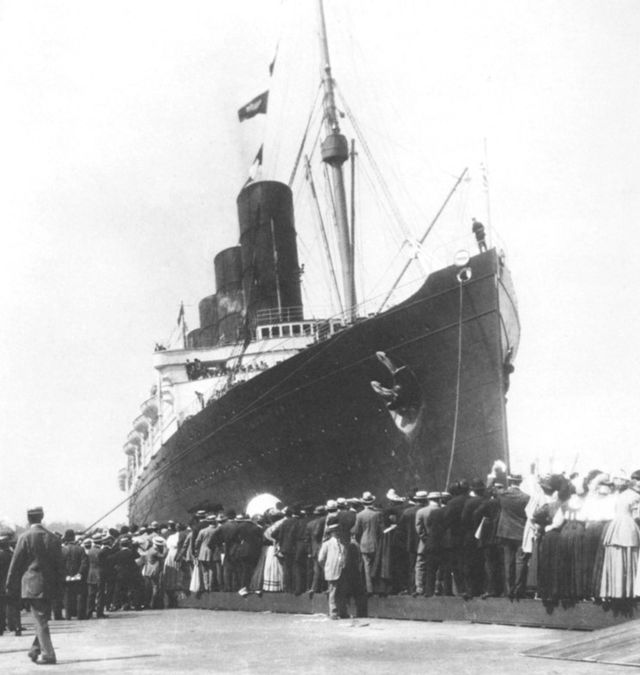
What drove me to write about the Lusitania was the potential it offered for nonfiction story-telling–for crafting a narrative full of real-life suspense. A nonfiction maritime thriller. The archival base was extraordinarily rich, full of elements that I felt no one else had adequately mined–all the things I love to work with: telegrams, diaries, love letters, secret documents, even the German submarine commander’s hour-by-hour war log. It doesn’t get any better than that. Whether I succeeded, of course, is for readers to decide.

Aside from the obvious choices to concentrate on Captain Turner and Kapitänleutnant Schwieger, how did you choose the individual stories to follow? Were they (Charles Lauriat, Dwight Harris, Theodate Pope, etc.) simply the ones who left behind the most documentation?

Exactly! The three you cite all left vivid, detailed accounts, especially Lauriat, who wrote a book on the subject, and in addition left a broad and deep documentary trail. I also liked the fact that Lauriat was a famous bookseller. How nice that a time once existed when a bookseller could become famous and travel in first class on Cunard ships and be recognized on sight. As for Pope, I found her backstory particularly compelling: her depression, her interest in the supernatural, the fact she was a pioneering female architect and pal of Henry James and that she was in that cadre of American women who were first to embrace their identity as feminists, back when the term itself was brand new.

You state in your “Note to Readers” that you are very careful to stick to the facts, with no embellishment. And yet your narrative is incredibly lively. Please explain the importance of that rule for you–the integrity of pure fact–and how you make the bare truth so gripping.

They key lies in detail. There are no shortcuts–you have to do the necessary digging to find the bits and pieces that will ignite the reader’s imagination. It’s the reader, I’m convinced, who does the animating of my narratives. I just present the details necessary to allow that to happen. For example, I often have people tell me that I must have made some things up, because I have actual dialogue in my books. But in fact, if there is dialogue, it’s pulled directly from some actual historical document, like a letter, or memoir, or newspaper interview. More often than not, however, what they point to isn’t even dialogue–it just seems to be dialogue, and reads that way in their imagination. Which is wonderful. The human mind loves to connect dots and finish sentences and make disparate bits of information seem like a coherent whole.

lusitaniaWhat do your processes of research and writing look like, and are they in fact two separate processes? What’s the most enjoyable part for you?

They are two separate processes that merge in the middle. Ideally I’d like to have all my research done before I start to write, but that never happens. Invariably I reach a point where the book just has to come out. It’s like how my wife describes pregnancy: get this baby out of my body, NOW. Passages come to mind, and I start writing. At first I’ll just write them in my journal–I keep a journal for each book–then I’ll start writing things in a computer file called “Passages.” Then I enter my page-a-day mode, where I get up early, and write a single page before breakfast, and then return to my research for the rest of the day. Pretty soon the writing supplants the research almost entirely–although the research really never ends, because you always end up having to check things. What did early NYC street lamps look like? What was the weather like on a particular day? What were people reading in the newspapers in New York on the day the Lusitania departed? That kind of thing.

How do you keep so many characters and events in such a complex world history straight?

The most powerful tool is chronology. Before I start to write, I build a chronology that contains every worthwhile fact that I’ve mined from archives, books and whatever, with each item coded in such a way that I can readily find the source document in my files. This chronology becomes a de facto outline, with various events clumping at various points, and with each character’s role clearly defined. Using this as a spine, I craft the first draft. Then, I lay the whole thing out on the floor of our bedroom and, using a scissors and tape, I literally cut everything up and move it around, hunting for the most natural structure, while hoping that no one will open a window at the wrong moment. Once my dear departed dog, Molly, walked across the manuscript for Thunderstruck. Luckily only one small passage was displaced–it wound up on the balcony outside my bedroom.

What are you or will you be working on next?

I’m exploring a possible idea. This is early for me, so, being a pessimist, I’m pretty sure the idea won’t pan out. But I’m writing a test proposal. I won’t say what the subject is, because I never talk about works in progress until they’re done. It’s very annoying for my friends and family, though my wife and daughters all know early on. The proposal is a draft of what I would eventually send my agent, and which he in turn would send to my publisher, and which ideally my publisher would love so much that she would spend gobs of money to acquire it. Doing a proposal is a good test of an idea’s strength. If you get through the process–writing an opening chapter, an overall description and a chapter outline, maybe 80 to 100 pages in all–you have a pretty good sense that it’s a viable idea and that halfway through you won’t hang yourself from boredom.


This interview originally ran on February 9, 2015 as a Shelf Awareness special issue. To subscribe, click here, and you’ll receive two issues per week of book reviews and other bookish fun!

Maximum Shelf author interview: Cecilia Ekbäck

Following Monday’s review of Wolf Winter, here’s Cecilia Ekbäck: The Impact of Place.


Cecilia Ekbäck was born in Sweden, in a small northern town. Her parents come from Lapland. Ekbäck now lives in Calgary with her husband and twin daughters, “returning home” to the landscape and the characters of her childhood in her writing. Wolf Winter is her first novel.

ekbackWhat background–literary or personal–led you to this subject matter?

A wolf winter is a very cold, very bitter winter. But in Sweden, it is also the period in life when you’re faced with your mortality, when you realize that you’re alone–an illness, or the loss of a loved one or something like that, when you come face to face with death, and feel very lonely. Where you have to face sides of yourself that you didn’t know that you had, that you like less, or things that you haven’t dealt with. I wrote this book after my own wolf winter, which was when my dad passed, from cancer. He was my best friend. That was the time when I had to do a lot of soul-searching, when I had to do a lot of thinking through what I wanted to do with the rest of my life and what I was going to do with the enormous space that he left after himself. The book sort of came out of that. I wanted to take a number of characters and have them walk through their wolf winter, if you like, both literally, with the cold and the winter and the snow and the hunger and so on, but also emotionally.

The book switches perspectives slightly between several characters. What led you to that strategy?

Society in those days was very compartmentalized, so I knew that I wanted the main character to be a woman. When we read history, there’s so little about women. I wanted to write women back into that period. And I felt you had to have a few different views to get access, for example, to the church. Maija was always there; and then I felt that her character did not let her easily get involved in the more emotional or spiritual side of Blackåsen, so I let her daughter do that. And then I felt that we needed the priest to get access to the church and to the crown.

Was there a character you felt closest to?

Well… I like them all. But I like Maija and the priest very, very much. Frederika felt… a little bit close to home. I grew up in a very religious environment, and I just felt she came a little bit close to home, so I liked her less! But I was very, very fond of the priest and of Maija.

Are there heroes and villains in this story?

I think there are more strengths and weaknesses. You could say that there are certainly villains. But I guess what I wanted them to be was thoroughly human. So nobody, I don’t think, is straight out one way or straight out another. I wanted to work more with strengths and weaknesses of each character.

What kind of research did you do to evoke 1700s’ Sweden?

I read lots. I’m not a historian, and I get uncomfortable when people say this is a historical novel, because I know that I don’t have my education in that field–I have a terrible memory, and very poor attention to detail. It’s a story set in the past, is how I think about it.

I read everything I could find. In northern Sweden, very often when a town celebrates 200 years or 300 years, they publish a book. Those books are only locally published, and they give the history of the place and lots of anecdotes and so on. I worked a lot with books like that. Then, one of the most important things I did was interviews with my grandmother, her sister and their friends. Even though the story happened way earlier, Lapland didn’t actually change that much until after the Second World War. My grandmother used to say they lived like people had lived in all times. And then, one day to another, they went from shoes that they had made themselves to buying high-heeled shoes in the shop. It was a shock to everyone. It was like when falls a meter of snow and you wake up and you go out and you think, this is not my world! I recognize certain things, but not many others…. So, I spoke a lot to them about the practical details, how they cooked, how they shepherded goats, how the cold was, how the houses were, and I imagined that a lot of it wouldn’t have been that different. Because a lot of this sort of knowledge was passed down through generations–the way you did laundry, the way you worked with nature and so on. So that was really, really important for the practical life of the settlers. And I spoke to a lot of priests, but that was more to understand the faith of the state church as was in that time.

I wrote this story four times. The first time it was set in 1985, and it was really much more of a family saga. I was writing it to try and understand where we came from and why we were a certain way and why we were religious, why we didn’t speak of certain things, why we were frightened of certain things, and so on. And the second time it was set in, if I remember correctly, 1865. And then I wrote it set in the early 1800s, and then, finally, in 1717. And every time I wrote it I thought yes, but this is not where it starts, this is not the beginning. And the further I went back, the more I felt that 1717 was a great year, because the early 1700s was when the settlers began to arrive to Lapland, for various reasons. That particular year was a year when Sweden was at its peak. Sweden was a great power, but it was crumbling. The king had warred abroad for his whole life, and he had just returned to Sweden, and we were warring on several fronts and there was no more money and so many people had died in the years of war…. I thought that added something, that crumbling sense, where things change for the characters regardless of which social class they belonged to. I thought that was a good setting for them and for this story. It’s where the story felt comfortable. We’re so influenced by place, in the largest sense of the word; not just nature and climate, but political history and socially what’s going on and so on. I wanted a place that would have an impact on them, whether they were close to it or further away.

What did you feel upon completing your first novel for publication? What are you working on next?

It’s a bizarre thing, publishing your book. You’ve lived with it for so long and it’s so close to you. The delight is that others read it and talk about it, and they’ve seen things in it or found things in it that they feel are valuable, and then I feel elated. But the publication of it actually frightened me more than it made me happy. When I found out that I had actually sold the book, I went to my best friend and I cried. I said, I don’t want to be published! And he said, you’re insane. But that’s what I did. And then I called my husband and said I thought I had a brain tumor. Those are the two things I did.

Now I’m working on the second book, which is a very, very loose sequel. It’s set 130 years later, at Blackåsen, and so the mountain is the same and the supposed curse is the same, but the characters and the dilemma they face are completely different. I have found it easier in a way and harder in others, to write the second one. Easier in that I have more of a writing process. And also easier because I wrote it in so many different centuries that a lot of the research I’d already done. But harder in the sense that it’s much more real: it’s actually going to be a book! It’s not just a story for me any longer. And I find that makes it harder.


This interview originally ran on November 25, 2014 as a Shelf Awareness special issue. To subscribe, click here, and you’ll receive two issues per week of book reviews and other bookish fun!

Maximum Shelf author interview: Jonas Karlsson

Following yesterday’s review of The Room, here’s Jonas Karlsson: On Acting in Writing.


Jonas Karlsson writes plays and short fiction. One of Sweden’s most prominent actors, Karlsson has performed on Sweden’s premier stage and in several acclaimed feature films and television series. In 2005, he made his debut as a playwright, earning rave reviews from audience and critics alike. Spurred by the joy of writing for the stage, Karlsson began writing fiction. He has published several short story collections; The Room is his first novel.

jonasThe Room is a short and apparently straightforward work, but takes us deeply inside the head of Björn, which is a strange place. How difficult is it to present such seeming simplicity?

Thank you! I’m glad to hear that. As an author, I believe it’s all about trying to get inside your main character’s head. If you’re close enough to the story, you’ll get an instinct for what is important and what isn’t. If I choose to describe the right details, it will give the reader a clear image–probably not exactly the same as mine, but one shaped by the reader’s own experiences.

Your background as an actor would imply that you haven’t spent a great deal of time in office settings, but this isn’t the first work of fiction you’ve set there. What experience are you drawing on?

That is correct–I’ve never worked in an office. But I’ve visited many offices and maybe I nurture a secret dream about working in a real open office landscape. I can tell you that the environment in the theater and movie business is more similar to offices than you could imagine. There are a lot of meetings, deals, hierarchies, informal decision paths, intrigues, jealousy–not to mention weirdos–there as well.

Did you intend this as another short story that got away from you, or did you set out to write a novel?

I actually never know how lengthy a story will be when I start writing. Most often I start with a situation or some dialogue that I think seems intriguing. Then I write on and see what happens. Sometimes it turns into nothing, other times it becomes a short story, and sometimes–pretty rarely–it turns into something as lengthy as this. It all depends on what I find along the way, and if I find it exciting to keep going. (I love this feeling of freedom in the writing process. It is like being a jazz musician and starting on a piece of music, and not knowing what will happen–all you can do is hang on.) The story about Björn was hard to let go.

Your decision to write in Björn’s own perspective or voice is a large part of what makes his story so creepy. How did you make that choice?

In the beginning, I only had the part where Björn finds a room. I put myself in his shoes and, as the character took shape, he became very special. When I had the whole story set in my mind, I actually tried to change it to third person because it was so hard to describe how the people around Björn reacted to him. But this proved not to be so easily done. I felt it was like exposing him: “Look here, what a crazy guy, and look at the weird stuff he does….” It became obvious that the story had to be experienced through Björn for it to work.

Besides, I think it’s very intriguing to gradually, over time, discover your narrator isn’t to be trusted.

What do you think makes Björn such a compelling protagonist?

I hope that I’ve given him depth, despite the many comic situations he finds himself in. I always try to imagine that I’m my main character–I have to think: Okay, if I was Björn, what have I done? Kind of like I do as an actor when I play a part.

How hard, or troubling, is it to write from inside a space of darkness or even mental illness?

Above all, it is very exciting. But I did have periods when I thought it was difficult and wondered if I was going to go mad, or if my readers would think that I had become weird and had all of those crazy ideas. At the same time, it is a wonderfully mind-blowing feeling to create and enter into the mind of such a special character. Again, it is similar to acting in that way.

Did you have any role in the translation of this novel by Neil Smith into English? What does the process look like? Is there any sort of back-and-forth?

Neil is such a good translator, and I trust in his judgment 100%. We really just talked about the end, which is altered a bit from the original text. Otherwise I let him do his work, which he does so well.


This interview originally ran on November 10, 2014 as a Shelf Awareness special issue. To subscribe, click here, and you’ll receive two issues per week of book reviews and other bookish fun!