Maximum Shelf author interview: M.L. Stedman

Following Friday’s review of A Far-Flung Life, here’s M.L. Stedman: Capturing the Vast Sweep of Events.


M.L. Stedman was born and raised in Western Australia and now lives in London. The Light Between Oceans was her first novel. Her second, A Far-Flung Life (Scribner, March 3, 2026), examines tragedy, memory, loss, secrets, and the power of love in a family saga set against the vast, stark landscape of a Western Australia sheep station.

Where does the germ of such an expansive plot begin?

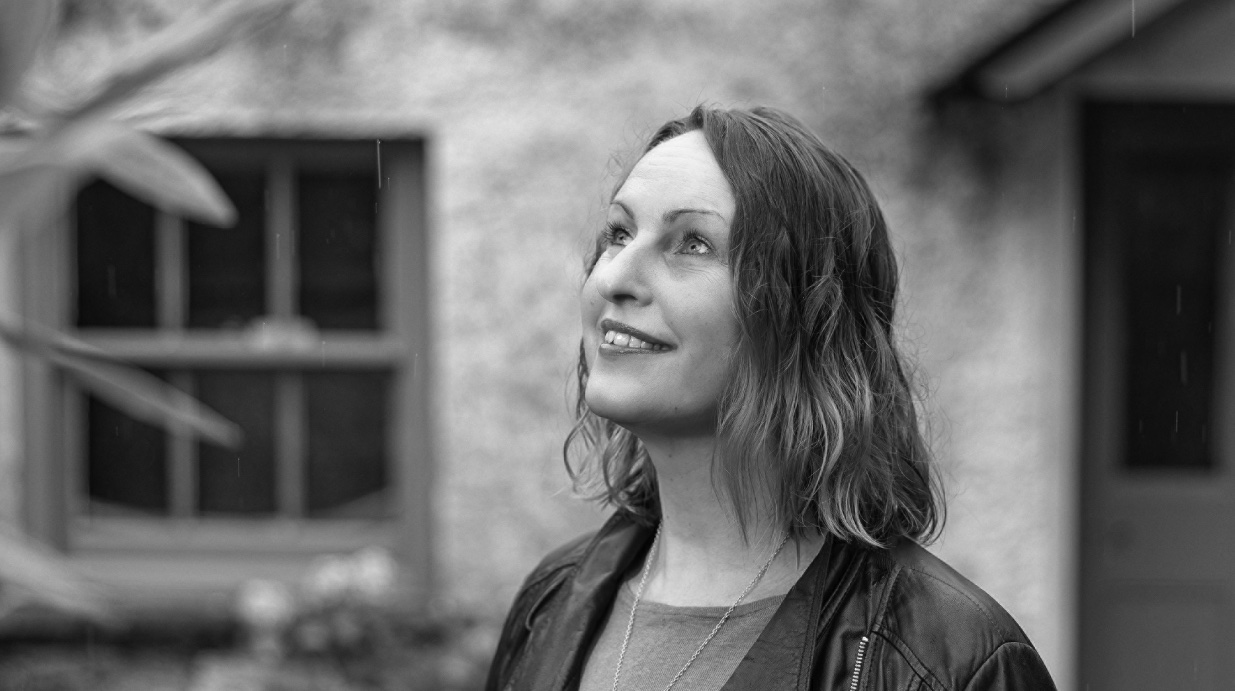
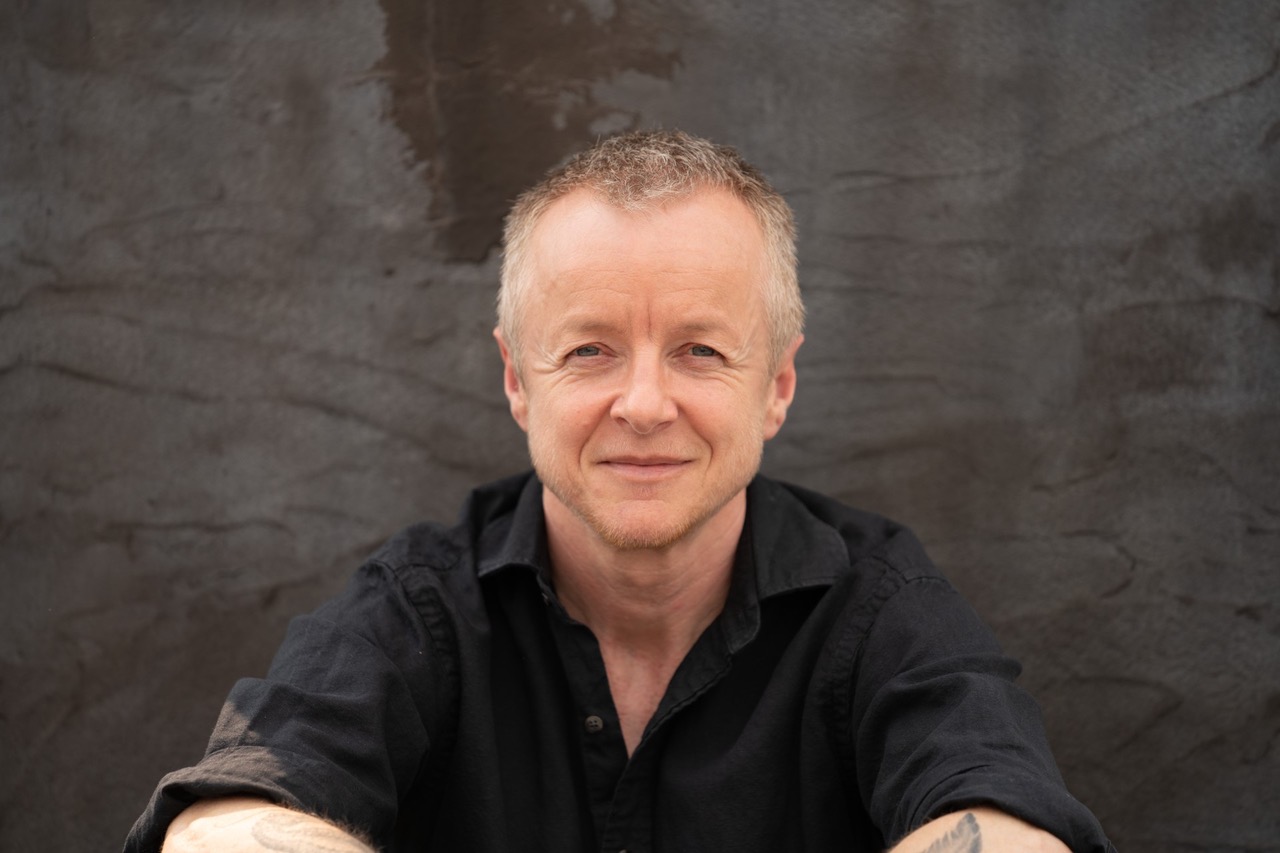
M.L. Stedman
(photo: Johnnie Pakington)

It’s different for everyone. I don’t plan what I write–it just sort of turns up, from an image in my mind’s eye, or a random thought. Setting is always crucial for me, too, and Western Australia is a natural place for my stories to arise. I’m drawn to intractable problems, which, because they have no “right” answer, force us to examine our underlying values: as with The Light Between Oceans, there are knotty ones at the centre of this book.

I wrote the story over a very, very long time, and it just sort of grew and took shape organically over years. Characters turned up bit by bit, out of nowhere: they might be prompted by seeing a face, or hearing a phrase, or sometimes, they just materialised when I started to imagine a scene. The process is quite mysterious to me.

How was the process or experience of this novel different for you from your first?

The biggest difference was the time it took–I wrote my first book in about three years or so. It was harder to find uninterrupted space to write once The Light Between Oceans was published. As to what’s changed–I’d say the whole world. From that point of view, it was a great luxury to spend so much time in the remote imaginary setting I’d created, where e-mails and smartphones didn’t exist, “far from the madding crowd.”

Do you have any organizational tricks, for plot or timeline, for example?

When it comes to writing, I’m both organised, and not organised. I’m organised in that I set aside time for it–being at your desk increases the chances of actually writing something. I’m not one of those writers (whom I envy), who can say “I’ve got a spare hour between festival events, so I’ll write a few pages of my novel.” I need long, uninterrupted stretches.

I think it’s important to find out how you write best, and do that: if you’re a planner, plan. If (like me) you’re not, and story turns up as your fingers hit the keyboard, don’t fret about the lack of a plan. I don’t write in chronological order. Often, scenes aren’t remotely linked, and then, with time, like mushrooms underground, little connections form by themselves and suddenly things fit together. It’s risky, of course–you have to be prepared to discard strands that turn out to be dead ends. But in discarding, and discovering what the story is not, you narrow down what the story is. For me, the trick is to stay, to wait, and to trust.

Is “forgetment,” for “the opposite of a memory,” your own coinage?

The concept of “forgetment” is foundational to the book. Anyone who spends a long time thinking and writing about memory will probably eventually notice that there’s a word for things we remember (“memory”), but not one for things we forget. I came up with the word “forgetment,” but didn’t investigate beyond its absence in the Oxford dictionary. When I finally did Google it years later, it turned out–not surprisingly–that other people had thought of that word too.

I’m fascinated by how the “known now” becomes the “lost past.” In the book, there’s a reference to Sleeping Beauty, in which a whole castle disappears from memory. The fact that we accept that story so readily bespeaks how familiar we are with the process of “un-knowing.”

I’m also interested in the role of forgetting in forgiving (there’s a reason we say “forgive and forget”). Humans have been outsourcing memory since they first drew on cave walls. Writing supercharged this, and lately, technology has increased it exponentially, so that the most trivial things are now indelibly recorded and subject to instant recall, without context. Does this mean as a society we’re losing the ability to forget, or at least, as individuals, to choose what is remembered about our lives? If every fault or grudge or transgression remains fresh in our minds, does it diminish our ability to forgive?

Was the close third-person perspective, shifting between characters, always the plan, or did you play with a few points of view?

Writing in the third person comes most naturally to me. That said, I also think about the characters in the first person, seeing the world through their eyes. I’m very conscious of how characters see themselves and each other, and, in A Far-flung Life, how the omniscient narrator sees them all. We switch between the characters living their lives minute to minute, struggling through peril to an unknown future, and the omniscient narrator, who reminds us of the vast sweep of events in that timeless, imperturbable landscape. I find that “eternal” perspective reassuring, comforting.

What was the role of research in this novel?

Research is one of my favourite aspects of writing. For this book, I travelled a lot within Western Australia, read a lot, listened a lot: to people; to the sound of the wind in the trees and the night creatures of the Australian bush; above all, to the deep silence that envelopes the far-flung places I describe. I spent a long time in archives, exploring records that left my fingers covered in the red dust that filled the pages. I was incredibly fortunate to speak to pastoralists (like “ranchers” in the U.S.) and geologists and other people of the generation in which Australia “rode on the sheep’s back,” who recounted their stories and guided my research. I studied rocks and sheep (I even had a brief taste of shearing a wether, under very close supervision!). I visited various stations, sometimes hitching a ride on small aircraft visiting remote places, or delivering supplies to a station cut off by floods.

I must pay tribute to librarians and archivists, the unsung heroes keeping “forgetment” at bay. In this era of austerity and automation, I fear these quiet champions of knowledge are an endangered species. But computers could never replace their wisdom and enthusiasm.

What might you work on next?

Ha! If I knew, I might even tell you. But the ink is barely dry on this book. Once it makes its way out into the world, I’ll look forward to retreating to my imagination again, following up a few little threads of ideas, to see what they want to grow into.


This interview originally ran on October 30, 2025 as a Shelf Awareness special issue. To subscribe, click here, and you’ll receive two issues per week of book reviews and other bookish fun.

Maximum Shelf author interview: James Workman and Amanda Leland

Following Friday’s review of Sea Change, here’s James Workman and Amanda Leland: Messy, Immersive, and a Little Salty.


James Workman and Amanda Leland are the authors of Sea Change: Unlikely Allies and a Success Story of Oceanic Proportions (Torrey House Press, September 30, 2025), the compelling story of hard-driving fishermen and determined conservationists working together to turn the tide on overfishing. In this vivid, accessible book, they argue for a system that could serve as a blueprint for solving other environmental crises.

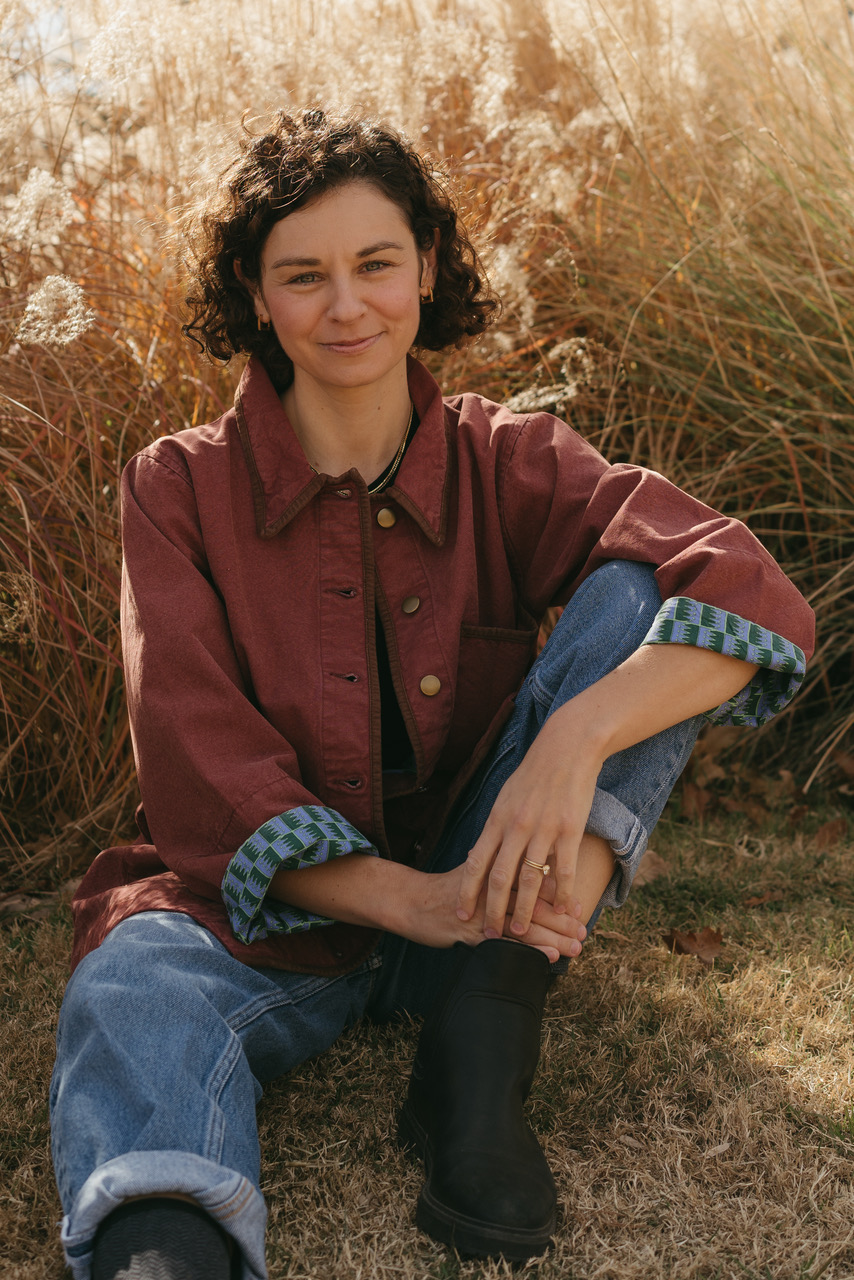
James Workman

James Workman is a storyteller, entrepreneur, and author of resilience strategies, including the award-winning book
Heart of Dryness. He founded AquaShares, a firm pioneering water credit trading, and has been published in the New York Times, the Los Angeles Times, the New Republic, Orion, Trout, and Washington Monthly. Workman studied at Yale, Oxford, and Stanford, and taught at Wesleyan and Whitman. But his real education came from wildfire recovery, reintroducing wolves, blowing up dams, smuggling to dissidents, getting married, and raising two daughters.

Amanda Leland
(photo: Ben Tiu)

Amanda Leland fell in love with the sea at five years old, when her grandfather taught her to fish. She is executive director of Environmental Defense Fund and previously led EDF’s Oceans program, a global team focused on reversing overfishing while supporting those whose livelihoods rely on fish. An avid kayaker and scuba diver, Leland holds a master’s degree in marine biology and lives with her family in Washington, D.C.

What was the origin of this book?

It’s the classic, counterintuitive “man bites dog” story, right? Against the ubiquitous headlines warning our oceans were running out of fish and “deadliest catch,” we knew there was a counter-narrative of quiet recovery, innovation, and collaboration. Fishing was growing safer, more ecologically resilient, and more prosperous, yet almost no one knew it. That silence was our opportunity: to share this well-kept secret of offshore transformation with fellow landlubbers.

The scale and complexity of this story ruled out a blog series or even a long magazine feature. Moreover, it cried out for a deeply human protagonist, someone who faced storms, institutional obstacles and his own doubts. That search led us to Buddy Guindon, a Galveston captain whose life traced the arc of modern fishing: from unregulated abundance to dangerous depletion, from the most dangerous profession to calm seas, from fierce resistance to steady reform. Through Buddy’s eyes we could share how a remarkable inner shift, combined with real agency, altered the fate of a fishery and sent ripples outward to the region, the nation, and the world.

How did the two of you come to this project?

For two decades, on opposite coasts, we had been watching this story take shape and sensed it needed to be told in full. On the Atlantic, Amanda, a trained marine biologist turned environmental advocate, was building coalitions, educating policymakers, and supporting new solutions. On the Pacific, Jamie, fascinated with hunter-gatherer societies, was interviewing fishermen from Mozambique, India and Belize to Lake Michigan, the Gulf, and his native California coast.

Both of us kept hearing the same universal, fatalistic trap: “If I don’t catch the last fish, someone else will.” We realized our distinct but converging perspectives could make the book richer and more compelling: Amanda could open insights into ocean ecology and the political tensions behind reform; Jamie could personalize the stakes for readers with a firsthand view of life and death on the docks, bars and decks offshore.

What are your roles as coauthors?

It’s an iterative process of talking, writing, rewriting… then rewriting again. Amanda brought science knowledge, policy experience, and relationships with key players like Buddy. Jamie had flexibility to explore narrative structure, conduct dockside or barstool interviews, research scientific documents, and distill complex systems into human stories that would resonate beyond the waterfront.

Drafts got passed back and forth until even red ink Track Changes could no longer tell who had revised what. When we disagreed, our exchanges mirrored the trust-building central to the book, the delicate negotiations between conservationists and fishermen, scientists and policymakers, who must work past suspicion to get results.

What does the research process look like for a project of this scope?

Messy, immersive, and a little salty. We logged hundreds of hours in interviews listening to fishermen, scientists, seafood dealers, policymakers, and critics. We tracked EDF’s decades-long efforts to advance sustainable fisheries. We sifted through historical archives, economic data, and stock assessments, where otherwise dry material might yield some fresh angles or surprising discoveries. For example, among our title’s “unlikely allies,” Thomas Jefferson and Alexander Hamilton set aside a lifetime of political rivalry to unite, perhaps for the only time, behind an economic vision for America’s fisheries based on “sharesmen.”

The work took us from early-morning commercial harvests to fluorescent-lit stakeholder workshops, from policy conferences in Washington to cutting bait on a skiff in southern Belize. We found patterns: secure rights, clear rules, and shared stewardship could take root in wildly different contexts, from tropics to arctic, and we tried to bring those contrasts to life on the page.

The structure you use, a journey from personal to global, feels very natural. How did you come to it?

It grew organically, with form following function. Other approaches–framed on a single species, gear innovation, era, or location–lacked the human flow and rising stakes we wanted. By chance, the formal evolution of catch shares paralleled Buddy’s personal journey from alienation to reconciliation, from antagonism to collaboration, from fighting the old system to advocating for the new.

His growing concern radiated outward: from family, Galveston bar and first boat, to the local wharf, fish house, and rival yacht club, then to his coastline, country, Gulf Stream, and fishing communities worldwide. That expansion mirrored the spread of an unlikely idea that began with skepticism yet matured into stewardship. Helping readers identify with Buddy made the story tensions real; scaling up made the stakes consequential.

That arc also let us show a universal truth: fishery management is really people management. And since few of us (not just Buddy) like to be managed by distant strangers, the challenge is to overcome the legacy of distrust and rediscover how to manage from within the community, because the people closest to the problem are often also closest to the solution.

What do you hope results from this book’s publication?

There is an undeniable despair and cynicism about how, or if, we can sustain a healthy, clean, life-giving planet for all of us. It’s too easy, especially while shopping in well stocked supermarkets, to point fingers at “commerce” or “industry” and blame remote “others” for ecological decline, or to cut off access to resources so essential to the health, nutrition, and security of billions.

Sea Change wants to replace simplistic blame and fatalistic shrugs with a proven, science-based case for practical hope. We want readers to see that “wicked problems” aren’t always intractable, that solutions can emerge from unexpected alliances, and that those most directly tied to the fate of a resource can become its fiercest protectors when given the right incentives.

We also hope the book sparks a wide conversation about how the same principles that saved fisheries could help us restore mature forests, groundwater, soil fertility, and even slow climate change. If a Gulf Coast “pirate” can transform into a guardian of the sea, imagine what the rest of us can do?


This interview originally ran on September 11, 2025 as a Shelf Awareness special issue. To subscribe, click here, and you’ll receive two issues per week of book reviews and other bookish fun.

author interview: Rabih Alameddine

Following my review of The True True Story of Raja the Gullible (and His Mother), here’s Rabih Alameddine: In an Insane World.


Rabih Alameddine is the author of Comforting Myths: Concerning the Political in Art; novels including The Angel of History, The Wrong End of the Telescope, and An Unnecessary Woman; and the story collection The Perv. He divides his time between his bedroom and his living room. His latest novel, The True True Story of Raja the Gullible (and His Mother), considers the life of a high school philosophy teacher in Beirut and his fractious relationship with his overbearing mother.

You are a painter as well as a writer–what is the relationship between the two?

Rabih Alameddine
(image: Oliver Wasow)

I’m not very good at painting, which is fine, because part of the reason I enjoy it is I don’t ask of myself a lot. It’s as if I no longer enjoy writing; I put so much pressure on myself.

I started taking piano lessons at around 58, and I can’t say I am the worst piano player ever, but it’s close. I love that there’s no requirement. Removing the pressure, painting allows me to play.

It takes two to three years for something to grab a hold of me for a writing project. It might be interesting for a month or for an hour, but to sustain interest for the three to four years that it takes to write, is a big thing. Whereas with painting–ooh! That’s a lovely tree! It’s expressing a feeling at that time. It’s not necessarily instantaneous, but it’s not a long-term obsession. Writing is all about obsession, what will not leave my head.

It’s the pressure of making something good that troubles me. I watched a documentary on Meredith Monk the other day, and I was fascinated. She does a lot that is just experimental. It might work, it might not, people might see it, they might not. And I started thinking, when was the last time I did something like that? I don’t know.

Painting and bad piano playing allow me to relax. To allow play back into my work. I make it sound like my work is serious, which it isn’t, but my intention is serious. And I think that’s the problem. One of the worst things an artist can do is take themselves seriously. You have to take it a little seriously, but there has to be some part of me that always goes, ha ha! You think that’s good! Otherwise it becomes too earnest. There has to be a part of me that wants to change the world and a part of me that says, fuck it.

Does your wonderful humor come naturally?

Humor is my defense mechanism. How can one live in this world and be conscious of all the traumas that we cause and still be sane if one didn’t have a sense of humor? How do we deal with the Trump years? One of my ideas was to write this book where this woman gets distracted by two men, one who’s all sex and the other who’s all patriotism. I’m trying to see, would that work as distraction? Would having a lot of sex counter the guilt of being part of a genocide? Or cutting Medicaid on millions of people? How do we deal with these things? What is the distraction? For me, it’s humor. In an insane world, being insane is quite normal.

Raja the Gullible starts and ends in 2023 but jumps timelines in the middle.

I did not want to deal with Gaza, so it had to stop in 2023. There’s no way anybody living in Lebanon or, for me, in the United States, could not deal with it if it goes past 2023. Hakawati ended in 2003, right before the Iraq invasion. You can’t not deal with it, and dealing with it would take over the book.

I wanted this parabolic look at life, and the center of it is the kidnapping, if you want to call it that. I was interested in how we looked at trauma, and how trauma has become identity. We have prescribed ways of dealing with trauma; I sometimes think that it might be better if we go back to not dealing with trauma. We forget that two people might have the same experience and have completely different outlooks. We tend to think this person is this way because such and such happened to them. This is not just wrong, it’s insane! Not even Freud ever suggested that this would explain everything. It has become a cliché: my father did not pay any attention to me and that’s why I fall for men who are such and such. That’s bullshit! I went to see this movie, one of the Marvel superhero movies, and it had a talking racoon. And the movie actually went back to how the raccoon was tortured as a baby raccoon, and I thought, wait, am I supposed to become attached to a raccoon?! This book is sort of the anti-raccoon. Yes, yes, Raja could go back and deal with [his trauma], but dealing with this is not his primary concern. He’s functioning. That’s what I was going for… and then I started writing, and the mother took over.

I did want to write about love. Whether you want to call what was between the two boys Stockholm syndrome–I hate these terms, because it assumes the syndrome is the same for everybody. It isn’t. I wanted to show different kinds of love. It turns out that the weirdest was Raja and his mother. They’re completely devoted to each other, and they want to kill each other. There’s one line: Raja says, “I want to kill my mother. I don’t want to hurt her!” If you live through a civil war and you’re kidnapped, how much would you want the world to be orderly and controlled? He’s a control queen. His mother is, what is the opposite of a control queen? A chaos queen. That was the primary tension.

What do you hope your writing offers to the world?

I am both still shocked that anybody reads me–What?! You don’t have anything better to do with your time?–and shocked that I am not read by absolutely every single person on earth. It is in this tension between ‘you must listen to me’ and ‘why would you listen to me’ that I think art resides. This tension of narcissist megalomania and, I don’t want to call it self-loathing, but feelings of utter incompetence. I hope that tension makes something good.

A book doesn’t exist without a reader, but we’re all different. If you write in every detail, down to the knot in your shoelaces, that leaves little to the reader’s imagination. I tend to write just enough description to be believable, but readers fill in the rest. Because we’re all so different, each reader brings something different. I used to think if we could just empathize–but a book can never do that, in my mind. If this romantic notion were true, that a book can change a life… there are so many amazing books, and we still commit genocide. It is my perspective that what you get out of it is yours–it’s not from the book. Maybe what books do is light a fire under you. What you already had.


This interview originally ran in the September 5, 2025 issue of Shelf Awareness for Readers. To subscribe, click here, and you’ll receive two issues per week of book reviews and other bookish news.

author interview: Jessica Gross

Following my review of Open Wide, here’s Jessica Gross: Playing with Reality.


Shelf Awareness called Jessica Gross’s first novel, Hysteria, “coolly sexy and razor-smart”; it has been optioned for TV development. Her nonfiction has appeared in the New York Times Magazine, Lilith, and the Los Angeles Review of Books, among other publications. She has taught writing at the New School and Texas Tech University, and lives in West Texas with her husband and her dog–she notes that “we all have the same hair.” Her second novel, Open Wide (Abrams Press), is thought-provoking, darkly funny, and a little terrifying, and has been optioned for film development.

Do you start with the imagery of splitting open, or a concept that you then look for a metaphor to fit?

Jessica Gross
(photo: Macy Tapp)

More the latter. This book has taken me through a personal evolution. At the time I started working on it, I was a single woman living in New York in 2019. Then I met my now-husband and entered a serious relationship for the first time in a long time. I was grappling with the question of what it means to be with someone and maintain your separate personhood, and my own boundary issues and confusions. So it started with mining that difficult psychological terrain personally, and thinking, what can I do with this in a fictional world? And concretize it. So it started with the psychic part, and became the surreal body horror iteration.

Is that a matter of literalizing a universal impulse?

I’ve been very inspired by the writer Marie-Helene Bertino, who I’ve been privileged to know personally. Her work often does this kind of magical realist thing, and she’s talked about it in ways that have influenced my own writing. Why not literally make the world magical, instead of it just feeling magical? That’s been something I’ve had a lot of fun playing with in my own work. It’s just taking a concept to its most extreme version. Often, when I’m revising, it helps me to print out the work. Then I can see it from a distance and in a new way, and cut it up and play around with it, literally, on the paper. It feels like a version of that. I’m going to play with this concept, but from a different angle, and see what happens. And it’s often nothing good for the characters! It’s easier to see their psychological ailments when you make them really concrete.

Why do you suppose it’s fun for us to write, and read, those uncomfortable extremes?

When I taught at the New School, we were reading a story where the characters were completely going at it, and one of my more brilliant students said “Oh! In fiction the characters can do and say things that we’re too scared to do and say in real life.” And that was a great description of one thing that fiction can offer. This catharsis, being able to live through characters what we don’t necessarily have the guts or ability to live through in our real life, is something that plays and novels have offered us since their inception. It’s fun in the same way that reading a book set on the French Riveria while you’re living in Lubbock is fun. You get to be transported to another world, another person, another psyche, and you get to play something out without any repercussions in your actual life or relationships. And maybe there’s a bit of schadenfreude too, that this character is doing something damaging and, oh, what a relief. It’s like waking up from a dream. Whew. None of that was real.

This is a very physical, embodied story. Is it fun to write that stuff, the guts? Is that a consistent interest or feature in your writing?

Yes. I like to root things in the body. I feel like it’s a very effective way to involve the reader in the story, simulate for the reader what’s happening in the story. In my first book, there was a lot of sexual body stuff–which there is some of in this book. But the body horror elements–it’s funny, because I don’t like reading or watching horror. It’s not a genre I’m interested in as much. But doing it myself is obviously very different, because I have total control over the gruesomeness. So it was extremely pleasurable! On the couple of occasions when I forced myself to watch videos of doctors performing surgeries, I was really disgusted. I was then having to search “doctor explaining surgery on human model,” because I just couldn’t handle the actual gore. But it was extremely fun and pleasurable to be able to write about the body in such a visceral way. In this novel, also, I tried something new to me, which was making it very focused on sound. And that’s tough–trying to get anything sensory on the page is a fun challenge, and a way for the story to subsume the reader from different angles that aren’t just intellectual.

What relationship does Open Wide have with Hysteria? Are they in conversation?

They definitely are. One is not an extension of the other–it’s not a sequel–but the narrators of both happen to be a little off their rockers, have psychological struggles that they’re working through. They’re both deep first person. The first one even more–it takes place over about 48 hours, so it’s very much about living the narrator’s life, and incredibly embedded in her psyche. With this one, I wanted a tiny bit more distance, and it takes place over a longer period of time, so it’s not quite as immersive. But they have that stylistic thing in common, and the surrealism. The first one was also surreal; in both of them I’m playing with reality. What’s really happening? And as you noticed, concretizing something that could have just been a metaphor. They have a lot in common, but with different characters and different challenges I set myself from a craft perspective.

What makes Olive so compelling as a protagonist?

Well, it is not a foregone conclusion that someone else would find her compelling! To me, she’s strange in a way that I really enjoy. I feel like she’s very observant, and she’s funny, and just bizarre and messed up in a way that I like. I’m not drawn as much to characters that have everything figured out. I’d rather they be working through something kind of messy, and a little bit spilling all over the place. I’m drawn to people who are working through it, working on their psyches, and willing to let you in. I tend to start with something I’m grappling with my own life and then turn up the volume by 400%. For fun. For exploration.


This interview originally ran in the August 8, 2025 issue of Shelf Awareness for Readers. To subscribe, click here, and you’ll receive two issues per week of book reviews and other bookish news.

Maximum Shelf author interview: Pat Harris

Following Friday’s review of A Season on the Drink, here’s Pat Harris: People Matter.


Pat Harris is a lifelong Saint Paulite and passionate community champion. His commitment to public service began in 1989 as a VISTA volunteer at Catholic Charities, where he first learned about the Saint Anthony Residence and heard tales of a softball team that won it all. The experience sparked a lifetime of civic engagement and advocacy. Harris’s debut novel, A Season on the Drink (Adventure Publications, September 9, 2025), chronicles the story of Marty Peterson and the Saint Anthony Residence fast-pitch softball team their single, undefeated season, and the flash of inspiration it provided. Harris and his partner, Laura, have four dynamic children, and one enthusiastic canine companion named Ranger.

Tell me about the line between verifiable fact and fiction in this novel based on true history.

Pat Harris
(photo: Michael Murrary)

It’s nearly all true, although obviously you have to bring in some license in order to really show the story. When I was a VISTA volunteer, I spent time at the Saint Anthony Residence and learned some of the struggles that people were going through, but also the hope that existed in that building. It’s kind of the end of the road if you’re a person in the deep levels of alcoholism; that’s where you can go to sort of live out life and continue to be an alcoholic. I spent a lot of time there learning about people, and I heard this story, of this one year where they started playing pickup softball games at this park near the building, and they were kinda good! In the middle of some very intense poverty and alcoholism, they were good softball players. It was anchored by a guy I eventually worked with, Marty Peterson, who played baseball at the University of Minnesota. He was a standout baseball player, but alcoholism turned the tide of his life. As soon as I heard it, I was like, someone’s gotta tell this story. A lot of stars aligned to really change some people’s lives. The Saint Anthony is a very intense place that a lot of people are unaware of, but this one year, something really cool happened.

I spent the better part of many years interviewing people and learning what happened. I compiled all the information, but I wasn’t at the games, so I had to reconstruct them based on interviews and stories. All the members of the team, as far as we can tell, have passed. The staff people have passed. Some of the people in the book are still around.

When Marty got sober and got out of the Saint Anthony Residence, that’s when I met him. I discovered this extraordinary person with a trove of original poetry, who saved a child from a burning building (which is in the book)–an absolutely 100% true story that was on the front page of the St. Paul Pioneer Press. My main character, who was a chronic alcoholic and played on this softball team, saved a child from a burning building! You can’t make that up. It had to have been true; I could never have thought of it.

What research did you do?

A lot of it was that I was there. Not for the games–that season happened before I arrived–but the stories were told with great pride. I just spent time there and knew everybody. There were extensive interviews. Marty Peterson’s son and I have become good friends. He tells some amazing stories about his dad, ones of struggle and ones of extraordinary times. A little baseball research here and there, to correlate to what was happening in baseball at the time. The Twins were on the verge of the World Series–they didn’t have a phenomenal season in ’86, but they won the World Series in ’87.

Is this a book about baseball?

This is a book about hope. The game of softball, or baseball, carried some people on this pathway of hope and of perception. Sure, it’s a sports book. But it’s also a book about hope and recovery and alcoholism and poverty and all over the top of it, perception. You’re a bank, or a construction company, or whatever, and you’re playing people who are chronic alcoholics–they’re wearing jeans, and they’re smoking, and half of them are actively intoxicated, perhaps on Lysol or other chemicals, and they’re beating you–badly, sometimes. And competitive juices flow on ball fields, and people get angry. But at the end of these games–hey, you know what, y’all might be at the Saint Anthony Residence, but you’re all right.

This book has a little bit of everything. It’s got sports, it’s got some humor, a lot of sadness, and recovery… and it’s got people that couldn’t get out of those depths. A lot of the team passed onsite, or somewhere not far after exiting the facility.

It’s not singularly a book about sports. It’s about perception and hope, in a true story. This is really emotional for me because people matter. People matter. There are a lot of places that lesson can be taught, and one of them is the ballfield.

What about Marty captured your attention so hard?

I was in my 20s when I met him as a client in the job service program. Marty was one of these guys… this softspoken person that had struggled all his life with the disease of alcoholism. At his core, externally and internally, Marty was a brilliant and good human being. He struggled with this disease; it impacted his family, his job, his ability to be successful in baseball. And he was an extraordinary baseball player. He was kind and decent, and we’d sit in the Union Gospel Mission Thrift Store where he worked, and we’d talk about books and about life and where he was going. He was kind. And then I found out he was a poet! You read his poetry, or the letters his son allowed me to see, and it’s extremely emotional. The gentleman was deep. And, oh yeah, he saved a child from a burning building!


This interview originally ran on July 24, 2025 as a Shelf Awareness special issue. To subscribe, click here, and you’ll receive two issues per week of book reviews and other bookish fun.

Maximum Shelf author interview: Victoria Redel

Following Friday’s review of I Am You, here’s Victoria Redel: Our Obsessions Reveal Themselves.


Victoria Redel is the author of Paradise and three other books of poetry; three novels, including Before Everything; and two story collections. She has received fellowships from the Guggenheim Foundation, the National Endowment for the Arts, and the Fine Arts Work Center. She is a professor in the Creative Writing programs at Sarah Lawrence College and lives in New York City. I Am You (SJP Lit/Zando, September 30, 2025) is an expansive novel about two 17th-century Dutch women painters and the hardships and joys they experience together.

These characters are based in history, but upon scarce information. How did you deal with such a shortage of fact?

Victoria Redel
(photo: George Rings)

It is great to have a shortage of facts because it provides freedom for invention. I encountered Maria Oosterwijck and my first whiff of a novel reading Russell Shorto’s Amsterdam, where he says little is known about the painter Maria Van Oosterwijck. I was curious and began to research, and what he’d written turned out to be true. I believe I’ve learned all that’s known about her–maybe there’s untranslated Dutch sources–but, mostly, the same scant information was repeated everywhere: that Maria had not been allowed in the Guild because she was a woman; that she’d had a prominent reputation and a prosperous life as a painter despite that; that she trained the family servant, Gerta, to be her paint-maker and assistant. They lived together for a time, though they were not together at their deaths. This posed the question of why? What transpired between them? These seemed like interesting questions for a novel.

I also gave myself the freedom to challenge the received facts. For example, because of the nature of her paintings, it’s assumed that Maria was highly religious. I’ve imagined her spiritual choices differently. I also did a ton of research about life in the 17th century. It’s an essential moment in Dutch history and much is written about trade and everyday life. When the novel expanded to include England, I needed to learn about the English court.

One pleasure in writing a novel has always been diving into research. But the trick is to learn and learn and then not exactly try to forget it all, but, hopefully, create a seamless world, not so jammed with details that you feel the writer bragging, “look what I know.” That’s the hope: that the world is effortlessly stitched on every page. I want the world I shape to feel inevitable.

Do you have a background in the visual arts, or paint-making?

Yes, I was a visual studies major in college. In many ways this book has been gestating for 20 years, when I walked into a paint and pigment store on the Lower East Side, saw shelves stocked with jars of pigment. I wanted to know about and use every one of those brilliant colors! I read about the very storied global history of paint and pigment with the idea of writing a novel, but I couldn’t find the story.

Then, a few years ago I had the opportunity to spend a couple of months living in Amsterdam, and it occurred to me that I might find a clue for that long-abandoned paint book. Every day, I went to the astonishingly beautiful art library in the Rijksmuseum to finish another book. But also to study the Dutch Golden Age. Then I’d leave the library to roam the canal streets. It was wandering through Amsterdam that I began imagining Maria and Gerta.

You excel at sensory writing: food, painting, color, sex.

Thank you for saying that. I say to my writing students, you have to love the thinginess of the world. Witness, observation, that’s at the core of my job on the page. If I want you, the reader, to engage with characters and a world of my making, my task is to render a believable and sensual world. In 17th-century Amsterdam, smells and tastes were right in your face, for good and bad. There were fewer opportunities to be discreet about what you did with garbage. You threw it in the canal! You threw bodily waste in the canal. Those same canals were the lifeblood of the city. My job as a writer dovetails with Gerta, my narrator, who moves from a profound physical knowledge–caring for animals, for a house, making food–and, over the course of the novel, extends her range from house servant to studio assistant, to painter, and lover. Paint-making, botany, lovemaking are beautiful and messy. Her awareness expands. She has an artist’s awakening. I want the reader to accompany her on that journey.

Gerta and Maria’s story offers commentary on power dynamics, especially gender and class, in society and in interpersonal relationships. Was that by design or a natural feature of their lives?

It’s what I learned through writing the book. There was an initial glimmer of power dynamics, understanding that Maria had a maid and assistant. And I right away knew it was Gerta who must tell their story. I needed to learn what Gerta needed to learn. As the story of what happens to them and between them unfolded, I saw that both interpersonal and societal power became more layered. What was at stake for each person? Their situation, their story complicates as it unfolds. What were their essential questions? I had to discover how they would each respond. I knew none of this when I started the book. I know very little when I begin. Which I think is good. Otherwise, I’d want to protect them from their choices and actions. The surprise and mystery of my characters’ choices is the hardest and greatest fun of the whole enterprise.

Where does this novel fit in your larger body of work? What was different this time?

I started as a poet. My relationship to language as a poet is, I’d like to believe, present inside all the fiction. My prior novels take place in loosely contemporary periods–though I’d argue every novel is a historical novel–and I Am You takes a leap back in time. If one of the goals in writing fiction is to enlarge and engage the empathic imagination, to let oneself enter into what it is to be another human, here I had the opportunity to consider people in another historical moment with all that might entail. Certainly, there’s much that reverberates in a contemporary way, but my task was to honor my characters, the choices and limitations of their present-day lives, and not impose current ideas and values on them. I didn’t think about overlaps while I was writing, but perhaps obsessive love, devotion, autonomy, and secrecy are themes that ribbon through all my work. But as I say to my writing students, we don’t choose our obsessions; for better or worse, they reveal themselves to us.


This interview originally ran on June 10, 2025 as a Shelf Awareness special issue. To subscribe, click here, and you’ll receive two issues per week of book reviews and other bookish fun.

Maximum Shelf author interview: Eliana Ramage

Following Friday’s review of To the Moon and Back, here’s Eliana Ramage: Personhood Isn’t Static.


Eliana Ramage holds an MFA in fiction from the Iowa Writers’ Workshop. She has received residencies and fellowships from the Kimmel Harding Nelson Center, Lambda Literary, Tin House, and Vermont Studio Center. A citizen of the Cherokee Nation, she lives in Nashville, Tenn., with her family. Her first novel, To the Moon and Back (Avid Reader Press, October 28, 2025), is the spellbinding story of a woman who aims to become the first Cherokee astronaut, with her loved ones and generations of history as backdrop.

Why space? (Which came first: Steph or the astronaut dream?)

Eliana Ramage

(photo: Leah Margulies)

Actually, Della came first! I started writing about Della when I was about 23 years old. I loved her. For me, she’s the easiest to love. I wrote a novel draft from her perspective, astronaut-less, and when I brought in Steph there was still something missing. When Steph turned out to really want something (space travel!), and when she came to live in the same fictional world as Della instead of in a separate project, I got what it meant to need an engine in a novel for the long haul.

As for why space? I love space! I’ve always loved it, since I was a kid watching Star Trek: The Next Generation with my brothers. The show taught me to have optimism when it comes to the far future. It’s easy to feel like there’s no point in our efforts towards good–for other people, for the earth, for both–when you assume we will always do terrible things to each other. Space exploration, an extremely long-term group project, carries a lot of weight for a novel that’s interested in who we are and what kind of world we’ll leave behind. When I say “group” I mean humanity, and I also mean specifically Cherokees. I wanted Cherokee people in the novel to grapple with their identities, as people everywhere have done forever. What does it mean to be Cherokee? When we’re living on Mars–an inclusive and optimistic “we,” because I’d be dead or unwilling–that question will still be there.

Is this a coming-of-age novel?

At first the book was heavily focused on Steph’s early years, because I defined “coming-of-age” more narrowly and as the kind of writer and reader I was. And that’s still true, I’ll read any yearning queer kid with big ambitions!

What changed is that I got older. This book took me up to age 34, with stops like coming out and having a child. The mom-as-side-character turned out to be (of course!) more complicated than I’d thought, and I revisited Steph’s first love with different expectations for what it could hold.

This is still a coming-of-age novel, but now I know personhood isn’t static after a character makes it through their teens. We see how much Steph changes and surprises herself, all the ways her life expands outwards for better or for worse, which is something I didn’t know to expect for myself in my early 20s. Now it’s one of my best hopes for anyone.

You’ve created an interesting blend of points of view and epistolary fragments. How did you choose which voices to highlight?

Kayla, Hannah, and Della are all characters who are or who become hyperaware of how they’re understood by others. For Kayla there’s the pressure to be a certain kind of Native woman on social media; for Della there’s the worry that her story will continue to be told for her after her Native identity was picked apart on a national scale; and for Hannah there’s the tension between what to share with her children and what to keep for herself.

A few years ago, I was messing around with my computer on an airplane and thought it would be a funny exercise to ask how Steph might represent herself on Tinder over about a decade. But 10 years of Tinder profiles is 10 years of choosing how you want to be seen and judged. It went from a joke to something deeper, and I leaned into epistolary forms for other characters. Stepping outside of first-person point-of-view for Kayla, Hannah, and Della meant a more conscious engagement with questions of representation.

Your characters navigate identity, trauma, science, ambition, romantic and familial relationships. How did you handle keeping so many threads balanced in the larger narrative?

I’m so glad I get to talk about school supplies! There were so, so many school supplies. While the novel itself went through a lot of change, I stayed obsessed with trying to organize it. Post-it notes, highlighters, stickers on top of Post-it notes to indicate several things tracked within a single scene… I was inspired by [author] Claire Lombardo, who back in grad school built the most beautiful storyboards and color-coded charts that I’ve ever seen.

Between drafts, I’d make storyboards where different threads were different colors (i.e., “Green is science, according to this green index card this scene is science-y, oh NO wait, why have we not seen a green sticky note for 100+ pages?!”).

By the time I made it to my last three years of edits, I had an evolving system of checklists. As I read each chapter, I’d make myself check off that yes, this chapter had addressed/touched on/hinted at [insert long list of threads I was determined to keep in balance]. Some of the things I’d check for were broad, like the heading “Astro!” to make sure the novel hadn’t strayed from its interest in space. But some were weirdly specific, like (for example) “[Bicycle] Where?” That one meant that for a few objects that really don’t spend much time on the page, I wanted to remember where they’d been stashed and ask myself if they were needed.

To what extent are Steph’s or Della’s remarkable lives based on true stories?

Steph became a character after the first Cherokee Tri-Council meeting, which I attended in 2012 with my family and two Cherokee friends. That first version of Steph wasn’t interested in space, which is wild to me now. Looking back, I think No-Space Steph would react to other people and their actions, but she didn’t have that drive to push forward on her own.

A few years later, long after Steph had become an aspiring astronaut, my brother began a Ph.D. program. He was studying the political and economic history of the Cherokee Nation between 1866 and 1906. Just about everything I was starting to learn from him was surprising to me–regarding both our nation and our own ancestors.

One day, when I was visiting friends in Oklahoma, my brother invited me to join him in the Western History Collections at the University of Oklahoma. That, along with several years of sibling talks that would follow, complicated and deepened my understanding of Cherokee identity and how it was understood in the past and today.

I wanted that for Steph, particularly as she looks to the future, so I decided that up until the year 1860 her ancestors would be my ancestors. Lending Steph a real, research-based history wasn’t the key to many answers for Steph. But it raised questions! And, importantly, it added Steph to a conversation that had begun long before her.


This interview originally ran on March 25, 2025 as a Shelf Awareness special issue. To subscribe, click here, and you’ll receive two issues per week of book reviews and other bookish fun.

Maximum Shelf author interview: Aaron John Curtis

Following Friday’s review of Old School Indian, here’s Aaron John Curtis: The Punch Is Real.


Aaron John Curtis is an enrolled member of the Saint Regis Mohawk Tribe, which he’ll tell you is the white name for the American side of Akwesasne. Since 2004, Curtis has been quartermaster at Books & Books, Miami’s largest independent bookstore. His debut novel is Old School Indian, a spirited, funny, and gravely serious story about a man who travels from his longtime home in Miami back to the reservation in New York State where he was raised, to process a serious medical diagnosis. It will be published by Hillman Grad Books/Zando on May 6, 2025.

Abe’s story closely mirrors your own. What are the pros and cons of writing autobiographical fiction?

Aaron John Curtis (photo: Cacá Santoro)

The hard part is trying to disguise people who don’t want to be recognized. [I’ve been told] that if you change someone’s physical description, they never recognize themselves, because no one is aware of their own behavior. So I kept that in mind. But I was lucky in that for all the stories, I got permission. The hard part is some of the stuff goes to some pretty dark places. Hot-topic cold-prose is one thing, but it’s easy to go surface, to just say, this happened. My editor was so good at “drill down here, dig a little deeper,” and you do, and it’s emotional, and you lose that day being sad. That’s hard. At the beginning the hard part was actually doing it. Because I had in my mind if you did autofiction, it didn’t count as a real book, like I wasn’t a real author, it wasn’t legitimate.

Because you didn’t make it up?

Exactly. But this is all true and it’s all made up! It’s this weird mix. My writer’s group was really like, just go for it. Once I had the first draft, I was like, oh, this is how I want to write books from now on.

Why this story now?

I did not realize it at the time, but I had been having symptoms for a few years by the time [my illness] started to present. I was in the mountains of northern California, harvesting pot actually, and I had this mark on my leg. Oh, I’ll get that checked out when I get back to Miami. And because I’d been in the mountains, they thought it was MRSA. They treated it like MRSA, and it started to spread, and it was months of them trying to diagnose it. Dermatologist, rheumatologist, dermatologist, rheumatologist… they lived in the same high-rise… all this is in the book. They would have dinner and call me at like 10 at night, sounding like they were tipsy.

They have that sheet of paperwork where they check off what they’re testing for. That second time they were testing, the doctor checked off the whole sheet. And when we got back the results, they were all negative. They didn’t tell the doctor anything, and she just stared at me and said “you’re fascinating.” And I was like, “yeah, fascinating.”

Just trying to deal with that anxiety–whatever I’d been trying to write before didn’t matter. Just to get through my day to day, work a job, support my wife, and all that stuff–I had to get it out somewhere. And it was going toward the page. At the time I still wasn’t diagnosed; I didn’t know what was going to happen to the protagonist, either. And someone in the writer’s group said, well, what if there was a healer? And I was like, oh my god. A Native healer. Thanks for that trope. In my head, I was like, that’s borderline offensive. But then it was like, oh. Hmm. I know a healer. I’m related to a healer. Okay. Yeah. Imagine what getting him involved would look like.

How did you come up with Dominick as narrator? Seems like he was fun to write.

He’s got a little attitude. In my first draft, the narrator was first person, and was pretty hostile toward the reader. I don’t know if that was anger toward the disease or all these issues that had been on my mind about just being Native in life. I imagined a white reader and I had a lot of anger to take out. [Author] Diana Abu-Jaber kind of runs lead on my writer’s group, and she suggested I do it third person, see what that unlocked. That group is mostly older, middle-aged professionals, and then I had a second writer’s group that was younger and all women of color but for one guy. And they had read the first three chapters in that first person, and then the next were in third person, and they said it lost something. One person said, if I read that first book, I’d be running around telling everyone this is the best book ever. The second book, it was still good, but I wouldn’t have had that same reaction. Oh. Hmm.

But I was really digging what the third person was doing. I don’t know exactly when Dominick started. Maybe it was when I was doing the poetry.

Also, I don’t live on the reservation, I never have, and I wanted someone who’s a little more authentically Mohawk than Abe is. I hoped that would address the fact that I’m not born and raised there.

You operate as both novelist and poet. Which is your home?

The fiction comes a lot more naturally. I noticed, as I was editing the book, I was getting better at doing the poetry. And my original thought was, because Abe is working on it as well, as you read the book, the first set of poems would be kind of bad. And by the end you’d be like “wow, he can really do it now.” By the time we came to the final draft of the book, each poem was as good as I could make it.

Poetry is something I want to do more of, definitely a challenge.

What haven’t I asked?

Did Tóta really do a split when she was 72? Yeah, she did. And [her] punch is real.


This interview originally ran on November 18, 2024 as a Shelf Awareness special issue. To subscribe, click here, and you’ll receive two issues per week of book reviews and other bookish fun.

author interview: Oliver Radclyffe

Following my review of Frighten the Horses, here’s Oliver Radclyffe: Barely a Category.


Oliver Radclyffe‘s work has appeared in the New York Times and Electric Literature. He is the author of Adult Human Male and his memoir, Frighten the Horses, was just published by Roxane Gay Books/Grove Atlantic Press. Radclyffe lives on the Connecticut coast with his four children.

What was different about your two books?

Oliver Radclyffe
(photo: Lev Rose)

Writing this book took me 10 years. I wrote a manuscript in five years about coming out as a lesbian in mid-life. But by the time it was finished, I was already midway through my transition. When I started sending it out to agents, I pitched it as the first of a two-book series; I would write the transition second. The agents said, that’s not going to work.

So I started again from scratch, focusing on my gender and the denial that I had been experiencing. I wrote that book over a three-year period. Got an agent; she started submitting it. We got feedback from editors that they weren’t clear who the book was for. I hadn’t thought about my audience; I needed to distance myself from that to write what I was writing.

While that book was out on first submission, Roxane Gay announced she was opening her imprint. I had this thunderbolt moment: What if I rewrote this for Roxane Gay? I’d done her master class on writing through trauma, I’d seen her interview trans people, I knew who she was publicly, I knew the way she thought and what her values were. I thought, I can tell this story to this woman. I wasn’t thinking Roxane Gay might buy the book, it was just an exercise in how to fine-tune it. I spent another nine months rewriting.

During resubmissions, I had an essay published in Electric Lit which Patrick Davis from Unbound Edition Press read, and he called me up and said, I want to commission you to write a book of essays. At that point I wasn’t sure the memoir was going to be published. So I said okay. We signed the contract, and then Roxane got back to us. There was a minor panic about the timing of publications. Grove said, we can do this, but we need a year’s grace between the two books. That meant I had to write the book in three months. So the difference between the two books? One took me 10 years and one took me three months. It was actually really fun to write to a really tight deadline.

Why tell your story?

For the first draft, the starting point was in 2011, when I needed to read books about people who were discovering their queer identities in midlife. They really didn’t exist, particularly in my situation: married, masquerading as heterosexual, with kids. I was about to blow up my own life, and I desperately wanted to find somebody who’d been through this before. I’m Gen X; I wasn’t going to start going onto Reddit forums. I started looking for books, and they didn’t exist. I’d always wanted to write. That old cliché: write the book you want to read.

When I wrote the second draft, about transitioning, the focus shifted from writing for a queer audience to trying to be a bridge. There were so many books at that point written for trans people, I didn’t feel the need to add to that canon. I was in a unique position to write to cis people because I had been in essentially a cisgendered heterosexual life for so long. When I first started transitioning, I said to all my friends, please don’t hold back on the questions. Anything you want to know, even if you think it might be rude or weird or uncomfortable, ask. That’s what I set out to do, but not in a didactic way.

Legitimately, I am less vulnerable than a lot of trans writers. I’m trans masculine, I’m white, I’m comfortably off, I live in this lovely house in the Connecticut suburbs with my children. I am not in a position of extreme danger and vulnerability. When I made the choice to write about some of the more intimate details, I thought, I’m going to do this because I can. I wanted people to understand that transness is not ideological. It’s incredibly physical. The only way to show this is by going into those details about my body. It’s not something you can think your way out of, or intellectualize your way out of–it’s your body that is leading this journey. I leaned into that. I hope that other trans people do not feel that I have opened a door to invite cis people to ask those questions unsolicited! Because obviously it is curated and controlled by me, the writer. But I did feel it was important to go there.

The timeline in your writing jumps around.

Those jumps weren’t there originally. In the early drafts I didn’t have any backstory, but the real-time narrative really doesn’t make sense without it. An early reader said, you have to take all references to your privilege out of this book. Nobody is going to want to read about the poor little rich girl. I said yeah… I really can’t do that. Because, firstly, none of this story makes sense without referring to my privilege. And secondly, I’ve spent my life pretending to be something that I’m not so that people will like me, and I am not going to do that anymore. I recognize that my privilege is going to put some people off, and that’s okay. The story doesn’t make sense without explaining what I came from and the processes I had to go through to figure out how to live my life as the person I am now, given what I came from.

I love the humor in a story that is often fraught.

That’s the English; we tend to use humor to disguise discomfort and pain. I think it’s in my DNA. It’s a coping mechanism. I remember there were times I used to laugh till I was crying, my stomach was hurting, over things that were so absurd and ridiculous. It’s a much more enjoyable way of releasing emotion than getting angry and throwing plates at the wall. Also, this journey was tricky and difficult, but compared to what some trans people have to go through, it wasn’t devastating or catastrophic. I wasn’t in any danger, crucially, which is unusual. So I felt like this was a book that could be written with a light touch without disrespecting what had actually happened.

I’m so happy at the moment about the quantity of books by trans people that are being published. We are in this amazing period where trans writers, trans artists, trans filmmakers, trans musicians–they’re everywhere. I just went to see the Whitney Biennial and it’s just full of trans artists. It’s incredibly exciting: every one is different, every one is amazing and bringing something different and new to this canon. And that’s important, because this isn’t one experience. Nobody can be a spokesperson for the trans experience because we’re all so different. The more we put out there, the more people can understand the diversity within this category. It’s barely a category, really.


This interview originally ran in the September 20, 2024 issue of Shelf Awareness for Readers. To subscribe, click here, and you’ll receive two issues per week of book reviews and other bookish news.

Maximum Shelf author interview: Lisa Genova

Following Friday’s review of More or Less Maddy, here’s Lisa Genova: On Empathy.


Lisa Genova–who’s been hailed as the Oliver Sacks of fiction and the Michael Crichton of brain science–is the author of Still Alice (adapted into an Oscar-winning film starring Julianne Moore), Left Neglected, and Remember: The Science of Memory and the Art of Forgetting, among others. Genova holds a degree in biopsychology from Bates College and a Ph.D. in neuroscience from Harvard University. Her sixth novel, More or Less Maddy (Gallery/Scout Press, January 14, 2025), features a young woman coming to terms with bipolar disorder.

Why bipolar?

Lisa Genova
(photo: Greg Mentzer)

I’m excited to talk about the distinction between a mental illness and a neurological condition. There’s a stigma attached to the idea of mental illness. I can’t trust you, you’re crazy, you’re dangerous–all of that gets piled on immediately. We would never refer to ALS, autism, or Alzheimer’s as a mental illness. And yet depression, schizophrenia, bipolar–those are also neurological conditions. To distinguish them as mental illness seems to add an unnecessary burden on these folks that this is somehow their fault.

My neuroscience background is my unique lens on fiction and it’s why I write, because these topics are so daunting and overwhelming, and fiction is such a lovely place to help people empathize. I picked bipolar disorder because I had a sense it was everywhere.

Every time I said my next novel was going to be about bipolar disorder, it got the same reaction: a mix of gasps, whispers, and applause. That’s never happened with any other topic I’ve announced. People started DM-ing me on social media: I have a mother, I have a brother, I have a dad. Not necessarily offering to talk to me, although a lot of people did, but others were just thanking me already for this book I hadn’t written yet. I felt an enormous sense of responsibility and opportunity to contribute something meaningful.

Your website identifies you as an “empathy warrior.” Is that what drove you to fiction?

My grandmother had Alzheimer’s. I was 28 when she got the diagnosis. I had a Ph.D. in neuroscience. Alzheimer’s was not my area of expertise, but I had the vocabulary. I dove into the research, I read on how the disease was managed from a clinical perspective, but what was missing was, what does it feel like to have this? And how to feel comfortable with her Alzheimer’s. I had a tremendous amount of sympathy for her, and for us, but I did not know how to be with her. If she started talking to plastic baby dolls, I left the room. I let my aunts take over. I felt heartbroken, frustrated, scared, and embarrassed. I felt sympathy, but sympathy actually drives disconnection. Keeps us emotionally separate. I didn’t know how to get to empathy. I didn’t have the understanding or the maturity to just be with her and imagine what it’s like to be her in a room, not recognizing it as her home. Everything I’d been reading about Alzheimer’s was from the outside looking in. The scientists, caregivers, and social workers have valuable points of view, but none of them were the perspective of the person who’s living it. Fiction is where you get a chance to walk in someone else’s shoes, find that human connection, that shared emotional experience. That was the beginning. When Still Alice worked, and I got feedback about how much it helped, there was so much appreciation–I just knew. I love doing this, and now I feel the value in it. I’m going to keep going.

How did you create Maddy?

I begin all my stories by reading as much as I can. I read lots of memoirs and textbooks, and then I go out and talk to people. For this book I sought out the authors of some of those textbooks. I talked to the guy who runs the bipolar treatment center at Mass General. I found a psychiatrist at McLean Hospital. I spoke with psychiatrists from all over. If you have diabetes, there’s a single protocol, no matter where you live in the world. With bipolar that is not the case. You go to 10 doctors, you’re going to get 10 different prescriptions. I’m always trying to tell the truth under imagined circumstances, but one thing I’m very cognizant of is my books are known for being informed. They’re researched, and they’re going to be used as a blueprint. They’re used in medical schools, in OT, PT, speech pathology. I wanted to get the best practices right. My experts are always the people who live with it and their families. I spent a lot of time talking with lots of people. It’s an ongoing conversation, it’s in-depth and really intimate, and I’m grateful that people trust me with their stories.

Bipolar begins young. I wanted Maddy to be a woman. I wanted to consider the expectations of her to live a normal life as a woman, and the limitations that imposes. If this starts just as you’re launching a life, how disrupting and confusing would that be? I wanted her to be a college student, with all those expectations and pressures. In making her a comedian, I wanted her to choose something that was outside the stability of the expected life. Comedy I liked because it’s very public; she’d be in front of people. Comedians sort of live the bipolar experience. If you’re killing it, that’s the highest high. You’re connecting, everybody gets you, there’s a human bond. If you’re bombing, it’s the lowest of lows. It’s a death. Weirdly, that swing is a nice metaphor for what it could feel like to be bipolar. I’m a big comedy fan, so this gave me a lovely excuse. Comedians who are great at what they do, it’s because they’re speaking truth. They’re tapping into a vulnerability in the human condition. If I could write my character’s comedy and that progression toward having something meaningful to say about accepting herself with bipolar, that would be really cool. It was terrifying, too, because I’d never written comedy. I did take a standup comedy writing class and I did a five-minute set.

Did you discover a new calling?

Oh no. Ohhhh, no. Not going to quit my day job.

Do you consider yourself an activist author?

That’s what the “empathy warrior” is about. It’s about humanizing, destigmatizing. These books are an opportunity. If I see someone with dementia, or who might be manic, my reflexive response isn’t, I need to get away from that. My response becomes more, I’m not afraid of you. How can I help?

I advocate for resources for care and for research. In the author’s note of this book I send people to the International Bipolar Foundation for more education, and to donate money if they’d like. I’ve raised millions of dollars for Alzheimer’s care and research. And we’re 15 years out from Still Alice, so I stay as an activist, advocate, empathy warrior. I want my books to be a reason for people to learn more, to contribute, to offer help.


This interview originally ran on August 27, 2024 as a Shelf Awareness special issue. To subscribe, click here, and you’ll receive two issues per week of book reviews and other bookish fun.