Verity Vox and the Curse of Foxfire by Don Martin

This lovely book came to me from a Shelf Awareness review. I was hopeful that it will be right for one of my young friends next, especially with the Appalachian connection. And I think I was right!

The town of Foxfire, deep in the dark woods in a holler, is cursed. Following the withdrawal of the coal companies, struggling, the townspeople had made some deals with a traveling peddler who calls himself Earl. It started out innocently enough, but Earl’s prices were untraditional: one’s ability to see the color blue for fair weather. The hearing in one’s left ear for his horse to be healthy. A man’s jaw for some good canned vegetables. When the town pushes back against their tormentor, he takes his revenge. The bridge that connects the town to the rest of the world is destroyed, and attempts to rebuild it always fail. Animals sicken, food rots, the earth will no longer yield produce. The people seem doomed to despair and slow deaths, able neither to provide for themselves nor to leave.

Someone in Foxfire sends out a message.

And then the reader meets Verity Vox, a young witch in training, awaiting her next assignment. Her familiar, Jack-Be-Nimble (generally known as Jack), who normally appears as a black cat (sometimes a kitten) and sometimes as a black bull, a jaguar, a black rat, a crow (etc.), finds the message: “We’re cursed. Send help!” And Verity Vox goes to Foxfire.

Verity is young and still learning. Part of any witch’s training involves moving around: she can only stay in a place for one year, and then she must follow the signs to the next place she can help. Her powers and talents have come naturally to her; she is accustomed to easy success, and to being welcomed wherever she goes. People are glad to have her assistance. In Foxfire, however, things are different. The town got burned hard by the last magical being from whom they accepted ostensible help. And these hills can be a little insular. For the first time, her advances are unwelcome. Verity is perplexed; but she only wants to help, she keeps repeating. Her first reluctant customer (so to speak) keeps asking what she owes Verity, and Verity is baffled. Mistrust, it seems, is an unfamiliar concept.

So, Verity and the town have much to learn about each other. And then there is the pressing mystery of Earl – who he is, from where he draws his power, what it would take to rid Foxfire of his malice once and for all. Magic can do a lot, but there are still rules. For example, “tea… eluded even the most powerful of witches. It simply could not be rushed and every attempt to do so resulted in a brew that was bitter, bland, or box turtles.” Verity is very powerful. But there is much she doesn’t know yet about the world, and Earl is an unprecedented challenge, and the more she gets to know the people of Foxfire, the more she wants to improve their lot. There is a point where she thinks she will be able to offer them an escape, a literal exit from the place, and is surprised to learn that they don’t want to leave their home. More lessons to learn for our young witch protagonist, but she remains determined. “What was magic after all but having the gall to believe you could tell the world around you how it ought to be and then watching as it did as it was told?”

This is a beautiful story about learning and growing up, facing challenges, relationships formed with people and with place. The connection to Appalachia feels very special to me, and I have been telling everyone I know about it. The book is recommended for grade levels 10-12, although I see no reason not to give it to kids a little younger than that, and obviously it has enormous appeal for some of us adults, as well. Will be on the lookout for more from this author!


Rating: 8 candles.

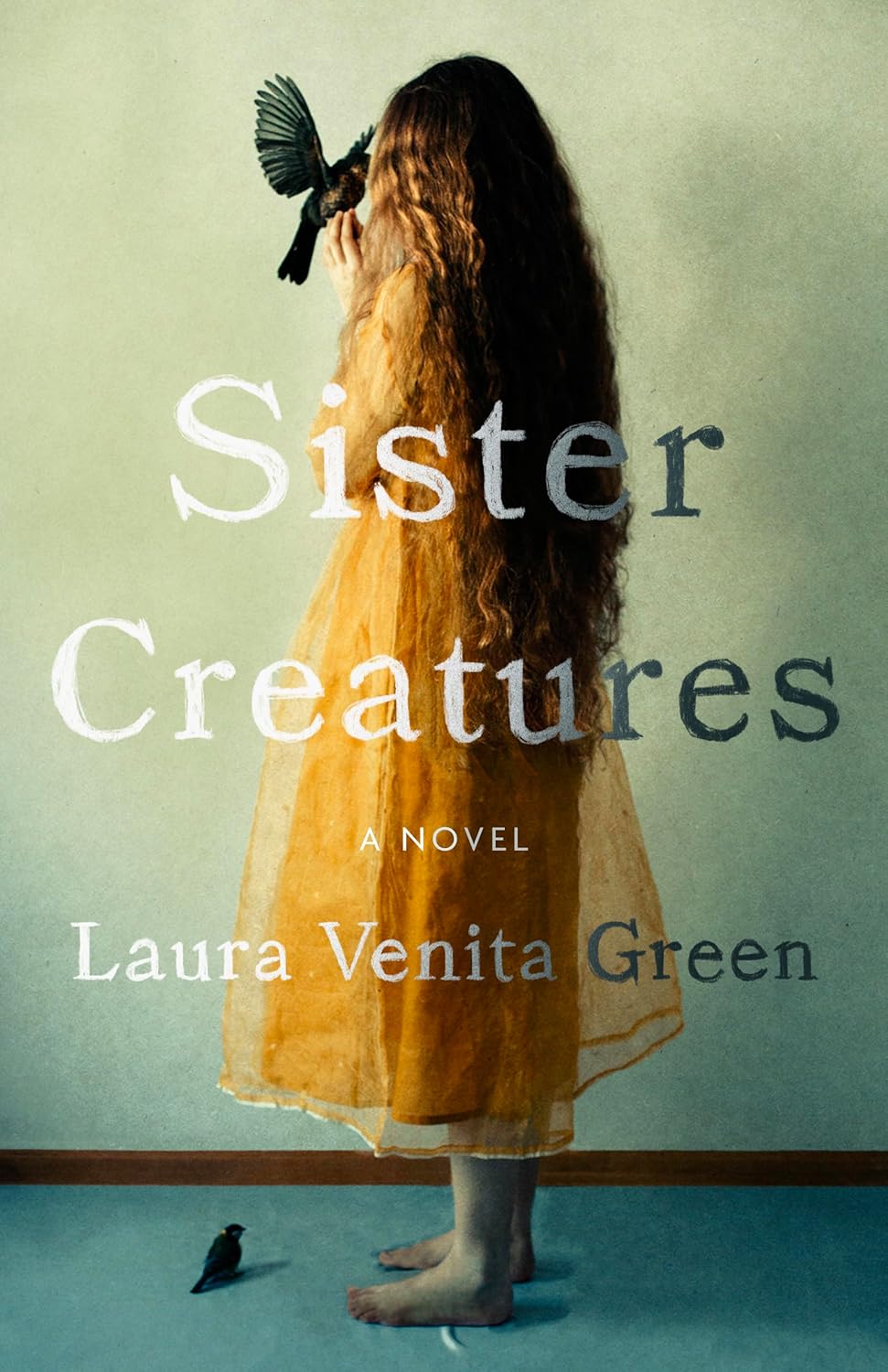
Sister Creatures by Laura Venita Green

From rural Louisiana to locations around the globe, the same problems and secrets follow a quartet of girls-become-women in this arresting, unnerving, and wise debut novel.

With Sister Creatures, Laura Venita Green invites her reader to navigate a shape-shifting world, beginning in rural Louisiana and ranging overseas and into starscapes and imagination. Rotating among a small group of girls and women, this imaginative narrative muddies the line between the novel’s real world and a fictional one within it. The result is dreamy, often disturbing, and hauntingly unforgettable.

In the opening scene, Tess uses her isolated job as a live-in nanny to hide away from the life she feels has already cratered, at age 20, with her heavy drinking. A neighboring teenager, Gail, makes a disquieting appearance: she is clearly not well, perhaps in danger, but rejects Tess’s half-hearted offer to help. The older girl “hat[es] how relieved she felt not to have to deal with anything.” Gail’s plight becomes a legend to the other characters until she makes a reappearance as an adult at the novel’s end. Meanwhile, Tess grows up and has a daughter of her own, lives around the world as part of a military family, but struggles to escape the problems she hid from in Pinecreek, La. Her former best friend, Lainey, leaves Louisiana as well, resulting in permanent banishment at the hands of a troubled younger sister. Another young woman, Olivia, wrestles with the local options, characterized as “Jesus and booze,” and with a sexuality not likely to be tolerated there. And then there is a recurring character whose entire reality seems in question. While they all choose to leave Pinecreek, the struggles that originate in their shared hometown follow these characters to Munich, Baltimore, New York City, and beyond.

In their parallel comings-of-age, and across generations, Green’s characters thread their paths between love and spite, affection and abuse. Their loose connections and jumps in chronology reward close attention, contributing to a slightly off-balance reader experience that is very much a part of the novel’s atmosphere. Sister Creatures blurs the concepts of reality and of right and wrong. Are the woods–of Louisiana, Maryland, or Bavaria–sanctuary or threat? Who is real and who is made up? Green’s narrative offers a strong literary bent, as characters interact with “The Yellow Wallpaper,” old fairy tales, misogyny, motherhood, and their own creative pursuits. They hurt each other, but they help each other, too; this is a novel ruled by nuance and surreality as well as the all-too-real.

Sister Creatures is often unsettling, but pairs moments of great sweetness alongside discomfiting ones. This novel remains thought-provoking long after its final pages.


This review originally ran in the August 12, 2025 issue of Shelf Awareness for the Book Trade. To subscribe, click here.


Rating: 7 cut-out musical notes.

Our Lady of Mysterious Ailments by T.L. Huchu

At the start of book 2 of the Edinburgh Nights series, young Ropa Moyo thinks she’s got a big break with an apprenticeship at the Society of Sceptical Enquirers, working directly with Sir Callander, Scotland’s top magician. But in the opening scene, her apprenticeship is downgraded to an unpaid internship. The big shots who work highly regarded “scientific magic” in this culture see this as a role with honor and opportunity–Callander has not taken an intern in many years–but Ropa is not exactly a member of that rank of society. She and her Gran and little sister Izwi live in a slum, in poverty, and Ropa is their sole wage earner. She cannot afford “unpaid.” (Race is not a very ‘forward’ issue in these books, but Ropa’s family is originally from Zimbabwe, and those roots influence the style of magic she’s learned from her Gran and which puts her a bit at odds with the establishment.)

Luckily, her buddy Priya has the lead on a side job: figuring out the nature of illness for a young patient at Our Lady of Mysterious Ailments. And, because Ropa is resourceful and always hustling, another mystery presents itself as well, one that might actually come with a serious paycheck. (Our protagonist is always worried about medications and medical care for Gran, and schooling for the precocious Izwi.) Chasing one puzzle and another, trying to impress the society and keep her family afloat, hard-working Ropa alternates between hopefulness and despair. Interestingly – and in a departure, as far as my memory serves, from The Library of the Dead – the case(s) here are tangled up with Scottish history and old wrongs.

Ropa’s unmistakable, unforgettable narrative voice is a big part of the charm to these novels. She offers a mix of a sort of classic, hard-boiled detective’s cynicism with a teenaged variety of same, and a youthful (not quite naïve) optimism, with both sardonic wit and earnest love for her family and friends. There is significant slang to season that combination to boot. I’d recognize Ropa anywhere, and although I have to look up the odd word, I’m always stimulated, intrigued, and entertained.

I hope it goes without saying that I’m all in for book 3 of this trilogy.


Rating: 7 movie posters.

The Islands of Elsewhere by Heather Fawcett

Another sweet, feel-good, funny, wholesome, middle-grade book by Heather Fawcett. I believe I have just one left in this age range, after which (if she’s not published more!) I’ll have to return to the Emily Wilde series to get my fill, and refresh my memory on how Fawcett matures her characters (and subject matters) for adult readers. I’m really enjoying just swimming in her imagination.

The Islands of Elsewhere stars the three Snolly sisters, but especially the middle sister, Bee. Eldest Hattie likes math, money, and being bossy; youngest Plum never stops moving, likes all sports, and generally teams up with Hattie, especially in their shared love of witches, fairies, and all things magic. Plum prefers to wear a costume, always: some of them store-bought Halloween costumes, many handmade by their loving Mom, who works for and performs in the theatre. And then there’s Bee, who appreciates science, especially botany, and is ever annoyed by her sisters’ belief in dreamy magical nonsense. Their toddler brother Dore rounds out the small family. Dad is mostly off-screen, but he and his girlfriend get along great with Mom, and he’ll be picking up the sisters for a camping trip in a few weeks’ time.

But first, Mom and the four kids are off to stay with Granddaddy at his home on the beach. They haven’t been there in a long time – Bee was too young to remember the last time. The sisters are delighted to arrive and discover that he lives right on the ocean! And his property includes an island – no, three islands! Fairy Island, Little Fairy, and Ghost come with some fascinating, even sinister stories in the little community of Misty Cove. The girls will have plenty to keep them busy: Hattie is practicing for a sandcastle contest that she intends to win (with a grand prize of one hundred and seventy five dollars!), Bee’s collecting new specimens of leaves and flowers, and Plum finds costume inspiration in the new setting: she wants to be a seal next, among other things. But there’s also a sadder reason for their visit. Beloved Granddaddy, an accomplished surfer and prolific and inventive baker of chocolate chip cookies, is having trouble with his memory. Mom is afraid he may not be able to live on his own for much longer.

The girls hatch a plan. If they can find the hidden treasure rumored to have been hidden away by their great-great-grandmother – an actual pirate – maybe they can afford to all live with Granddaddy from now on. The Snolly sisters must band together to search the fabled islands, and deal with octopuses, surly islanders, and the possible ghost of a witch along the way.

I loved the family dynamics here, which are nontraditional in some ways but always loving and positive. I loved the sibling relationships, and the earnest attempt to save the day. I loved Granddaddy’s quest for the perfect chocolate chip cookie, which includes everything from gum drops to Halloween candy to pumpkin pie, and maybe even octopus? It’s just all good clean fun, but not so clean as to be stuffy. In between heavier reads, I will take Fawcett’s younger-reader offerings any day. I hope she’s still hard at work. Hugs to Bee and the rest.


Rating: 7 unexpected ingredients.

Open Wide by Jessica Gross

This mind-bending novel examines the nature of love and the social conventions that govern relationships and asks where limits should be drawn, if at all.

Jessica Gross (Hysteria) staggers and challenges readers with her sophomore novel, Open Wide, starring a socially awkward protagonist who finds love and dives in very, very deeply.

Olive compulsively records all the hours of her life, “collecting sounds the way other people collect stamps.” She records diegetic sounds, which she uses in her work as a radio producer, and conversations, which she plays back–to study what went right or wrong, to soothe or arouse herself. She has long yearned for romance when she meets Theo, a handsome colorectal surgeon. He agrees with Olive’s proffered metaphor: people’s insides look like pink pasta. Olive can’t get enough. She wants to spend every night together. She wants to “climb inside” him.

Alongside their deepening love affair, Olive reveals to readers her relationships with her sisters and mother, through which Gross also explores boundaries (or lack thereof) and obsessive love. “My mother had climbed inside of me. My little self, filled with her bigger one. Her daughter, who was not supposed to be the vessel, but the one contained.” However, Theo is not parent or child to Olive but partner, so their intimacy is different, Olive tells herself.

Olive’s first-person narration of her bizarre story is an inspired choice that makes readers privy to her fears, confusions, passions, and rationalizations. By the final pages, which reveal what has changed in Olive’s surreal world, readers will feel dizzy with her perspective and its consequences. Open Wide is a tense, engrossing examination of the bounds of love.


This review originally ran in the August 8, 2025 issue of Shelf Awareness for Readers. To subscribe, click here, and you’ll receive two issues per week of book reviews and other bookish news.


Rating: 7 dog walks.

Stay tuned for my upcoming interview with Gross.

All the Wandering Light by Heather Fawcett

This one follows Even the Darkest Stars, with similar darkness, coming-of-age growth and learning and complication, and love. As is my usual practice, this review will contain spoilers for that previous book but not for this one.

So, on with the spoilers: at the end of book one, we had been hit with the shocking news that River himself was secretly a witch, and therefore obviously (to Kamzin and those of her world) a natural enemy. He has broken the binding spell that stole the witches’ power generations ago, and now their powers are restored, and the Empire is in danger. We learn quickly, though, that River is not so much motivated by wanting to overthrow or hurt anybody; rather, he wanted the freedom of possessing the powers he was born to. He wants to be himself. But by releasing all witches, he has enabled those who have crueler goals than he does, including revenge. His brother Esha intends to be the next emperor of the witches, and desires power enough to destroy the humans’ Empire, including Kamzin and everyone she loves.

In similar fashion to book one, a race is on, this time to get to a fallen star that is said to offer unimaginable power to whomever wields it: the human Emperor or the witch one. Kamzin travels with her friend Tem, her sister Lusha (and the two sisters offer nearly infinite messy siblinghood), and for part of the way, Mara, who was once a member of River’s crew. In the other camp, River reluctantly, even half-heartedly, helps his brothers. The plot of the book follows these two groups, centered on our protagonist, Kamzin–angry and hurt at her betrayal by the magnetic River, who had been a bit of a romantic interest–and her counterpart, River himself, who is likewise confused at the way the world reshapes around him and the power struggles that involve him even without interesting him much. This conflict will build to affect (again) the very fate of the world, and hinge upon the ability of the humans, in particular, to reconsider old prejudices.

Along the way, the part of this book that I struggled most with was the detail in some of the fighting or conflict scenes. Maybe it’s just this reader, for whom the fighting (in its minutia) will never be the most interesting part of the story. But especially with the ethereal, ghostly sort of enemy (and other only-halfway-there monsters), the shadowplay violence is a bit abstract, and doesn’t hold my attention well enough to sustain the way some of those scenes dragged on. I got a bit impatient. I think where Fawcett excels is, yes, worldbuilding, but most of all relationships: the way people (or witches, or stars!) interact and communicate and treat each other. And/or, this is where I’m most engaged with any story. There was lots to love here, just a little that I wished moved a bit more quickly. It’s worth noting that the two books in this duology were Fawcett’s first two. It’s clear to me that she’s improved from here.

I have just two more middle grade books of hers to read and then we have to wait for her to write more. Fawcett remains one of my favorite authors of the last year or two, so I hope she’s hard at work!


Rating: 7 beautiful ball gowns (what?!).

Maximum Shelf: A Season on the Drink by Pat Harris

Maximum Shelf is the weekly Shelf Awareness feature focusing on an upcoming title we love and believe will be a great handselling opportunity for booksellers everywhere. The features are written by our editors and reviewers and the publisher has helped support the issue.

This review was published by Shelf Awareness on July 24, 2025.


In 1986, at the Saint Anthony Residence, a haven for folks two steps away from living on the street in Saint Paul, Minn., a series of events and personalities converged in an unlikely and perhaps unprecedented situation. As described in the opening pages of Pat Harris’s novel A Season on the Drink, two softball teams met on Raymond Field: “The Saint Anthony Residence for chronic alcoholics and the drywall company were tied. It was the final game of the season.” It was just rec-league ball, but the stakes felt much greater than the outcome of the game itself. There was dignity on the line.

Harris’s debut is a remarkable novel whose subject is, on its surface, a softball team made up of chronic alcoholics. Immersion in its storytelling, however, reveals greater depths, focusing on a handful of characters from the team and the Saint Anthony Residence; most central is a man named Marty Peterson. Marty is nearing 50 years old, with a county record including “treatment six or so times, detox 30 or 40,” when he goes to live at the Residence. Quiet, easygoing, cerebral, Marty has long found himself unfit for mainstream life.

He does have a personal history with baseball, however. A strong player in high school, he played a single year at the University of Minnesota, briefly brushing shoulders with greatness in the form of coach Dick Siebert and Herb Brooks. “Herb would eventually take off his Gopher baseball uniform for a checkered sport coat and one of the most iconic gold medals in history. Marty took off his uniform for a shirt he found at Goodwill.” In an extraordinary year at Saint Anthony, he will have an important role to play in forming a team that will go undefeated for its single season.

Based on a true story that touched the author early in his public service career, A Season on the Drink delves into Marty’s personal history through “Marty Interludes” and his original poetry. Harris features a few other characters in detail: Harry Opus, the day manager at Saint Anthony, is a recovering alcoholic and somewhat reluctant team member. Terry Thomas, longtime resident, is “a provocateur… humorous, conniving, and sad,” but a born salesman and Marty’s more gregarious counterpart as player/manager. Allison Boisvert, director of housing for Catholic Charities, aka “the Queen of Housing,” along with community investors Mr. Long and Mr. Ryan and a “charitable mobster” known as “The Padre,” provide financial and moral support; the Queen’s partner, Jim, also a staffer at Saint Anthony, is a steady hand on a team with very few of them. But Marty is the heart, soul, and talent.

In telling the story of these and other lost alcoholics and those who serve them, Harris artfully profiles people, the city of Saint Paul, and alcoholism itself. He also touches on politics, economics, and social services. The existence of the Saint Anthony Residence relies on the skillful marketing by the Queen and other advocates to both ends of the political spectrum. Housing “chronic inebriates” at Saint Anthony costs taxpayers far less than treatment or detox; visible, homeless drunks are bad for business. It is also “a matter of dignity… [which] calls for the basics of life–food, shelter, and maybe something for the soul.” “All were welcome at Saint Anthony”–the residence is a wet house: residents have no obligation to attend meetings or make any attempt to be sober. They may own alcohol but not possess it on the premises. Some leave for parts unknown; some leave in a body bag. There is a regular schedule to each month, from the first when residents collect a check for $47 and are, briefly, funded drinkers, through the mid-month descent into alchemy: profoundly toxic cocktails of cleaning products and rubbing alcohol for the truly committed. “The Saint Anthony Residence was a last stop–a formal determination of the end while living.”

But then there was the spring of 1986. Led by Kirby Puckett and called by Bob Kurtz, the Minnesota Twins are on the Saint Anthony televisions; Marty, Terry, and Harry watch in the latter’s office, and Marty recalls his youth. A baseball glove appears. Marty and Terry knock a ball around over at Raymond Field, and the Queen directs Harry to form a team–she wants to see the residents a little more occupied, beyond alchemical creativity. Terry’s charisma and salesmanship, Harry’s unenthusiastic aid, and most especially Marty’s love for and knowledge of the game coalesce to form “America’s first organized softball team of chronic inebriates.” “The game of baseball was made to make the world feel better. Even in failure, it offered victory.”

By the end of this narrative, fictionalized from Harris’s own conversations with Marty Peterson, a team has formed and stumbled, won, and disbanded. The Saint Anthony Residence is still the bottom of a certain trajectory, but there are fine and shining moments. “Seeing the playing field from the vantage point of the batter’s box is the greatest moment in sports, and Marty was right back in it.” Victory parties are thrown with kegs of root beer.

“If this were a movie, there’d be happy endings, but life stories are not that neat.” With A Season on the Drink, Harris offers somber but loving reflections from this less-than-neat story, and there is no question of the tenderness at its center–“[Marty] just liked playing ball.”


Rating: 8 unusually fresh doughnuts.

Come back Monday for my interview with Harris.

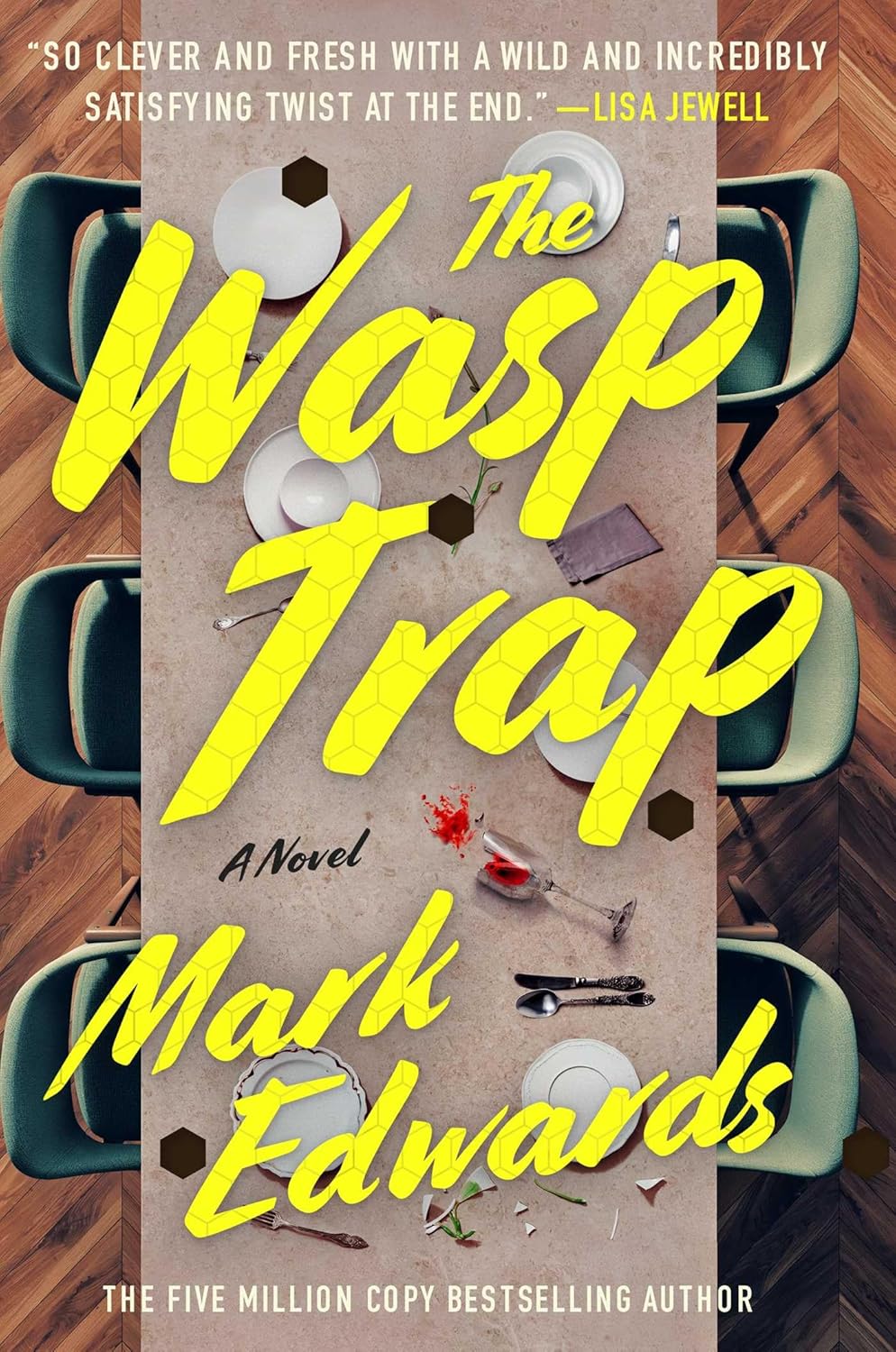
The Wasp Trap by Mark Edwards

Six estranged friends and colleagues gather at a sumptuous dinner party to find themselves terrorized by old secrets in this gratifying tale of suspense and psychopaths.

The Wasp Trap is an absolutely thrilling, tautly plotted puzzle of a novel by Mark Edwards. This double-locked-room mystery, with all the tension that that implies, presents a cast of well-developed characters facing various hidden challenges.

The first timeline, introduced in the novel’s prologue, takes place in July 1999. A group of recent college graduates are gathered at a country estate outside London by a charismatic psychology professor to work around the clock on a dating website meant to achieve maximum dotcom-era profits. In truth, they also work at developing a test to identify psychopaths (their mentor’s first interest). The estate is well outfitted with “fruit-colored iMacs” and age-appropriate entertainment. For a few months, in these pleasant confines, the group becomes very close. “The lothario. The salesman. The affluent couple, the joker and the local girl. Finally, me, the wordsmith, whose role was to write it all down. If any of us were a psychopath, I already had a good idea who it would be.” The bulk of the novel is narrated by Will, an aspiring writer who often feels trapped on the outside, thwarted in his attempts to connect. He is well-suited to observe the character of his counterparts, but not unbiased.

Twenty-five years later, they gather again, to commemorate the death of their former employer. Two members of the original project have married–they are the only two to have kept in touch, after what seems to have been a rocky and abrupt ending. Now “the affluent couple” hosts their old friends for a lavish dinner party in their high-security Notting Hill townhouse. But immediately the evening shifts from awkward to nightmarish, part home invasion and part sinister game. The group is commanded to reveal a secret from the storied summer of ’99. Each dinner guest denies knowing what information is sought, but each, of course, does harbor secrets. The key to The Wasp Trap‘s deliciously frightening uncertainty lies in the pain and horror of not knowing whom, in a closed environment, one can trust. The once-tight-knit group fractures amid secret and not-so-secret sexual tensions, financial pressures, and old jealousies, especially with a suspected psychopath or two in their midst.

Offering twists and turns and surprises through his novel’s final pages, Edwards executes a highly satisfying thriller with this intriguing blend of terror and nostalgia for youth and freer, more hopeful times.


This review originally ran in the July 22, 2025 issue of Shelf Awareness for the Book Trade. To subscribe, click here.


Rating: 8 cans of Pepsi.

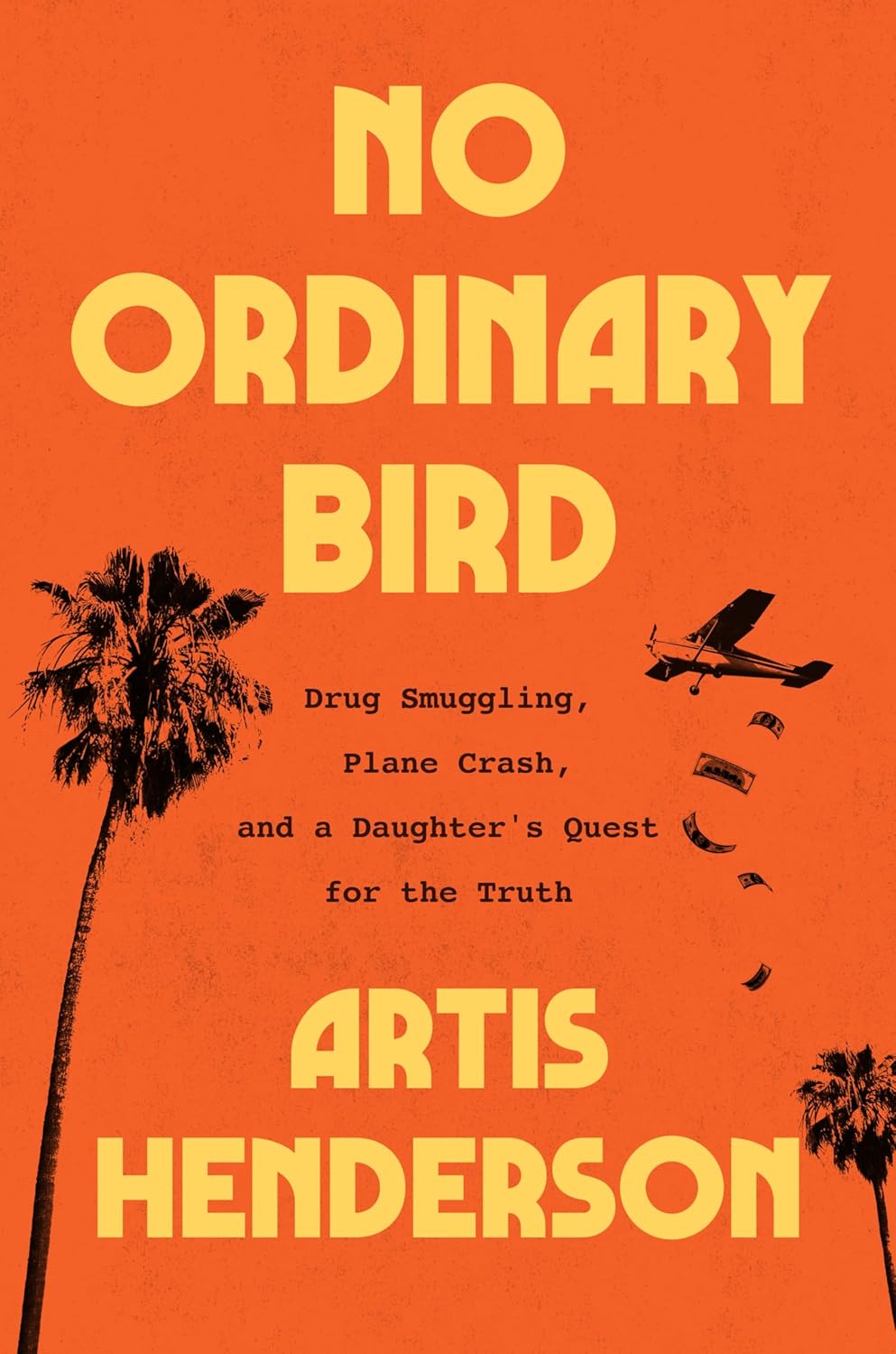
No Ordinary Bird: Drug Smuggling, a Plane Crash, and a Daughter’s Quest for the Truth by Artis Henderson

A daughter’s study of her father’s life and death artfully reveals intrigue, astonishing slices of world history, and a loving but flawed man.

In June of 1985, a small private plane, a Piper Cub, crashed on its owner’s property in northern Georgia. The pilot, Lamar Chester, was killed. His only passenger, his five-year-old daughter, AJ, sustained severe injuries but lived. In death, Lamar escaped prosecution as a marijuana smuggler. His widow, hoping to protect her child, removed the young AJ from the life she’d known, isolating them from family and friends who had been involved in the smuggling business. AJ grew up to be Artis Henderson (Unremarried Widow), who spent decades turned away from her father’s story, interpreting her mother’s silence as shame. Her eventual readiness to examine the truth of her father’s life, their brief but loving relationship, and his end has resulted in No Ordinary Bird: Drug Smuggling, a Plane Crash, and a Daughter’s Quest for the Truth, which combines investigation and personal excavation in a searing, moving memoir.

In their few years together, Lamar made a strong impression on his youngest child, one that has been enriched by her later research. She remembers him as a loving and beloved father, and deeply charismatic, although his attitudes toward women in particular appear problematic through a modern lens. Henderson is thoughtful about such judgments, and careful in considering her father’s upbringing as a factor in his life. And a wild life it was, with an early marriage yielding three surviving children and one lost; divorce and remarriage; and a colorful career as a pilot, smuggler, and ostentatious party boy in 1970s Miami. Increasing profits and outward success allowed Lamar to acquire ever-more-impressive possessions, and he became involved in ever-more-risky ventures, until he faced federal prosecution and the plane crash that killed him.

Henderson’s work is both investigatory and personal: “I’m grappling with this story as much as I’m reporting it.” She loved her father, sympathizes with the demons he faced, and remembers a childhood of “uncomplicated happiness. My father made me feel safe and protected.” She trusts that there was a time when, “to him, the line between the good guys and the bad guys was still very clear,” but also realizes that he made choices that endangered his family and, she concludes, led to his own death. No Ordinary Bird is a loving portrait that benefits from the nuance of understanding that, as Lamar liked to say, “you can’t tell the good guys from the bad guys.” It is both research-based inquiry–involving travel to Miami, Georgia, Colombia, Nicaragua, Iran, and beyond–and also a memoir of family, love, and risk. Henderson excels at the subtlety required by such a story, and her telling is intriguing, painful, and cathartic.


This review originally ran in the July 18, 2025 issue of Shelf Awareness for the Book Trade. To subscribe, click here.


Rating: 8 bear claws.

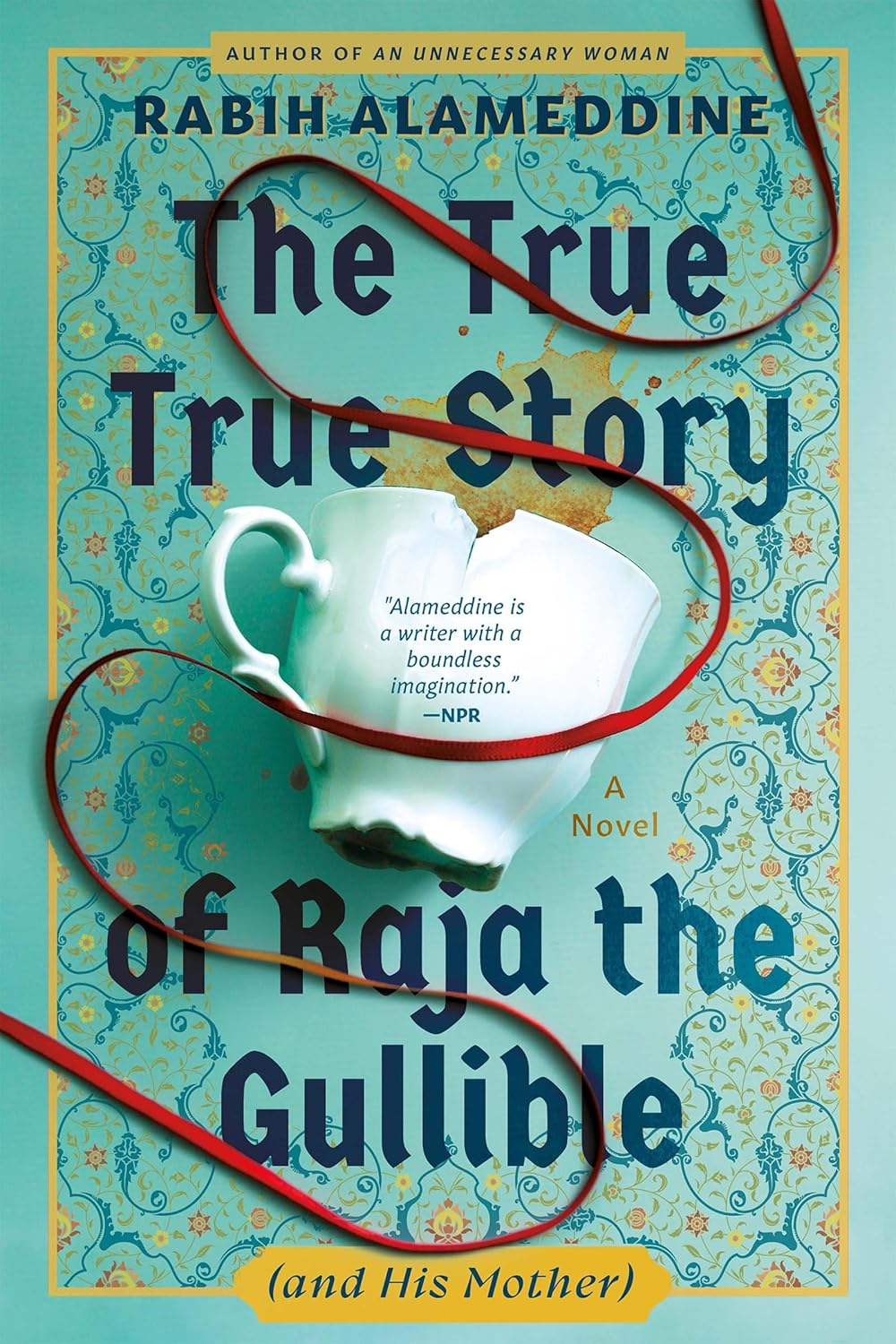
The True True Story of Raja the Gullible (and His Mother) by Rabih Alameddine

An especially wry, wise, comic style distinguishes this unforgettable tale of national trauma, community, familial love, and forgiveness.

The True True Story of Raja the Gullible (and His Mother) is a novel as expansive, funny, and poignant as its title promises. With his signature wit and irreverence, Rabih Alameddine (The Angel of History; The Wrong End of the Telescope; An Unnecessary Woman) charts decades of Beiruti history and trauma through the life of his narrator, Raja, a reclusive, aging teacher of French philosophy.

The novel opens and closes in 2023, when Raja shares his apartment with his overbearing but deeply endearing mother, Zalfa. The bulk of its sections jump back in time: to the pre-civil-war 1960s, Lebanon’s civil war in 1975, the banking collapse and Covid-19 epidemic, and Raja’s ill-fated trip to the United States for an artists’ residency in Virginia. (He should have more fully recognized how suspicious the invitation was: he had written a book 25 years earlier, but “I’m not a writer, not really. I wrote a book, that was it. It was an accident.”) Writer or no, Raja is a knowing, purposeful narrator, teasing his reader with what is to come, defending his story’s chronological shifts: “A tale has many tails, and many heads, particularly if it’s true. Like life, it is a river with many branches, rivulets, creeks….” Self-aware and self-deprecating, Raja names himself the Gullible, the Imbecile, the Neurotic Clown, the Dimwit. His mother is “Raja the Gullible’s Tormentor.” “Deciphering [her] was a feat that would have surely flummoxed Hercules–my mother as the unthinkably impossible thirteenth task.” They bicker constantly, foul-mouthed but fiercely loving.

In past timelines, the reader learns of Raja’s troubled childhood as a gay younger son, bullied by much of his family, especially Aunt Yasmine, “the wickedest witch of the Middle East.” During the civil war, in his teens, he is held captive for weeks by a schoolmate and soldier with whom he begins a sexual relationship that is part experimentation, part Stockholm syndrome. He describes his accidental path to teaching, 36 years of it; he refers to his students as his “brats,” but his care for them and, even more, theirs for him will become gradually apparent. Amid terrible events, like the port explosion of 2020, Raja’s mother befriends a neighborhood crime boss named Madame Taweel: “Only my mother would find a mentor at eighty-two, let alone the most inappropriate one.” Bawdy, rude, and impossibly sweet, with “a laugh so delightful, so impetuous, so luminous,” Raja’s mother is the indomitable star of this loving, heartwrenching novel.


This review originally ran in the July 14, 2025 issue of Shelf Awareness for the Book Trade. To subscribe, click here.


Rating: 7 cans of tuna.