Last Call at the Nightingale by Katharine Schellman

With lively and appealing historical detail, this mystery turns a poor factory worker into a sleuth when a murder disrupts the party at her favorite jazz speakeasy.

In Last Call at the Nightingale, Katharine Schellman (The Body in the Garden) serves up Prohibition-era murder and intrigue with style, atmosphere and a side of bootlegged bubbles and gin. The first in a Jazz Age mystery series, this novel will appeal to readers on several levels.

In 1920s New York City, Vivian Kelly is alone in the world but for her stick-in-the-mud older sister, Florence. Vivian works for a pittance and receives less respect in a dressmaker’s factory, but at night she has a space where she can forget her poor pricked fingers and dance ’til last call: the Nightingale, a speakeasy jazz club. “She needed to feel like she belonged somewhere, to feel there was something in her life that actually belonged to her,” and the Nightingale and its staff and patrons give her just that. Vivian is “poor orphan Irish trash”; her best friend Bea is Black; bartender Danny is Chinese; and the bar’s owner, Ms. Honor Huxley (don’t call her Miss), prefers other women as her dance partners. The Nightingale is a place where anything goes, more or less–until one night that includes murder.

When Vivian discovers a body just outside the club’s back door, she finds herself thrown into circumstances beyond her usual daytime drudgery and nighttime frolics. “I grew up in an orphanage. I live in a tenement. People die faster there than on Park Avenue,” she blusters, but she’s in over her head. Arrested in a raid, she owes her bail bond to the intimidating but sexy and intriguing Ms. Huxley. Then a mysterious stranger arrives from Chicago and begins pursuing Vivian. Threatening bruisers are hot on her tail, and Florence is increasingly displeased by the younger sister’s nightlife. Vivian at first feels pressure from others to solve the murder; eventually she may need to do so to save her own life. A poor dressmaker’s apprentice, she creeps into the parlors of the powerful to poke into their secrets, and finds herself pinned between the criminal underworld and the careless menace of the very rich. Time is running out, but this protagonist is as plucky as they come.

Readers will love Last Call at the Nightingale for its twisting plot, its flair for historical detail and its inclusive cast of appealing characters. Schellman’s author’s note on historical accuracy broadens the appeal of this engrossing jaunt into murder and dangerously good times. Don’t look away, as the surprises keep coming until the final page.


This review originally ran in the March 18, 2022 issue of Shelf Awareness for the Book Trade. To subscribe, click here.


Rating: 7 stitches.

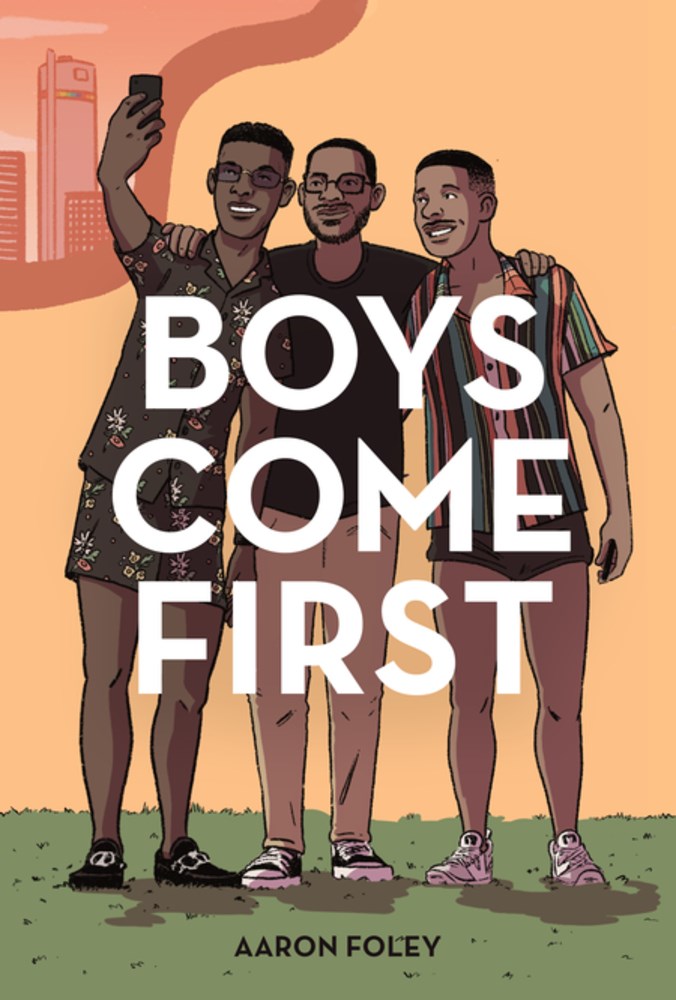
Boys Come First by Aaron Foley

Three gay, Black, millennial men in Detroit face romantic, professional and existential challenges together in this deeply engaging novel about the importance of friendship.

With Boys Come First, Aaron Foley (How to Live in Detroit Without Being a Jackass) offers a delightful novel about romantic and career ambitions, friendship and the particular charms of and challenges faced by gay Black millennial men in Detroit. Chapters alternate perspectives among a lovable trio of friends.

Readers first meet Dominick as he departs New York City’s Hell’s Kitchen in a fluster: the start-up advertising firm he’d taken a chance on has just failed, immediately before he walked in on his boyfriend of eight years with another man. Dom flees home to Detroit to lick his wounds and reconnect with his old friend Troy. Troy teaches sixth grade at a charter school, eschewing his father’s considerable wealth in favor of giving back to the community, but he’s frustrated in his relationship with a domineering boyfriend, and the school’s charter is now under threat. Feeling a little stagnant, Troy has just picked up a mild-to-moderate cocaine habit. Meanwhile, Troy’s college friend Remy has styled himself as “Mr. Detroit,” a real estate prodigy and local celebrity: outwardly successful, but struggling to find meaningful connection with a partner who wants more than sex. (Remy oozes style, so it suits his character that his chapters are the only ones written in first person.) Remy likes sex, no mistake–each of the friends does, but each is also in search of something more meaningful.

Dom and Remy hit it off, and the boys’ club is complete. With group texts and happy hours around town, they support each other through messy hookups via dating app, professional disappointments and workplace microaggressions, heartbreaks and more. That is, until Remy’s latest development opportunity conflicts with Troy’s local advocacy. In Dom’s mind, “when you’re Black, gay, and thirtysomething, time always feels like it’s running out,” and these men feel both in-common and individual pressures to which any reader can relate.

Boys Come First is rich in flavor and detail, benefiting from Remy’s comprehensive knowledge of Motor City neighborhoods, Troy’s hyperlocal concerns for his school and Dom’s perspective as he returns from afar. The changing demographics of contemporary Detroit, by class but most pointedly by race, are front and center. Foley’s novel shows range, with its fun, silly and pathos-filled handling of the love-and-sex storylines, serious commentary on social issues and an endearing representation of sincere (if troubled) friendships. Unforgettable characters, madcap fun and mishaps converge in this sweet and, finally, aspirational story.


This review originally ran in the March 15, 2022 issue of Shelf Awareness for the Book Trade. To subscribe, click here.


Rating: 7 glasses of Lambrusco.

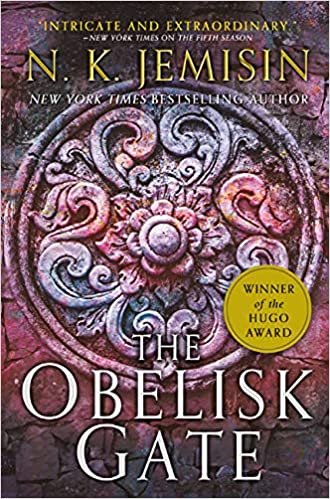
The Obelisk Gate by N.K. Jemisin

Book two of the Broken Earth trilogy went past like lightning, unsurprisingly. (Mild-to-moderate spoilers for book one – but not book two – follow.)

At the end of The Fifth Season, Essun – the latter-day identity of girl we knew as Damaya and the woman we knew as Syenite – was hiking south in a particularly nasty Season, in search of her missing daughter. She had picked up one companion, a strange boy named Hoa, and then another, an equally-but-differently strange woman named Tonkee (who we will learn also wore a different identity in earlier times). The extremely oddball trio had arrived at an apparently abandoned comm (for community) called Castrima, where they had been sort-of-invited, sort-of-taken-prisoner into a hidden but thriving comm underground of Castrima. There, other reunions: Alabaster had also taken up residency, for one. Castrima is a unique settlement in that it tolerates orogenes, even works to attract them and is led by one. That doesn’t mean that all relations are good, though.

The Obelisk Gate alternates between two storylines: that of Essun in Castrima-under (in a Season and under duress), and that of Nassun, Essun’s daughter (the first time we’ve met her). Nassun’s story backs up in time to allow us to follow her from the start of the Season, and her father’s murder of her little brother, until Essun’s narrative present. Essun learns more about the various people (stills, orogenes, and stone eaters) she’s cohabitating with, and continues to learn under her mentor Alabaster, whose own story is drawing to a close. Nassun finds a mentor as well, another character we know (and have decidedly mixed feelings about) from book one. She grows as a mightily powerful orogene and begins to navigate the liabilities of that power. Mother and daughter draw nearer to each other, not geographically but in common traits and efforts. Book three seems sure to follow that drawing-together.

The obelisks themselves, of the title, are important to the outcome of the world in this series; their power and the power to guide and steer them are central to the stories of both Essun and Nassun. But they feel much less important to me than the character arcs and relationships at play – Nassun and Shaffa, Nassun and her father, Essun and Alabaster (and Tonkee and Hoa and Ykka and Lerna, etc.). Plus, the obelisks get a little more technical, both in the science side of the sci-fi and the magic side of the fantasy. And that stuff is always less interesting to me than the human element (even where it’s not entirely clear who is technically ‘human’).

I love, love, love the complex nature of this fictional world and how full and thorough its rules and customs are. I feel well convinced that Jemisin has done the backstory work to know how its parts operate even in ways that aren’t spelled out on the page. It’s compelling and absorbing, a world to lose myself in, which I value highly. I’m excited about book three (and sorry to see the series close, but happy to have bought a whole ‘nother one already!). Jemisin’s characters are convincing: there really isn’t a one of them that I adore and admire entirely, because they all have their considerable flaws. But they’re very real, and I care what happens to them.

This writer is a master.


Rating: 8 boilbugs.

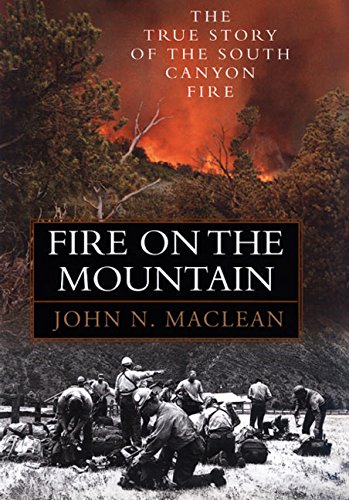
Fire on the Mountain by John N. Maclean

This is the 18th book I’ve read this year, and easily the most affecting.

I try not to lead with what somebody’s dad did before them, respecting (for example) Joe Hill’s desire to live outside of Stephen King’s considerable shadow, but this one is just too close to its forebear. John N. Maclean is the son of Norman Maclean, who wrote the absolutely earthshattering 1992 book Young Men and Fire about the Mann Gulch fire of 1949 and the tragic deaths of thirteen wildland firefighters there. This book, Fire on the Mountain (1999), does a similar job of rumination on a markedly similar event, the 1994 South Canyon fire, and the deaths of fourteen wildland firefighters. The two events and the two books are too parallel for me to avoid noting this context up front.

Fire on the Mountain is riveting, suspenseful even though the reader knows the outcome from the start. It is better (or worse, if you like) than a horror novel in its pervasive sense of foreboding and doom.

The realization came to Cuoco that the front would strike with almost no warning. Half the fires in western Colorado could explode, and if someone didn’t warn firefighters, they could be caught in harm’s way.

At minutes past noon the main front provided the final confirmation, sweeping into Grand Junction with sudden winds just as the lightning storm had four days earlier. For Cuoco this was ‘an adrenaline-pushing, severe weather condition,’ the same as a tornado warning.

Because this is nonfiction – these are real lives lost – it carries a little extra weight. And there’s just something about fire and, I submit, wildland fire in particular, and the special bravery (or foolhardiness?) and undeniable toughness of the firefighters who venture against it… something especially elemental, romantic, compelling. It makes for fine literature and tempts us to neverending consideration. Maclean’s writing focuses on those elemental forces at work, both natural and human ones. This is in part an investigative work, an attempt to figure out what happened out there – what went wrong, what might have been preventable, and who (if anyone) might be to blame. There were investigations into the South Canyon fire, and attempts to assign blame, and Maclean is hesitant to crucify anyone, but he does wind up trying to correct the record, easing blame in certain quarters (the firefighters themselves) and offer a little more in others (management staff and agencies). He doesn’t get judgmental til the final pages (and even then I don’t mean this as a criticism; he’s here, after all, to make a judgment), at which point it felt perhaps a little jarring to slide into that tone. But he also made good arguments throughout – by the time Maclean begins to assign blame, his points are well proven.

It is a difficult book to read, emotionally, and yet so propulsive that it was hard to turn away from, too. There was one night in particular when I had to force myself to put it down and get to bed before midnight (on a school night!), knowing that that would be best for me (as reader as well as teacher) and for my impression of the book.

I’m deeply impressed and moved. I will say, though, that it doesn’t quite reach the heights of Young Men and Fire, at least for me and according to my memory of that earlier book (which I read nearly ten years ago). The first I recall having more zoomed-out, existential-philosophy-level meditation to it. The religious imagery of the stations of the cross and the relentless focus on the firefighters’ final moments lent it a mythic quality. (You will rarely find me praising a book for its religious imagery.) There was something magical there. This book is excellent; but it remains a little closer to earth, as a work of thoughtful investigative journalism and compassionate remembrance of lives lost. I had forgotten, though, that Young Men and Fire was published posthumously, with John Maclean’s involvement, so that’s an interesting point.

Hard to read, but so worth it.


Rating: 8 steps.

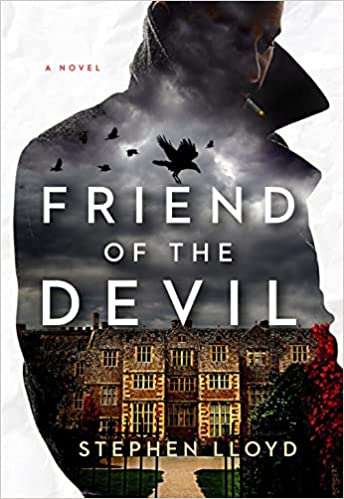
Friend of the Devil by Stephen Lloyd

This singular novel of teenaged hijinks, a mysterious missing book, potentially profound evil and PTSD is wry, shockingly violent, philosophical and laugh-out-loud funny.

Stephen Lloyd’s Friend of the Devil offers a captivating blend of madcap mischief, terrifying and gory malevolence and thoughtful ruminations on humanity. Gruesome, deadly serious and frequently hilarious, this novel is an unusual cocktail.

Sam Gregory works as an inspector for an insurance company, responsible for rooting out fraud or solving cases like this one: a valuable antique book gone missing from the library of Danforth Putnam, a snooty boarding school on an island off the coast of Massachusetts. A war veteran, Sam pops pills to clear his mind of the traumatic memories and bad dreams that haunt him. He feels only a jaded weariness at the privileged antics of the students (and for that matter, the staff), but dutifully searches for the missing volume, sure there’s nothing here but another case of a drug-addled teen or disgruntled employee.

Sam is so wrong. But on his way to shocking, elemental horrors, he (and readers) will meet magnetic characters like the indomitable Harriet (D&D dungeon master, student journalist, extreme nerd and loyal friend) and bitter, acerbic Dale (a charity case at Danforth, which no one will ever let him forget). Despite his initial impressions of the school, Sam will take away unexpected lessons from these and other inhabitants of the island. What haunts Danforth and its very special missing book will turn out to be seriously sinister, and by the time Sam approaches its true nature–supernatural, or simple human evil?–the stakes will be ultimate.

Sam’s sardonic wit and tough-guy demeanor impart a flavor of classic noir. Harriet, who moves swiftly and unstoppably from bullying victim to plucky heroine, is a pure pleasure. Lloyd, who is also a TV writer and producer (Modern Family; How I Met Your Mother), showcases a talent for description and rich sensory detail from the first pages, when readers meet the rarified denizens of Danforth, “a diverse group… in every way but one. They were all filthy rich.” His characters are colorful, lovable or repellant, and the almost casual facility with which he kills them off is impressive.

Lightning-paced and undeniably weird, this is not a tale for everyone, as it bounces around between witch hunting and mythical evils, teenaged betrayals, PTSD, petty crime, bloody violence and delightful dry humor. But for the right reader, Friend of the Devil‘s unusual brand of gore and laughs is wildly, wickedly entertaining and positively unforgettable.


This review originally ran in the March 4, 2022 issue of Shelf Awareness for the Book Trade. To subscribe, click here.


Rating: 7 Junior Mints.

The Fifth Season by N.K. Jemisin

I got sad that there’s still no sequel to The City We Became, so I chose one of Jemisin’s sci-fi trilogies to try while I wait. And it is so good, you guys. I’m already feeling withdrawal from this fictional world.

The Fifth Season is set in a world that keeps ending. It appears to be much like the world I live in now, only much later? (Or earlier? Sometimes the two can blur.) This world has just one continent, as far as its inhabitants know, and it is a very active one. “Like an old man lying restlessly abed it heaves and sighs, puckers and farts, yawns and swallows. Naturally this land’s people have named it the Stillness. It is a land of quiet and bitter irony.” There are ruins scattered around from previous civilizations, that preceded earlier Fifth Seasons, those times when the puckering, heaving land goes a little nuts (tsunamis, blows [volcanic eruptions] and shakes [earthquakes] being the most common issues) and life becomes extra difficult for a period of years. (The book offers two helpful appendices, one a catalog of Fifth Seasons and the other a glossary of terms, most of which were easy enough to suss out by context clues, anyway.) Such an unstable world has sprouted an empire (naturally), a caste system, numerous injustices, and policies meant to help its subjects weather the Seasons: storecaches of food, clear divisions of labor, Seasonal Law. This world is peopled by different kinds of people, too. Some of them are “still,” but others have the power to move the earth. These are orogenes (or the derogatory ‘rogga’), and they can use thermal, kinetic and other forms of energy to control and even cause seismic events. Some of them are controlled and wielded in turn, so to speak, by a class of persons known as Guardians. And then there are the stone eaters…

Jemisin’s narrative centers around three characters, three woman orogenes, in three different, distressing points in their lives. We learn about the possible paths for orogenes from their experiences. One of them is navigating a Season after having just lost a child. Another has been trained at the Fulcrum, and is now being sent out on a humiliating assignment. And one is just a girl, frightened of her own power and identity, newly embarked on the world. As each woman’s story advances, we learn more about the single world they share. There are secrets to be revealed, but not much goodness. (When I say I miss this fictional universe, it’s not because it’s pleasant.) I love a big, complex otherworld. And I loved these characters – not just the main three, but a few others as well. Jemisin’s characters have facets and nuance. I appreciate characters who can be flawed and problematic and maybe not people I’d even want to be friends with, but with whom I can feel such strong connections. That’s true to life.

Also, there are pirates.

Lovely worldbuilding, full and complex and deeply layered, plenty deep enough to get lost in. Despite the presence of those two appendices, which I didn’t find until the end!, I was always more or less clear on what was happening (also true to life: when are we ever on entirely solid ground?). Great characters, beautiful writing, opportunities for philosophical pondering, and some superlatively clever plotting. This book has it all; what’s not to love? Jemisin is a rock star (no pun intended).

I’ve already ordered books 2 and 3 in this trilogy, obviously. And somebody had the very clever idea to include, at the back of this book, snippets from the first books in two other Jemisin trilogies as well, so I ordered one of those at the same time. Good thing she’s written plenty. Stay tuned.


Rating: 8 kirkhusa.

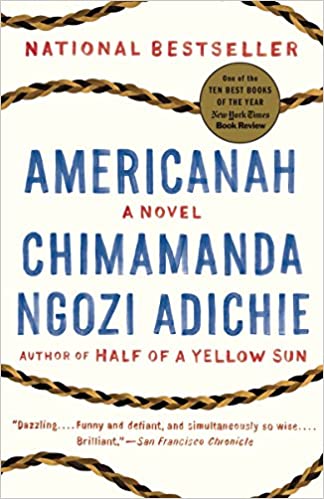
Americanah by Chimamanda Ngozi Adichie

I was blown away by this novel, which absorbed me totally in the life of Ifemelu, a Nigerian woman who lives in the United States for some years during and after college and then returns home to Lagos. It is large and sweeping in its considerations of cultural differences and personal relationships but also retains its focus on one life.

Ifemelu and her high school boyfriend Obinze have a deep and intense relationship, and no doubts about one another, but they both know – as everyone around them seems to know – that it is necessary to get out of Lagos and into the West, where there will be more opportunity to learn and study and earn money and build a life beyond the limitations of their home. Ifemelu is able to get to the United States to attend college in Philadelphia, where she struggles to scrape by, and to navigate a race and class system that is new to her. She has one strong family connection in the states, her aunt and younger cousin Dike. Her path is not easy but she eventually establishes a proper and “successful” life for herself, finally in New Haven, which is where we meet her in the opening chapter. Meanwhile, Obinze is unable to get papers to the United States, eventually traveling to London and overstaying his visa to live a hidden, undocumented life there. Each of them faces unique dangers, and after a particular trauma, they fall out of touch. The novel follows Ifemelu but occasionally checks in with her childhood sweetheart until the two eventually reconnect.

Americanah is first a story about people. It’s also about race and class in America, and about Nigerian and American cultures, and others (especially the multitude of “Non-American Black” cultures Ifemelu encounters in this country). While stateside, Ifemelu makes a career for herself as a blogger about race in America (she is clear that she wasn’t black till she got here). But it’s also just people, in the loveliest, messiest way, the ways in which we can be ugly and beautiful and complicated. There is some romance; but I take issue with the materials that describe this as a book about Ifemelu and Obinze, or an ‘intergenerational’ story. Although it’s true that Obinze is present for much of the book, and that there are multiple generations in it, I would say that this is a book firmly about Ifemelu, and the life she leads and everything it exposes about race and class and culture – Ifemelu as an individual, not a symbol or a device. This book is beautifully written and completely captivating; it’s the quickest nearly-600-pages I’ve taken in in a long time.

Ifemelu’s blog does provide Adichie with a mechanism for communicating pointed and explicit observations about race; but this is still far from polemic. Ifemelu mostly tells anecdotes from the world she encounters, which is a very approachable or accessible way to have these conversations (points to both Ifemelu and her creator). “…she began, over time, to feel like a vulture hacking into the carcasses of people’s stories for something she could use. Sometimes making fragile links to race. Sometimes not believing herself. The more she wrote, the less sure she became. Each post scraped off yet one more scale of self until she felt naked and false.” Now, look, I have no reason to conflate the character in these sentences with the writer Adichie, but I do think any time a writer writes about writing, we should consider that relationship. And I will certainly say that I relate to Ifemelu’s challenges here as a writer.

There is plenty of heaviness here, but it was also a pure delight to spend time with Ifemelu, a gorgeously self-assured, thoughtful character. While there is much here that is culturally foreign to my experiences, I always found it easy to sink into and to follow. I strongly recommend Americanah and admire Adichie.


Rating: 9 fried plantains.

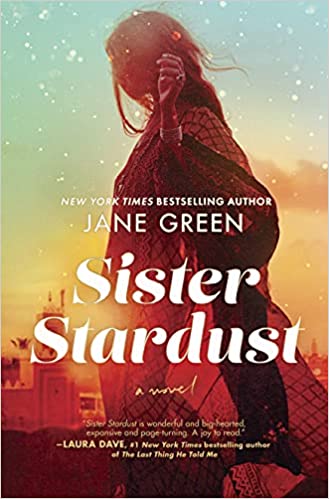
Sister Stardust by Jane Green

In this captivating coming-of-age novel, a teenager from the English countryside throws herself into life in 1960s Marrakech in a grand adventure that will color the rest of her life.

Sister Stardust is the captivating coming-of-age story of a shop girl from Dorset swept into 1960s Marrakech among the rich and famous. Jane Green (Summer Secrets; The Sunshine Sisters) dazzles readers with the brilliant adventures of Claire, who leaves behind a little Dorset village and a troubled relationship with her stepmother to journey to London. From there she is astonished to achieve a few girlhood dreams: losing baby fat, working in progressively hipper clothing stores and buying cooler clothes, finally meeting real, live rock stars and setting off on a spur-of-the-moment trip that will change her life forever. But even as she embarks on drugs, sex and cultural discoveries, Claire–by now calling herself Cece–finds that fabulous celebrities have their problems, too, and a tabloid-picture-perfect lifestyle is no guarantee of happiness.

This story takes the form of an extended flashback, as an elderly, widowed Claire goes through boxes in the attic and finally tells her daughter, Tally, what the colorful Moroccan artifacts were meant to remind her of. Still in her teens, Claire had jumped into a silver Bentley and been flown away to Marrakech, where she became the houseguest of 1960s icons Paul and Talitha Getty (true historical figures), running with a large group of famous musicians (of the fictional hit band the Wide-Eyed Boys) and an enigmatic chauffeur/bodyguard named Jimmy. The newly minted Cece experiments with hashish, opium, Quaaludes and orgies; she develops a passionate bond with Talitha, “this mysterious woman who lived in a palace and had managed to seduce the son of the richest man in the world,” and a close friendship with Paul, who introduces her to poetry, opera and more. However, a tragedy will change Cece’s course once again.

As a girl, Claire naively imagines that becoming skinny and flat-ironing her hair will be the answer to all her problems, as she dreams about pop stars and beautiful dresses. “Of course, I would have settled for Paul McCartney, but Dave Boland was my number one.” As a grandmother, telling these stories to her daughter, she draws different conclusions: the value of friendship, of self-actualization, of seizing the day. This dreamy narrative emphasizes life lessons and revels in the glitter and dazzle of 1960s free love and sex in more or less equal measure. Sister Stardust gathers momentum and achieves the kind of propulsive prose that brings immediacy to its joys and sorrows. Female friendships, the arts and the sensory joys of Morocco combine for a sparkling coming-of-age story of simple adventure and profound experiences.


This review originally ran in the February 8, 2022 issue of Shelf Awareness for the Book Trade. To subscribe, click here.


Rating: 6 babouches.

Aurora’s End by Amie Kaufman and Jay Kristoff

I am sad to see book 3 of this trilogy go by. Liz, what’s next?

With Aurora Rising, we met our cast of wacky characters, and saw them just begin to fit together. With Aurora Burning, we saw those bonds tighten even as the group began to be split apart by circumstance. Aurora’s End then brings all the dramas and plot conflicts, large and small, to their conclusions. This installment got still more convoluted in its science, and hit that note that sci-fi sometimes does for me, where it made me glaze over a bit: I just let the science go by and trust that it makes sense. It was definitely fun to mix up some timelines, I’ll say that. I am sorry to see it all come to an end, obviously, but I feel really good about where Kaufman and Kristoff left my new friends. There was some trickery right at the very end, but they brought it all around. And they are masterful worldbuilders; I’m going to look into their other work and see if there’s more there for me. This trilogy was such a treat as absorbing escapism, and I really needed that.


Rating: 8 gremps.

Shady Hollow by Juneau Black

This whimsical cozy mystery set in a town of animal characters will tickle and amuse alongside its whodunit plot.

Previously published in 2015 by Hammer & Birch, Shady Hollow is the first in a series of cozy mysteries starring sweet, lovable animal characters. Juneau Black (pen name of a two-author team) will please lovers of both woodland creatures and whodunits with this gentle, plot-twisting exploration of small-town life.

The community of Shady Hollow is home to a typical cast of amiable eccentrics, including a gossip-hungry hummingbird; a good-natured, coffee-slinging moose; a timid mouse accountant; and a family of upper-crusty beavers. When a cantankerous toad turns up dead in the mill pond, however, the town’s policebears turn out to be underprepared to investigate, and it falls to local reporter Vera Vixen to uncover the murderer. Vera the fox is “an old-school journalist, despite her youth,” and though new to town, her friendship with Lenore Lee (a wise raven well-read in murder and, naturally, owner of Nevermore Books) provides a solid base for her inquiries. The more she learns about the inhabitants of Shady Hollow, however, the more complicated the case becomes, and Vera herself may be in danger.

With its charming and affable characters, Shady Hollow nonetheless serves up plenty of intrigue and danger, ending with teasing hints of what’s to come in the next installment (Cold Clay is slated for March 2022). The nonhuman cast offers an extra note of humor: accused of cynicism, Lenore responds, “I’m a raven…. If you want sunshine and melodies, go find a swallow.” This captivating tale offers sunshine and murder in perfect proportion to keep readers entertained and engrossed in deceptively placid Shady Hollow.


This review originally ran in the January 28, 2022 issue of Shelf Awareness for Readers. To subscribe, click here, and you’ll receive five issues per week of book reviews and other bookish news.


Rating: 7 cups of coffee.

Come back Friday for my interview with Juneau Black!