Vera Wong’s Unsolicited Advice for Murderers by Jesse Q. Sutanto

This is a very cute, sweet, pleasurable story: a cozy mystery, a loving family tale, with rom-com style matchups and a loveable amateur sleuth. Vera Wong is an older lady – in the world of this novel, she’s just sixty but also an ‘old lady,’ all things being relative, I guess. (Despite Vera’s starring role, the rest of the perspectives are decidedly youthful.) She’s widowed, and she misses her beloved husband, but it is in her personality (and, implied, part of her ‘Chinese mother’ culture) to soldier on. She has a small business she’s very proud of: Vera Wang’s World-Famous Teahouse, in San Francisco’s Chinatown. (Yes, she’s taking advantage of the more famous Vera Wang’s name recognition.) She lives upstairs, and wakes every morning precisely at four-thirty to start her day with a brisk walk and a text to her adult son, Tilly, who receives a number of these texts every daily, exhorting him to proper behaviors; he rarely responds. The voice of Vera’s chapters (in close third person) is resolute and cheerfully bossy; but we understand that she is very lonely. Despite its name, her teahouse is far from famous. She knows it will soon have to be shut down.

Then something terribly exciting happens: she comes downstairs one morning to find a dead body in the teahouse. Vera is thrilled! She calls the police, but they do not seem nearly as worked up about the possible murder as they should be, and they are not at all appreciative that she has helpfully outlined the body for them in Sharpie. “Vera knows they won’t do anything… but… nobody sniffs out wrongdoing quite like a suspicious Chinese mother with time on her hands, and what does Vera have but time?” And so the nosy, overbearing, but somehow magnetic Vera is on the case. If there is a case – the dead man, Marshall Chen, is originally ruled an accidental death. But Vera won’t let this stop her.

Soon other characters (suspects!) surface: there is Julia, Marshall’s widow, worn into submissive passivity by his years of verbal abuse, and her sweet toddler daughter, Emma. There’s Oliver, Marshall’s twin (who gives everyone a start when he first shows up on scene), long estranged from his bully of a brother. And then there are Sana and Riki, both of whom pose as reporters but who are each hiding a secret connection to the dead (murdered?) man. In her usual domineering manner, Vera takes each of these younger people under her wing, even charming the somewhat troubled Emma into calling her Grandma. It helps that Vera never stops cooking up wild, wonderful feasts of traditional Chinese food anytime they gather. Even as she’s befriending them and improving their lives (with a little insistent advice, not to say pushing), Vera is investigating each of the foursome as murder suspects. But as they come together to form an unusual little family of their own, she is less and less pleased at the thought of turning one of them into the police (incompetents!), especially as it is increasingly obvious that the late Marshall was not a nice man at all.

Vera Wong’s Unsolicited Advice for Murderers trades rather heavily on stereotypes about Chinese mothers, to an extent that I think would be problematic if the author did not herself come from that culture. She pokes fun in a loving manner. Does her in-group status excuse using stereotypes as the punchline? I don’t consider myself qualified to make a firm call on this, especially as I am not in-group; I’m cautiously okay with this case, but mine is not perhaps the final judgment that matters most. I will say the book is intended in good fun and comes off as such. Jesse Sutanto has published an impressive number of adult, young adult, and middle grade novels, and the writing style of this one leans toward the cute rather than the literary. Some constructions feel quickly slapped off. It’s fine for an easy, entertaining read, and this one hits the mark.


Rating: 7 bowls of congee.

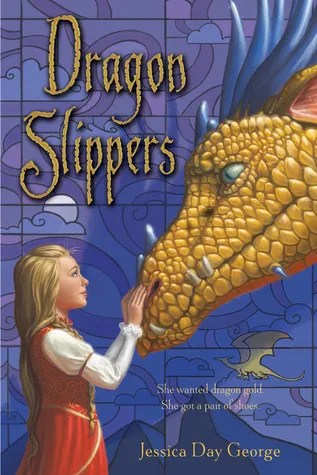
Dragon Slippers by Jessica Day George

My favorite 11-year-old saved this book especially to loan to me, and I was so excited to be given the assignment. And I quite enjoyed it! Rated for grades 5-6, Dragon Slippers has engaging action, humor, sweet friendships, a hint of romance, and snappy pacing. It’s also got some good messaging, which I approve of. It’s the first in a series and I thought I’d walk away after just one, but the surprise ending (and the sample chapters of book two!) got me.

In poverty and desperation, with a hint of a Hansel & Gretel dynamic, Creel’s aunt decides she should be abandoned to the rumored local dragon, in hopes that a noble knight will rescue her and uplift the whole family. (“Why should anyone be rewarded for defeating a dragon by being saddled with a dowryless, freckled wife and well over a dozen daft and impoverished in-laws?” Creel wonders, but nobody asked her.) This device gets Creel in the company of a dragon that no human has seen in generations, and she quickly learns that their hoards of gold and treasure are a false rumor – this one prefers shoes – and that they’re not terribly motivated to kill humans. She makes a friend, gains a beautiful pair of blue slippers that fit just right, and heads off to the city of King’s Seat hoping to make her own living rather than return to an aunt who tried to feed her to a dragon. Creel is a talented maker of what her late mother called fancywork: embroidery, weaving, and (if necessary) sewing. In the city, she is repeated called a country bumpkin. Events move quickly: she falls afoul of a visiting princess; meets a friendly prince (no relation); gets a job in a dressmaker’s shop; and finds herself embroiled in a few messes. One, working for a boss involves the kind of exploitation anyone in our present, real capitalist system will recognize. Two, her coworkers range from friend material to backstabber. Three, the prince’s attentions and the princess’s hostility somehow manage to entangle Creel in political intrigue and matters of state that also – surprise – turn out to involve her dragon friends.

(Following an early whiff of Hansel & Gretel, the slippers and the prince definitely recall Cinderella. Just echoes.)

I asked my favorite 11-year-old what she liked about the book, and she started with the initial meeting with the first dragon. (Dragons are one of her two favorite animals.) She also mentioned Creel: she likes her strength and her unwillingness to take any crap. She identifies with that. We talked about the friendships in the book, and the pacing. She said she wanted me to read it because she thought I would like Creel, and she was right.

If Creel’s interest in pretty gowns, sashes, and slippers is a bit prissy for me, she is on the other hand a highly practical feminist entrepreneur, with a dangerous habit of speaking her mind even to royalty, and a strong sense of her own powers. I love the urge to make her own way in the world. She’s brave. And she’s a good friend to a handful of dragons as well as humans, and might just turn out to be a hero. I appreciate the positive messaging, and the imaginative world of dragons. There were a few very minor plot holes that I think would likely be tolerated (or missed) by many adult readers, and certainly by younger ones. And as I said, I was hooked by a surprise finish. All in all, my young friend gave a good recommendation.


Rating: 7 collars.

The Last Graduate by Naomi Novik

Book two of the Scholomance series was every bit as thrilling and engaging as book one. I love our grumpy, standoffish teddy bear of a protagonist.

El had good character development in A Deadly Education; now she’s continuing to develop as a person, both because she’s a teenager (coming of age) and because she’s made friends for the first time in her life. She’s reluctant to believe in this, because she’s endured a lifetime of trauma at the hands of almost everyone she’s ever known. Her new friends and allies do have something to gain from working with her at graduation, now that her power as a wizard is becoming more widely known, so she’s not entirely wrong to consider that this may motivate their friendship; but the reader can see better than she can that their friendship is real, too. It’s poignant to see such a sweet but enormously curmudgeonly, damaged, dear kid struggle to accept that people might actually care about her.

The privileges of class and nationality at work here, the power structures that are most invisible to those in power, and the injustice of it all, are more overtly at the center of this book. I think there are some good magical parallels to our real world here that can be instructive but also entertaining and fit neatly into the fantastical wizard-y world of Novik’s imagination, which is prodigious, by the way; this is expert-level worldbuilding. Late in the book the focus begins to move beyond the Scholomance to consider the whole world, which is clearly where book three will take us; this one ends on another final-line cliffhanger (!), so I’ll be getting there fairly quickly.

Perhaps because they were both Liz recommendations, I am reminded of the Murderbot series here, which also featured an outsider first-person narrator who is actually a loveable marshmallow on the inside but puts forward a hard, aggressively antisocial exterior. Despite being mostly rejected by their respective societies, both are driven to right the big wrongs. I do love this set-up, and I love El for being a hard-nosed, sarcastic badass.

In this installment, I actually questioned the YA label. The series does star teenagers, and deal with coming-of-age problems (therefore YA). On the other hand, it also deals with some very dark themes, heavy enough that some readers move it out of the YA category; but after some consideration, I don’t think that’s necessarily a disqualifier. It’s definitely for older kids, not least because there’s some (non-graphic) sex in this one. Maybe the line between YA and adult is blurred; certainly it depends on the reader. There’s no question that these are books for adults (hi), but I think they’re also books for young adults who are up for serious thinking on dark subjects, and some really good writing. This is a step adultward from Hunger Games, which are however very fine books in their own right. Who’s to say what kids should read, anyway? My parents didn’t seem to me to monitor my reading much, and I definitely read some stuff beyond my comprehension at a young age, and all that seems to have done is whet my fire. As ever, your mileage may vary.


Rating: 8 glaciers.

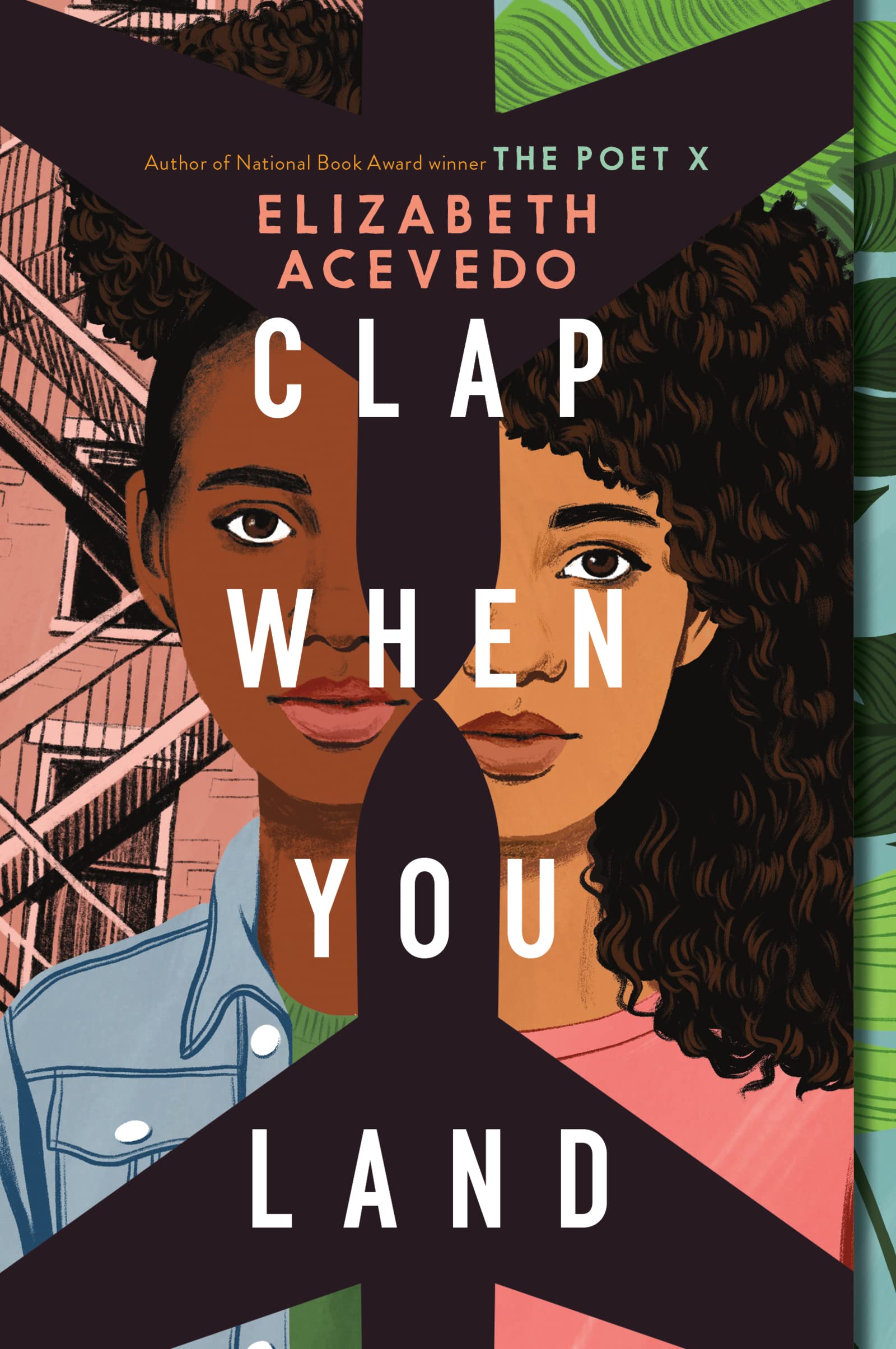
Clap When You Land by Elizabeth Acevedo

Clap When You Land is a novel in verse, in two alternating perspectives. Camino lives in a village in the Dominican Republic with her Tía, who has raised her since her mother died some years ago. Her father lives in New York, and comes to stay each summer for several months. Camino loves her father, and feels loved in return; he supports her and her Tía better than they could afford to do on their own, with the small funds raised by Tía’s doctoring duties. She’s a healer and midwife, skilled with herbs and prayer, and Camino wants to follow in her footsteps, but take it a step further: her dream is to study medicine at Columbia University. Meanwhile, Yahaira lives in New York City with her parents. She’s a former chess champion, but she’s given it up, which has put a rift between her and her father. The two girls are just two months apart in age, approaching 17. They have the same father, but they don’t know it until after he is killed in a plane crash, traveling from his home with Yahaira to spend the summer in the DR, as he does every year.

In their alternating chapters, we see two teenaged girls wrestle, first, with their futures: Camino is concerned about where to go with her life if her father doesn’t help her get to the States. Her options in the DR are few, and there is a predatory young man after her. Yahaira is upset because she’s discovered that her father had a secret – although it’s not the big one she’s about to learn, that she has a sister. Each girl has a best friend: Camino’s is about to give birth, and Yahaira’s is also her partner. We see them both struck by the loss of a father that each loved and admired. And then we see them hit by another shock: they’ve lost a father, but each has gained a sister. What will they do with that knowledge?

I like the questions raised by the twinning of the two girls, what each might have been under different circumstances, what is conveyed by certain advantages. (Camino’s household is better off than most in her village, but still much poorer than Yahaira’s unremarkable middle-class home in Morningside Heights.) At its heart, this is a story about family love, grief, and forgiveness. It’s lovely told in simple verse: easy to read but also contemplatively paced, dealing as much with emotions as events. As a YA novel, I think it would be well suited to thinking about loss for young people, or for any of us.

Papi’s two families, and his keeping the girls in the dark about each other’s very existence, isn’t much dealt with: the character is dead before we meet him, so we only see him in their memories, and he never gets to justify his choices. That’s rather more complicated.

Another thread involves the crashed airplane, which is based on the real American Airlines flight 587. Both the fictional and the real flights left New York headed for the DR filled with Dominican-Americans; the Dominican community in New York was badly shaken by its loss, and that’s a large part of what inspired Acevedo to write this novel (as described in her Author’s Note). That community-wide impact is well described here, which I think is a service.

Sad, thought-provoking, but also a beautiful honoring of a community.


Rating: 7 bachata songs.

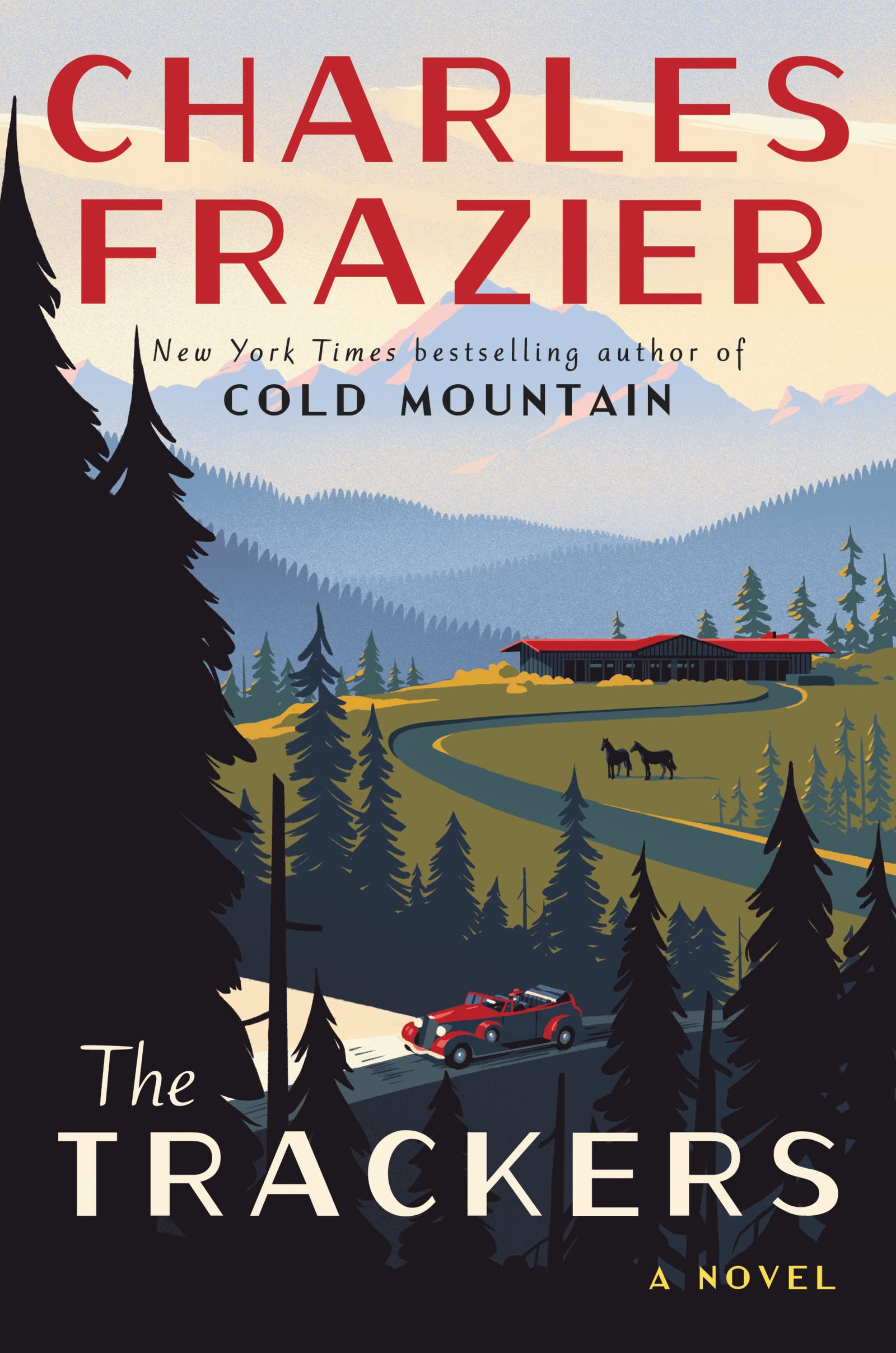
The Trackers by Charles Frazier

I never read any Frazier before, although I’ve been aware of his well-received Cold Mountain. I liked what I saw in teasers about this recently-published historical novel: set in the Depression and centered around an artist named Val Welch who’s been hired to paint a mural in the post office of small-town Dawes, Wyoming. An old art school mentor helped him get this New Deal commission: “Hutch was the right kind of idealist for the times. He believed public art could be like a pebble thrown into a still pond, a small influence but spreading in all directions.” Val is back-and-forth between idealism and cynicism, but he does take art seriously, and earnestly wants to do a proper job of this mural. There is a public education aspect to the job, as locals wander in while he paints. He tells them,

The mural is going to express waves of history always swelling and cresting and breaking and rising again, and all the images will be slightly tilted forward, leaning into the future.

I was twenty-seven, so take that into consideration.

The locals are not always charmed. They keep telling him the joke that WPA really stands for We Piddle About (and he doesn’t even work for the WPA). But he still feels it’s important work.

In a nutshell, this is the book I was hoping to read: art, community, historical time and place. But the book Frazier wrote is a little different from that. We first meet Val Welch as he’s traveling west, from home in Virginia to Dawes; we see some of the country through his eyes, and we arrive with him at Long Shot, the ranch owned by the extremely wealthy John Long (old friend to Val’s mentor Hutch) and Long’s wife, Eve. Long Shot is opulent, and Long very pleased with himself. He’s hoping to go into politics. His right-hand man Faro is a hard-handed old cowboy, around whom rumors congregate. Eve is a beauty, much younger than her blowhard husband, with stories to tell about being a childhood tramp following the harvest cycle around the country and leading a successful cowboy band. She can offer hard edges, a movie star’s glamour, and whatever story her current audience is apt to find most engaging. It’s implied that her personal history is changeable at the least. Val is easily drawn into the odd family of Long, Eve and Faro. When Eve runs away, Long hires him (at an extraordinary wage) to track her. Val steps away from his mural with an alacrity that surprised me.

The rest of the novel is not about art, but about the intrigue and spiderwebs of Long and Eve’s marriage, Eve’s alleged first husband Jake, and the characters Val meets in Seattle, San Francisco, and a Florida backwater while trying to track down a woman no one understands. The Trackers refers in its title to Val’s efforts, obviously (and a few others who jump in on the game in the book’s present), but also to a couple of figures in Val’s mural. The mural trackers fall off the page pretty quickly, though, which is a metaphor for the mural and the public art thread in general. The tracking-of-Eve storyline is well executed, technically and in its craft elements, and Frazier writes beautifully and compellingly in descriptive details, characterization, and dialog; it’s not at all surprising that his books have won awards. The mystery of Eve is suspenseful and well paced. But as a thread, the beautiful, deceptive woman and her various bumble-headed male admirers didn’t do a lot for me. I was much more interested in the public art / historical angle. That’s not a great criticism of Frazier: he wrote a different book than the one I’d hoped to read, and it’s not his fault that I got a different impression from wherever I read about this book. I will make a slight criticism in that his female lead feels like a Hemingway woman to me. She doesn’t pass the Bechdel test but seems a male fantasy; does she have an interior life that’s not in relationship to the men around her and how they react to her? Her clothing, her literal onstage performances, the way she smokes a cigarette, are all about the male gaze. I find this disappointing.

It kept me reading, but I missed the book I wished I were reading. And I thought Eve was a missed opportunity. Passes technical muster, but not impressive to this reader.


Rating: 6 glasses of champagne.

Hedge by Jane Delury

In this profound novel about love, loss, and choices, a summer’s exciting work and exhilarating affair will reverberate through the lives of a deeply likeable protagonist and her family for years.

Hedge by Jane Delury (The Balcony) is a roller coaster of a novel about family, creation, love, and shifting priorities, lush with detail and delicately rendered. Readers will be thinking of Delury’s protagonist long after these pages close.

Maud is a garden historian, “with her odd mix of botany, archaeology, history, and practical gardening skills,” and she loves her work. Originally from California, she was well suited to England, both London (where she finished her education) and the countryside, but reluctantly returned to the United States for her husband Peter’s career. When Hedge opens, Maud is at work on a restoration project in New York’s Hudson Valley. It is beautiful, stimulating work, and she is likewise stimulated by the company of Gabriel, a handsome, intriguing archeologist at work on the same site. Her two daughters, Ella and Louise, are about to join her for the rest of the summer. Peter remains in California: the couple has separated “both geographically and maritally,” and Maud plans to make this separation permanent and legal, but their girls don’t know this yet. On the cusp of an affair with Gabriel, she feels enlivened, awakened by his attention, her own physicality, the thrill of discovering flower beds from the Civil War era and the turning of the earth. She allows herself to dream of what a new life could look like for her as well as for the scotch roses, lilac, clematis, and honeysuckle she plants. But when the girls arrive from California, 13-year-old Ella suffers a trauma that snowballs into life-changing events for all involved.

The idyll in New York ends suddenly, and Maud’s next months and years are spent dealing with hard choices between undesirable outcomes. She wrestles to balance meaningful work and practicalities; lustful, soulful connection, and the mundane compromises of marriage; her own needs and those of her children. “You could comfort yourself with statistics, tell yourself that a twenty-year relationship was a good run. After all, when marriage was invented, no one lived this long. But it was still a jagged gash through your life, even if it was what you wanted.” Delury’s prose is finely detailed, saturated with color and feeling; Maud’s passion for her work is as substantial and sympathetic as her love for her daughters. Both a quiet domestic tale and a novel of surprising suspense, Hedge cycles from hopeful to harrowing and back again. Maud is nurturing and steely, riveting and unforgettable.


This review originally ran in the May 8, 2023 issue of Shelf Awareness for the Book Trade. To subscribe, click here.


Rating: 7 slices of pepperoni.

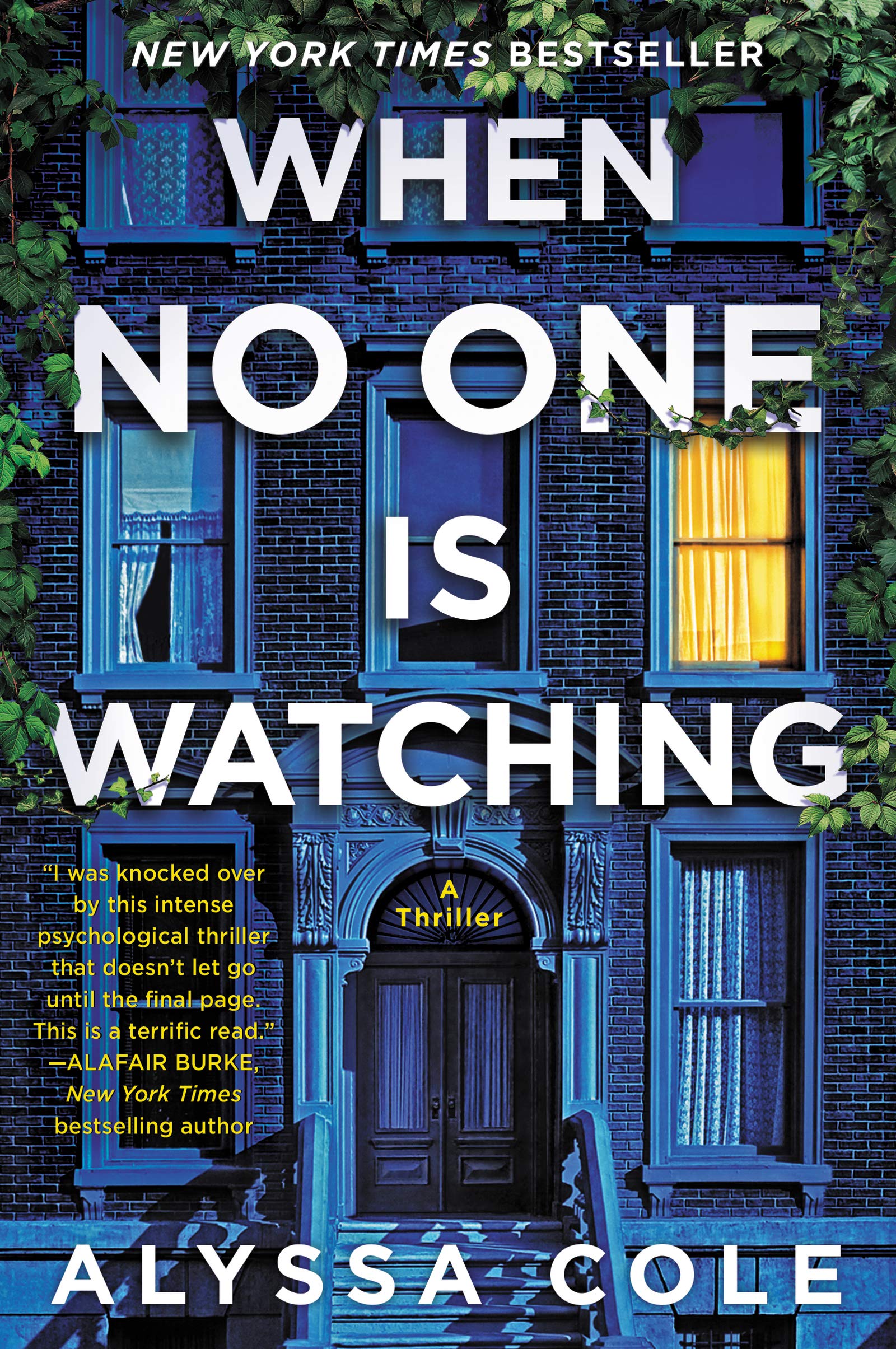
When No One Is Watching by Alyssa Cole

While it takes its time getting to the ‘thriller’ part, this novel does pack a punch once the thrills begin. Told in two points of view, a romance builds alongside the terror.

Following a nasty divorce, Sydney has recently moved from Seattle back home to the fictional Gifford Place neighborhood in Brooklyn, NY. Her mother’s health has taken a turn for the worse, and it is a relief anyway to return to her childhood home, a handsome brownstone building where Sydney’s lifelong best friend Drea also lives in an apartment. The neighborhood is changing quickly, though: gentrification is coming hard for Gifford Place, a traditionally Black neighborhood, and neighbors Sydney’s known all her life are disappearing right and left, along with the businesses she frequents, and being replaced by white residents. The book opens with a brownstone tour emphasizing only the neighborhood’s distant white history, which Sydney interrupts to interject a truer version, before leaving frustrated for comfort food at her favorite bodega. The tour guide’s snotty advice that Sydney should start her own tour gets her thinking, though.

With the annual block party approaching, Sydney works on her research for the tour. Meanwhile, a new white resident, Theo, struggles in a failing relationship with his absolutely toxic racist girlfriend Kim. She is one of several of Sydney’s new white neighbors who move well beyond micro- into macro-aggressions and overt racism, while hapless Theo appears to be having the first eye-opening of his life all at once. I’m leery of this device. Theo volunteers to be Sydney’s assistant in tour research, offering us a rather too obvious didactic opportunity: Sydney explains history to Theo who also, on his own, researches patterns of white flight, redlining, real estate scams, and the reaches of slavery beyond Confederate borders. Gasp, northern bankers benefit from cotton planting too! This is a bit transparent for my tastes. Where has Theo been hiding all these years that he’s so ready for his awakening but has just never been exposed to truth before? [I thought it was a good detail, on the other hand, that Theo is white but also comes from poverty and crime. I felt this offered a subtler and therefore perhaps more clever avenue to explore why poor white people, though facing certain disadvantages, still experience an absence of the obstacles that face Black people of any socioeconomic background.] There are however some fun moments, like when they come up with a safe word (‘Howdy Doody’ – Theo’s idea) for when he gets into his “little white feelings.”

This is the weakest part of the novel, for its didactic feel and slower pacing. Then we move into a quickening of the dangers. Theo and Sydney uncover the dirt, historical and contemporary, the widespread conspiracy to take over Gifford Park for great profits and throw longtime residents out on their asses or to an undisclosed location. Banks, hospitals, real estate agencies, medical research facilities, tech scams and plain intimidation–is it a conspiracy theory if it’s all true? Where have Gifford Park’s disappeared residents been going, anyway? Why would Mr. Perkins take off in the final days before the big block party? Sydney’s past traumas make it difficult to trust her new friend, who is admittedly slow to some punches. (It is funny, if also sad, when he figures it out: “Not being able to call the police when you need help really sucks, I’m learning.”) Once the action shifts into gear, When No One Is Watching rockets along. Horror, fight scenes, sex, drama, and relevant social issues: it’s haunting but also fun. If a few plot threads get dropped along the way, so be it.

Possibly Cole got a bit ambitious with the combination of capital-I Issues and thriller intrigue. It was rough in spots. But she also accomplished a lot, and kept me engaged (if occasionally a little impatient), and I’d encourage more efforts like this one.


Rating: 7 loosies.

Maximum Shelf: Let Us Descend by Jesmyn Ward

Maximum Shelf is the weekly Shelf Awareness feature focusing on an upcoming title we love and believe will be a great handselling opportunity for booksellers everywhere. The features are written by our editors and reviewers and the publisher has helped support the issue.

This review was published by Shelf Awareness on May 17, 2023.


Two-time National Book Award-winner for Fiction Jesmyn Ward (Men We Reaped; Navigate Your Stars; The Fire This Time; Sing, Unburied, Sing; Salvage the Bones) takes a different direction with her fourth novel, Let Us Descend: it’s her first historical narrative. Beautifully written and heartrending, Ward’s story sensitively handles grief, love, and recovery. On a rice plantation in the Carolinas, an enslaved teenager named Annis narrates as she works alongside her beloved mother. Mama is a source of comfort and strength even as her finger bones are “blades in sheaths.” Annis says, “The first weapon I ever held was my mother’s hand.” This steely woman teaches Annis lessons of combat learned from her own mother, one of thousands of warrior wives to an African king, tasked with both protection and elephant hunting. “In this world, you your own weapon,” she tells her daughter, and Annis will need to be.

Annis’s father is the plantation owner who owns her and her mother. Annis has half-sisters in the big house. “My sire’s house hulks; its insides pinned by creaks,” and her “sallow sisters” have a tutor to read to them, to teach them the texts of ancient Greece, about bees and wasps and Dante’s Inferno: “The tutor is telling a story of a man, an ancient Italian, who is walking down into hell. The hell he travels has levels like my father’s house.” Let Us Descend‘s title is a nod to Dante, and a cue to the reader to notice hells, descents, and journeys south. Annis listens and learns. Through her natural gifts, her own interest, and with her mother’s help, she becomes skilled in foraging: herbs, mushrooms, medicinal plants, and simple foods. She learns to befriend the bees she hears her sisters’ tutor speak of.

Then Annis’s father chooses to sell her mother south. The “Georgia Man” takes her away in a line of stolen people for the long walk to market. Annis falls into a near-fatal grief at being left without the most important person in her life, until a kind friend pulls her back to the surface. But soon, Annis and Safi, her friend-turned-lover, are sent on the same walk with the Georgia Man. From the plantation where she was born, Annis makes a death march to a New Orleans slave market and is sold to a cruel lady whose Louisiana sugar plantation marks a further descent, into a new level of hell. Others will uplift her along the way, but she never shakes the excruciating grief for her mother.

Along the way she gains and loses friends, and meets a spirit: Aza controls the storms and winds, and has stolen the name of Annis’s maternal grandmother, the warrior Mama Aza. “Aza’s hair a living thing: scudded clouds, the setting sun lighting them on fire. She leans forward and a breeze blows from her. Feels like the slap of a freshly washed linen on my face, snapping in a cool wind.” The spirit seeks her own identity and self-importance in relation to others, and has locked onto Annis’s maternal line as a way to achieve this: she models herself after the grandmother Annis never knew, and her use of the name Aza represents both connection and theft. That Annis refers to enslaved people like herself as “stolen” adds a layer to Aza’s use of the name.

Less centered around plot and character than Ward’s previous novels, Annis’s story is more elemental and thematic, dealing primarily with grief, forces of nature and human evil, villains and allies. The spirits she meets–chiefly Aza, but others as well–are closely associated with natural forces. “Another spirit, white and cold as snow, walks the edge of the river; it hungers for warmth, for breath, for blood, for fear, and it, too, glances against the enslaved stolen and feeds. Another spirit slithers from rooftop to rooftop before twining about wrought iron balconies outside plaçage women’s bedrooms, where it hums, telling the bound women to portion out poison in pinches over the years, to revolt, revolt, revolt.” These spirits can help but also harm, offer but also take away; they may represent another form of attempted ownership, as Aza has taken Mama Aza’s name. In a magical-realism twist, Annis finds these spirits widen her world beyond her immediate suffering to other timelines and possibilities.

Just as Ward’s title refers to Dante’s story of a descent into ever-deeper levels of hell, her hero makes a parallel, nonconsensual descent into the deeper South, into pain and suffering and sorrow, and into the worsening and worst of humanity. The novel moves with Annis from the Carolinas to Louisiana, and in story, back to Africa, where Mama Aza established the fighting spirit she would pass on.

Ward gives Annis’s voice a raw strength and musicality. After she is imprisoned in an underground cell by a particularly sadistic plantation owner, Aza tells her, “When you were up north, your sorrow choked your song. Swallowed it down. Even so, it hummed. But the walk changed it. The further you went, the more it rose until the woman put you down in the earth. Then it shrieked.” Attention to descriptive detail emphasizes Annis’s close relationship to place, and the importance of the land itself (not least in supplementing the enslaved people’s painfully meager allotted diet). “The water reaches in every direction, duckweed bright and green, floating on the murky wet. Cypress, fresh with rain, shimmers.”

As much pain, struggle, torture as there is in these pages, there are also various forms of love, and great strength, power, and personal reclamation. Let Us Descend ends with surprising hope. “How the whitewash of starlight would buoy them along. How they dance with the rocking deck. How them sing.” With this novel, Ward’s talent continues to deepen and glow.


Rating: 6 broad, glossy leaves.

Come back Friday for my interview with Ward.

A History of Burning by Janika Oza

Janika Oza’s A History of Burning is a stunning multigenerational saga that follows a family and a community who move during the years 1898 to 1992 from India to Kenya to Uganda, to Canada and the U.K., and beyond. In nearly a dozen voices, Oza’s debut novel illuminates immigration patterns and pain alongside familial joys and sorrows.

Readers first meet 13-year-old Pirbhai in Gujarat, India; he is, as the oldest son, fierce with the need to provide for his family. In exchange for a coin and the promise of opportunity, he unwittingly sells himself into labor on the railroad the British are building in East Africa. Pirbhai builds a family and a community with other Indian Africans; his children and grandchildren feel buoyed by the strong ties but sometimes limited by the strictures of tradition and duty. After Ugandan independence, anti-Asian sentiment drives them out of the only country they have known. Pirbhai’s son, Vinod, thinks there must be a “third possibility–not African, not Indian, but something beyond borders, an identity forged over decades of scattering apart and, miraculously, finding repair.” Each generation struggles in a new place, the tight-knit family always navigating change and searching for a place to call their own. Oza’s gorgeous prose is lush with detail–colors, flavors, emotions–and saturated with loveliness and pain, “the messy, the beautiful, the wild improbable light.” A History of Burning admirably charts how–by the time Pirbhai’s descendants plant seeds in Canadian soil–history, both personal and collective, is formed from the stories we tell and the silences we allow to remain.


This review originally ran in the May 5, 2023 issue of Shelf Awareness for Readers. To subscribe, click here, and you’ll receive two issues per week of book reviews and other bookish news.


Rating: 8 matunda.

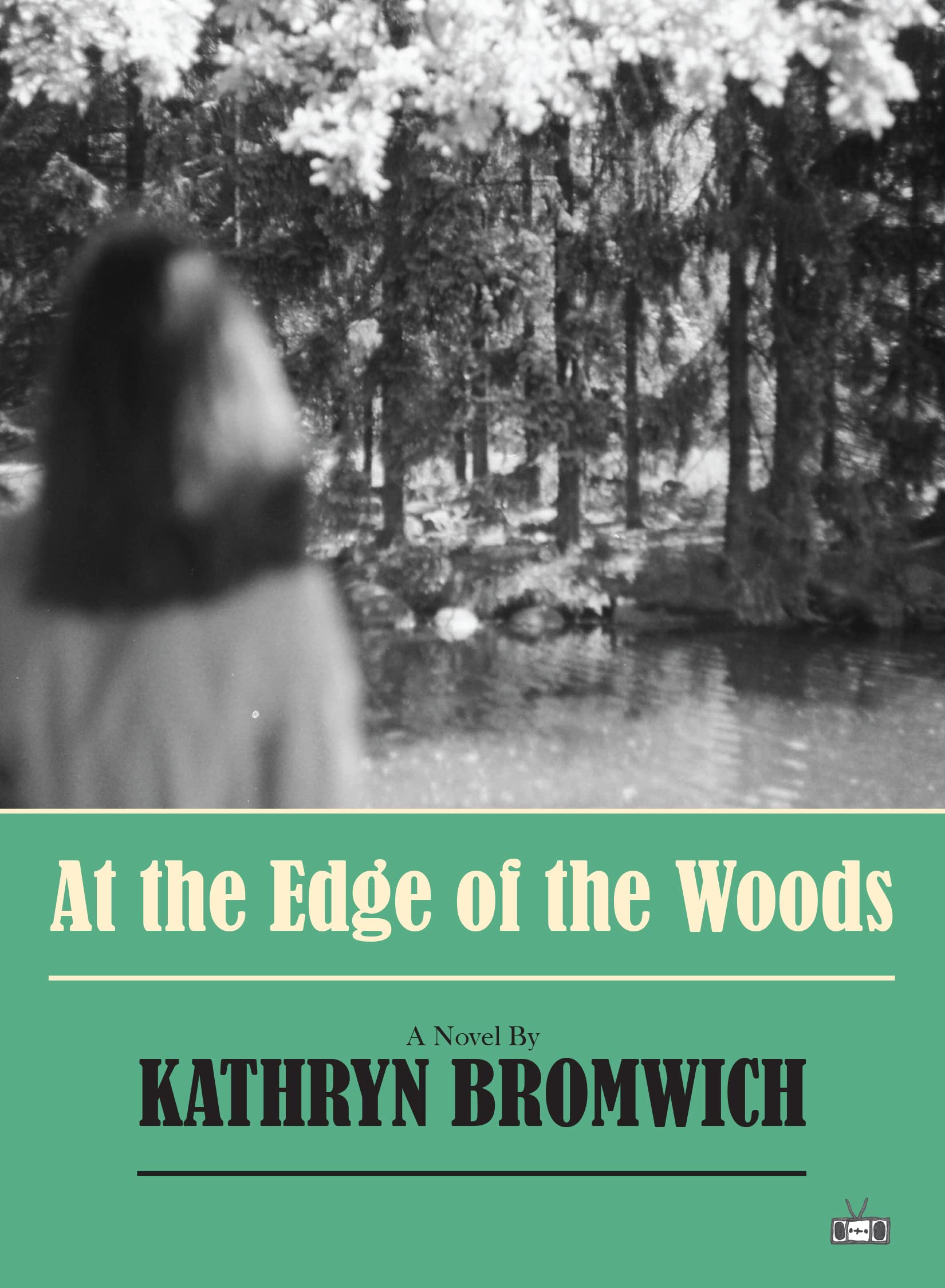
At the Edge of the Woods by Kathryn Bromwich

A woman reinvents herself in solitude but finds the tension with humanity remains in this finely textured novel set in the Italian Alps.

Kathryn Bromwich’s first novel, At the Edge of the Woods, both chills and charms with its fable-like story of a woman beginning a new life alone in a cabin outside a small Italian village.

“In the mornings, when my thoughts have not yet arranged themselves into their familiar malevolent shapes and the day is still unformed, I wake up before dawn… and walk deep into the woods while my eyes adjust to the velvety darkness.” First-person narrator Laura Mantovani is determined to simplify and forget: she revels in her close attention to her daily walks, her observations of nature, her humble fare, and austere human contacts. She supports her modest lifestyle with translations of medical texts for the village apothecary and tutoring a few well-off children; in the evenings, she reads widely. She briefly takes a lover, before retreating into still deeper solitude and communion with the natural world. Readers wonder what she has escaped from–until a contact from her past life turns up on the doorstep. Glimpses of another life are revealed in flashbacks, before Laura’s narrative returns to the deceptive quiet of the Italian mountaintop woods.

Bromwich’s prose is sedately paced, erudite, and textured in its observations of nature. Laura has a sly sense of humor and a deep distrust of humankind. As her story advances, her relationship to reality shifts and slides. She has visions. “The woods seem to have taken on unusual colors–not just deeper but slightly off. Certain tree trunks appear a lurid purple; tangerine and teal leaves wave in the breeze.” She sinks into the nonhuman world in ways that strengthen her and give her confidence: “I seem to have passed over into–somewhere I am no longer beholden to the chains and responsibilities of man, but to the perfect harmony of the natural world, where everything has its place, and no rock or broken twig is without purpose.” The village down the mountain from her, where she treks for supplies–with decreasing frequency, as the forest provides all she needs–shifts as well, from a point of support to something rather more sinister. The villagers call her strega (witch), because an independent woman alone is otherwise too much to grasp. Laura has created a new life for herself, a world in which her needs make sense in new ways, but human society still looms. “If you are there, in front of their eyes–fading, yes, but not invisible, not quite yet–it is more difficult for them to turn you into a monster with their words after you are gone.” In the end, she may find herself in as much danger as ever.

At the Edge of the Woods is wise, ethereal, haunting, filled with both beauty and horror. Brief but thoughtful, lush in its descriptions, this is a novel of introspection.


This review originally ran in the May 5, 2023 issue of Shelf Awareness for the Book Trade. To subscribe, click here.


Rating: 7 rude jokes for potatoes.