best books of 2011 so far

Today, the Armchair BEA theme is giveaways – a number of participants will be hosting book giveaways on their blogs, so you should check those out. For those of us not giving away (ahem, me), we are writing about our favorite books of 2011. Here are mine.

Dethroning the King, Julie Macintosh. Nonfiction. Macintosh covered the hostile takeover of Anheuser Busch for the Financial Times, and later wrote this book about it. I found the story fascinating, and appreciated Macintosh’s style: she presented what could have been tedious financial and legal details in very readable and interesting narrative style, including touching on her personal experiences in researching the story.

Fire Season, Philip Connors. Nonfiction. Connors has now spent nine seasons as a fire lookout in the Gila National Forest in New Mexico, watching for signs of smoke from his tiny tower room over 10,000 feet above sea level. This book is a contemplation of solitude, a tribute to the natural world, and an examination of many aspects of our world and our Forest Service policies; it is reflective and beautifully written and artistic, and never stilted.

Heroine’s Bookshelf, Erin Blakemore. Nonfiction. Blakemore praises 12 classic works by and about women, and discusses their impact on our lives as women today. A celebration of the literature of Austen, Alice Walker, Louisa May Alcott, and more.

Iphigenia in Forest Hills, Janet Malcolm. Nonfiction. A journalist’s account of a murder trial that took place in Queens, in a community of Bukharan Jews, with no final decision as to whodunit; an interesting study of murder and of culture. Malcolm is an amazing writer of nonfiction.

Paris Wife, Paula McLain. Fiction. McLain fictionalizes the life of Hadley Hemingway, first wife of Ernest, during and after their marriage, focusing on their years together in Paris. This is a fascinating study of Hadley in which Ernest takes a backseat; I loved it both as an amateur Hemingway scholar and as a fan of literary fiction.

I cheated; some of these are 2010 releases. I read them all in 2011, though, and I hope the community will be forgiving, because the fact is that we don’t always get to read books when they’re first released (mainly because we all have such daunting TBR lists!). If you find a title here that you finally pick up in 2012, you should still enjoy it. 🙂

Thanks for stopping by! What are your favorite books of 2011?


Edit: I think The Great Night (fiction by Chris Adrian) is making this list as well! Look for my review to be up next week.

a pair of Quixotes

I have a slightly 🙂 ambitious summer plan, y’all. Tell me what you think. I’ve always wanted to read Don Quixote (yes, for the first time), and I hope that this is the year. I have also heard from more than one source about a book called The Female Quixote, or The Adventures of Arabella, by Charlotte Lennox. I think these would make a good pair of companion reads. The latter claims to be “part imitation of and part commentary on” the original Quixote (so says the “product description” on Amazon, usually meaning the back cover or inside flap). Obviously I need the original before reading the imitation & commentary.

This will work towards the Classics Challenge, of course, and will also be a significant reading commitment: Don Quixote runs some 1,000 pages depending on the edition, and the Female is just under 300. I shall take my time! I have a copy of Quixote at home waiting for me, and I’ve just ordered a copy of the Female.
What do you think, am I crazy? Have you read the either? Any thoughts? Any joiners? 🙂 We could call it a readalong if any of you were crazy enough to join me.

The Stronger Sex by Hans Werner Kettenbach, Anthea Bell

A quietly provocative novel that examines the psychology of sex and aging through the eyes of a nervous young lawyer in over his head.

The Stronger Sex is narrated by the young Dr. Alex Zabel, a lawyer saddled by his boss with the difficult task of defending an incorrigible elderly womanizer. He is immediately in over his head. The legal situation is thorny enough: Herr Klofft has fired his former mistress, an accomplished engineer, for taking sick time, and she has protested before the employment tribunal. Zabel’s real challenge, however, is in human relations: he has to deal with his client, Herr Klofft, with his ornery moods, ever-looming mortality and off-color humor; the surprisingly sexy and seductive Frau Klofft; and Zabel’s own prickly girlfriend. The plot is quiet and unhurried, proceeding sedately toward a resolution that is less important than the journey Kettenbach takes us on to get there. Anthea Bell translates from the German with great skill, with fewer awkward moments than many native-English writers.

This novel contemplates old age, sensuality and the relationship between the two. The advances (and retreats) between Zabel and Frau Klofft feel deathly serious in their implications. The young attorney is deeply embarrassed by Herr Klofft’s vulgarity as well as by his own attraction to the elderly Frau. He reacts almost as an adolescent to her worldly charms, struggling to fit the Kloffts’ eccentricities into his conservative world.

While the events that move the action in this book are muted, the layered, potentially uncomfortable questions resonate in the back of the reader’s head. Kettenbach has succeeded in writing a novel that demands reflection. It’s not a psychological thriller, but a psychological study with a legal background, filled with black humor to accompany Zabel’s slightly bizarre relationships. This meditative novel is mildly disturbing but massively thought-provoking.


This review originally ran in the May 19, 2011 issue of Shelf Awareness. To subscribe, click here, and you’ll receive two issues per week of book reviews and other bookish fun!

Fire Season by Philip Connors


EDIT: You might also want to check out my father’s review, and friend Tassava’s, of same.


This is an amazing book. The first sentences immediately grabbed me. Connors works summers in a teeny, tiny tower room way up in the sky in the Gila National Forest in New Mexico, as a fire lookout. His job is to spot smoke and call it in for control or “management” of the fires. But his “field notes” tell so much more than the story of his career as a lookout. This is the story of his time alone in the Gila, and of the visitors he receives and the visits he pays back to town; it’s the story of his and his dog Alice’s interactions with nature. It’s the story of fire and smoke and the Forest Service’s management of fire. It’s a history of fire, of the Forest Service, of the Gila, of so very many aspects of our nation’s history, and the natural history of the southwest. Connors discusses the varied reactions the government has had to fire: the policy of fire suppression, consistently and in every case, versus the concept of “controlled” or “prescribed” burns, and the ongoing debates. He contemplates society, its benefits and our occasional desire to escape it. He discusses his unique model of marriage, in which he spends some five months a year living alone and mostly out of touch. He also relates ecological issues like fire as a natural control mechanism, erosion, and the preferences of flora and fauna. And more.

I found Fire Season astounding and important. There’s a zen-like balance in it. Connors is a rather balanced man, in that he still craves human contact; he’s not an entirely back-to-the-wild isolationist, nor does he fail to appreciate cold beer and a variety of media. But he achieves a special and rare state of commune with nature, too. His writing, for me, parallels this balance. He can wax philosophical, crafting lyrical, beautiful odes and hymns of reverence to nature, fire, and life; but he never gets overly wordy, tempering the poetry with (still beautifully written) narrative history.

Connors tells so many little stories I would love to pull out of this book and share as vignettes. For example, the story of Apache Chief Victorio’s last stand (that lasted over a year) in the vicinity of the lookout tower where Connors is stationed:

That September day in 1879, on the headwaters of Ghost Creek, marks a peculiar moment in America’s westward march: black soldiers, most of them former slaves or the sons of slaves, commanded by white officers, guided by Navajo scouts, hunting down Apaches to make the region safe for Anglo and Hispanic miners and ranchers. The melting pot set to boil.

Or the history of the smokejumpers, which I didn’t know before – the parachuting firefighters who pre-date paratroopers and taught them their trade. Or the tale of the Electric Cowboy. Or the story of the little fawn. I cried, mostly because I empathized. Really, it could be read as a series of anecdotes; but the whole is greater than the sum of its parts. The larger story is important, too. I even glimpsed traces of the training I’ve received in trail-building and (more broadly) land management.

The history, the lore, the anecdotes, the author’s relationship with nature, his relationship with his wife, the landscape of the Gila, the details about local species of bird, fish, and game… there are so many gems in this thoughtful, loving, lovely book. I am not doing it justice. It’s a very special book and I strongly recommend this to everyone, no matter who you are. But I especially recommend it if you are… a nature lover, a hiker, a dog lover, a government bureaucrat, a pyromaniac, an environmentalist, a city dweller, a romantic, a firefighter, a skydiver, a cribbage player, a whiskey drinker, a writer, a loner, a philosopher, a historian, a student, or a teacher. This book goes on The List.

guest review: Suite Française by Irène Némirovsky (audio), trans. by Sandra Smith – from Pops

I have an exciting guest reviewer today: my father. He’s off for the season now – he leaves Houston for the hot months (must be nice to be retired!) and does all his favorite things: running, riding his bike, camping and hiking and visiting beautiful outdoor settings all over. Not to mention, visiting all the great craft beer and brewpubs he can find. He’ll settle for a few months at a time in some hip small town with the right combination of culture, outdoors, and beer; and he’ll move on for the next attraction. This summer I sent him off with a small collection of audiobooks for all that driving, and he has hesitatingly agreed to see about writing up his reactions to them for me to post here. Today he’s sharing with us his thoughts on Suite Française by Irène Némirovsky. Pops, you’re on.

This is not a major work, but is indeed unique, intriguing and noteworthy in a number of respects.

Synopsis: this is a work of fiction written contemporaneously with the author’s own experience during the 1940 German onslaught in France and the subsequent occupation and collaboration. Unlike many journal-type works from the period, this is stylishly written with a now-familiar formula using a cast of fictional, intertwining characters to personalize incidents and experiences amidst real-life events. (Among a number of intriguing questions raised by this work – was this formula at all established at the time?)

For me, this reading was reminiscent of Winds of War (Herman Wouk, 1971); while not nearly as ambitious in scope (actually, a strength), Suite Francaise was as engaging both for the characters as well as for revealing historical nuance. I thoroughly enjoyed it, spent time reflecting over it, and was left wishing for the narrative to continue.

So – what’s exceptional about it?

First, much of the impact derives from knowing the author’s own story and how the book came to life. Born 1903, she was a Russian Jewish immigrant to France (1918), converted to the Catholic Church (1939), published numerous works of renown before the war (including one brought to film), was denied French citizenship in 1938 due to Jewish heritage, and has since been criticized for being a self-hating Jew. She was in the course of writing this work as events unfolded, expecting to create a novel in 5 parts. She finished two parts, was denounced by French collaborators and deported to Auschwitz where she died within a month. Many more of her writings were published since the war. But her daughters retained this notebook manuscript, keeping it unread until 1990 due to anxiety over the expected pain of reading her wartime “journal” – only then, before donating the pages to an archive, did they realize what powerful words those pages held. Written 1940-42, it was published in 2004, acclaimed, translated and read internationally.

Reading with this background, there are numerous elements that may gain impact or raise questions either in the context of her own experience or a clear sightline to contemporary thinking of the time.

  • There are a number of musings by characters and narrator about the future during and after the war that raised chills for me knowing they were written so early in the war.
  • The story contrasts individuals’ different experiences of war, from common civilians feeling powerless and distant from the passions of aggression versus the anonymous, indistinct elites and politicians driving the conflict.
  • She sharply depicts still-thriving class contradictions that threaten to surmount the national conflict: aristocrats of mixed national heritage, communists, resistance fighters, the Church, city vs provinces, villagers vs farmers.
  • There is one passage that strongly evokes scenes from Lord of the Flies. This includes one of several “arbitrary” non war-related deaths in the story. I was left wondering about the origin and meaning of these.
  • Aristocrats and other characters tending to be collaborators make reference to their sympathies opposing the advance of Jews, communists and Freemasons (a triad central to Nazi propaganda). Freemasons?
  • How the French characters respond to the war depends greatly on whether they experienced the “first war” only 25 years (and one young generation) earlier, or the 1870 war (with Prussia, resulting in a victorious German Empire); for the entire society the immediacy of both was stunning.
  • As often occurs with translated works (and in this case the separation of 60+ years), numerous passages had me wondering about the author’s full meaning.

Well you’ve sold me on needing to read this book; and I certainly didn’t know any of that backstory, which does indeed enrich the experience. Thanks for the guest post! Please do give us more as you keep listening!

The Big Sleep by Raymond Chandler (audio)

I know Chandler as the mystery author who inspired, among others, Michael Connelly. Connelly is one of my favorite genre authors and cites Chandler as an influence on his work. In fact, Shelf Awareness quotes him (as their Book Brahmin on April 22, 2011), in answer to a question of the book that changed his life: “The Long Goodbye by Raymond Chandler. I was a casual reader of genre fiction. This book made me want to write it.” Thank goodness for that!

I read The Long Goodbye first (and before the above quotation!), and found it to be delightful. I recognized Connelly in his writing style and Harry Bosch in the style of his lead detective. (Of course obviously the influence went the other way around.) So when I saw The Big Sleep on audio – unabridged, necessarily – I snapped it up. I believe the latter was actually his most-renowned work.

You can’t help but like a guy who doesn’t write that “time passed slowly”, but rather writes

Another army of sluggish minutes dragged by.

That’s pretty great. And this:

‘It’s goddamn funny in this police racket how an old woman can look out of a window and see a guy running and pick him out of a lineup six months later, but we can show hotel help a clear photo and they just can’t be sure.’

‘That’s one of the qualifications for good hotel help,’ I said.

You see my point, right? There are some awfully clever, funny, classic moments in this story; Chandler is a fine writer with a distinct style.

The actual story qualifies, too, as clever, funny, and classic. It’s easy to see that this man is one of the fathers of the genre I love. I’m a bit ashamed to note that I’ve read mostly recent authors, and neglected their heritage.

In this novel, Philip Marlowe, PI, is asked to look into a little matter of blackmail for General Sternwood, who has two young, beautiful, highly deviant and troublesome daughters. Marlowe is a man of relatively few, but quite witty words. He fends off both sisters at various point or another while looking into the missing husband of one, unasked. He’s a classic PI; he drinks alone in the morning; I’m pretty sure he wears one of those pulp detective hats – a fedora? At any rate, he releases the Sternwoods from the blackmail and pulls all the pieces together at the end to explain the missing husband too. It’s a tidy little ending, crowned by some grumbled musings on The Human Situation and The Big Sleep.

I liked this book very much and recommend it to readers of detective fiction who want to go back to the genre’s roots.

Do you read in the present or in the past? Do you miss the past, if you read in the present? I know I love my current genre authors (Lee Child, Michael Connelly, James Lee Burke, Elizabeth George) but it’s important and definitely enjoyable also to appreciate the pioneers. I’ve enjoyed Agatha Christie, Raymond Chandler, and one little gem from A.A. Milne; I’ve got a P.G. Wodehouse waiting in the wings. What are YOU up to?

another day in the life of a librarian

Remember my earlier post, about bringing home too many books? (sigh) I’m tempted every day, but today especially so. I got in a part of my early-May book order. In no particular order, I bought:


And of this order, I’m tempted by soooo many. I’d like to take home…

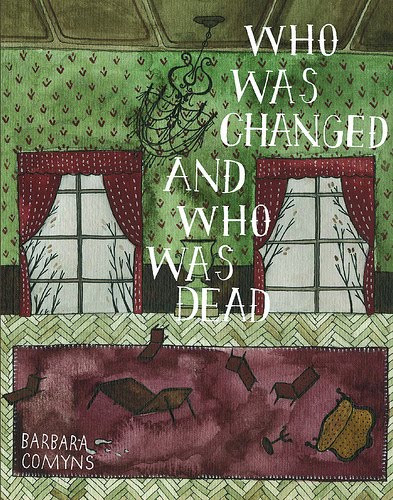
(…even though the cover looks awfully much like Clara and Mr. Tiffany, another book I want to read). The story of a developmentally disabled white woman and a deaf black man, their love story inside a state school, their subsequent escape, the delivery of their baby in the outside world, and their eventual reunion.

The story of Arthur and his difficulty relating to his con man father, and the lost Shakespeare manuscript that may or may not be legitimate.

Connors tells of the time he spent alone in a tiny tower as a wildfire lookout in New Mexico. Sounds Edward-Abbey-esque.

Ozma and her father made a promise to read together every night for 100 days; but the tradition continued long beyond that commitment. She tells their story through books.

A service dog helps a veteran live a normal life; but more important is the relationship they come to share.


Which newly-released books are YOU especially interested in?

The Red House Mystery by A.A. Milne

What a little treat! This slim volume informs me, on the back, that it’s the only detective novel ever written by Milne, best known as the author of the Winnie the Pooh books. I love Pooh, and I love detective novels, so this seemed like an obvious choice. I noted a few weeks ago that it begins with a tone very like Pooh. I was encouraged.

I thought this was a delightful little book. For starters, I have the Vintage Books “Rediscovered Classic” (as pictured), which opens with a new-for-the-edition introduction by the author. These 3 1/2 pages are worth reading in themselves. Milne is clever and funny, and bothered by the trends of literary taste. He discusses the merits of what he believes to be the perfect murder-mystery. I thought his brief critique of the genre and his own book were very funny and ironic.

This is a mystery in the amateur-sleuth-plus-sidekick tradition. (Holmes and Watson are constantly referenced.) Our protagonist, Antony Gillingham, is a gentleman of leisure who happens upon the Red House just as a murder has apparently taken place in a locked room. Assisted by his friend, Bill, a guest at the Red House (his Watson), Tony sets upon the mystery. Who killed Robert, evil brother to the man of the house, Mark? Where has Mark disappeared to? And what is Cayley, Mark’s right-hand man, up to? There are secret passageways and croquet sets involved. It’s very classic. Tony and Bill make a cute team, and Milne’s tone remains remarkably faithful to what I love about Pooh: tongue-in-cheek, self-deprecating, and picturesque. It’s great fun.

When it was over, I felt sad. I do have other reading to do, but this was such an enjoyable experience. I liked that it was short; it was just right for my weekend and just right for the moment in the way that books sometimes are. But I’m also sorry it’s over. I may have to go hunt up some Wodehouse next, what ho!

Slaughterhouse-Five by Kurt Vonnegut (audio)

Full title:

Slaughterhouse-Five, or the Children’s Crusade: A Duty Dance with Death

It seems a little odd to me that I’ve never read this book, and in fact I wondered if maybe I had, and had just forgotten. But as soon as we started listening to this audiobook (my parents and I, on the way home from New Orleans) I knew I’d never heard or read this book before. Vonnegut is always thrilling and fascinating! I know I really enjoyed his Cat’s Cradle and Breakfast of Champions, and Slaughterhouse-Five shares with them a very surreal, time-warped, rambling, fantastical tone. It feels like Fear and Loathing in Las Vegas, particularly the scene in the movie where they take the ether and things turn on their sides.

For those who don’t know, this is Vonnegut’s autobiographical story of the bombing of Dresden, which he experienced, like his protagonist Billy Pilgrim, as a POW in a slaughterhouse. Vonnegut, and Billy, survived only because they were holed up in the meat locker there, while the vast majority of the city burned.

Billy’s story involves war, bullying, sex, time travel, optometry, drinking, and misunderstanding. Overarching themes of death and timelessness tie the winding threads together. The world does not believe that Billy travels in time or that he was kidnapped by little green aliens from the planet of Tralfamadore. We hear of Billy’s whole life, as a small child, as a student, as a soldier in the war, as a young husband, as a professional optometrist, as a feature in a zoo on Tralfamadore, and as an old man. Like Billy, we don’t keep these experiences in sequence, but drop in here and there.

Billy’s story is preceded by a long intro in which Vonnegut narrates, not his experience as a soldier or a POW, but as a writer, many years later, struggling to write about Dresden. He visits an old war buddy and learns of this buddy’s wife’s fear of war. She’s concerned that he’ll write a book glorifying the experience and thereby encouraging future generations to make war. He reassures her that “there won’t be a part for Frank Sinatra or John Wayne” in his book, if he even ever finishes it. He also promises her he’ll call it “The Children’s Crusade”, agreeing with her that they were just babies over there.

This is a very powerful story. Descriptions of the horrors of war are evocative, perhaps even more so the depiction of the POW’s in the railroad cars passing steel helmets filled with their excrement to the men standing near the ventilation slots. War is bad. But there’s much more to this book than the point that war is bad; it’s also a fascinating story about family and relationships. (I’m reminded of Breakfast of Champions with its bizarre family structures and roles and dysfunction.) And the world of Tralfamadore is fantastical, incredibly imaginative, and so fully-developed in its details, I just wonder at Vonnegut. Where does he get this stuff? The turns of phrase are memorable. A drinking man’s breath smells of mustard gas and roses. That’s poetry.

This story is beautiful, strange, and strangely feels endless. It finishes with a question-mark; loose ends are not entirely tied up. How could they be, when events are presented out of sequence, and Tralfamadorian concepts teach that no one moment ever ends? Vonnegut was a genius, and I want to keep reading him all my life. (There are still a number of titles I haven’t touched, and were you aware? just this January, a new volume of his previously unpublished short fiction came out. It’s called While Mortals Sleep.) Oh, and I want to mention the reader of this audio version. He speaks in a strange whisper, and his style is very, very effective for this book. Guess who? None other than Ethan Hawke. I was surprised, and tried throughout to place this handsome actor behind the voice I was hearing; but I couldn’t put the guy I know from Reality Bites and Training Day into Vonnegut’s world. Very strange. I guess that’s the mark of a great actor, that he can fill different roles believably. I’m impressed.

Rebecca by Daphne du Maurier

Here’s yet another book I can’t believe I waited so long to read! I struggle to categorize this book. I think I thought it was genre romance, and I still tend to shelve it that way, but I also feel that sells it short. (Sorry, romance readers. Bear with me. I’m not trying to be ugly.) Of course, categorization is often problematic, and often doesn’t do a book justice. But we persist in trying to do it, for several good reasons. Labels are helpful in describing a book to your friends, and grouping like items together on a shelf assists browsing. So, I thought Rebecca was romance, or romantic suspense, as it says right on the cover of my paperback copy. And to me, this sounds like genre fiction: readable, easy, even “light”, entertaining, and in accordance with a known structure or format. Not a bad thing – I love a lot of genre fiction (although mostly mystery, and not romance). But I’ve also heard this book referred to as a classic. I’ve seen it written about and referred to repeatedly as a standard of sorts. My curiosity grew, and I had to pick it up.

And what a delicious little treasure it is! From the first page, I was transfixed. The mood is outstanding. I had only the vaguest of notions that something bad happened in this book, and I could feel the ghostly mist creeping unseen around my shoulders from literally the first few sentences. There is an air of foreboding that is absolutely unexplainable, as the plot proceeds in an outwardly staid and steady fashion. How does she do it?

Our narrator, who I believe remains unnamed throughout, is living a painfully awkward underprivileged youth when she meets a striking and tragic widower who abruptly proposes to her after a brief quasi-courtship. (This is not a spoiler, I don’t think, or not a very bad one. It is fairly well known from the first pages.) Anticipating this proposal was great fun for me. She accompanies him back to his famous (or infamous?) estate, and the legacy of the dead first wife looms.

Now I shall stop telling you the story. I might have known this much going in (at a maximum) and it was a real pleasure to breathlessly turn pages in ignorance of what was to come. It is suspense, people, as the cover says! If you haven’t read this, avoid spoilers with great care! And go get yourself a copy immediately! Here, you can borrow mine. (The library has several.)

The suspense is outstanding. The narrator’s awkwardness occasionally gets a little frustrating but it’s so REAL – my frustration is entirely realistic because she is realistic. The bad-guy characters are infuriatingly, in a juicy-delicious fictional way. The striking husband remains tragically striking, sort of admirable and obnoxious by turns, but I suppose the romance part drew me in, because I was right there with the nameless wife, wanting him to love us. And the background moodiness, the ghost-story feel, the gothic mists about my shoulders were entirely pleasurable.

I wish I could read this book again for the first time! I know du Maurier has written much else. I hope it is up to this standard because I thought it was outstanding. Genre fiction? I don’t know, I’m stumped, but whatever it is, it’s worth reading.