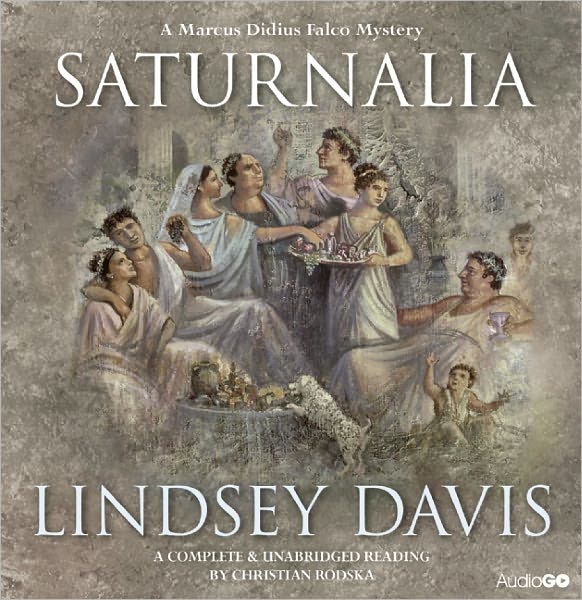
On Paris by Ernest Hemingway

On Paris is a collection of Hemingway’s dispatches for The Toronto Star from Paris when he was a young man, living with his first wife Hadley and hoping to become a successful novelist one day. It is brief, almost just a pamphlet at 70 pages; a person could easily sit down and read it in one setting (as I did, with a nap in the middle, with a puppy in my lap and rain on the roof, ah). The articles, intended for newspaper readers, are very short. Sometimes they are fairly well anchored in “news” but more often they are humorous musings on culture – the French versus the American or Canadian – including food & drink, legal niceties, Parisian manners, the nightlife scenes in various cities around the globe compared, even ladies’ hats. Unlike what I think of as “serious” newspaper reporting today, there is a tongue-in-cheek tone in almost every article. Rarely does he play it straight, which makes this book so fun.

I began to list the funniest highlights, but that is clearly a waste of my time. These are all funny short pieces and perhaps most importantly, I was pleased to note that Hemingway’s “voice” is present even in these early examples of his writing. He is droll. He pens deceptively simple one-liners with deadpan delivery; there is a one-count pause for his audience to get the joke. He makes observations that are incisive and sometimes frivolous. While not his mature work, and not fiction for which he is best known, I found this a very enjoyable little nibble of Hemingway, and I recommend it.

My parents brought me this book as a gift from Paris, as a contribution to the shrine that I was then completing. I can’t remember, but I think they got it at Shakespeare & Co.; I know they went there; Mom, can you confirm or deny? And of course there are other Hemingway “On” books: Hemingway On Writing, On War, On Fishing, On Hunting… but I still have By-Line: Ernest Hemingway too, to serve my need for excerpts of his journalism.

Have you read any Hemingway and what do you think of him?

The Journey Home by Edward Abbey

This is why we read Ed Abbey. He has the power to make me laugh and cry within a few pages.

I cannot describe The Journey Home better than Abbey does himself: this book is a collection of “adversary essays and assays, polemics, visions and hallucinations… published piece by piece in various odd places from Audubon to the Vulgarian Digest” and “fragments of autobiography, journalistic battle debris, nightmares and daydreams, bits and butts of outdoors philosophizing” (from Abbey’s introduction). The subtitle is “Some Words in Defense of the American West.” It works very well in the ways he describes: it is indeed a defense of the American West (although as he puts it another way: “the idea of wilderness needs no defense. It only needs more defenders”). It is a lovely collection of some journalism, some hallucinations and dreamings, and some eloquent essays.

The introduction to The Journey Home is devoted to arguing why he is not a nature writer; he’s just a guy with a lot of experience in and love for nature, writing a memoir that naturally includes a lot of nature. I hope he would forgive me, were he still here, for saying: Abbey, you are a nature writer. Memoirs they may be (and watch out for his novels, too: I loved Fire on the Mountain; was disappointed by Black Sun which apparently he really loved; and am excited to crack open his best-known and arguably movement-starting The Monkey-Wrench Gang) but they are also some of the finest nature writing we’ve seen. His own arguments notwithstanding, Abbey absolutely belongs in the company of Thoreau and Muir. I recognize so much of what I, and modern authors and political thinkers and philosophers I admire, have thought and felt and written, in Abbey’s earlier work. He is important.

He is also so angry! He can be so funny, so flippant and casual (Husband and I both laughed til we cried over “Disorder and Early Sorrow”), but so angry, too. Rightfully so, of course, in detailing strip-mining operations and the destruction of the woods he played in as a kid. He is a contradiction; he reminds me very much of a much-loved friend who will recognize himself in this review. He throws beer cans out the window as he drives:

Rumbling along in my 1962 Dodge D-100, the last good truck Dodge ever made, I tossed my empty out the window and popped the top from another can of Schlitz. Littering the public highway? Of course I litter the public highway. Every chance I get. After all, it’s not the beer cans that are ugly; it’s the highway that is ugly. Beer cans are beautiful, and someday, when recycling becomes a serious enterprise, the government can put one million kids to work each summer picking up the cans I and others have thoughtfully stored along the roadways.

(from “The Second Rape of the West,” which deals not with beer cans on highways but strip-mining for coal, among other large-scale littering operations.)

…but is at the same time an ardent defender of wildness and nature, left alone. He advises a leave-no-trace approach to wilderness, packing out trash, dismantling fire rings, because after all, “the search and rescue team may be looking for you.” (That’s the wilderness, as opposed to the public highway.) He’s so incredibly (sadly) relevant today, only dated in some of the little details. He is poignantly hopeful; I regret the ways in which we’ve not lived up to his hopes in the few decades since he wrote. For example, our US Census in 2000 unfortunately showed our national population at 281,421,906 rather than the 250 million at which Abbey predicted we would “level off,” and we are now estimated at not quite 313 million.

Funny, angry, righteous, well-researched, poignant. A priceless glimpse into a fascinating, contradictory personality, and a moment in American time that will never be replicated. I want nothing more, after reading this book, than to go on one of his ill-conceived and poorly-planned backcountry trips with him. He makes me think – he makes me think in ways that we all desperately need to think, even more so today than when he wrote (original pub date 1977). I challenge you to read of his attempt to shake hands with a mountain lion (in “Freedom and Wilderness, Wilderness and Freedom”) and not get goosebumps.

In the end, this is a collection of essays and ramblings by a gifted author who loved our natural world, about small things as well as the big issues, like why we shouldn’t destroy what little of it we have left. I found it incredibly moving (again: I laughed and cried) and beautiful and can’t wait to read more Abbey. I only hope he’s right that

If man in his newfound power and vanity persists in the attempt to remake the planet in his own image, he will succeed only in destroying himself – not the planet. The earth will survive our most ingenious folly.

I’m afraid we’re going to push the point.

Inferno: The World at War, 1939-1945 by Max Hastings


Max Hastings is a highly regarded war historian (primarily WWII) and author of a great many books examining his subject from various angles (most recently Winston’s War). His latest, Inferno, covers WWII through the lens of “regular people” as primary sources. In his introduction, he explains that his book does not seek to be a comprehensive study of WWII in all its events, bringing a reader from zero knowledge up to expert level; rather, it assumes some familiarity with the war and concentrates on people: “This is a book chiefly about human experience.”

Hastings did what he set out to do: he exposed the human experience of WWII, in all its horror and almost incomprehensible suffering and death, in its follies and incompetencies and cruelties and in its rare moments of black humor. The brief quotations from regular folks from dozens of countries are moving, illustrative, and diverse, both in viewpoint and in origin. They offer a valuable telling of the war, and serve as a great history lesson/review too.

This is a high-quality book; it has a lot to offer. At almost 700 pages, the reader’s motivation will have to be fairly high to invest the time and effort required to reap the full benefits. But for the interested reader, a treasure trove of honest contemporary accounts of this remarkable tragedy of history awaits.


This review was written for Shelf Awareness for Readers. To subscribe, click here, and you’ll receive two issues per week of book reviews and other bookish fun!

The Chalk Girl by Carol O’Connell

Carol O’Connell’s Mallory returns to take on a case with nonstop twisting intrigues.


The little girl in Central Park has red hair, starry blue eyes and a dazzling smile; she reminds people of an elf or a fairy, and tells stories of blood raining out of the sky and an uncle who turned into a tree, and demands hugs from everyone she meets. The fairy tale halts abruptly, however, with the discovery of a body in a tree, hogtied and seemingly dead. And it’s not the only one. Coco, as she calls herself, presents a perplexing mystery. Where did she come from? Who does she belong to? Where did she get the strange explanations for the blood on her shirt and, most important, what kind of a witness will she make, if the NYPD ever manages to solve the homicides?

Detective Mallory, the protagonist of nine previous novels, is just back from three months of unauthorized down time and is none too stable herself; she and Coco may have more in common than meets the eye. But the case quickly grows bigger than a wandering child and a series of well-planned murders. Conspiracies and deceits connect Coco with the upper echelons of political power in the city, from high society to the DA’s office, even the police department–and Mallory’s investigation will reveal a chilly tale of torment stretching back 15 years. Unlike the spritely Coco, though, Mallory is a terrifying force to be reckoned with. Her methods are cold, merciless and conniving; her colleagues doubt she even has a heart. If nothing else, Coco’s tormenters can expect justice at Mallory’s hands.


This review originally ran in the January 20, 2012 issue of Shelf Awareness for Readers. To subscribe, click here, and you’ll receive two issues per week of book reviews and other bookish fun!

My Life as Laura by Kelly Kathleen Ferguson

Kelly Kathleen Ferguson grew up in the belief that she was Laura Ingalls’s long-lost twin, or perhaps her reincarnation; she was bored and frustrated by her suburban upbringing and longed for the simplicity, beauty, and utility of the world of the Little House books. After earning an English degree and attempting to be a rock-n-roll star, she ended up waiting tables… for decades. At thirty-eight, unhappy with work and her love life and feeling like a failure, she sets out to follow in her hero’s wagon tracks across the United States, visiting the sites of the various Ingalls homes as represented in the books. My Life as Laura is the story of Ferguson’s travels, and her reflections on her own life and what lessons she can learn from Laura.

She dons a “prairie dress” (which mostly makes her miserable, but occasionally helps her get into the spirit of things) and drives her Camry west. Laura’s home sites sometimes feature the preserved original structure, sometimes a replica or a monument to the location; sometimes tours are available; but they seem to always feature a gift shop. Ferguson’s most adventurous moments involve interacting with hotel and gift shop staff while wearing her period costume; but these conversations are generally perfunctory. She spaces out during tours, but reads a few books purchased in the gift shops and learns more about the object of her admiration – like the disturbing news that there is some question as to Laura’s authorship of the books, and the level of her daughter Rose’s involvement. Ferguson discovers that, while she’s a first-class expert on Laura the character of the books, she really didn’t know Laura the (arguable) author of the books very well.

Nothing much happens in this book. If you’re looking for adventure, experience, the trying of new things (or any attempt to live the Ingalls’ nineteenth century lifestyle), look elsewhere. Rather, what action there is is inward-looking, as Ferguson contemplates and picks apart her own past through the lens of Laura’s experiences. At the end she has made some personal growth and undertaken to write a book (ta-da!). The changes she makes to her life are modest, but she’s honest about what she’s able to take on.

This book has its strengths, humility and honesty being chief among them. But I was disappointed with the action component, and had expected more brave and outgoing feats than registering for a hotel room in an odd dress and subsisting on junk food. It didn’t feel like Ferguson’s boundaries were expanded much, even in a cross-country solo road trip. Perhaps the greatest downfall of the book was Ferguson’s success in convincing me of her own weakness and tendency towards failure. I feel badly writing that, but it was my reaction; I don’t mean to be unkind, but she had me talked into the thesis of her underachievement. Also, I have to note her repeated reference to the Amish driving around in their minivans. In nonfiction especially, that kind of sloppy error really stands out to me. [The Amish don’t drive cars.]

In conclusion, this book has a mild feel-good effect, and there are certainly some positive reviews out there. Ferguson is always brutally honest about her own weaknesses, and I respect her for it. But its lack of action and growth, and a few sloppy details, left me decidedly lukewarm.

I received a copy of this book from the author and I’m only sorry I didn’t have a more positive reaction to it.

Fire on the Mountain by Edward Abbey

Oh my. I have difficulty beginning this review. I found this book very moving and beautiful. I’m glad to have found such joy in Edward Abbey this time around; I was disappointed in Black Sun, but I knew he had this in him.

Abbey tells us that this story was “inspired by an event that took place in our country not many years ago” but is fictional in its particulars. Billy Vogelin Starr has just arrived in southern New Mexico to spend another summer with his grandfather, on the ranch that has been in Grandfather’s family since the beginning. Billy is twelve, and he loves the land, the terrain, the work, the ranch, and his grandfather very much; they move something deep inside him. He only gets to be a cowboy for three months a year, but he takes this time seriously. He’s also very excited to see his friend Lee again; Lee is handsome, charismatic, a real cowboy, his grandfather’s best friend, and Billy’s hero. This year things are different, however; the United States government intends to take the Box V ranch away. The story is, they need it for national security. We’re fighting the Soviets, at least in theory and in spirit, and the land is needed for rocket testing (thus explaining the cover image, if you can see it that clearly). Grandfather’s response is that his land is not for sale. He was born here; his daddy died here, and he’ll die here, too. If he has to do battle to retain his right to his land, he’s willing. And of course, Billy wants to be right by Grandfather’s side.

A short book at under 200 pages, Fire on the Mountain is incredibly powerful. In few words – just like a cowboy – Abbey teaches his reader about old men like John Vogelin, whose tie to the land and to an older way of life is stubborn. The descriptions of the natural phenomena of Southern New Mexico are awesome, and I challenge you to resist respecting Grandfather’s final stand. Not for nothing is Abbey called (by Larry McMurtry) “the Thoreau of the American West.” This is a coming-of-age story for Billy Vogelin Starr, whose twelfth summer sees drama that will change his world forever; it’s also a lovely evocation of the beauty and power of nature, and the story of the classic, iconoclastic, Western loner resisting a world of change. An incredibly powerful and touching book, beautifully written, irresistible, exhibiting the greatness that I expect from Edward Abbey. More, please.

Believing the Lie by Elizabeth George

The latest gruesome, yet touching, mystery starring Inspector Thomas Lynley and his friends.


Elizabeth George’s long-awaited 18th installment in the Inspector Thomas Lynley mystery series sees our Tommy back at New Scotland Yard, having returned from wandering the English countryside mourning his murdered wife. His new illicit relationship with a superior officer is interrupted by a mysterious secret assignment–to look into a drowning that has already been ruled accidental. A powerful patriarch (like Lynley, a peer of the realm) requests further investigation into his own family–most obviously, the recovering drug addict prodigal son. But as Lynley, with the assistance of the reliable Deborah and Simon St. James, delves deeper into this family’s history and entanglements, he uncovers myriad lies, betrayals, deceptive identities and plenty of cause for scandal.

Fans of the series will rejoice in rejoining Lynley, the St. Jameses and Sergeant Barbara Havers, who unwillingly undergoes a makeover in this book. George also delivers the fully wrought, sympathetic, very human minor characters her readers have come to expect. Longtime fans may find Deborah’s increasingly obsessive distress over her failure to conceive beginning to wear thin; the subject becomes a full-fledged plot thread here. But George’s strengths–character development, plot twists and shocking tragedy–continue to shine.

While Believing the Lie can stand alone, series readers will find a deeper appreciation of the complex relationships at play. Look out for a serious cliffhanger at the end, which will leave George’s fans panting for the next Lynley episode.


This review originally ran in the January 13, 2012 issue of Shelf Awareness for Readers. To subscribe, click here, and you’ll receive two issues per week of book reviews and other bookish fun!

A Room of One’s Own by Virginia Woolf

A Room of One’s Own is a compilation and expansion of two papers Virginia Woolf presented in response to the prompt, “Women and Fiction.” It’s an essay of just over 100 pages, in my edition, in which she meditates on the subject, does a little research, and muses as to what we can expect from women in the world of fiction, what we’ve gotten from them in the past, and why. The final conclusion drawn, which forms the title, is that if a woman has five hundred a year and a room of her own she can be another Shakespeare. She points out that these requirements are symbolic: “five hundred a year stands for the power to contemplate… a lock on the door means the power to think for oneself.” She acknowledges that her demands are rather materialistic, and defends them by pointing out that resources are required for great art, that all our greatest artists and poets have been (almost entirely) men of means.

She makes some interesting arguments about the differences between men and women, and claims that women shouldn’t try to write like men; we are different, she says, and shouldn’t try to be the same. I guess this is a liberating argument in some ways, and I certainly agree that women shouldn’t try to be men; but in some ways this argument strikes me in a separate-but-equal fashion. I don’t necessarily appreciate having the “innate” differences harped upon, between sexes or ethnic groups or any of it. Part of celebrating diversity is about recognizing the diversity of the different groups, meaning their innate differences, yes, but part of tolerance and acceptance of diversity is about acknowledging our basic sameness too, right? It actually reminded me a little bit of VS Naipaul’s extraordinary and controversial remarks about female writers last year. Some of the response to his ignorant statement that women writers are always inferior to men came in the form of quizzes where, given a short excerpt of writing, the quiz-taker was to guess the writer’s sex. We all got a lot of them wrong, proving that a good writer is not necessarily a “woman writer” or a “man writer” but just a writer, which is a position I tend to agree with. (Same goes for poor writers, too, of course.) It’s odd to me that she also spends a certain amount of time exhorting women not to react to men’s exclusion or prejudice, but to write, as it were, in a vacuum, to not let the “opposition” color their work – either by apologizing or aggressing. Also a strong point, but seemingly a little at odds with her “women are different” point, perhaps. I got a little muddled here.

All in all I did not have the reaction to A Room of One’s Own that I expected to. I wholeheartedly applaud her basic sentiments, and I respect her for being the female writer in the face of male disapproval that she was. But some of her arguments got a little bit questionable to me; I suspect they may be a little dated. The course of the essay, too, was a touch rambling for my taste. As a persuasive essay it was a little more poetic and meandering than I was expecting. Is this slightly genre-bending? Maybe I came at it from a strange angle. At any rate, I respect it, I enjoyed it somewhat, and I congratulate Woolf; but I was not enraptured.

The House on Mango Street by Sandra Cisneros

Another gift from my buddy Fil, and another hit! Fil says he hasn’t read this one yet, himself, and I say to him and to all of you: hurry up and read this slim but powerful book! My 25th anniversary edition includes an introduction entitled “A House of My Own” by Cisneros, which was gold; do find an edition with this intro, because it’s wonderful. I would say it was my favorite part of the book but I can’t relegate any other part to less-than-favorite.

So first, the introduction. (A bell rang for me as I opened this book, as I was reading A Room of One’s Own simultaneously.) Cisneros describes a former self, the woman pictured on the opening page, a young woman living in her own apartment in Chicago, after graduate school, working to become a writer. It’s a really lovely essay all on its own, describing some of the challenges that faced a young Latina writer and looking at that former self through her older, wiser eyes. It was beautiful. I cried a little, not because anything was too terribly sad (okay, there was that one bit), but because it was so well-done. And it served as a beautiful introduction, as it introduces the young woman who composed the short stories, the episodes, the anecdotes that make up The House on Mango Street, not yet knowing that they would become a book. Rather, she was working on her MFA thesis in poetry, so those fiction fragments (or “little-little stories”) were extracurricular, failed to fit into a known body of work. But oh, the book that they became…

The House on Mango Street is a collection of short stories, and I mean short – the longest run to 3-4 pages, most 1-2, some just a paragraph long. As a whole, they follow Esperanza (the narrator) through the first year of life at the first home her parents own, on Mango Street. It is not the home they aspired to and Esperanza doesn’t like it very much. She has a lot in common with Cisneros – the city, the time, and the ethnic background; but I know from “A House of My Own” that Esperanza is really a combination of Cisneros’s students, people she’s known and people she’s made up, and herself. There is a coming-of-age element, as well as a theme of home – what makes a home, what a person need from her home.

The stories are entrancing. The style is great, is dynamic; it’s both poetic and conversational. It’s not formal; sometimes a sentence runs on until it loses track of itself, but I’ve come away with the strong impression that every word was carefully chosen and exactly in its place. The economy of language reminded me of Hemingway, although I don’t suppose Cisneros gets compared to him very often, and I don’t mean to say that they’re very similar. Rather, they both seem to have very carefully created what looks like simple language but turns out to be poetry. (There is of course always the danger that I see Hemingway everywhere because I’m crazy about his work.)

The subject matter is mostly mundane and ordinary (a young girl’s life and disillusions, her disappointment that she has to wear old shoes with a new dress to a party) but also serious, weighty, and sad (because such things happen to a young girl, too). I only knew Sandra Cisernos by reputation before I picked up this book; that will have to change, because she’s amazing. It’s only about 100 pages long (including the introduction), a super-easy read, and so powerful. No excuse! Go get yourself a copy.

The Innocent by Taylor Stevens

A whirlwind thriller about a seriously ass-kicking female renegade’s battle against a hair-raising cult.


In this sequel to The Informationist, Vanessa Michael Munroe is back. Taylor Stevens‘s heroine has been compared to Jack Reacher, Jason Bourne and Lisbeth Sanders, and evokes each–but also possesses certain qualities all her own.

The traumatized Munroe, facing her horrific past every time she tries to sleep, vacillates between insomnia and drug-induced oblivion. Her private battles are interrupted, though, when her old friend Logan shows up begging for her help. Eight years ago, when she was five, Hannah was kidnapped by members of a religious cult called The Chosen. As a former member, Logan know first-hand how desperate her situation must be–and though his gruesome childhood is not quite like Munroe’s, he has an understanding of her damaged soul. Now, eight years after her capture, Logan finally knows Hannah’s location, and he needs the help of Munroe to free her. But to get Hannah out of The Chosen, Munroe will have to go in.

The Innocent is tight and fast-paced, an adrenaline rush of a novel with vibrant settings ranging from Morocco to Buenos Aires and characters who jump off the page. The descriptions of The Chosen’s abuses of its own members are heartwrenching; Stevens’s own experience in such a world makes this semiautobiographical novel’s emotional impact even stronger. But the story’s greatest strength may be Munroe herself: gender-bending, starkly violent, as lethal with her bare hands as she is with a knife, she steals the reader’s heart, tortured psyche and all.


This review originally ran in the January 10, 2012 issue of Shelf Awareness for Readers. To subscribe, click here, and you’ll receive two issues per week of book reviews and other bookish fun!