Ember and the Ice Dragons by Heather Fawcett

For all the girl scientists, whether human or dragon.

I was deeply sad to have finished the last (so far!) of Heather Fawcett’s adult books, so I dipped into her back catalog of books for younger readers. Alongside Woods & Words, I am so pleased to have this one to pass along to a young person I love. (This one is for an older sister, age 13, as in love with dragons as ever. Woods & Words is for both sisters together.) Heather Fawcett, young adult fantasy, plus dragons for a friend in particular – all wins.

When we meet Ember St. George, she is twelve years old. She has just set her father’s office on fire, accidentally, again. It’s not Ember’s fault – she is a fire dragon, whom her (human, adoptive) father rescued fresh out of the egg, immediately after her biological (dragon) parents were killed by dragon hunters. Lionel St. George, an academic and a magician, cast a spell to turn her into a human girl. She still has her wings, though they are invisible, which can make it awkward to move in crowds. And she sometimes accidentally bursts into flames. She’s afraid of hurting someone, especially Lionel, who is a good and loving father. And so, in the opening pages, she contrives to move from the London university where she has always lived to a research station in Antarctica with an aunt she has never met. [It is believed that sunlight and heat contribute to the spontaneous combustion. Also, fewer people to hurt with the flames in Antarctica.]

This is how, before we’ve known Ember for long, we follow her on an ocean journey and into an unknown environment. At the research station, Ember must attend school for the first time, with a handful of other children. She has always avoided children, finding them strange – she is not precisely one herself, remember, but she must pretend; almost no one knows she is actually a dragon – and has never gone to school. (Instead, her eccentric father lets her read what she pleases, and discusses it with her. Theirs is a world divided into mostly-antagonistic schools of Magic and Science, and Ember most wants to be a biologist.) There is a humorous exchange over a certain novel concept:

“You’re going to go back inside and do your homework.”

Ember was surprised. “Why would I do that?”

Aunt Myra stared. “Haven’t you been doing your homework?”

“No.” Madame Rousseau had told them to read a chapter a day of a strange book about two children who had rhyming conversations with various animals that looked as if they’d been drawn by someone who’d never seen one. It was the most ghastly thing Ember had ever read. She had felt sorry for Madame Rousseau, who couldn’t have seen many books if she thought something like that was worth reading. Ember hadn’t been aware that this ‘homework’ was mandatory. When she didn’t like something her father gave her to read, she simply told him so, and they had a lively debate about it.

In her new home, Ember befriends some unusual penguins, explores the beautiful, icy surrounds (cold does not bother her, for reasons that might be obvious – fire dragon), and makes her first human-child friend, not entirely by choice. The attentions of a mathematical genius, Nisha, perplex Ember at first, but she finds a friend is a nice thing to have. Nisha’s friendship includes another, with a mysterious, pale, quiet boy named Moss, an orphan whose background is unknown.

Next, Ember discovers that Antarctica is home to the Winterglass Hunt, a royal expedition to kill rare ice dragons for their valuable, jewel-like scales. Ember is outraged, and schemes to join the hunt so as to sabotage it from within. She is very lucky to have her friends, who insist upon accompanying her, as it turns out that the many dangers she encounters will require their assistance.

The world of Ember and the Ice Dragons is fascinating and (this being Fawcett) well-constructed with internal logic, which I appreciate. The story is entirely wholesome, with its strong girls and women, solid friendships, and life lessons. Ember’s secret dragonhood, and Moss’s existential mystery, offer meditations on what it is to be different, and what identity can mean.

Both Moss and Nisha felt alone, even though they weren’t – they weren’t the last of the their kind, after all, and Nisha had both her parents. She decided eventually that there must be different kinds of alone, just as there were different species of lantern fish.

Enchanting, absorbing, entertaining, positive, and fun. I swear Fawcett left room for a sequel; my greatest complaint about this book is that there isn’t one yet.


Rating: 8 riddles.

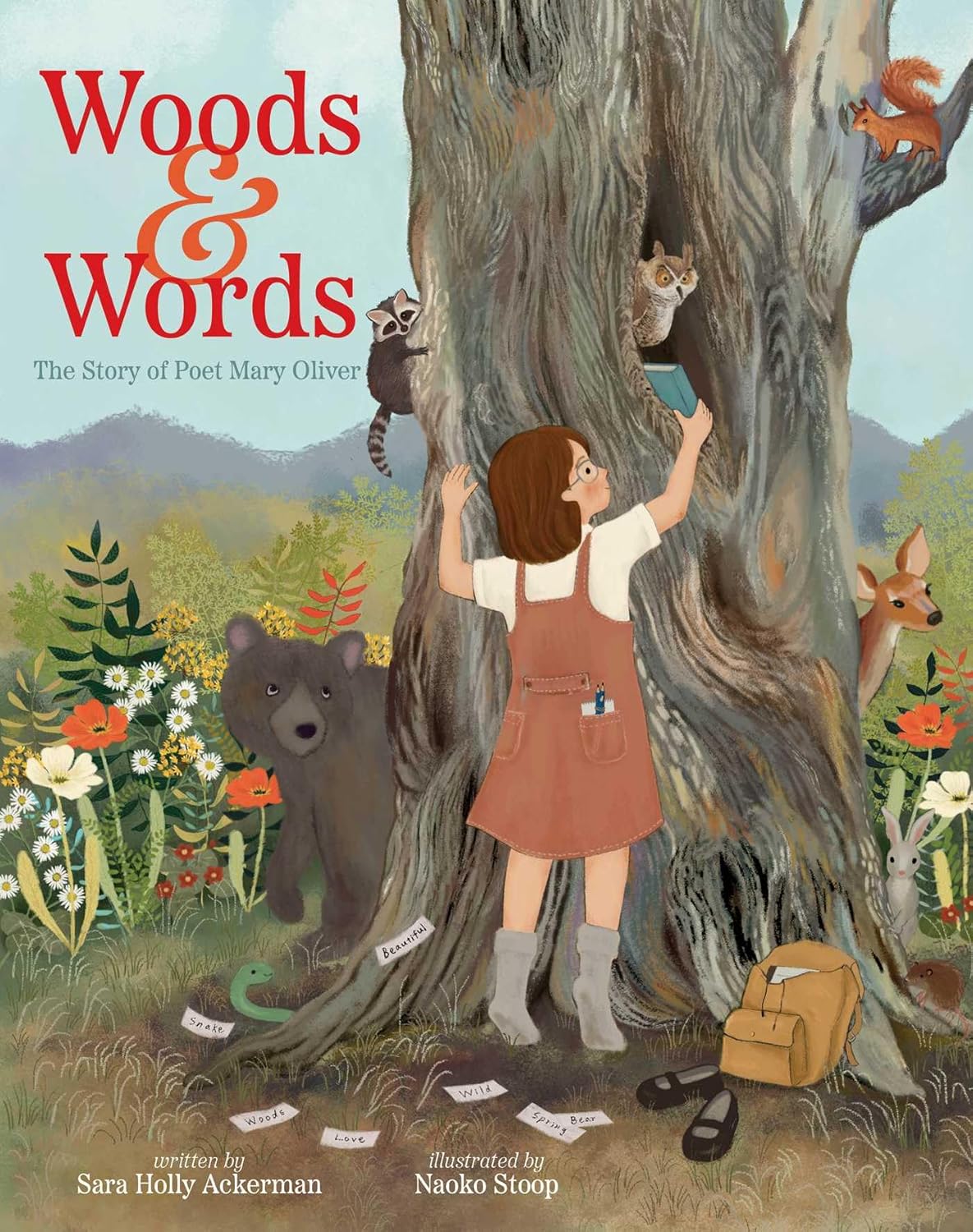
Woods & Words: The Story of Poet Mary Oliver by Sara Holly Ackerman, illus. by Naoko Stoop

I was sold on this book by my Shelf Awareness colleague’s review. I purchased it for some young friends who I think will enjoy it, but that was partly a reason to enjoy it myself first, before I passed it on.

This is a beautiful book, in its simple storytelling, its lovely sentiments and the values it communicates, and in the charming illustrations, full of plants and animals and sweetly expressive human faces. Rated for ages 4-8, it took only a few minutes to page through once, but will reward multiple and slower readings. I liked looking for the critters tucked away in the illustrations’ crevices, and reading through the words that trip and twist across the pages (outside of the narrative). I love that this story, which can be appreciated for its own sake, also introduces young readers to the life of Mary Oliver, an artist for whom mainstream “success” was not guaranteed. The Author’s Note notes that Mary Oliver’s home life, as a child, was “difficult.” She was a woman, she was queer, and she wrote poems that were defiantly “plain,” diverging from a tradition that makes poems less accessible to us regular people. This is what we love her for; but it presented some barriers in her acceptance by critics.

So, a beautifully rendered illustrated children’s book bringing the life of a great American poet to young people. An utter joy to read and look at, much like Oliver’s poetry. Strongly recommend for the kids in your life, and you will enjoy sharing it with them. More of this, please.


Rating: 9 shingles.

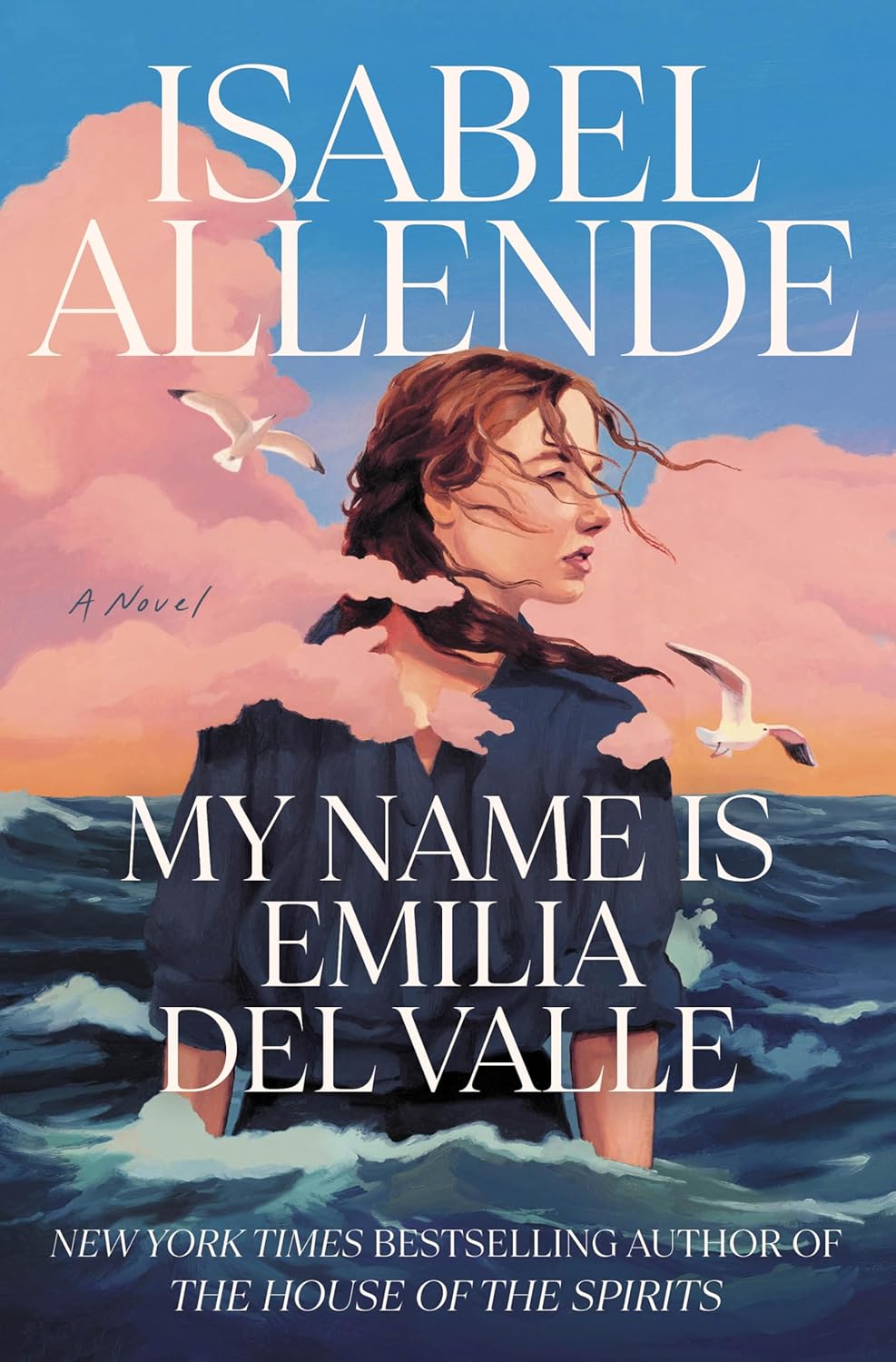
My Name Is Emilia del Valle by Isabel Allende, trans. by Frances Riddle

A daring young woman and groundbreaking reporter journeys from San Francisco to Chile in the 1890s to investigate a civil war and her own roots in this stirring novel by the celebrated Isabel Allende.

Isabel Allende brings the experience of more than 20 books to My Name Is Emilia del Valle, a swashbuckling tale of the life and adventures of a young woman born in San Francisco in the 1860s. Emilia’s story is exciting, empowering, and inherently feminist, as she travels from California to her father’s native Chile during that country’s civil war, bucking social norms and going wherever she’s told she can’t.

A young Irish novice named Molly Walsh is about to take vows as a nun when she is seduced and abandoned, pregnant, by a Chilean aristocrat. Devastated, she accepts a marriage proposal instead from a colleague and friend in San Francisco’s Mission District, who will be the devoted stepfather, “Papo,” to her child. Molly remains bitter toward the absent father, del Valle, but Emilia lacks for nothing in the loving household where her mother and Papo teach the Mission District’s children, provide bread to the poor, and support her unusual goals.

Emilia first makes a living by writing sensational dime novels of “murder, jealousy, cruelty, ambition, hatred… you know, Papo, the same as in the Bible or the opera” (under a pen name, of course). Next she decides to become a journalist, launching a newspaper career, soon traveling to New York (where she takes her first lover and otherwise broadens her worldview) and then abroad: Emilia journeys to Chile to cover the civil war as a reporter for San Francisco’s Daily Examiner. Female reporters are vanishingly rare, but as war correspondents, unprecedented; and Emilia del Valle writes under her own name. She is also motivated to fulfill her mother’s lifelong wish to track down her biological father, del Valle. Emilia finds great danger as well as the opportunity to define her identity for herself. The adventures she encounters along the way fill Allende’s pages with violence, love, high society, and human interest.

As she has in previous acclaimed novels, Allende (The House of the Spirits; Inés of My Soul; Maya’s Notebook; The Japanese Lover) applies riveting storytelling to an exploration of history through the lens of a fictional heroine. Allende’s language, and Frances Riddle’s translation, is evocative in its descriptions of Chile’s lovely landscapes, a young woman’s complicated love for her family, and the horrors of the battlefield, with which Emilia will become painfully familiar. This enthralling novel leaves Emilia, still young, in a position of some uncertainty: readers may hope for more from this plucky protagonist in a possible sequel.


This review originally ran in the April 3, 2025 issue of Shelf Awareness for the Book Trade. To subscribe, click here.


Rating: 7 stitches.

Girls with Long Shadows by Tennessee Hill

Identical triplet girls are linked to tragedies across generations in this evocative first novel set along the swampy Texas Gulf Coast.

Tennessee Hill’s first novel, Girls with Long Shadows, is a dreamy, atmospheric tale of sisterhood and coming-of-age in the fictional town of Longshadow, on the Texas Gulf Coast. Nineteen-year-old triplets Baby A, Baby B, and Baby C were orphaned when their mother died in childbirth; their father’s identity remains a mystery. But they have always known family in the form of their loving but distant Gram (“Manatee” to the townsfolk, for her swimming prowess) and their adopted, nearly deaf younger brother, Gull. The whole town looks askance at the girls, spookily identical and associated with their mother’s early death. The family’s golf course, Bayou Bloom, provides respite, and the bayou itself (where Gram takes a daily swim, joined sometimes by one or more of the girls) offers a connection to nature, its fecundity and floods. Then one fateful summer, an act of violence, combining desire and objectification, ruptures the triplets, the family, and the town.

A tautly plotted Southern gothic, Girls with Long Shadows takes a distinctive perspective in Baby B’s elegiac narration. “That weekend something gurgled beneath, rattled us where we stood.” And: “Even before the worst of what that summer would bring was upon us, I began to mourn the girls we had been.” Baby B speaks as “we” as often as “I.” Only a few people other than themselves can tell the girls apart; even the boys they date may not make the effort. And intermittently the perspective shifts to a “Front Porch Chorus,” in which the town speaks collectively, observing the girls from without: “They’re a blur we never bothered to untangle.” This lack of distinction is both a wound for the triplets and an indelible part of their identity. They feel each other’s sensations and know that this is a boon. Without that link, they would be less themselves. In the eyes of the town, however, they are less human for being undifferentiated, more object or mirror. “All those boys touching all of us at the same time, hands on hands on bodies on hands. It wasn’t even that Pete was the one touching me, it was all of them, their inability to leave us be.”

Encompassing a single summer in the dripping, humid South, Hill’s haunting debut deals in lyricism and tragedy as it considers the harm done to young women by the outside gaze.


This review originally ran in the March 31, 2025 issue of Shelf Awareness for the Book Trade. To subscribe, click here.


Rating: 7 bikini tops.

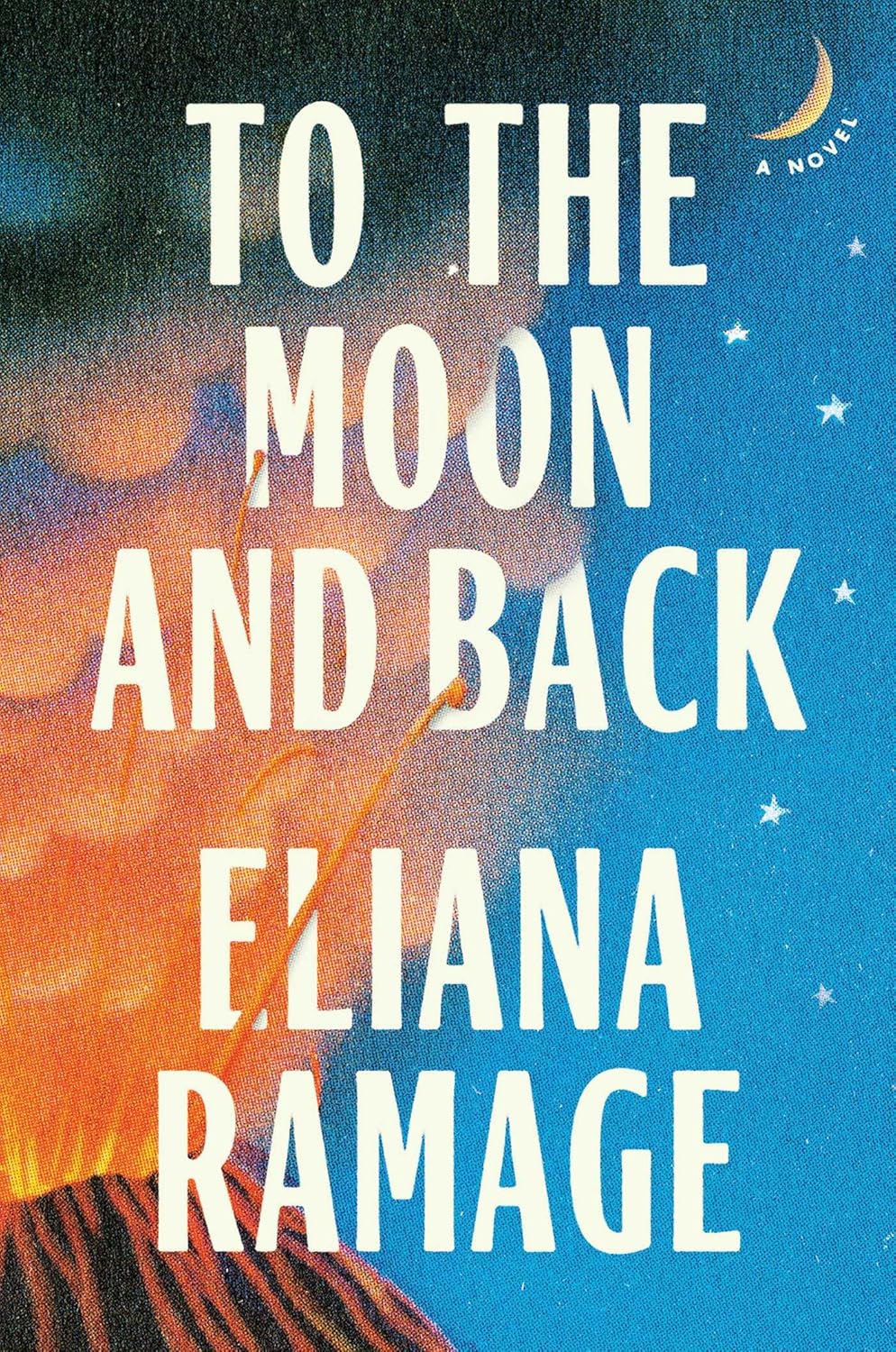
Maximum Shelf: To the Moon and Back by Eliana Ramage

Maximum Shelf is the weekly Shelf Awareness feature focusing on an upcoming title we love and believe will be a great handselling opportunity for booksellers everywhere. The features are written by our editors and reviewers and the publisher has helped support the issue.

This review was published by Shelf Awareness on March 25, 2025.


Eliana Ramage’s debut, To the Moon and Back, is a far-reaching, ever-surprising, intricate novel about identity, family, ambitions, career, romance and, yes, astronomy.

When readers meet Steph Harper, she is almost six years old. “I imagine her terrified. Our mother. Two children in the backseat. She drove like a woman followed, even after we left him at the foot of that tall hill. There was blood there, back in Texas, and tiny shards of glass still covered my sister.” Their mother, Hannah, is in flight from a vague threat–abuse, trauma–with her two little girls in tow. Precocious Steph is already developing her obsession with astronomy. Kayla is just a baby, sparkling in broken glass but unscathed by what haunts the others: “Our mother would never have Kayla’s confidence because Kayla had no memory of another self. Of another place. Of what was possible, here on earth. Maybe what was wrong with our mother was also wrong with me.”

From Texas, the fragile family resettles in the Cherokee Nation, in Tahlequah, where Hannah hopes to recover community and reclaim her heritage. Steph and Kayla learn to speak Cherokee. Steph watches the sky and fine-tunes her plans to become an astronaut: when readers meet her for the second time, she is 13 and concerned only with getting into Exeter Academy, which she hopes will put her on course for Harvard and then NASA. She studies the biographies of astronauts and the hard science she will need, with the help of a telescope gifted to her by her mother’s new boyfriend, Brett. “It had been my goal to understand the origins of earth, the universe, and everything in it by my fourteenth birthday. I was behind schedule.” This dream is what gives Steph’s life focus; she needs this to live. “I’d picture an astronaut watching me back. Some astronaut would call his daughter through mission control and she’d say tell me what you see and he’d say oh, the Northern Hemisphere, North America, and that would be true, but also true was Oklahoma, a field, a tree. A girl alone, looking up.” It is also true that the dream, which in some ways saves her, may be what keeps her from finding happiness in relationships on Earth: with her mother, her sister, or the love of her life.

Distracting her along the way are her feelings for girls, which she suspects will not be appreciated in Tahlequah: “If I could figure out the money and the applications and the getting myself to college, I decided I would be gay. Or bi, maybe? At schools like Harvard, they let you figure that out.”

As Steph moves from Tahlequah to Hollis College in rural Connecticut, a parallel character is introduced. She was named Della Owens at birth, when she was adopted by a Mormon couple in Provo, Utah. But as the center of a legal case resting upon the Indian Child Welfare Act, she became known as Baby D. Many Native Americans believe she belongs with her people. Della’s path intersects Steph’s when they find themselves at Hollis together, and they will intertwine from there, coming of age in parallel and navigating romance, Native heritage, and ambition.

For a portion of the book, Della’s first-person voice alternates chapter-by-chapter with Steph’s, which otherwise dominates. Later, these perspectives are joined by various epistolary elements: e-mails, social media posts, text messages. To the Moon and Back excels in surprise; these points of view are only one area in which Ramage takes her reader in unexpected directions, geographically and otherwise. The novel is gloriously expansive, epic, and sweeping. It covers just a couple of decades, from 1995 to 2017, although the history of previous generations certainly comes to bear on the present timeline. But like Steph herself, the story keeps reaching beyond its expected limits. It is not only a coming-of-age story, but also about a variety of Native American experiences, and about queer experiences and those intersections. It’s about lofty goals, astronomy, and yearning. Just when readers grasp the enormity of Steph’s single-minded focus on becoming an astronaut, she reaches further, to becoming a better human being. The events of Steph’s life are often sensational, but always, in Ramage’s expert storytelling, believable.

So many threads would be too much for a less skilled writer to wrangle, but these characters are developed with such steady pacing, depth, and perfect detail that they always feel natural. A plot summary with spoilers would sound, perhaps, absurd. But To the Moon and Back is anything but. It is a complex, absorbing, thought-provoking novel, compulsively readable. Steph is exceptionally eccentric, and her story is also universal, all-encompassing. Her impressive character arc comes, eventually, to wisdom and an unlikely peace: “I want to love the universe, even if I don’t know what it is. I do not have to know what it is.” Readers will be enriched for having shared these pages with her.


Rating: 9 M&Ms.

Come back Monday for my interview with Ramage.

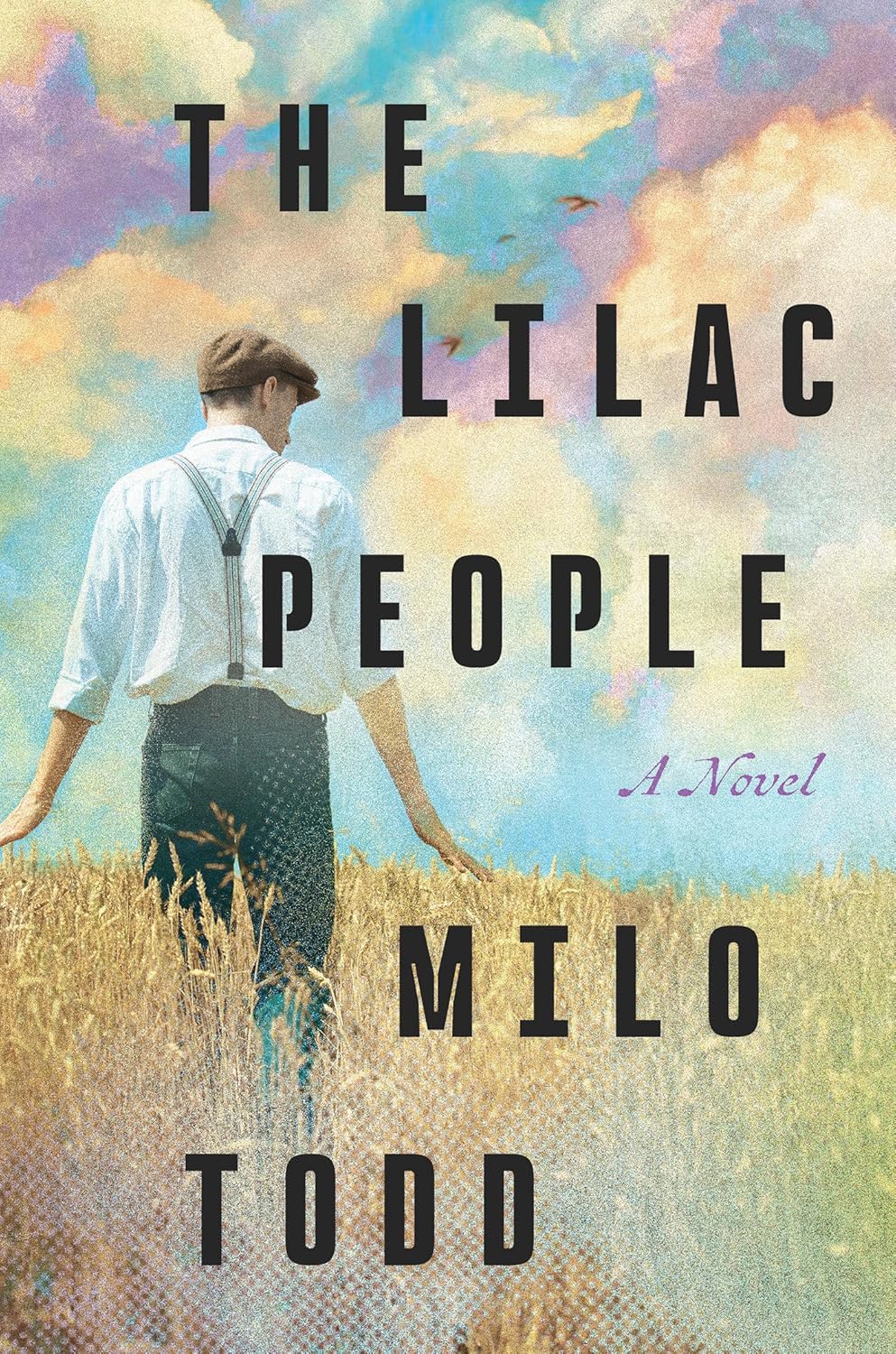
The Lilac People by Milo Todd

A trans man survives with a small chosen family, from Berlin’s lively queer scene in 1932 through the Holocaust and the Allies’ hostility, in this moving historical novel.

With The Lilac People, Milo Todd delves into the nearly lost history of trans people in the Holocaust. Integrating imagined characters with historical research, Todd brings humanity and specificity to atrocities that are still being uncovered. The heartbreaking result honors love and friendship, and ends with hope for one built family of survivors.

The opening pages find Bertie on the outskirts of the German city of Ulm in 1945. He has ridden out the war with his partner, Sofie, “on a little farm that was not theirs,” growing vegetables, raising chickens and one cow. It is an unadorned but not unpleasant life, and they know they are lucky. “The apple blossoms were beginning to show on their three trees at the far edge of their land, pollen spilling out as they blushed.” Then, weeks after the news that the Allies have freed camp prisoners, Bertie finds a body in the garden. Dressed in rags from the camp, the young man is alive, barely. “[The Allies] sent all the pink triangles to jail. And all the black triangles that qualified the same,” he tells Bertie. He wears a black triangle. He is a trans man–like Bertie. This changes everything for Sofie and Bertie, who will be greatly endangered by their choice to hide and protect Karl.

But Bertie finds that he must help, to confront his survivor’s guilt, his failure to protect his own community, and (as a hostile Allied lieutenant accuses) his complicity in Germany’s crimes. Karl’s appearance takes Bertie back to 1932 Berlin, where Bertie assists Dr. Magnus Hirschfeld at the Institute for Sexual Science and is a member of a vibrant queer and trans community, with a tight-knit group of friends that is lost on the Night of the Long Knives. Karl’s existence brings hope, guilt, and memory. To save Karl and themselves, Bertie and Sofie must leave the farm’s relative safety.

The Lilac People is filled with music, with an emphasis on the queer anthem “The Lilac Song.” Sofie is a pianist who gives Karl piano lessons alongside Bertie’s instruction in “how to transvest,” or pass as a cis man. The song is an important piece of history and means of accessing a pride in community that’s been all but destroyed. Notes from the author detail the research required for this writing, what is true history and what is fiction, and just how limited is the historical record on Germany’s queer and trans communities in this era.

The Lilac People is emotionally wrenching, but also lovely in its details, the humanity of its characters, and the resilience and hope at its end, when a fresh start seems possible. Todd has made an enormous contribution to historical fiction with his own research and this beautiful, touching narrative.


This review originally ran in the March 25, 2025 issue of Shelf Awareness for the Book Trade. To subscribe, click here.


Rating: 7 seeds.

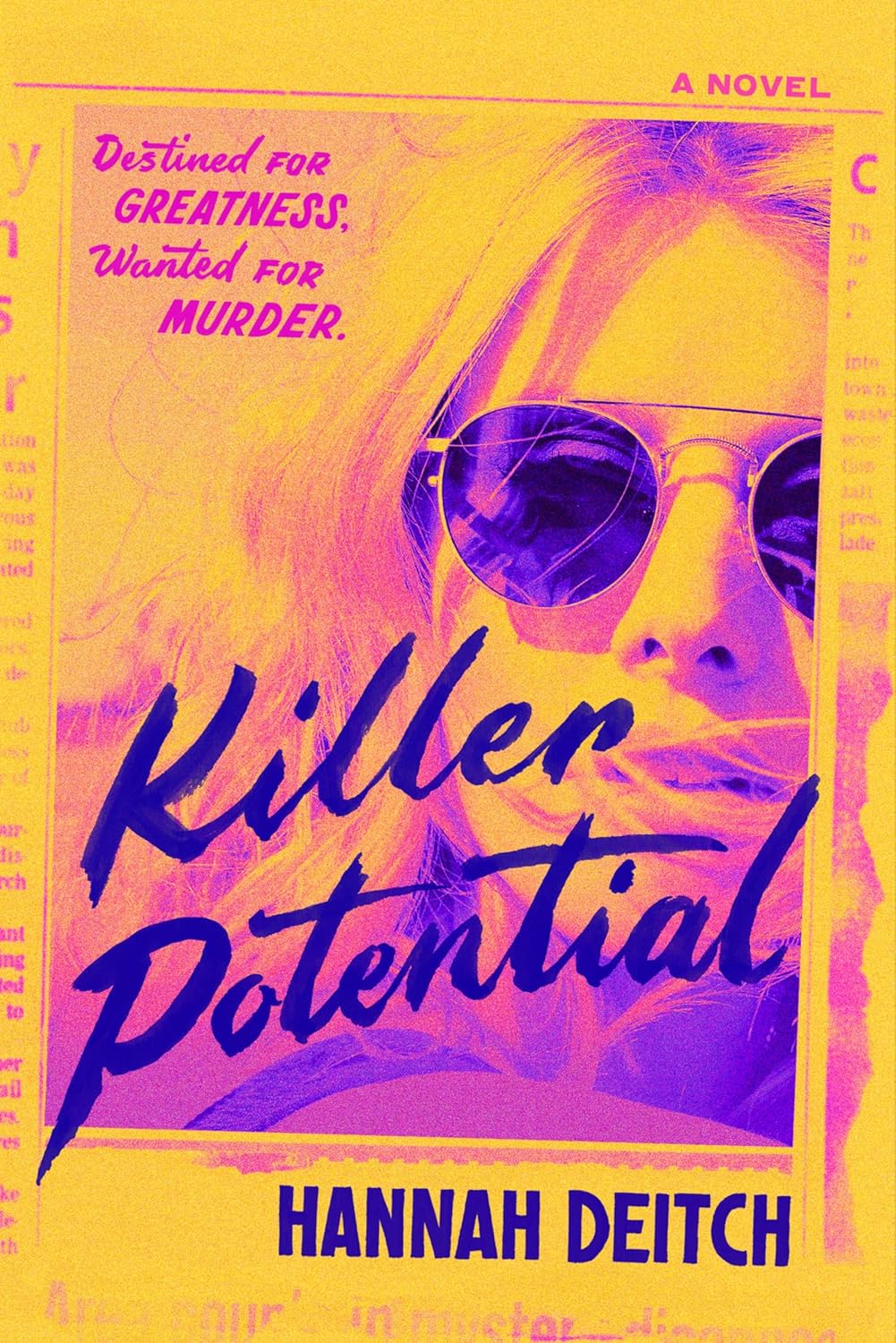
Killer Potential by Hannah Deitch

Two young women on the run offer mesmerizing complexity in this smart, propulsively paced, thought-provoking, and electrifying debut novel.

Hannah Deitch’s first novel, Killer Potential, is a bloody, class-conscious, suspenseful thriller starring two young women caught in a spiral of violence, blame, and bonding. This rocket-fueled debut is a deliciously dark, twisting, entertaining read, so beware the urge to stay up all night finishing it.

The novel’s primary narrator is Evie Gordon, who opens by saying, “I was once a famous murderess…. It isn’t true.” Labeled “Talented and Gifted” from the age of eight, Evie thrived on the simple, clearly outlined goals and rewards of formal education. As a graduate, she foundered and eventually landed in Los Angeles as an SAT tutor to the children of the rich and famous. On a Sunday afternoon, she appears at the Victor mansion as usual, only to find Peter and Dinah Victor very freshly and brutally murdered, and an emaciated, traumatized, and nearly mute woman tied up in a closet. In an adrenaline-fueled haze of terror and confusion, they flee the bloody scene together. The bulk of the novel follows Evie and the woman, Jae, as they go on the run, presumed to be the murderers of the Victors, and commit a series of crimes along the way.

Through Evie and Jae’s fragile, yearning, mistrustful bond, Deitch explores privilege and the divide between the haves and have-nots; sex and sexuality; trust and betrayal; what it means to be a “nice” or “good” person; and ambition and aimlessness. The interplay between them offers a taut psychological drama as backbone to a propulsive thriller of gruesome crime, exhilaration, and deception. Killer Potential is disturbing, fun, and unforgettable.


This review originally ran in the March 22, 2025 issue of Shelf Awareness for Readers. To subscribe, click here, and you’ll receive two issues per week of book reviews and other bookish news.


Rating: 7 powdered doughnuts.

North Woods by Daniel Mason

A gift from a dear friend, this novel is different. It could be categorized as a collection of linked shorts, in various formats (formally playful, you might say), including epistolary. The stories that make up North Woods are connected across history by place: together, they track a single location, a small valley in what will become western Massachusetts, from early colonial America until the more-or-less present and into the future. We are used to novels and stories being connected by character or plot. We are familiar with stories that center place heavily – I’m thinking of Rebecca, Housekeeping, The City We Became, The Rope Swing. This one felt a bit more… kaleidoscopic.

They had come to the spot in the freshness of June, chased from the village by its people, following deer path through the forest, the valleys, the fern groves, and the quaking bogs.

Fast they ran!

So opens the novel, and it takes several paragraphs until the reference to ‘harquebuses‘ (I had to look it up) gives us a clue as to setting in time. I loved how the fens and meadows, bramble and thickets, bear caves and tree hollows could have been anywhen. The couple who run remain nameless, and we learn very little of their story in their four-page chapter, but we see them stop in a valley: “a clearing, beaver stumps and pale-green seedlings rising from the rich black ash.” “Here,” says the man, and there they stop with their chicken and their squash and corn seeds and fragments of potato. And scene.

Subsequent residents – most of them human – find the log and stone hut built by this original couple, experience joys and hardships there, and add to that structure. A veteran of the American Revolution establishes an apple orchard. His twin daughters, after his death, grow old preserving his legacy and bickering with each other, unto a shocking end. A mountain lion briefly occupies the abandoned dwelling, hoarding her kills. A slave catcher hunts other prey in the area, eventually homing in on the house in the overgrown orchard, but will not find what he seeks. A painter finds a haven there, in a gorgeous valley where he can observe nature and work on landscapes and studies of birds nests, fungus, and trees; he pursues a forbidden love. In his old age, a nurse comes to assist him, and finds a love of her own that will fare no better. (It begins to feel like the home in the valley, at this point with many additions and “improvements,” might be a site of bad luck.) A mystic plies her trade, claiming to drive out a haunting, but has bitten off a bigger haunting than she’s realized. The chestnut blight settles in. A mother struggles to care for her disturbed son, who is schizophrenic, or haunted, or maybe both (?). The son wrestles with his delusions, or, his heightened knowledge of reality; his sister, an academic on the west coast, grapples with her brother’s life’s work. A newlywed couple lives out a fantasy, and a bark beetle expresses its lusts in parallel, in one of the weirder sections of this novel (and that’s saying something). (The chapters that feature nonhuman characters – spores, beetles, panthers – are delightfully immersive, but also somehow inherently creepy, in a way that feels anthropomorphic.) A lonely old woman narrowly avoids a dangerous con artist, a crime writer discovers an ancient grave, a metal detectorist goes seeking evidence, and a graduate student searches for spring ephemerals but encounters a ghost. The world turns.

It was a fascinating experience to sink into this place. There were not many characters or episodes to like or even especially enjoy; there was often a sense of watching something disquieting take place. I definitely loved the consideration of place over time, the natural world, and the different ways we interact with it. I loved the orchardist, the painter, and the graduate student most of all. I do love a zoom in on a procreative beetle. It was a disjointed experience, one I’ll not soon forget, but also don’t feel a firm grasp of. Maybe I need more time out of this book to figure out what it did for me. Maybe this is an instance of the author demonstrated prowess for its own sake. (As ever, your mileage may vary.) If you get into it, please do let me know what you think.


Rating: 7 antlers, turtle shells, and bird eggs.

rerun: Honeycomb by Joanne M. Harris, illus. by Charles Vess

I’m still thinking about this one with some longing. Maybe it’s time to dip back in. Can I tempt you, or me?

Fairy tales for grown-ups, allegories, visions and horrors: these gorgeously illustrated linked stories are guaranteed to transport.

With Honeycomb, the prolific Joanne M. Harris (Chocolat; Peaches for Father Francis), who has written fantasy, historical fiction, suspense, cookbooks and more, offers an enchanting collection of darkly delightful, imaginative fairy tales and parables of the modern world. (These stories began as a series on Twitter.) Illustrator Charles Vess (Stardust; Sandman) brings to life Harris’s Silken Folk, “weavers of glamours, spinners of tales… whom some call the Faërie, and some the First, and some the Keepers of Stories,” in richly detailed images.

In the world of Honeycomb, the Sightless Folk (regular humans) unwittingly often share space with the numerous and diverse Silken. “There are many doors between the worlds of the Faërie and the Folk. Some look like doors; or windows; or books. Some are in Dream; others, in Death.” These 100 stories form a whole that is magical, fanciful, enchanting and occasionally nightmarish. Some center on single-appearance characters, and some characters are revisited, but all belong to the same universe. “Dream is a river that runs through Nine Worlds, and Death is only one of them.” In special moments, “all Worlds were linked, like the cells of an intricate honeycomb, making a pattern that stretched beyond even Death; even Dream,” and the stories are likewise linked cells.

Some act as allegories, as in “The Wolves and the Dogs,” in which the Sheep elect a Wolf to protect them because at least he is honest. In “The Traveller,” the titular character passes quickly by many delights in pursuit of his destination, which turns out less impressive than he’d hoped. “Clockwork” is a horrifying tale in which a husband rebuilds his wife piece by piece. “The Bookworm Princess,” on the other hand, ends with deep satisfaction. There is the Clockwork Princess and the watchmaker’s boy; a girl who travels with a clockwork tiger; and a mistrustful puppeteer who manifests what he fears. A recurring farmyard is packed with colorful animal characters–a troublesome piglet, a petulant pullet–and allegory, Orwellian and otherwise. The connecting character is the Lacewing King, whom readers meet at his birth in “The Midwife” and follow for hundreds of years, as the fate of Worlds hangs in the balance. “There are many different ways to reach the River Dream. One is Sleep; one is Desire; but the greatest of all is Story….”

Completely engrossing, exquisitely inventive, brilliantly illustrated and thought-provoking, Honeycomb is a world, or Worlds, to get lost in. “Some of these tales have stings attached. But then, of course, that’s bees for you.”


This review originally ran in the May 3, 2021 issue of Shelf Awareness for the Book Trade. To subscribe, click here.


Rating: 9 candied cockroaches.

No Names by Greg Hewett

This dazzling first novel applies poetry to the overawing power of art, friendship, and the ways in which many forms of love blend into one.

Following five books of poetry, Greg Hewett (Blindsight; darkacre) astonishes with a transcendent first novel about friendship, desire, music, loss, and love in its many forms. No Names is rough-edged, glittering, and brilliant as it spans decades and lives, traveling from a fictional American refinery town to Europe’s capitals, from Copenhagen to a place known simply as the Island, and back again.

Solitary teenager Mike’s world expands when he meets easy, outgoing Pete, with whom he shares a love of literature and especially music, and a nearly instant firm bond. Music, for Mike, is all bound up with sex and violence and epiphany: “It’s like I’m busting out of the prison of myself and giving to the world whatever part of me that’s worth anything.” The two guitarists form a punk band in the late 1970s, and with their two bandmates take off on a rocketing tour of the United States and then Europe that ends in enigma and tragedy.

In 1993, another angst-ridden teen from the same gritty, class-divided hometown discovers a dusty record in his mother’s attic and goes looking for a mostly forgotten punk band. Isaac will pursue the mystery of the No Names until he unearths Mike on a remote island in the Faroes, where the haunted older man has been living as a hermit since the band’s 1978 dissolution: “a mythical musician who, for a time, dwelt here and filled the place with songs.” Mike is supported by a Danish classical pianist named Daniel who had briefly been a friend to the band. On the island, Mike describes to Daniel “a state of ecstasy, or ekstasis–that is, becoming entranced, being brought out of oneself” by the aurora borealis, but these lines could as easily describe their relationship with music, or with one another. Mike, Pete, Daniel, and Isaac, among others, form permutations and re-combinations of friendship, affection, artistic inspiration, love, and desire.

Hewett brings a poet’s ear for language to a complexly layered story that treats sex, drugs, and rock & roll as simultaneously hard-grained and gorgeous. His evocations of music and the power of the muse are tantalizing and apt, as are his lines about the strain of finding oneself, of love and lust and pain. By the time No Names flashes forward to 2018, readers will be spellbound, and as much in love with the novel’s protagonists as they are variously entangled with one another. Hewett’s first novel is scintillating and absolutely unforgettable.


This review originally ran in the March 14, 2025 issue of Shelf Awareness for the Book Trade. To subscribe, click here.


Rating: 10 walnuts.