best of 2018: year’s end

Note: I’m out of pocket during my final residency period at school. I love your comments! But it may take me several days or a week or more to respond.


My year-in-review post will be up next week, as usual. But first, also as usual, I want to share the list of my favorite things I read this year. (You can see past years’ best-of lists at this tag.) None of these were audiobooks, but a few were new releases, so I’ve marked those with *.

These three books and one essay got a rating of 10.

And while I gave rather a lot of 9’s this year, I’ve chosen my favorites (from today’s perspective, at least) for you here, for a shorter list.

Bonus: Shelf Awareness’s Best Books of the Year is available at that link, and includes two that I had the good luck to review (Everything Under* and Convenience Store Woman*).

Hooray for good books always! What are some of the best things you read this year?

Come back next week to see a further breakdown of my reading habits in 2018.

traveling

Happy holidays, y’all, and a reminder that I am off and traveling for school – for the last time, my fifth and final residency. I’ll be back in Texas the second week of January, to pick up my dog and my van and carry on down the road. And let you back in on my readings. Again, I’m super fortunate to keep my job reviewing for Shelf Awareness, so you’ll continue seeing those posts. And who knows what else the future holds!

As usual, I’ve got posts scheduled for you in my absence, but comment response time may be a bit slower than normal while I’m away. In fact, there may be a slower new-normal, as I live in a van from here on! Also as usual, thanks for your patience. I hope you have a lovely holiday season & a hopeful new year.

Main Street Theatre presents Miss Bennet: Christmas at Pemberley (2018)

My lovely Houston friends – the same ones who rented Rent for us – took me to see the sweetest play at Main Street Theatre. Miss Bennet: Christmas at Pemberley is, of course, a sequel to Pride and Prejudice. It takes place at Pemberley after Elizabeth and Mr. Darcy, and Jane and Mr. Bingley, have been married a few years. Jane is pregnant; Lydia is still married (not entirely happily) to Mr. Wickham; and Mary and Kitty are still at home. The entire family is now converging on Pemberley, along with an unexpected guest or two: Mr. Darcy’s unpleasant Aunt de Bourgh has just died, and a distant cousin Arthur de Bourgh will be arriving for Christmas as well, having just inherited.

The Miss Bennet of the title here is Mary, the middle sister, whose life has begun to chafe. She loves to read, study, and practice her pianoforte. No one she knows understands her interest in a life of the mind; and while she loves traveling between the pages of books, she aches for a wider-traveled life in the real world, too. At Pemberley, amidst the giddy happinesses and dramas of her sisters, she wishes for more. And more may be in the cards for her just now, to start the new year…

Romantic? Sweet? Rather predictable? All of these things, yes, but so enjoyable. It’s clever and funny and plays at my emotions adeptly. I think it’s really saying something to tell you that while I saw each plot move, more or less, coming, I was still on the edge of my seat, because I had such sympathy for each character. What can I say. Buying into fictional plots might be a specialty of mine.

I loved every bit of this evening. The clever references to Austen’s original (including the genius line about “a truth universally acknowledged, that a single woman in possession of a good fortune…”), the heartfelt acting, the sweetly familiar setting and simple, charming set. I believe Main Street Theatre qualifies as amateur theatre, but it was very professional. Mary’s piano playing was no small accomplishment in itself; no one broke or stumbled over a line for the whole thing; it was excellent all around. Overall, I think this production accomplished everything intended by the play (by Lauren Gunderson and Margot Melcon). It made appropriate reference to the inspired original and made playful use of my emotions. It was at every turn sweet, and (the idea goes) ’tis the season for sweetness. Here’s to the latest Miss Bennet.


Rating: 7 books with blue covers.

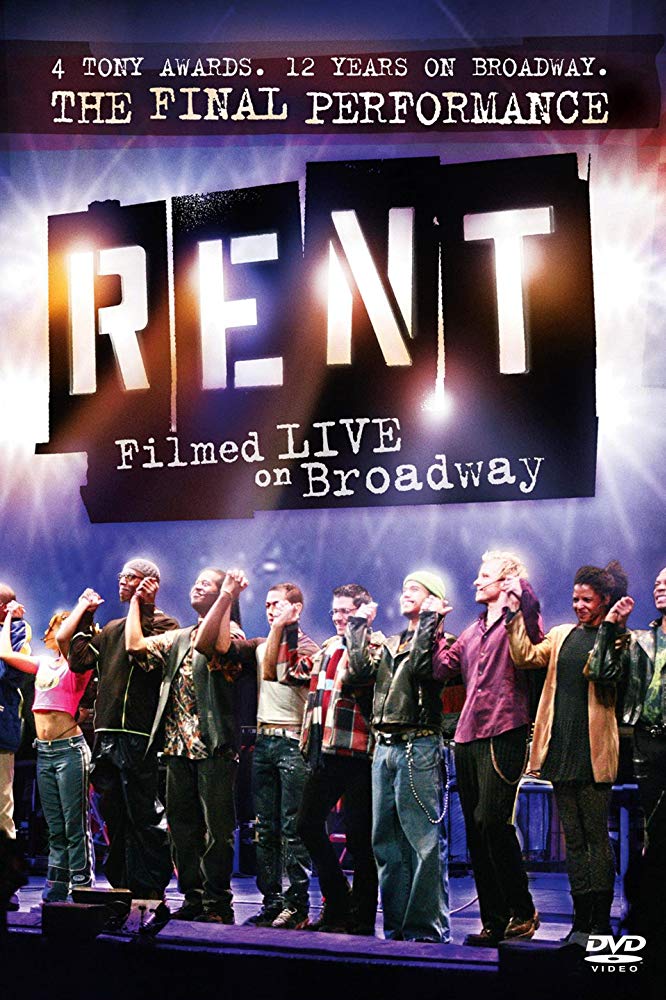
movie: Rent: Filmed Live on Broadway (2008)

I first saw Rent when I was in high school. My dad and I traveled to New York City to investigate that city among a few others where we thought I might go to college. He got us tickets to see Rent at the Nederlander Theatre on Broadway. I already knew that I loved musical theatre at that time, but this production really changed something for me. It was the first time that I cried at a stage production or at any piece of art other than a book. The subject matter felt especially meaningful and timely for me, as I had friends still discovering their sexuality and coming out to their parents. It was an event that resonated. I immediately bought the soundtrack and it still makes me cry today, twenty years later.

The friends I am visiting with now expressed an interest, and so we rented this version: a live taping of the final performance of the Broadway production, after a twelve-year run. The actors are almost entirely different (every major role was filled by a different actor in this version, from the one I saw). And I guess I had really invested in the first cast; but I have to say, this one was admirably close to the original, so even someone like me was able to be open to the new. Most cast members were very close in physical details as well as in talent; I was able to settle into this production and feel at home.

It’s still everything I remember, after all these years. Musical theatre does tend toward the theatrical (go figure) expression of emotions, but for the few moments of somewhat self-conscious hand-wringing that I might skip, there is such raw power… and the singing and dancing is amazing. I still find this play to be full of all the love, drama, angst, grief, rage, and passion I found there in the first place. It made me cry, again.

As a production, too, I think it works well – that is, both as a stage production (filmed live, with audience and applause) and as a cinecast. Unlike The Wiz and more like National Theatre Live, the camera angles varied and moved around, working for perspective and providing close-ups as appropriate. I don’t recall noticing that the cinematography in itself was extraordinary (as I often do with NT Live), but it was plenty serviceable. Since the chance to see Broadway’s version of Rent has passed, I’d strongly recommend this version.

It’s interesting to think about the extent to which an experience like this is about that original experience. I was probably 16 years old (maybe 17, but I think 16) sitting in the upper rows of the Nederlander Theatre, far from the stage. The words and lyrics and music and dramatic portrayals, the singing and dancing and kissing, took me so powerfully. I’ll never forget; I’ll also never have the same experience again, but every time I hear a song from Rent or see another production (even the 2005 movie, which I remember finding a disappointment), it refers to that original experience just enough to tap into some of those emotions. Still gets me.

In contrast, I have a friend and fellow writer who strongly dislikes Rent. He calls it a singing telegram to AIDS. Dave’s a few years younger than me, and I believe has never seen it live. I’d like to dismiss his opinion on these counts, but think I should give him a little more credit than that. Dave’s also a gay man, and some part of me feels I should defer to his opinion as being a part of a certain demographic – the play is about the AIDS crisis and has more queer characters than cis-het ones. (Another part of me knows that my own opinion & tastes remain worthwhile here.) At any rate I find it interesting, since I respect Dave’s approach to art and we often share interests and tastes. I wonder if he had gotten to see the play live at age 16 how it would have affected him… Then again, maybe the concern is that this is too serious an issue to get all song-and-dance about. That would be a position worth considering.

Local issues aside, Rent remains an important part of my personal understanding of art and value. I’m still hooked. Keep singing.


Rating: 8 samples that won’t delay, for its value in my personal mythology.

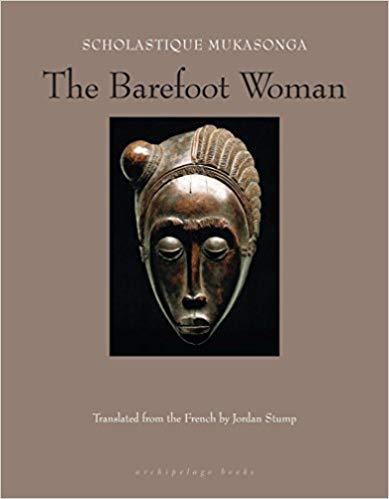
The Barefoot Woman by Scholastique Mukasonga, trans. by Jordan Stump

A shadow of tragedy hangs over this lovely, lyric memoir of Tutsi childhood in Rwanda, but the author’s love for her strong mother remains central.

The Barefoot Woman by Scholastique Mukasonga (Our Lady of the Nile; Cockroaches) is a loving tribute to a strong mother and a striking work of memoir.

Mukasonga and her family lived as exiles in Rwanda in the years leading up to the genocide of the Tutsi. This time in her life, when they were all together and alive, was short, but Mukasonga has vivid memories, especially of her mother, Stefania, a leader in the makeshift village where they were regularly terrorized by Hutu soldiers. In an earlier memoir, Cockroaches, Mukasonga depicted the horrific end of her family. Here, she focuses on her mother: Stefania is a hard worker, always with her hoe in hand; a healer with a medicinal garden of grasses, tubers, roots and tree leaves; a “highly respected matchmaker”; and a dedicated, ever-vigilant protector of her children. Saving them was her “one single project day in and day out, one sole reason to go on surviving.” She is not a hero with a single dimension, though. In Mukasonga’s warm telling, Stefania has personality, a sense of humor and a deep love for her family.

The book opens and closes with dreamlike sequences. At the beginning, in the narrator’s memory, Stefania reminds her children of their duty to their mother upon her death. At the end, Mukasonga describes a dream about her mother’s uncared-for dead body and those of so many Tutsi. This sets the tone for the rest of the memoir, which often feels dreamy as it turns to childhood memories. Extraordinarily, this story is at times horrifying in its content and at other times playful; lyric in its style and tender in its handling of the central character. While the reader’s knowledge of the genocide to come hangs over the narrative, the everyday events often retain a quotidian feeling; Stefania and her neighbors worry over their children but also laugh and celebrate and arrange marriages. As a literary work, this establishes a rare balance. Jordan Stump’s translation from the French beautifully conveys this sense of both tragedy and day-to-day joy.

The Barefoot Woman is also an essential record of traditions and a way of life that are in danger of disappearing. It describes the inzu Stefania builds, with great effort, in exile: a traditional straw-dome house “that was as vital to her as water to a fish.” The importance of keeping a fire going, and why a mother would borrow fire from a neighbor rather than use a match. The significance of sorghum, “a true Rwandan” crop, and why Stefania insisted on a cow, the traditional gift for her son’s marriage pact, even in the inhospitable new place where cows were no longer a part of their everyday lives.

This is an adoring, gorgeously rendered memorial to a mother and testimony to a people.


This review originally ran in the November 19, 2018 issue of Shelf Awareness for the Book Trade. To subscribe, click here.


Rating: 8 little loaves of bread.

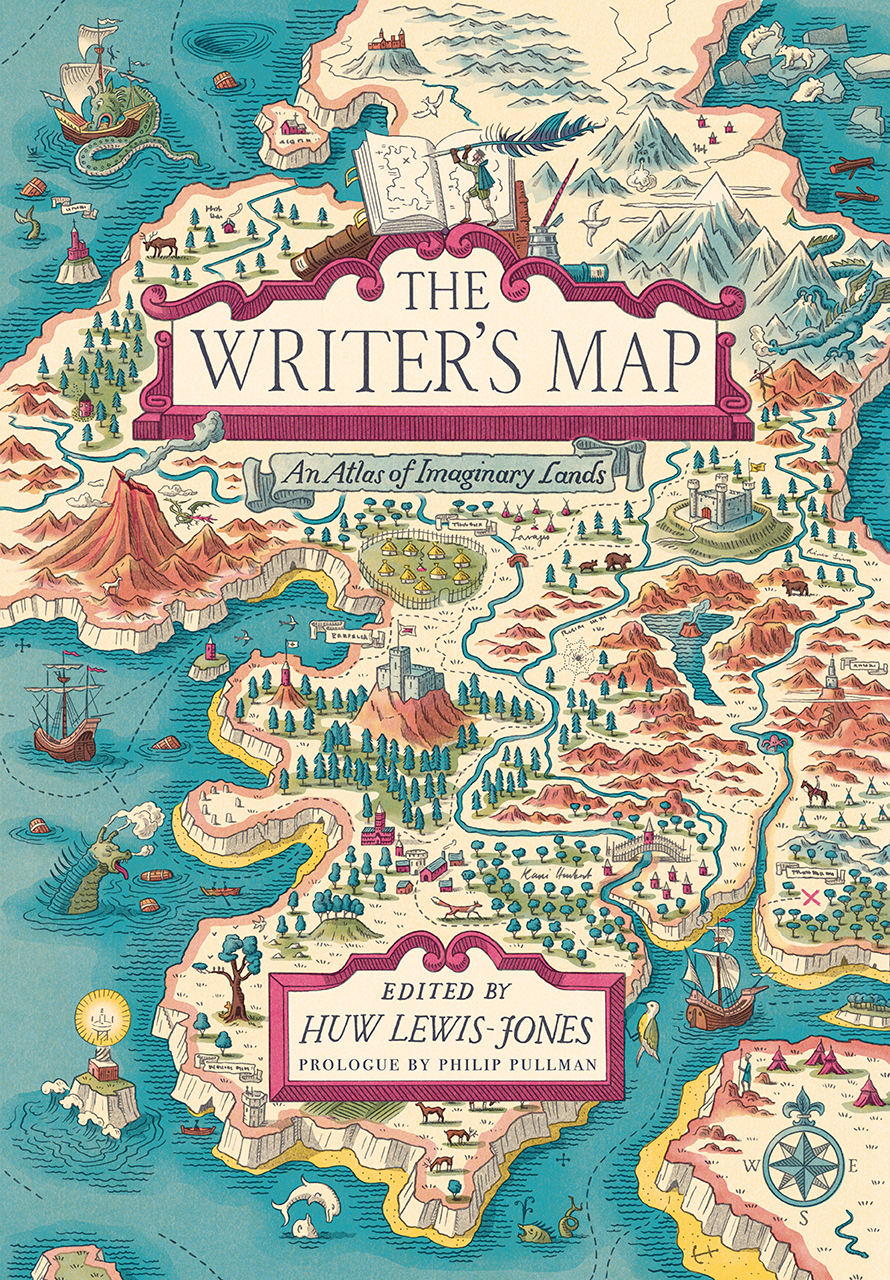
The Writer’s Map: An Atlas of Imaginary Lands ed. by Huw Lewis-Jones

This delightful, engrossing exploration is for every reader who’s ever admired a book or a map, let alone both.

In The Writer’s Map: An Atlas of Imaginary Lands, historian Huw Lewis-Jones offers a collection of essays by authors, illustrators and designers as they ruminate on processes of reading, writing and creating, as well as the link between map and story. They consider maps in two and three dimensions, sketches, stories and outlines that live only in the writer’s mind, and argue that creating maps, like creating stories, is essentially an act of compression, a set of choices about what to leave out.

Contributors include Robert Macfarlane, David Mitchell, Lev Grossman, Joanne Harris, Philip Pullman and the graphic artists for the Harry Potter and the Lord of the Rings movies. Literary references in this gorgeously designed, detailed coffee-table book begin with Kerouac, Tolkien, Twain and Thoreau, and visit Treasure Island, The Wind in the Willows and so many more.


This review originally ran in the November 6, 2018 gift issue of Shelf Awareness for Readers. To subscribe, click here, and you’ll receive two issues per week of book reviews and other bookish fun!


Rating: 8 archipelagos.

Truth Serum by Bernard Cooper

Among the central concerns of Truth Serum lie questions of truth and memory. This is a memoir-in-essays of Cooper’s coming-of-age in Hollywood from the 1950s onward, including his identity as a gay man in the early days of the AIDS virus. I found several elements I appreciated from Maps to Anywhere: lyric language and a profound attention paid to the world. I was reminded of Mark Doty in the moments that Cooper leans in, seeming to slow down time, to examine what’s around him, that the rest of us might have called the everyday. Maps to Anywhere, as I remember it*, had some longer essays but more short ones, several of which qualified as prose poems; by comparison, the essays in this collection are on balance longer, and while the language is undeniably lovely, few of these shapeshift toward poetic form. These essays more frequently offer clear narrative structure.

One shorter one I’d seen before was “The Fine Art of Sighing,” about the sighs of three family members. I’m pretty sure* this one reappears in Short Takes (ed. Judith Kitchen), and/or I’ve read it for class. I also really appreciated the opening piece, “Where to Begin,” which is very much about that problem of creating art: that the biggest question is not what to put in, but what to leave out. Else we’ll end up trying to paint, or write, the whole world, and be defeated before we begin. I loved “Burl’s” for its epiphany of gender fluidity. “Against Gravity,” about weightlifters and men and mortality, was a lovely longer meditation… I really enjoyed how it ranged and returned. “If and When” is a beautiful, tearing-open essay about discovering the narrator’s HIV status, and his partner’s. (I am reminded of an essay Cooper contributed to… some essay collection, about handling the public’s response to his revealing private information, this information in particular.) It’s a simply gorgeous and wrenching portrayal, and I think it’s a generosity. “Tone Poem” answers my statement above, about there being less poetry in this collection than in Maps. It’s not so much a poem itself, though, I argue, as it is about poetry, about finding something beautiful in the mundane. “Train of Thought” was the essay I thought might be a poem: it explores the etymology of that phrase, ‘train of thought,’ and the music and language of trains.

In one seminal dream from my childhood I was on a train with a woman who was dressed in an enormous satin skirt. I was sitting on her lap and we ladled cupfuls of cool water into each other’s mouths. Her petticoats crackled whenever I lifted the cup to her lips. “Where are we going?” I asked her. “To the city,” she said, “where the rustling of a woman’s skirt sounds the same as the rain.”

Which I misread, initially, as ‘the same as a train.’ This attention to language and sound, and a final memory about a boy who memorizes numbers, made me feel a little floated above the world. Lovely.

Finally, I was reminded of Ryan Van Meter’s If You Knew Then What I Know Now. Most obviously, both essay collections handle the narrators’ coming-of-age and coming to terms with being gay men. But that’s not all, and I hope I’m not guilty of that kind of simplification. I’m thinking more about the ordering of essays in both collections, where they proceed more or less chronologically, and with an overarching opening up from the immediately personal (and confusion about the subject at hand) to the outward-facing, the public issues involved with being a gay man (for example) in the 1980s as an unknown virus blooms.

Another lovely one from Cooper, although I missed the poetry in Maps and hope to get back into that book one day, too.


Rating: 8 plums.

*I owe y’all an update on this at some future date, but I’m about to be undertaking some travel and have been packing all my books to go into storage… so the other books I’ve mentioned here are not at hand as they’d usually be. I already miss my library!

Everything Under by Daisy Johnson

This surreal, riverine, gender-bending retelling of Oedipus Rex will fascinate and fire the imagination.

Shortlisted for the 2018 Man Booker Prize, Everything Under is a dreamy, twisty-turning tale set in modern Oxford but calling on mythology and upturning societal norms. Daisy Johnson’s first novel (following the story collection Fen) requires its readers to wonder and follow along for a while before its connections begin to form, but the payoff for that patience is well rewarded.

“The places we are born come back.” At the novel’s opening, Gretel is a lexicographer who mostly keeps to herself, caught up in her mysterious past: “I’d always understood that the past did not die just because we wanted it to.” She lives in a remote cottage with her mother, Sarah, whom she has recently found and brought home. Then time shifts, and for much of the book the reader sees Gretel’s unusual childhood, and the long stretch of adulthood during which she searched for her missing mother.

Gretel grows up living with Sarah on a river, in a houseboat that never moves. They forage for food and remain apart from society: “River people aren’t like other people. You won’t see the police down here.” They make up their own language, words that make sense only to them. It is a watery world of shifting gender identities and slippery, changing rules. Gretel is shaped by self-sufficiency, words, fluidity and a fear: something under the water called the Bonak. When she is 16, her mother disappears, leaving Gretel to take care of herself.

In the flashback chapters, an enigmatic third character appears. “What happened to Marcus?” Gretel asks her mother, in the later timeline when they live together again, the older woman having lost her memory and the words that mattered so much. But it takes many more pages to reveal who Marcus is.

Many chapters are named for settings: repeatedly, “The River,” where Gretel grew up; “The Cottage,” where she lives as an adult; and “The Hunt,” when she was actively searching for Sarah. In those chapters on “The Hunt,” Gretel explores the countryside near the river, visiting a couple who lost their teenaged daughter years ago. She meets a failed prophetess, collects a stray dog and excavates her memories. This action is every bit as wandering, confused, seeking and amnesiac as Gretel herself.

This is a complex plot with profound themes: a monster under the water, the shape of fear itself; the importance of language; the death grip of the past; fate versus free will; flexible gender identities; unanswered questions. Everything Under remakes the ancient Greek myth of Oedipus, with its prophecy that will be fulfilled, no matter how strangely it must twist. Johnson’s singular, hallucinatory storytelling is well up to her book’s ambitious form. The result is spellbinding.


This review originally ran in the October 29, 2018 issue of Shelf Awareness for the Book Trade. To subscribe, click here.


Rating: 7 rolls of cling wrap.

the next big adventure

Edited to add: there’s a new website afoot at foxylikeaturtle.com.


Everyone wants the familiar. (Yes, people often say the opposite, that they crave the new and long for adventure and novelty. They really don’t. What we call adventure is the process of meeting the new and turning it into the known as fast as possible. We want to name the unnamed and touch the untouched so that they are no longer unnamed and untouched. No longer strange. Then we can go tell people all about what we’ve found.)

–“Here Be Monsters,” Violation, Sallie Tisdale

I guess this is the best way to share my news: below please find the first short essay of my thesis.

Foxy

I bought a van, y’all. Her name is Foxy. She began as a 1995 Chevy G20, then underwent a conversion to become a model called Gladiator. This process installed a bed, shelves and storage and additional lighting, two big comfortable captain’s chairs, and privacy shades. The interior is all polished wood-grain and leather. There’s a television, the first that I have owned; luckily, it doesn’t work. She was named Foxy by Cody and Marie, who lived in her and traveled the country for most of a year, before they sold her to another couple, Kyle and Portia. Kyle and I started our new jobs at a small-town Texas brewery together, on the same day, and we’ve become good friends. He says when they went to look at the van they knew it was meant to be, because Cody and Marie are a tall skinny white guy with glasses and a short brown girl, like Kyle and Portia. “Her name is Foxy and she loves adventure,” Cody said. And now it’s my turn. Although I am neither a tall skinny white guy with glasses nor a short brown girl, I hope she’ll treat me as well as she did them.

I am a single woman living alone with two little dogs, and I already have a serviceable Honda to drive to work and back again. I’ve never before owned two vehicles, let alone one old enough to drink. Why do I need a van? It’s a contradiction: I want a house with a yard I can fill with bird feeders and a bird bath where the hummingbirds will come to know me and visit me from one year to the next. I want stability, and a home of my own, a backyard in which to plant anew. Texas bluebonnets, forget-me-nots. Why then would I take off? I’m still struggling to explain this to myself, but I feel inside me, in the homing parts, that I can get to a place of verdant possibilities—a stable and still place to grow—only through movement.

My little rental house, my part-time brewery job, the young man I keep company with some of the time: none of these is enough to keep me in place. One year ago, I left my husband and a well-established home. My freedom and my relative homelessness have not come cheaply, and have not always been joyful. And yet here I go again: pulling up roots, because sometimes they feel like chains. Not stability, but a holding back.

Foxy is like a turtle: she is slow and steady, ready, I hope, to win the race by feats of endurance. She carries her home on her back. And she is the animal of my heart. I’ve collected turtles—not live ones—since I was a little girl, since I can’t remember when. In high school I had forty or fifty of them, one of those shortcut gifts people learn to buy. At some point I downsized this collection, culling the stuffed turtles, the chipped or cheap ones; I’m down to a dozen or so of my favorite specimens. But more downsizing will be necessary. Foxy offers approximately seventy square feet of living space; what of my life will fit?

Turtles are one of the few animals with multiple collective nouns. Such fun, collective nouns: a murder of crows, a crash of rhinoceroses, a business of ferrets. Turtles make up a bale, a turn, a nest, or a dole. I am building a nest of turtles, or a nest for myself within the turtle that is Foxy.

As the year closes, then, I’m giving up my rental and moving into a twenty-four-year-old Chevy van. I’ll drive west to a desert I love; east to the Gulf oysters I’ve missed so much; north to a litany of national parks and breweries and friends’ driveways; south to the troubled border. Here comes the next exhilarating, terrifying thing. Her name is Foxy, and she loves adventure.

Today, the last day of November, I am out of the little house and on the road. I am also returning to West Virginia, in a little under a month, for my final residency there. I will give a thesis reading, teach a graduate seminar, and graduate (pending my final thesis deposit at the beginning of February). And I will be living out of a van. So, lots of big changes around here.

What does this mean for the blog? I’m not entirely sure yet. Many aspects of my life are up in the air, and I want to honor the process and follow it. But I can’t imagine not reading books and responding to them, so I think we’re safe in some ways, at least. Posts will continue on the normal schedule through the end of this calendar year, and after that – well, we’ll learn together, won’t we.

Thanks always, friends, for being understanding and flexible with me as I grow. Drop me a comment, please, and tell me what you’d like to see happen to pagesofjulia.

“House of Flowers” and “A Diamond Guitar” by Truman Capote

I am just finishing up this volume of Capote’s, which includes Breakfast at Tiffany’s and three short stories (the third is “A Christmas Memory“). I am rewarding myself with just a little bit of a break from school.

Short, easy, sweet reading. “House of Flowers” felt familiar to me; I think I must have encountered it somewhere before, because I recognized the memorably named Royal Bonaparte and the protagonist, Ottilie. Strangely, they don’t get developed very much as characters; there’s not much personality, aside from Ottilie’s vanity and Royal’s strange confidence and eventual diffidence. The friends from the city, Baby and Rosita, have a bit more personality. But mainly this is a story of types, or of the mysterious quality and damage of love (or of “love”). I liked it, though, with its bright colors and clear movements. It’s telling that the title of the story names not an emotion or a person or an event, but a place: the “house of flowers” that Royal brings his bride home to, where “wisteria sheltered the roof, a curtain of vines shaded the windows, lilies bloomed at the door.” “It’s like you picked a wagon of flowers and built a house with them,” Ottilie tells her friends when they come looking for her. “It’s cool inside and smells so sweet.”

And this is a sweet story, but not because all its contents are sweet. It has the Capote way of showing sadness and wrong, but with flowers. I don’t know how else to put it. I find it curious to think about Capote, after moving as a child from Louisiana to Alabama to New York and Connecticut and as a young adult, back to Alabama, writing about a young woman looked down upon as a native of the Haitian mountains. I wonder how much he really knew about what he was writing about.

“A Diamond Guitar” feels like a simpler story, or one I know better, although I can’t say why. I know love and friendship between women (as in “House”) better than I know prison and male friendship, as here. But the older man and his friendship with a younger man, and a not-entirely-successful jailbreak – maybe it’s Shawshank Redemption I’m thinking about, or Cool Hand Luke, or something. This felt in a way sweet and simple and predictable, but so feelingly told… as in the older man’s recollection that his friend still has so much growing up to do.

Both stories were easy to read and to feel. Both are about emotion. Both, I’m sure, can be read much more deeply than this; on the surface they seem simple and straightforward, but I don’t mean that negatively. I enjoyed falling into these worlds, and that’s the thing about short stories done right. So much in a few pages.

Thanks, Capote, for the break.


Rating: 7 yellow cats.