Shatter the Night by Emily Littlejohn

Note: I received an advanced copy for review. This book publishes on December 10, 2019.

Quickie review here. In a nutshell, dialogue and writing in general were very poor, but the suspense of the plot kept me going through to the end, which fact still surprises me.

This is the fourth in the Detective Gemma Monroe series, and the first I’ve tried. I won’t bother with any more in this series, not with the likes of Lee Child, Michael Connelly, James Lee Burke, and Tana French mysteries in the world. It took me just a few pages to laugh out loud at stilted dialogue (one of my pet peeves: two characters who know each other very well, discussing a third person they know very well, with first and last name and character’s background in dialogue – ugh!), and I continued to note less-than-credible police procedure and other basic factual matter all the way through this book. (Vampire bats in Colorado? A quick Google search says no.) These weaknesses – huge, glaring, obnoxious weaknesses – continued to annoy me from start to finish, and this is why I did not write a review for Shelf Awareness.

But I read the whole book! And you know I am quick to put down a book I don’t like and walk away forever. So, kudos to Littlejohn for a plot that kept me turning the pages (and probably a nod to the fact that I’m a bit stressed and it felt good to escape into something mindless). I enjoyed the mystery aspect itself, and there were enough goofy characters (possible suspects) that I didn’t guess the solution too far before Detective Monroe herself did. The ending, following the denouement, turned weak again: we took a hard left turn into sappy romance, even though the romance had itself looked a bit endangered earlier in the novel. Ah, well.

A far from perfect book, and one I might have put down at another time in my reading life, but credit for a plot that kept me til the end. Do I recommend this book? Not really.


Rating: 5 times the cops were shocked and called someone a ‘bastard.’

in a surprising departure: television

This post is long overdue, I guess, but it occurred to me rather late in the game to tell you about television series. During the van trip, strangely, I got into watching TV series that I could get through Amazon Prime.

This blog began, back in 2011, as a way for me to keep track of my reading for my own sake. I’m deeply grateful that other people read it and appreciate it, too. But on some level it remains a record I keep for myself, and so here we are. I wanted to remember what shows I’ve watched, and which ones I’ve especially liked.

Bones

The one that got me completely hooked is Bones, a mystery-per-episode (or often several) crime-solving drama series based in the fictional Jeffersonian Institute and starring a world-famous forensic anthropologist. It’s fairly silly, and relies too heavily on the sexual tension of a certain couple that we wait way too many seasons to see actually hook up. But I was thoroughly, entirely taken in; I watched all 246 episodes with relish and and someday, if laid up for months with nothing to do, I may watch them again. It’s goofy but I love it. (Based on the Temperance Brennan series of novels by Kathy Reichs, which I have not read, so there’s another project.)

Mystery series based on book series: you will note a theme. Also, lots of Brits.

I was quite impressed by Bosch, based on Michael Connelly‘s novels starring LAPD Detective Hieronymus “Harry” Bosch, which I have loved since I was a teenager. They’ve done a good job of capturing the title character, and the soundtrack (based on Harry’s love of jazz) is quite good. I’ll be on the lookout for future seasons; well done, Amazon.

Jackson Brodie of Case Histories

Case Histories is based on the novels of Kate Atkinson which star Jackson Brodie. Set and filmed in Edinburgh, this series features an excellent soundtrack of female country singer-songwriters (seriously, I would follow this show just for the music); Edinburgh itself is compelling and beautiful, but it’s also easy to fall for Jackson himself, who is a runner as well as a detective whose life is filled with ill-conceived sexual liaisons, a delightfully salty assistant, and the cutest, most precocious, wittiest young daughter imaginable, as well as interesting cases. Give me more Case Histories! And these are books I’ll need to read, obviously. (It’s always nice to get a two-for-one like that.)

Unforgotten is a modern London-set series which I appreciate for its two lead detectives, DCI Cassie Stuart and DI Sunny Khan. They are a likeable pair whose lives feel realistically imperfect, something not always true of our stars. Not everyone on this show is supermodel-beautiful, which again, is nice for reality’s sake. The narrative structure of each episode is interesting and a bit unusual: we switch around between the lives of various characters, including Cassie and Sunny but also including a number of others who at first have no apparent connection to the case at hand – although, of course, they will. I’ll keep watching this one.

Seattle PD’s Sarah Linden and Stephen Holder of The Killing

The Killing is based on a Danish series; this one is set in Seattle. It may seem formulaic at this point that there our two lead detectives are a man and a woman with perhaps a hint of sexual tension? but it still feels original here; I like these two and would continue with them, given the chance.

DCI Banks is another British mystery series, set in the more-or-less present, and one that kept me occupied for a time, but my rating would be only so-so. I found the characters I was meant to identify with only mildly appealing; I was often frustrated with them, and (slight spoiler) killing off one of them only served to engage me less. Meh. (Maybe it was just the one guy’s voice as he plaintively cries “Annie!” over and over that got to me.)

The ABC Murders is based on Agatha Christie’s novel of the same name, and stars John Malkovich as Hercule Poirot. I’m sure he did a fine job, but I was raised on David Suchet’s Poirot and it is too late for me to convert to a new version. While I suspect I would still enjoy reading Christie (a theory I should test!), this onscreen version dragged on. It felt dated by unusually slow pacing, but was made in 2018. Another series that was okay but not one I’m wild about.

DC Endeavor Morse and DCI Fred Thursday of Endeavor

Set in 1960s Oxford, Endeavor has my heart. I’m just in the middle of this one now, and I’m devoted to the title character, DC Morse (first name Endeavor. Which is weird, but not as weird as Hieronymus Bosch). This serves as a prequel to the long-running 1980s-90s series Inspector Morse; I have not seen that one. DC Morse is a prodigy within the department, but his odd methods, failure to bow to authority, and general nerdiness don’t play well with his superintendent. He does have a good relationship with DI Fred Thursday, and that relationship’s development seems to be part of the arc of the series overall. I’m having a good time with this one.

A few outliers are not mysteries.

Catastrophe is a comedy about a several-night stand between a visiting American businessman and an Irish primary school teacher living in London which results in a pregnancy and, surprisingly, marriage. A second child follows the first as the couple turns out to quite like each other, but (yes) catastrophes follow one upon another. Silly but good fun.

My Mother and Other Strangers caught me with its name, and this Masterpiece Theatre production has a charming, evocative, specific setting in a small Irish village during World War II. American soldiers are stationed in a village that does not appreciate their presence. The series is narrated (minimally) by an old man, years after the fact; he is the small son of the mother in question, and this is the story of his family (mom, dad, two kids) firstly, and of the village. I love the details of time and place, the sense of a small specific setting and its place in much larger historic events. The backward-looking perspective has elements of elegy and of nostalgia, and that mystery of the mother–she is present, but enigmatic–is compelling.
The Durrells in Corfu

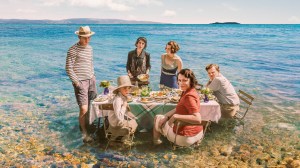
And then The Durrells in Corfu, an absolutely addictive series based on three memoirs by Gerald Durrell: My Family and Other Animals, Birds, Beasts, and Relatives, and The Garden of the Gods. (More books to read! If they’re half as loveable as this series, I’m in.) British widow Louisa Durrell decides all of a sudden to move her four children from Bournemouth to the Greek island of Corfu, where the financially strained family will have a better chance of scraping by. Antics ensue. Corfu has no electricity, there are animals everywhere, and the Greeks vary in their willingness to accept strangers. But delightful characters abound. The four Durrell kids (ranging from teens to early twenties) are a hoot; the youngest (Gerald himself) adopts every creature he can put his hands on. I would follow this series anywhere.

Old news, but in the interest of completeness: I am up to date on The Walking Dead which I have long loved, although yes, they frustrate me more every season. I think I’m in to the end, but the producers seem determined to test the bounds of my love. And I’ve seen all of Breaking Bad, but had mixed feelings. I found Walter White a little less ambiguous than I think he was intended to be – I didn’t like him enough (even within the bounds of ambivalence, and I do love ambivalence) to be entirely patient with the extended length of his torture of the more-loveable Jesse.

What excellent series am I missing that would fit into this list?

Galley Love of the Week: The Book of V. by Anna Solomon

Be among the first to read The Book of V. by Anna Solomon, a Shelf Awareness Galley Love of the Week. Presented on Mondays, GLOW selects books that have not yet been discovered by booksellers and librarians, identifying the ones that will be important hand-selling titles in a future season.

Anna Solomon (The Little Bride; Leaving Lucy Pear) offers a scalding, gripping story of three intertwined lives in The Book of V. The biblical Queen Esther, a 1970s Rhode Island senator’s wife and a former academic stay-at-home mom in 2000s Brooklyn have more in common than one might think. Holt editor-in-chief Serena Jones comments on “how similar–though they are actually separated by centuries–these characters’ stories feel, and how they converge and clash over the same themes. Agent Julie Barer observed how women’s lives have–and really more profoundly, have not–changed since biblical times.” Solomon’s storytelling is seamless and deeply engaging; readers will be living with Esther, Vee and Lily long after closing these pages.

Galley Love of the Week, or GLOW, is a feature from Shelf Awareness. View this edition here.

movie: The Watermelon Woman (1997)

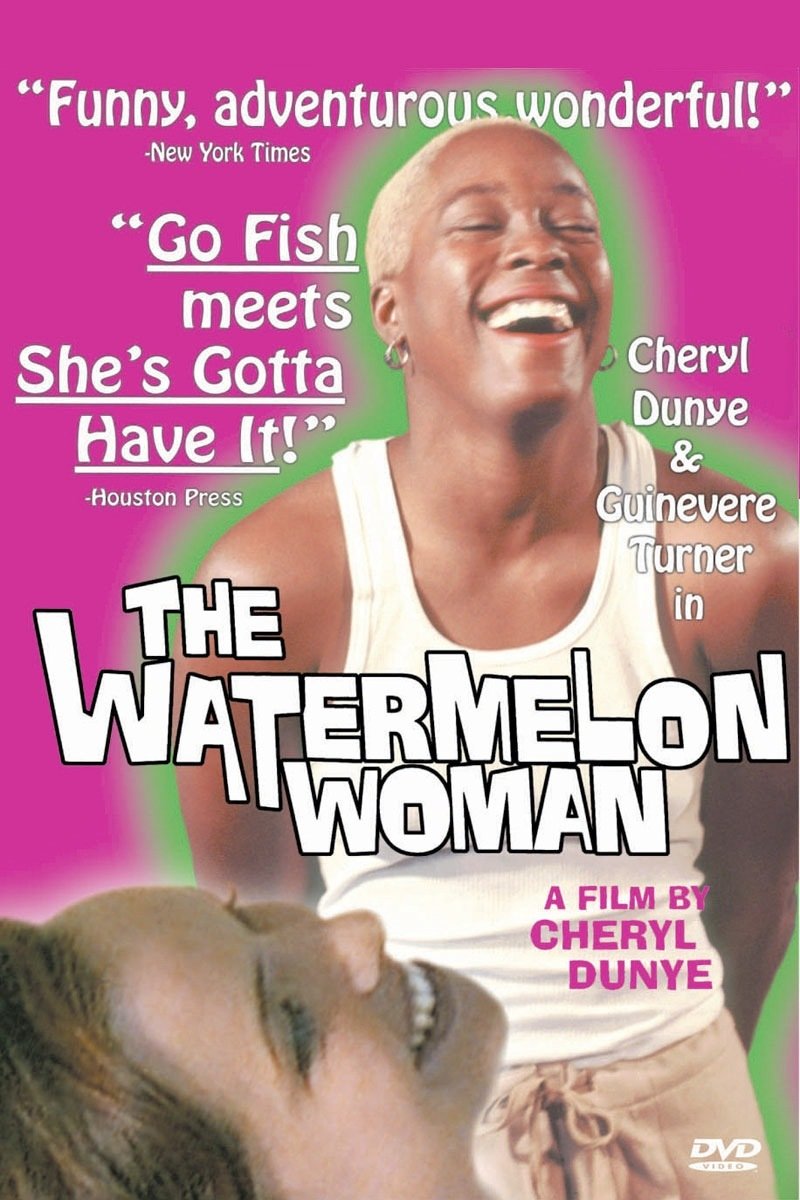
This 1997 film is an autobiographical mock-umentary in which filmmaker Cheryl Dunye stars as “Cheryl,” more or less herself: a young Black lesbian working in a video store with her buddy Tamara, and working as well on a film project which documents her research into the identity of a historic Black female actor known in credits only as “the Watermelon Woman.” This actor played the “mammy” or kitchen/maid/”help” roles that were most of the available work for Black women of her time, the 1930s. Cheryl learns that this woman luckily lived in Philadelphia, where Cheryl also lives; she finds people who knew her; the research goes fairly well. At the same time, Cheryl meets and begins a romance with Diana – who is white, which causes friction with Tamara. Two plotlines, then: finding the Watermelon Woman, and navigating romance and relationships across race lines.

On the one hand, as some testy reviewers have pointed out, the script can be a little stilted, and the acting falters; a few lines are fumbled, and I wish they’d reshot those scenes. The research plotline, in particular, is overly simplistic: two friends drive from Philly to New York to get into a special lesbian archive (acronym C.L.I.T.) and are in and out in five minutes! The research is too easy, too quick. But, it’s all in service of a message, right? The film is all-around dated – but it’s over 20 years old, so, fair enough. Those reviewers who criticized jumpy camerawork just missed the message, though: it’s presented as hand-shot by relative amateurs, you guys. Remember Blair Witch Project?

On the other hand, this project is sweet, heartfelt, and in pursuit of the kinds of social work I’m absolutely behind. It was funny, and earnest. I kind of loved it.

Just before closing credits, the screen reads: “Sometimes you have to create your own history. The Watermelon Woman is fiction. Cheryl Dunye, 1996.” IMDB quotes her further: “The Watermelon Woman came from the real lack of any information about the lesbian and film history of African-American women. Since it wasn’t happening, I invented it.” In other words, the outlines of this story may well be true, but in the absence of even a sketchy “watermelon woman” to investigate, Dunye has allowed a fictional one to stand in for those lost to history. I dig this way of dealing with absence.

Poo-poo to the crabby critics. An imperfect but fine film.


Rating: 6 photographs.

Life Undercover: Coming of Age in the CIA by Amaryllis Fox

This memoir of a talented young woman’s CIA career is that rare combination: enthralling and gorgeously written.

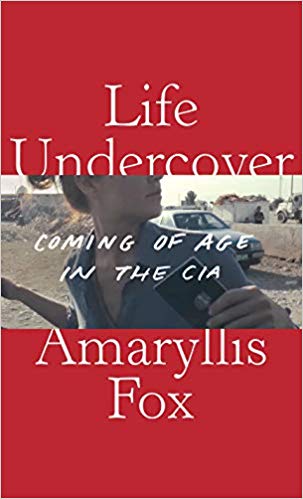
Amaryllis Fox served in the Central Intelligence Agency for eight years when she was in her 20s, and that experience is the impetus for her memoir, Life Undercover: Coming of Age in the CIA. But its contents are both broader and deeper, beginning with uncertainties encountered in childhood: when a grade school friend is killed by a terrorist’s bomb, Fox’s father offers her an education in current events, to understand what took her friend away. An insightful, curious child, the young Fox makes early observations about her parents’ hidden or inner lives.

These trends persist from high school to college: before starting at Oxford, Fox poses as an acquaintance’s wife, slipping into Burma to record and sneak out a historic interview with an imprisoned democratic leader. Early in her Georgetown master’s program in conflict and terrorism, this high-achieving, daring young woman with international interests attracts the interest of the CIA (not the first intelligence agency to approach her, but the first to appeal). Fox continues to impress in her training within the agency, often winning coveted, extra-dangerous spots ahead of standard career trajectories. She recounts the challenges, from her analyst work through her field work in 16 countries, with absorbing anecdotes.

Although she’s always had an interest in people, motivations and relationships–it’s what makes her so good, a “velvet hammer,” as one senior case officer calls her–Fox shows an increasing concern for the acts she puts on, the roles she must play. A CIA agent pretending to be an arms dealer pretending to be an art dealer, she wonders “which part of me is she and which part of me is me. Would I be able to make the same impact if I lived life in my true skin?” It is in part this worry about identity that finally leads her out of the agency–that, and the birth of her daughter, in her second marriage since entering her dangerous line of work.

One expects a CIA memoir to be thrilling; this one is positively riveting. But in addition, Fox’s writing is surprisingly lovely, lines often ringing like poetry. “It’s a strange place to find a man who aspires to deal in death, what with the music drifting from the park as the day goes to gloaming and the laughter issuing from pretty, wine-stained mouths along the riverbank.” “My waking self passes me one more note that night…. One of those memories so deeply packed away that I have to unfold its sepia edges gently, in case they turn to dust in my hands.”

Life Undercover is an astonishing book. Readers interested in the high adventure of tradecraft will certainly be satisfied, but Fox offers as well nuanced and sensitive perspectives on international politics, and humanizing views of nuclear arms dealers and terrorists. Her subtle, lyric prose elevates this memoir beyond its action-packed subject matter, highlighting instead its true focus: the breadth and beauty of humanity.


This review originally ran in the September 6, 2019 issue of Shelf Awareness for the Book Trade. To subscribe, click here.


Rating: 8 carbombs.

From the Shelf: “Memoir: Commonalities in Differences”

This column ran on October 22, 2019 in Shelf Awareness for Readers.

I love reading: stories, novels, poetry, magazine articles, listicles, all sorts of things. But the genre that strikes closest to my heart is memoir. I love finding commonalities among differences, noting the ways we’re all tied together.

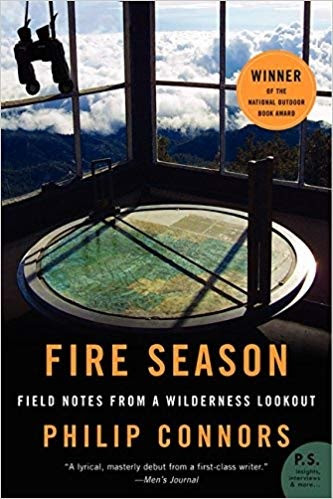
In The Wild Boy (Atria, $16.99), Paolo Cognetti recounts the year, at age 30, in which he returned to the Italian Alps with a sense of yearning for something earlier, simpler, purer. In these circumstances and in its literary cast, Cognetti’s memoir recalls Phillip Connors’s transcendent Fire Season (Ecco, $14.99), about a summer spent working as fire lookout in New Mexico’s Gila National Forest. Connors’s slim, moving book considers the history of fire management, family ties, solitude and so much more. That season became a career for Connors, and readers can follow his lovely, lyric writing, tender storytelling and heartbreak for the natural world in his sequel, A Song for the River (Cinco Puntos, $16.95).

Following numerous essays and novels (Confessions of a Recovering Environmentalist, The Wake, Beast [all Graywolf, $16]), Paul Kingsnorth offers a vulnerable core of himself in Savage Gods (Two Dollar Radio, $14.99), a memoir in part of writer’s block and in part of the more general frustration, stagnation and despair brought about by years of fighting for the Earth and her nonhuman inhabitants. Only Kingsnorth could express anguish so beautifully–in the midst of a claimed inability to write.

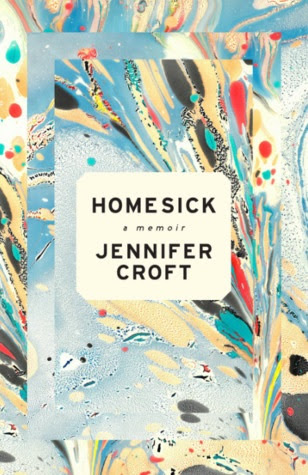
Jennifer Croft’s Homesick (Unnamed Press, $28) is a stunning, layered memoir, with photos, that reveals a passionate fascination with language as well as the story of two sisters, their devotion and devastation. It is a stylistic masterpiece, a narrative puzzle and an intelligent book to get lost in. In its elegiac consideration of family, it is cousin to fine work like Kelly Grey Carlisle’s We Are All Shipwrecks (Sourcebooks, $15.99) and Jeannie Vanasco’s The Glass Eye (Tin House, $15.95).

Good News by Edward Abbey

It has been too long since I got into some Ed Abbey. Good News follows The Brave Cowboy, in that it spends a little more time with old Jack Burns. This novel takes place in and around Phoenix, in a near future when political, economic, and other social systems have collapsed, leaving bands of people and individuals to fend for themselves. In “the city,” that takes the form of an army run by a nasty fascist leader known as The Chief. Guess how Jack Burns and his friends feel about this.

In the opening pages, Burns is accompanied by a Harvard-educated Hopi shaman named Sam. They will join up with a young man named Art, angry over the murder of his family and theft of their land (a la Fire on the Mountain), and eventually a beautiful barmaid. In the city, a small band of guerrilla resistance fighters, apparently largely made up of liberals from the university in town, harasses The Chief’s forces. It’s a very good-versus-evil story, without much interest in nuance. In classic Abbey style, the good guys indulge in a little fun sex and lots of good-natured shit-talking.

Some have called this a science-fiction novel, but I don’t agree. It’s set in the future (call it a not-too-distant future when this book was published in 1980; it feels quite like near future now, to some of us), but that does not sci-fi make. There’s no made-up technology to speak of. No, I’d call this a wacky Abbey satirical Western, maybe a bit picaresque. It speaks in absolutes. I was especially captivated by a four-and-a-half-page monologue by a Captain in The Chief’s army, rhapsodizing the past world she calls “the golden age.” Electricity, cars, neon signs, travel, sports, traffic, food, wine, a pill for everything, gadgets and televisions everywhere you looked… “You could drive your car anywhere. Anywhere! We had drive-in movies, drive-in banks, drive-in liquor stores, drive-in eateries, yes, my dear, eateries, charming term, we had eateries galore, people were always eating, eating, eating, oh it was gorgeous… the quickie marriage and the quickie divorce… there was always another partner waiting, by the pool, back at the condominium.” I can just imagine what fun Abbey had writing these pages.

Critics and readers generally agree that this is one of Abbey’s lesser novels. Kirkus panned it, cutely calling it “very small beer.” And I do find it to be a little less thrilling than some of the other very fine work he’s done, but that’s not the same as saying this is not a good book. I was at every point entertained; the pages kept turning; and for those of us who love and laugh along with Abbey, this is classic stuff, easily appreciated. Maybe that reviewer’s feeling that “[Abbey]’s farcical skills show considerable signs of wear and tear” and “the 1960s-ish attitudes have become shufflingly automatic” were sentiments of the moment; and, more likely, that reviewer was not among Abbey’s audience, not a sympathizer. Fair enough. Everything is not for everyone. I did find one reviewer who calls this book his favorite of Abbey’s. To each her own.

For those of us grinning at Abbey’s strange and curmudgeonly values and sense of humor, Good News is a worthwhile piece of the corpus. I was reminded of The Stand, The Walking Dead, and the Dark Tower series (especially as The Chief operates from a Tower that dominates the landscape and serves as symbolic). There’s also a little Escape From New York in the fantastical zaniness. Again, if you’ve bought into Abbey’s world, I absolutely recommend this one – for one thing, don’t you want to know what becomes of Jack Burns?? If you haven’t, give this a try; just don’t take it too seriously. Or maybe take it deathly seriously as a glimpse at our future. Eye of the beholder…


Rating: 7 piano tunes.

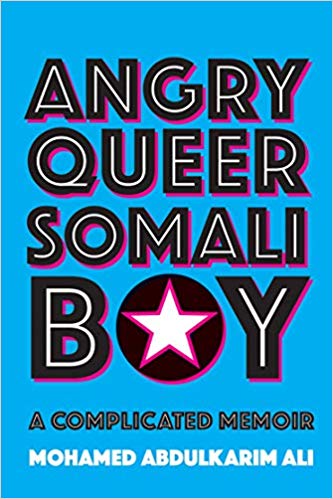
Angry Queer Somali Boy: A Complicated Memoir by Mohamed Abdulkarim Ali

An angry queer Somali boy navigates race, family and sexual discovery in a series of countries before writing this startling, incisive memoir of pain and resilience.

Mohamed Abdulkarim Ali was born in Mogadishu, Somalia, in the mid-1980s; he was stolen away from his home at age four by his father, a stranger to the young boy. With his stepmother and several new siblings, the young Ali lived for a time in the United Arab Emirates and in various cities in the Netherlands. When he was in high school, the disjointed family relocated again to Toronto, where Ali still lives, writing Angry Queer Somali Boy: A Complicated Memoir from a homeless shelter.

The traumas start early, with the national distresses of Somalia represented by Ali’s socialist grandparents and his mostly absent businessman father. “I saw him as a philistine, but he was in tune with the flow of history, unlike his parents.” Ali’s stepmother and stepsisters are violently abusive toward him and toward each other: the genital mutilation the girls endure happens off-screen but nevertheless forms a visceral, horrific scene in a chapter titled “Torn Desert Flowers.”

Ali suffers in the increasingly white countries he is moved to, as an immigrant, foreigner, African–“since the words for African and slave are interchangeable in Arabic, my schoolmates thought hurting me was their holy right.” Bullied at school, he must also deal with discovering his sexuality in an immigrant Muslim family disinclined to accept a gay son. Eventually, his coping mechanisms for these and other difficulties will include addictions to Valium and alcohol. Later, en route to an arranged marriage in Somalia that he will manage to avoid, Ali spends time in London, a place he finds “more alive” than Toronto and where museums are free.

His book is filled with suffering, but Ali avoids self-pity with his matter-of-fact reportorial style and the odd, acerbic interjection. His focus is global as well as personal, as he considers Somali history, colorism within nonwhite communities, the way one marginalized group can abuse another and observed trends in racism, homophobia and xenophobia. Among the pain are poetic, searing images, like the white teacher who hands out sugar cane to accompany a story about Barbados, “to taste the sweetness that had claimed so many black lives…. Armed with the taste of sugar cane, I made my way to the library.”

This is a memoir of raw agony and uncomfortable histories, told in a style alternately lyric and stark. Ali’s life experience has ranged widely, geographically and otherwise, and the stories he shares here are both particular and universal truths. Angry Queer Somali Boy is painful but recommended reading for anyone hoping to look directly at this world.


This review originally ran in the August 30, 2019 issue of Shelf Awareness for the Book Trade. To subscribe, click here.


Rating: 7 sticks.

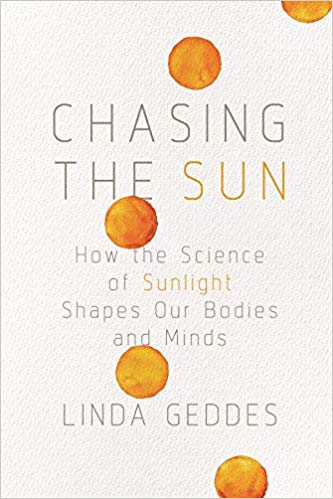
Chasing the Sun: How the Science of Sunlight Shapes Our Bodies and Minds by Linda Geddes

This broad study of the sun’s power over humankind, even in an age of electric lights and bright screens, is both absorbing and potentially life-changing.

Linda Geddes (Bumpology) illuminates the importance of one singular star in our human lives with Chasing the Sun: How the Science of Sunlight Shapes Our Bodies and Minds. The sun is life: allowing photosynthesis, warming the earth, providing solar power–it’s no wonder humans have long worshipped it. We have “assimilated starlight into the very fabric of our beings.”

People have resorted to the sun for medical purposes since early times, as well, and it is health and wellbeing that concerns Geddes in this lively, enlightening study. Circadian rhythms, her research reveals, are vital to many aspects of human life, governing blood pressure, body temperature, alertness, immune reactions, sleep cycles and quality and much more. “Almost half of our genes are under circadian control, including ones associated with every major illness investigated so far–including cancer, Alzheimer’s disease, type 2 diabetes, coronary artery disease, schizophrenia and obesity.” Shift work has recently been recognized as a probable carcinogen. In other words, the importance of sunlight to human existence can scarcely be overstated.

For this thoroughly researched investigation, Geddes consults history, international medicine, chronobiologists and NASA. She’s learned we get far too much artificial light and too brightly at night, while daytime interior lighting in most homes and offices is not nearly bright enough to simulate the sun’s power over our bodies. She also outlines light therapies for mental health issues, as well as for tuberculosis, and the special struggles and successes of populations at high latitudes, like Iceland. She speaks with fascinating people, like the man with non-24-hour sleep-wake disorder and the woman whose grandmother stuck to a strict meal schedule well into her 90s, and she visits the German “Chronocity” of Bad Kissingen, which advertises itself as “a place where internal time is as important as external time, and sleep is sacrosanct.”

While helpful to those interested in seasonal affective disorder or jet lag, this journey to the sun and back will certainly expose any reader to new concerns and marvels as well. Chasing the Sun offers many sobering lessons (sunlight and sleep cycles are life-and-death issues) and helpful tips (the utility of melatonin and vitamin D, and the importance of putting down that smartphone at least 30 minutes before bedtime). Geddes’s hopes for using what she’s learned, however, lean toward technological advances, not a return to older ways. This is also a riveting read, filled with characters, places, anecdotes and histories sure to fascinate. Geddes brings a sense of wonder to her work that is infectious, and makes scientific and medical concepts easy to understand through simple, serviceable prose. Caution: Chasing the Sun may inspire readers to try eating by candlelight and waking with the sun.


This review originally ran in the August 27, 2019 issue of Shelf Awareness for the Book Trade. To subscribe, click here.


Rating: 7 excited submariners.

movie: The North Star (1943)

By Source, Fair use, Link

Another quick movie review: I’ve had this one in a queue for a long time. Lillian Hellman wrote the screenplay for this drama about a Nazi attack on a Ukrainian collective farm, where the locals rather romantically undertake to defend their land and resist the greater power at whatever cost. Wikipedia says “the film was an unabashedly pro-Soviet propaganda film at the height of the war,” and they are not wrong. Romantic, yes; propaganda, yes; and yet it’s neatly done and who doesn’t sympathize with romantic guerrilla resistance to Nazis?? I certainly do, and I enjoyed this movie, found it heartwrenching even as I saw its machinery working to just that effect.

[In the 1950s, the House Un-American Activities Committee took exception, and the film was re-cut to remove the idealized portrayal of Soviet collective farms, and to include references to the Hungarian Uprising of 1956.]

Teenage romance, children and pets, a principled stand taken by an aging doctor, homegrown guerrilla tactics, hometown pride, fraternal bickerings set aside in the face of larger enemies – I say The North Star has it all. I was impressed that this one from all the way back in 1943 was available for free on Amazon Prime (Amazon is evil but here we are). Go check it out.


Rating: 7 guns.