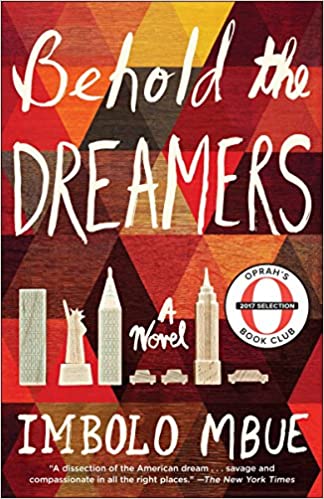
Aurora’s End by Amie Kaufman and Jay Kristoff

I am sad to see book 3 of this trilogy go by. Liz, what’s next?

With Aurora Rising, we met our cast of wacky characters, and saw them just begin to fit together. With Aurora Burning, we saw those bonds tighten even as the group began to be split apart by circumstance. Aurora’s End then brings all the dramas and plot conflicts, large and small, to their conclusions. This installment got still more convoluted in its science, and hit that note that sci-fi sometimes does for me, where it made me glaze over a bit: I just let the science go by and trust that it makes sense. It was definitely fun to mix up some timelines, I’ll say that. I am sorry to see it all come to an end, obviously, but I feel really good about where Kaufman and Kristoff left my new friends. There was some trickery right at the very end, but they brought it all around. And they are masterful worldbuilders; I’m going to look into their other work and see if there’s more there for me. This trilogy was such a treat as absorbing escapism, and I really needed that.


Rating: 8 gremps.

author interview: Juneau Black

Following my review of Shady Hollow, here’s Juneau Black: ‘It’ll Be Handled.’


Juneau Black is the pen name of authors Jocelyn Cole and Sharon Nagel. They share a love of excellent bookshops, fine cheeses and good murders (in fictional form only). Though they grew up separately, if you ask either of them a question about their childhood, you are likely to get the same answer. Shady Hollow (out now from Vintage Crime/Black Lizard, originally published in 2015 by Hammer & Birch), is the first in their series by the same name; the next two installments will follow close on its heels: Cold Clay (March 2022) and Mirror Lake (April 2022).

Why the pen name?
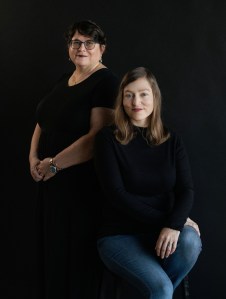
Juneau Black, aka Jocelyn Cole (l.) and Sharon Nagel

Sharon Nagel: We were both booksellers for a long time, and the problem with two-author books is that they inevitably get shelved in the wrong place.

Jocelyn Cole: The pseudonym Juneau Black is a nod to Milwaukee and the bookstore where we both spent so much time. Juneau is Solomon Juneau, who is one of the founders of the city, and Black is Schwartz [in German, schwarz means black]–we both worked at Harry W. Schwartz Bookshops for years.

What’s the origin story?

SN: After Schwartz Bookshops closed and [its flagship store] became Boswell Books, on a slow night, we were pricing finger puppets. They were all these adorable little woodland creatures, and so we decided to give them names and occupations, and we said what if they lived here and did this, and so we wrote a story about them.

JC: And because NaNoWriMo was coming up, we had this idea: What if we just trade off days and see if we could get a novel out of it?

How do two people together write a novel?

JC: I imagine it’s different for every team. We were physically at the same bookshop and talking together every day for the first book, so we just sent a Word file back and forth. I would write 1,667 words, because that’s what NaNoWriMo suggests you do, send the file to Sharon, and then she’d write the next day and e-mail it back, until we had what very roughly approximated a draft of a novel.

SN: We seem to have the same snarky sense of humor, so it didn’t seem like two separate people. It melded pretty well.

JC: There was definitely an editing process after, to glue things together. But I think it speaks to the fact that we are on the same wavelength that when I go back now and read passages from Shady Hollow, I have no idea who wrote what.

SN: No idea.

JC: I do freelance editing, so that was already a little bit in my wheelhouse. I edited the first pass, but we did then hire an editor, to be an objective voice and be sure it was really clean.

And now you’re moving from an independent publisher [Hammer & Birch] to a traditional one.

SN: It’s a simple thing. All you have to do is work in bookstores for 10 years and meet people. No, actually we were very fortunate to have a wonderful publishing rep for Penguin Random House who I’ve known for many years, and one day he said, “Hey, I’d like to show your work to my bosses,” and we were like, “Ha, go ahead!” And fortunately for us they were interested.

JC: It’s been a pretty smooth process, because the books were already written and published. We weren’t on the hook to complete a novel after making a deal. It was just getting more polished, copyediting again for house style and cleaning up any last remaining edits. And beautiful new covers! It’s been really nice to see the difference between doing everything ourselves and having a team, which is just amazing.

And they’re publishing all three books!

JC: I think they were excited that they could see what was there already. They weren’t just buying an idea; they had read all three books and liked them.

What are the challenges of animal characters versus human ones?

SN: Not so much in the writing, because we’re fully invested in the idea of our animals. But when you handsell it to a person and try to explain what it is, you either get immediate enchantment or you get the look that says… I don’t want any part of this. Not everybody is really into it, but those that are, are heavily into it.

JC: A lot of people do assume it’s for kids, because it’s animals, which I understand, but on the other hand it’s also murder. They’re very anthropomorphic animals, so we’re writing them just as we would any character. You occasionally stumble over a word like handkerchief in draft–oh, they don’t have hands, they wouldn’t have that word. You realize certain terms are so human-centric; you have to work around that.

How did your bookseller careers help you write a successful novel?

SN: I think we can appreciate how important indie bookstores are to a writer’s journey. When booksellers love a book, they will sell it to anyone who will stand still long enough. Our biggest cheerleader is Daniel Goldin, the owner of Boswell Books, and we always said, if we just had Daniels all over the country… and now we sort of do. Daniel tirelessly promotes us and other writers–it’s what he does all the time, and he does it so well.

JC: It comes from our history of being booksellers and loving books. We’ve both been through library school. When you’re among books for so long, you can see what appeals to people, what takes off, what resonates. When I talk about the books, I often use the high-concept explanations: it’s like Knives Out meets Animal Crossing. It’s like Redwall meets Agatha Christie. We have all these references that people understand because they’re all book people.

What do you love about the world of Shady Hollow?

SN: I like the level of comfort in the surroundings. You feel at home; you know you can go down to Joe’s Mug and have a cup of coffee. The murders are there, and they matter, but they’re secondary to the characters and the atmosphere.

JC: The fact that it is animals kind of allows people to let go and just relax and enjoy it. You’re already accepting this level of fantasy and you can just roll with it. That’s very appealing to people, particularly in pandemic times, that there is this little world where the weather is usually beautiful; there’s always coffee. There’s an occasional murder, but it’s fine.

SN: It’ll be handled.


This interview originally ran in the January 28, 2022 issue of Shelf Awareness for Readers. To subscribe, click here, and you’ll receive five issues per week of book reviews and other bookish news.

Shady Hollow by Juneau Black

This whimsical cozy mystery set in a town of animal characters will tickle and amuse alongside its whodunit plot.

Previously published in 2015 by Hammer & Birch, Shady Hollow is the first in a series of cozy mysteries starring sweet, lovable animal characters. Juneau Black (pen name of a two-author team) will please lovers of both woodland creatures and whodunits with this gentle, plot-twisting exploration of small-town life.

The community of Shady Hollow is home to a typical cast of amiable eccentrics, including a gossip-hungry hummingbird; a good-natured, coffee-slinging moose; a timid mouse accountant; and a family of upper-crusty beavers. When a cantankerous toad turns up dead in the mill pond, however, the town’s policebears turn out to be underprepared to investigate, and it falls to local reporter Vera Vixen to uncover the murderer. Vera the fox is “an old-school journalist, despite her youth,” and though new to town, her friendship with Lenore Lee (a wise raven well-read in murder and, naturally, owner of Nevermore Books) provides a solid base for her inquiries. The more she learns about the inhabitants of Shady Hollow, however, the more complicated the case becomes, and Vera herself may be in danger.

With its charming and affable characters, Shady Hollow nonetheless serves up plenty of intrigue and danger, ending with teasing hints of what’s to come in the next installment (Cold Clay is slated for March 2022). The nonhuman cast offers an extra note of humor: accused of cynicism, Lenore responds, “I’m a raven…. If you want sunshine and melodies, go find a swallow.” This captivating tale offers sunshine and murder in perfect proportion to keep readers entertained and engrossed in deceptively placid Shady Hollow.


This review originally ran in the January 28, 2022 issue of Shelf Awareness for Readers. To subscribe, click here, and you’ll receive five issues per week of book reviews and other bookish news.


Rating: 7 cups of coffee.

Come back Friday for my interview with Juneau Black!

The Icarus Girl by Helen Oyeyemi

This one was more difficult for me than Gingerbread was. Still intriguing, but more mysterious, more opaque. When we meet her, Jessamy Harrison, age 8, lives in England with her white English father and her black Nigerian mother. She struggles socially and in school, and feels most secure hiding in the dark. When her family moves for a time to Nigeria, to live with her mother’s father and extended family there, she makes her first friend: a girl apparently her own age, hiding out on the premises of the family compound. TillyTilly is an enigma, and insists that Jess ask no questions. When Jess’s family returns to England, TillyTilly finds a way to follow, and this is when things get weird.

I’ve seen The Icarus Girl labelled as a horror novel, which makes a certain amount of sense, but it doesn’t feel like its primary goal is to frighten me – frightening though it is, by the end. Instead, it feels chiefly concerned with Jessamy’s identity and her difficulty finding a home in a world that doesn’t make sense to her. She is scared most of the time, but mostly without reason, and more or less knows this doesn’t make sense. She is bullied at school, and reacts in rages or tantrums. She’s never had a friend, and neither of her parents knows how to relate to her. Therefore she’s ripe for the affections of a (perhaps equally strange) friend – her first ever! – to hold great influence.

There’s a fair amount of Yoruba culture and language baked into the novel’s themes. There are a lot of pairings and contrasts, first in Jessamy’s dual English/Nigerian heritage and racial/ethnic makeup, and the story’s back-and-forth travel between the two locations. I don’t want to give anything else away, but doubles are important.

I found Gingerbread more accessible, and more easy to enjoy. Certainly, this one offered more horror, and significantly less whimsy and humor. It kept my attention, though, and I have the distinct impression that there’s more going on in its layers than I’m equipped to grasp. Impressive? Yes.

I’m super curious about Oyeyemi’s other work.


Rating: 7 books.

Behold the Dreamers by Imbolo Mbue

This book found its way onto my bookshelf and lived there a while before I picked it up, at which point I didn’t even know what it was about. I purposefully avoided even flipping it over to read the back-cover blurbs and went in thoroughly blind. Early on, it’s about a family of immigrants from Cameroon to New York City, beginning to make their way there, and I began to have a bad feeling – for a novel to work, there has to be conflict, right? I wanted things to be easy for this family (a couple and their young son), but I just knew (because of how stories work) that something had to go wrong. I was tempted to flip the book over, but I resisted, and I’m really glad they did. That’s going to affect how I write this review: I’m glad I kept my ignorance and experienced the story as an innocent, so to speak, and I want that for you too. I absolutely recommend this book.

If you’re game for just a little more information, here are some observations in white text (highlight to read): The father/husband figure in this story feels very fortunate to get work as a chauffeur for an important figure at Lehman Brothers. Well, that name alone tells us a lot about where the plot turns, doesn’t it. Near the end I found myself strongly reminded of Upton Sinclair’s The Jungle (a book that’s very important to me). There’s a hint there, too. These remarks are only as spoiler-y as the back-cover blurbs, FYI.

I will say that our central characters are Jende and Neni Jonga, the Cameroonian immigrants, and eventually their counterparts, Clark and Cindy Edwards, who are white New Yorkers of great wealth. The two families become somewhat intertwined, and it is to Mbue’s great credit that despite enormous differences, they conflate as well. A Q-and-A with the author at the back of my paperback tells us that Mbue didn’t necessarily set out to do this work, and did not find empathy for the Edwardses easy. It’s not empathy that lets anyone off of any hooks either, though.

It might be said that this is a book about immigration politics (or any number of other capital-I Issues: capitalism, race and American racism), but I think it’s true – and I think it’s a strength – that it’s about the Jongas first (and secondarily the Edwardses), and about those Issues only because they are the ones that the Jongas live through, if you will.

It’s a beautifully told, absorbing story to get lost in. Each character has a distinctive voice, and even though none is a saint, they all earn our compassion. Mbue is an impressive writer and I was pleased to spend this time with her characters.


Rating: 8 bacon-wrapped shrimp.

Ocean State by Stewart O’Nan

In this unforgettable novel–disturbing, gorgeously written and poignant–working-class women and girls are pushed to extremes.

“When I was in eighth grade my sister helped kill another girl. She was in love, my mother said, like it was an excuse.” So opens Ocean State by Stewart O’Nan (West of Sunset; City of Secrets; The Odds: A Love Story). If this were a murder mystery, the killer’s identity is immediately known. But it’s not the crime itself that occupies the novel’s spotlight so much as the challenges faced by its four central characters.

They are four women, closely connected but very different. Angel is a popular high school student. Carol, her mother, is a nurse and stressed-out single mother, a bit preoccupied by her dating woes. Marie is Angel’s younger sister, forever watching other people’s lives as if they were movies and waiting for hers to begin. Birdy is Angel’s classmate. They both want the same boy, a rich kid who inevitably will leave their small town behind. Angel is his girlfriend of three years, Birdy his secret. The way these lives converge will change all of them forever. O’Nan presents the four women’s perspectives in turn, so that readers watch them build and crescendo to a violent crime and then tumble through its aftermath. The events are horrifying, and not only in terms of that final violence, the writing is lovely, glimmering. O’Nan evokes Ocean State‘s setting, the blue-collar Rhode Island town of Ashaway, with equal care: perhaps unbeautiful, but rendered with detail and tenderness.

O’Nan’s greatest accomplishment is in the compassionate portrayal of characters who are each guilty of smaller and larger wrongs, but whose motivations, concerns and battles always feel of real concern. Marie desperately wants to connect, with anyone. Carol wants the best for her daughters but can scarcely keep her head above water. Birdy has strong family ties but has succumbed to a dangerous infatuation. Angel is gripped by a version of love that contains a large dose of possessive rage. Interestingly, the boy that these girls focus on does not have his perspective revealed; readers meet him only as Birdy and Angel see him.

Because of how the book begins, readers always see the crime coming. Somehow, this does not reduce the suspense, as tension builds toward the unavoidable climax. Ocean State is a compelling, propulsive read: easy to inhale but difficult in some ways to stomach. This is a story less about love than about obsession and family connections and disconnections, and about the devastations of hardscrabble lives. The ugly turns beautiful in O’Nan’s scintillating prose, and his four main characters will linger with readers long after their stories end.


This review originally ran in the January 21, 2022 issue of Shelf Awareness for the Book Trade. To subscribe, click here.


Rating: 7 coffee cabinets.

The Drowning Boy’s Guide to Water by Cameron Barnett

I bought this book when Barnett visited my MFA program as a guest writer and lecturer a few years ago, and as I read these poems I heard them in his voice, which I remember as unassuming and powerful. They share a humility, an honest, open, vulnerable, questioning attitude. Their concern is not always about race, and in fact the poet (or the persona?) often resists or resents that that should be his expected work – which is fair – but there is a frequent question of whether there’s a right way to be Black, and some very strong writing in indignation and in rage at what it is to be Black in this country. “Post-Racial America: A Pop Quiz” is fiery. Several poems for Emmett Till are extraordinary and still just what we need. In “Notes on Cameron Barnett” (a bio, as it were, in poem form!), he writes: “Another black poet told me he liked my poem / for Emmett Till despite His story being overdone / For weeks I fantasized about switching out / the murderers’ names and putting in his.” Whew. I also appreciated the water theme throughout (as in the title, which is also the title of an astonishing, perfect poem), which can do so much good, diverse work. “Muriatic” does that strong, water-and-fire work, and then is immediately followed by “Bishop on a Slant,” which is about family. Likewise, “Firefly” honors the imperfect father-son relationship, finishing with this wisdom: “I want to take everything you think you taught me and teach you / what I have learned.”

I was also gratified to find again Barnett’s memorable contribution to Psalms for Mother Emanuel.

The book is structured in three parts, I and III each containing a number of individual poems, while II is marked ‘from The Bones We Lose.’ The design of these sections eludes me, and in general I find these poems harder to respond to than I did Duffy’s, that I reviewed recently. Inarticulate though I may be, there were many moments here that made me stop and think and whose beauty or truth stay with me. I had to move more slowly.

Beautiful.


Rating: 7 word problems.

Pandora’s Jar: Women in the Greek Myths by Natalie Haynes

This classicist’s reconsideration of famous Greek myths from various female perspectives combines cultural and literary criticism, humor and wit.

Classicist Natalie Haynes (The Furies; A Thousand Ships) brings her prodigious expertise to Pandora’s Jar: Women in the Greek Myths, a thorough consideration of the perspectives, reputations and visibility of some of ancient Greece’s most famous female characters. The title refers to the first correction Haynes offers: rather than the mythic Pandora’s box, Pandora in the original Greek opened a jar, which is only the first of several misconceptions. Not that there will ever be an authoritative version: even Homer, Haynes reminds us, drew on earlier sources. Myths “operate in at least two timelines: the one in which they are ostensibly set, and the one in which any particular version is written,” and Haynes has a firm grasp of numerous iterations. In her capable hands, Pandora and others appear as multifaceted, complex characters, even across conflicting accounts. Best of all, despite its impressive depth of research, Pandora’s Jar is never dry, and frequently great fun.

After the opening chapter’s title character, Haynes introduces readers to Jocasta, Helen, Medusa, the Amazons, Clytemnestra, Eurydice, Phaedra, Medea and finally Penelope. Readers unfamiliar with their stories are guided through the relevant versions. These myths involve traumas of marriage, motherhood, rape and betrayal; their themes are serious and unforgiving. Perhaps surprisingly, some of the misogyny and erasure that Pandora, the Amazons, Eurydice and others have experienced have surprisingly modern origins. “Not for the first time, we see that an accurate translation has been sacrificed in the pursuit of making women less alarming (and less impressive) in English than they were in Greek.” Among Haynes’s subjects, “some have been painted as villains (Clytemnestra, Medea), some as victims (Eurydice, Penelope), some have been literally monstered (Medusa),” but each contains depths: “Medusa is–and always has been–the monster who would save us.”

Haynes’s authorial voice is remarkable: expressive, nuanced, impassioned. Her tone is absolutely accessible, even conversational, and often laugh-out-loud hilarious. Haynes (also a stand-up comic) is as well versed in the modern world and its concerns as in the ancients. The book opens with 1981’s Clash of the Titans, and refers to Beyonce and Wonder Woman with the same ease and mastery as it does Homer, Ovid, Euripides, Aristotle, Aeschylus and many more ancients and more recent writers. Haynes’s assessments of the visual arts (from ancient pottery through Renaissance paintings to modern television and movies) offer another dimension in this meticulous study.

The classics are as relevant, subversive and entertaining as ever in this brilliant piece of work. Clever, moving, expert, Pandora’s Jar is a gem, equally for the serious fan or scholar of Greek myth, for the feminist or for the reader simply absorbed by fine storytelling across time and geography.


This review originally ran in the January 18, 2022 issue of Shelf Awareness for the Book Trade. To subscribe, click here.


Rating: 9 gazes.

Aurora Burning by Amie Kaufman & Jay Kristoff

Good thing I got on top of ordering books 2 and 3 in this series; I couldn’t wait long after Aurora Rising, could I! I raced through these 500 pages and I don’t think it’ll be long til I’m in book 3, sadly the last one. Very fine pacing and invisibly-easy-to-read prose make for a lovely indulgent time. I need so much more like this (Liz, keep ’em coming).

Where Aurora Rising offered lots of delightful comedy in between its world-endingly-high stakes, Aurora Burning gets a little more serious. It’s right there in the titles: in book 1, Aurora (and our team, and the plot) were on the upswing, and now we are settling into the action, with increasing temperatures in several senses, and no margin for error. We see the development of one deeply intense romantic relationship, and otherwise a bunch of flirting and sexual tension, because these are just teenagers, folks – something we rarely forget because they behave like teenagers, but also sometimes forget, because they’re carrying the weight of worlds, and it’s really too much for the kids that they are. (Also, I love that everybody just loves [flirts with, has sex with] whomever they please, with little bother over gender. It’s refreshing.) We lose some people (‘people,’ to use the term loosely), and we uncover some damaging secrets. We also gain another sibling: it turns out Kal has a sister, whose personality and values are quite opposed to his own, with several comparisons to the contrasting closeness between twins Ty and Scar. Kal’s sister is the source of pain and anguish, but also some much-needed comic relief.

I don’t want to give too much away, but this middle book of the trilogy ends us in truly dire straits. I’m not sure how long I can hold off on the final installment, Aurora’s End (foreboding, that, although I’ll choose to read it as the end of the series, thank you), although the longer I wait the longer I get to spend in this world before it’s gone…

The Kaufman & Kristoff writing team is outstanding. Pacing and voice are perfect. I disappear into these pages and lose track of the world. I don’t believe I mentioned in my earlier review that there is a fairly sentient, very advanced smartphone-type-devise (a uniglass, here), named Magellan, that has a personality its own and narrates short informational sections as well as speaking to (haranguing) our squad, and this detail is genius. Give me more.


Rating: 8 gifts.

The World’s Wife: Poems by Carol Ann Duffy

I got this title out of Pandora’s Jar (review still forthcoming!), and it’s every bit as good as I’d hoped. These are the women’s stories, from myths and classics and fairy tales, reconfigured. Many of these women are new to their tales, like Mrs. Aesop, Mrs. Sisyphus, Queen Kong, Frau Freud, and Pope Joan. Others already had their own myths before Duffy arrived to rewrite them: Penelope, Demeter, Circe, Salome. The book begins, for example, with “Little Red-Cap,” whose relationship to the Big Bad Wolf takes a different angle. A few of my very favorites are “Mrs. Midas” and “Mrs. Darwin,” although I’m also captivated by Duffy’s Eurydice, who was so relieved at the quiet of the Underworld and so sorry to see that damned Orpheus again. Clever, clever, cynical Eurydice.

I am pretty confident in calling these persona poems: each takes the first-person perspective of a female hero we’ve not heard enough of until now. Each has its charms and its surprises; I have been slow in writing this review over more than a week–unusual, and a bad hole to fall into usually, but they haven’t left the top of my mind in that time. I think Duffy was the perfect author to do this job, the new highlighting of both familiar traits and of delightful surprises. (Guess what body part Frau Freud assigns no fewer than 31 nicknames to in fifteen lines.) These poems are often funny, often fraught and moving, and always lovely. See these images: “a thousand windows, each with its modest peep-show / of boredom or pain, of drama, consolation, remorse.” And these judgments: “The Devil was evil, mad, but I was the Devil’s wife / which made me worse.” What else has Duffy written? I would read more poetry if it all worked like this: easy to access but inviting lots of processing time, deep and rich and wide.


Rating: 8 teeth of the rich.