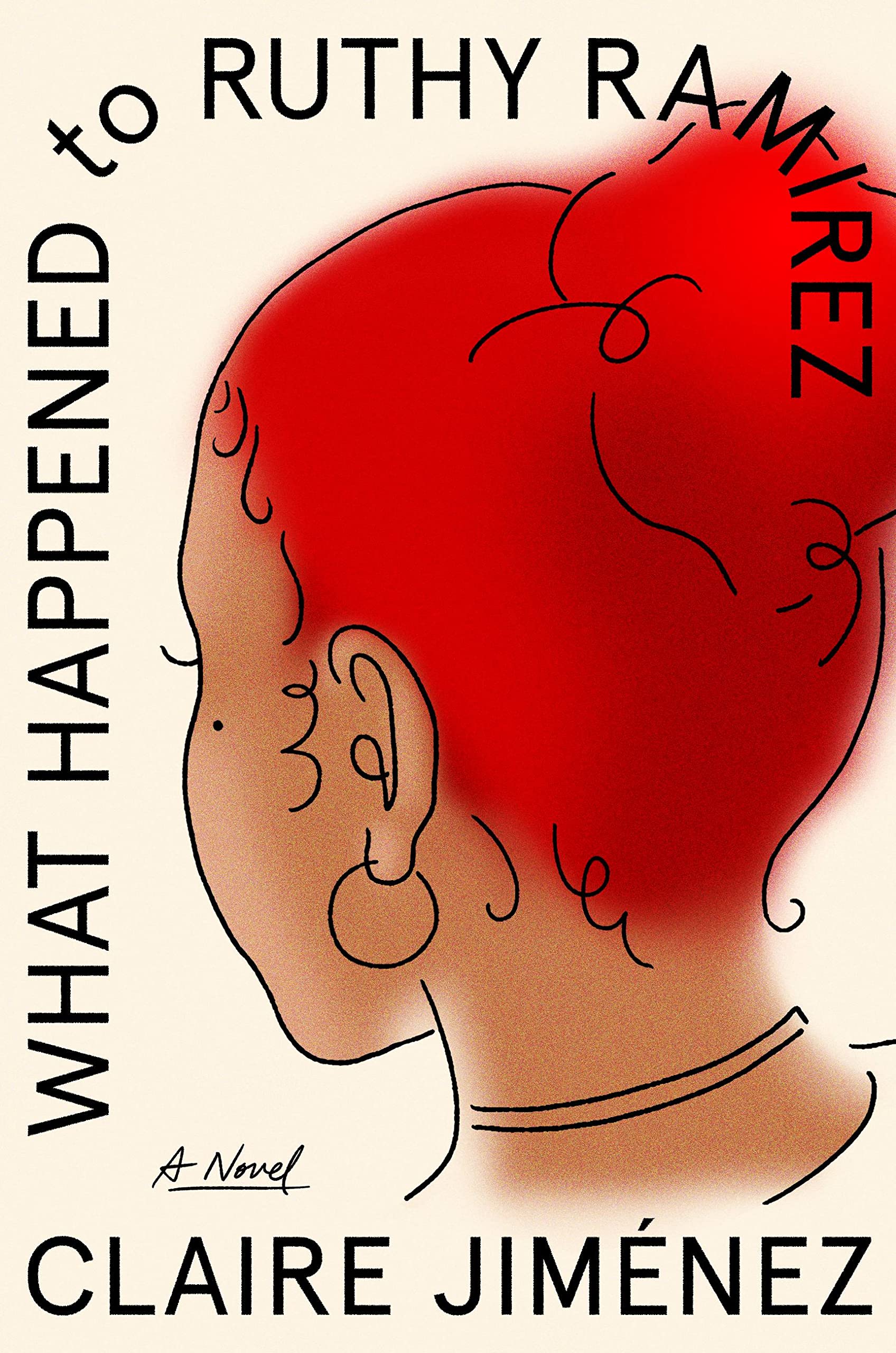
What Happened to Ruthy Ramirez by Claire Jimenez

This debut novel about a family still searching for a long-missing daughter and sister brims with voice, attitude and yearning.

Claire Jimenez’s first novel, What Happened to Ruthy Ramirez, brings to life a close but troubled Puerto Rican family in Staten Island, N.Y., carrying on but rocked by loss. “The five of us seem normal for a while, up until Ruthy turns thirteen and disappears…. Draw my mother sixty-two pounds later. Give her diabetes. Kill my dad. Cut a hole in the middle of the timeline. Eliminate the canvas. Destroy any type of logic. There is no such thing now as a map.” No one ever figured out what happened on the day Ruthy didn’t come home from track practice on the S48 bus as expected.

More than a decade later, Nina, the baby, is “blessed with the brilliant luck of graduating [from college] into the 2008 recession,” the first in her family to attend college but now returned home to live with her mother and work at the mall selling lingerie. Jessica, the eldest, lives with her boyfriend and their baby; she works as a patient care technician at the hospital, harried and tired but proud of her work. Their mother, Dolores, depends on her relationship with God and the church. What Happened to Ruthy Ramirez unfolds in alternating chapters, through the first-person perspectives of these four central characters: Nina, Jessica and Dolores in the late 2000s and the stormy, troubled 13-year-old Ruthy in 1996 when she disappeared. The latter is all attitude: You really want to know what happened to Ruthy Ramirez, she asks? Most people “think they got it all figured out, about who I am and what happened. Whatever, who cares? Not me, I promise you.” She describes the day it happened, the schoolgirl dramas and fights, whose pain appears superficial only from the outside. Years later, her sisters and mother struggle with everyday life and with moving on–until the day Jessica believes she sees Ruthy’s face on a sordid reality TV show: the woman shares the missing girl’s beauty mark, her laugh, the toss of her head, a couple of key phrases. And the remaining Ramirez family is off on a mission to recover their lost member.

One of Jimenez’s greatest achievements lies in the individual voices of her narrators, crackling with life, wit, humor, pain and personality. Jessica and Nina wrestle with the complicated love they feel for their family; Dolores rants in a well-meaning but frustrated one-sided conversation with her God; Ruthy oozes teenaged bravado and angst. Readers will be tugged by hope and despair alongside these true-to-life characters. In the end, What Happened to Ruthy Ramirez offers observations about race, class, family and the fate of missing girls beyond its title character.


This review originally ran in the February 7, 2023 issue of Shelf Awareness for the Book Trade. To subscribe, click here.


Rating: 7 grilled cheese sandwiches from the school cafeteria.

Deadly Deceit by Mari Hannah

Micro-review today because it’s what I can spare for this title at this time, friends. Thanks for your patience.

On the one hand: I’m glad to be getting a bit deeper into DCI Kate Daniels’s personal (read: love) life. I find her a bit frustrating! but what else is new with our hardboiled detective types. She’s got baggage and lack of closure with an ex (who is also a coworker, remember), and a possible new beginning with a newer acquaintance who we met in an earlier book (who was, briefly, a person of interest in a case). I’m glad for this new sideplot, because that’s part of what I enjoy about mystery series in general: personalities and personal lives.

On the other hand, I found some frustrations this go-round with writing, specifically the overuse of ‘stuff’ and ‘things’ when more interesting nouns would have been appreciated. (This is something I get onto my students about. Maybe it’s just that I’m in-semester now.) I’m giving some grace because I think it was in part intended to be about voice – this was most noticeable in chapters in the close-third-person belonging to one or two characters in particular. Still bothered me a bit. If I’m paying attention to the writing, you’ve lost me for the story, however briefly.

I’m still committed to the series; I care about the people, and am looking forward to book four. But this one was not an unqualified success.


Rating: 7 wigs.

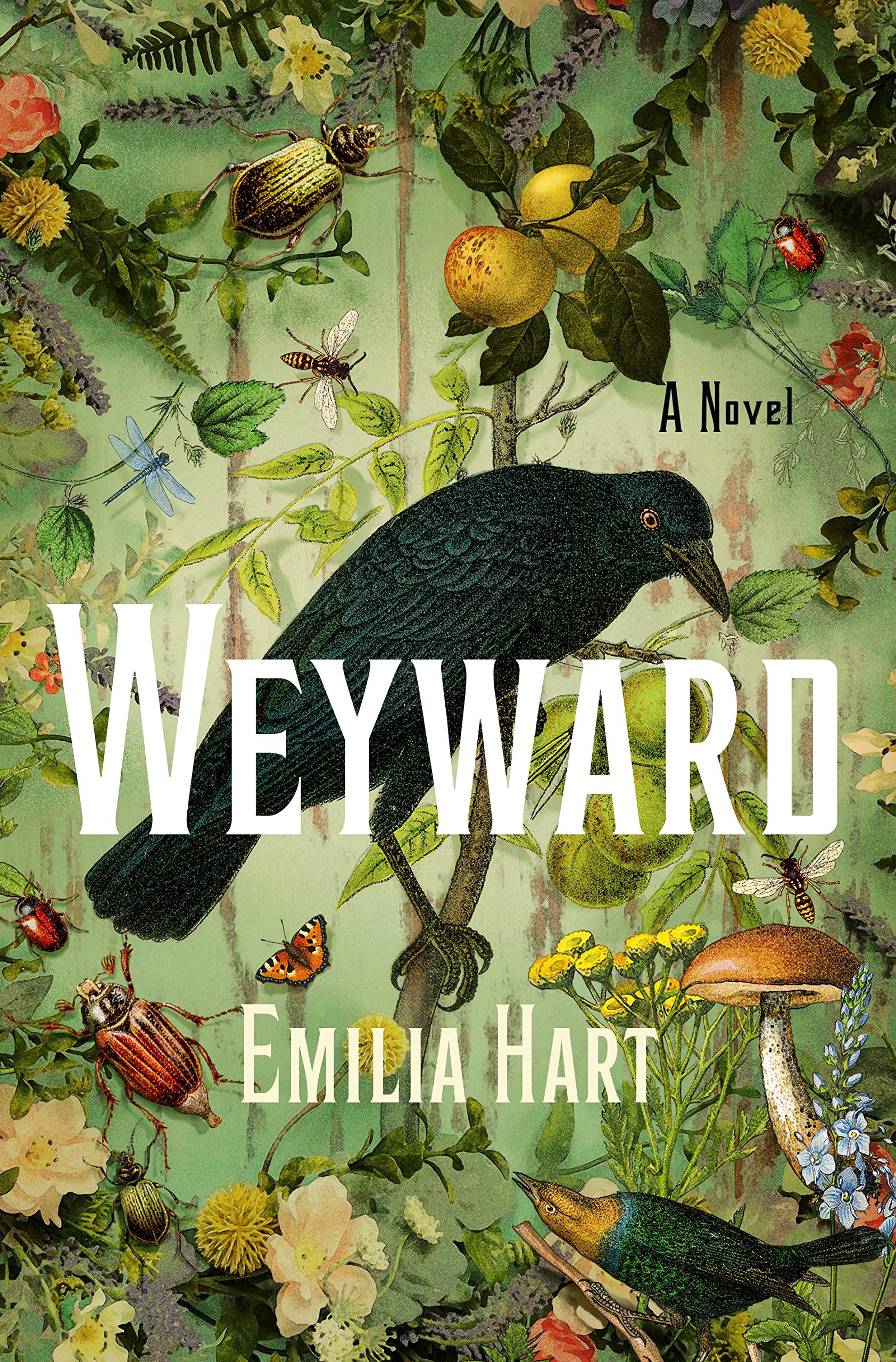
Weyward by Emilia Hart

The stories of three imperiled protagonists across centuries connect in this suspenseful, magical debut about the power of women and the natural world.

Emilia Hart’s first novel, Weyward, glows and glimmers with hidden powers, thrills and danger, a close connection with nature and between women across time. Three distinct stories eventually link to form a larger tale about strength, resilience and love.

Altha goes on trial for witchcraft in the English countryside in 1619. In 2019 London, Kate attempts to escape an abusive partner while harboring a significant secret. And at a grand estate in 1942, teenaged Violet struggles against the limitations of her father’s strict household rules, consumed by an unladylike love for trees, insects and other natural wonders. In alternating chapters, each of these stories deepens. Altha, the daughter of a healer, tries her best to follow in her beloved late mother’s footsteps, helping her neighbors and causing no harm, while dodging the increasingly avid witch-hunters of her time. Locked in a Lancaster dungeon, Altha does what she can to protect herself. Kate flees the city undetected, holing up in a cottage inherited from a great-aunt she hardly knew, but her safety there is tenuous as she plans for an uncertain future. Violet is a tenacious and spirited 16-year-old, but powerless as she is imprisoned in her father’s world; she dreams of becoming a biologist or an entomologist, but cannot even visit the local village. Men in the Weyward world, in all three timelines, are sources of power and abuse, not kindness, but Violet’s loyal brother forms a notable exception.

Each woman must learn about and come to terms with her powers and her connections to the natural world. Violet is passionately entwined with a particular beech tree, with damselflies and weasels, but no one will even tell her her mother’s name, let alone the family history that she senses casts a shadow on her life. Having lost her father at a young age in a curious accident, Kate lives in fear of the birds and insects that most call to her. Altha is reluctant to exercise her full powers, having promised her mother she would be careful. But, she says, “I had begun to suspect that nature, to us, was as much a life force as the very air we breathed.”

Hart expertly weaves together disparate but connected storylines, with leaves and butterfly cocoons and a mountain stream. Her protagonists are strong, but hard beset by the forces around them, even across centuries. Her prose sparkles with wonder and simmers with danger. Weyward‘s atmosphere is compelling, as each plot thread offers suspense. With a momentum of its own, this debut draws readers inexorably to a glorious conclusion that celebrates connectedness and the power of women and nature.


This review originally ran in the February 2, 2023 issue of Shelf Awareness for the Book Trade. To subscribe, click here.


Rating: 7 feathers.

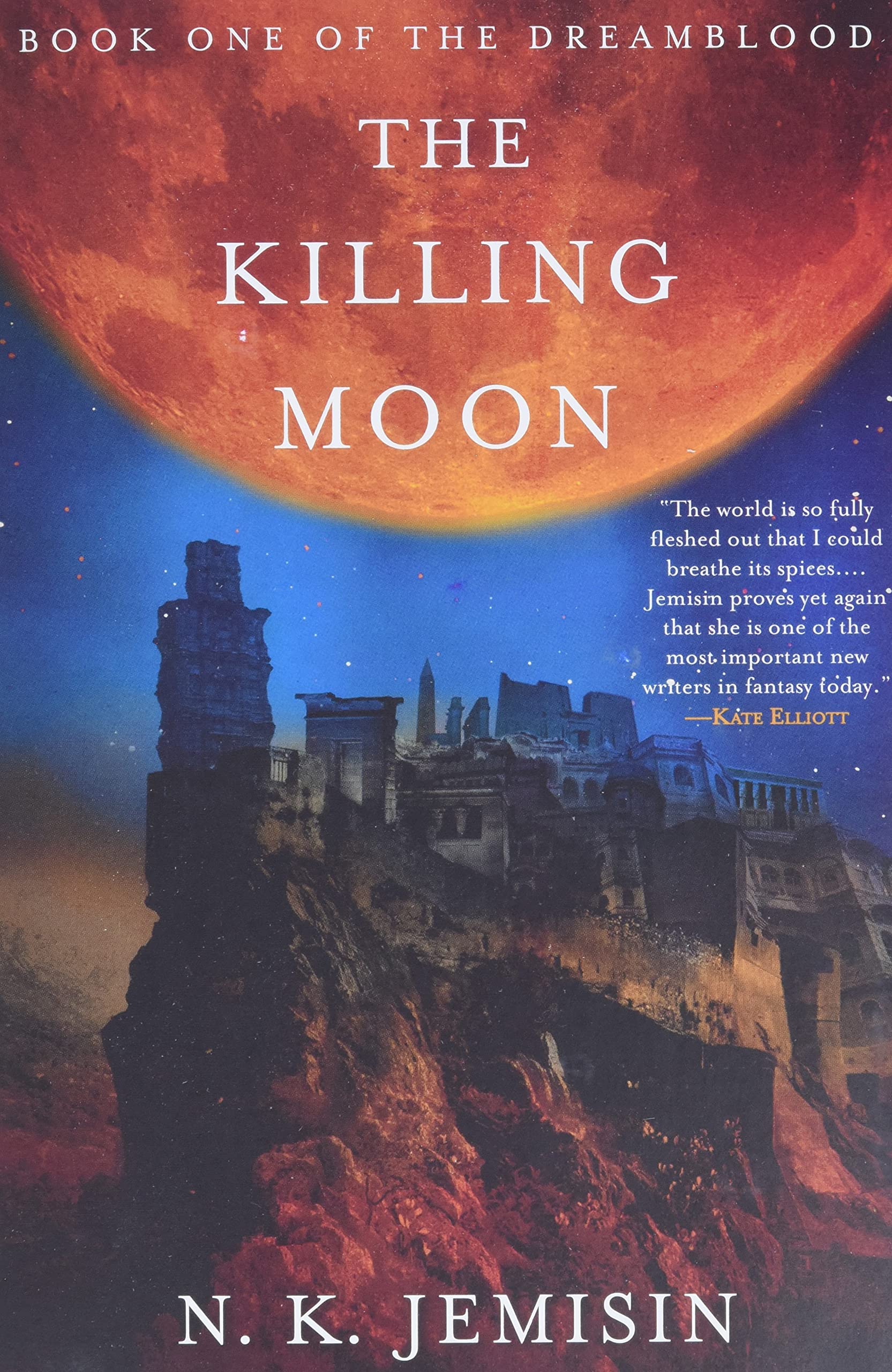
The Killing Moon by N.K. Jemisin

First in a duology by Jemisin who we know I love. Like the Broken Earth and Inheritance trilogies, this is set in a world that in some ways resembles our own and in some ways departs from it. We deal with a continent and, mostly, two city-states upon it. One is Gujaareh, where peace is the highest virtue and priority and the people worship the goddess Hananja above all; she is goddess of dreams, death and the afterlife. Gujaareen priests follow four paths, and we spend most of our time with one of them: the Gatherers, whose job it is to peacefully “gather” the final tithe of dreams from a person at the end of their life. (They share this dream tithe with their temple, and it is used by Sharers to heal and soothe other people in a sort of public health service.) In other cultures, it might also be said that Gatherers “kill” people. Ideally, this is done with consent, but not always. So, here is our first cultural relativism. Gatherers are pious, devout priests; they reject the idea that they are killers.

We also follow a woman from the city-state of Kisua. Sunandi is a Speaker, sort of an ambassador, in Gujaareh. She is not a big fan of the system nor of Gatherers, but finds herself thrown into awkward cooperation with some of Gujaareh’s most faithful when she uncovers a plot to drive their two powers into war against each other.

In this novel, I appreciated (as ever) Jemisin’s world-building: the details, like the special kind of stone that is used in dream magic, or the tethers to one’s soul; the pantheon of Sun, Dreaming Moon, Waking Moon, their children, the gods that are worshipped in various city-states, and the kinds of homage and behaviors demanded of Hananja’s followers. I loved that this land – Gujaareh, Kisua and the other powers in between – is multicultural, and their people treat each other with varying levels of respect and make assumptions based on appearance and clothing (etc.) in ways that felt familiar. In other words, Jemisin excels at creating a world that is different and inventive but also makes sense to a reader from this world. Although, I will also say: of all Jemisin’s novels, I think this is the one where the glossary may be most helpful in understanding the story as you go. I wish readers were more aware on page 1 that there is a glossary. Make use of it – it’s an excellent tool, if you find it.

I will head into book two as soon as I can make the time, because that’s how I feel about Jemisin and this world; but I’m also feeling good just now sitting with what I’ve learned. It’s a book with good closure, not merely a book-one-of-two. Strongly recommend.


Rating: 8 ornaments.

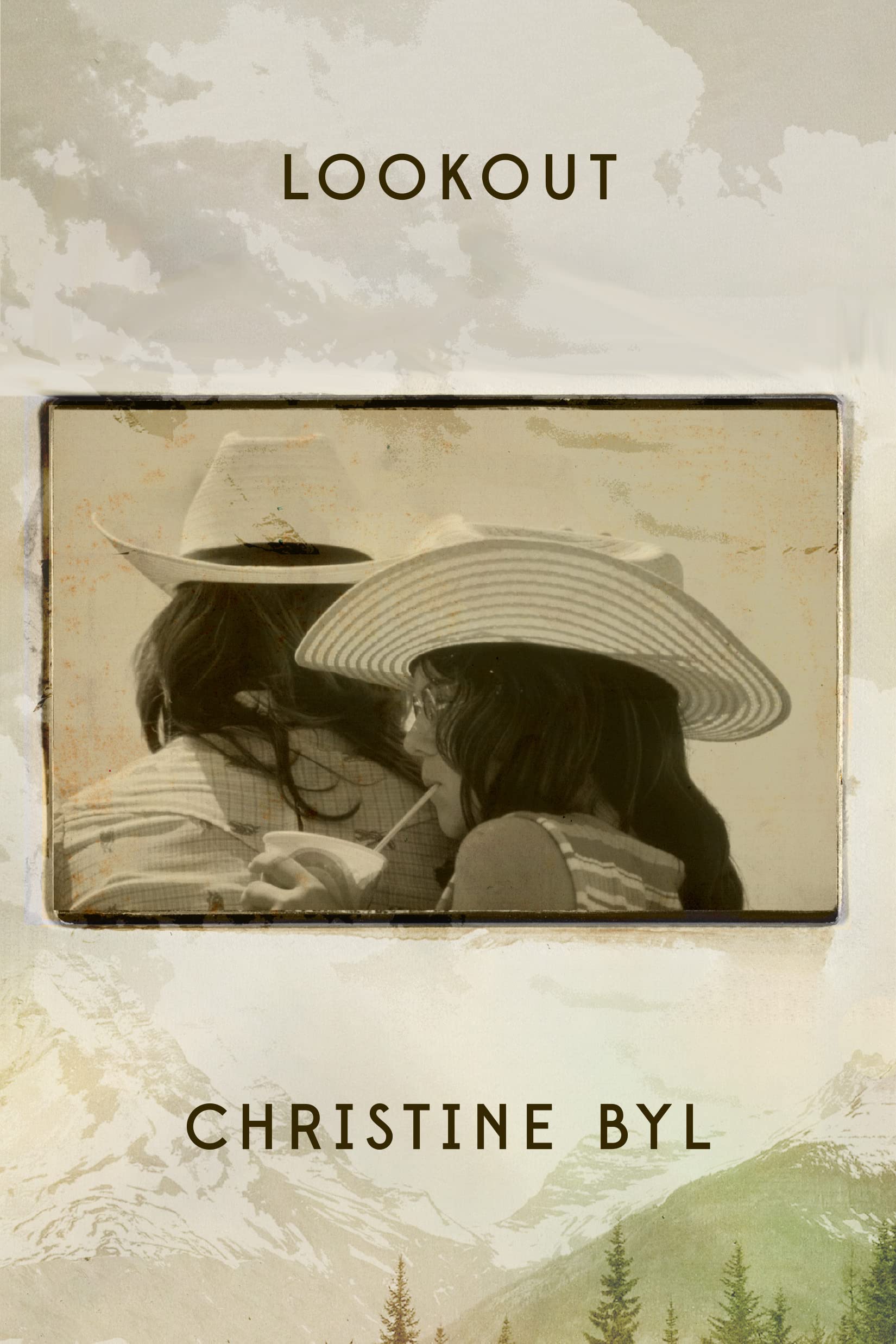
Lookout by Christine Byl

This astonishing novel of work, love, community and forgiveness in 20th-century rural Montana will leave readers forever changed for the better.

Christine Byl’s Lookout is an unforgettable novel, both stunning and subtle, written with nuance and compassion. With all the down-to-earth lyricism displayed in her memoir, Dirt Work: An Education in the Woods, Byl transports readers to rural Montana in the 1980s, ’90s and 2000s, where the Kinzler family lives, works and loves. These characters, whose bonds are gorgeously rendered and even inspirational in their imperfections, are deeply lovable.

Josiah Kinzler’s family history includes alcoholism and suicide; he is alone in the world before he is 20 but possesses land, skills, a work ethic and strong ties to his neighbors. He marries Margaret Blanchard. Together they eke out a living in her father’s hardware store and eventually through Josiah’s highly regarded furniture-making and woodworking. Their two daughters, Louisa and Cody, are remarkably different from one another but as fiercely loving as their parents. The family will grow into nontraditional shapes, but its members never lose their commitment to one another. Each is complicated, fully developed and sensitively drawn.

Chapters shift between a third-person perspective and the first-person voices of various characters–not only the central Kinzlers but also various members of their community. In this way, Byl offers triangulations on events and characters. These secondary characters’ perspectives enrich the story enormously, as when a neighbor who has known Josiah from childhood observes the latter’s marriage and fatherhood: “He loves those girls, and I can see his ease with them that I have not found with my own sons.” Montana in the 1980s and ’90s is not without its problems: gay characters struggle to find acceptance, and American Indians’ claims to the land are dismissed. Families and individuals struggle with mental illness and addiction. But Byl treats the people and their problems–even the shortsighted ones–with grace and frankness. Frequently, characters do the same for one another.

Lookout, which contains evocative expressions of love, is lush in its descriptions of relationships, the natural world and Josiah’s exquisite woodworking. Byl writes with an attention to the details of her characters and setting: “A heavy snow in early May buried pasqueflowers and daffodils and the barely rising shoots that would become the season’s crops, but by the end of the month, the sun lit up like a match.” Cody and her father are similarly laconic and watchful; they share a special bond, as displayed in a stunningly beautiful scene in which he proudly watches her run a chainsaw just as she was taught. Many of the relationships and family systems represented are unconventional–but sensitive and thoughtful. Lookout specializes in the quiet observation of transcendent truths about many facets of life.


This review originally ran in the January 26, 2023 issue of Shelf Awareness for the Book Trade. To subscribe, click here.


Rating: 10 dried pansy petals.

The Writing Retreat by Julia Bartz

In this shape-shifting tale, aspiring novelists come together at a possibly haunted estate with a famously reclusive writer–for what turns out to be as much horror as inspiration.

Alex, the glum protagonist of Julia Bartz’s The Writing Retreat, has recently crossed into her 30s. Stuck in long-term writer’s block, her dreams of making it as a novelist are just about dead; she holds a thankless and “bleakly underpaid” position in publishing; her sex life is equally bleak; and she still mourns her traumatic friend-breakup with the more successful Wren a year ago. So it feels like a shocking and undeserved honor to be accepted to a fantastically exclusive writing retreat hosted by Roza Vallo, the wildly successful novelist Alex has idolized since she was 12 years old. The catch is that Wren has been accepted, too.

Roza’s Blackbriar Estate in the Adirondacks in New York is grand, dramatic and supposedly haunted. Roza herself is famous, rather controversial and private: the five young women attending the retreat must sign NDAs. Alex’s adoration of her enigmatic hero is enormous, and she senses this is her big shot at turning her life around: “If I lived in a pocket of Roza Vallo’s brain, however small, I sensed it would bolster my own existence.” She is also nearly crippled by anxiety about being near Wren–but that concern is quickly overshadowed by the terms of Roza’s intensely competitive program for the retreat. The five writers in attendance must each complete a whole novel in just 28 days, and the best of their works will win a million-dollar advance on a publishing deal. Even as the high-speed writing race ramps up and the drama with Wren continues to smolder, it emerges that something still more sinister is going on behind the scenes at Blackbriar Estate. Inexorably, The Writing Retreat evolves into a locked-room mystery, as eight women–five young writers, two staff and Roza–find themselves snowed in at Blackbriar and beset by potentially fatal threats that may be supernatural or simply human evil.

Bartz imbues her writing with a shape-shifting momentum: the plot’s focus moves from the small, painful dramas of competition and jealousies in friendship into horror and psychological suspense. Blackbriar Estate is both magnetic, in its haunting history and narrative possibilities, and stifling. The world of writing and publishing can be, at turns, solitary, socially supportive, triumphant and backbiting, and The Writing Retreat encompasses all these possibilities and more, as it explores friendship and family traumas, artistic crises and human nature. Bartz’s debut subverts genre in the interest of entertainment, satire and chilling thrills.


This review originally ran in the January 19, 2023 issue of Shelf Awareness for the Book Trade. To subscribe, click here.


Rating: 7 words.

The Liar’s Crown by Abigail Owen

Pretty sure I got this one from a Shelf Awareness review, and I found it quite enjoyable. It definitely has a YA flavor, but that’s okay: I was entertained, absorbed, transported. I also learned a new label: it’s marked upper YA/NA, and I had to look that up. NA is ‘new adult,’ so that upper YA/NA takes us through late teens and early twenties, I guess. As ever, your mileage may vary, but I think that rating, if you will, makes good sense. For one thing, there’s not only violence but sexual content. Not graphic, but clear enough.

A brief prologue gives us a few details of the alternate world in which The Liar’s Crown is set. Also, there’s a map! The world is Nova, and there are six continents/kingdoms or dominions with their own rulers. Their names give clues as to climate: Savanah, Tropikis, Mariana, Wildernyss, Tyndra, and Aryd. Following the prologue (the birth of twins, and a blessing and a curse), our narrator is Meren. Her twin sister Tabra is princess of Aryd and will be queen once their grandmother dies. Meren’s existence is a secret; she lives in a city distant from the capital city, visiting her sister in the palace only in stealth. She’s been raised by her grandmother’s twin – also a secret. By tradition and heredity, her family line is ruled by queens with secret twin-sister body doubles, who stand in as queen in times of danger. Meren’s life purpose is to serve and protect her sister; she can have no true life of her own. She’s lucky to have a single friend, Cain, heir to a minor authority figure among the desert’s Wanderers. He does not, of course, know her true identity.

Meren and Tabra are 18 when this story begins, with a quick series of events: their grandmother the queen dies. King Eidolon of Tyndra, whom the girls have been trained all their lives to fear, proposes marriage to Tabra, and sends her a unique gift. Meren goes to her sister’s side, to take her place for the coronation, and to reject Eidolon’s threatening proposal; but then she is kidnapped by a man of Shadows, swept across dominions and into a world she never dreamt existed. Her captor is both terrifying and magnetic. He has surely grabbed the wrong princess, thinking he’s got the true heir to the throne; Meren must continue to play the role of Tabra, but her kidnapper is keeping secrets too. They are each responsible for lives beyond their own. They are in awful danger, and they might be falling for each other.

The Liar’s Crown has mystery and intrigue, magical powers and amulets, strange beasts and frightening environments. Meren is navigating the beginnings of love, romance, and sex – her old friend Cain has just voiced his amorous intentions as the man of shadows comes along. She yearns for her own identity (like any eighteen-year-old) but also feels her responsibilities toward her sister, her family, her dominion, her people. She has her own individual desires and also wants the best for her society. She is caught up in the difficulties of friendships, filial and romantic love – as are we all.

Meren is an accurate teenager, and sometimes feels a bit juvenile, which I guess is where I get that YA flavor I mentioned earlier, but that all feels true-to-life; and these themes are certainly universal. The storyline offers suspense, plotting for good and for ill, unknown intentions, the puzzle of whom to trust… there are battles, new alliances and tragic losses, and there are a handful of brief but well-written and compelling scenes of kissing and one memorable sex scene. This book had me looking forward to when I could snuggle back up with it, and that’s always a win. I smell a sequel, and I’m looking forward to it.


Rating: 7 death worms.

Settled Blood by Mari Hannah

As I said about book one, The Murder Wall, this is a solid mystery series. I like DCI Kate Daniels. The series seems inclined to paint her as your classic self-sabotaging detective: a loner, typically a hard drinker, soft-hearted but with a stony exterior and a tendency to violence. She’s rather sweeter than this, though. Despite points made about always putting the job first and not taking very good care of herself (eating & sleeping, for example), she has strong connections to the other members of her squad, and she’s not much of a drinker. The job itself can certainly be a killer, no pun intended (murder detectives do not have it easy), but as far as self-sabotage goes, she’s a pretty light version, I’d say. I like her habit of jumping on the motorcycle for stress relief, and I like even more her friendships: especially here with her second-in-command Hank Gormley, who has a pretty good feel for what she needs (to be questioned, to be left alone) and where she’s likely to be at a given moment. That is downright tender. Her relationship with her former (now promoted) boss, the prickly Phillip Bright, is a little less healthy, and he is not nearly such a sweetheart, but as character development and narrative complication I like it very much. There are other work relationships, too, that advance the characters and story in pleasing ways. As I said in the previous book, Daniels’s partner (now ex) is still a little under-developed, which I still regret. Will she continue to step forward into the light, or is she just a device? I will let you know, because I’ve already ordered books three and four in this series.

The whodunit itself was stimulating and kept me going through some late nights when I should have turned off the light. A murdered girl; a missing girl who is a lookalike to the murdered one but not in fact the same girl; and then more. Daniels is coming off a bit of a trauma herself – and in fact many members of her team are dealing with difficulties or losses, and I appreciate the way in which this mixes things up in a real-world way. Lots of questions about how much compassion and assistance is owed to people who are on the one hand jerks and on the other hand have suffered greatly. This ethical puzzle is one of my life’s fascinations, so I enjoy the angle.

Still true that Daniels’s identity as lesbian is a bit subtle as a framing element here. I appreciate the way in which that has a normalizing effect, but don’t come here looking for a big-deal LGBTQ headline; it’s more background. (Although Daniels is out to very few colleagues, which I find interesting. Her team seems practically warm-and-fuzzy in how well they support each other – unusually for the hard-boiled murder squad. On the other hand, her erstwhile partner being a distant member of the same work environment is a complication of its own, regardless of gender, and could justify secrecy.)

I am intrigued and interested to keep getting to know this group.


Rating: 7 headlamps.

Stone Blind by Natalie Haynes

Natalie Haynes splendidly showcases classical scholarship, witty humor and an appreciation for nuance in this reframing of the story of Medusa.

With Stone Blind, Natalie Haynes (A Thousand Ships; Pandora’s Jar) brings her authoritative expertise in Greek myths to bear on Medusa, whose story is fresh and surprising in this telling. Haynes is both a scholar of the classics and a stand-up comic, and that combination is brilliantly evident in this sardonic, darkly funny adaptation.

Stone Blind combines several threads familiar to fans of Greek mythology, although readers need no previous knowledge to follow along. Zeus, king of the gods on Olympus, philanders and bickers with his wife, Hera; this narrative will witness Athene’s birth and a battle between gods and giants, among other Olympian events. Medusa is delivered as an infant mortal to the two elder Gorgons who will be her sisters–in this version, they are monsters only in their unusual appearance, and they care for their fragile mortal sister with great tenderness. As a young woman, Medusa is raped by Poseidon in Athene’s temple. The goddess is so offended by this sacrilege that she punishes the victim, replacing Medusa’s hair with snakes and bestowing her most famous attribute: the ability to turn any living creature to stone by eye contact. In a third thread, the demigod Perseus comes of age as a bumbling incompetent: self-serving, lazy, whining, unnecessarily violent. And Andromeda, legendary beauty and princess of Ethiopia, is cursed to death by her mother Cassiope’s hubris.

These threads come together in complex ways when gods are offended and angered and play out their dramas with mortal pawns. Traditional storytelling has cast Perseus as a hero and Medusa as a monster, but Haynes does not concur: “The hero isn’t the one who’s kind or brave or loyal. Sometimes–not always, but sometimes–he is monstrous. And the monster? Who is she?”

“Who decides what is a monster?” Medusa’s sister asks. To which Medusa responds: “I don’t know…. Men, I suppose.”

Haynes’s genius lies not only in her subtle recasting of this story–with an emphasis on who assigns roles and draws conclusions–but in her dryly scathing humor. Her gods are (even more than usual) immature, selfish and often silly. Athene is “delighted with herself” for the simplest of observations about humanity; she burst forth from Zeus’s head fully formed, but not necessarily with the emotional maturity or world knowledge her physical perfection would imply. Poseidon’s bluster and Zeus’s carelessness of his children are exaggerated. Perseus is a dolt, impervious to learning the lessons of his (mis)adventures. Haynes writes in many voices: those of olive trees, Medusa’s snakes-for-hair, a crow, the gods and mortals that make up this twisting tale. A surprising ending caps off her truly delightful and novel version of a very old story.


This review originally ran in the January 6, 2023 issue of Shelf Awareness for the Book Trade. To subscribe, click here.


Rating: 8 birds.

The Same River Twice by Chris Offutt

First book I’ve read in the new year and it is a big winner. I read Offutt’s No Heroes some years ago, and I have a few clear memories of it – and I gave it an 8 – but I have to say it’s faded some since then. This one, I think, will be different. From the first pages he had me nodding along in recognition and agreement, when I wasn’t laughing til my sides split. This is a remarkable book in several ways.

For one thing, as an example of craft and structure in memoir, I appreciated the format: alternate chapters switch between two timelines, one (the narrator’s present) in which his wife is pregnant (with the courtship & marriage compressed at the start), and an earlier one in which the younger man leaves his home in the eastern Kentucky hills and travels for more than a decade around the country as an itinerant, not to say bum, short-term laborer and modestly aspiring artist. In the end, this is a memoir of becoming a father. The younger Offutt’s travels, bumbles, attempts at self-destruction eventually make him the man (for better or worse) who meets Rita, marries, and enters on purpose but somewhat reluctantly into the pregnancy that defines the narrative present. When the two timelines meet at the book’s end there is, again, heavy compression, rushing us through Rita-to-pregnancy; I can sense some readers protesting at that rush, but I think it suits the scope of this book. True memoirists have at least several memoirs in them; there’s a piece of Bernard Cooper wisdom on this topic. The Same River Twice is about Offutt becoming a father within himself. It’s not so much about Rita, who in these pages is a lovely and likeable person but mostly remains off-page.

In his roamings of the country, Offutt recalls Blue Highways (maybe even On the Road) but with perhaps more angst – or at least angst that felt more familiar to my own – and definitely more laughs. I could hardly breathe at Offutt’s first couple of sexual encounters, and his adventures in the Florida swamp had me pretty riveted. This is some of the best humor writing I’ve seen in some time.

And on the other hand, in the later timeline, a more mature and serious-voiced narrator (who nonetheless self-deprecates) walks alone in the floodplain woods near his and Rita’s rental home on a dirt road on the Iowa River. This man is contemplative and highly observant of the natural world. He’s struggling with pending fatherhood; he always wanted children but felt less ready than Rita. She worried about her age, while he worried that he still lacked stable employment (he’s trying to sell his writing) and general responsible adulthood. When Rita becomes pregnant, he feels pride, relief, and happiness that she is happy; he feels terrified of the responsibility, and selfishly (he’d say) sorry to lose his freedom. He’s afraid he’ll damage his child; his father has always said he comes from a long line of bad fathers. Fear, in fact, is paramount. “I fear the loss of independence although I didn’t do so well alone.” He’s on a journey to learn about pregnancy and babies, partly through library books and an ill-fated hospital-based Lamaze class, but also via walks in the woods, where he watches the natural world cycle through life and death. Seamlessly integrated facts about biology and natural and human history add to his musings. If the earlier hapless-bum episodes are woeful and hilarious, the older man is quietly thoughtful and wise (even if he denies it). I thought there were some fascinating observations about what it means to be a parent. (I am not a parent. I did call up a few friends to discuss their experiences.)

Let me also note, I found Offutt because of my connection to writing in Appalachia. Relatively little of this book is set there: we see young Offutt leave as a teen, with two brief returns (one for recuperation from injury, one under great duress for his brother’s wedding); otherwise he is all over the country or settling in Iowa. But eastern Kentucky looms throughout; it’s what he’s escaping and it continues to define him, most obviously in the accent that other people feel marks him as a type.

Where I’m from, the foothills of southern Appalachia are humped like a kicked rug, full of steep furrows. Families live scattered among the ridges and hollows in tiny communities containing no formal elements save a post office… Our hills are the most isolated area of America, the subject of countless doctoral theses. It’s an odd sensation to read about yourself as counterpart to the aborigine or Eskimo*. If VISTA wasn’t bothering us, some clown was running around the hills with a tape recorder. Strangers told us we spoke Elizabethan English, that we were contemporary ancestors to everyone else. They told us the correct way to pronounce “Appalachia,” as if we didn’t know where we’d been living for the past three hundred years.

This is a narrator who then travels to, of all places, Manhattan, where he has to relearn how to walk to accommodate the traffic of other people doing the same thing near him. After some hours on a bench watching New Yorkers walk near each other, he concludes his stride is too long and regular for the environment; the locals use quick, short steps, like dancing. “As long as I concentrated, everything was jake, but the minute my attention wavered, my gait lengthened and someone’s legs entangled with mine.”

Offutt makes repeated references to Kentucky’s Daniel Boone and explorer-to-America Christopher Columbus, as he styles himself also an explorer and a frontiersman, but without the aggrandizement that implies. “Two hundred years back, someone asked Boone if he had ever been lost. He answered no, but that he’d once been bewildered for three days. I knew exactly how he felt.” On returning home for the brother’s wedding: “After Columbus’s third trip across the sea, he was brought home in manacles and chains. I knew how he felt.” The aspiring-writer Offutt is a funny thread: he journals compulsively, copiously, but despite defining himself as a poet for a long stretch, writes no poetry. (He also decides to be a painter and a screenwriter at different points without actually producing any art.) I loved this bit:

My adherence to the jounal slid into a strange realm where I viewed my immediate interactions as a form of living diary. If riding a bicycle through a snowstorm sounded like good material for the journal, I borrowed a bike in a blizzard. The actual ride didn’t matter. What I did was try to observe myself as carefully as possible, while simultaneously imagining myself writing everything down later.

If that doesn’t sound like a social media obsession before its time, I don’t know what does.

Offutt is a gorgeous writer of prose. The subject matter – family dynamics and stress, the natural world, travel and restlessness, the meaning of life, place and particularly Appalachia, the angst of trying to be a writer – certainly speaks to me. An entire chapter is devoted to the importance of names (a special interest of mine). But the writing is notable for its own sake. Check out this metaphor-to-simile turn: “The sky was a gray flannel blanket like a watercolor background with too much paint.” And metaphor plus anthimeria: “The riverbank is a crouching porcupine, bare tree limbs quilling the sky.” This is probably my favorite travels-in-America chronicle yet, and I’ve read a few. I’ll be thinking about this one.


Rating: 9 tracks.

*this book was published in 1993.