Teaser Tuesdays: The Ogallala Road by Julene Bair

Teaser Tuesdays is a weekly bookish meme, hosted by MizB of Should Be Reading.

ogallala

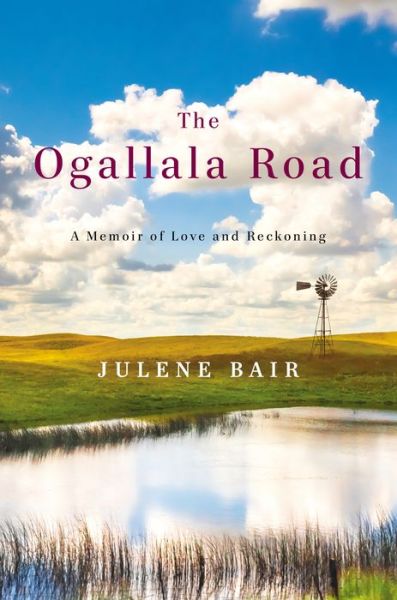
I found very thought-provoking Julene Bair’s memoir of returning with mixed feelings to the family farm. My full review will not be out until a little closer to its March publication date, but for now, a few lines that got me thinking:

Our sense of beauty is a survival instinct, telling us that a place can sustain us for generations to come. I’d always known this in my bones, but it wasn’t until many years after I left Kansas and discovered my passion for wilderness that the intuition became conscious. This creek was now ugly. That didn’t bode well for the underlying aquifer’s ability to support life in the future.

Part of me nods firmly at this, and part of me wonders if beauty is really the same thing as lifegiving. Perhaps it’s all in the eye of the beholder? Please weigh in, Pops.

This quotation comes from an uncorrected advance proof and is subject to change.

movie: Urban Cowboy (1980)

Husband was dismayed to learn that I hadn’t seen Urban Cowboy, set in my hometown and rather iconic; it stars the nightclub Gilley’s and is mentioned in one of my favorite songs by one of my favorite bands. My excuse is (as usual) that I’m not real good with pop culture; also, this movie is older than I am.

winger

So we put it on. Urban Cowboy is set at the beginning of the 1980’s, when young Bud Davis leaves his family on the farm and heads into Houston (actually, Pasadena, a dirty oil-refining suburb) to look for a job. He starts off by staying with an aunt and uncle; the latter works at the refinery and gets Bud a job. They also take him to the local, Gilley’s, a honky-tonk nightclub that was at the time the largest nightclub of any kind in the world (according to Guinness, says the Texas State Historical Society and others). There he immediately falls into the kind of lifestyle his mom back home probably worried about: drinking hard every night of the week and showing up to work hungover; and meeting Sissy, a beautiful, flirtatious youngster with whom he is quickly entangled. They drink, fight, get married. She wants to ride the new mechanical bull set up at Gilley’s, but he doesn’t want her to. So she goes behind his back and learns to ride it from a dangerous ex-con.

Bluffing, out of spite at one another, and both hoping the other will blink, Bud and Sissy take up with other people: she with the ex-con bull rider, he with a rich girl from “the city” of Houston with a fetish for “cowboys.” (One notes that Bud doesn’t really qualify, as he works at an oil refinery and like Sissy, rides only a mechanical bull, not the real kind.) The big “rodeo” at Gilley’s will culminate in Bud versus the ex-con on the bull, and will put back together again the couple we’ve been rooting for.

I have mixed feelings. The iconic Houston skyline (minus many buildings I know) and time-and-place details, not least Gilley’s itself (famous, but like this movie, before my time), were great fun. Bud and Sissy have a certain Sid-and-Nancy ugly rightness about them that feels good in some twisted way; they’re a symbol of good Southern cowboy coupledom that some part of me responds to. But the misogyny was too much for me. Sissy gets hit, only a little by Bud (the “good” guy) and a lot by her ex-con; then Bud comes in and saves the day, because he hit her less often and less hard and so we should… feel good about this? Yes, another time (and culture), I get that; but there’s only so much wife-beating I can stomach and still come away calling this a feel-good film.

For visuals, including Sissy’s shockingly sexy bull ride, I’d give this a better-than-average score, if only for its historic and cultural value. For its actual values, it loses points for the pit it put in my stomach. John Travolta and Debra Winger are nice to look at, though.

travolta


Rating: 5 rides.

book beginnings on Friday: Eating Dirt by Charlotte Gill

Thanks to Rose City Reader for hosting this meme. To participate, share the first line or two of the book you are currently reading and, if you feel so moved, let us know what your first impressions were based on that first line.

eating dirt

This book came recommended from two authors I’ve fallen in love with in recent years: Phil Connors and Christine Byl. That was enough for me. Charlotte Gill begins:

We fall out of bed and into our rags, still crusted with the grime of yesterday. We’re earth stained on our thighs and shoulders, and muddy bands circle our waists, like grunge rings on the sides of a bathtub. Permadirt, we call it. Disposable clothes, too dirty for the laundry.

Hers is a memoir of planting trees, and that’s about all I know so far, but I think I’m going to love it.

Happy Friday and what are you reading this weekend?

Rosarito Beach by M.A. Lawson

A sexy renegade DEA agent’s past resurfaces at the worst possible moment in a new series from (a barely disguised) Mike Lawson.

rosarito

Mike Lawson, creator of the Joe DeMarco thrillers (House Odds et al.), uses the pen name M. A. Lawson to launch a new series, Rosarito Beach, with a new protagonist: DEA agent Kay Hamilton. Hamilton brings a take-no-prisoners attitude to her investigations, and though it’s clear she makes a better field agent than supervisor, she’s assigned to lead a team in Southern California investigating Caesar Olivera, the boss of a major Mexican drug cartel. After arresting the kingpin’s little brother, Tito, Hamilton’s main concern becomes keeping him locked up. Even after Tito is transferred to the brig of a vast Marine base, however, Caesar’s army threatens.

Hamilton dislikes authority figures, enjoys a drink or four, picks fights with every other law enforcement agency in town and knows exactly how to use her good looks and hot body to her advantage. She follows her own personal code, pleased to be beholden to no one except herself, involved with her career and personal pursuits–mainly her sex life–until a mystery from her distant past resurfaces. This new addition to her short list of concerns reorders Hamilton’s priorities and drives her to actions, and crimes, she never thought possible. The DEA fights to keep Tito locked up, the cartel arms itself for action and Hamilton rejects protocol in an accelerating race toward the end game, which concludes with all the fireworks and upheaval a thriller fan craves.


This review originally ran as a *starred review* in the January 3, 2014 issue of Shelf Awareness for Readers. To subscribe, click here, and you’ll receive two issues per week of book reviews and other bookish fun!


Rating: 5 stiletto heels.

To expand a bit on my review, above: this thriller was suspenseful, had pace and momentum, and kept me interested and engaged. Its fault (and the reason my rating isn’t higher) relates to the caricatures of the characters. Hollywood-style, they were all beautiful, had smokin’-hot bods, and dressed like magazine spreads. Similarly, the hero’s coldly detached interest in sex without strings struck me as unrealistic and a little stereotyped – career-obsessed woman not interested in relationships but able to seduce her way into the most highly-guarded yadda yadda. There was a cartoon element to it, is what I’m saying. On the other hand, though, I stayed up late reading avidly to see what would happen next. So I may have rolled my eyes, but Lawson gets the win in the end.

Writing Is My Drink: A Writer’s Story of Finding Her Voice (and a Guide to How You Can Too) by Theo Pauline Nestor

A writer’s journey, written as a guide for aspiring and developing writers.

writingdrink

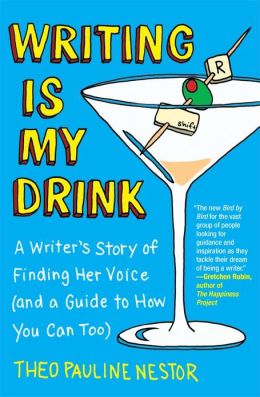
Theo Pauline Nestor always wanted to be a writer. But she struggled to find confidence and her writing voice for many years, through two kids and several career changes, before publishing How to Sleep Alone in a King-Size Bed, a memoir about her divorce and its aftermath. In Writing Is My Drink, Nestor returns to memoir with tales from her childhood, formative years and journey toward publication, and confessional forays into her parents’ alcoholism and her more embarrassing moments as an aspiring writer. Readers and writers will appreciate nods to Terry Tempest Williams, Natalie Goldberg and Frank McCourt, whom Nestor temporarily confused with her father.

Writing Is My Drink is also part instruction guide. Each chapter finishes with a short “Try This” piece that offers writing exercises, lists to make and concepts to keep in mind. She coaches when to push oneself and when to be forgiving, and shares the sad news that rejection and bad writing are integral parts of publication and good writing. Now an instructor in memoir writing, Nestor is well placed to offer such advice, and despite her convoluted journey–or perhaps because of it–she has a great deal of wisdom to share with her students.

Writing Is My Drink is by turns instructive, funny, poignant and deeply personal. Nestor’s voice is informal and occasionally self-deprecating, but one of the central lessons she has learned and wants to share is that of trusting oneself. Her story will be an inspiration to readers who seek self-expression.


This review originally ran in the December 27, 2013 issue of Shelf Awareness for Readers. To subscribe, click here, and you’ll receive two issues per week of book reviews and other bookish fun!


Rating: 7 stories told sitting on a barstool.

Teaser Tuesdays: A Burnable Book by Bruce Holsinger

Teaser Tuesdays is a weekly bookish meme, hosted by MizB of Should Be Reading.

burnable book

A Burnable Book (whose title, I’m sure, strikes fear into many our hearts) is a to-be-published work of historical fiction, with a pedigree: author Bruce Holsinger is, according to the back of my review copy, “a prolific and award-winning scholar of the medieval period” at the University of Virginia. Thus we should trust him, and his research capabilities. But that’s not all! Any book lover would be charmed by the following passage:

Angervyle possessed a strong sense of history, citing examples of renowned book-buyers from the past, including Plato and Aristotle, as well as some negative exempla of those who spurned their volumes. There was also a long discussion of the treatment and storage of the bishop’s own books. Dripping noses, filthy fingernails, pressed flowers, cups of wine brought too near the precious folios: all of these represented destructive forces to the volumes in his collection, which he sought to preserve and protect against the ravages of their many potential abusers. To this end, he wrote, his plan was to endow a hall of books at Oxford, a chamber that would lend out his collection, rendering it a great public good to the entire Oxford community. “The treasures of our books,” he wrote, “should be available to all.”

Well, naturally. Librarians and modern-day book lovers nod their heads sagely. Dripping noses, indeed! Although, the cups of wine…

This quotation comes from an uncorrected advance proof and is subject to change.

The Murder Code by Steve Mosby

A series of murders force a seasoned detective to reexamine his understanding of evil.

murder code

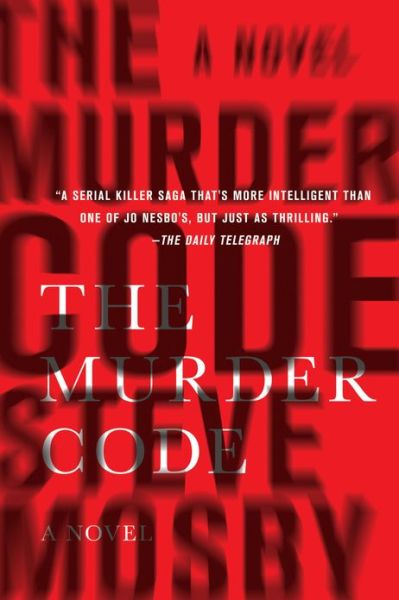
The Murder Code, British author Steve Mosby’s American debut, opens with the brutal but seemingly straightforward bludgeoning of a young woman on her way home from work. Detective Andrew Hicks immediately looks to her abusive ex, because he knows all murders are committed for reasons–bad reasons maybe, but reasons that make sense at the time to the killer. But when the bodies start piling up–clearly the work of the same hand or, more precisely, the same hammer–Hicks is forced to reconsider his theory. And when he receives a letter from the murderer, Hicks must confront everything he’s understood for years about the reasons people kill each other.

Story lines overlap and tangle tantalizingly in Mosby’s capable hands. The reader glimpses teasing flashes of various characters and their backgrounds before returning to Hicks’s increasingly troubled life. His pregnant wife knows there’s something Hicks isn’t telling her, but doesn’t know what, any more than the reader does. Something disturbing in his past threatens to resurface.

While other sympathetic characters are briefly sketched, Hicks is very much at the heart of this psychological thriller. Mosby expertly spools out and retracts details, keeping the reader breathless with anticipation as the body count rises and Hicks asks himself questions he thought he’d answered long ago. The Murder Code offers not only a surface-level mystery to be solved, but the deeper mystery of how the pieces fit together–and the central question of whether innate evil is real.


This review originally ran in the December 27, 2013 issue of Shelf Awareness for Readers. To subscribe, click here, and you’ll receive two issues per week of book reviews and other bookish fun!


Rating: 7 data points.

book beginnings on Friday: A Burnable Book by Bruce Holsinger

Thanks to Rose City Reader for hosting this meme. To participate, share the first line or two of the book you are currently reading and, if you feel so moved, let us know what your first impressions were based on that first line.

burnable book

A historical novel for you today, to start the new year, with quite a bit of style to it and with Geoffrey Chaucer taking a role somewhere between costar and sideline. It begins:

Under a clouded moon Agnes huddles in a sliver of utter darkness and watches him, this dark-cloaked man, as he questions the girl by the dying fire. At first he is kind seeming, almost gentle with her. They speak something like French: not the flavor of Stratford-at-Bowe nor of Paris, but a deep and throated tongue, tinged with the south. Olives and figs in his voice, the embrace of a warmer sea.

I enjoy the olives, figs, and warm ocean water in this man’s voice, and am immediately intrigued. Stay tuned. Happy new year and Happy Friday, kids!

This quotation comes from an uncorrected advance proof and is subject to change.

2013: A Year in Review

It’s always nice to look back, especially when we can do it fondly; and I’m getting better at spending my reading time enjoyably, and putting down books I don’t enjoy. I’ve reviewed a few years now (2012; 2011), so we can do some comparisons.

Of the 116 books I read in 2013…

  • 45% were nonfiction (51% last year)
  • 48% were by female authors (32% last year)
  • of the 64 novels I read, 37% were mysteries or thrillers, 10% were historical fiction and only 6% were classics. The rest were a smattering of adventure, drama, fantasy, horror, short stories, and humor. (Last year 31% were mysteries, 27% were historical fiction and 23% were classics.)
  • 23% were audiobooks. (25% last year)
  • 35% of the books I read came from the library, a whopping 43% were review copies, and 14% came from my personal collection; the remaining few were books I was loaned, books I purchased, or (those treasured few) books I was given as gifts. (Last year, 40% of the books I read came from the library, 32% were review copies, and 28% came from my personal collection.)
  • I read 116 books this year, compared to 126 last year.

For the very *best* books I’ve read this year, see New Year’s Eve’s post.

So, how have my reading habits changed? I’m a little surprised at some of my observations here, which helps me justify how very nerdy it is to run these numbers! I am pleased to see that I’m reading a little more equitably between authors’ genders. I seem to have slightly reversed my fiction/nonfiction trend – last year NF had a bare majority, this year it swung the other way a bit, but I’m still nearly half and half. I’m certainly pleased to be reading that much nonfiction, and I wouldn’t want to slip too far below the halfway point, but I also recall a definite moment in the fall of 2013 when I felt that I needed a break from nonfiction.

Within the fiction I read, there is a noticeable trend toward mystery/thriller holding a large plurality, and a drop in classics. I regret that drop in classics somewhat. I wonder if the also noticeable increase in books I read for review has something to do with this. On the other hand, I don’t feel that I need to be too concerned. I bet next year will change again.

Audiobooks held steady at about 1/4 of my reading life, which seems about right. However, a new thing happening in my life in 2014 is – oh my gosh can you believe it – they finally opened up the new light rail line that runs between my home and work!! This is very exciting, and may mean that I find more time for reading print and spend less time listening to audio. So far, however, this is not the case: I’m in the middle of a delightful Stephen King audiobook and don’t want to put it down once I board the train. So, we shall see.

I read slightly fewer books than last year – a decrease of 8%, as long as I have this calculator out – and am perfectly content ascribing that to reading several longer books this year.

What does the future hold? Who knows? I’m feeling contented, and disinclined to make plans or promises. Rather, I want to keep enjoying my reading. I think that’s the most important thing, and if that suddenly means romance novels, or histories of the first World War, or reading much more or much less (none of these seems likely…), then so be it.

What about you? Any reading resolutions? Or, how was your 2013 in books?

New Year’s Day in book history

A review of the *book in question is yet to come, but for a quick teaser today…

Born today: in 1879; E.M. Forster, and in 1919, J.D. Salinger. A big birthday for people who go by two leading initials and are well known for their classic works!! And died today: in 2002, Julia Phillips (You’ll Never Eat Lunch in This Town Again) and in 2007, Tillie Olsen (Tell Me a Riddle, Silences).

Of the other literary notes assigned to January 1st I am choosing my favorite to share with you:

1947: In a Guide to Your Child’s Development she has purchased for the purpose, Charlotte Haze notes on the twelfth birthday of her daughter, Dolores, that the girl is fifty-seven inches tall and possesses an IQ of 121. She also completes an inventory of the child’s qualities: “aggressive, boisterous, critical, distrustful, impatient, irritable, inquisitive, listless, negativistic (underlined twice) and obstinate.”

(Negativistic, indeed!)

…For Charlotte’s new husband, Humbert Humbert, this list of epithets is “maddening” in its viciousness toward the girl he calls Lolita and claims to love. But he has his own reasons to revolt at the child’s birthdays: after just a few more of them she’ll no longer be a “nymphet,” and soon after that she’ll be – “horror of horrors” – “a ‘college girl.'”

What fun!

reader's book of days*The book in question is A Reader’s Book of Days: True Tales from the Lives and Works of Writers for Every Day of the Year, by Tom Nissley, and was a gift from my parents on my most recent visit to see them in the chilly north. I have only flipped through it so far (which is what it’s designed for, obviously), but I will be giving it a closer inspection and writing up a proper review for you at some point this year.

The other thing I will be doing with it is keeping it handy for those few days when I’m scrambling for a blog post! (rubs hands together) Thanks, Mom and Pops, for helping out!