Maximum Shelf: Spinster: Making a Life of One’s Own by Kate Bolick

Maximum Shelf is the weekly Shelf Awareness feature focusing on an upcoming title we love and believe will be a great handselling opportunity for booksellers everywhere. The features are written by our editors and reviewers and the publisher has helped support the issue.

This review was published by Shelf Awareness on March 4, 2015.


spinster

“Whom to marry, and when will it happen–these two questions define every woman’s existence, regardless of where she was raised or what religion she does or doesn’t practice… even if the answers are nobody and never.” Kate Bolick explores her own answer to the classic questions, arduously and over the years of her own life; she examines their place in society, and the way other women she admires have answered them, mining the lives of female writers who have affected her. The resulting book, Spinster: Making a Life of One’s Own, is less a polemic than one might expect, and more a thoughtful, generous consideration of our world, and a woman’s best options to honor herself.

Bolick begins with her family background, her loving parents and brother, and her home in Newburyport, Mass. In a personal and family tradition of talking, reading, discussing and writing, Bolick naturally gravitates toward literary models for the life she hopes to build. After her mother’s death, she seeks to re-create the conversations they used to share, “not with other, real, live women… but real, dead women, whom I could sidle up to shyly and get to know slowly, through the works they left behind and those written about them.” In the opening pages, she introduces her five “awakeners,” women of the written word who have offered her lessons about how to live as a woman, married or not. These awakeners are an essayist, a columnist, a poet, a novelist and a social visionary (although each, of course, crosses over and between those categories).

Maeve Brennan (1917-1993), essayist at the New Yorker, offers a loving picture of single city life and an admirable sense of style. She will also come to provide a frightening negative version of the stereotypical single woman’s final days. Neith Boyce (1872-1951), columnist at Vogue and representative of the Bachelor Girl, supplies a glimpse into the life of working women, a novel possibility in her time; although as Bolick points out, the chance of sex or sexiness in the workplace presents a “negotiation [that] continues today.” Edna St. Vincent Millay (1892-1950), poet and legendary lover, brings revelations. “Her legacy wasn’t recklessness, but a fierce individualism that even now evades our grasp.”

Edith Wharton (1862-1937), novelist and grand dame (“society’s favorite version of the single woman”), built herself a house, the Mount, with two rooms of her own, a public “boudoir” for entertaining and a spare bedroom in which to do her writing. She represents a model for the prioritization of one’s work, and also for the work Bolick reluctantly takes on in editing a luxury decorating magazine: rather than mere frivolity, this focus offers another opportunity to get to know herself. Charlotte Perkins Gilman (1860-1935), social visionary and prolific writer (of The Yellow Wallpaper, for example), inspires self-improvement and a different way to go about making a home.

Bolick tells her own story chronologically. As she discovers each of her five awakeners (a term borrowed from Wharton) and the lessons she finds with them, she changes jobs, moves from Newburyport to Boston to New York City, and dates and cohabitates with different men (referred to only by the first letter of their first names). She started using the word “spinster” in her journals in her early 20s, and always considered it a positive appellation, one posing possibility. Her evolving interest in spinsterhood is tracked by all of these layered journeys, the lives and writings of the awakeners interspersed with her own. Along the way, she also makes brief calls on Virginia Woolf, Mary McCarthy, Anne Sexton, Annie Dillard and others. Bolick acknowledges that the subjects of her investigations are all like her: straight white women of New England; diversity is not her focus.

Spinster‘s tone is charming, by turns confessional, collegial and academic. Bolick’s erudition is leavened by a playful, casual tone, even as she references Shakespeare and the Lernaean hydra in a single page. Not only a memoir, Spinster employs research into the lives of the five profiled writers, as well as into history and sexual politics. As the narrator of this voyage, Bolick is amiable, credible and fun to know.

Interestingly, all five of the awakeners eventually married, in some cases more than once. While it thoughtfully contemplates the possibilities for and arguments in favor of women remaining unmarried, Spinster is not a mandate. Bolick does not insist upon spinsterhood for her readers. Rather, she offers assistance in “holding on to that in you which is independent and self-sufficient,” whether single, happily or unhappily coupled. The word “spinster,” and all it entails–and Bolick makes great strides toward the proud and pleased application of this embattled historical term–is thus a tool for our individual contentedness.

Entertaining, wise and compassionate, Spinster is the result of Bolick’s lifetime of meditations, ruminations, angst and joy; of research, reading and appreciation of five intriguing lives; of dating, moving in with someone and time spent alone. While allowing that the coupled lifestyle is fine for some, Bolick’s message for readers is a celebration of the delights, challenges, and opportunities of remaining single.


Rating: 8 women.

Come back tomorrow for my interview with Bolick.

Untangling the Knot: Queer Voices on Marriage, Relationships & Identity, edited by Carter Sickels

An incisive and enlightening examination of same-sex marriage within the wider context of LGBTQ needs.

untangling

Untangling the Knot: Queer Voices on Marriage, Relationships and Identity assembles pieces from diverse contributors, college professors and blue-collar workers, some established writers and some never before published. Edited by Carter Sickels (The Evening Hour), these extremely sharp essays offer a startling array of perspectives on the fight for same-sex marriage in the United States, rendering a deceptively simple concept–that the needs of the LGBTQ community range far beyond marriage–fully and feelingly. Published as the Supreme Court agrees to hear arguments about same-sex marriage on a nationwide level, Untangling the Knot is profoundly eye opening, even for readers well informed on the subject.

Essays cover the reasons why marriage is important to some members of LGBTQ communities, addressing questions of medical decision-making, finances and insurance, child rearing, equality. Others protest what Ben Anderson-Nathe calls a “rhetoric of sameness”: the argument for marriage rights based on the idea that queer families are just like straight ones. Jeanne Cordova illustrates why choosing a single issue is damning for a movement. Joseph Nicholas DeFilippis writes that the continuing assumption that marriage is the highest form of family does a disservice bigger than the queer community, affecting straight people as well. Several contributors argue against legal rights, benefits and protections being tied to marriage at all. Some suggest better uses for organizational resources: homelessness, health care, anti-discrimination, and aid to trans people, the poor and queer people of color.

With Sickels’s synthesizing introduction, these sympathetic, well-informed essays show that the fight for same-sex marriage is deeply complex and only one issue in the fight for inclusiveness and equality.


This review originally ran in the March 3, 2015 issue of Shelf Awareness for Readers. To subscribe, click here, and you’ll receive two issues per week of book reviews and other bookish fun!


Rating: 8 nontraditional arrangements.

National Theatre Live presents Treasure Island (2015)

The Pickford Film Center regularly offers this format: live-taped broadcasts from the National Theatre in London, of plays performed on the stage there. I was originally skeptical about the concept; would it translate? The answer is yes, and I will be seeking out more.

treasureI was interested because I have fairly recently read (listened to) Robert Louis Stevenson’s Treasure Island. This adaptation for the stage by Bryony Lavery was astoundingly good – on which more to come; this is mostly a rave review – but I don’t know why I’m always so surprised at how much they change from the original. (This is why they call it an ‘adaptation.’ I know the compression/acceleration is necessary, but I’m always taken aback and disappointed. When will I learn?) In this case, most notably from the start: Jim is parented not by his mother but by a grandmother, both of his parents being dead; and Jim starts out as a gender-bending youth, and then becomes clearly a girl. The former, the grandmother for the mother, remains inexplicable to me. She provided some comic relief; maybe the mother from the original, rather a serious, even dour character, was deemed too sober. But I didn’t find the grandmother so much better as to justify making the change.

Jim as a girl, though, was totally amusing and fun, and provided another element. She’s every bit as boyish as the Jim we know and love; it is mainly just a poke at the original, and an inclusion. I dug it. And the gender-bending confusion here and there is good fun. Maybe it’s strange, that the apparently huge change of the protagonist’s sex bothers me less than the substitution of one female relative for another, but there it is.

This format, of stage-on-film? Completely outstanding. I loved that it captured the best of both worlds: the theatricality of the stage with the informality, convenience, and affordability of the big screen. The music & sound effects were great. And the set! My word, this is the finest set I’ve ever seen onstage: the stage itself was round, and the set lifted up from a flat to a multi-story, and also rotated on demand, so that there was no need for darkened figures hurrying to replace scenery while the audience was distracted: they simply turned the stage around, the actors meanwhile performing in our view, and changed what was behind (or took it underground to change it there). Transitions were perfectly seamless, adding to the drama rather than taking away from the momentum of the play, because there was such a sense of movement, of action. I am blown away.

Jim herself, portrayed by Patsy Ferran, was possibly even more astounding than the astounding set. She was delightfully expressive and sort of puckish, and pulled off that gender confusion early on. Lavery’s adaptation keeps Jim as the narrator of the story, so she speaks directly to the audience lots throughout. I loved the emotion and delivery: action, drama, adventure, humor.

As for some complaint about the “feminist twist”: I have to disagree with the Spectator blog. I don’t feel that the play was feminized aside from the change of Jim’s gender; she goes on no feminist tirades; she’s not a particularly feminine girl by any means. It was more of a nod than anything else, and takes nothing away from Stevenson’s original. The tone of that original is unchanged, except in that this version is a little funnier – which has nothing to do with Jim’s nominal gender. If we’re going to take issue with the fact that the play is not precisely the original novel, I think we have bigger beefs than Jim’s gender, frankly: the ending is changed, for example.

This play was even better than the original book, to which it is not completely faithful – for the best.


Rating: 8 apples.

A Greater Ireland: The Land League and Transatlantic Nationalism in Gilded Age America by Ely M. Janis

Scholarly examinations of a political movement delve into the nature of the Irish American identity.

greater ireland

A Greater Ireland: The Land League and Transatlantic Nationalism in Gilded Age America, by Ely M. Janis, is a concise, meticulously researched examination of one specific thread in a shared Irish and Irish American history: the Irish National Land League of the 1880s. This organization spanned the globe, uniting citizens of both Ireland and the United States in pursuing Irish land reform and self-rule, and had lasting repercussions for Irish American identity and political involvement.

…Click here to read the full review.


This review was published on February 27, 2015 by ForeWord Reviews.

IMG_4538


My rating: 3 speaking appearances, for tedious readability.

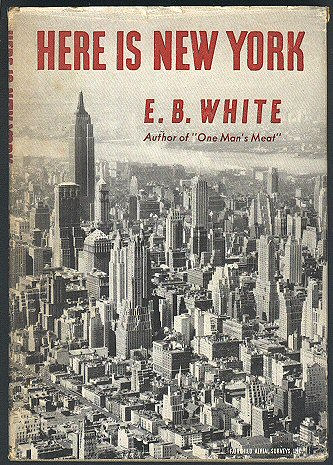
Teaser Tuesdays: “Here is New York” by E.B. White

Teaser Tuesdays is a weekly bookish meme, hosted by MizB of Should Be Reading.

here is new york

I’ve heard about this essay over the years, and have finally gotten around to reading it for a class I’m taking. I think it’s quite lovely and expressive, and I suspect it still rings true in the New York of 2015, though E.B. White wrote it in 1949. I especially loved this line:

And the fan takes over again, and the heat and the relaxed air and the memory of so many good little dinners in so many good little illegal places, with the theme of love, the sound of ventilation, the brief medicinal illusion of gin.

I think it is the illusion of gin that did it for me.

You can read the full essay here.

Her Own Vietnam by Lynn Kanter

A woman’s story of wartime PTSD gathers complex characters to shed light on a little-discussed point of view.

vietnam

Her Own Vietnam, by Lynn Kanter, is the story of Della Brown, who served as an army nurse in Vietnam but only begins to address her trauma decades later, when an old friend who shared that experience contacts her out of the blue. Kanter portrays Della’s painful chronicle with sensitivity and surrounds her with a family that is imperfect but, for the most part, making an effort. The resulting novel is insightful in telling of the little-known struggles of women “in that green and poisoned country.”

…Click here to read the full review.


This review was published on February 27, 2015 by ForeWord Reviews.

IMG_4538


My rating: 8 flowers.

Travels in Vermeer by Michael White

A poet’s quiet, beautifully composed, powerful story of self-healing by viewing the paintings of Vermeer will be a balm to troubled minds as well as satisfying to lovers of art and memoir.

travels

Poet Michael White’s unusual and riveting memoir, Travels in Vermeer, opens in the midst of a nasty divorce and custody battle. White lost his first wife to cancer, but counts this second marital tragedy as a “total loss,” of faith as well as of his partner. Reeling, he flies to Amsterdam (“all I’d wanted was an ocean behind me”), and heads to the Rijksmuseum to see Rembrandts. But what he sees instead is The Milkmaid, a tiny painting by Johannes Vermeer. The maid evokes a “tingling at the back of [his] scalp,” and this knee-buckling discovery inspires a plan, hatched on the museum grounds, to devote his breaks from teaching university-level creative writing to traveling the world viewing all the Vermeers he can. For the next 14 months, he chases the life-changing insights and soothing, healing effect provided by the Dutch master’s small-scale, intuitive paintings, in which he sees expressions of love.

White studies biographies and art criticism about Vermeer, while visiting museums in The Hague, Washington, D.C., New York City and London. The reader shares in this lucid examination of Vermeer’s remarkable lighting techniques, occasional trompe l’oeil and the solitary women who feature in his work (alongside a few group scenes and landscapes). White sheds light as well on his difficult childhood, including a scene when his mother dumps him unannounced at his father’s apartment, following their divorce: unlike White’s own daughter, he was an apparently unwanted son. While Vermeer occupies the bulk of this brief, eloquent book, a few scenes from White’s battle with alcoholism and his tentative success with Alcoholics Anonymous round out a self-portrait sketched with great feeling in few words. Only a poet could communicate so economically, in language deserving of contemplatively paced reading.

White’s descriptions competently guide even the most unfamiliar or untrained reader through an appreciation of the mechanics and mysticism of Vermeer’s art. Readers will regret the lack of reproductions of the paintings under consideration; but as he observes upon meeting Girl with a Pearl Earring, “reproductions are useless.”

Travels in Vermeer is a thoroughly user-friendly piece of art education, but it is even better as a thoughtful, spare memoir of pain and recovery, unusually formatted and exquisitely moving. For a companion piece, consider White’s previously published book of poetry inspired by the same journey, entitled Vermeer in Hell.


This review originally ran in the February 27, 2015 issue of Shelf Awareness for the Book Trade. To subscribe, click here.


Rating: 9 daubs.

Luigi’s Freedom Ride by Alan Murray

A novel of love and bicycles, both funny and poignant, beginning in Mussolini’s Italy and traveling around the world.

luigi

Alan Murray (The Wealth of Choices; Showdown at Gucci Gulch) tries his hand at fiction with Luigi’s Freedom Ride, and achieves a rare blend of humor, solemnity and grace in this sweeping tale. Luigi Ferraro was born in 1921, in a small Tuscan village where he learned metalworking and a love of bicycles from his Uncle Cesare. Under Mussolini, Luigi is conscripted into the Italian army with his two best friends and trains in the cycling corps; he escapes and joins a group of partisans resisting fascism, and experiences both love and loss. The heartbroken young man then sets out on an international tour via bicycle and train, visiting Jerusalem and Sri Lanka and circumnavigating Australia, that “furthest place” he’d been seeking. Finally, Luigi dismounts in Sydney, where unexpected good fortune awaits him. With friends, family, love and pain spread around the globe, will he ever make it back to Tuscany?

Murray’s quirky tone is absolutely charming, managing to express both the brutality and ugliness of war as well as the sweetly naive foibles of a young man learning about the wider world. Luigi is deeply endearing: he is well-intentioned but inexperienced, confounded by the English dialects of the Scots, Australians and Americans he meets, loyal and quick to love. Employing the bicycle as a symbol of freedom, fun, adventure and forward movement, Luigi’s Freedom Ride is a novel about hope, self-determination and fresh starts, both heartfelt and surprisingly optimistic.


This review originally ran in the February 24, 2015 issue of Shelf Awareness for Readers. To subscribe, click here, and you’ll receive two issues per week of book reviews and other bookish fun!


Rating: 8 clicks.

Death Comes for the Deconstructionist by Daniel Taylor

Weighty subjects and introspection never bog down Taylor’s quirky characters as they rush toward a surprising finish.

deconstructionist

Death Comes for the Deconstructionist, by Daniel Taylor, is a slim, funny, thoughtful novel about mental illness, academia, self-knowledge, and philosophy, with a murder mystery thrown in.

Jon Mote, a failed husband and failed graduate student, lives with his sister on a houseboat in St. Paul, Minnesota. When the widow of a murdered professor calls, asking him to look into the death of his former dissertation director, Mote is reluctant—his usual part-time research work involves, for example, the history of popcorn or insurance rates—but he needs the money. Alongside his incessantly sunny but unwell sister, Judy, Mote will have to revisit his own past, as well as that of the highly accomplished Doctor Pratt, who turns out to have a surprising number of enemies. The voices in Mote’s head grow more insistent as the case stresses his fragile grip on reality. Despite her own handicaps, Judy may have to hold things together.

…Click here to read the full review.


This review was published on February 27, 2015 by ForeWord Reviews.

IMG_4538


My rating: 7 zippers.

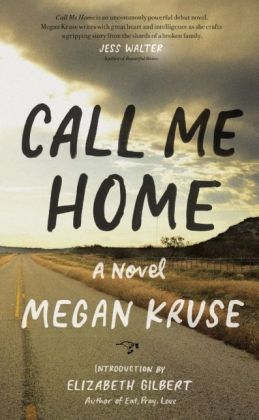
Teaser Tuesdays: Call Me Home by Megan Kruse

Teaser Tuesdays is a weekly bookish meme, hosted by MizB of Should Be Reading.

call me home

What a beautiful book. I had the added feeling of synchronicity, that it handles a move from Texas to my very region of Washington state. But even without sharing those personal details with this family, I think this is a moving story. And then these lines.

There was a bar for every loneliness, he suspected. A bar for every sad story, and one for every joy. All of those things, contained in the shifting glass, the water rings and fingerprints across old wood, the smell of sweat.

I’m a sucker for writing about bars, as place and atmosphere. Stick around.

This quotation comes from an uncorrected advance proof and is subject to change.