Pegasus Descending by James Lee Burke

“Was it you or Purcel who said most of the world’s ills could be corrected with a three-day open season on people?”

“It was Ernest Hemingway.”

“I’ve got to read more of him.”

pegasusOn a recent vacation, I ran out of reading material (!!) and took the opportunity to visit the local Half Price Books. I was happy to indulge in an old favorite, James Lee Burke, and also to read something I picked out all by myself.

Pegasus Descending is not one of the more recent Dave Robicheaux novels, although it’s not one of the first, either, which surprised me. It reads like quintessential, vintage James Lee Burke, and vintage JLB means excellent JLB: I enjoyed it very much.

To place this one in the series for Burke fans: Robicheaux is married to Molly the former nun in this installment, and working as a detective for the New Iberia (Louisiana) PD, where his boss is the androgynous, likeable Helen Soileau. Clete Purcel comes into play, too, and unsurprisingly falls for a dangerous woman (what else is new). The novel starts with a flashback to Robicheaux’s hard drinking days, when he watched a good friend’s murder and was too drunk to stop it. Flash forward again, and that man’s daughter enters Robicheaux’s jurisdiction and tries to pass marked bills to a casino. He feels obliged to help her if he can, out of respect for his dead friend. At the same time, a young woman shows up dead – by murder? suicide? – to whose family Robicheaux also feels some responsibility. Against the advice of his superiors and wife (again, what else is new), he insists upon pressing the buttons of a few dangerous, powerful, criminal men around town, and the bodies continue to mount.

Burke’s favorite themes are all present: difficulties with alcohol and authority; the sensations of the air off the bayou and the local cooking and culture; the imperfections that lie deep within our psyches; race relations; and the question of pure evil. Also family dynamics and love and battered, bruised redemption. I love this guy.


Rating: 7 three-legged raccoons.

A View From the Bridge by Arthur Miller

view-bridgeAnother tragic dramatic masterpiece from Arthur Miller. I read Death of a Salesman and The Crucible in school; I am hoping to see this one produced onstage soon, so I picked up A View From the Bridge, and it was as great as the others.

Eddie lives in an Italian neighborhood of New York City with his wife Beatrice and Beatrice’s orphaned niece Catherine (Katie). Beatrice’s cousins are coming over illegally from an impoverished town in Italy, to work on the docks and raise money to send back home. The elder, Marco, has a wife and three children to support. The younger, Rodolpho, catches the eye of the teenaged Catherine, who Eddie loves perhaps more than is appropriate. There are oblique references to Eddie and Beatrice’s sex life having suffered lately, and also to Rodolpho being a bit effeminate for Eddie’s tastes. Financial and sexual tensions arise and the ending is not happy.

The building tension in this unassuming domestic setting reminds me of Tennessee Williams and The Glass Menagerie, a play I should read again someday. The working-class frustrations of Eddie, a longshoreman, feel familiar to me from other Miller plays. Themes include the concept of “rats”, or those who tell tales; loyalty and secret-keeping; and the machismo of the docks, not to mention obsessive love. The View From the Bridge is a powerful, emotionally moving classic tragedy, and I can’t wait to see it on the stage.


Rating: 8 coffees.

Maximum Shelf author interview: Leslie Parry

Following Monday’s review of Church of Marvels, here’s Leslie Parry: Trusting the Characters.


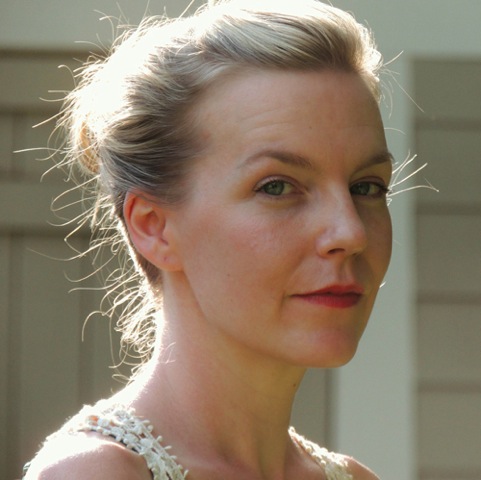
Leslie Parry is a graduate of the Iowa Writers’ Workshop. Her stories have appeared in the Virginia Quarterly Review, Missouri Review, Cincinnati Review, and the PEN/O. Henry Prize Stories, among other publications. She was recently a resident at Yaddo and the Kerouac House. Her writing has also received a National Magazine Award nomination and an honorable mention in The Best American Short Stories. She lives in Chicago.

photo: Adam Farabee

photo: Adam Farabee


Church of Marvels inhabits a very compelling and specific setting that combines fantasy and history. How did you choose this time and place?

I didn’t consciously set out to write a book about New York, but the sensory experience of living there (the space, the light, the sounds and smells) remains very vivid in my mind, years after I moved away. Like many Americans, the city was a portal for my family. My great-grandfather, who was born in 1888, grew up in an immigrant family in Greenwich Village. His own father was a dreamy, dissolute, would-be poet who operated an elevator; his mother and sister worked as dressmakers. He fell in love with my great-grandmother, an actress, when he saw her on the stage. It’s a story that’s always fascinated me, but because he died so young, it’s all that I really know of him. So at the root of this book, perhaps, is the desire to re-create the world that he lived in, to imagine a history of the Parrys in America. But the story, of course, became something else entirely. And once I started following these specific characters through the streets of Manhattan, the book took on a life of its own.

How much research did you have to do into this historical setting, and what did that process look like?

Before I even knew this was going to be a novel, I was reading certain books just out of curiosity–New York history, medical history, labor history; various histories of vaudeville, dime museums, prizefighting, theater. I even read a book on the history of garbage. So I’m sure all of those various threads were humming along in my mind, crossing and sparking, when I sat down to write. Then, when I was deep into the drafting process, I went back and did some more focused reading: on hair weaving, river transportation, the opium trade, etc. I loved doing research: it answered questions I didn’t even know I had, and helped me understand the hurdles these characters would have been up against. But at the same time–since this is a work of fiction–I didn’t feel beholden to a strict factual representation. I let the research inform the story, but not determine it.

You tell a number of different stories that eventually converge into one. Was it hard to keep track?

Yes! And more so at first, when the story was still taking shape. I knew the direction I was traveling–I knew, in a loose way, how I wanted the plot to evolve–but I didn’t always have a clear path. I took a lot of wrong turns and hit a few dead ends. But I was guided by the overall sensibility of the story; I had to trust the characters. And I was fortunate enough to have a terrific editor help me across the finish line.

Did you always intend to write them as distinct stories?

Yes. In fact, the very first pages of this novel were not novelistic at all. I began writing vignettes about people who populated different areas of the city–just character sketches, really. It was almost like an actorly exercise, trying to situate myself in another body, in another world. This came about after spending some time in New York, where a few chance encounters happened to dovetail serendipitously. I caught a sideshow act at Coney Island; I read Nellie Bly’s Ten Days in a Mad-House; I spent days traversing downtown Manhattan with my sister (usually on the hunt for gelato, mussels, pickles, dumplings). I stumbled across the word night-soiler, I think during a visit to the Tenement Museum. But I got frustrated with these vignettes after a while, unsure where they were headed. I put the pages away for a few years, but I kept thinking back on them. One day I read everything through again and saw the whole project differently–it was a novel, and soon the threads began to braid together.

What do you think makes for good or memorable characters?

That’s a good question. I’m drawn to characters who make mistakes. (This is different from having an endearing flaw–being beautiful but clumsy, say, or handsome but moody.) Mistakes–whether they’re decisions made impulsively, or are calculated; whether they happen in spite of a character’s better judgment, or begin as acts of good faith, naiveté–they reveal some of the most complicated aspects of human behavior. Confusion and doubt, shame or regret, thwarted desire, yearning, fury, vulnerability, perhaps a barbed pathway to amends–it’s a universal experience, and yet has infinite variations.

Do you have a favorite character?

Whichever character I was writing about at the moment became my favorite (even when they tried me and exasperated me!). But there is a special place in my heart for Alphie.


This interview originally ran on April 2, 2015 as a Shelf Awareness special issue. To subscribe, click here, and you’ll receive two issues per week of book reviews and other bookish fun!

Teaser Tuesdays: A Buzz in the Meadow by Dave Goulson

Teaser Tuesdays is a weekly bookish meme, hosted by MizB of Should Be Reading.

buzz

My teaser today from A Buzz in the Meadow: The Natural History of a French Farm is actually a footnote, outside the main text; but I felt it was too profound not to share.

Sadly, funding for taxonomic work such as describing new species has shrivelled in recent decades, so such specialists are now hard to find. Soon there may be no experts left in many fields, so there will be no one to go to for help if you suspect you have discovered a species new to science.

It’s a sad world.

This quotation comes from an uncorrected advance proof and is subject to change.

Maximum Shelf: Church of Marvels by Leslie Parry

Maximum Shelf is the weekly Shelf Awareness feature focusing on an upcoming title we love and believe will be a great handselling opportunity for booksellers everywhere. The features are written by our editors and reviewers and the publisher has helped support the issue.

This review was published by Shelf Awareness on April 2, 2015.


church

Leslie Parry’s debut novel, Church of Marvels, is set in 1895, in phantasmagorical New York City, and stars a weird, lovable cast. Four protagonists share the spotlight in alternating chapters: recently estranged twin sisters Belle and Odile, orphaned loner Sylvan Threadgill, and the mysterious Alphie.

Belle and Odile’s mother was the indomitable and fabled Friendship Willingbird Church, a runaway who at age 14 dressed as a boy to fight for the Union army, and later established her own circus theater on Coney Island, called the Church of Marvels. After the Church caught fire and Friendship died in its embers, Belle (ever the adventurer) left for the city with a secret that readers must wait for and wonder about. Odile stayed behind, wondering herself at her sister’s abandonment. Belle writes home: “You, dear sister, have always been the brave one, the good one, the strongest of all.” But Odile is not the brave one, and her sister’s letter illuminates nothing about Belle’s new life.

Sylvan Threadgill earns his wages as a night-soiler, cleaning out tenement privies on the Lower East Side. He moonlights by competing in fights that take place and are bet upon in back rooms and on the docks. In the novel’s opening pages, Sylvan, at work one night, finds an unusual treasure in the filth: a baby girl, pale and green-eyed, “with a small nose and a dimpled chin like a pat of butter someone had stuck their thumb in.”

Alphie is an undertaker’s wife with a scandalous past who awakes one morning, disoriented, to find herself imprisoned in the asylum on Blackwell’s Island. She is desperate for rescue, sure that her husband will come, sure that her plight is another evil trick of her mother-in-law’s.

These four characters occupy separate stories for much of the book, and are joined by a colorful supporting cast. There are actors from the sideshow: a boy who is half girl, a girl with four legs, the man who throws knives at Odile as she rotates slowly on a wheel. There is the woman Sylvan turns to for help with the baby, and the very different woman Belle turns to for a very different sort of help. A strange parade of children who dwell underground put on a show for Odile when she reaches Manhattan, with implications she takes personally; Alphie’s fellows, from her past life, shed a harsh light. This array is completed by the baby Sylvan liberates. An orphan himself, he is unable to turn away from her stark need. But a part-time pugilist who was never parented himself makes an inapt caretaker for a newborn.

However fantastical they may be, these eccentrics do not populate a fantasy, but a realistic, heartbreaking and sympathetic story of resilience and connections lost and found. Appropriately, the action of the novel begins with Odile’s breaking character. She had found familiar if uncomfortable circus work with another theater company following her mother’s death, but now leaves to pursue Belle, a journey that leads her into underground opium dens, a hothouse flower nursery curated by an enigmatic woman, and the back alleys of the tenement district. She finds an unlikely ally in her hunt for her sister, just as Belle finds her own, “in this city [where] the lights burn ever brighter, but they cast the darkest shadows.” In chapters alternating among third-person perspectives, we track the movements of the four protagonists as they close in, geographically and philosophically, on the end of their individual and shared stories.

Parry’s central players are each mysterious and multi-layered, and readers will receive shocking new intelligence in the final pages of this masterful novel. In gradually, teasingly unveiling myriad deceptions, Parry shows perhaps her greatest strength.

The atmosphere she evokes is both whimsical and grotesque. The gruesome, appalling asylum, roiling with violence and refuse, and the babies abandoned in privies paint a brutally harsh picture. But the free-wheeling circus performers and the Church family history contribute a note of fancy. Alphie’s life story in particular provides a showcase for this dualism, where horror meets magic–she once worked on the street as a “penny Rembrandt,” painting men’s faces with great skill to cover up the bruises and sallowness of their dissipated nights, so that they could go home to their respectable lives. Church of Marvels demonstrates fascinating characterization and atmosphere as well as a riveting plot.

The bizarre and fanciful world contained in New York City at the turn of the last century is a playground for Parry’s magnificent, alluring prose. These enchantments make Church of Marvels memorable. But it is the compelling characters, both larger-than-life and poignantly real, that exhibit beauty, wonder and distress, and will most beguile readers in the end.


Rating: 7 swords swallowed.

Come back Wednesday to read my interview with Leslie Parry.

The Wilderness of Ruin: A Tale of Madness, Fire, and the Hunt for America’s Youngest Serial Killer by Roseanne Montillo

A dramatically told history of murder, madness and urban growing pains.

ruin

In The Wilderness of Ruin: A Tale of Madness, Fire and the Hunt for America’s Youngest Serial Killer, Roseanne Montillo (The Lady and Her Monsters) concentrates on a gripping era of Boston’s history. In the late 1800s, a series of seemingly unrelated events are her focus: the Great Fire of 1872, which broke out despite the efforts of a fire chief who saw dangers parallel to Chicago’s Great Fire the previous year; the literary work of Herman Melville, who was increasingly fascinated by the concept of insanity; and, at the heart of this book, the crimes and incarceration of a boy named Jesse Harding Pomeroy.

Montillo follows Pomeroy’s childhood, his early crimes of torture against younger boys and the murders of two small children for which he would be convicted, in a burned-out city struggling with modernization and increasing class divisions. Throughout the investigation and trial, Pomeroy exhibits characteristics that would later have termed him a psychopath, and his lawyers’ attempt to plead insanity is part of the early establishment of precedent in such cases. Meanwhile, Melville experiments in his literature with the labels of monomania and moral insanity, and Dr. Oliver Wendell Holmes applies his medical expertise to the possible role of sensational dime novels in Pomeroy’s crimes, and weighs in on the question of executing the boy, who was 14 years old at the time of his conviction. Using detailed research, Montillo braids together these cross-disciplinary subjects–urban development and class, fire and murder, the definition of insanity and the standards of judicial punishment–into a story that has the momentum of a thriller.


This review originally ran in the March 31, 2015 issue of Shelf Awareness for Readers. To subscribe, click here, and you’ll receive two issues per week of book reviews and other bookish fun!


Rating: 6 piles of ashes.

The Wild Party by Joseph Moncure March, illustrated by Art Spiegelman

What?! I found time to read a book just ’cause I wanted to? I know! It was amazing. I’ve read a lot of truly astonishing good books this year that I got assigned to read; but there’s nothing like choosing one myself.

wild partyIt was from MetaMaus that I first learned about this slim book, and it is worth tracking down, friends. The Wild Party is a book-length story-poem originally published in 1928 but banned far and wide for its explicit content. (Tame by our standards today: there are references to sex and a fistfight or two. And lots of booze.) It is the narrative of a party, in the jazzy, profligate 1920’s. Queenie and Burrs live together, but their relationship does not run smoothly; in the opening stanzas they threaten each other’s lives, and then make a very tentative peace by deciding to throw a party that night. Everybody comes: and the descriptions of their guests are lovely, vivid, ghoulish and grand. The party itself does not run smoothly, either. It is a great orgy of drink, music, betrayals and sex. It’s awesome.

I loved Art Spiegelman’s introduction, in which he points out that he doesn’t normally do poetry (thus reassuring the rest of us, likewise). William S. Burroughs gave confirmatory acclaim to March’s work by reciting a good portion to Spiegelman at their first meeting. And of course I loved Spiegelman’s illustrations of the poem, which conform perfectly to March’s words. There’s nothing like a literary work that is evocative of pictures… unless it is those pictures also perfectly composed.

A quick read of, I don’t know, under two hours, this narrative poem takes the reader on a wild ride, and Spiegelman paints it beautifully. Do check it out.


Rating: 8 unnamed drinks.

Hammer Head: The Making of a Carpenter by Nina MacLaughlin

The pile of boxes dwindled at the bottom of the stairs and grew at the top. Ten boxes left, then four, then one, and I realized I should not have left the two bags of cement for last. I climbed eight hundred and ten stairs that day, hauled up nine hundred ninety-five pounds, nearly half a ton. The feeling that resulted from the effort, the satisfaction, was so different from the one I knew putting a final period on a book review or a profile on deadline.

The journey of a journalist-turned-carpenter, a woman in a man’s world, both thoughtful and spirited.

hammer head

Nina MacLaughlin studied English and Classics in college, and went on to work for a Boston newspaper. She spent her 20’s there, increasingly frustrated by pointing and clicking and sinking into her desk chair, so she walked away, unsure of what was next, until she spotted an ad for a carpenter’s assistant: “Women strongly encouraged to apply.” MacLaughlin relates the journey offered by that opportunity in Hammer Head: The Making of a Carpenter.

MacLaughlin’s new boss, Mary, describes herself as a “journeyman-level carpenter and a slightly better tiler.” MacLaughlin doesn’t know what these words mean, but brings her strength, work ethic and quickness to learn, and finds an unexpectedly rewarding new life working with her hands: “The feeling that resulted from the effort, the satisfaction, was so different from the one I knew putting a final period on a book review or a profile on deadline.” She documents years spent learning and working in a male-dominated field, occasionally seasoned with observations referencing poets and ancients, but mostly living and reveling in the tangible: calluses, sinews, wood and sweat. That interplay of the physical and the intellectual centers this book, which is itself both intelligent and well-muscled, hardy and poetical.

Organized by tools that represent qualities of character, Hammer Head is unsurprisingly beautifully written, and well supported in both its structural and its cerebral elements. MacLaughlin’s voice is wise and playful, wondering and astute, and Mary is a marvelous character, levelheaded and non-demonstrative. The result is a charming, thought-provoking, utterly lovely ode to work and life and learning.


This review originally ran in the March 24, 2015 issue of Shelf Awareness for Readers. To subscribe, click here, and you’ll receive two issues per week of book reviews and other bookish fun!


Rating: measure 9 times.

Teaser Tuesdays: Mislaid by Nell Zink

Teaser Tuesdays is a weekly bookish meme, hosted by MizB of Should Be Reading.

mislaid

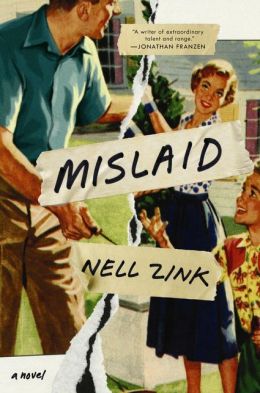
Here, I found you an outstanding book! Read this book! First, read this sentence.

When two females vanish from a patriarchy, both of them attached to a homosexual, the ripples can be truly minimal.

Sad, funny, true. That’s my three-syllable review. Seriously, Mislaid has everything in it that is in life, and it’s less than 300 pages. I am impressed.

Stay tuned, as ever, for my longer review.

This quotation comes from an uncorrected advance proof and is subject to change.

The Unraveling of Mercy Louis by Keija Parssinen

A lovely, thoughtful, disquieting story of the effects of small-town pressures on a remarkable young woman.

unraveling

Keija Parssinen’s (The Ruins of Us) The Unraveling of Mercy Louis depicts a young woman’s coming-of-age in small town peopled by complex, conflicted, ultimately sympathetic characters.

Port Sabine is a refinery town on the Texas Gulf Coast, depressed and parochial, built around oil, secrets and religion. Mercy Louis lives with her grandmother Maw Maw, a radical evangelical who prophesies the end of the world will come in Mercy’s senior year. A basketball prodigy, Mercy needs this senior year to show the scouts that she’s worth the investment, so she can go to college if Maw Maw is wrong. A discovery in a dumpster throws the town into upheaval and witch-hunting, even as Mercy begins to explore the secrets of her own past as well as the possibilities of her future.

The cast of characters includes Mercy’s best friend, Annie, riotously rebellious and rich; Mercy’s mother, absent until a mysterious letter arrives; and Illa, the manager of the basketball team and a hopeful sports photographer with troubles of her own, fixated upon Mercy in her camera’s lens. A new boy in Mercy’s life–the first–threatens to upturn her delicate balance: obedience to Maw Maw and the church, and the poetry she makes on the basketball court.

Although this is clearly Mercy’s story, many of these characters captivate and capture the imagination; Parssinen’s gift is in rendering the essences of both people and place. The Unraveling is suspenseful and disturbing, compassionate and tender, a thought-provoking experience for anyone who’s ever been young and wondered about the past, and the future.


This review originally ran in the March 20, 2015 issue of Shelf Awareness for Readers. To subscribe, click here, and you’ll receive two issues per week of book reviews and other bookish fun!


Rating: 8 points.