movie: The Hateful Eight (2015)

hateful eight

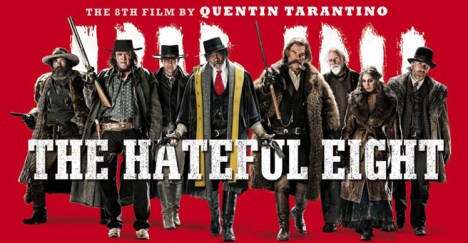
In a word: not Tarantino’s best. I felt pretty quickly bombarded with heavy-handed racial slurs (Tarantino loves the n-word) and racial conflict – not that this stuff is not rich source material for drama and social critique, but that’s not really what’s going on here. No, this felt gratuitous. As in, tapping straight in to such grotesque subjects is an easy and direct route to the kind of shock value that Tarantino is known for. I prefer when he writes it into the script, though, rather than access it via well-established societal pain pathways.

Husband’s less convoluted criticism was that this movie never got exciting in the way that Tarantino’s best work does. There were few-to-none of those gasp-and-jump moments. The gore was slightly less well done, more cartoonish, and less prodigious than his best (I’m remembering a few key scenes from Pulp Fiction). Almost all the action takes place in closed-room settings, which as we know can be highly effective, but here contributed to a feeling Husband and I shared, that not much happened. And finally, the classic Tarantino dialog – wordy and long-winded, sarcastic and highly explicative – felt a little timeworn here. I can’t account for this feeling: am I just getting sick of hearing this kind of hot air? (I think not, as the Tarantino classics still appeal, even after many viewings.) I suspect this script is simply less well-written.

Graphic violence, rampant obscenity, and discomfiting racism are among Tarantino’s best-known themes. And I’m no Puritan when it comes to that stuff (for example, I loved Django Unchained). But here – and with the added misogyny, which he is not so well-known for – it felt like he was merely wielding those tools (violence, racism, etc.) for their own inherent powers to harm, rather than contributing the wisdom and humor in interpretation that I come for.


Rating: 5 blood spatters.

movie: Breakfast at Tiffany’s (1961)

breakfastFinally got around to the movie! This 1961 adaptation of the Truman Capote novel was an enjoyable visual and emotional experience – not quite the same feat the novel achieved, but what else is new? Perhaps the main point – not that you didn’t know it – is that Audrey Hepburn is a doll. Movies this old generally feel slow-paced to today’s audiences, and while this was true here, the appealing visuals – Audrey, as well as historic New York – and intrigue of the story were plenty engaging for me. Husband went to bed before it was over, though. I wonder if it would have been more interesting if he had also read the book first.

audrey

It should not be surprising that the gender roles of the time were hard to watch sometimes, but again, what’s new. There were a few twists from the story Capote wrote (that’s why they call it an ‘adaptation’), but I felt that the feeling was faithful. Holly Golightly is an airhead, a dingbat, obnoxiously needy; but on another level, surprisingly self-aware and conniving, even wise. This is what I interpret O.J. Berman means when he calls her a “real phony.” The emotional effect of this character – dingy, ditzy, defiant, vulnerable, both an object and the vehicle of her own existence, both stupid and clever – is the strongest element of the film, despite certain weaknesses. For example, Mickey Rooney’s portrayal of Mr. Yunioshi is obviously, cringingly racist to today’s eyes. It can be hard to reconcile these things. But there it is; I watched the movie anyway.

This is a historic and iconic adaptation of a fine novella, and well worth viewing.


Rating: 7 cigarettes.

Distant Light by Antonio Moresco, trans. by Richard Dixon

A man on a remote mountain puzzles over a mysterious distant light in this gently disquieting novel.

distant light

Antonio Moresco offers an otherworldly story of isolation with Distant Light, translated from the Italian by Richard Dixon. The unnamed narrator opens with the statement that “I have come here to disappear.” He is the sole resident of an abandoned village in the mountains, and spends his day wandering the ruins of houses, sheds and a cemetery that are fast returning to nature. He contemplates the forces around him, described in sinister terms: evil, savage plants strangling and fighting one another in “this slaughter, this blind and relentless torsion they call life.” While bothered by these thoughts, and the noises of the wild animals, he is most tormented by the mystery of the light across the gorge. Deep in a thick forest, the light comes on each evening at the same time. What could it be–human, bioluminescence, alien?

Distant Light combines poetry and philosophy, and employs a setting both threatening and teeming with life. In a plot where not much happens, with few characters and no names, Moresco nevertheless evokes profound concepts and deep emotions. His quietly anguished protagonist claims to seek seclusion but cannot put down the question of the “maelstrom of little lights.” When the man finally crosses the gorge and meets the small boy living alone in an ancient house, he finds only another puzzle. Lonesome, dreamy, desolate, this is a novel of reflection on humanity’s place in the universe and the fluid relationship between life and death. Patient readers of philosophy will appreciate this brief but deliberately paced meditation.


This review originally ran in the March 29, 2016 issue of Shelf Awareness for Readers. To subscribe, click here, and you’ll receive two issues per week of book reviews and other bookish news.


Rating: 7 potholes.

Growing Up Twice: Shaping a Future by Reliving My Past by Aaron Kirk Douglas

A raw, honest, and inspirational memoir about a young man growing into his own while mentoring another.

growing up twice

Growing Up Twice is Aaron Kirk Douglas’s memoir about acting as a Big Brother to an at-risk teen named Rico and how their interactions moved him to rethink his own upbringing. The sometimes unpolished language does not detract from a story that is powerful and heartfelt, and certain to appeal to a wide variety of audiences.

…Click here to read the full review.


This review was published on March 23, 2016 by ForeWord Reviews.

clarion 3 star


My rating: 6 Frisbees.

Alligator Candy by David Kushner

This tender, intimate memoir probes the childhood murder of the author’s older brother.

alligator candy

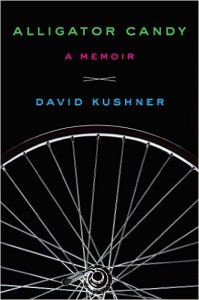
On a Sunday afternoon in 1973, 11-year-old Jon Kushner rode his bike through the woods to the 7-Eleven. His four-year-old brother, David, had asked for one kind of candy in particular. Jon’s family never saw him alive again. Journalist David Kushner still struggles to fathom his brother’s murder and his family’s experience; Alligator Candy is his memoir of investigation and connection.

Kushner lovingly portrays his hippie parents, eldest brother and Jon, who struggled with an auditory deficit disorder and was known for his compassion. Their community in Tampa, Fla., included activists and academics, and emphasized freedom and the outdoors. It was perfectly natural for a boy to ride alone through the woods. Jon’s murder presaged an end to the “ability of kids to simply get on their bikes and go,” as one family friend put it.

Alligator Candy explores how a family and community survive loss. The twin terrors of not knowing fully what happened versus knowing the horrific details of exactly what was done to Jon comprise only two reasons that this is a painful story. However, Kushner can also be funny, and he skillfully captures a child’s innocent curiosity, even in loss. He writes so simply, but this is deceptive. Alligator Candy is sensitive, insightful and understated.

Forty years later, Kushner (Bones of Marianna; Masters of Doom) still struggles with grief, isolation and guilt. In writing Alligator Candy, however, he discovers certain details of his brother’s case for the first time, begins to comprehend his family’s coping methods and, finally, achieves a long-sought connection with Jon.


This review originally ran in the March 25, 2016 issue of Shelf Awareness for Readers. To subscribe, click here, and you’ll receive two issues per week of book reviews and other bookish news.


Rating: 7 pieces of gum.

Beijing Comrades by Bei Tong, trans. by Scott E. Myers

A passionate, troubled love affair between two men is set in a time of cultural upheaval, in late 20th-century China.

beijing comrades

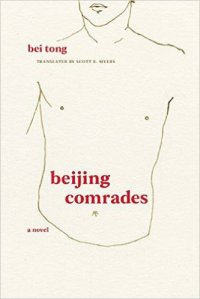
Translator Scott E. Myers’s introduction to Beijing Comrades is itself an engrossing story: the tale was originally serialized online, and the author–listed here as Bei Tong, elsewhere as Beijing Comrade, Miss Wang and other names–remains anonymous; Myers does not know Bei’s gender. This is the first English translation and the third version of the novel to be published, combining two previous publications and a new manuscript by Bei with an expanded story and explicit sexual detail.

Beijing Comrades is about Handong, a privileged, successful, egotistical businessman, and Lan Yu, a younger man of modest circumstances. When Lan Yu arrives in Beijing as a student, Handong immediately takes him as a lover. The older man had been accustomed to myriad sexual conquests of both men and women, defined by psychological domination and materialism, but this liaison is different, eventually coming to dominate both men’s lives. Over the years, Handong and Lan Yu strain to reconcile their relationship with a culture in upheaval: late 1980s China, experimenting with capitalism, approaching the Tian’anmen Square protests, increasingly materialistic and anti-gay.

While the dialogue is stylistically inconsistent, reminding readers of the fact of translation, the emotions of the story reinforce its realism. First-person narrator Handong is not always a likable character: he is cynical, profit-driven, fickle in love and often cruel. But these flaws make him credible, and even increase the impact of both men’s anguish.

Beijing Comrades is an important entry in the Chinese historical record as well as a moving, erotic and emotional novel.


This review originally ran in the March 25, 2016 issue of Shelf Awareness for Readers. To subscribe, click here, and you’ll receive two issues per week of book reviews and other bookish news.


Rating: 7 dinners out.

Personal by Lee Child (audio)

personalWhat else can I say about Reacher? In some ways, my review of this book is going to say “this is like all the other Reacher books,” but I mean that in the best possible way. He is still a whiz, a he-man, a polymath expert – although I do like the odd bit where he is lacking. For example, we’ve heard before that he’s not a very good driver: it’s not a skill he had much time to develop in his Army-based life. I also found it refreshing that in this installment (minor spoiler here) he does not sleep with any of the beautiful women. I mean, I enjoy those scenes; but it’s more realistic for him to bat less than 1.000, don’t you think?

Briefly: in Personal, Reacher is tracked down by an Army contact to whom he owes a favor. There has been an assassination attempt against the French president, and all the major world powers are pitching in to help solve the crime, because they fear for their own leaders’ safety at an upcoming G8 meeting. The shot was taken so accurately from such a distance that only a few snipers in the world could have done it, making the list of suspects very short. Reacher resists the conclusion, but it does seem likely that an American took the shot – specifically, a man Reacher sent away to prison for 15 years, just 16 years ago. He is paired up with a young woman from the State Department (…or is she?) to investigate, and travels from Seattle to North Carolina to Arkansas to Paris and London, etc. It is, typically, an exciting and blood-splattered storyline, and I loved every minute of it.

I’m not saying much new here – if you know and love Reacher, you’ll be pleased by Personal, another chapter in the longer story and not at all Lee Child’s weakest. Next!


Rating: 7 pills.

Fever at Dawn by Péter Gárdos, trans. by Elizabeth Szász

This historical novel of the hard-won love of two Holocaust survivors is based on the experience of the author’s parents.

fever at dawn

Péter Gárdos’s Fever at Dawn is a novel based on the lives and love of his parents. It spans less than a year, beginning in July of 1945. In that brief time, Gárdos evokes worlds of love and pain.

Miklós is a 25-year-old Hungarian Jew, an idealistic journalist and dreamy poet, just released from Bergen-Belsen concentration camp at the end of World War II. In the opening pages, he’s aboard a ship that will take him and 223 other survivors to Stockholm, to convalesce in Swedish hospitals under the administration of the Red Cross. In that first scene, Miklós collapses on deck. He is very ill with tuberculosis and is told he has six months to live. Undeterred, he requests from the Swedish Office of Refugees a list of women survivors who, like him, are being nursed in Sweden. He asks that they be from his region of Hungary and under 30. From his hospital bed in a “barracks-like wooden hut,” he writes 117 identical letters to these women. He gets 18 replies, and gains several pen pals, but only Lili captures his heart.

Over the next several months, Miklós and Lili correspond, exchanging stories from their past lives and their respective hospital settings hundreds of kilometers apart. Miklós asks for a picture of Lili, but is careful not to mention that he has virtually no teeth. Both make new friends: Miklós has Harry, the resident Don Juan, and a larger group of loyal comrades, while Lili has two confidantes. These secondary characters contribute to the budding romance in various ways. Fragments from the lovers’ letters supplement a narrative lively with humor and antics–at the men’s dorm in particular–as well as the continuing calamity of the war. In December, they manage to meet: Miklós travels all day for a brief visit, hoping to declare his love and be answered.

Gárdos draws this story in part from his parents’ letters, which his mother presented to him after Miklós’s death. Fever at Dawn, told in Gárdos’s first-person voice, is a sweet love story framed by horror. The war is over, but the bad news continues to trickle in. The Hungarians living in Sweden are displaced in every sense, seeking loved ones, scraping joy out of a bleak day-to-day existence. Miklós is repeatedly reminded of his six-month sentence, his time dwindling; but he is determined, after all he’s survived, to marry.

At once heartrending and lighthearted, this romance covers enormous ground in love and war, joy and tragedy, humor and pathos. Fever at Dawn, with its historical backdrop, will win over many readers.


This review originally ran in the March 24, 2016 issue of Shelf Awareness for the Book Trade. To subscribe, click here.


Rating: 7 scraps of cloth.

Teaser Tuesdays: The Hour of Land by Terry Tempest Williams

Teaser Tuesdays is a weekly bookish meme, hosted by MizB of Should Be Reading.

Terry Tempest Williams is as wonderful as ever. As I explore her work, I keep returning to her lesser-known Pieces of White Shell as my personal preference, but The Hour of Land is a new favorite.
hour of land
In these essays, she applies her wise, poetic eye to place, history, ecology, the future, and how we relate to one another, resulting of course in phenomenal writing. Naturally I turn to her chapter on Big Bend for today’s teaser, a single line I loved.

Ocotillo is a green withheld in winter.

Keep your eyes open for this treasure to come in June.


This quotation comes from an uncorrected advance proof and is subject to change.

National Theatre Live presents As You Like It (2016)

Back to the Pickford for a very fine production of As You Like It, a romantic comedy by Shakespeare which showcases his playfulness with gender reversals. This play introduces the line, “all the world’s a stage.”

photo credit: Mads Perch

photo credit: Mads Perch


I did not remember this one until we met Celia and Rosalind, and then I knew it. The plot, very briefly: Orlando is a frustrated younger son. Celia is the daughter of the new duke; her cousin Rosalind is the daughter of the banished duke. Thus they are both friends, and the respective daughters of rival brothers. Orlando makes a brave and foolhardy challenge, which he wins, but which puts him out of favor with several powers that be; he exchanges meaningful eye contact with Rosalind; the duke sends Rosalind away, and loyal Celia decides to go with her. Orlando and companion escape into the forest. Celia, Rosalind and their companion the court fool Touchstone likewise escape into the forest, in search of Rosalind’s father, the banished duke. Rosalind dresses up as a boy to help protect their little group. When she next encounters Orlando, then, he meets her as a boy named Ganymede. Ganymede convinces Orlando to court Rosalind with “him”self – Ganymede – as stand-in. In Shakespeare’s time these parts would all have been played by boys. So this is a boy actor playing a girl disguised as a boy pretending to be a girl. The play ends in the forest with a quadruple-wedding and a fascinating epilogue.

Shakespeare is a treasure, and this production was great fun. It begins modernized by an office setting, which I didn’t love but which was amusing in its own ways; but once we get into the forest it feels purely Shakespeare again, which is not to say dated so much as timeless. (National Theatre Live as usual gave us some expository narrative, which can get tiresome. But in this case I have to say: everyone who repeated over and over that Shakespeare is timeless and ever-relevant was perhaps not original, but absolutely correct.) The acting was great. Celia was played by Patsy Ferran, who starred so beautifully as Jim in NT Live’s Treasure Island. Celia is an interesting character, and Ferran is a joy to watch: she has a wonderfully expressive face. Rosalie Craig was outstanding as Rosalind/Ganymede, perhaps equally attractive in both roles.

But Orlando was my favorite, played by Joe Bannister who was too adorable as well as passionate, expressive, silly and dreamy. It’s a deep cast, both of great characters (Touchstone, Jacques, the Duke, Phoebe and Silvius – wonderful! – Audrey, on and on) and of fine acting. The singing Amiens was handsome and talented.

I like to study the plots of these plays before I see them. I think of that as being the right preparation for fully appreciating all the nuance. This time, I just fell down, and went in nearly blind: I had read this play before but it had been many years. But it cost me nothing. Shakespeare’s themes, emotions, passions and politics always feel fresh, and his work with language – well, he helped make English as we know it.* He coined or popularized many figures of speech we all take for granted today; and the dialog in his works, which sounds awkward to the modern ear for the first ten minutes, lapses into a very easily absorbed dialect in the next ten. He is still so funny – laugh out loud funny, which we don’t see all that often. (Mark Benton as Touchstone contributes significantly to that, too.)

A National Theatre Live review wouldn’t be complete without me mentioning, again, the cinematography. The more of these productions I see, the more I feel glad that I am sitting in a movie theatre, getting all the benefits of close-up shots and artistic angles, rather than the (considerably more expensive) single-angle view of the live audience. I’m not saying I wouldn’t attend live: I would love to. But I really appreciate the affordability as well as the high quality of this hybrid form. Oh, and set design: the transition from modern office to spooky forest is surprising, arty and intriguing, and surprisingly effective. I won’t ruin it for you.

Shakespeare and NT Live continue to make a winning combination. Don’t hesitate.


Rating: 8 necklaces.

*If you haven’t already, check out Bernard Levin’s “You Are Quoting Shakespeare” (text here; performed by Christopher Gaze here). There is also the perspective of this grumpy guy, who points out that Shakespeare was not the originator of every one of these phrases. I still think it matters to us that Shakespeare gave them to the world. For example: The Telegraph acknowledges the concept.