Enchanted Islands by Allison Amend

A woman with a modest past turns unlikely spy in the Galápagos in this evocative fictionalized history.
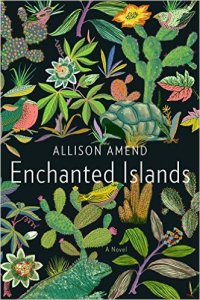
enchanted islands

Allison Amend’s Enchanted Islands is based on the life of a woman named Frances Conway, who lived with her husband, Ainslie, on the Galápagos Islands for several stretches in the 1930s and ’40s. Aside from her memoirs, which reveal only the day-to-day mechanics of her life, little is known about her. In Amend’s imaginative, richly detailed novel, Frances comes from a large, poor family of Polish Jewish immigrants in Duluth, Minn., where her lifelong friendship with a girl named Rosalie begins. The girls are in many ways opposites: Rosalie is from a relatively well-off family of better-established German immigrants; she is coddled, sexually precocious and selfish. As teenagers, the two run away together to Chicago, where a serious betrayal causes them to part ways.

When they reunite in middle age, Rosalie is married to a wealthy man and has a mansion filled with sweet children. Frances has recently married the tall, handsome, charismatic Ainslie Conway, but it is an arrangement orchestrated by Naval Intelligence, their shared employer. Ainslie is being sent to the Galápagos to keep an eye on suspected German spies, and Franny is part of his cover. The falsehood of their relationship pains Franny, and Ainslie has more secrets than just the nature of his profession. Still, the years on Floreana Island–one of the Islas Encantadas, as the Galápagos were once called–are the happiest of her life.

“You’re not allowed to read this–I’m not even really allowed to write it,” begins Enchanted Islands, Franny’s fictional third memoir. In her own words, she tells her life story with emotional resonance: confusion at Rosalie’s behavior as a teenager, bitterness and jealousy at her cruelties, a quiet if resentful acceptance of an unexciting life, and then exhilaration as she discovers Ainslie and stimulating new work, and rediscovers her old friend Rosalie. The narrative is colorful and sensually bursting, from the wet laundry that dominated her childhood home to the creatures and climate of Floreana, a changeable, isolated place both tropical and desert. These details are engrossing and lush, while the realities of World War II are recalled in dreamier terms; Franny is either far away on the island for much of it, or back at home in San Francisco feeling detached and lost without Ainslie. Her no-nonsense voice–by turns aggrieved, resigned, distraught, clever and wise–is the perfect foil to the fantastical nature of her life.

Amend offers strong, nuanced characters and a potent backdrop. Her prose is lovely without being overbearing, and her dialogue is impeccable, effortlessly evoking the characters’ lovable eccentricities and less lovable faults. With a wide-ranging, adventuresome plot and a humbly engaging protagonist, Enchanted Islands is a gorgeous piece of historical fiction.


This review originally ran in the May 3, 2016 issue of Shelf Awareness for the Book Trade. To subscribe, click here.


Rating: 7 camotes.

Notes from No Man’s Land by Eula Biss

notes from no man's landI am terribly grateful that I got to read this book with a class to help me along. That is, the same class that read Bernard Cooper’s wonderful Maps to Anywhere, about which likewise. I was once in a book club, not for very long, which I wished would go much more deeply and intellectually into very serious books. My father said back then, “it sounds like what you really want is a graduate school classroom.” I see now that he was right. This is “just” an undergraduate class, but a good one.

Notes from No Man’s Land is an essay collection that I think is most obviously about race in the United States, but it is about much more than that, too. The writer is a white woman (albeit one from a remarkably diverse family, not at all a white family), and in writing about race she takes on the voice of “the other,” always a nearly impossible thing to do sensitively, smartly and with authority, but she does it.

Like Maps to Anywhere, this is also a masterpiece of organization; we could pick apart the ordering and titling of Biss’s essays in several ways and still not be through with all she’s done here. The first and last (or next-to-last, depending on interpretation) essays are fragmented contemplations of apparently disparate subjects, that wrap this collection up intelligently. If I had to choose one word to characterize Biss, the writer, as I’ve come to know her on these pages, I would choose “smart.”

The language is poetry, too. Every word choice was considered and weighed. The connecting images are so many and complex that I can hardly begin to see how many levels this book might be read upon. Oh, and she works heavily with a sense of place: what else could I ask for? I will share a few lines, several pages apart:

I fell asleep to the distant sound of drums, which I was not always entirely sure was the distant sound of drums. Rain, blood in the body, explosions in the quarry, and frogs are all drums.

I know now that I left home and I left the drums but I didn’t leave home and I didn’t leave the drums. Sewer plates, jackhammers, subway trains, cars on the bridge, and basketballs are all drums.

And just as a sample (not to bore you), I’ll share a little of the analysis I wrote for class of Biss’s opening essay, “Time and Distance Overcome.”

I appreciated both the braided form, and all the white space.

There are three sections separated by a centered line. The longest single paragraph is about half a page long (wraps pages 5-6, about the sabotage against telephone poles that took place in Sioux Falls, SD and Oshkosh, WI). Mostly the paragraphs are just a few sentences long; five contain just one sentence each. These short, punctuated passages feel almost staccato, almost list-like. This works well for the subject matter, which begins benignly but quickly turns dark.

Biss begins with Bell’s invention of the telephone, and the reader has one expectation for the meaning of “time and distance overcome,” the title which tops this first page, where the telephone is introduced. The first section of the essay moves smoothly from telephones to telephone poles, and the resistance early telephone poles encountered. After that first break, though, the lynchings begin coming fast and thick, in short sentences that echo the choppy effect of Biss’s short, double-returned paragraphs. The first lines of this second section read:

“In 1898, in Lake Cormorant, Mississippi, a black man was hanged from a telephone pole. And in Weir City, Kansas. And in Brookhaven, Mississippi. And in Tulsa, Oklahoma, where the hanged man was riddled with bullets. In Danville, Illinois…”

This jarring delivery emphasizes the nasty jolt of the sentences’ content. Likewise, the direct leap into the new subject – no transition – increases the reader’s shock. Lynchings are shocking: this is appropriate. The short sentences and feeling of litany continues, from lynchings through race riots and from the South to the North, making clear a general rather than geographically specific trend.

The final, shortest section, at just half a page, mirrors the work of Notes from No Man’s Land as a whole. That is, it turns back around to an earlier time, Biss’s childhood, family history, and innocent view of telephone poles; there are no lynchings in this section, but there is reference: “Nothing is innocent.” Then there are the telephone poles in Nebraska that, after a heavy rain, grew small leafy branches. This image prefaces “All Apologies,” the concluding essay of the book which echoes this one in form, and concerns itself with regret, apology, the duality of responsibility/guilt, and what is owed. There is a small measure of hope in those green branches.

The most obvious thread or theme that holds this essay together is the telephone pole; the reader is prompted by the cover image. But the less obvious, more sinister themes are those that hold the book together: race relations, the complexities of varied perspectives. “The world was not waiting for the telephone.” “Even now it is an impossible idea, that we are all connected, all of us.” “But nothing, I would like to think, remains unrepentant.”

I think Biss’s opening essay shapes in miniature the work of her entire book; presages the final essay, which so nicely wraps up by recalling the opening; and uses form to emphasize subject matter. It’s an extraordinary essay in these layers of function, and I’m so glad to have her “Notes” to shed some light into her process.

I am impressed throughout with what Biss is confident enough to leave out, or point obliquely towards. I think it must take a lot of courage and self-trust (or is it trust in her reader?) to leave such subtlety on the page and not direct my gaze. “You can get it or not, all the same to me,” she seems to be saying.

This is the kind of work I very much want to study, forever.


Rating: 10 circles.

birth/place project launch at Defining Place

A few weeks ago I asked for your help with a project. That project has now gone live: I’m calling it birth/place, and you can visit it here. I want to thank those of you who have offered to contribute, and I invite the rest of you to do so. Also, of course, you are invited to follow birth/place at that link. New images go up every Tuesday morning, so you’ll get just one ping a week (unlike the five-day schedule I keep here).

defining place
I’m having a fabulous time exploring place, and I just hope some others out there find it as fascinating a conceptual journey as I do. Thanks as always for reading, friends.

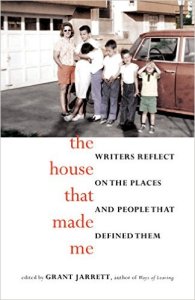
The House That Made Me: Writers Reflect on the Places and People that Defined Them edited by Grant Jarrett

Carefully curated essays take on the concept of home from varied points of view.

house made me

The House That Made Me collects essays by 19 writers reflecting on their childhood homes (or whichever home each writer has found most influential). Editor Grant Jarrett developed the idea for this anthology while contemplating his own first address via Google Earth, and he directs the contributors to that software. While the majority of essays hew close to Jarrett’s initial notion, some also riff on the concept: Roy Kesey considers those who view our homes from above, including birds, spies, angels, gods, astronauts and children climbing on roofs, as he once did.

The resulting assembly of voices offers a range of approaches and backgrounds: Kris Radish’s nostalgia for an idyllic rural community; Patricia Jabbeh Wesley’s attempts at home-building in Liberia just before civil war erupted; and the juxtaposition of Pamela Erens’s privileged upbringing on the lake in Chicago and Jeffery Renard Allen’s difficult one in that same city’s Southside. Justine Musk writes of the possibility that “a person has two homes: the place where you were born (literally, not metaphorically), and the place that fits your soul.” As she works to leave her small Canadian hometown for Los Angeles: “It’s that sense of not-belonging that can become, slowly and over time, its own kind of belonging.” While each essay is a worthy and thought-provoking piece of craft, the true achievement is in the sum of these parts, a chorus of diverse experiences that work together to define “home” in all of its possibilities.


This review originally ran in the April 22, 2016 issue of Shelf Awareness for Readers. To subscribe, click here, and you’ll receive two issues per week of book reviews and other bookish news.


Rating: 8 parachutes, for its matching my personal obsessions, these days.

book beginnings on Friday: Everybody Behaves Badly: The True Story Behind Hemingway’s Masterpiece The Sun Also Rises by Lesley M. M. Blume

book beginnings

Thanks to Rose City Reader for hosting this meme. To participate, share the first line or two of the book you are currently reading and, if you feel so moved, let us know what your first impressions were based on that first line.

Guess what brought me to this one. It’s been a while since I read The Sun Also Rises (first discovered in Mrs. Smith’s English class in high school, which began my Hemingway admiration). I wonder if I’ll find time for a reread…

everybody behaves badly

I think these opening lines set the scene nicely – or the atmosphere of Hemingway’s life and fame, if you will.

In March 1934, Vanity Fair ran a mischievous editorial: a page of Ernest Hemingway paper dolls, featuring cutouts of various famous Hemingway personas. On display: Hemingway as a toreador, clinging to a severed bull’s head; Hemingway as a brooding, café-dwelling writer (four wine bottles adorn his table, and a waiter is seen toting three more in his direction); Hemingway as a bloodied war veteran.

I wonder how much that page of paper dolls would be worth now!

This quotation comes from an uncorrected advance proof and is subject to change.

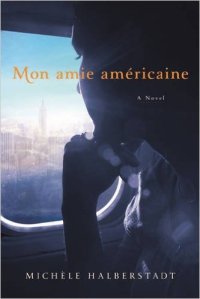
Mon amie américaine by Michèle Halberstadt, trans. by Bruce Benderson

In a long letter to a friend in a coma, a Parisian woman meditates on friendship.

mon amie

Parisian Michèle and New Yorker Molly have been friends for many years. As colleagues in the film industry, they travel together, and talk on the phone nearly daily–until, at 40, Molly collapses in her office and becomes comatose. Michèle Halberstadt’s (The Pianist in the Dark) novel Mon Amie Américaine takes the form of a long letter Michèle writes to Molly, in lieu of speaking, because “The words I can’t share with you are choking me.” As Molly remains unresponsive, uncomfortable truths are revealed behind a presumably lifelong friendship.

Michèle’s letter acts as a diary, an account of her experience of Molly’s near death: getting the news; tracking her friend’s progress (or lack thereof); being forbidden to visit; and finally, after Molly awakens several months later, discovering a different person from the one she’s missed. The new Molly is hesitant, frightened and languid where the old one was a high-powered businesswoman, vibrant and fun. Meanwhile, Michèle suffers injuries in her own life, with no Molly to turn to.

Bruce Benderson’s translation from the French is melodic and evokes fluent but accented English, exactly as the reader expects Michèle to sound. Her tone ranges from elegiac to loving to frustrated (“How many times in the last ten years have I repeated you ought to see a specialist”) to self-pitying and to resigned. This love letter to friendship ends by considering what we are willing to do for those we love, and what obstacles even friendship may be unable to overcome.


This review originally ran in the April 22, 2016 issue of Shelf Awareness for Readers. To subscribe, click here, and you’ll receive two issues per week of book reviews and other bookish news.


Rating: 7 phone messages.

guest review: Great Bear Wild by Ian McAllister, from Pops

I reviewed this book very briefly, for a gift review several years back. Now, here’s Pops.

great bearMcAllister writes eloquently & sincerely about this amazing place, with confident familiarity from living there for decades; he was a wonderful guide & companion for the all-too-brief time of reading.

The region he describes is also subject of several other books worth mentioning – and reading.

The Fish in the Forest, with its detailed explication of salmon + forest ecosystem interdependence, is significantly based on the research of Tom Reimchen, which documented bears’ role in spreading nutrients from salmon into temperate rainforest. Reimchen’s extensive observation and data collection was based in the Great Bear wilderness.

The Last Great Sea by Terry Glavin (2000) is an exceptional survey of the geologic and human history of the North Pacific basin, from Japan to Bering Sea to California’s Bay Area. Learning of North America’s temperate rainforest in this context illuminates how literally unmatched it is on earth; Great Bear represents the best surviving enclave of this precious treasure.

The Golden Spruce includes both factual narrative and cultural backstory revolving around McAllister’s Great Bear region, with a stunning impact that lays bare the tragic contradictions implicit in human impacts and threats in such a place.

Threats to coastal waters from increased fossil fuel tanker traffic are a prominent theme in McAllister’s telling; beyond that, there were persistent threats from continued logging, hunting and general human expansion in the region.

However, there have been significant developments on these fronts even since the 2014 publication.

The Enbridge tar sands pipeline project was at first permitted by the conservative Harper government. Then in 2015 Justin Trudeau was elected PM, and this year his government quickly denied the permit. Such battles are never “won”; but depressed crude prices are driving tar sands closures, global pressures against further oil extraction are growing and Trudeau faces constant scrutiny to transition Canada away from Harper’s legacy to become an international clean energy leader.

At nearly the same time this year, the Great Bear Rainforest Agreement was finally signed after decades of maneuvering & negotiation between BC, Tribes, logging companies and non-profits like Sierra Club, Greenpeace & ForestEthics. The Agreement is broadly depicted as welcome preservation for the region.

Yet, even with that consensus some regrets are inevitably emerging, and McAllister is among those voices. Although the agreement protects 85% of the rainforest from logging, the 15% remaining is in coastal lowlands with remaining old-growth forest – the largest trees; these should be preserved. And although the Agreement “ends all bear hunting”, what it really does is grandfather bear hunting licenses so that hunts will continue at existing levels, at even greater value now, for the foreseeable future.

As with most such efforts since John Muir arrived in California in 1868, conservation has meant compromise; and when humans make concessions on behalf of natural resources, some of those resources are lost. After more than 150 years of this well-intentioned horse-trading, there is little left to bargain away.

Agreed; this is at least a 9.

(Susan Vreeland’s The Forest Lover is set in BC, as well.)

A different perspective, with background on the political situation. Let me just weigh in to say PICTURES! This is a collection of deeply gorgeous photographs, as well, and for that reason as well is not to be missed.

Thanks, Pops.

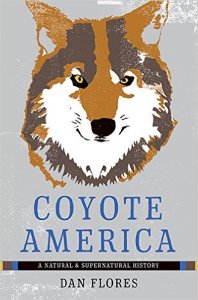
Teaser Tuesdays: Coyote America: A Natural & Supernatural History by Dan Flores

Teaser Tuesdays is a weekly bookish meme, hosted by MizB of Books and a Beat.

Teaser

Coyotes seem to make consistently interesting reading – for me at least – whether Native American mythology or the natural history that is handled here.

coyote america

I thought I’d share one of the fascinating tidbits I learned. Coyotes interbreed quite avidly with red wolves in the southern U.S.; not so the gray wolves of the West.

Mech also points out that killing coyotes, not mating with them, is intrinsic to gray wolf behavior. Julie Young of the Predator Research Facility even told me that in experiments there, coyotes inseminated with gray wolf sperm actually killed the puppies they bore.

They are quite clear on their preferences, it seems. That makes sense to me, considering the Trickster Coyote I knew as a child from books like Coyote &. Stay tuned…

This quotation comes from an uncorrected advance proof and is subject to change.

movie: Heartworn Highways (1976)

heartworn highwaysOh, man, what a treat. This 1976 documentary showed at the Pickford a few weeks ago, and Husband and I really enjoyed it.

We were not expecting such a departure from the documentary as I know it, which tends to splice in interviews, voice-overs, text captions to identify players, and the like. Instead, this was just 90 minutes of footage strung together. Which is not to say that it wasn’t artful; transitions felt natural and it was edited, of course, but there was no guide to the experience, which is different from what I’d imagined. So we were just bystanders to the action: Larry Jon Wilson records “Ohoopee River Bottomland” in the studio; Townes van Zandt takes the camera on a tour of his home in Austin and chats with Seymour Washington; David Allen Coe road-trips to the Tennessee State Pen and performs there; Gamble Rogers gives an outstanding spoken-word performance between songs at a bar; Charlie Daniels plays a high school gym; a teenaged-looking Steve Earle sings around a table with Guy Clark, Rodney Crowell and others. As you can just imagine, it’s all very atmospheric, alternately very funny and touching. Guy Clark’s “Texas Cooking” really got to me.

I had no idea Townes van Zandt was such a riot, and now I want to see Be Here to Love Me. This was great. If you’re a fan of “outlaw country” or regional flavor, check it out.


Rating: 8 holes.

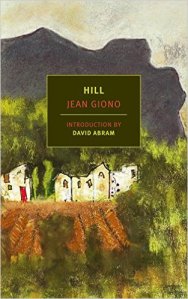
Hill by Jean Giono, trans. by Paul Eprile

This slim French novel in a new translation pits humankind against the natural world in moody, lyrical prose.

hill

Hill, Jean Giono’s first novel, won the Prix Brentano in 1929 and has been newly translated into English by Paul Eprile. Focused on the conflict between humans and nature in a tiny French village, the story’s imagery and atmosphere offer a thrilling, disturbing, visceral experience in an unassuming package.

A small Provençal hamlet known as the Bastides Blanches (the White Houses), or simply the Bastides, has been for some time slouching back toward a state of nature. In these crumbling houses now live four families comprising a dozen residents–plus one, a mute vagabond they call Gagou, “who throws off the reckoning.” The eldest resident, an old man named Janet, falls ill, takes to his bed, and here the troubles begin: an ill omen is noted, the town’s water supply runs dry, and the surrounding landscape takes on a sinister cast. Janet begins to speak in tongues, and “in the old man’s talk there are chasms where untold powers rumble.” The men of the village meet to strategize as the natural world encircling the Bastides advances.

Hill runs just over 100 pages, but its impact is powerful. Giono sketches his characters sparingly. The character of Gagou presents ominous questions that are left unanswered: Are his differences malevolent, or merely another force of nature? The individualities of human characters are not the point; instead, this story is about the shape of the world, the breadth and agency of nature independent of humankind. Eprile’s translation emphasizes language and a brooding tone. The result is a curious, intriguing novel of wind, earth, water and fire, both threatening and luminous.


This review originally ran in the April 12, 2016 issue of Shelf Awareness for Readers. To subscribe, click here, and you’ll receive two issues per week of book reviews and other bookish news.


Rating: 6 purple foams.