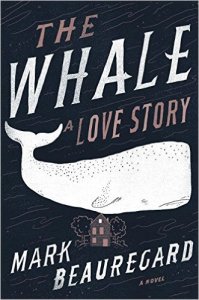
The Whale: A Love Story by Mark Beauregard

Careful research supports this story of a love affair between Hawthorne and Melville that birthed a classic.

the whale

In 1850, Herman Melville was in debt and struggling professionally, particularly with the novel-in-progress he was then calling The Whale. That summer, on a family trip to the Berkshires, he met the older, successful author Nathaniel Hawthorne, and began a relationship that would be passionate and painful, fraught and inspirational. Mark Beauregard explores the intimate friendship between these two literary legends in The Whale: A Love Story.

Based on primary sources including letters and journals, and meticulously researched, this novelization follows the historical record closely, as detailed in an epilogue. Hawthorne’s letters to Melville, lost to history, are re-created here using his other letters and journal entries; Melville’s letters to Hawthorne, however, are reprinted faithfully (with few, documented exceptions). Melville dives deeper into debt to move to the Berkshires and be near Hawthorne. As they discuss cerebral, spiritual and literary matters, grow close and suffer estrangements, Beauregard charts a full-blown love affair. In this telling, Moby-Dick is a labor of love and obsession directed not at a whale but at a man. Melville’s novel (which was dedicated to Hawthorne) continues to compel and confound readers today, and The Whale: A Love Story offers one possible explanation for its tortured mysteries.

In Beauregard’s fittingly emotive account, Melville is preoccupied and fervent, and Hawthorne is changeable, by turns sensitive and cool. Set against a literary community that helped define American letters of the time, this high-spirited story evokes a singular relationship and the complexity of Moby-Dick.


This review originally ran in the June 17, 2016 issue of Shelf Awareness for Readers. To subscribe, click here, and you’ll receive two issues per week of book reviews and other bookish news.


Rating: 7 flashes of lightning.

movie: Papa: Hemingway in Cuba (2015)

YARI-PAOS-01_27x40_031816.inddI’m afraid I’m quite late in writing this review: it has been at least a month since I saw this movie at a local theatre. I was really hoping for a reprise so I could take Husband to see it, and see it a second time for myself, but no luck. I recall my impressions, though, and will share them here.

The story is that of a young Miami reporter who idolizes Hemingway. In the film he is Ed Myers; in real life he was Denne Bart Peticlerc, who wrote the screenplay. Myers, played by Giovanni Ribisi (who I really like), writes Hemingway an adoring letter which he does not mean to send. His girlfriend sends it on, which results in a phone call from Papa himself, and an invitation to visit the Finca Vigía, the Hemingway home in Havana. A friendship develops between Myers, Hemingway and Hemingway’s 4th wife Mary.

This is also the first U.S./Hollywood filming to take place in Cuba since the 1959 revolution, an interesting factoid and one that should cue us to look closely at setting and extras.

Papa: Hemingway in Cuba has been criticized. Some reviewers find it lacking in background introduction to Hemingway’s story (no problem for this viewer, but okay, noted), or poorly acted, or melodramatic. I enjoyed the movie quite a bit, but I’ll allow that my fascination (not to say obsession) with the subject may have helped.

It is hard to watch Hemingway and Mary fight, and watch Hemingway struggle with depression and mental illness. It is melodramatic; but so, I think, was his life. It was actually rather painful to see it portrayed, but I do think it’s a pretty accurate portrayal. There were some hilarious as well as pathos-ridden, and very apt, scenes involving Hemingway’s performances in life–because his life was a performance–and Myers’s obvious discomfort. I was occasionally uncomfortable, too. I think Hemingway had that effect on people.

Adrian Sparks plays Papa, rather uncannily, I’d say.

The backdrop was most interesting, especially when I think about how filming took place. There were a few wide-angle shots of streets filled with gleaming, colorful 1950’s American cars: I imagine it took a little looking to find such mint-condition specimens (shot in 2014 but to match a late-50’s setting), but of course these are the cars still largely piloting Havana today. I wondered about the extras, such as musicians playing in bars. How were they hired? How did they approach this project? What a weird, meta-meditation on the persistent issues with U.S.-Cuban relations today. All of which does belong in any story about Hemingway.

In a nod to the Chicago Sun-Times review linked above, I will recommend this movie to viewers with a certain familiarity with the Hemingway story. And be prepared for sad, disturbing scenes. But the one presupposes the other: Hemingway’s life was indeed filled with scenes like these.


Rating: 7 skinny dips.

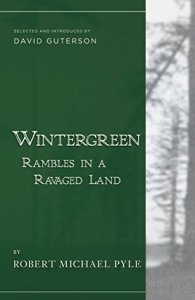
Wintergreen: Rambles in a Ravaged Land by Robert Michael Pyle

wintergreenAs I mentioned last week, I read Wintergreen in preparation for a class I am taking this very weekend from the author, Robert Michael Pyle. It was an intriguing read, and I’m looking forward to learning from the man himself.

The copy I read, borrowed from Pops, is a Pharos Edition, meaning that “one of today’s most exciting authors” hand-picked and introduced it in a reprint. Wintergreen was originally published in 1986 by Scribner; this 2015 edition is being called a 30-year anniversary, and David Guterson (The Other, Snow Falling on Cedars) brought it to Pharos.

In a word, Wintergreen is a book in defense of the ravaged land of the subtitle. That land is the Willapa Hills of southwest Washington (near where the Oregon line meets the coast), where Pyle settled after growing up in Colorado and studying in Seattle and at Yale, and some other stops along the way including Great Britain. This land is ravaged, of course, by logging; but Pyle argues that it is still beautiful, still deeply rich in natural wonders, and worth saving. Pyle is a biologist and a writer, and his style is both reverent and carefully descriptive and detailed. His tone can be occasionally irreverent and jokey; he is conversational, humble, and disarming, absolutely likable. I intend to like him, when I meet him.

In his own words,

This is the plan of the book: to describe the Willapa Hills and the wildlife they support, both native and alien; to examine the impact of intensive forestry upon the land and its life; and finally, to assay the ability of organisms (including ourselves) to survive in the aftermath of massive resource extraction. Throughout, questions of biogeography, ecology, and evolution in the wet, wintergreen world find their way into the text.

And four sections of four essays each do this work, as promised. It is kept from being overly square, in that structure, by Guterson’s intro, a Prologue, and an updated Afterword written for this 2015 edition.

I felt a great affinity for the sense of place that is so central to this work, especially because the place Pyle loves is an underdog, a humble and much-derided place. He writes,

In attending to these neglected hills I try to appreciate them for what they still are, without holding against them what they once were.

He takes his reader leisurely through what this place once was – the hugest of the huge old-growth Douglas firs et al, the ones whose stumps were repurposed as roomy homes for families – and what it is now – second-, third- and fourth-growth, and stump fields that however hold their own beauty, and remarkably biodiversity. He writes beautifully. There is undeniable poetry in the line,

The backs of old barns break and ancient boats and Studebakers deliquesce into the fundament.

Or, when introduced (and little-loved) nutria are quirkily described:

Wombatlike but generally black, they add a definite presence to an already-altered ecosystem, and they are somewhat more interesting than cows.

His audience is understood to be somewhat sympathetic to his feelings and beliefs: that the natural world deserves our protecting even while that is a rather arrogant concept; that old growth forests are special; that green is good. He takes some background knowledge for granted (first approaching the question, “what is old growth?” on page 198), but this is not much of a risk. He is right about the background his readers come to him with.

As he acknowledges in the newly-added Afterword, some of the specific details of politics, policy, and specific local conditions in the 1986 edition are a little dated now. But none are incorrect; and he brings us up to date in this Afterword. The questions I noted during my reading were well answered. Any period-specific feeling to the whole is enriching, if slightly distracting: it makes this text feel grounded in time as well as literal ground.

The pace of these 369 pages is not rushed, but indeed rambling. Patient readers, however, who love a certain level of detail and a good, rain-soaked, mature story, will be well rewarded.


Rating: 8 individually loved stumps.

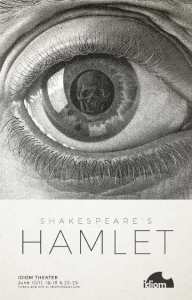
iDiOM Theater presents Hamlet

My third visit to iDiOM Theater, and I would love to be able to say it won’t be my last. It will be my last, because I’m moving away; but I have seen nothing but outstanding performances (one, two) here, and it will be a loss.

hamlet2Confession: I’m not sure I’ve seen Hamlet performed before, and I’m not sure I’ve read it, although I think I did, in high school. The story feels familiar, of course, but I could have gotten that through osmosis. Because I haven’t seen many Hamlets, I’ll defer to my parents, who have seen a number of them, including two or three in a single recent summer: they agree that this is the best Hamlet they’ve ever seen.

From the theatre’s website:

While retaining Shakespeare’s language, director Heather Dyer has abridged Shakespeare’s text to focus on Hamlet’s “struggle as a lost young man whose foundation has been completely shattered” and reducing the emphasis on the international political machinations between Denmark and Norway, giving prominence to the emotional conflict and relationships within the Hamlet family and court. (This edit also reduces the running time to more like two-and-a-half hours instead of the typical four.)

This works very well: two-and-a-half is probably long enough for most of us, and it was dynamic throughout. I’m typically more stimulated by interpersonal and emotional stories than international political ones, myself. The website also makes reference to modern set and costuming, but I have to say that these were quite invisible: both were so modest as to entirely disappear, and by that I mean that the incredibly fine acting outshone everything else. (This is a good thing.) Wonderful things can be done with set and costuming, certainly, but I really think these should be bonuses, not at all requisite to awesome theatre.

The lead is played by Matthew Kennedy, and he was spellbinding. The monologues are at the heart of this work, of course, and he pulled them off perfectly: dramatic but not overly or falsely so, and with all the facial elasticity to make it real. The acting was all-around very good. I enjoyed Ophelia (Nan Tilghman) and Polonius (Jeff Braswell) especially – Braswell’s Polonius was delightfully hilarious, taking full advantage of the script. What a play! I had forgotten (or maybe never fully appreciated) how good this play was, not that I’m surprised; Shakespeare’s genius is timeless. This has all the tragedy and the comedy.

iDiOM continues to please with a tiny, intimate theatre* and professional-level acting that is also, discernibly, community-based. A few actors fumbled a few lines. I can handle it. Hell, I may find time to go see this play a second time. That should be review enough. Congratulations again, iDiOM.


Rating: 9 facial expressions.

See the theatre’s website for details on the new space: this is the last play in the tiny, intimate one I’ve enjoyed. I’m sure new space will bring new wonders for this talented group, though.

book beginnings on Friday: Wintergreen: Rambles in a Ravaged Land by Robert Michael Pyle

Thanks to Rose City Reader for hosting this meme. To participate, share the first line or two of the book you are currently reading and, if you feel so moved, let us know what your first impressions were based on that first line.

wintergreen

I am reading this in preparation for the upcoming Chuckanut Writers Conference and a class I will be taking from Robert Michael Pyle himself. An introduction from David Guterson is intriguing, as is the Pharos Edition (same folks who brought Still Life With Insects back into print). It begins:

At any time of the year and in any weather, my bedroom window frames a green and pleasant country scene. Halfway open, it makes a Kodachrome slide of the bucolic valley below, bordered by white sashes and molding.

Lovely. And this setting is just a few hours south of where I live.

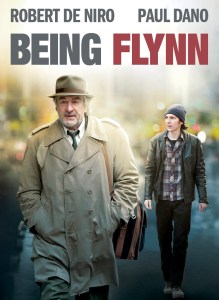
movie: Being Flynn (2012)

being flynnI’m super glad I got to watch this movie version of a book I recently admired, Another Bullshit Night in Suck City. First of all, let me say that Being Flynn captured the book better than most adaptations do. Not perfect, of course, and not exactly the same, but they never are because books aren’t movies.

This one was an interesting experiment, though, because the book involved so much theatre – meaning scenes that were constructed like scenes from a play or movie. Being Flynn took perhaps less advantage of that feature of the book than might be expected. But then again, what works as theatre-on-the-page doesn’t necessarily translate to Hollywood movie-making. Let’s see if I can explain myself…

Another Bullshit Night in Suck City (a title the New York Times finds “too pungent and profane” to print, whew!) is made up of a collage of different forms. One chapter is a list; one chapter is a long, stream-of-consciousness prose poem; another is a stageplay. Some are “straight” prose but with attention paid to setting and framing, and the drama of performance. Certainly, in the life of Jonathan Flynn, performance is a central question: he doesn’t want his audience to perceive him as homeless, as a loser; he is always reminding whoever will listen that he’s a great writer, and it seems he believes it, himself. The formal play of the book does not translate well to the screen, in part because moviegoers aren’t interested in playfulness in print. The differences between the two media are often at the heart of why books don’t adapt well into movies, or why book lovers resent the film’s adaptation.

Here, the movie wisely relinquishes some of the book’s form, and goes instead for story and feeling. Roger Ebert and the Times review linked above agree that the film ends with ambivalence, fails to commit to an outcome; but they seem to find this a negative, where I found it simply faithfulness to the true story that the book and film are both based on. Jonathan Flynn’s life was ambivalence and ambiguity, and that life wasn’t yet over when the film was produced. As Nick Flynn writes at the back of my copy of the book, “My father’s not dead yet, so there’s always still the chance the Nobel committee will call.” If the movie fails to wrap up, I say, that’s life. Til it wraps.

Robert De Niro as Jonathan Flynn worked out really well; I thought De Niro made a remarkably convincing crazy-or-genius homeless man. Paul Dano as Nick Flynn worked, for me, equally well. Ebert finds Dano “distant and mystifying,” but again, this feels true to the character as I came to know him through my reading. I wonder if it’s relevant that Ebert does not seem to have read the book (“by all accounts, the memoir is a powerful piece of work”). Maybe I just have a soft spot for Dano because I liked him so much in Little Miss Sunshine, and he looks so much like my good buddy Jerko.

I really enjoyed that the movie snuck in a scrap of that prose-poem chapter “same again” that I loved so much. I thought the spirit of the story and the noncommital, troubled, on-again-off-again nature of the father-son relationship was well portrayed. The question of whether the son is the father was perhaps a little heavy-handed in this version (as De Niro repeatedly yells “you are me!”), but it is one of the questions at the heart of the book. In short, this was a more faithful movie-based-on-book than I’d hoped for. I enjoyed it, but maybe my recent guided reading of the book helped me along.


Rating: 8 ice creams.

Everybody Behaves Badly: The True Story Behind Hemingway’s Masterpiece The Sun Also Rises by Lesley M. M. Blume

This study of the creation of The Sun Also Rises illuminates both the compelling story and Hemingway’s complex and not entirely likable personality and behavior.

everybody behaves badly

Many books have been written about Hemingway, but it seems there is still more to be learned. Lesley M.M. Blume’s Everybody Behaves Badly zooms in on the creation of The Sun Also Rises, Hemingway’s first novel and the one that firmly established his reputations, literary and otherwise. As her subtitle promises, Blume seeks the true story: in this case, the real men and women whose lives inspired Hemingway’s fiction, which some claimed was not really fiction at all.

Everybody Behaves Badly is not a biography of Hemingway; it skips his childhood to open with his marriage to Hadley Richardson, and the couple’s move to Paris in pursuit of cheap living and a storied expat community. Blume portrays a devilishly charismatic young writer, ambitious and confident, who easily collected mentors and admirers. She follows that young writer to Pamplona with a group of friends in 1925, and through the weeks after in which he wrote feverishly. Unflatteringly immortalized, one of the people Hemingway transformed into a character spoke of lives divided into B.S. and A.S.: before Sun, and after. Blume’s study concludes as Hemingway’s career expands, his first marriage ends and his second begins.

A biography of a novel, then, Everybody Behaves Badly is itself an engrossing and varied tale: raucous and dissipated, pitiable and serious. Blume’s research offers new detail to a well-studied story, and her narrative style is as entertaining as the original. Obviously required for Hemingway fans, this engaging work of nonfiction will also please a broad audience.


This review originally ran in the June 7, 2016 issue of Shelf Awareness for Readers. To subscribe, click here, and you’ll receive two issues per week of book reviews and other bookish news.


Rating: 8 slight changes.

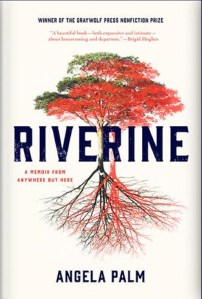
Teaser Tuesdays: Riverine: A Memoir from Anywhere but Here by Angela Palm

Teaser Tuesdays is a weekly bookish meme, hosted by MizB of Books and a Beat.

Teaser

riverine

I am observing a real trend in my reading, and in the reading I’m enjoying most, toward Graywolf Press and their Nonfiction Prize. That is only one of the promising aspects of this book.

I usually handpick teasers for you, but for this one I decided to open the book randomly to a page I haven’t yet read. And I am not disappointed.

The fields that surrounded my new home were laden with a history that I could not yet unpack. They were neither romantic nor scary.

But, it is implied, they became so? This one does tease.

This quotation comes from an uncorrected advance proof and is subject to change.

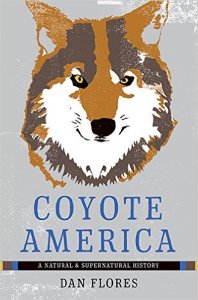
Coyote America: A Natural and Supernatural History by Dan Flores

This biography of the coyote in biological, political and historical terms illuminates a much-maligned North American original.

coyote america

Dan Flores (The Natural West) examines an iconic North American original in Coyote America: A Natural and Supernatural History. This small, clever, charismatic predator originally roamed the interior West, enjoying a mutual tolerance with the people who lived there. Some Native American tribes built creation myths around the coyote, “America’s universal deity.” After European colonization, coyotes became the enemy of ranchers and herders–undeservedly, as scientists would eventually show, as their prey is more bite-sized. Decades of extermination efforts only encouraged the diminutive canine, however, whose range now extends from Alaska and Canada into Central America, from coast to coast. Coyotes now live in every major city in the United States, which surprises many but, Flores argues, shouldn’t: they were there first.

Styled as a biography, Coyote America follows its protagonist through history, geography, human perceptions and millions of years of American canid evolution, with detailed accounts of governmental policies regarding predators. Flores sees the coyote as an avatar for humankind. Like us, the coyote is highly flexible, can be social or solitary, and adapts well to changing environments. Coyote mythology, well documented in other books, plays a minor role here, although Wile E. makes an appearance.

Flores has a tendency to use nine words where two would do, but his slight long-windedness is well offset by the endless fascinations of his subject. Nature lovers, students of U.S. natural resource policy and those charmed by the native American “song-dog” will be engrossed.


This review originally ran in the June 7, 2016 issue of Shelf Awareness for Readers. To subscribe, click here, and you’ll receive two issues per week of book reviews and other bookish news.


Rating: 7 words.

author interview: Allison Amend

photo: Stephanie Pommez

photo: Stephanie Pommez


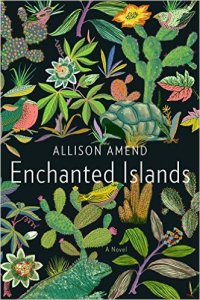
Allison Amend, a graduate of the Iowa Writer’s Workshop, is the author of the novels A Nearly Perfect Copy and Stations West, which was a finalist for the 2011 Sami Rohr Prize for Jewish Literature and the Oklahoma Book Award. She is also the author of the Independent Publisher’s Award-winning story collection Things That Pass for Love. She lives in New York City, where she teaches creative writing. Her latest novel is Enchanted Islands, based on the life of Frances Conway, who lived with her husband, Ainslie, on the Galápagos Islands for several stretches in the 1930s and ’40s. My review is here.

When did you discover Frances Conway, and what about her spoke to you? Did you know you needed to tell this story when you first encountered her?

I discovered Frances through her memoirs. I originally wanted to write about the series of strange disappearances on the Galápagos island of Floreana, but some of the descendants of the people involved are still alive, and Dayna Goldfine and Dan Geller were making a documentary about it, and I felt I wanted more freedom to imagine characters. It was in that period of research, though, that I read Frances’s memoirs and immediately fell in love with her voice. She is funny and witty, self-deprecating and actually a talented writer. This was a voice I wanted to attempt to emulate.

What also struck me about her two books is what they didn’t say. She was 50-year-old woman married to a man more than 10 years her junior, and in her middle age they decided to go to a deserted island? There was some larger story that she wasn’t talking about. It was in the space between the lines that my interest in the story grew.

I had written a full draft of the novel before I went to do research. Frances never mentions in her memoirs that Ainslie has a drinking problem, but I wrote that into the novel. Later, I spoke to the son of someone who knew the couple, who said that the Conways had come to Floreana in part so he could dry out. There are traces of honesty even when we try to hide them.

Have you ever been to the Galápagos?

Yes. My parents took me and my brother when I was just out of high school. It was an amazing trip. During that time I read Floreana, Margret Wittmer’s account of the strange goings-on on the island, and I became fascinated with the human history of the islands.

I returned to do research in February 2015 and found the islands much changed. Land-based tourism is in full effect, and the population of the islands has exploded. I saw many more Ecuadoreans taking advantage of their natural park. It’s wonderful that the islands have become accessible to those who are non-wealthy, but the increased traffic stresses the islands.

Every superlative everyone has uttered about the utter awesomeness of the Galápagos is true. I urge everyone reading this to visit this spot before tourist degradation destroys it.
enchanted islandsWhere is the line between fact and fiction? How firm is it? How important is it to you?

Ehhh, line-schmine. I like to say that fiction dwells in the possible, not the probable. Is it possible that Frances and her husband were spying for the U.S. government? Unlikely. But it does seem clear that Ainslie wrote an anonymous feasibility report for the U.S. Navy, and it is rather strange that a mismatched middle-aged couple would play Swiss Family Robinson on a strategically placed island full of Germans just before World War II, so who knows?

If there had been more historical records about Frances and Ainslie, I might have felt more compunction about inventing their lives, but the dearth of facts seemed to me to be a green light.

How much research did you do, and do you find that part of the process enjoyable?

I love to do research, and all of my books have been research-intense. It is one of the most enjoyable parts of writing for me. This may be because I get to procrastinate and call it writing.

I did try to complete a working draft before I started researching so that I would be sure to focus on creating characters rather than writing a Forrest Gump-like series of important events.

I did a lot of my research on the internet, unsurprisingly. There is a fantastic resource on the human history of the islands compiled by John Woram: www.galapagos.to, which has nearly all the historical documents that exist on the islands. I also did a lot of reading on spying tradecraft in the 1930s, and the role of the Pacific and the Panama Canal in the Second World War. Then there was all that research on Chicago during the turn of the century and San Francisco in the periods between the wars. Oh, and I went to the Roosevelt library and the Allan Hancock collection at the University of Southern California.

I read Frances’s memoirs several times, because I wanted her voice in my head. For a while I considered weaving in parts of her memoir, but I decided that would be more of a gimmick than an asset to the novel, so I tried to put the book out of my head and just write from my memory of her voice.

There comes a time, though, when research starts to inhibit imagination instead of spark it, and then it’s time to put the research away and just write.

Do you have a favorite character or one you feel closest to?

Well, obviously I spent four years or so with Frances, so I feel like I know her (or my fictionalized version of her) very well. But I have sympathy and fondness for all the characters in the novel.

In what ways is this book different from your previous work?

All of my books are different from each other. One of my biggest pleasures in writing is to try something new–it keeps the writing exciting and challenging. After my last historical novel, I swore I would never write another… but the pull of this story was just too great.

Enchanted Islands was a challenge because I was writing in first person for the first time in a novel. And I was writing from a voice that already existed. I didn’t have to match it, but I wanted to be true to its spirit. I was also challenging myself to write a tightly plotted novel, with spies and violence and action. From someone who comes from a literary fiction, character-driven background, highlighting plot is like getting a horse to walk backwards.


This interview originally ran in the June 3, 2016 issue of Shelf Awareness for Readers. To subscribe, click here, and you’ll receive two issues per week of book reviews and other bookish news.