A Wife of Noble Character by Yvonne Georgina Puig

Set in contemporary Houston, Tex., this fresh riff on The House of Mirth addresses the same questions of class and feminism, although in its own way.

wife of noble character

In Yvonne Georgina Puig’s A Wife of Noble Character, Vivienne Cally comes from Houston, Tex., high society, but her value is fading: 30 years old, unmarried and living with a coldly distant aunt, she possesses no wealth to speak of. Preston Duffin is an architecture graduate student from a different but adjacent class of people; the two have known each other all their lives. Despite her traditional upbringing, Vivienne is refreshingly spirited and skeptical, and Preston’s challenges to the life she knows intrigue her. He is attracted in turn not only to her beauty, but also to her similarly questioning attitude. Because the novel’s perspective shifts between the two, readers know what neither Vivienne nor Preston does as they are mutually drawn together, mystified and intimidated.

Plot progression would be accelerated if the characters would only talk to one another, but neither of them have the ability to speak honestly. Meanwhile, Vivienne’s society affairs–bridal and baby showers, lunches, mani-pedis–and her increasing struggle to maintain the façade of effortless wealth provide both heartrending pathos and entertainment, as the scene shifts from Houston to Paris, where Vivienne attempts a professional career as an art consultant, and back. Lavish details evoke the fashion and humidity of an expertly rendered setting, and Puig’s characters can be both silly and profoundly recognizable. With allusions to Edith Wharton’s The House of Mirth, and sensitive criticisms and clever details, A Wife of Noble Character is both fun and intelligent, much like its heroine.


This review originally ran in the August 9, 2016 issue of Shelf Awareness for Readers. To subscribe, click here, and you’ll receive two issues per week of book reviews and other bookish news.


Rating: 8 pedicures.

The Fire This Time: A New Generation Speaks About Race edited by Jesmyn Ward

Poems and essays by a range of writers address race in the United States.

the fire this time

Responding to the deaths of Trayvon Martin, Michael Brown, Eric Garner, Tamir Rice, Sandra Bland and so many others, the subsequent Black Lives Matter movement and a feeling that not much has changed, Jesmyn Ward (Salvage the Bones; Men We Reaped) felt moved to build a collection of words to counter the pain and injustice she saw. Essays and poems, many of them solicited by Ward, make up The Fire This Time: A New Generation Speaks about Race. Its title, of course, answers James Baldwin’s 1963 The Fire Next Time, which addressed the same questions of being black in the United States.

Led by Ward’s powerful introduction, contributions from Natasha Trethewey, Isabel Wilkerson, Edwidge Danticat and more consider past, present and future–Legacy, Reckoning and Jubilee. Honorée Jeffers writes in defense of Phillis Wheatley’s husband, a man apparently wrongfully denigrated, and honors Wheatley’s legacy while questioning the way it’s been written by others. Kevin Young muses on Rachel Dolezal’s interpretation of race. Garnette Cadogan writes movingly of what it looks like to walk through U.S. cities as a black man. And Ward offers an essay on her own ethnic heritage.

These powerful words from a range of sources vary in specific subject matter, but all make the same vital demands: for black citizens to have true equality. The entries in the collection are a little uneven, but each is stirring in its way, and the finest among them offer poetry as well as truth.


This review originally ran in the August 9, 2016 issue of Shelf Awareness for Readers. To subscribe, click here, and you’ll receive two issues per week of book reviews and other bookish news.


Rating: 8 names.

Granta, issue 133: What Have We Done (autumn 2015)

When I was young, and just beginning to travel with them, I imagined that indigenous people saw more and heard more, that they were overall simply more aware than I was.

So begins Barry Lopez’s short essay on how to really observe, entitled “The Invitation.”

granta 133
This is only one of the fine pieces I read in Granta‘s issue 133, titled “What Have We Done.” Ann Beattie’s short fiction “Lady Neptune” was haunting and vibrant, and a collection of photographs by Helge Skodvin of taxidermists interacting with their work was weirdly intriguing. (I found Audrey Niffenegger’s introduction to those photos less dynamic.) “The Hand’s Breadth Murders,” one of the longer pieces, by Adam Nicolson and with photos by Gus Palmer, really captured my interest: it’s an investigative story about the murders in the Maramureș province of Romania over teeny-tiny parcels of land. These killings have increased dramatically since the revolution of 1989 and the land claims cases that followed. It’s a complicated story: pick up your copy of Granta 133 here to learn more.

I also enjoyed the disturbing short story “George and Elizabeth” by Ben Marcus very much – it’s left me wondering. And “Fragments” from the notebooks of Roger Deakin, introduced by Robert Macfarlane. Check out Deakin’s words on trees:

We live in symbiotic association with trees – they are an intimate part of all our lives. We eat of them, open and shut them to go in and out of our houses and bedrooms. We play cricket with them, we sail the seas with them and row boat races with them. We eat our daily bread on them, we warm ourselves before them at the hearth, we sit on them, play croquet with them, canoe rivers in them, grow runner beans up them, build sheds and shacks out of them, sit underneath their shade in summer, reading books or picnicking, read them every morning on the train to work or borrow them from the library.

In between these pieces I enjoyed are others, that you might like even better.

I knew Granta by reputation, of course, but now I’ve confirmed that this is a journal of high quality. It won’t be easy to get into, naturally: this issue includes a number of “names.” But I’ll keep reading.


Rating: 8 details.

Teaser Tuesdays, hemingWay of the day and synchronicity: Love from Boy: Roald Dahl’s Letters to His Mother, ed. by Donald Sturrock

Teaser Tuesdays is a weekly bookish meme, hosted by MizB of Books and a Beat.

Teaser

hembut2
Imagine my thrill to see Roald Dahl and Ernest Hemingway walking alongside one another, pictured in my galley copy of Love from Boy, a collection of previously unpublished letters from the beloved children’s author to his mother.

love from boy

I’m afraid you’ll have to buy the book to see the photo! (It’ll be worth it.)

The caption reads,

Wing Commander Roald Dahl and his literary hero, Ernest Hemingway, in London, 1944. Roald got to meet many of the great and good in the literary world while he was in Washington. He thought Hemingway ‘a strange and secret man’ for whom he felt ‘overwhelming love and respect.’

For me, this was another moment of chimes sounding, so to speak. I hadn’t realized these two had any contact; I guess I hadn’t thought much about their contemporaneity. What fun to find that Dahl – one of my favorite authors when I was a kid – shared my appreciation for Papa’s work. Strange and secret man, indeed.

I was also interested to see Hemingway looking quite short and fat, next to the tall, thin Dahl. I’ve seen a lot of pictures of Hem: mostly the flattering ones he liked released; fewer in which he appears fatter and wearing his glasses (which he generally avoided being photographed in). While he is a perfectly distinguished-looking man here, in a suit and tie and those offending spectacles, both hands in pockets, striding purposefully across a street, beard clearly dark-going-to-gray (even in black and white) – I suspect this is not a photograph he liked. This one, taken during his third marriage, to Martha Gellhorn, hearkens to a slightly older Hemingway.

I love that there is always more to know.


This quotation comes from an uncorrected advance proof and is subject to change.

American Heiress: The Wild Saga of the Kidnapping, Crimes and Trial of Patty Hearst by Jeffrey Toobin

New research on the Patty Hearst case reveals a story as compelling and confounding as ever.

american heiress

Jeffrey Toobin (The Run of His Life) brings context, nuance and new sources to a dramatic story in American Heiress: The Wild Saga of the Kidnapping, Crimes and Trial of Patty Hearst.

The 1974 kidnapping of heiress Patricia Campbell Hearst by the radical group self-styled as the Symbionese Liberation Army (SLA) was a media sensation. A nation watched with shock as the victim joined her captors in bank robberies and other crimes. Decades later, Toobin helpfully sets this salacious story against its backdrop: the influence of the Hearst name; the fledgling nature of televised media, particularly live news feeds; and the cultural upheavals underway via the radical political left, especially in the San Francisco area where Hearst lived. Surreally, a bumbling, incompetent SLA plagued by internal strife managed to elude federal investigators for many months. Jim Jones, Bill Walton and Ronald Reagan make cameo appearances.

American Heiress avoids firm conclusions about Hearst’s level of agency in her own crimes. As Toobin observes, the phrase “Stockholm syndrome” was not yet in use at the time, but psychological coercion was the focus of Hearst’s criminal defense. With the information uncovered, Toobin can reveal only a woman making the best of circumstances, “a clear thinker, if not a deep one.”

While most older readers will have preconceptions about the events, Toobin’s ample research and new sources offer a fresh version. An author’s note states that Hearst declined to comment, and explains the research methods. This history satisfies with its level of detail and emotional distance from a subject who remains mysterious.


This review originally ran in the August 2, 2016 issue of Shelf Awareness for Readers. To subscribe, click here, and you’ll receive two issues per week of book reviews and other bookish news.


Rating: 7 shots fired.

Stephen King’s The Body: Bookmarked by Aaron Burch

A writer’s examination of the writing that shaped him–even reluctantly–yields layers of self-awareness.

stephen kings the body

Ig Publishing’s Bookmarked series features writers contemplating the literature that has made deep impressions on their lives and work. Aaron Burch’s entry is Stephen King’s The Body, a brief but incisive consideration of King’s novella and Burch’s life in ways that surprise the author and intrigue the reader.

“The Body” is one of four novellas in King’s Different Seasons (which also includes “Rita Hayworth and the Shawshank Redemption”). It is perhaps better known for the film adaptation, 1986’s Stand by Me. Burch’s lifelong fascination began with the movie; he writes here about coming later to King’s written work as he becomes a reader, a writer and a teacher. King’s protagonist, Gordie Lachance, is also a writer and very much resembles King himself. The layers of meta-awareness continue in Stephen King’s The Body: Burch refers to his writing of the book and to its earlier drafts.

“The Body” is a Bildungsroman circling themes of friendship, nostalgia and loss as four childhood friends trek cross-country to view the dead body of a boy their age. Burch explores these themes with tenderness and sentiment, even as he resists the latter. Although “The Body” and Stand by Me provide the framework for Burch’s contemplation, his work is at least as much self-reflective memoir or personal essay as it is literary criticism. As he writes, his marriage looks to be breaking apart–a parallel Burch forces himself to confront. The two processes, writing and considering a marriage, prompt a direct gaze into difficult truths, but as King writes (as Gordie Lachance): “The most important things are the hardest to say.” This is a recurring sentiment in Burch’s slim book, where he earnestly attempts to address those hard things.

Burch exposes himself as a striking character who has a complicated relationship with art–the art he produces (up until now, only fiction) and the art he enjoys. He is an unlikely writer of literary criticism, with his resistance to considering authorial intent, and purposefully avoids behind-the-scenes perspectives on his favorite works. “It can be fun to take apart a magic trick and figure out how it actually works, but it also ruins the magic of the trick.” Having pushed himself, however, Burch is surprised to find his venture into literary criticism extraordinarily enlightening.

Burch elaborates on King’s themes of loss and friendship with those of transitions, of firsts: first date, first kiss, first job, first road trip. As Gordie (or King) writes, “There’s a high ritual to all fundamental events… the rites of passage, the magic corridor where the change happens.” The beauty of Stephen King’s The Body is in Burch entering that magic corridor, and splitting the experience wide open–uncomfortably, even–for the reader to study with him.


This review originally ran in the August 1, 2016 issue of Shelf Awareness for the Book Trade. To subscribe, click here.


Rating: 7 scenes.

Women Lovers, or The Third Woman by Natalie Clifford Barney, ed. and trans. by Chelsea Ray

A sprightly, autobiographical 1926 novel of a Belle Époque lesbian love triangle, written in French by an American and appearing in English for the first time.

woman lovers

The works of Natalie Clifford Barney, an American who lived in Paris and wrote in French, are little known, and her 1926 autobiographical novel Amants féminins was published for the first time only in 2013. Woman Lovers, or The Third Woman is the first English translation.

A scholarly introduction by Melanie C. Hawthorne and a translator’s essay by Chelsea Ray place this work in the context of modernism and evolving gender definitions while detailing Barney’s biography. These introductory materials are revealing and absorbing in their own right, if a little dry in their academic tone. The novel, however, leaps energetically to life.

Barney’s protagonist N., who stands in for the author, believes in love among women as an ideal of pleasure and friendship. “Friendship is simply love without pleasure!” she declares. “Love is heavy for two to carry, and happiness is monotonous.” With a new lover, M., she establishes an “association” by which the two women will comfort those in romantic distress by sharing their affections. When she brings such a woman into her relationship with M., however, N. is unexpectedly left out, jealous and hurt.

Barney is perhaps best known for her aphorisms, and she uses such pithy fragments as well as screenplay-style dialogue, mock journal entries, a combination of first- and third-person perspectives and even drawings to tell her story. Woman Lovers, while brief, is thus a noteworthy and historically significant piece of experimental literature, queer theory and a captivating roman à clef all at once.


This review originally ran in the July 29, 2016 issue of Shelf Awareness for Readers. To subscribe, click here, and you’ll receive two issues per week of book reviews and other bookish news.


Rating: 7 chestnuts.

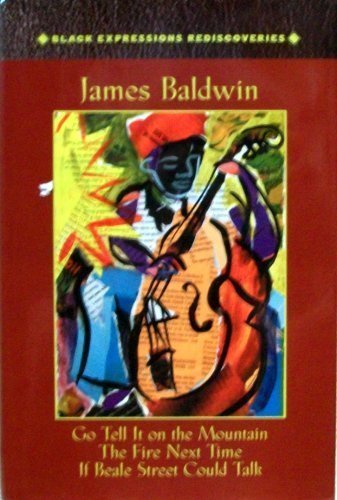
guest review: The Fire Next Time by James Baldwin, from Pops

Pops sent me this guest review – unexpected, unsolicited, but very welcome – with the note, “you will likely find it easy to tie this into your own readings.” Certainly; but he had no idea how timely, as I’ve just recently reviewed Jesmyn Ward’s forthcoming The Fire This Time, a collected of essays and poems Ward solicited from today’s minds, to answer Baldwin’s 1963 book. I read Baldwin’s Notes of a Native Son and Go Tell It On the Mountain, and so have some idea of his voice & power, but I hadn’t read this title, so it’s excellent to have Pops’s perfectly-timed review. Synchronicity, we’ll call it.
the fire next time

I recently finished James Baldwin’s The Fire Next Time, which is a strange bird in form as it consists of two essays that are pretty different: a short personal letter to his 14 yr-old namesake nephew, and a much longer autobiographical, contemplative ramble, a sort of musing, largely about religion. My book’s dust cover says it “caused a great stir upon publication in 1963 and landed its author on the cover of Time [magazine]” – while he was on a Civil Rights speaking tour of the US south. (He lived mostly in France beginning in 1948 at age 24.) In 1963 Baldwin was an established author, an “accepted” spokesman for the Black experience. His call in these two essays for integration & reconciliation during the outbreak of angry & nationalist activism is the likely source of that “great stir.” Indeed, the great value in reading these today is in appreciating the issues of that pivotal time in our history.

The short piece has a long title: “My Dungeon Shook: Letter to My Nephew on the 100th Anniversary of Emancipation.” This is the one recently associated with the book title, compared to numerous other public letters by Black authors to the next generation. (This is a comparison where context is again important, as we are challenged to appreciate the Black Lives Matter movement as it matures.)

Baldwin describes his great-grandfather’s “terrible life; he was defeated long before he died because, at the bottom of his heart, he really believed what white people said about him.” This begins a two track theme: an unbridled (almost bitter?) depiction of the oppression & tragedy of racism, with also a sober appreciation of the need for reconciliation & even love. On the former: “You were born into a society which spelled out with brutal clarity, and in as many ways as possible, that you were a worthless human being.” Yet, after more of such clarity, he says, “The really terrible thing, old buddy, is that you must accept them… and accept them with love.” In spite of all, he advocates for integration, “this is what it means: that we, with love, shall force our brothers to see themselves as they are, to cease fleeing from reality and begin to change it.”

With this in mind, he closes by reminding young James that he is prepared for the future: “you come from sturdy, peasant stock… [who] in the teeth of the most terrifying odds, achieved an unassailable & monumental dignity. You come from a long line of great poets, some of the greatest poets since Homer. One of them said, The very time I thought I was lost, My dungeon shook and my chains fell off.” This of course ties us back to the essay title; but oh, there is much more.

The words Baldwin quotes in italics are from a traditional spiritual. In fact, in his “I Have a Dream” speech, when MLK Jr. says “in the words of the old Negro spiritual…” he is referencing the same source, a spiritual now generally known under the title “Free at Last!” but also appearing under different titles and with varying lyrics. Here is the pertinent section of an “accepted” version that agrees with Baldwin’s quotation:

Free at last, free at last,
Thank God Almighty, I’m free at last.
The very time I thought I was lost,
Thank God Almighty, I’m free at last;
My dungeon shook and my chains fell off,
Thank God Almighty, I’m free at last,
This is religion, I do know,
Thank God Almighty, I’m free at last;
For I never felt such a love before,
Thank God Almighty, I’m free at last.

Further, MLK delivered his speech on Aug 28, 1963; Baldwin’s essays were published in book form in 1963 but had earlier been published in The New Yorker in 1962. Did MLK have occasion to read Baldwin during those turbulent months? Though I find no record in a quick search, it is quite likely; they ended close friends and Baldwin was widely read in the movement. In any event, I am quite satisfied & comforted just thinking in terms of “like minds.” And this is not the last time Baldwin invokes religious and musical references, both an essential part of the Civil Rights movement.

The second & longer (~90 page) essay is the autobiographical “Down at the Cross: Letter from a Region in My Mind,” the main title taken from a hymn quoted after the title page. It begins with the author at age 14 (same as nephew James, above) and describes how his abusive stepfather drives him to join a Pentecostal church, where he is successful as a preacher. In long and rambling paragraphs, suitable for exploring those “regions in his mind,” he relates his mixed experience with religion – and racism – up through adulthood, concluding, “the Christian world has revealed itself as morally bankrupt and politically unstable.”

His narrative path arrives at his moment of writing as he tells of his recent audience with Elijah Muhammad, which opens a lengthy account of his perspective on the Nation of Islam and racism as seeks a path to reconciliation, consistent with the first essay. As he does for young James, here again he closes with a measure of hope and a call for action, as he considers the prospect for continued racial strife: “at the center of this dreadful storm, this vast confusion, stand the black people of this nation, who must now share the fate of a nation that has never accepted them, to which they were brought in chains. Well if this is so, then one has no choice but to do all in one’s power to change that fate… I know that what I am asking is impossible. But in our time, as in every time, the impossible is the least that one can demand.”

His final line provides a caution for those who hesitate at key moments in history, and the title for the book, as he quotes a spiritual, a “slave song” called “O Mary Don’t You Weep”: “If we do not now dare everything, the fulfillment of that prophecy, re-created from the Bible in the song by a slave, is upon us: God gave Noah the rainbow sign, No more water, the fire next time!

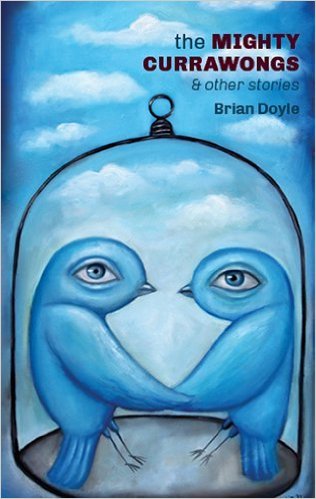
Teaser Tuesdays: The Mighty Currawongs and other stories by Brian Doyle

Teaser Tuesdays is a weekly bookish meme, hosted by MizB of Books and a Beat.

Teaser

Brian Doyle on books! Obviously you need this in your Tuesday.

mighty currawongs
From the story called “Elson Habib, Playing Black, Ponders the End Game”:

…one only needs a hundred books, my boy; the trick is to choose carefully which books are your companions; many people simply accumulate books and do not read them, whereas a discriminating soul has fewer books in toto but swims in them regularly; and the best books bear rereading, for somehow they always contain surprises and lessons you did not notice in previous readings. It is possible that some very good books continue to write themselves after they are published, perhaps working with their companions on the shelf, which is why I rearrange them twice a year, so as to provide them with new stimuli. Who is to say that they do not communicate among themselves, in ways only they know?

There is a whole blog post hidden in here about book ownership: how many, how stored, how arranged, how loved, how many read vs. unread. Incidentally, I am preparing for another cross-country move, so packing & choosing books again. Today, I don’t want to muck up Doyle’s lovely words. That blog post will come (and you will be asked about your own habits!).

But for today, go back and reread those lines, above. Happy reading.


This quotation comes from an uncorrected advance proof and is subject to change.

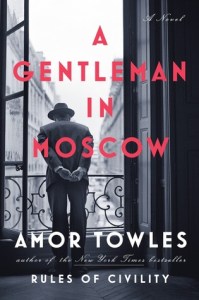
A Gentleman in Moscow by Amor Towles

This grand, sweeping story takes place entirely inside the walls of a luxury hotel in 1920s-1950s Moscow, in lushly evocative writing from the author of Rules of Civility.

gentleman in moscow

Amor Towles’s first novel, Rules of Civility, won readers’ hearts with its strong sense of time and place, fully realized characters and richly evocative voice. A Gentleman in Moscow repeats the feat with those qualities and more.

In 1922, Count Alexander Ilyich Rostov (“recipient of the Order of Saint Andrew, member of the Jockey Club, Master of the Hunt”) appears before a Bolshevik tribunal, accused of “succumbing irrevocably to the corruptions of his class.” He responds with quips, and is sentenced to house arrest in the luxury hotel where he has lived for the last four years. “Make no mistake: should you ever set foot outside of the Metropol again, you will be shot.”

This stylish and cultured protagonist has already lost his family and their estate. Now two armed guards move him from his suite into a monastic room of one hundred square feet. The bulk of his fine furniture, which will not fit in his new lodgings, becomes the property of the People. Remarkably good-natured, Rostov makes the best of his circumstances. He has all he needs in the Metropol: two restaurants, a barber, a seamstress and impeccably mannered staff who know him well. His worst enemy, perhaps, will be boredom–or a waiter who is particularly committed to the revolutionary cause. To brighten Rostov’s days, a fellow resident, “the young girl with the penchant for yellow,” befriends him. And then the hotel opens for him into a world as broad and rewarding as the one he wishes for his new friend–but ultimately as limiting as well.

The charming, complex Rostov is joined by colorful hotel employees (especially a talented chef and maître d’) and visitors, including a lovely actress, a dear friend from his youth and an assortment of Western journalists and businessmen. It is the charm of this expansive, lushly detailed novel that such a rich cast and such diverting and occasionally devastating events can populate the closed space of the Metropol, over a span of 32 years. A Gentleman in Moscow is filled with literary and cultural references–Chekhov, Tolstoy, Tchaikovsky, Humphrey Bogart–and with tastes, smells, humor, love and loyalty. Towles indulges in sentimentality to just the right degree. Readers who enjoy a generous, absorbing story, vibrant characters and immersive time and place will fall in love with this saucy novel. And by the time A Gentleman in Moscow closes in 1954, those readers will be sorry to lose the new friend they’ve found in Rostov.


This review originally ran in the July 29, 2016 issue of Shelf Awareness for the Book Trade. To subscribe, click here.


Rating: 8 jackets hanging in the closet.