book beginnings on Friday: Modern Death: How Medicine Changed the End of Life by Haider Warraich

Thanks to Rose City Reader for hosting this meme. To participate, share the first line or two of the book you are currently reading and, if you feel so moved, let us know what your first impressions were based on that first line.

I do enjoy learning more about end-of-life issues, medical and legal and ethical. This one seems to be for me.

modern-death

The opening chapter, “How Cells Die,” begins:

It had been the longest of months–in both the best and the worst possible ways. Brockton is a small town about a half-hour drive south of Boston, but in many ways it seems a world apart.

A little out of context, it seems, but we are just beginning. I like that it’s not a dry, thesis-sentence sort of beginning. Reading on, Haider Warraich does seem to grasp the idea of narrative writing, making his storytelling immediate and personal; and he does have a personal story to tell, being an MD. I am optimistic.

Modern Death is forthcoming in February. Stick around!


This quotation comes from an uncorrected advance proof and is subject to change.

Speaking American: How Y’all, Youse, and You Guys Talk: An Illustrated Guide by Josh Katz

Regional linguistic patterns in the U.S. are explained with intelligence, whimsy and visual aids.

speaking american

In December 2013, the New York Times published an online dialect quiz that became the paper’s most-viewed page. Times graphics editor Josh Katz expands that quiz’s contents and the powerful response it elicited with Speaking American: How Y’all, Youse, and You Guys Talk: An Illustrated Guide.

This large-format book organizes United States dialect patterns by subject matter: how we live, what we eat, where we go and more. Two-page color-shaded maps visually communicate regional usages, like the predilection for “rummage sale” in southeastern Wisconsin, over “garage sale” and “yard sale.” Maps and text zoom in for unusual local outliers, like Pittsburgh’s distinctive use of “yins” for the plural “you.” Katz notes the rare case where gender is predictive of usage (women are more likely than men to say “bless you,” or anything at all, when someone sneezes) as well as the “linguistic fault line running from Texas up through Arkansas, then tracking the Ohio River… toward the Mason-Dixon line,” credited to white settlers’ expansion patterns. Besides seriously investigating the questions of sneaker vs. tennis shoe, doodle bug vs. roly-poly, semi vs. 18-wheeler and more, Katz clearly enjoys his subject: especially amusing are the “How to Pretend You’re From…” sections. For Nebraska, you might pick up some “pickles” at the store–not pickled cucumbers, but a form of legal gambling.

Offering some new material since the famous quiz and elucidating the original, Speaking American is a fascinating survey of U.S. dialects as well as a fun, humorous exploration of a nation.


This review originally ran in the November 4, 2016 issue of Shelf Awareness for Readers. To subscribe, click here, and you’ll receive two issues per week of book reviews and other bookish news.


Rating: 8 potato bugs.

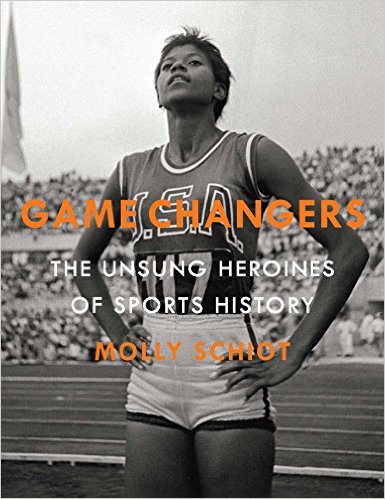
Gamechangers: The Unsung Heroines of Sports History by Molly Schiot

This photographic survey of trailblazing female athletes through history celebrates a diverse range of inspirational talents.

gamechangers

Molly Schiot created the Instagram account @theunsungheroines to celebrate pioneering female athletes the world has scarcely heard of. Game Changers expands that concept: a collection of historic photos Schiot found in libraries and archives, paired with short narratives of a page or less, tell the stories of groundbreaking and little-known female athletes.

The women featured here include some better-known names like Kathrine Switzer, Wilma Rudolph, Billie Jean King and Nadia Comăneci. These are joined by early mountaineer Annie Smith Peck, powerboat racer Betty Cook, judo champion (and mother to Ronda Rousey) AnnMaria De Mars, the “Sea Women” of the Korean island of Jeju and many more: boxers, billiard players, swimmers, skateboarders, players of team sports, Olympians, referees and umpires, sports journalists, coaches and policy makers (for example, the legislators behind Title IX). While women from the United States dominate these pages, every continent is represented except Antarctica. Women of color and those of non-binary genders are given special consideration as well. Among the strange and wonderful, don’t miss the first woman to hike the Appalachian Trail’s entire length in one season: she was 67 years old at the time.

These stories are brief but breathtaking. Not only athletes, these women were often activists and advocates as well as accomplished in business and the arts. Their photographs, naturally, speak volumes on their own. To be read in small pieces or cover-to-cover, Game Changers is an obviously indispensable choice for athletes, fans, parents or anyone else stirred by courage, talent and determination.


This review originally ran in the October 28, 2016 issue of Shelf Awareness for Readers. To subscribe, click here, and you’ll receive two issues per week of book reviews and other bookish news.


Rating: 6 balls.

Teaser Tuesdays: The Evening Road by Laird Hunt

Teaser Tuesdays is a weekly bookish meme, hosted by MizB of Books and a Beat.

Teaser

The Evening Road is a meandering novel set on the country roads of Indiana on a terrible night. One of its several strengths is in the two strong voices it’s told in, and the turns of phrase it employs.

evening-road
For example, in describing the details that don’t seem like they’d matter, but do:

There is a curve to a piece of fried catfish that satisfies the eye. Leads you off to the rocks and reeds of the river where it once swam. I was about to set in to cutting at the center of that curve when a nickering voice nosed the air just behind me.

Doesn’t that make you hungry? And I like what we learn about the incoming voice with the use of that verb, nickering.

This one is coming in February; keep your eyes open.


This quotation comes from an uncorrected advance proof and is subject to change.

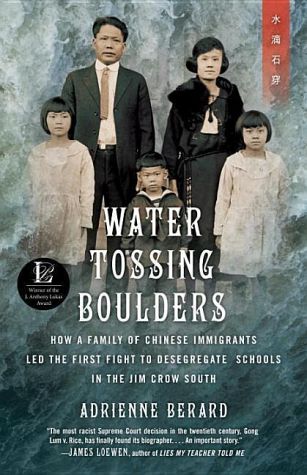
Water Tossing Boulders: How a Family of Chinese Immigrants Led the First Fight to Desegregate Schools in the Jim Crow South by Adrienne Berard

Chinese immigrants to Mississippi challenged school segregation a generation before the famous Brown v. Board of Education case.

water tossing boulders

Thirty years before the Brown v. Board of Education decision made school segregation unconstitutional, a case originated in small-town Mississippi to challenge the same injustices. Journalist Adrienne Berard’s Water Tossing Boulders reveals the little-known experience of the Mississippi Delta Chinese population, including the Lum family, whose two daughters were sent home from the local white school they attended in Rosedale, Miss. The resulting case, Gong Lum v. Rice (1924), made it as far as the United States Supreme Court, but failed.

Berard has done rigorous research, as detailed in her author’s note, and offers a storytelling style with momentum. She expertly evokes her characters. Jeu Gong Lum and his wife, Katherine Wong, were Chinese immigrants who met and married in the Delta; their daughters had divergent personalities, Berda rebellious and Martha an ardent scholar. Their lawyer, Earl Brewer, spent his career fighting for social reforms. Ultimately an anti-lynching campaign would take his attention away from the Lums’ case, perhaps ruinously. Other legal players are profiled, including Supreme Court Justice Louis D. Brandeis and Chief Justice William Howard Taft, who penned the Court’s unanimous decision in favor of segregation. This is the story of the Fourteenth Amendment to the United States Constitution and the tortured arguments of eugenics, racism and segregation as much as it is the story of a family who simply wanted a decent education for their children. Told with precision, sympathy and context, Water Tossing Boulders is a brief but incisive history of great significance.


This review originally ran in the October 28, 2016 issue of Shelf Awareness for Readers. To subscribe, click here, and you’ll receive two issues per week of book reviews and other bookish news.


Rating: 7 children.

book beginnings on Friday: Fever Dream by Samanta Schweblin, trans. by Megan McDowell

Thanks to Rose City Reader for hosting this meme. To participate, share the first line or two of the book you are currently reading and, if you feel so moved, let us know what your first impressions were based on that first line.

fever-dream
A slim, well-regarded novel in translation from the Spanish. I’m all in.

It begins:

They’re like worms.

What kind of worms?

Like worms, all over.

It’s the boy who’s talking, murmuring into my ear. I am the one asking questions.

Intriguingly weird, yes? And I’m entranced by the cover. Horses and worms. Stay tuned.


This quotation comes from an uncorrected advance proof and is subject to change.

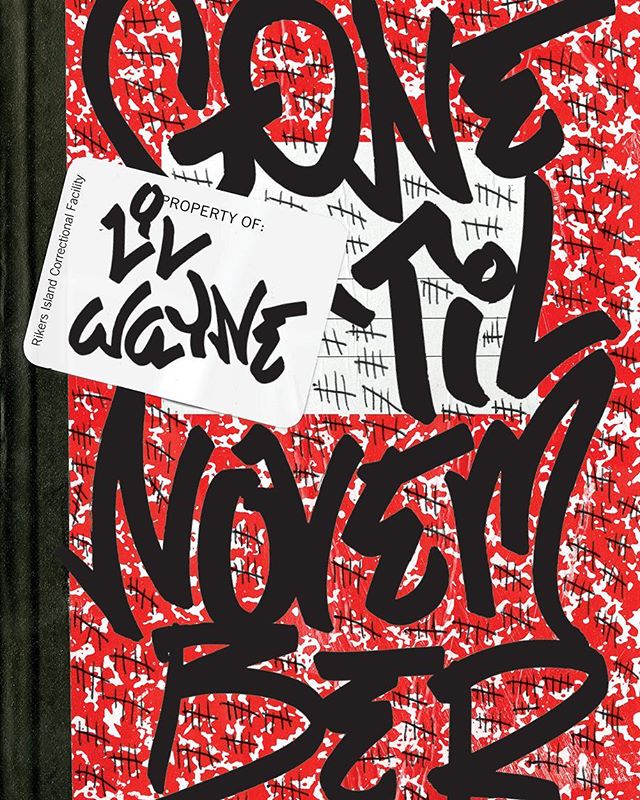
Gone ‘Til November: A Journal of Rikers Island by Lil Wayne

Lil Wayne’s prison diary gives a day-to-day account of his time in Rikers Island and a taste of the rapper’s offstage voice.

gone til november

In 2010, Lil Wayne entered New York’s Rikers Island Prison Complex to serve a yearlong sentence for illegal possession of a firearm. The New Orleans rapper was in the midst of a record-breaking career: multiple platinum records, Grammy Awards and financial success. In the eight months he spent in Rikers, Wayne kept a slim journal, published as Gone ‘Til November.

Wayne repeats himself: what he eats day to day varies little (the theme is burritos filled with chicken, rice, noodles, Doritos or Ruffles, beef jerky), and each night he does pushups, prays, reads his Bible and listens to ESPN. This monotony is to be expected in a prison diary, and is broken by the minor dramas of Wayne’s visitors, fellow inmates and the corrections officers he befriends. While the odd mention is made of violence occurring in other wings, the celebrity rapper has a relatively safe experience, plagued mostly by boredom. Entries are undated, requiring close attention to mark the time Wayne was incarcerated, from March through November. His slangy, informal tone shines vibrantly throughout.

A diary in which not much happens may sound less than gripping: this memoir will appeal most to Wayne’s many fans, who will find references to other rappers, future projects and Wayne’s lovers and children. But as an account of daily life in prison and its discontents, and as an exhortation to avoid incarceration, Gone ‘Til November offers a rare perspective for general readers as well.


This review originally ran in the October 25, 2016 issue of Shelf Awareness for Readers. To subscribe, click here, and you’ll receive two issues per week of book reviews and other bookish news.


Rating: 6 burritos.

Bayou Magazine, issue 65 (fall 2016)

bayou mag 65Bayou, from the University of New Orleans, is one of the briefer lit journals, which I confess leaves me sort of relieved: easier to get through in a sitting. In turn I’ll pass that brevity on to you.

Three essays grace these pages. “Holiday” by Ann Hillesland is, again, brief (a theme!), and takes a look at a movie that interested the writer when she was a teen, its commentary on her life; she comments in turn. I am sympathetic with this kind of writing, as a book reviewer. “Lifeline” by Patricia Feeney recalls Pat Conroy’s The Death of Santini, for its elegiac look at a rather unloveable family member. In ten pages, it manages a great deal of pulled-back perspective and passage of time; there’s a lot of movement.

My favorite was “The Mending Wall,” by Andrew Bertaina, who is undertaking something like what I hope to undertake in writing about my own mother: seeking the parts we can by definition never know. It also yielded the remarkable lines,

Perhaps you cannot mend things when you are still broken. I will never understand love or people: we are collections of moments, of opinions, of thoughts, not whole.

Overall, these pieces feel a tad less polished than the essays that appear in The Believer or Oxford American, which is not all bad: I’ve written before about the value of amateur art, the feeling of community and of real people efforting, and of movement and progress: we start here, and we improve. It can’t all be Broadway and the NBA; it is heartening to see community theatre and Division III college ball. Also, there has to be somewhere for us amateurs to submit to. I hope this doesn’t sound like faint praise: I enjoyed my time spent with Bayou, and you’ll see more of it here.


Rating: 7 showtimes.

Teaser Tuesdays: Take Me to Paris, Johnny by John Foster

Teaser Tuesdays is a weekly bookish meme, hosted by MizB of Books and a Beat.

Teaser

I am reading a beautiful, sad memoir about a love affair and the death of the beloved to AIDS. Juan was a Cuban refugee living in New York City and training as a dancer when he met John, an Australian history professor.

take-me-to-paris-johnny
John Foster tells this story with some lovely lines, like these.

I have one other memory of that November afternoon: the wind. It whipped off the river sharp and mean, and we were glad to step down from the street into the musty warmth of the subway on our way home. Juan was still living out of the bag of summer clothes that he had deposited, and since retrieved, at the Port Authority Bus Terminal.

Deceptively simple; but can’t you feel the wind? Whipping off sharp and mean really gets it there, for me. As I read this book, I feel like the tone of the title suits it: dreamy, sad, with some whimsy. Look for my review closer to the December pub date.

This quotation comes from an uncorrected advance proof and is subject to change.

Oxford American, issue 87: Texas Music Issue (winter 2014)

oxford-american-texasThey’ve done it again. This is my favorite magazine.

Actually, lest you think me totally partisan, the Georgia Music Issue might have been even better. Let’s start with the included musical cds, which make this very fine magazine even more desirable. I’m really enjoying the Texas cd, which includes tracks by Ray Price, Billy Joe Shaver, Rick Trevino, The Texas Tornados, Bob Wills, Freddy Fender, Kimmie Rhodes with Willie Nelson, Buddy Holly, Waylon Jennings, Guy Clark and Janis Joplin (whew). But I do notice that there’s not much here that bucks a traditional idea of Texas music – that is, country and Tejano. Contributions by Ornette Coleman and Spoon take a few steps off that path. But I thought the Georgia cd did a much better job of showing the wild variety available in a state prone to stereotypes. And it’s not because Texas doesn’t have the diversity available. Likewise, the text accompaniments to these musical tracks were a frank disappointment after reading the Georgia version. Rick Clark’s text is a just a little more basic, which is not to say I would have been let down, if only I hadn’t read that other one, in which each Georgia track was brought to life with storytelling unto itself that made me need to go back and listen again. Here, I’m listening again and again because the music is good, but not because a whole narrative world was opened to me. Perhaps tellingly, the write-up of the Texas cd is located at the back of the mag, not at the front.

But there’s something there, too: the cd and liner notes read a little better, feel a little fuller, after taking in the magazine as a whole. Joe Ely, Doug Sahm and others get attention in shorter articles, while features include Margaret Moser’s groupie diary (which I really enjoyed) and pieces on Guy Clark, Paul English (Willie’s drummer and bodyguard/door guy/gunslinger) and DJ Screw. The latter finally provided what I was looking for: a feeling that Texas music is as broad as its state lines suggest. I especially liked Amanda Petrusich’s commentary on the extreme localness of Screw’s reign – and here I am being partisan – in Houston’s rap scene, shortly before the internet blew the world wide open and, as she says, offered

more opportunity for cross-pollination, but less opportunity for the kind of place-specific identity-making that Screw wrought for Houston. The membranes are too permeable now.

Other highlights, for me, included the quirky perspective in Rachel Monroe’s “That Drifting Place,” where she examines Roy Orbison through the lens (excuse the pun) of his iconic dark glasses. “Texas Calling”, by Joe Ely as told to Alex Rawls, was a fun one to read: a bunch of recollections about playing with the Clash – with no real plot to hold them together, but it felt all the more like realistic recollecting that way. A very short piece of fiction by Bret Anthony Johnson provided an interesting departure – I don’t recall any fiction in the Georgia Music Issue. And I was thrilled to read Aaron Alford’s interview with Amanda Shires. She says,

When I bring people there [West Texas], they find it very odd, but they eventually love it. It’s unique in the way that it looks, and the people are so hospitable there, friendly. You have to be if you’re in a place that has a lot of prairie dogs.

Which is perfect, of course, and funny, and I can just hear it in her sweet drawl.

All in all? A different piece of work than the Georgia version was. Another very fine cd, more good writing, and again I learned a lot. Keep ’em coming.


Rating: 8 outlaws.