






This memoir of food, family, feminism, and Cambodian history, which includes enticing cookbook-quality recipes, is breathtaking in its emotional resonance and lovely writing.
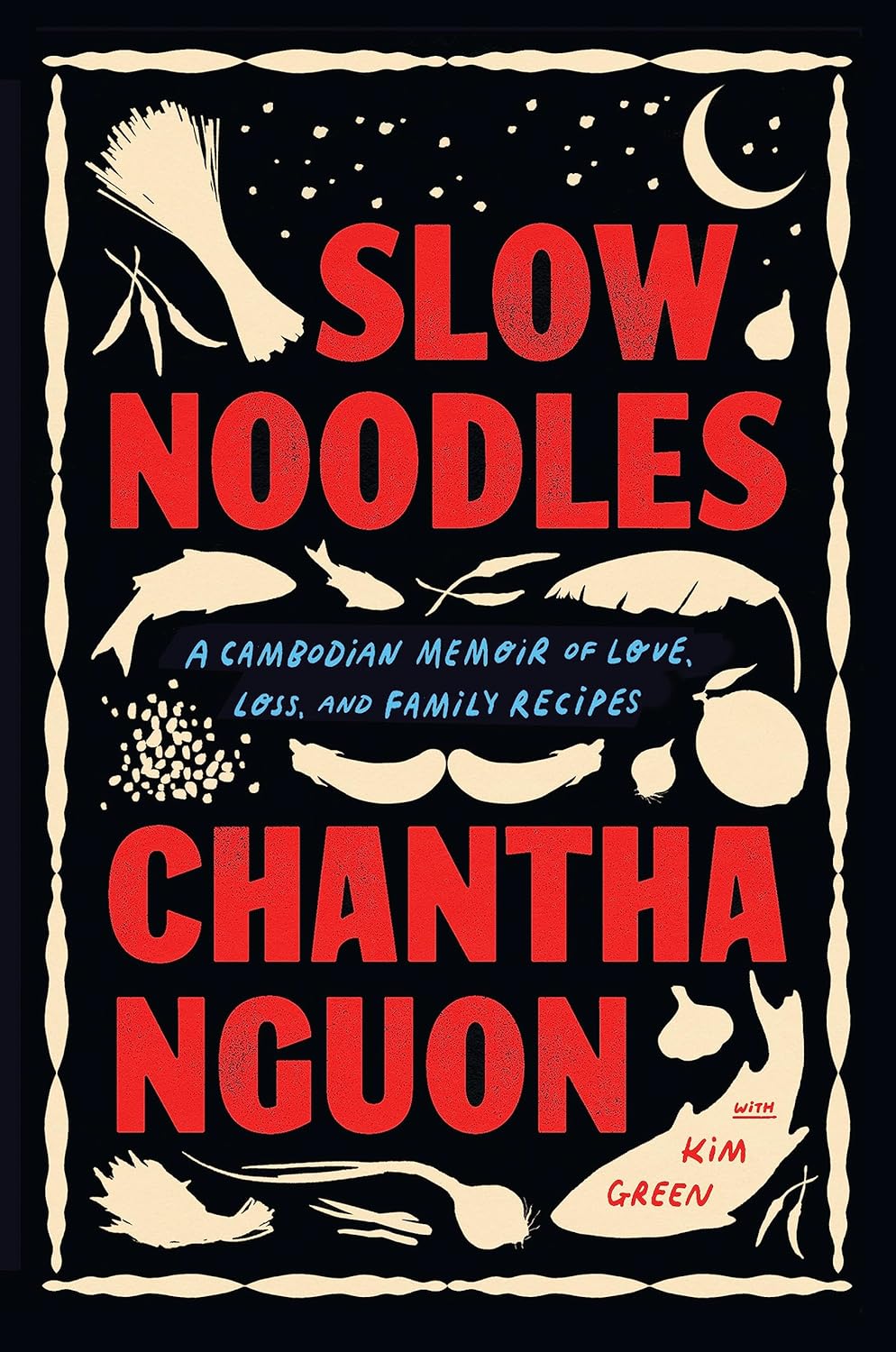
Slow Noodles: A Cambodian Memoir of Love, Loss, and Family Recipes tells a story that is, by turns, heart-wrenching, inspiring, harrowing, and mouthwatering. Chantha Nguon’s memoir, written with Kim Green, encompasses both world history and an intimate personal account. Nguon, born the youngest child in a comfortable family in Cambodia’s Battambang, had nine years of soft living and good eating before Pol Pot reset time to Year Zero in the 1970s. Moving first to Saigon, where she weathered the end of the Vietnam War, and then escaping as a refugee into Thailand, Nguon gradually lost everyone she loved, ending with her mother’s death when Nguon was 23. She was a food-focused young child with a mother who took cooking very seriously; she became a young refugee in peril of starvation. For Nguon, rationing or missing entirely the most basic of ingredients is not only a literal life-or-death issue but also symbolically life-altering. With the loss of her family and, to some extent, her culture, she views herself as a repository of recipes, culinary knowledge, memories, pain, and strength.
Food metaphors enrich this book, which sparkles with poignant, deeply lovely writing: “The green-fresh fragrance of young rice is as lovely and fleeting as childhood itself.” Nguon’s mother “taught [her] the art of rebelling as quietly as a whisper of silk.” Twenty-two recipes learned from Nguon’s beloved mother, or developed throughout her own accomplished cooking life, are included, with clear instructions and helpful notes on ingredients (and accompanied by a glossary for potentially unfamiliar terms). These are joined by cleverly figurative recipes, such as the recipe for silken rebellion, which begins: “Find the pockets of freedom available to you. Exploit loopholes.”
By the end of the story, Nguon has transformed into an impressive woman, acting as her husband’s equal (a radical concept, encouraged by her quietly rebellious mother) and a fierce advocate for social change. Nguon, who becomes a staunch feminist, eventually undertakes medical and humanitarian work with AIDS patients and sex workers, fights for education and independence for Cambodian women, and with her husband, founds the Stung Treng Women’s Development Center in rural Cambodia.
Nguon’s titular noodles contribute enormous metaphorical meaning. In her childhood household, slow and proper cooking was prioritized (“my mother despised the flavor of shortcuts”). In Thai refugee camps and in the Cambodian jungle, instant noodles became a prized delicacy. And by the memoir’s end, this thoughtful narrator has integrated these experiences, valuing both the careful preparation of fine foods and the stark relief of basic nutrition. Slow Noodles is a rare gem of a story, gorgeously written, humble and stirring, and packed with tempting recipes.
This review originally ran in the December 14, 2023 issue of Shelf Awareness for the Book Trade. To subscribe, click here.
Filed under: book reviews | Tagged: family, history, memoir, nonfiction, race, Shelf Awareness |
 pagesofjulia
Leave a comment