






In this darkly comedic yet philosophical horror novel, an unhappy 20-something returns home to the insular community and church she’d left behind only to find frights worse than she’d remembered.
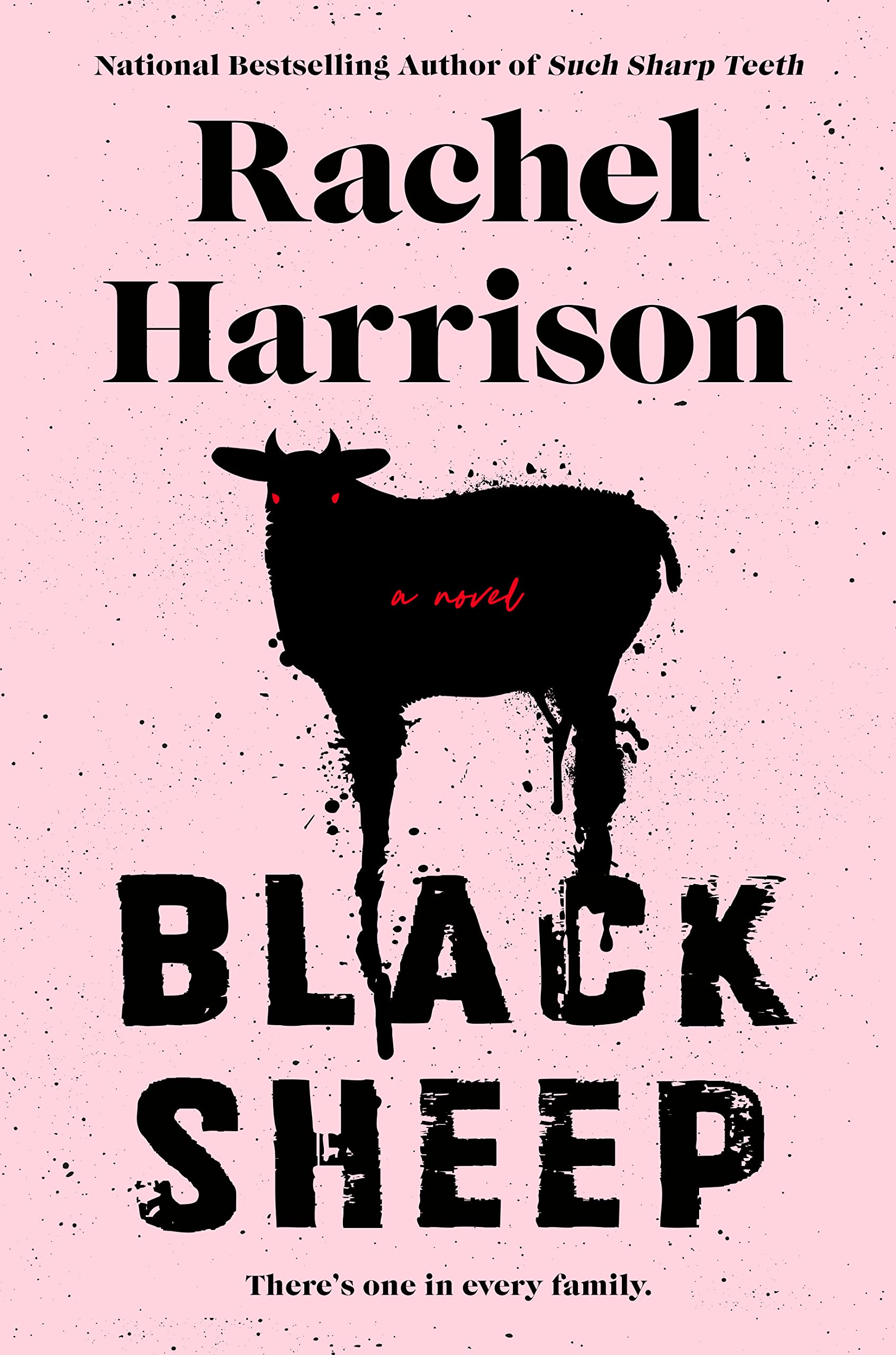
Black Sheep by Rachel Harrison (Such Sharp Teeth; Cackle; The Return) moves inexorably from the darkly absurd into terrifying horror. Readers follow apathetic, antisocial Vesper Wright as she returns home to her estranged family and learns that what she knew of her unorthodox upbringing was just the beginning.
Vesper is 23 years old, working as a server at a chain restaurant “in an unglamorous part of Westchester County, sporting a polo and serving plates of baby back ribs I was fairly certain were generated in a lab.” She’s unhappy but relieved to be free from the family, community, and church in which she was raised–until she receives an invitation to attend the wedding of her former best friend and her first boyfriend. Magnetically drawn to the place she misses, dreads, and still thinks of as home, Vesper reencounters not only the unusual church but her powerful mother, a horror movie megastar who never proved very maternal: “I’d only ever seen her emote on screen, her vulnerability behind glass. She was more human to me when she was pretending to be someone other than herself.” What she finds at home will blow Vesper’s world, and perhaps literally the entire world, wide open. She reconsiders her memories and “that our past is not the truth. It’s warped by time and emotion, inevitably muddied by love and resentment, joy and shame, hope and regret.” Eventually Vesper will have to rethink everything she thought she understood about her family, her church, and her past–and reexamine her loss of faith.
Early on, Black Sheep exhibits black humor and an accessible 20-something nihilistic angst. Details of Vesper’s former church are darkly comic. As the stakes rise, however, Harrison’s imaginative plot turns gruesomely to true horror. Fans of the genre will find pleasure in both the playful and the ghastly aspects. Aside from the terror, Vesper’s story ruminates on themes that include nature vs. nurture, the legacy of family trauma, and the repercussions of organized religion in its various forms. “Nothing terrified me more than this. The notion that without a choice we inherit parts of us that we cannot change. Cannot cut out.” This subject matter elevates a horror novel to a study in philosophy, even as the bloodletting ramps up.
Black Sheep is can’t-look-away riveting in its best and most disturbing moments, gripping readers on both conceptual and visceral levels. Vesper’s discontent and wrestling with her own worst self, her former family’s creepy cultlike demeanor, and the final crescendo of action add up to an unforgettable adventure.
This review originally ran in the July 14, 2023 issue of Shelf Awareness for the Book Trade. To subscribe, click here.
Filed under: book reviews | Tagged: family, horror, misc fiction, Shelf Awareness |
 pagesofjulia
Leave a comment