






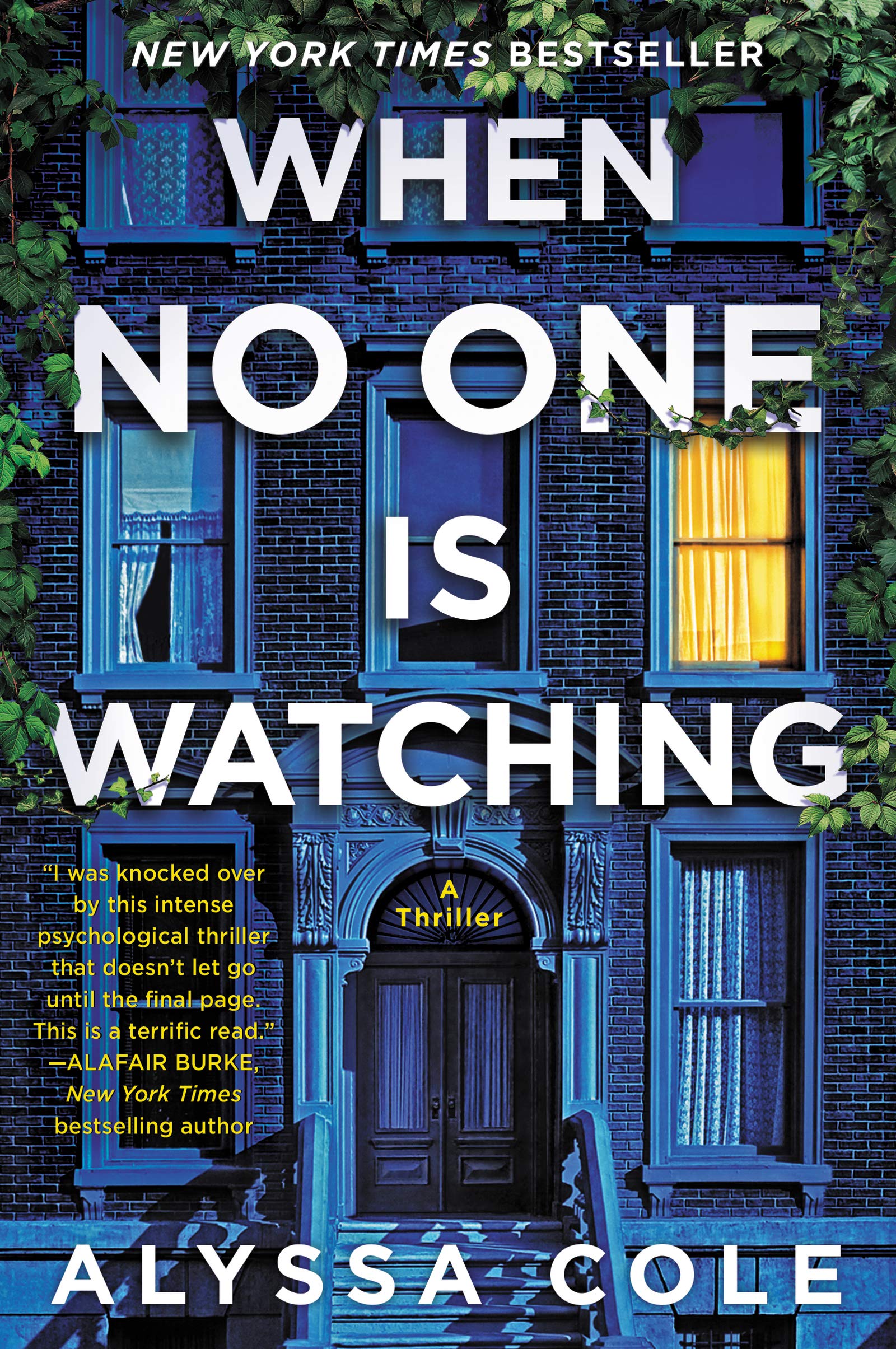
 While it takes its time getting to the ‘thriller’ part, this novel does pack a punch once the thrills begin. Told in two points of view, a romance builds alongside the terror.
Following a nasty divorce, Sydney has recently moved from Seattle back home to the fictional Gifford Place neighborhood in Brooklyn, NY. Her mother’s health has taken a turn for the worse, and it is a relief anyway to return to her childhood home, a handsome brownstone building where Sydney’s lifelong best friend Drea also lives in an apartment. The neighborhood is changing quickly, though: gentrification is coming hard for Gifford Place, a traditionally Black neighborhood, and neighbors Sydney’s known all her life are disappearing right and left, along with the businesses she frequents, and being replaced by white residents. The book opens with a brownstone tour emphasizing only the neighborhood’s distant white history, which Sydney interrupts to interject a truer version, before leaving frustrated for comfort food at her favorite bodega. The tour guide’s snotty advice that Sydney should start her own tour gets her thinking, though.
With the annual block party approaching, Sydney works on her research for the tour. Meanwhile, a new white resident, Theo, struggles in a failing relationship with his absolutely toxic racist girlfriend Kim. She is one of several of Sydney’s new white neighbors who move well beyond micro- into macro-aggressions and overt racism, while hapless Theo appears to be having the first eye-opening of his life all at once. I’m leery of this device. Theo volunteers to be Sydney’s assistant in tour research, offering us a rather too obvious didactic opportunity: Sydney explains history to Theo who also, on his own, researches patterns of white flight, redlining, real estate scams, and the reaches of slavery beyond Confederate borders. Gasp, northern bankers benefit from cotton planting too! This is a bit transparent for my tastes. Where has Theo been hiding all these years that he’s so ready for his awakening but has just never been exposed to truth before? [I thought it was a good detail, on the other hand, that Theo is white but also comes from poverty and crime. I felt this offered a subtler and therefore perhaps more clever avenue to explore why poor white people, though facing certain disadvantages, still experience an absence of the obstacles that face Black people of any socioeconomic background.] There are however some fun moments, like when they come up with a safe word (‘Howdy Doody’ – Theo’s idea) for when he gets into his “little white feelings.”
This is the weakest part of the novel, for its didactic feel and slower pacing. Then we move into a quickening of the dangers. Theo and Sydney uncover the dirt, historical and contemporary, the widespread conspiracy to take over Gifford Park for great profits and throw longtime residents out on their asses or to an undisclosed location. Banks, hospitals, real estate agencies, medical research facilities, tech scams and plain intimidation–is it a conspiracy theory if it’s all true? Where have Gifford Park’s disappeared residents been going, anyway? Why would Mr. Perkins take off in the final days before the big block party? Sydney’s past traumas make it difficult to trust her new friend, who is admittedly slow to some punches. (It is funny, if also sad, when he figures it out: “Not being able to call the police when you need help really sucks, I’m learning.”) Once the action shifts into gear, When No One Is Watching rockets along. Horror, fight scenes, sex, drama, and relevant social issues: it’s haunting but also fun. If a few plot threads get dropped along the way, so be it.
Possibly Cole got a bit ambitious with the combination of capital-I Issues and thriller intrigue. It was rough in spots. But she also accomplished a lot, and kept me engaged (if occasionally a little impatient), and I’d encourage more efforts like this one.
Filed under: book reviews | Tagged: race, sense of place, thriller |
 pagesofjulia
Leave a comment