






A woman reinvents herself in solitude but finds the tension with humanity remains in this finely textured novel set in the Italian Alps.
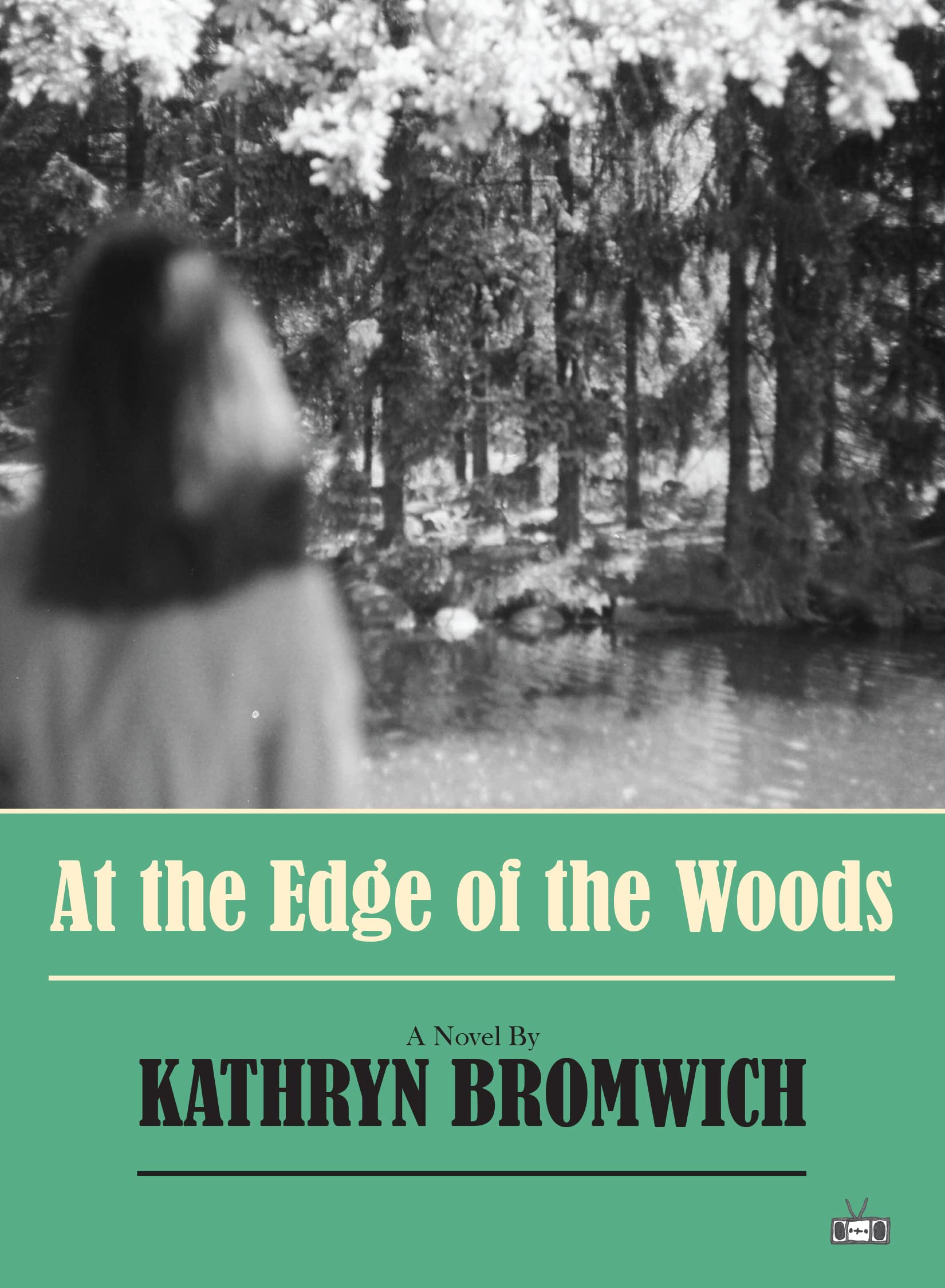
Kathryn Bromwich’s first novel, At the Edge of the Woods, both chills and charms with its fable-like story of a woman beginning a new life alone in a cabin outside a small Italian village.
“In the mornings, when my thoughts have not yet arranged themselves into their familiar malevolent shapes and the day is still unformed, I wake up before dawn… and walk deep into the woods while my eyes adjust to the velvety darkness.” First-person narrator Laura Mantovani is determined to simplify and forget: she revels in her close attention to her daily walks, her observations of nature, her humble fare, and austere human contacts. She supports her modest lifestyle with translations of medical texts for the village apothecary and tutoring a few well-off children; in the evenings, she reads widely. She briefly takes a lover, before retreating into still deeper solitude and communion with the natural world. Readers wonder what she has escaped from–until a contact from her past life turns up on the doorstep. Glimpses of another life are revealed in flashbacks, before Laura’s narrative returns to the deceptive quiet of the Italian mountaintop woods.
Bromwich’s prose is sedately paced, erudite, and textured in its observations of nature. Laura has a sly sense of humor and a deep distrust of humankind. As her story advances, her relationship to reality shifts and slides. She has visions. “The woods seem to have taken on unusual colors–not just deeper but slightly off. Certain tree trunks appear a lurid purple; tangerine and teal leaves wave in the breeze.” She sinks into the nonhuman world in ways that strengthen her and give her confidence: “I seem to have passed over into–somewhere I am no longer beholden to the chains and responsibilities of man, but to the perfect harmony of the natural world, where everything has its place, and no rock or broken twig is without purpose.” The village down the mountain from her, where she treks for supplies–with decreasing frequency, as the forest provides all she needs–shifts as well, from a point of support to something rather more sinister. The villagers call her strega (witch), because an independent woman alone is otherwise too much to grasp. Laura has created a new life for herself, a world in which her needs make sense in new ways, but human society still looms. “If you are there, in front of their eyes–fading, yes, but not invisible, not quite yet–it is more difficult for them to turn you into a monster with their words after you are gone.” In the end, she may find herself in as much danger as ever.
At the Edge of the Woods is wise, ethereal, haunting, filled with both beauty and horror. Brief but thoughtful, lush in its descriptions, this is a novel of introspection.
This review originally ran in the May 5, 2023 issue of Shelf Awareness for the Book Trade. To subscribe, click here.
Filed under: book reviews | Tagged: misc fiction, Shelf Awareness |
 pagesofjulia
Leave a comment