






No, I’m not going to talk about the fiction of Bill O’Reilly or Glenn Beck.
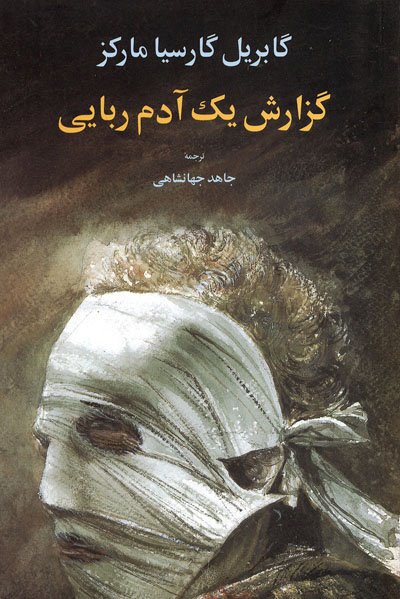
García Márquez Novel a Bestseller in Iran
Copies of Gabriel García Márquez’s 1996 novel News of a Kidnapping have sold out in Tehran’s bookshops this week “after detained opposition leader Mir Hossein Mousavi said the book’s description of Colombian kidnappings offers an accurate reflection of his life under house arrest,” the Guardian reported. Mousavi and opposition leader Mehdi Karroubi have been under house arrest since calling for mass protests last February in solidarity with other pro-democracy movements in the Arab world.
Last week, Mousavi was permitted to meet briefly with his daughters, and told them: “If you want to know about my situation in captivity, read Gabriel García Márquez’s News of a Kidnapping.” Word spread quickly online, “prompting hundreds of opposition supporters to seek out the book. Queues formed in some bookshops, and copies of the book sold out within days,” the Guardian wrote.
The news was also shared on García Márquez’s Facebook page, which linked to a Radio Free Europe blog post reporting that Mousavi’s supporters had launched their own Facebook page, “News of a Kidnapping, the status of a president in captivity,” and that “a number of Iranian websites and blogs have made an electronic version of the book in Persian available for download.”
I find this very exciting and interesting in so many ways. Marquez wrote a work of fiction in 1996 that has become incredibly relevant and interesting to a demographic he may have never originally specifically intended; it’s speaking to modern events that he couldn’t have foreseen (again, at least not specifically). Let this be an rebuttal to those that argue that fiction has no real-life important purpose! Commercially speaking, it can’t be a bad thing from Marquez’s perspective that he’s selling more books; but I’d wager he is more pleased that his work is speaking to current events and, hopefully, helping the cause of democracy.
Another interesting aspect of this short news piece, as reported by Shelf Awareness, is in the rapid-fire social networking/media communication of Mousavi’s recommendation, and the distribution of the Persian translation. As in the recent Egyptian protests, these relatively new media are aiding social and political causes. I think it’s interesting to see media technologies changing the way we do the business of the world. And to see these lessons tied back to BOOKS is kind of inspirational for me.
I’m no expert in Iranian politics and don’t claim to be. But the power of the media, communications and social networking, and most especially, 15-year-old works of fiction on today’s political turmoils is worth noting.
Does this catch your imagination as it does mine?
Filed under: musings | Tagged: reading as education, Shelf Awareness |
 pagesofjulia
My feeling as always is that we shouldnt have to mask our opinion in the veil of fiction. Are we children that can only deal with the harshness of reality through the metaphor of fiction; unfortunately yes, but it shouldnt be so. We must hide from our goverments, our piers, loved ones, and ourselves. I will continue to champion the direct route to truth even if psychologicly, or politicaly it doesnt work, and tact requires the long road.
Gerber on the deversion of fiction
Ah Gerb, thanks for coming by, so glad to have you!
So are you saying that the reason people write fiction is because they’re afraid (or have too much tact) to write nonfiction that reflects their views? That fiction-as-politics (or politics in fiction) is always a form of hiding out instead of just writing the nonfiction they should have written? I would argue that there are respectable reasons to write fiction: subtlety or sneaking in of beliefs or concepts that readers might not pick up if presented as fiction. Or even… fun? Did Marquez intend for his book to represent Mousavi’s struggle years later? Clearly not. But doesn’t it still have value?
Thanks for discussing. 🙂