






 It’s time for more vocabulary lessons! The Devil in the White City offered a wealth of learning opportunities for me.
A shot tower is “a tower designed for the production of shot balls by freefall of molten lead, which is then caught in a water basin.” It’s used in a list of miscellaneous structures in a discussion of the design of the fairgrounds.
Virga is “an observable streak or shaft of precipitation that falls from a cloud but evaporates before reaching the ground,” as in “strong gusts of wind buffeted the train, and ghostly virga of ice followed it through the night” (page 78).
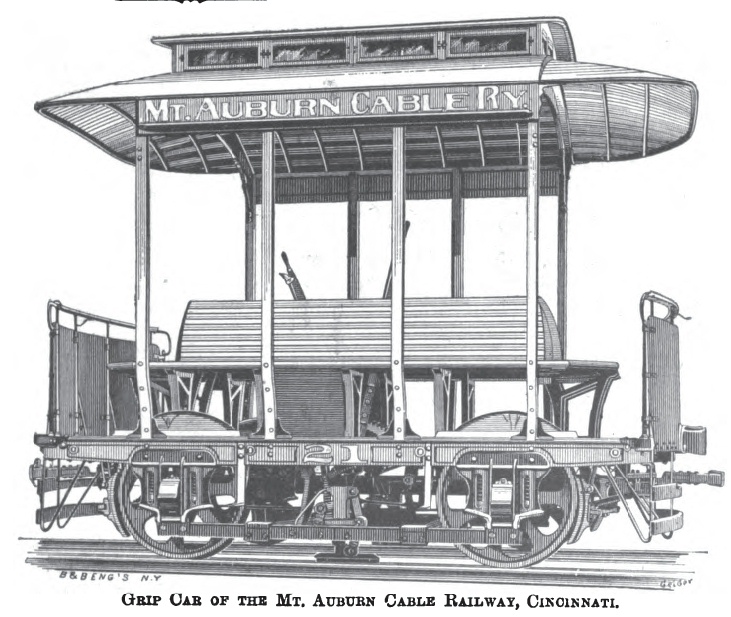
Grip-cars are defined in the book itself: they get their name “for the way their operators attached them to an ever-running cable under the street” (page 13). How interesting; I didn’t know about this kind of streetcar, and I looked for a picture:
According to context clues (it’s used several times), I concluded that an alienist must be a period term for psychologist, and it looks like I was right.
And here’s one I really like: a sirocco is “a Mediterranean wind that comes from the Sahara and reaches hurricane speeds in North Africa and Southern Europe.” It’s used on page 113: “In the hearth at the north wall a large fire cracked and lisped, flushing the room with a dry sirocco that caused frozen skin to tingle.” What a neat word for such a specific concept.
Some of these felt vaguely like a review; but I still had to look up calumny: “a misrepresentation intended to harm another’s reputation” and meretricious: “tawdrily and falsely attractive.”
Mucid was entirely new to me, but creepily appropriate, almost an onomatopoeia. It means “Musty; moldy; slimy; mucous.”
In addition, I looked up a number of names, of celebrities of the times. Some I knew and needed to know better; some were unknown to me.
This book was rich with vocabulary-learning opportunities. Have you learned anything new from your reading lately?
Filed under: musings | Tagged: vocabulary |
 pagesofjulia
[…] vocabulary lessons: The Devil in the White City « Pagesofjulia's Blog Grip-cars are defined in the book itself: they get their name “for the way their operators attached them to an ever-running cable under the street” (page 13). How interesting; I didn't know about this kind of streetcar, […]